
Audioguía de Túnez: De Mezquitas a Monumentos
Una puerta marítima marcó una vez la línea donde la vida de la antigua medina y la ambición colonial chocaron. Túnez guarda sus secretos detrás de cada puerta arqueada y estante de biblioteca dorado, esperando a aquellos que miran dos veces. Este audioguía autoguiado te invita a deslizarte entre mundos y descubrir historias que la mayoría de los visitantes pasan de largo con prisa. ¿Qué tratado secreto se susurró bajo las piedras de Bab el Bhar mientras la revolución bullía afuera? ¿Qué manuscrito prohibido desapareció de los estantes de la Biblioteca Diocesana sin dejar rastro? ¿Por qué un antiguo palacio en El Hafsia resuena con historias de exilio, traición e improbable resurrección? Muévete de las calles bañadas por el sol al silencio sombrío de los palacios, a través de siglos de escándalo, fe, resistencia y renacimiento. Cambia para siempre cómo ves Túnez. Da un paso adelante ahora y desvela la verdadera cara de la ciudad, una puerta oculta a la vez.
Vista previa del tour
Sobre este tour
- scheduleDuración 40–60 minsVe a tu propio ritmo
- straighten3.7 km de ruta a pieSigue el camino guiado
- location_on
- wifi_offFunciona sin conexiónDescarga una vez, úsalo en cualquier lugar
- all_inclusiveAcceso de por vidaReprodúcelo en cualquier momento, para siempre
- location_onComienza en Bab el Bhar
Paradas en este tour
Welcome to stop number 1, Bab el Bhar, also known as the gate of the sea! So picture this: you're standing right at the separation point between the old and the new, like the…Leer másMostrar menos
Welcome to stop number 1, Bab el Bhar, also known as the gate of the sea! So picture this: you're standing right at the separation point between the old and the new, like the mediator of two worlds. It's like a gatekeeper saying, "Hold up, Medina, stay in your lane, and modern city, you do your thing." This gate is like a fashion statement with its lowered archway and a fancy crenellated parapet on top. I mean, who doesn't love a bit of style? Now get ready, because we're just getting started! Shall we head to stop number 2, the Diocesan Library of Tunis?
Abrir página dedicada →Located on Sidi Saber Street, the library used to be the basement of a Catholic school run by the Sisters of St. Joseph of the Apparition. When the school closed in 1999, the…Leer másMostrar menos
Located on Sidi Saber Street, the library used to be the basement of a Catholic school run by the Sisters of St. Joseph of the Apparition. When the school closed in 1999, the Archbishop of Tunis had a brilliant idea. He entrusted Father Francisco Donayre with the mission of creating this fantastic library. After restoring the building, the library opened its doors in January 2001. Now, let's talk about the collection! Brace yourself, because we're talking about over 50,000 volumes here. These books cover a broad range of subjects, including comparative religion, Tunisian culture, and the social sciences. From ancient times to the present day, you'll find books in Arabic, various European languages, and even ancient languages like Greek, Latin, and Hebrew. They've got it all, my friend! Oh, and did I mention that they also have a collection of French classical literature? Ooh la la! The library has some amazing supporters. A French organization called Partnership Between Mediterranean Cultures, located in Aurillac, France, supports their endeavors. And the Tunisian Association of Cartagena collaborates with the library to organize social and cultural activities. They're always keeping things interesting here! Keep in mind that the Diocesan Library of Tunis is in contact with the Carthage Studies Center and the Institute of Arab Literature in Tunis. So, you know they're well-connected and always up to date with the latest happenings in the world of literature and culture. All in all, this library is a treasure trove of knowledge and a testament to the power of dialogue between different cultures and religions. Let's keep exploring Tunis together! On to our next stop!
Abrir página dedicada →Ah, welcome to the Hayreddin Palace, my curious traveler! This old palace, located within the marvelous Medina of Tunis, has quite a history. It's not just any ordinary palace,…Leer másMostrar menos
Ah, welcome to the Hayreddin Palace, my curious traveler! This old palace, located within the marvelous Medina of Tunis, has quite a history. It's not just any ordinary palace, it's actually the current Museum of Tunis! Fancy, isn't it? Now, let me tell you a bit more about this place. The Hayreddin Palace was built between 1860 and 1870, way back when, under the orders of someone quite important - Hayreddin Pasha. This impressive structure can be found in the Tribunal's place, which is conveniently near the vibrant El Hafsia district. You'll never run out of things to see around here! But hold onto your hats, my friend, because there's more to this palace's tale. During the French occupation in 1881, the palace was sold off and transformed into a justice court. Quite the turn of events, don't you think? Unfortunately, a big part of the palace was destroyed, making way for an Israelite school. Change is the only constant, it seems. However, fear not, for this splendid Hayreddin Palace has not been forgotten. It has been officially recognized as an important monument, thanks to a decree issued on 19 October 1992. And now, here you are, getting to witness its grandeur firsthand! How lucky can you get? So, come on, let's explore this fascinating palace and uncover the secrets it holds. There's always something delightful to discover in Tunis, and this stop is definitely no exception. So, brace yourself, my adventurer, for more wonders await at our next destination!
Abrir página dedicada →
Mostrar 10 paradas másMostrar menos paradasexpand_moreexpand_less
Ah, welcome to stop number 5, my friend! You've made it to Ramadan Bey Square, or as the locals love to call it, the place where the fun never sleeps! Just like a 24-hour bakery,…Leer másMostrar menos
Ah, welcome to stop number 5, my friend! You've made it to Ramadan Bey Square, or as the locals love to call it, the place where the fun never sleeps! Just like a 24-hour bakery, this square is always bustling with activity. Now, don't get confused with the name - it's not a square dedicated to the holy month of fasting. No, no, it's named after a fellow named Ramadan Bey. Who was Ramadan Bey, you ask? Well, he was quite the big shot back in the day! He was a sovereign from the Muradid dynasty, and I must say, he had quite the stylish mustache. Legend has it that he even combed it with a gold comb! Now that's dedication to facial hair, my friend. So, here in Ramadan Bey Square, you'll find yourself surrounded by a vibrant market atmosphere. It's a smorgasbord of scents, sights, and sounds! You'll see artists displaying their beautiful creations, street performers dazzling the crowd with their talents, and of course, vendors selling everything from unique trinkets to mouth-watering street food. Just a heads up, though, my friend - if you're in need of some quiet time, this might not be the place for you. It's a bit like a party that never ends! But hey, who needs peace and quiet when you can have excitement and adventure, right? So enjoy the lively ambiance, take part in the hustle and bustle, and maybe even grab a delicious grilled sandwich from one of the street vendors. You're in for a treat here at Ramadan Bey Square, my friend!
Abrir página dedicada →Now, let's dive into some historical fun facts. Ettarraz Mosque was actually built way back in 1836, during the reign of the Husainid dynasty. It was the brainchild of the…Leer másMostrar menos
Now, let's dive into some historical fun facts. Ettarraz Mosque was actually built way back in 1836, during the reign of the Husainid dynasty. It was the brainchild of the cleverly named emir Mustapha Ben Mahmoud Ben Mohamed El Rachid. Quite the mouthful, huh? But hey, at least he had a fancy plaque on the facade to remember him by! Now, I must admit, Ettarraz Mosque has seen its fair share of makeovers. It got a little makeover in 1982 when it was restored. You know, kind of like giving it a fresh coat of paint to keep it looking fly. So, make sure to take a moment to admire the architecture and soak in the history of Ettarraz Mosque. And don't forget to snap a selfie with the mosque too! You know, it's all about those #MosqueGoals.
Abrir página dedicada →Ah, the Hammouda Pacha Mosque! What a beauty we have here. This mosque, my friend, is a true historical gem. It's so old that I'm pretty sure even the grandpas of grandpas visited…Leer másMostrar menos
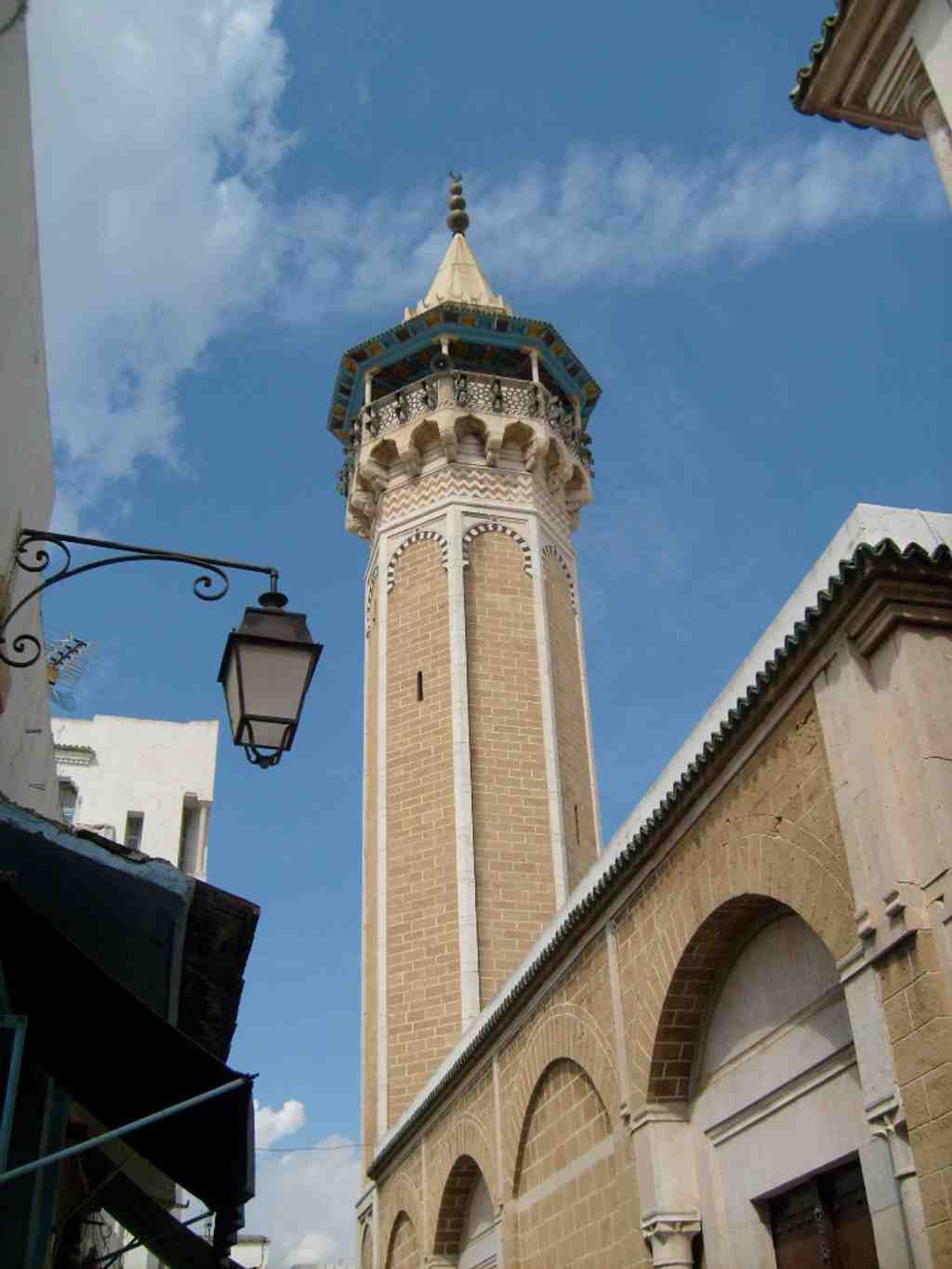
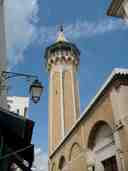
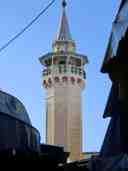
Ah, the Hammouda Pacha Mosque! What a beauty we have here. This mosque, my friend, is a true historical gem. It's so old that I'm pretty sure even the grandpas of grandpas visited it back in the day! Built in 1655 by the one and only Hammouda Pacha, this mosque has quite the reputation. It's the second mosque in Tunis that was built by the Hanafi rite. Talk about some serious mosque-building skills! Now, let's talk architecture. The Hammouda Pacha Mosque is all about that Turkish style, my friend. It's so cute and cozy, you'll feel right at home. And don't get me started on that octagon minaret! It's like a piece of art right there, reaching up to the sky. Once you step inside, you'll be blown away by the hall of prayer. It's like a big rectangular embrace, ready to welcome all the worshipers. So, if you're in the mood for some spiritual vibes, this mosque is the place to be. Oh, and don't forget to snap a selfie outside! You'll definitely want to capture this amazing landmark and show off to your pals. Trust me, they'll be super impressed. So, let's move on to our next stop, shall we?
Abrir página dedicada →Ah, welcome to Dar El Bey, my friend! This place is full of history and splendor, you won't be disappointed. Alright, picture this: you're stepping into a magnificent palace…Leer másMostrar menos
Ah, welcome to Dar El Bey, my friend! This place is full of history and splendor, you won't be disappointed. Alright, picture this: you're stepping into a magnificent palace that's fit for royalty. That's exactly what Dar El Bey is! In Arabic, it's actually called "دار الباي", but we can stick with Dar El Bey for now. This palace is located right in the heart of the medina, in a lively neighborhood called the Kasbah. It's known as the government palace because, well, that's exactly what it is! These days, it serves as the office for the Head of Government of Tunisia. Pretty cool, huh? But let me take you back in time for a second. Dar El Bey was built way back in the 17th century, during the rule of the Muradid Bey Hammuda Pasha Bey. And get this, my friend: it was even further beautified in 1795 by the Husainid Bey Hammuda Ibn Ali. I guess they just couldn't resist making it even grander! Now, brace yourself for some seriously breathtaking decor inside. You'll find rooms filled with the most exquisite details, designed by talented artists from Tunisia, Spain, and Morocco. Imagine sixteen twisted columns in white marble, adorned with beautiful arches. And the ceilings? Oh, they're something else! They're decorated with painted scenes and made with precious materials. It's like stepping into a dream! And don't even get me started on the courtyard. Prepare to be dazzled by the gleaming white marble floor, surrounded by a lovely portico. It's the perfect place to take a moment and soak in the beauty around you. Henri Dunant, a famous humanitarian, once said that Dar El Bey is "the most beautiful Moorish royal house in the world." I mean, if that's not a glowing recommendation, then I don't know what is! So, my friend, take your time to explore this regal landmark. It's truly a gem in the heart of Tunis. And when you're ready, we'll move on to our next stop on this grand adventure!
Abrir página dedicada →Alrighty, folks! Welcome to stop number 10, the National Monument of the Kasbah! This here is not just any old monument, oh no! It's a big, fancy memorial and a symbol of some…Leer másMostrar menos
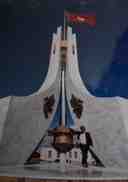
Alrighty, folks! Welcome to stop number 10, the National Monument of the Kasbah! This here is not just any old monument, oh no! It's a big, fancy memorial and a symbol of some pretty important events in Tunisia. You can find this beauty right smack dab in the center of Kasbah Square in Tunis, just chilling and facing the Town Hall like a boss. It was lovingly designed and crafted by a talented Tunisian sculptor named Abdelfattah Boussetta back in 1989. And let me tell ya, this monument is a real star! It's even featured as the background image on Tunisian ID cards. Talk about fame! Now, if you're lucky enough to catch a glimpse of it from different angles, you'll see why it's such a crowd-pleaser. And hey, if you stick around long enough, you might even witness the Tunisian president himself participating in the national flag salute ceremony right here in Kasbah Square. It's quite the spectacle, I tell ya! So, take your time, enjoy the view, and don't forget to snap a selfie with this iconic symbol of Tunisia. Trust me, your friends back home will be mighty impressed!
Abrir página dedicada →Now, let me tell you a bit about the Kasbah Mosque. It was commissioned back in 1230 or 1231 by Abu Zakariya Yahya, who was a pretty important guy. He declared his independence…Leer másMostrar menos
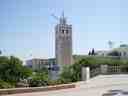
Now, let me tell you a bit about the Kasbah Mosque. It was commissioned back in 1230 or 1231 by Abu Zakariya Yahya, who was a pretty important guy. He declared his independence from the Almohads and went on to found the Hafsid dynasty. He must have been feeling pretty proud of himself because he decided to build this mosque shortly after becoming ruler. The mosque is located in the Medina, specifically in the Kasbah district. You'll still find some government buildings around here, so it's got an important place in the city. The architect behind this masterpiece was Ali ibn Muhammad ibn Qasim, and he did a fantastic job. One thing that makes this mosque special is its minaret, which was completed in 1233. It is said to be the first Friday mosque built in Tunis after the famous Al-Zaytuna Mosque. Talk about making a statement! The mosque was initially meant for the rulers who lived in the Kasbah. But later on, it became a public mosque open to the entire city for the Friday prayer. I guess they decided to share the beauty with everyone, which is quite nice if you ask me. Over the years, the mosque has seen some renovations under Ottoman rule. They even replaced the wooden minbar with a stone one, making it sturdier and more grandiose. Gotta love those upgrades! When you step into the prayer hall, you'll notice that it's a bit different from other mosques of the era. It's deeper than it is wide, which is quite unusual. The hall is divided into seven "naves," and each nave has nine beautiful arch spans. It's like walking through a symphony of horseshoe arches! The mihrab, which symbolizes the direction of prayer, is truly a sight to behold. It's decorated with marble paneling and flanked by decorative colonettes. Unfortunately, some of the original features aren't as preserved as they once were, but you can still appreciate its beauty. And let's not forget about the minaret! It's directly inspired by the Almohad architecture in Marrakesh, Morocco. You can see the similarities in its design and the decorative motifs on its facades. But unlike its cousin in Marrakesh, this minaret is made of stone instead of brick. Talk about some serious craftsmanship! The upper part of the minaret is absolutely stunning. It's decorated with triple horseshoe-arch-shaped windows surrounded by a zone covered with tiles. You can't help but stand there, marveling at the intricate details. The design of this minaret has even influenced the look of other minarets in Tunisia. You can spot its influence in the 17th-century Great Mosque of Testour and even in the modern minaret of the Al-Zaytuna Mosque. So, there you have it! The Kasbah Mosque is not just a beautiful place of worship, but a true historical gem in Tunis. Take a moment to soak in the beauty and appreciate the incredible craftsmanship that went into building this masterpiece. And, of course, don't forget to snap a few pictures for your Instagram!
Abrir página dedicada →All right, ladies and gentlemen, welcome to the El Jedid Mosque! Or as I like to call it, the "New Kid on the Block" mosque. Why? Well, it might not be the oldest or the most…Leer másMostrar menos
All right, ladies and gentlemen, welcome to the El Jedid Mosque! Or as I like to call it, the "New Kid on the Block" mosque. Why? Well, it might not be the oldest or the most famous mosque in Tunis, but it sure knows how to make a statement! The El Jedid Mosque, or الجامع الجديد for my friends who speak Arabic, is nestled right here in the heart of the Medina area of our beautiful city. Now, if you're wondering why it's called the "New Kid on the Block," it's because it was built in the 17th century, which might sound ancient to some, but in the grand scheme of things, it's pretty fresh. This mosque has a unique architectural style that reflects a fusion of Ottoman and Tunisian influences. Oh, and fun fact alert! It was actually built over an existing archaeological site, so you can say it's got some hidden history beneath its foundation. While the exterior of the El Jedid Mosque is impressive with its grand entrance and intricately designed minaret, the real surprise awaits inside. Step through those doors, my friends, and you'll be greeted by a stunning interior that will make you want to say, "Allah is in the details!" The prayer hall is adorned with beautiful floral tile work, gorgeous geometric patterns, and delicate calligraphy, all done with the utmost precision and attention to detail. Trust me, it's like being in a colorful dreamland of Islamic art. So, my friends, take a moment to soak in the beauty of El Jedid Mosque. It might be the "New Kid on the Block," but it's definitely a crowd-pleaser when it comes to architectural wonders. Just remember to show some respect and be mindful of the prayer times if you're lucky enough to visit during one of them!
Abrir página dedicada →
Preguntas frecuentes
¿Cómo empiezo el tour?
Después de la compra, descarga la app AudaTours e ingresa tu código de canje. El tour estará listo para comenzar de inmediato - solo toca play y sigue la ruta guiada por GPS.
¿Necesito internet durante el tour?
¡No! Descarga el tour antes de empezar y disfrútalo completamente sin conexión. Solo la función de chat requiere internet. Recomendamos descargar en WiFi para ahorrar datos móviles.
¿Es un tour guiado en grupo?
No - esta es una audioguía autoguiada. Exploras de forma independiente a tu propio ritmo, con narración de audio reproduciéndose en tu teléfono. Sin guía, sin grupo, sin horario.
¿Cuánto dura el tour?
La mayoría de los tours toman 60–90 minutos para completar, pero tú controlas el ritmo completamente. Pausa, salta paradas o toma descansos cuando quieras.
¿Qué pasa si no puedo terminar el tour hoy?
¡No hay problema! Los tours tienen acceso de por vida. Pausa y continúa cuando quieras - mañana, la próxima semana o el próximo año. Tu progreso se guarda.
¿Qué idiomas están disponibles?
Todos los tours están disponibles en más de 50 idiomas. Selecciona tu idioma preferido al canjear tu código. Nota: el idioma no se puede cambiar después de generar el tour.
¿Dónde accedo al tour después de comprarlo?
Descarga la app gratuita AudaTours desde App Store o Google Play. Ingresa tu código de canje (enviado por email) y el tour aparecerá en tu biblioteca, listo para descargar y comenzar.
Si no disfrutas el tour, te reembolsamos tu compra. Contáctanos en [email protected]
Paga de forma segura con 


