AudaTours logoAudaTours

Audioguía de Taipéi: De eruditos a estadistas en el distrito de Da’an

Guía de audio4 paradas

El eco de una sola campana resuena en el corazón de Taipéi mientras las estatuas permanecen congeladas en un saludo y las sombras de la revolución perduran tras las columnas de mármol. Aquí, la superficie de la ciudad esconde historias de ambición imparable, rebelión silenciosa y secretos insondables. Esta audioguía autoguiada le invita a recorrer los lugares icónicos y las calles secundarias de Taipéi, descubriendo historias que la mayoría nunca escucha y vislumbrando el alma compleja bajo su reluciente horizonte. ¿Qué confrontación en el gran Monumento a Chiang Kai-shek cambió para siempre el rumbo de la democracia de Taiwán? ¿Quién conspiró en secreto bajo los pasillos de la Facultad de Medicina de la Universidad Nacional de Taiwán cuando la medicina y el poder chocaron? ¿Por qué una humilde puerta en el distrito de Da'an todavía lleva las cicatrices de un escándalo olvidado? Muévase por Taipéi mientras la historia cobra vida tras los pasos de rebeldes, visionarios y leyendas perdidas. Sienta cómo la ciudad respira y palpita con recuerdos olvidados y descubrimientos frescos. Descubra lo que yace debajo. Comience su viaje hacia el verdadero corazón de Taipéi.

Vista previa del tour

map

Sobre este tour

  • schedule
    Duración 30–50 minsVe a tu propio ritmo
  • straighten
    3.5 km de ruta a pieSigue el camino guiado
  • location_on
    UbicaciónTaipéi, Taiwán
  • wifi_off
    Funciona sin conexiónDescarga una vez, úsalo en cualquier lugar
  • all_inclusive
    Acceso de por vidaReprodúcelo en cualquier momento, para siempre
  • location_on
    Comienza en Facultad de Medicina de la Universidad Nacional de Taiwán

Paradas en este tour

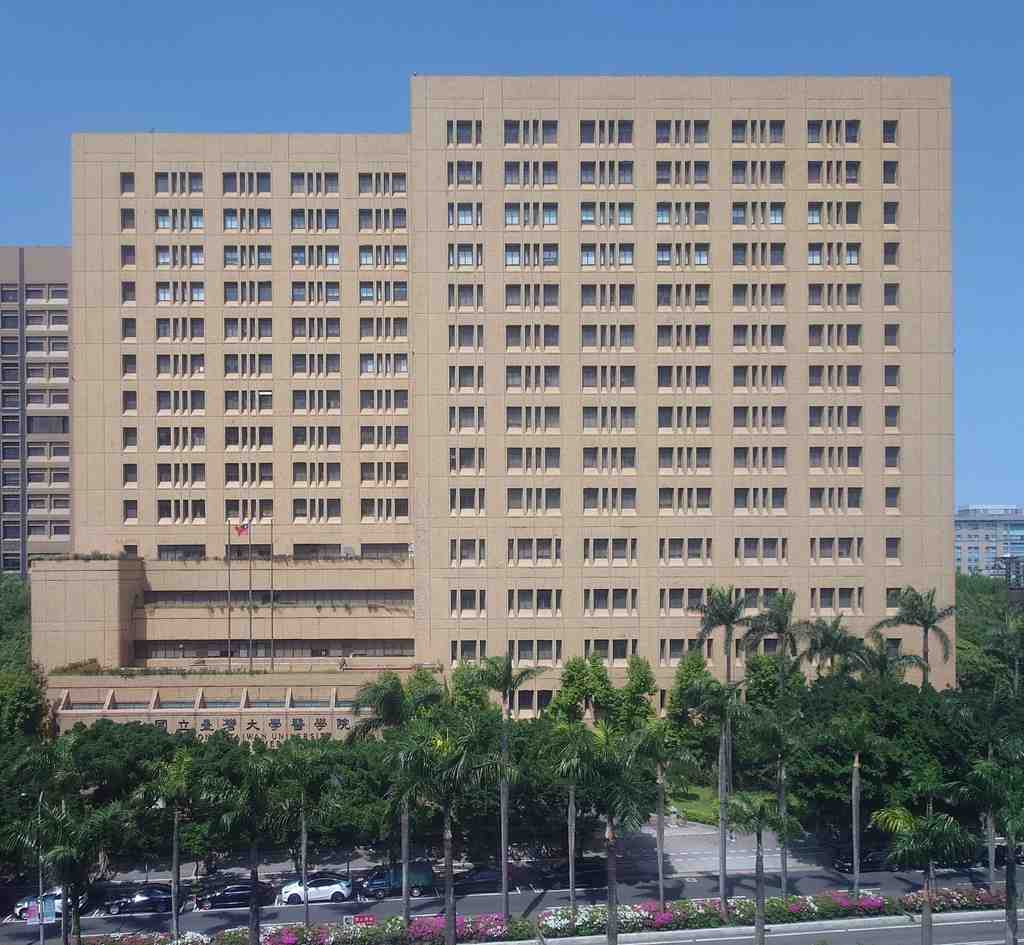
  1. You can’t miss it-look for the huge, sandy-colored building with rows of small square windows rising high above the palm trees, just across from the bustle of downtown…Leer másMostrar menos

    You can’t miss it-look for the huge, sandy-colored building with rows of small square windows rising high above the palm trees, just across from the bustle of downtown traffic. Now, let me take you back to the late 1800s. Picture Taipei-no MRT, no neon glow, just muddy lanes and wooden carts rattling through rice paddies. Right here, the seeds for Taiwan’s medical future were being planted! The first spark? In 1895, during Japanese colonial rule, clever folks set up a hospital in Dadaocheng-nothing too fancy, but it quickly transformed into the "Taiwan Governor-General’s Taipei Hospital," which later launched a medical training institute. Imagine hopeful young students learning medicine, armed with little more than determination, in a city barely beginning to modernize. As decades ticked by, the school morphed through names and eras-Taipei Medical Professional School, Taipei Imperial University-each new title like a badge, marking Taiwan’s transformation. Fast-forward to 1945, World War II ends, and Taiwan returns to Chinese rule. The hospital and school join National Taiwan University, becoming the College of Medicine. Slowly, they began to add department after department-pharmacy, nursing, dentistry. If you were to list every major medical advancement in Taiwan over the last century, odds are it sprang from these very doors-anesthesia, urology, emergency medicine, even gleaming new research institutes. But here’s my favorite twist: in 2007, a local legend-Terry Gou, the founder of Foxconn, decided to dig deep in his pockets and donate a cool NT $15 billion (imagine that as nearly half a billion dollars today) to build a world-class cancer center right here. Just goes to show, some dreams come with a jaw-dropping price tag-and a new hospital wing! The cancer center opened in 2019 and now stands as a beacon of hope, sporting his mother’s name for good luck. So next time you pass by a white-coated doctor downtown, chances are, they’ve pounded pavement (and maybe their head against a textbook or two) right here. Alright, ready for the next stop? Taipei Mayor is just an 8-minute walk heading east.

    Abrir página dedicada →
  2. Look to your right for a low, charming wooden house with a tiled roof and a few red lanterns hanging out front-it sort of feels like an old teacher’s cottage, tucked under the…Leer másMostrar menos

    Look to your right for a low, charming wooden house with a tiled roof and a few red lanterns hanging out front-it sort of feels like an old teacher’s cottage, tucked under the trees. Alright, picture this: It’s 1940, and instead of all this city noise, this place was where the big shots of Taipei-back then, the mayor-kicked off their shoes after a long day bossing folks around. Built by the Japanese government, it started as the official residence of the Taipei governor, and after World War II, it passed right on to the city mayors, each moving in (except for one guy, Wu Bo-xiong, who apparently preferred his own digs-can’t blame him, the rent must’ve been wild, even way back then). From secret strategy sessions over endless cups of tea, to the sound of kids running across these tiles, this house has seen it all. But here’s a plot twist: Since 1994, it opened its doors to the public, swapping politicians for painters, poets, and just about anyone with a creative bone. Imagine what you could dream up after a stroll under these shady trees! Once you’re ready, head west for 12 minutes to get to 中正紀念堂.

    Abrir página dedicada →
  3. If you glance to your right, you’ll spot a massive, bright white building topped with a royal blue octagonal roof and an orange dome-it looks like something straight out of a…Leer másMostrar menos

    If you glance to your right, you’ll spot a massive, bright white building topped with a royal blue octagonal roof and an orange dome-it looks like something straight out of a movie, and you really cannot miss the giant flight of stairs leading up to its entrance. Now, welcome to the mighty Chiang Kai-shek Memorial Hall, or as the locals call it, Zhongzheng Jinian Tang. This is Taipei’s version of “go big or go home”-a whopping 250,000 square meter complex, with a main hall so tall you’d need about 23 giraffes standing shoulder to shoulder to reach the top. Imagine rolling up in 1975 with a plan for a shiny international business center... only for those plans to get bumped for something even flashier after Chiang Kai-shek passed away. The government decided, “Nope, we need a memorial!” and with about 15 billion old Taiwan dollars-more than a billion in today’s US dollars-they got to work. The project was so massive, they had committees for committees, all to make sure nothing here was done halfway. This place has always been a stage for big entrances. Picture world leaders rolling in, the military putting on a show, and crowds gathering for everything from performances to protests. And yes, there are protests-this plaza’s seen students sitting in with paper lilies, calling for democracy, and people flinging eggs at statues in ways I don’t recommend trying yourself. <sfx>distant marching footsteps and murmurs of a crowd</sfx> Architecturally, you’re standing in the middle of symbolism central. The building is decorated in blue and white, echoing the national emblem-the “blue sky, white sun.” There are 89 steps going up, one for every year of Chiang’s life, just in case you forgot who they’re honoring here! The eight-sided roof is a classic nod to good fortune, and the central avenue faces the west, towards China-subtle, right? Head inside (well, when you have time), and you’ll see a giant bronze statue of the Generalissimo himself, looking like he’s about to break into a lecture on good conduct and democracy. The main doors are colossal bronze beasts themselves, weighing 75 tons! And don’t miss the changing of the guard ceremony out front, which draws quite the crowd-unless it’s raining, because even guards don’t like soggy uniforms. Around the hall are sprawling gardens, koi ponds, and the white-arched gateway out front. That gate used to say “Great Centrality and Perfect Uprightness” in Chinese, but nowadays, it says “Liberty Square.” There were more debates and drama over those four characters than I’ve seen at most Taiwanese family dinners, which is saying something. Oh, and fun fact: This spot made it onto the “Amazing Race” TV show-so go ahead, take a victory selfie, you’re standing at a world-famous finish line. <sfx>birds chirping in the large plaza</sfx> If you’re ready to keep exploring, our next stop is 大安區 (臺北市). Just head northeast-it’s about a 31-minute walk, perfect for stretching those legs! Interested in a deeper dive into the history, management office organization or the architecture and landscape? Join me in the chat section for an insightful conversation.

    Abrir página dedicada →
Mostrar 1 paradas másMostrar menos paradasexpand_moreexpand_less
  1. Alright, look to your left-welcome to the ever-bustling, always-interesting Da’an District: sort of Taipei’s answer to Manhattan, but with way better night markets and an actual…Leer másMostrar menos

    Alright, look to your left-welcome to the ever-bustling, always-interesting Da’an District: sort of Taipei’s answer to Manhattan, but with way better night markets and an actual frog mountain (don’t worry, the frogs are strictly honorary these days). Now, take in the scene around you: you’re smack-dab in the center of Taipei’s largest and densest neighborhood, where close to 290,000 people live shoulder to shoulder-imagine fitting the whole of a small country into one modern, flat, convenient patch of city. If you’re feeling crowded, you’re in good company! But let’s roll back a couple hundred years, because Da’an was not always about coffee shops, SOGO department stores, and thirty types of boba tea. Picture it: late 1700s, this place was known by locals as “Da Wan,” named for a big ol’ crescent-shaped pond that was basically the local hangout spot-like Central Park but with more water buffalo than hipsters. Eventually someone got fancy and decided “Da’an” (which means "great peace") sounded more elegant. Which is a laugh, really, given how lively the place is today. Throughout the Qing Dynasty, Japanese era, and straight through postwar Taiwan, maps have redrawn themselves here more often than Taipei’s skyline changes neon colors during Chinese New Year. Da’an got bounced around between provinces, counties, and districts-sort of like a political hot potato. By 1946, after the chaos of World War II, the officials mashed a bunch of smaller neighborhoods together and voilà: Da’an District, with official boundaries, was born. Not that the locals needed a bureaucrat to tell them what was home-just give them a street food stand and a nearby park and they’ll thrive anywhere. And speaking of parks, right in the heart of Da’an is Da’an Forest Park. With almost sixty-four hectares of grass, trees, and the occasional friendly stray cat, it’s Taipei’s “lungs.” Locals jokingly call it Taipei’s Central Park-except if you’re waiting for a yellow cab to whizz by, good luck. You are, however, much more likely to stumble upon an open-air tai chi class at sunrise, jazz bands on weekends, or someone’s grandma crushing a brisk power walk. Let’s not forget Da’an’s claim to fame: it’s the seat of education in Taipei. You’ve got National Taiwan University, National Taiwan Normal University, and enough top high schools to keep local parents nervously calculating their kids’ GPAs. During exam season, the amount of bubble tea consumed per square meter probably breaks world records. There are so many schools here that if you stand still long enough, a student might just try to hand you their math homework. Da’an’s demographics are something to talk about too: yes, it’s packed with students and families, but fun fact-a shocking number of centenarians live here. The district boasts the highest number of folks aged 100 and above in Taiwan-190 of ‘em at latest count! Maybe it’s the fresh park air, maybe it’s all that walking to beat MRT crowds, but clearly, Da’an is doing something right. The whole place is a shopping paradise, too. Department stores, quirky boutiques, and, of course, those legendary night markets-Shida Night Market, Linjiang Street, Yongkang Street (where the local soup dumpling, the xiaolongbao, may actually bring tears to your eyes). It’s the epitome of city living: neon signs, scooters zipping by, and the mouthwatering scent of fried chicken drifting from food stalls. <sfx>Rush of scooter engines and distant street chatter</sfx> And yet-right between all this urban mayhem, tucked on nearly every other street, you’ll stumble upon a forgotten slice of history. Old Qing-era temples, Japanese colonial architecture, and the odd stone-walled house from the 1800s remind you that, in Da’an, you’re never far from the past. Every street has a story; every family here has a tale. So take a deep breath, soak it in, and remember: in Da’an, the past and present aren’t just neighbors-they’re roommates competing for space, sharing meals, and trading stories at the boba tea shop around the corner. If you're curious about the history, geography or the politics, the chat section below is the perfect place to seek clarification.

    Abrir página dedicada →

Preguntas frecuentes

¿Cómo empiezo el tour?

Después de la compra, descarga la app AudaTours e ingresa tu código de canje. El tour estará listo para comenzar de inmediato - solo toca play y sigue la ruta guiada por GPS.

¿Necesito internet durante el tour?

¡No! Descarga el tour antes de empezar y disfrútalo completamente sin conexión. Solo la función de chat requiere internet. Recomendamos descargar en WiFi para ahorrar datos móviles.

¿Es un tour guiado en grupo?

No - esta es una audioguía autoguiada. Exploras de forma independiente a tu propio ritmo, con narración de audio reproduciéndose en tu teléfono. Sin guía, sin grupo, sin horario.

¿Cuánto dura el tour?

La mayoría de los tours toman 60–90 minutos para completar, pero tú controlas el ritmo completamente. Pausa, salta paradas o toma descansos cuando quieras.

¿Qué pasa si no puedo terminar el tour hoy?

¡No hay problema! Los tours tienen acceso de por vida. Pausa y continúa cuando quieras - mañana, la próxima semana o el próximo año. Tu progreso se guarda.

¿Qué idiomas están disponibles?

Todos los tours están disponibles en más de 50 idiomas. Selecciona tu idioma preferido al canjear tu código. Nota: el idioma no se puede cambiar después de generar el tour.

¿Dónde accedo al tour después de comprarlo?

Descarga la app gratuita AudaTours desde App Store o Google Play. Ingresa tu código de canje (enviado por email) y el tour aparecerá en tu biblioteca, listo para descargar y comenzar.

verified_user
Satisfacción garantizada

Si no disfrutas el tour, te reembolsamos tu compra. Contáctanos en [email protected]

Paga de forma segura con

Apple PayGoogle PayVisaMastercardPayPal

AudaTours: Audioguías

Tours a pie autoguiados entretenidos y económicos

Probar la app arrow_forward

Amado por viajeros de todo el mundo

format_quote Este tour fue una excelente manera de ver la ciudad. Las historias fueron interesantes sin parecer demasiado guionadas, y me encantó poder explorar a mi propio ritmo.
Jess
Jess
starstarstarstarstar
Tour de Tbilisi arrow_forward
format_quote Esta fue una forma sólida de conocer Brighton sin sentirme como un turista. La narración tenía profundidad y contexto, pero no se excedía.
Christoph
Christoph
starstarstarstarstar
Tour de Brighton arrow_forward
format_quote Empecé este tour con un croissant en una mano y cero expectativas. La app simplemente vibra contigo, sin presión, solo tú, tus auriculares y algunas historias geniales.
John
John
starstarstarstarstar
Tour de Marsella arrow_forward

Audioguías Ilimitados

Desbloquea el acceso a TODOS los tours del mundo

0 tours·0 ciudades·0 países
all_inclusive Explorar Ilimitado