
Tour de Audio de Santa Cruz: Un Viaje Sónico por Calles Sagradas y Monumentos Históricos
En estas calles antiguas de La Laguna, la luz del sol brilla en el altar de plata del Real Santuario del Cristo mientras historias ocultas susurran desde fachadas de tonos pastel. Este audioguía autoguiado revela siglos de triunfos, escándalos y secretos que la mayoría de los visitantes nunca sospechan mientras exploras santuarios sagrados y olvidadas salas de aprendizaje. ¿Qué reliquia prohibida atrajo a la realeza y a los soldados a una sola puerta bajo la vigilancia de la luna? ¿Qué misterio perdura en los polvorientos libros de contabilidad del laberíntico Museo de la Educación? ¿Por qué un techo de iglesia despertó la envidia entre los maestros artesanos de Europa? Recorre donde los reyes oraron, los rebeldes tramaron y los eruditos moldearon silenciosamente el futuro de la isla. Traza pasajes sombríos desde el esplendor sagrado hasta la revolución académica, vislumbrando la deslumbrante historia de La Laguna con nuevos ojos. Comienza tu viaje ahora y ve más allá de la superficie: cada piedra tiene un secreto esperando ser descubierto.
Vista previa del tour
Sobre este tour
- scheduleDuración 30–50 minsVe a tu propio ritmo
- straighten5.1 km de ruta a pieSigue el camino guiado
- location_onUbicaciónSanta Cruz, España
- wifi_offFunciona sin conexiónDescarga una vez, úsalo en cualquier lugar
- all_inclusiveAcceso de por vidaReprodúcelo en cualquier momento, para siempre
- location_onComienza en Real Santuario del Cristo de La Laguna
Paradas en este tour
Alright, you’ve arrived at the Real Santuario del Cristo de La Laguna! Look for the building with the lovely stone bell tower and the large, arched wooden door. The walls around…Leer másMostrar menos
Alright, you’ve arrived at the Real Santuario del Cristo de La Laguna! Look for the building with the lovely stone bell tower and the large, arched wooden door. The walls around the entrance are a tan, stone-finished hue, while neighboring buildings are painted in light pastel colors - one stands out with its yellow facade, and the other with a light blue one. Now, let's dive into some fascinating history with a sprinkle of fun! Real Santuario del Santísimo Cristo de La Laguna, or the Royal Sanctuary of the Christ of La Laguna, is not your average church. This Roman Catholic gem, nestled in the charming city of San Cristóbal de La Laguna in Tenerife, houses the famous Cristo de La Laguna image - a big deal in the Canary Islands! Talk about history - this place has it in spades. Built back in 1580 by Alonso Fernández de Lugo, it was the first Franciscan monastery on the island. Pope-endorsed indulgences give it some serious street cred, likening it to the prestigious Basilica of St. John Lateran in Rome. Inside, you'll find a high and narrow nave measuring about 46 meters long and 7 meters wide. As you enter beneath the choir loft, your eyes will be drawn to a spectacular silver altarpiece, complete with a carved wooden and gold cross. Royalty has graced this place too! King Alfonso XIII gave it the title of "Royalty" on December 19, 1906. And more recently, the then King of Spain, Juan Carlos I, and his wife, Sofia of Greece, stopped by in 2006. But that’s not all! This sanctuary features an exact replica of the Shroud of Turin - one of only two in Spain! It was donated by the Spanish Center of Sindonology and is currently the most precise replica of the original. Next door, you'll find the Military Barracks, HQ of the Military Area Command and the Canary Islands. So, while you're marveling at the sanctuary, remember, it's got quite the high-profile neighborhood. And there you have it - a spot rich in history, royal visits, and religious significance, all wrapped up in one beautiful package. Pretty impressive, huh?
Abrir página dedicada →As you approach the Museum of Education of the University of La Laguna, keep your eyes peeled to your left. You'll notice a building that exudes historic charm, fittingly set…Leer másMostrar menos
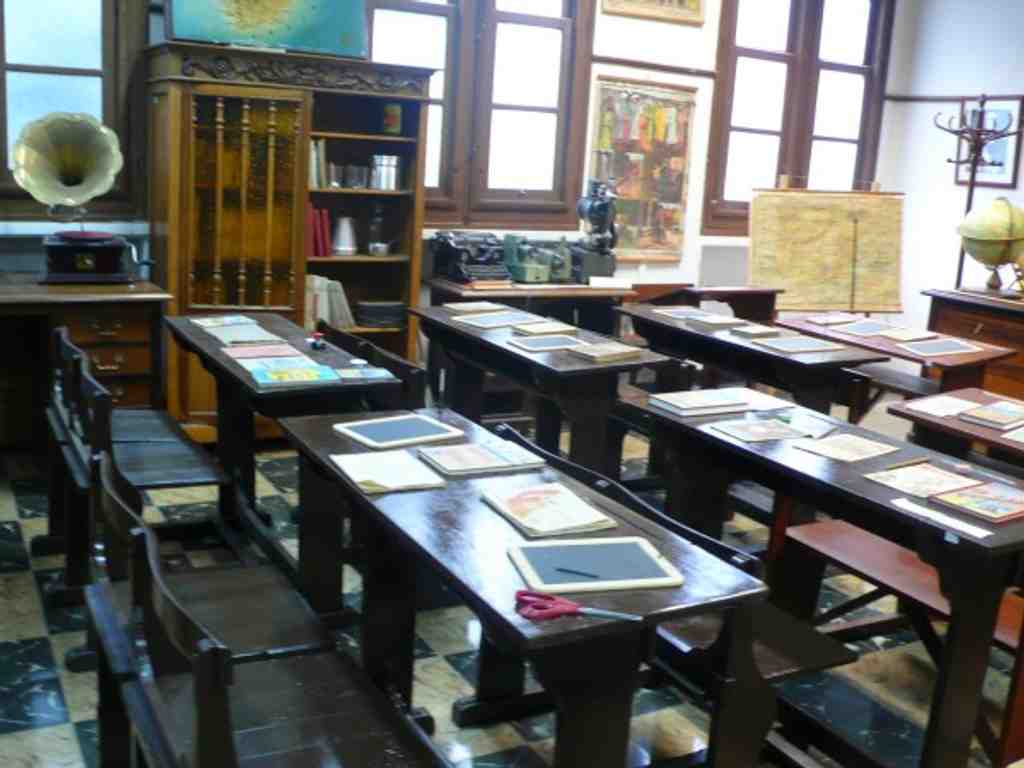
As you approach the Museum of Education of the University of La Laguna, keep your eyes peeled to your left. You'll notice a building that exudes historic charm, fittingly set within the Faculty of Education. The exterior may not boast bold colors, but its understated academic presence is quite inviting. Look for signs indicating the museum, often adorned with the university's logo or plaques. Now, let’s dive into the tale of this fascinating place! The idea of creating the Museum of Education of the University of La Laguna took shape in 1998 thanks to Professor Ana Vega, who highlighted the importance of such an institution during a meeting of the Department of Didactics and Educational Research. Embracing this vision, the project began to materialize with contributions from various professors across different departments. By January 22, 1999, the Faculty Board had approved the initial basis of the museum, envisioning it as a future hub for conserving, disseminating, and researching our educational past. In 2001, the museum received further support from the Vice-Rectorate of University Extension and the Cultural Activities Committee, helping it grow into the resourceful center it is today. Inside, you'll find permanent exhibitions showcasing school furniture and teaching materials from the previous century, including embroidered items, book collections, games, and more. There’s also an extensive photo archive of school-related motifs, with some images digitized for online access. Additionally, various historical documents transcribed by museum members offer a deep dive into educational history. Think of it as traveling back in time to your school days, complete with an old-timey classroom setup, minus the homework!
Abrir página dedicada →

Mostrar 7 paradas másMostrar menos paradasexpand_moreexpand_less
As you approach stop number 4, the San Cristóbal de La Laguna, look for buildings with a distinct colonial charm, adorned with traditional Canarian balconies and historical…Leer másMostrar menos
As you approach stop number 4, the San Cristóbal de La Laguna, look for buildings with a distinct colonial charm, adorned with traditional Canarian balconies and historical structures that seem to whisper tales from centuries past. If you're near the area with the open plaza and greenery, you're likely in the right spot. La Laguna, officially known as San Cristóbal de La Laguna, is quite the gem! Nestled in the northern part of Tenerife in the Province of Santa Cruz de Tenerife, it's affectionately referred to simply as 'La Laguna.' This city packs quite a historical punch, being the former capital of the Canary Islands and now the second-most populous city on the island. Can you believe it was declared a World Heritage Site by UNESCO back in 1999? Strolling through La Laguna, you're actually walking through the cultural heart of the Canary Islands. Agriculture thrives in the northeastern parts while the urban hub buzzes in the central and southern areas. The city's historical center is like a time capsule, with cobblestone streets and beautiful old buildings around every corner. And here's a fun fact: La Laguna was home to some rather colorful characters! Ever heard of Amaro Pargo? He was one of the famous corsairs of the Golden Age of Piracy. Or how about José de Anchieta, a Catholic saint who founded both São Paulo and Rio de Janeiro in Brazil? Talk about ambitious travel plans! One must-visit spot is the Cathedral of La Laguna, the spiritual and architectural highlight of the city. And if you’re into a bit of ghostly lore, there's the story of Catalina Lercaro, a 16th-century lady said to haunt her old family mansion after refusing an arranged marriage. Spooky, right? The city's name, "Villa de San Cristóbal de La Gran Laguna," was thought to be inspired by a neighboring pond or lake. Though the name has since shortened, the history is no less vibrant. The coat of arms granted back in 1510 is quite a sight-featuring an island, a fiery volcano, and Saint Michael poised with a spear and shield. La Laguna's climate is wonderfully refreshing, thanks to moisture captured from the northeasterly winds. It’s greener here compared to the arid climate found elsewhere on the Canary Islands, making every corner a bit cozier and lush. So, take a deep breath, soak in the history, and enjoy exploring this captivating city! Ready to delve deeper into the coat of arms, climate or the main sights? Join me in the chat section for an enriching discussion.
Abrir página dedicada →You're approaching the Hermitage of Saint Michael the Archangel, which will be on your right. To spot it, look for a quaint, charming building with a distinctive yellowish facade…Leer másMostrar menos
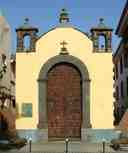
You're approaching the Hermitage of Saint Michael the Archangel, which will be on your right. To spot it, look for a quaint, charming building with a distinctive yellowish facade and two small bell towers on each side at the top. It has a large wooden door framed by an arch made from dark stone, and directly above the arch is a cross resting on a small plinth. Now, let me tell you a bit more about this enchanting landmark. The Hermitage of Saint Michael the Archangel, situated in the Plaza del Adelantado, is a little gem of history in San Cristóbal de La Laguna on Tenerife Island. Saint Michael the Archangel is the patron saint of both Tenerife and the municipality of San Cristóbal de La Laguna, proudly featured on their coats of arms. This hermitage, along with other antique buildings around it, paints a vivid picture of the historical atmosphere the plaza once offered, thanks to its architectural harmony. It's so special that it's been declared a Bien de Interés Cultural (Asset of Cultural Interest), with the category of Monument. Architecturally, the most valuable part of the hermitage is the main facade. The central portion is dominated by a large portico framed by a semicircular arch supported by carved stone pilasters. Above the arch is a cross, resting on a small plaque bearing the date of the hermitage's reconstruction in 1759. The sloping roof and anvil-shaped finish at the top give it a unique character. The twin bell towers on each corner, with their symmetrical design, simple rectangular bodies, and graceful bell openings, add to its charm. The inside of the temple is quite minimalist, with a beautifully adorned wooden ceiling, making up for the absence of other decorative elements. As you step inside, you'll notice two small staircases that divide the nave into three different levels, culminating in the presbytery. The interior is designed in such a way that it guides you upward step by step, each section revealing more of its modest beauty. Isn't it amazing how a small building can hold so much history? Now, let's continue our journey through this charming city!
Abrir página dedicada →Hey there! To spot the Cathedral of La Laguna, look to your right. You'll see a grand building with distinct Neoclassical and Neo-Gothic elements. Its majestic facade is quite…Leer másMostrar menos
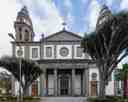
Hey there! To spot the Cathedral of La Laguna, look to your right. You'll see a grand building with distinct Neoclassical and Neo-Gothic elements. Its majestic facade is quite eye-catching, flanked by twin towers and crowned by a massive dome that dominates the skyline. The facade is inspired by the Cathedral of Pamplona, so it's hard to miss! Now, let's dive into this historical treasure! The Cathedral of La Laguna, also known as the Cathedral of San Cristóbal de La Laguna or Catedral de Nuestra Señora de los Remedios, is a shining star in Tenerife, Spain. Built between 1904 and 1915, it replaced an earlier structure that kicked off in 1515 and achieved its cathedral status in 1818. This grand basilica is dedicated to the Virgin of Los Remedios, the patroness of the Diocese and the island of Tenerife. Covering the entire diocese, which includes the islands of Tenerife, La Palma, La Gomera, and El Hierro, this cathedral serves as the central hub of spiritual life. It's also where you'll find the bishop's episcopal seat, though it’s currently vacant following the 2024 retirement of Bishop Bernardo Álvarez Afonso. Talk about a prime address in the religious world of the Canary Islands! This cathedral isn't just a spiritual center; it's a historical landmark too, given World Heritage status by UNESCO in 1999. Inside, you'll find the remains of Alonso Fernandez de Lugo, the conquistador who captured the island and founded the city. (Basically, if La Laguna were a movie, he’d get top billing.) A fascinating blend of Neoclassical and Neo-Gothic architectural styles, the cathedral dazzles with its imposing facade and eye-catching dome. Originally, a hermitage stood here, built by the conquering Alonso Fernandez de Lugo back in 1511. This site was once a Guanche necropolis and a pilgrimage spot, adding to its layers of historical intrigue. The original building, dedicated to the Virgin Mary, was later reconstructed in 1515 in the Mudéjar style, complete with a tower added in 1618. Over the years, renovation and expansion continued, aiming for grander aspirations, which were finally realized in 1818 when it gained cathedral status. Adding to its legacy, Saint José de Anchieta, a La Laguna native who went on to found the cities of São Paulo and Rio de Janeiro in Brazil, was baptized here. Full of history and architectural splendor, the Cathedral of La Laguna is truly a cornerstone of the city's heritage. Alright, keep those eyes peeled for the stunning facade! Ready to head to the next stop, the Leal Theatre? Intrigued by the architecture, chapels or the music? Make your way to the chat section and I'll be happy to provide further details.
Abrir página dedicada →You’re almost there! To spot the Iglesia de la Concepción, look for a tall stone tower that seems to touch the sky. It stands proudly amidst a quaint plaza. The tower is…Leer másMostrar menos
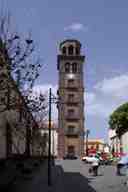
You’re almost there! To spot the Iglesia de la Concepción, look for a tall stone tower that seems to touch the sky. It stands proudly amidst a quaint plaza. The tower is rectangular with multiple levels, each marked by rows of small windows, and at the top, you'll notice the clock faces keeping time. This iconic structure is hard to miss, given its height and historical presence. Now, let's dive into the charm of this landmark! The Iglesia-Parroquia Matriz de Nuestra Señora de La Concepción, or the Church of the Immaculate Conception, isn't just any church; it's a foundational part of Tenerife's history. Established by the conqueror Alonso Fernández de Lugo, this church has been around since the early 16th century, so it's got some serious historical mileage. Interestingly, it's almost a doppelgänger of the Church of the Conception in Santa Cruz de Tenerife. So, if you ever get a feeling of déjà vu, that's why! This parish holds the title of being the first in Tenerife, founded in 1511. One of the highlights is the tower. Not only is it home to the largest bell in the Canary Islands, but visitors can also climb it for a breathtaking view of the city. Declared a National Historic Monument in 1948, the church is steeped in stories, including one about miraculous oil from St. John the Evangelist that sweated during a plague in 1648, magically ridding the island of the disease. Inside, various brotherhoods, including one linked to the Basilica of Saint Lawrence in Rome, call this church home. Don't miss the Monument to Pope John Paul II right by the entrance. This statue, brought all the way from Poland, captures the beloved pontiff blessing two children in traditional Canary attire. Now take a moment to soak in the rich tapestry of history and faith woven into the very stones of the Iglesia de la Concepción. Enjoy the views and maybe even ring that famous bell!
Abrir página dedicada →Alright, as you approach the final stop, the Church of Saint Benedict the Abbot, keep an eye out to your left. You'll notice a charming building with a distinct yellowish facade,…Leer másMostrar menos
Alright, as you approach the final stop, the Church of Saint Benedict the Abbot, keep an eye out to your left. You'll notice a charming building with a distinct yellowish facade, framed by lush trees. Its standout feature is the main doorway, outlined by a red stone arch. Above the entrance, there's a small, rectangular window, and to the left side of the facade, you'll see a humble bell gable. Now, let me tell you a bit about this beautiful landmark. The Church of Saint Benedict the Abbot, located on Marqués de Celada Street in San Cristóbal de La Laguna, dates back to the mid-16th century. Its vast dimensions and rectangular layout make it quite the imposing sight. Every year, the famous Romería de San Benito Abad starts from here. This event celebrates Saint Benedict, the historical patron saint of farmers and peasants of the island of Tenerife. The church itself has been declared a Cultural Interest Site, categorized as a Monument. The front of the church is simple yet noteworthy. The main doorway is framed by a semi-circular red stone arch adorned with three delicate moldings. Above this arch is a modern stone-framed rectangular choir window. Flanking the entrance are masonry benches, offering a quaint spot to sit and ponder. The sloping, tiled roof protects the large nave and the main chapel, which is topped by a four-sided roof. On one of the side facades, there is a small opening framed with modern stained glass and red stone. There's also a slightly recessed arch accommodating a wooden cross, which used to be an entrance but is now sealed. Inside, the church is spacious, measuring 26 meters in length plus nearly 9 meters for the presbytery, and 8.5 meters in width. The high choir spans the entire width of the nave and is accessible via a spiral staircase. The fascinating ceiling features five double braces, decorated with crosses, diamonds, and stars. The main altar is adorned with an octagonal structure and intricate geometric designs, creating a stunning visual. Behind the altar, there's a fresco or mural with doors leading to the storage room and sacristy. So take a moment and soak up the history and charm of this beautiful church. It’s been standing strong for centuries, much like the spirit of the local community. I hope you’ve enjoyed exploring La Laguna with me. Cheers!
Abrir página dedicada →

Preguntas frecuentes
¿Cómo empiezo el tour?
Después de la compra, descarga la app AudaTours e ingresa tu código de canje. El tour estará listo para comenzar de inmediato - solo toca play y sigue la ruta guiada por GPS.
¿Necesito internet durante el tour?
¡No! Descarga el tour antes de empezar y disfrútalo completamente sin conexión. Solo la función de chat requiere internet. Recomendamos descargar en WiFi para ahorrar datos móviles.
¿Es un tour guiado en grupo?
No - esta es una audioguía autoguiada. Exploras de forma independiente a tu propio ritmo, con narración de audio reproduciéndose en tu teléfono. Sin guía, sin grupo, sin horario.
¿Cuánto dura el tour?
La mayoría de los tours toman 60–90 minutos para completar, pero tú controlas el ritmo completamente. Pausa, salta paradas o toma descansos cuando quieras.
¿Qué pasa si no puedo terminar el tour hoy?
¡No hay problema! Los tours tienen acceso de por vida. Pausa y continúa cuando quieras - mañana, la próxima semana o el próximo año. Tu progreso se guarda.
¿Qué idiomas están disponibles?
Todos los tours están disponibles en más de 50 idiomas. Selecciona tu idioma preferido al canjear tu código. Nota: el idioma no se puede cambiar después de generar el tour.
¿Dónde accedo al tour después de comprarlo?
Descarga la app gratuita AudaTours desde App Store o Google Play. Ingresa tu código de canje (enviado por email) y el tour aparecerá en tu biblioteca, listo para descargar y comenzar.
Si no disfrutas el tour, te reembolsamos tu compra. Contáctanos en [email protected]
Paga de forma segura con 


