Tour de audio de Melilla: Bastiones, brisas marinas e historias por contar
Un teatro blanco crema con agujas de castillo vigila Melilla, pero mira más de cerca: las calles de esta ciudad laten con historias ocultas detrás de fachadas rosas y atrevidos salones de mármol. En este tour de audio autoguiado, desvela secretos de grandeza, ambición y supervivencia mientras paseas entre sitios que la mayoría de los viajeros pasan por alto. ¿Por qué la noche de estreno en el Teatro Kursaal sacudió los cimientos de la ciudad? ¿Cuál fue la carta perdida que casi derrumba el futuro de Melilla en la Oficina de Correos? ¿Y cómo pudo el trágico error de un solo trabajador resonar durante décadas a través de la Cámara de Comercio? Pasa junto a balcones silenciosos y plazas soleadas mientras historias de drama, poder y rebelión olvidada surgen de cada piedra. Este viaje transforma la arquitectura familiar en un escenario vivo donde la historia se desarrolla con vívido detalle ante tus ojos. ¿Listo para adentrarte bajo esas agujas de cuento? Empieza a explorar y deja que Melilla te revele su verdadero drama.
Vista previa del tour
Sobre este tour
- scheduleDuración 40–60 minsVe a tu propio ritmo
- straighten1.4 km de ruta a pieSigue el camino guiado
- location_on
- wifi_offFunciona sin conexiónDescarga una vez, úsalo en cualquier lugar
- all_inclusiveAcceso de por vidaReprodúcelo en cualquier momento, para siempre
- location_onComienza en Teatro Kursaal-Fernando Arrabal
Paradas en este tour
Walk up just a little closer-can you spot the grand, creamy-white building with peachy accents and a giant curved balcony out front? That’s the Theatre Kursaal-Fernando Arrabal,…Leer másMostrar menos
Walk up just a little closer-can you spot the grand, creamy-white building with peachy accents and a giant curved balcony out front? That’s the Theatre Kursaal-Fernando Arrabal, and you can’t miss those pointed spires rising up at the corners, almost like something from a castle in a children’s storybook. Its windows are tall and framed in style, and right above the entrance you’ll see big black letters announcing where you’ve arrived. The theater stands proudly on Cándido Lobera Girela Avenue, part of Melilla’s Historic-Artistic Complex, so just look for the building that seems to be putting on a show all by itself. Now that you’re standing in front of it, take a moment to soak in the drama! Picture this spot back in 1930-workers in overalls, the sound of hammers on local stone and brick, the city buzzing with excitement as the largest theater in Melilla rose up before their eyes. When the doors first opened on October 31, 1930, more than two thousand people squeezed inside, maybe hoping not to drop their popcorn from the excitement. This theater was a social hotspot, the heart of Melilla’s arts and film scene. If these walls could talk, they’d tell you about the city’s very first sound film presentation in 1931. Imagine everyone gasping when the movie actually spoke! No more silent black-and-white screens; it was a revolution. Of course, the Kursaal went through some dramatic events-earthquakes shook its pinnacles, decorations swapped out like costumes, and the screen got bigger to fit the times. By the ‘80s, when the old cinema next door closed, this place became the biggest cinema in town-imagine lines of Melilla’s movie lovers stretching out the door at the famous Melilla Film Week. Look up and admire the details: the curved pediments, the iron balconies, and geometric pilasters give it that special flare like a set from an opera. And don’t forget those wooden doors to the sides, decorated to look like something a famous actor might burst through for their big entrance. If you listen closely, maybe you’ll hear the echoes of applause, laughter, or a faint chorus practicing backstage. The Kursaal isn’t just a building-it’s a living part of Melilla’s story. And hey, if you feel inspired to burst into song or deliver a dramatic monologue, I promise not to tell. Ready to explore more? Let’s head onward to the next stop!
Abrir página dedicada →Look to your right, just past the row of tall palm trees and the open square with benches. You'll spot a pale yellow and cream-colored building with a rather strict, square shape…Leer másMostrar menos
Look to your right, just past the row of tall palm trees and the open square with benches. You'll spot a pale yellow and cream-colored building with a rather strict, square shape and lots of windows lined up in tidy rows. The ground floor is lined with strong stone, and there are some hefty wooden doors. If you’re standing in front of it, the central part of the façade sticks out a bit, giving you a good clue you’ve found the famous Melilla Post Office Building. Alright, time to let your imagination run! Imagine, right where you're standing now, the clip-clop of footsteps on those stone tiles as people rushed to send letters, postcards, or-if they were lucky-collect a surprise package. This isn’t just any building. The Melilla Post Office Building is the showstopper of rationalist architecture here in the city. Built from tough iron and wrapped up in brick, it’s got a complicated past! The city handed over the land in 1920, a captain in the military-Jorge Palanca-drew up plans in 1924, but... plot twist! The Spanish Civil War put a halt to everything. Construction only picked up steam again in 1943, and after nearly three decades of waiting, the doors finally opened in 1951. Now, picture being here in the 1950s: this was the biggest office building in town. The ground floor once buzzed with people at sturdy marble counters, sunlight pouring down from a big skylight above. You can almost hear the clatter of typewriters and the ding of desk bells. Talk about snail mail-some letters might’ve taken so long, your pet tortoise could’ve hand-delivered them faster. Over the years, the post office moved out, mostly-though, in a comic turn, parcels had to be brought back after the new spot proved too small. The plan now is for this grand old place to whisper new stories as the Faculty of Nursing once restoration is finished. So, as you stand among the palms, look up at those color-blocked walls and imagine all the secrets, hopes, and news that have passed through those doors. Each window might have a story to tell-or a letter still waiting to be delivered.
Abrir página dedicada →To find our next stop, you’ll want to look for a striking two-story building right on the corner, painted a rosy pink with creamy white decorations that curl and twist around the…Leer másMostrar menos
To find our next stop, you’ll want to look for a striking two-story building right on the corner, painted a rosy pink with creamy white decorations that curl and twist around the windows like frosting on a birthday cake. If you spot a building that looks like it belongs in a storybook, with tall, narrow windows, balconies, and that proud sign at the top, you’ve found it! This is the Building of the Official Chamber of Commerce, Industry and Navigation of Melilla. Imagine yourself standing here over a hundred years ago, when this spot was a swirl of excitement, plans, and big dreams. Try to picture the clang of hammers and the chatter of builders as they first raised this ornate structure in the early 1900s. Its architect, Enrique Nieto, sketched out this masterpiece without asking for any payment-now that’s going above and beyond! When the Chamber was founded in 1906, the city wanted a place that would represent Melilla’s passionate drive for business and trade. They dreamed of creating a grand commercial museum-a place to show off the city’s goods and ideas. The first stone was set with a lot of pomp and circumstance, probably involving generals, top hats, and maybe one or two nervous officials hoping nothing would fall on their heads. But life here hasn’t always been smooth. This building has seen it all: fires, earthquakes, and more than a few renovations. There was even a sad day in April 1914, when a worker named Rafael Vega Guerrero lost his life on the job. The hustle of people and commerce pulsed through its walls, making it a living symbol of Melilla’s ambition, as shopkeepers dreamt big and business plans bounced off its bright pink exterior. Through the years, the building has changed and adapted-at one point, it was even taken over by the government, and later parts of it were rented out to help pay for repairs. After a massive shake from the 2016 Alborán Sea earthquake, part of its decorations had to be carefully stored away, and restoration has been a constant challenge and adventure. But still, here it stands-a survivor with grand style, and the first Chamber of Commerce in Spain to have its very own home. So as you stand outside, listen for the echoes of grand openings and tense meetings, of business dreams and hammerfalls. It’s more than just a building-it’s Melilla’s determination carved in stone and painted in pink. And don’t worry, if you ever want business advice, maybe the walls themselves have a few tips to share!
Abrir página dedicada →
Mostrar 12 paradas másMostrar menos paradasexpand_moreexpand_less
You’re now standing in front of the legendary Rastrillo de Espadas del Fuerte de San Miguel! Picture yourself back in the late 1700s-the air is tense with the possibility of…Leer másMostrar menos
You’re now standing in front of the legendary Rastrillo de Espadas del Fuerte de San Miguel! Picture yourself back in the late 1700s-the air is tense with the possibility of invasion, and soldiers walk briskly along these old stones, their armor clanking. This tower guarded the southwest corner of Melilla’s mighty old fortress, and it was much more than just a lookout. It was first pieced together in 1707 with humble stone and mud, but over the years it got a serious makeover. By the 1730s, they rebuilt it properly with sturdy local stone and solid brick arches. I bet the construction team never knew their work would last over two centuries! And don’t be fooled by its size-a semicircular tower with a sentry box and a thick, heavy door called a “rastrillo.” Imagine a big, medieval portcullis dropping down with a bang as enemies try to sneak in. Whoever built this tower wasn’t messing around. This spot was the way out from the fortress to the vegetable gardens-because even defenders need their daily veggies, right? Luckily, when they tore down the main fort in the 1940s, the tower escaped the demolition crew’s wrath. It got a beautiful restoration in the 1980s, so it looks nearly as heroic as in its prime. Look up-can you feel the history lingering in the stones? If these walls could talk, they’d have stories of old soldiers, late-night patrols, and maybe even a ghost or two. But don’t worry-if you hear footsteps behind you, it’s probably just another tourist… or is it?
Abrir página dedicada →Look just to your left, where the wide street opens up. You’ll see a striking grey and white building with geometric shapes, tall columns, and dramatic lines slicing up to a…Leer másMostrar menos
Look just to your left, where the wide street opens up. You’ll see a striking grey and white building with geometric shapes, tall columns, and dramatic lines slicing up to a narrow pointed roof. The word “MONUMENTAL” is just visible, faded but proud, near the very top of the façade. If you catch glimpses of decorative panels and old theater entrances, you know you’ve found it-the legendary Monumental Cinema Sport. Imagine the excitement along this very street back in the 1930s. Crowds would drip in, anticipation buzzing in the air as beams of sunlight glanced off the art deco designs. Built by architect Lorenzo Ros y Costa, this building wasn’t just a cinema-it was the ultimate place to see and be seen. It opened its grand doors in 1932, fresh and modern, showing talking pictures to packed audiences. But let’s rewind even further. Before the grand façade you see here, people flocked to a simple wooden summer theater on this spot, open-air, roofless, and full of laughter and applause. It’d shake and creak a little, so much so that by the late 1920s, city officials nervously warned, “one of these days the roof might come down!” Out went the old, in came the bold. With its sharp lines and rich decorations, the Monumental became one of Spain’s best examples of art deco-tall, elegant and just a bit mysterious. Yet even legends face hard times: as newer technologies arrived, the cinema’s seats grew emptier. In the 1980s, most of its beautiful interiors were lost, sparking outcry from locals and history lovers alike. Today, while the grand applause and the clatter of projector reels are gone, you’re standing before a piece of living history-witness to high drama, both on and off the screen. It may no longer be the shining star of cinema, but the Monumental seems to whisper stories of glamour, hope, and fierce local pride to everyone who passes by. Just think, maybe you’ll feel a leftover tingle of red-carpet excitement on the breeze as you head to the next stop.
Abrir página dedicada →Take a good look just ahead-there it is! The Melilla Military Casino sits proudly on the corner, its creamy façade gleaming in the sunlight and peeking gracefully above perfectly…Leer másMostrar menos
Take a good look just ahead-there it is! The Melilla Military Casino sits proudly on the corner, its creamy façade gleaming in the sunlight and peeking gracefully above perfectly trimmed trees. The building is square-shaped with two main floors and small attic-like rooms at the top, each layer boldly framed by rows of tall windows, some arched and others sharply triangular. You’ll spot its grand entrance in the middle, flanked by elegant columns, with balconies stacked right above it, topped by a triangular pediment wearing a crest. If you’re still not sure, look for the sign that reads “Casino Militar” right at the very top, just above the central balcony. Alright, let’s imagine the plaza in front of you buzzing with life nearly a hundred years ago. You’re now standing before a true star of Melilla’s Plaza de España! This building first started to take shape back in 1920, on Christmas Eve-can you picture it? Soldiers and builders running about, maybe sneaking a quick break for some holiday cheer while placing the first stone. The Military Casino’s life began as a project led by different hands and heads-every time someone new picked up the plans, the design took on a new twist, much like a game of telephone. If only these walls could speak, I bet they’d have some hilarious tales of architectural debates! It’s more than just a pretty face. The building was made strong, out of stone and solid bricks, and even iron beams-ready to survive centuries and, let’s be honest, the occasional overenthusiastic dance night hosted by off-duty officers. Look at that main façade! The entrance is framed by imposing columns, leading up to two glorious balconies that make you feel like you should be waving regally at a cheering crowd below-don’t worry, I won’t judge if you try! There’s also a shield nestled in the top triangle, reminding us that even parties here happen with a little military discipline. Now, a twist of fate hit in 2016, when an earthquake rattled Melilla and left a crack in the story-part of the front and cornice had to be repaired after the shake. Picture craftsmen and engineers swarming the building like rescue ants, restoring its old glory as quick as possible. Today, the Melilla Military Casino stands tall and proud-a dashing survivor of history, war, earthquakes, and perhaps a few spilled drinks too many. So take it in-look up, let the air of the plaza sink in, and imagine the echoes of laughter, music, and military tales bouncing around inside. Ready for the next adventure? Let’s march on!
Abrir página dedicada →To spot the Military Chapel of the Immaculate Conception, look straight ahead for two sharp, pointy black spires poking up from creamy, yellow-beige walls. You’ll see a large…Leer másMostrar menos
To spot the Military Chapel of the Immaculate Conception, look straight ahead for two sharp, pointy black spires poking up from creamy, yellow-beige walls. You’ll see a large wooden door right in the middle, under a pointed arch, and just above that, a round, rose-window design. It almost looks like the church is wearing a pair of tall, spiky hats! The two towers, one on each side, reach up like watchful guards-well, if guards wore pyramidal hats and stood perfectly still. Try not to run into any secret agents coming out of the bushes-oh wait, those are just neatly trimmed potted plants. Now, soak in the atmosphere right here. Imagine: it’s the early 1920s, Melilla is buzzing with change, and an army engineer named Francisco Carcaño is cooking up this chapel’s neo-Gothic look. He wanted a place where soldiers-and, let’s be honest, anyone needing a bit of peace-could slip inside, away from the world. But the chapel’s had some adventures! Back in the 1980s, new homes were built so close to the north side that one of its towers became a bit shy-nearly invisible! Then, in 2016, the earth itself gave a little shake during the Alborán Sea earthquake. The southwest tower wobbled like a jelly on a plate, and the army had to come marching in-not for battle, but with wooden beams, shoring it up until restoration could begin. Look up at the main entrance. The door is framed by an elegant pointed arch, with a circular stone pattern above. That’s called a rose window. And higher up, the triangular front is decorated with ornate stonework, making this quieter side street feel a little more like a scene from a storybook. Each tower has its own personality, too-check out the gargoyles, who guard the corners, as if they’re daring anyone to mess with the place. If those bells in the towers could talk, I bet they’d have a few war stories and a couple of good jokes about noisy neighbors. Take a moment to let the history settle around you. This chapel has survived almost a hundred years, earthquakes, and a crowd of new neighbors. Now, aren’t you glad it’s still standing here, guarding Melilla’s memories with a steeple and a smile?
Abrir página dedicada →You’re approaching the San Fernando Bastion, standing tall and sturdy-a real stone guard from centuries past. To find it, just look ahead for a thick, stone structure jutting out…Leer másMostrar menos
You’re approaching the San Fernando Bastion, standing tall and sturdy-a real stone guard from centuries past. To find it, just look ahead for a thick, stone structure jutting out from the walls, almost like a proud old giant keeping watch over the sea. Notice its curved walls and the worn, sandy color. You might even spot small windows or cannon slits peering out-a reminder of its defensive days. Picture yourself in the late 1800s. The air smells salty, mixed with the clatter of carts and chatter from nearby markets. Behind these very bastion walls, the city of Melilla was hungry for a market worthy of the bustling streets. Enter the Mercado de Hierro del Mantelete-a market with iron bones! No, it’s not a superhero, but for a market, it’s got enough metal muscles to earn a comic book issue. Imagine the noise when it first opened, the market doors swinging wide and people flooding in. This place was built on big dreams and some drama: after many failed projects, José Gómez and Carlos Ezagoury took their shot, with a military general cheering them on. The final design fell to a military engineer, but in the end, it was Francisco Orozco who laid the last piece. They started in 1896, working right on top of the old city wall, splitting up the Mantelete area. By January 1898, the first bananas met their buyers here-and not just bananas, but everything from bread to fresh fish! The market even set up special stalls just for the demands of local Riffian tribes. Vegetables spilled over into nearby streets, so if you’d been here then, you’d smell fresh produce at every corner-or maybe dodge the odd runaway cabbage. As you look at the bastion, imagine its echoey iron structure, filled with voices haggling, laughter, and maybe a seller boasting his melons were “the best in the Spanish lands!” But progress rolled in. In 1909, the market packed its bags and shifted to the Plaza de las Culturas so carriages could rumble through to the docks. Now, even though the iron market’s legacy has moved on, you’re still standing where ideas sparked, trades happened, and history stretched forward-one noisy market day at a time. Remember, only Melilla could make a fortress moonlight as a grocery store. Only here, my friend! Ready to explore what stories the next landmark is hiding? Let’s keep walking!
Abrir página dedicada →Right in front of you is a striking scene from the past-look for tall, sandy-colored stone walls crowned with battlements, and an old drawbridge stretching over a dry moat. The…Leer másMostrar menos
Right in front of you is a striking scene from the past-look for tall, sandy-colored stone walls crowned with battlements, and an old drawbridge stretching over a dry moat. The walls are thick, weathered by centuries, with arched openings and shadows dancing across the cobbled ground. That bridge, with its iron railings, looks ready for an old-fashioned standoff. It’s hard to miss-just follow the line of stonework and your eyes should land right on the heart of the story. Imagine it’s 1564. The air in Melilla is hot and tense, a scent of dust and patience fills the air. Out beyond those walls, where you’re standing now, whispers travel quickly. News has come that a “morabito”-let’s call him a sort of magician or holy man-named Mohamed ben al-Lal has arrived from the region of Guelaya. People are excited and a little nervous, because Mohamed claims he can help his followers take Melilla, not with swords or cannons, but with magic. He’s promised to put the Spanish soldiers to sleep, as easy as tucking in a child, so long as no one steps on the crops, everyone praises Allah loudly, and-this is key-no one dares touch a firearm. Now, close your eyes for a second and feel that anticipation in your chest. It’s midday, the sun throws harsh shadows, and a crowd gathers outside, hungry for glory and convinced by Mohamed’s confidence. But-plot twist! The Spanish governor, Pedro Venegas de Córdoba, is no fool. He’s got a spy in the crowd and knows what’s coming. The guards inside these very walls are lying still, faking slumber like overgrown cats napping in a sunbeam. When the invaders tiptoe in and try to grab their weapons-surprise! Suddenly, chaos erupts, the air cracks with shouting and struggle, and the plan falls apart faster than cheap magic tricks. Most attackers get away, even the famous morabito himself, who later blames the failure on someone being too hasty and breaking his “spell.” He’s so convincing, people try it again two months later with even more followers. This time, the defenders are ready-bridges up, doors locked. Six hundred attackers get trapped inside the fort’s second wall, surrounded by the boom of 23 cannons and fierce soldiers. Only sixty prisoners make it out, sent away on Spanish galleys. And as for Mohamed ben al-Lal? He vanishes into legend. Standing here, you can just imagine the shouts, the hopes, and the letdowns echoing off these stones, the dust swirling up from quick footsteps, and that odd blend of belief and bravado that can sometimes change the course of history-or at least make it pretty entertaining. Not every spell works out, and sometimes the biggest drama is right under your feet, on this very spot.
Abrir página dedicada →Wow, you’re standing right where the famous Ahmed Ben Taleb’s House once stood! Look around-the air feels like it’s whispering stories from the past, doesn’t it? Close your eyes…Leer másMostrar menos
Wow, you’re standing right where the famous Ahmed Ben Taleb’s House once stood! Look around-the air feels like it’s whispering stories from the past, doesn’t it? Close your eyes for a second and imagine the year is 1933. The city is buzzing with excitement, and right here on Jardines street, a brand-new building is ready to steal the show. The house itself was a true masterpiece of Art Deco, covered in colorful, geometric patterns. The walls were built from strong local stone and brick, while the iron beams supported a sloping roof-the kind that looks like it’s wearing a hat, ready for a fancy party. Ahmed Ben Taleb must’ve strutted up and down these steps feeling like the king of style! But what made this house really pop were the big wooden balconies supported by chunky brackets. Picture them jutting out like they’re keeping an eye on the fishermen in Plaza de los Pescadores. If you peeked inside, you’d see flat arches above windows, all painted in shades of green and blue-which, honestly, was probably really soothing unless you were the painter, in which case, I hope you liked staircases. The best part? The entire building wore a dramatic, gothic crown on top. Not the kind you’d wear at a royal banquet, but the kind that scares away pigeons. The finishing touch on a true Melilla treasure. Now, the original house is gone, replaced by the Koknoor Building, which still tries to capture that vintage flair. It’s like the city was too stylish to let such a cool design disappear forever. Take a moment to just soak in the atmosphere-who knows what conversations, celebrations, and secrets this spot has heard over the years? One thing’s for sure: if these balconies could talk, they’d have a lot more stories than your average hotel doorman!
Abrir página dedicada →Take a good look around you-the sea breeze, the sound of the waves rolling in, and the wide open sky. This is the Melilla Seafront Promenade, a local favorite for leisurely…Leer másMostrar menos
Take a good look around you-the sea breeze, the sound of the waves rolling in, and the wide open sky. This is the Melilla Seafront Promenade, a local favorite for leisurely strolls and dramatic sunsets. Imagine the locals, couples, and families wandering here, chatting with the gulls overhead. Sometimes the smell of roasting chestnuts drifts through the air, and you might even hear distant laughter from kids skipping stones or from friends sharing a joke. But it’s not just about the ocean views. This promenade has seen history play out on its broad paths-Spanish soldiers in uniform, traders wheeling carts, and fishermen carrying baskets full of the day’s catch. Everyone, big or small, royal or regular, has stopped to watch the horizon and wonder what’s on the other side. If you think the sea looks inviting, just remember: the last guy who tried swimming to Europe only made it as far as the beach café for an ice cream. So stay on the path, soak in the salty air, and let your mind travel with the ships you see off in the distance. This promenade is a front-row seat to both Melilla’s past stories and today’s living city.
Abrir página dedicada →If you’re walking up from the square, you can’t miss this one: Look for a tall, four-story tower with a clock and bell perched right at the top. Below it, you’ll see a long, pale…Leer másMostrar menos
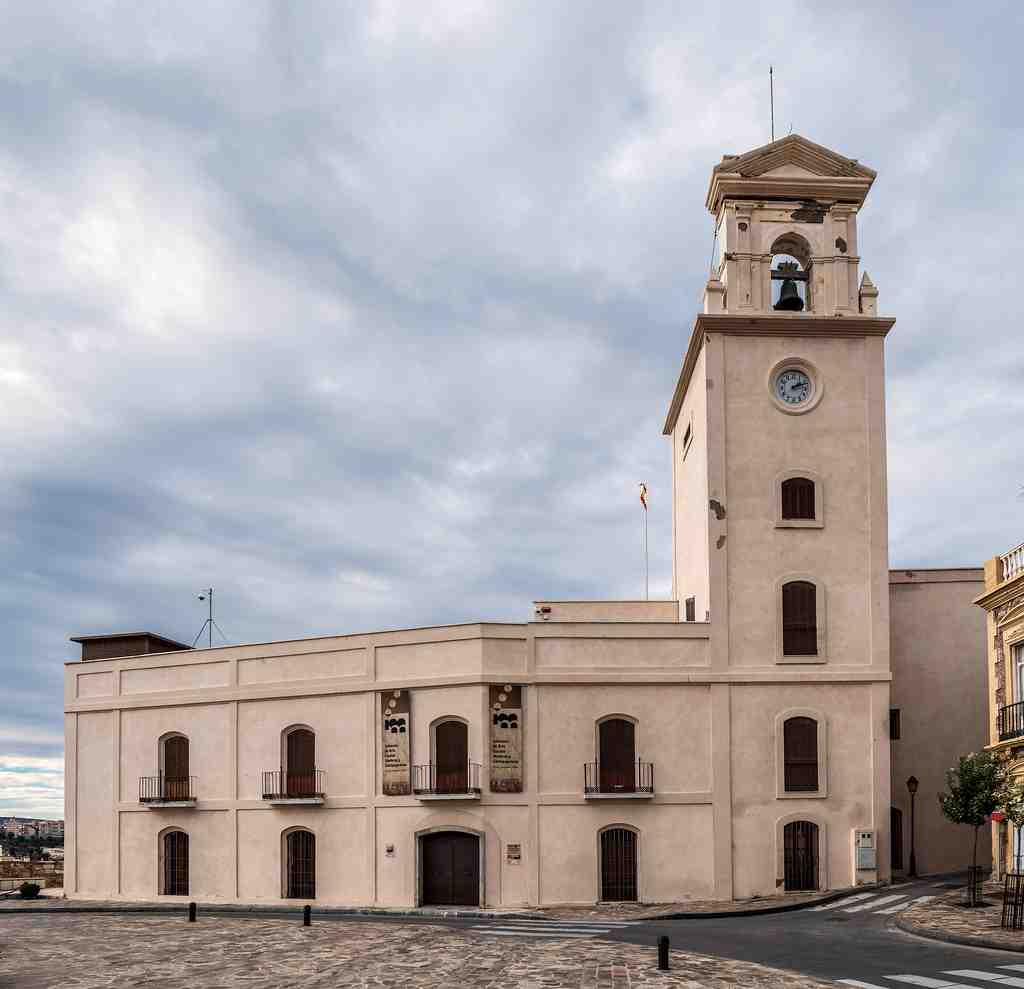
If you’re walking up from the square, you can’t miss this one: Look for a tall, four-story tower with a clock and bell perched right at the top. Below it, you’ll see a long, pale stone building with arched windows and square balconies stretching out to the left. It’s set at the edge of a cobbled plaza, so just keep your eyes peeled for the tallest building in the area with that distinctive old clock face-and you’ll know you’ve arrived at the Torre de la Vela! Standing here, picture yourself back in the 1600s. This wasn’t just any tower-it was the neighborhood’s watchful guardian! Locals know it fondly as the “Casa del Reloj,” the House of the Clock, but it was built as a defense lookout and an artillery barracks. That bell overhead? It’s been ringing since 1686, calling out moments of danger, celebration, and-let’s be honest-probably the odd siesta interruption. Behind these stone walls, you’d have found soldiers going about their busy routines. The place has served many purposes: a weapons hall, a commander’s home, and later, a bustling artillery barracks. After a major siege in 1775-the kind with cannonballs and flying insults-it was rebuilt, then given a new lease of life in the 19th century as a barracks. At one point, it even hid a jail and a secret battery in the wall-imagine the shouts and clanging chains echoing inside! Fast forward to modern times: after surviving history’s storms and some fancy restoration, the tower became Melilla’s very own Museum of Modern and Contemporary Art. Today, it’s all about creativity, not cannons! When you look up at that weathered bell, see the date “608192” painted on it. That’s a memorial to the tragic events of Monte Arruit. This tower doesn’t just stand tall-it remembers. So take a moment to soak up the views, let your imagination wander… and if you hear the bell ring, don’t worry, you’re not being called to battle-just to enjoy a piece of Melilla’s living story.
Abrir página dedicada →Look ahead and you’ll notice a sturdy, almost fortress-like building made of golden stone, with wide arches framing the windows and doorways. These stone walls are thick and…Leer másMostrar menos
Look ahead and you’ll notice a sturdy, almost fortress-like building made of golden stone, with wide arches framing the windows and doorways. These stone walls are thick and solid-they give the feeling that if a storm blew through here a hundred years ago, this place wouldn’t shake at all. If you spot a row of arches topped by steep, triangular roofs and a metal gate, you’ve found the Melilla Museum. Alright, deep breath! As you stand here on the old cobbled paving, close your eyes for a second-imagine cart wheels rattle past, voices echoing through the arches, the salty breeze from the sea mingling with the distant sound of military drums. Welcome to the Melilla Museum, sitting here inside the old Almacén de las Peñuelas-once a warehouse, always a home for treasures, now holding the soul of the city’s history. Picture this: at the beginning of the 20th century, Rafael Fernández de Castro-think of him as a real-life Indiana Jones, but with less running from boulders-started gathering old coins, pottery, and pieces of the past dug up from the nearby hill. Imagine his study filled with mysterious finds, piles of dusty artifacts, while he might have whispered, “One day, I’ll have a real museum!” Well, it took a few moves-basements, halls, and high bastions-but today, that dream stands right in front of you. Step inside this labyrinth of history and you’ll discover two worlds. Downstairs it’s like jumping into a storybook of cultures-the vibrant textures of Berber jewelry, a beautiful re-creation of the Or Zaruah Synagogue, and a space honoring the Romani people. These rooms aren’t quiet-they sing with color, memory, and tradition. Climb upstairs and suddenly you’re an explorer again, brushing sand off ancient Carthaginian coins, peeking into a recreated Moorish burial, and staring into past lives through giant models of Melilla. Strange busts, old emblems, and secrets hiding in every corner! There’s magic in these stones. Listen carefully and you might hear the laughter of old curators, a whisper of secret deals, or the echo of a faraway festival. You might even spot a ghostly historian, still cataloging that last, mysterious artifact. So, have a look around-but don’t let any mischievous spirits steal your hat! When you’re ready, I’ll be waiting to bring you to the next chapter in Melilla’s never-ending adventure.
Abrir página dedicada →There it is, right ahead! If you’re searching for the Historical Military Museum of Melilla, just look for the large stone-walled structure perched on this high point, offering…Leer másMostrar menos
There it is, right ahead! If you’re searching for the Historical Military Museum of Melilla, just look for the large stone-walled structure perched on this high point, offering sweeping views over the city and out towards the shimmering blue horizon. And if you spot a rather impressive cannon parked right at the edge, well… you’re definitely in the right place! Go ahead, take a good look around. Imagine the heavy footsteps of soldiers echoing on these cobblestones, the clink of buttons on uniforms, and the cool sea breeze that must have carried both excitement and anxiety back when this was more fort than museum. Step inside and you’ll find yourself traveling through time, surrounded by velvet jackets and tall hats, the kind of gear that only the bravest (or most stylish) soldiers would wear. There’s something for every history buff here-an actual Enigma machine hides in plain sight, just waiting for you to test your secret agent instincts. Want something with a royal twist? Keep an eye out for Queen Isabella II’s own saddle-yes, the Queen herself had a seat in the story here! Downstairs, you’ll see models of battles and dioramas, pistols and sabers that shimmer in the gentle light, and shelves heavy with stories waiting to be told. Then, climb up to the upper room and you’ll find cannons and mortars standing proudly on the old artillery platforms, as though they’re still keeping watch over Melilla. But don’t worry-today, the only thing these cannons fire are curious questions and maybe a joke or two. So, while you’re here, let your imagination run wild. Whisper to the past, and see if it whispers back. And if you hear a ghostly marching band… well, it’s probably just your tour guide’s stomach rumbling for lunch! Ready for the next adventure?
Abrir página dedicada →If you look just ahead and to your left, you’ll spot our grand finale: the Royal and Pontifical Church of the Immaculate Conception. Look for the stark white walls and the tall,…Leer másMostrar menos
If you look just ahead and to your left, you’ll spot our grand finale: the Royal and Pontifical Church of the Immaculate Conception. Look for the stark white walls and the tall, elegant bell tower reaching above the nearby rooftops. There’s a distinctive old iron fence and a warm lamp glowing by the main entrance. The stone archway over the door holds a touch of history, like a guardian still keeping watch. If you listen close, you might even hear the gentle echo of the bells above. Now, as you stand in front of this grand old church, imagine stepping back in time-way back! This is the oldest church in Melilla, built over 450 years ago, right here in the heart of the old city. The stones and bricks in the walls have seen more stories than your family’s WhatsApp group-earthquakes, storms, and the odd royal visitor or two! Originally, the church replaced a small chapel destroyed in the 1500s. But it didn’t get much rest: soon after, a quake in 1579 rattled the place so hard that the roof nearly fell in. But Melilla’s church wasn’t down for long. Teams of builders, led by master architects (and probably a fair bit of grumbling), patched it up, sometimes working by the smoky glow of oil lamps. Over the centuries, the church has survived just about everything: more earthquakes, storms, and even a makeover or two. The Capuchin friars once took care of it, and at one point, the Governor of Melilla decided he wanted his own crypt built here-because why not? If you were important back then, you got prime real estate, even underground! Every stone and wooden beam tells a story. The beautiful image inside is of Our Lady of Victory, the city's patron. Imagine the gatherings, celebrations, and maybe even a few nervous prayers during dangerous times. And don’t let the peaceful scene fool you-the church has gone through enough repairs and restarts to make you dizzy. From new bell towers to fancy new chapels, every restoration added another layer of character (and maybe a few creaky floorboards for good measure). So, as you take in the peaceful setting and the gentle glow of the streetlamp, remember: this isn’t just a building. It’s a survivor, a storyteller, and-who knows?-maybe home to a secret or two within its ancient walls. If only these stones could talk, right? But for now, you’ll have to settle for my fun facts and maybe snap a last photo before we wrap up our tour. Thanks for adventuring across Melilla with me! I hope you’ve enjoyed the stories, the laughter, and a tiny bit of mystery lurking just behind these historic doors.
Abrir página dedicada →
Preguntas frecuentes
¿Cómo empiezo el tour?
Después de la compra, descarga la app AudaTours e ingresa tu código de canje. El tour estará listo para comenzar de inmediato - solo toca play y sigue la ruta guiada por GPS.
¿Necesito internet durante el tour?
¡No! Descarga el tour antes de empezar y disfrútalo completamente sin conexión. Solo la función de chat requiere internet. Recomendamos descargar en WiFi para ahorrar datos móviles.
¿Es un tour guiado en grupo?
No - esta es una audioguía autoguiada. Exploras de forma independiente a tu propio ritmo, con narración de audio reproduciéndose en tu teléfono. Sin guía, sin grupo, sin horario.
¿Cuánto dura el tour?
La mayoría de los tours toman 60–90 minutos para completar, pero tú controlas el ritmo completamente. Pausa, salta paradas o toma descansos cuando quieras.
¿Qué pasa si no puedo terminar el tour hoy?
¡No hay problema! Los tours tienen acceso de por vida. Pausa y continúa cuando quieras - mañana, la próxima semana o el próximo año. Tu progreso se guarda.
¿Qué idiomas están disponibles?
Todos los tours están disponibles en más de 50 idiomas. Selecciona tu idioma preferido al canjear tu código. Nota: el idioma no se puede cambiar después de generar el tour.
¿Dónde accedo al tour después de comprarlo?
Descarga la app gratuita AudaTours desde App Store o Google Play. Ingresa tu código de canje (enviado por email) y el tour aparecerá en tu biblioteca, listo para descargar y comenzar.
Si no disfrutas el tour, te reembolsamos tu compra. Contáctanos en [email protected]
Paga de forma segura con