AudaTours logoAudaTours

Audioguía de Chișinău: Ecos de Teatros, Torres y Salones Sagrados

Guía de audio9 paradas

Bajo los frondosos bulevares y las fachadas ornamentadas de Chișinău, las leyendas bullen justo bajo la superficie, esperando a exploradores audaces que desvelen sus capas. Esta audioguía autoguiada desvela historias secretas y rincones ocultos a través de grandes teatros, misteriosas mansiones y cúpulas deslumbrantes que la mayoría de los visitantes solo vislumbran al pasar. ¿Por qué la construcción del teatro más ambicioso de la ciudad se detuvo de la noche a la mañana? ¿Fue sabotaje o algo más extraño? ¿Qué escultura desaparecida desató rumores de una rivalidad artística olvidada? ¿Y qué secretos aún giran en las sombrías cámaras del sótano de la mansión Inglezi? Muévete a través de épocas cambiantes de intriga política y escándalo. Escucha risas resonar de banquetes del siglo XIX, siente el silencio antes de que se levanten telones centenarios y observa cómo Chișinău revela su corazón rebelde con cada paso. De repente, cada esquina crepita con tensión dramática. ¿Listo para cambiar el turismo ordinario por un descubrimiento épico? Sumérgete en la verdadera historia de Chișinău ahora.

Vista previa del tour

map

Sobre este tour

  • schedule
    Duración 30–50 minsVe a tu propio ritmo
  • straighten
    2.5 km de ruta a pieSigue el camino guiado
  • location_on
    UbicaciónChisinau, Moldavia
  • wifi_off
    Funciona sin conexiónDescarga una vez, úsalo en cualquier lugar
  • all_inclusive
    Acceso de por vidaReprodúcelo en cualquier momento, para siempre
  • location_on
    Comienza en Teatro Nacional "Mihai Eminescu" de Chisinau

Paradas en este tour

  1. You’re looking for a grand neoclassical building set back from the boulevard, with tall Corinthian columns and a triangular pediment-just look for the impressive staircase rising…Leer másMostrar menos

    You’re looking for a grand neoclassical building set back from the boulevard, with tall Corinthian columns and a triangular pediment-just look for the impressive staircase rising from the sidewalk, drawing your eyes to the bold inscription, “TEATRUL NATIONAL MIHAI EMINESCU,” above its massive doors. Welcome, traveler! Right now, you’re standing before the legendary “Mihai Eminescu” National Theatre-a stage that’s seen more drama than a soap opera marathon. Let’s travel back to October 10, 1920. Imagine this spot not as it is today, but as a swirl of ambition and hope during a time when Chisinau longed for its own fortress of Romanian language and culture. A passionate group of thinkers, including everyone from a government minister to celebrated writers and visionary directors, dreamed up the first permanent Romanian-language theatre in Bessarabia. They fueled this idea with late-night discussions and, I suspect, more than a little strong coffee. But here’s where the plot twists-true to theatre tradition! Dreams met reality with a crash when economic depression hit in the 1930s. The building got started in a glorious neoclassical style, but construction soon ground to a halt. Imagine a skeleton of columns and unfinished walls, sitting forlorn and silent. Yet, like all epic stories, this wasn’t the end-it was just an intermission. Fast forward to 1949-1953, a new team, led by the architect Galadjeva and local masterminds, picked up the blueprints. Interior designers, sculptors, and painters all pitched in, refusing to let the original interwar vision be lost. When spring 1954 arrived, the theatre finally opened in all its glory! Just look at it: three grand levels, the top one an attic perched above the rectangular facade. Get a sense of the theatre’s gravitas from the broad stone steps and the imposing entrance, high above the street. The theatre occupies the corner like it always meant to be here-a monument of art, architecture, and history. Notice the main facade-there’s a symmetry and orderliness to those four Corinthian columns, flank by sturdy square pillars, all bearing a triangular pediment. During the theatre’s life, that pediment once boasted an incredible sculpted relief, lost during reconstruction-mystery added to its character, like a missing prop from a famous play. The main theatre hall, hidden within, is a round marvel with a domed ceiling once painted with dancers swirling in a circle, sketched by the artist L.P. Grigorashenco. Imagine the audience climbing sweeping monumental stairs, the rustle of smart coats, whispers of excitement echoing under the dome as they took their seats-all beneath the soft glow of chandeliers. And talk about entrances! The main way in is dramatic, but there are secret side doors for actors and staff, the pulse of excitement always just behind the scenes. In 1988, the theatre finally received the name of Romania’s greatest poet, Mihai Eminescu, cementing its role as a beacon of the national spirit. By 1994, new generations of passionate young actors, schooled in Moscow, Tbilisi, and beyond, brought fresh energy to the stage. So next time you stroll past, imagine a packed auditorium inside, curtains rising, and that magical hush just before the first line is spoken-a hush that has echoed here for over a century.

    Abrir página dedicada →
  2. Right in front of you, on the corner shaded by rows of leafy trees, stands a stately rectangular mansion with tall rectangular windows framed in ornate white, set atop a high…Leer másMostrar menos

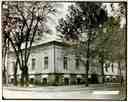
    Right in front of you, on the corner shaded by rows of leafy trees, stands a stately rectangular mansion with tall rectangular windows framed in ornate white, set atop a high stone basement-just peek behind those branches to spot its elegant, slightly mysterious façade facing Mihai Eminescu Street. As you stand gazing up at the Urban Mansion of Inglezi, imagine yourself whisked back through time. The year is 1875, and the streets of Chisinau are alive with the clatter of carriages and the whispers of local gossip. Here on this bustling corner, a remarkable home is rising-designed by the famed architect Alexandru Bernardazzi, no less! The aroma of fresh plaster and stone fills the air as master builders carefully place each ornate detail around the windows, carving out curling arches and eastern-inspired ornaments. Take a closer look, and you’ll notice how no window here is quite like anything else on the street. There are intricate chain patterns, twisted moldings, and ogival arches-all perfectly aligned in symmetrical rows, just as the original plans intended. Up above, seven luxurious rooms sparkle with parquet floors and even tiled ceramic stoves, their walls lined with the finest wallpaper, ready to impress any visitor bold enough to step inside. But don’t be fooled: below those grand rooms, the servants bustle around in five underground chambers, mixing soup in the kitchen and scrubbing laundry, making sure the house runs smoother than a well-oiled clock. But the real drama begins as decades roll on. Nobleman A. D. Inglezi himself claimed this fabulous mansion for a time, entertaining dignitaries and perhaps even the odd secret admirer. Can you hear the echoes of champagne glasses and laughter? Then came a twist straight from a soap opera: the mansion was sold to the noble lady Alexandre Casso, pawned off to a credit society, and shuffled through so many hands that even a cat might get dizzy keeping track. By the 1940s, the grand halls didn’t merely echo with music and poetry, they rang with the footsteps of students from the girls’ normal school, who flocked here from the neighboring district-perhaps reading secret notes under those grand arches, or dreaming of their own futures in the city’s changing world. The story doesn’t stop there! Fast forward to the 1960s and 70s when the mansion became a hidden backstage world: the city’s opera and ballet costume workshops filled every corner, with the rustle of tulle and the whisper of velvet as seamstresses hurried to finish costumes for the next show. And if you look closely at the main entrance-pointing proudly down Mihai Eminescu-you’ll see it’s not just any door, but a portal inspired by the mysterious East, framed by elegant columns and flanked by windows that seem to wink in the sunlight. Legend has it that if you listen carefully at twilight, you can almost hear the footsteps of Bernardazzi himself, making sure his creation is still looking her best. Restored and cherished even now, there are plans afoot to turn these halls into a café or restaurant. So perhaps one day soon, you can sip your coffee right where Chisinau’s most dramatic stories once unfolded. And hey, if any ghostly seamstresses offer you fashion advice from the shadows, just nod and smile-they definitely know style.

    Abrir página dedicada →
  3. Look around for a bright, colorful building with bold red brick details, striped stone bands, and two impressive onion domes-if you spot a fence with iron grilles and lion-head…Leer másMostrar menos

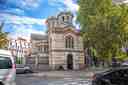
    Look around for a bright, colorful building with bold red brick details, striped stone bands, and two impressive onion domes-if you spot a fence with iron grilles and lion-head decorations, you’ve found Saint Panteleimon Church! Picture yourself in Chișinău in 1891-horses clopping down cobblestone streets, and the smell of fresh bread floating through the markets. Suddenly, you see this exotic-looking church rise before you, standing out with its elegant mix of light and dark stone and two lively, voluminous turrets. This is no ordinary church. The air smells faintly of old stone and cool marble, and the walls seem to tell stories. Saint Panteleimon Church was born from the dreams of the Sinadino brothers, Iannis and Victor, whose family was so Greek that even their dad, Pantelimon, had a church named after his patron saint! Their home was Chișinău, but their hearts were in Greece. They wanted their church to look just like the beautiful stone churches back home-so they asked the famous architect Alexandru Bernardazzi for help. “Leave it to me!” he probably said, twirling his mustache, and designed a church in the classic Greek-cross style: four arms, each the same length, creating a sense of perfect harmony. When they finished, the local newspapers called it the most beautiful thing the Russian Empire had seen in years-finally, a star was born in Moldova! Take a good look at the outside: the church almost seems to dance with its playful, wavy cornices and those deep-red bricks woven through the light stone, almost like chocolate in a vanilla cake. And see the cupola sitting tall on a nest of stone arches? That’s the secret to its light-filled, joyful atmosphere inside. Before you go, notice the black iron fence topped with stone pillars-guarded by lion heads, of course. They say the lions keep away any mischief-especially tourists who try to climb the fence just for a better photo! So take in the view, imagine the whispers of Greek prayers from long ago, and enjoy the story this church still tells every day.

    Abrir página dedicada →
Mostrar 6 paradas másMostrar menos paradasexpand_moreexpand_less
  1. Look for a tall, square-shaped stone tower with a striking red-tiled roof rising above the trees right across the street-it stands out as one of the highest landmarks in the…Leer másMostrar menos

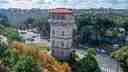
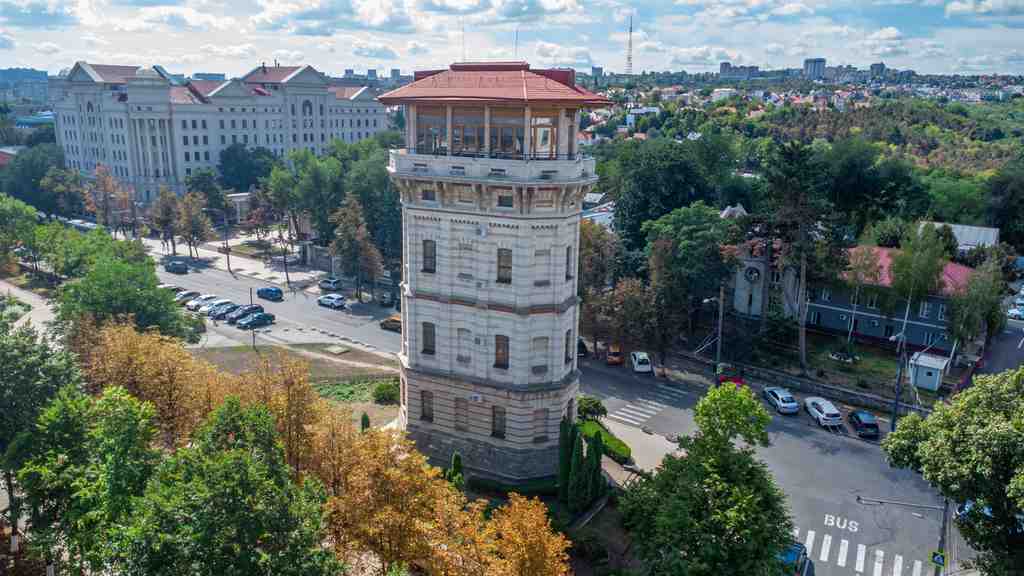
    Look for a tall, square-shaped stone tower with a striking red-tiled roof rising above the trees right across the street-it stands out as one of the highest landmarks in the area. Alright, pause for a second-imagine yourself in front of this grand old tower, with sunlight catching on its pale stone, and the top pavilion stretching toward the sky. Believe it or not, you’re standing at the very spot where all of Chișinău once dreamed of running water! If you listen closely, you might just hear the ghostly echoes of water splashing through pipes long ago. Back in the late 1800s, city planners had a big, thirst-quenching idea: they wanted to supply fresh water to a growing Chisinau, and they needed a mighty tower at the city’s highest hill to do it. Designed by the legendary architect Alexander Bernardazzi (who probably loved big, dramatic hats to match his big, dramatic buildings), this spot became the beating heart of Chisinau’s very first waterworks. It could pump out 200,000 buckets of water a day! That’s a lot of tea. But the Water Tower wasn’t just about water. When you glance up, picture the city’s first firefighters racing up the spiral iron staircase-still inside today!-to keep watch and prepare for emergencies, with their heavy boots clanging on the metal. Over the decades, the tower has survived earthquakes and closed its doors more than once, only to rise again like a very persistent phoenix (but one made of stone and brick). Nowadays, it hosts incredible exhibits about the city’s history, and sometimes even art shows and concerts up on the top floor-imagine music floating out over the rooftops, just as the tower has watched over Chișinău for more than a century. So as you soak in this spectacular view, remember: you’re really looking at the city’s original VIP-Very Important Plumbing!

    Abrir página dedicada →
  2. To spot the former hydrotherapy clinic of Dr. Tumarkin, look for a grand, ornate white building perched on the corner, with detailed window frames, an eclectic mix of classical…Leer másMostrar menos

    To spot the former hydrotherapy clinic of Dr. Tumarkin, look for a grand, ornate white building perched on the corner, with detailed window frames, an eclectic mix of classical decorative elements, and striking triangular pediments above the windows. As you stand here, your feet on the cracked cobblestone and your eyes tracing the sharp lines of this impressive structure, let your mind travel back to the 19th century. Imagine it: the year is 1878, and this very spot was nothing more than a bare city lot, snapped up at auction by the ambitious secretary Nicolai Ivanovici Kușkovski. Over the next few years, the gentle thuds and clangs of hammers echoed on these streets as Kușkovski’s elegant six-room villa took shape at the corner, its rectangular body stretching confidently along the intersection. But the story gets even more interesting. In 1897, enter Dr. Lazăr Tumarkin-a man who’d soon become quite the legend around here. He saw more than just a villa; he had a vision. Imagine carriages rattling past and the scent of wet stone after the rains as Dr. Tumarkin decided to transform the property. By 1902, a brand new building had risen in the yard-a hydrotherapy clinic, where the promise of water’s healing embrace drew people from all corners, seeking the latest miracle in health and relaxation. Picture locals whispering tales of this cutting-edge clinic, which quickly gained a reputation as one of the most advanced in the entire Russian Empire. Patients would shuffle in, nerves tingling with anticipation, while inside, sunlight danced through high windows, and water flowed through pipes and basins, bringing hope and relief. Now don’t just stare at the villa-check out the playful details! The main façade, the one facing Pushkin Street, once welcomed guests with a proud entrance, now replaced by a window. But what really catches the eye? Look above, tucked under an archway, and you’ll spot two stone dragons with wings unfurled-rumor has it they’re here to guard against boring architecture! The façade around the corner is just as remarkable: seven proud windows, some capped by bold triangular ledges, standing like little crowns, and the corners strengthened by chunky “diamond” stones. Life wasn’t always easy for this place-World War II battered it, leaving scars that restoration tried to heal later, and the building you see today was given a bold splash of Art Nouveau spirit, diverging from its classical roots. Over in the yard, you can still spot the former hydrotherapy clinic, a sturdy two-story structure with a modern and simple look, though decades of wear and a few less-than-glamorous renovations in the 1990s have left it a bit grumpy-looking, with heavy new features that tried and failed to capture its old beauty. The villa is now watched over by the National Olympic and Sports Committee, but if you listen closely, you can almost hear echoes of water splashing, doctors giving orders, and the laughter of patients discovering that even the dragons outside approve of a good bath. So as you stand here, you’re not just admiring beautiful architecture-you’re stepping into a place that has seen healing, hope, and a dash of dragon magic over more than a century. If only these walls could talk… though with those dragons around, maybe it’s best they don’t start breathing fire!

    Abrir página dedicada →
  3. Right in front of you, you’ll spot a stately two-story building with tall, arched windows, a small set of steps leading to grand wooden doors, and a beautiful metal canopy-just…Leer másMostrar menos

    Right in front of you, you’ll spot a stately two-story building with tall, arched windows, a small set of steps leading to grand wooden doors, and a beautiful metal canopy-just look straight ahead past the leafy trees! Now, picture yourself back in the 19th century, right here on this very spot. The air smells of fresh plaster and sawdust, and the sound of hammers echoes as workers scamper about like characters in an old-timey musical. This plot of land was once just a quiet, unused patch, edged by the streets Reni, Livezilor, and Seminarului, waiting for its big entrance! And what an entrance it made: in the early 1870s, with a decision that must have felt a bit like winning the lottery, the Theological School finally got its own home. Before that, students squeezed into old seminar buildings-imagine a bunch of hopeful young theologians all crammed together, probably debating philosophy way too loudly for the neighbors’ taste. Then along came architect Mihail Seroținsky, with plans that would take this school from humble beginnings to grand landmark status. By 1875, the blueprints had been approved, and in no time, the main school building and its annex were rising from the dirt. The energy must have been electric-a whole community watching as brick by brick, their very own center for learning, worship, and gathering took shape. No sooner had the school opened its doors than the builders set their sights on something even higher: a chapel right next door! After all, what’s a theological school without a place to practice all that contemplation-plus, it gave the students somewhere peaceful to sneak off and ponder during tough exams. By 1880, that chapel-now known as the Church of the Meeting of the Lord-was complete. And guess what? Just like a fashionista never satisfied with her closet, in 1902 the church got an upgrade: four sparkling new turrets on the roof, making it even more impressive. The architect, Seroținsky, was everywhere, checking on the work, perhaps muttering under his breath about budget overruns, as all architects do. This complex didn’t just stand still. It grew, with new wings and additional expansions over the years-even a hospital, all designed to blend seamlessly with the original structures. If you listen closely, you might almost hear the footsteps of generations of students, teachers, and doctors bustling through the halls, each leaving a hint of their dreams behind. Today, as you stand quietly beneath the leafy shade, know that you’re witnessing living history-a monument still ringing with laughter, learning, and maybe a bit of sacred mystery. And if you get a sudden urge to debate philosophy with a tree, well, you’re in good company!

    Abrir página dedicada →
  4. To spot the Church of the Meeting of the Lord, look for a charming yellow-and-white building topped with elegant silver domes and golden crosses nestled right inside the Moldovan…Leer másMostrar menos

    To spot the Church of the Meeting of the Lord, look for a charming yellow-and-white building topped with elegant silver domes and golden crosses nestled right inside the Moldovan State University campus. Welcome to a place where time seems to play a little game of hide and seek-a church that’s been through more costume changes than a theatre star. Built between 1879 and 1880, the Church of the Meeting of the Lord began its life thanks to a generous land gift from the city’s mayor, meant for the local theological school. Imagine the excitement on that summer day in August 1880 when crowds gathered here for its first blessing! Later, a bold architect named Mihail Seroținski came along with some big dreams (and maybe not enough sleep), giving the church a makeover in 1902-enough space now for 700 pairs of hopeful eyes at any service. But here’s where our story takes some wild swings-world wars turned the church into a hospital, and under Soviet rule, students did something quite unexpected here: they broke a sweat during gym class right inside these sacred walls! Isn’t it funny to picture basketball echoes replacing sacred hymns? Finally, in 1991, the church reopened as a beacon for theology students, and later the university helped restore it to its former glory. So as you stand outside, take a deep breath and imagine all those generations who laughed, prayed, learned, and maybe even did a few jumping jacks right here!

    Abrir página dedicada →
  5. To spot the National Museum of Ethnography and Natural History, look for a tall, cream-colored building with colorful geometric trim along the roof and a grand arched entrance…Leer másMostrar menos

    To spot the National Museum of Ethnography and Natural History, look for a tall, cream-colored building with colorful geometric trim along the roof and a grand arched entrance right behind the trees across the road. Now, imagine it’s October 1889-a world of swirling leaves and grand ideas. Out of a wave of applause and a touch of horse-drawn cart clatter, the very first agricultural exhibition in Bessarabia kicked off here, thanks to the imaginative Baron A. Stuart. What began as a humble collection of farming curiosities blossomed over the years-changing names more often than a secret agent! Today, you’re standing before a national monument where history, culture, and nature dance together. Its intricate Moorish-inspired façade was once home to stuffed wildlife, farming tools, and even whispering gossip from villagers long past. Each window and colorful border hints at stories of peasants, inventors, and curious children peeking in for a glimpse of distant lands and wild beasts. Wander the gardens behind the museum-a masterpiece itself-and you might hear the faint echo of a gardener’s laughter. From cows to rare butterflies, from folklore to fieldwork, this museum has watched Moldova change, grow, and celebrate the wonders of its land-one odd exhibit at a time.

    Abrir página dedicada →
  6. To spot the Zemstva Museum, look for a yellowish, one-story historic building with a rounded dome above the entrance and a green sign reading “MUZEUL ZEMSTVEI,” framed by gentle…Leer másMostrar menos

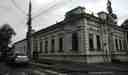
    To spot the Zemstva Museum, look for a yellowish, one-story historic building with a rounded dome above the entrance and a green sign reading “MUZEUL ZEMSTVEI,” framed by gentle trees and slightly worn stone steps leading up to old wooden doors. Alright, treasure hunter, here you are at the final stop: the Zemstva Museum! You’re standing where stories have stacked up like bricks for over 170 years-each one echoing with laughter, secret meetings, and thousands of hopeful footsteps. Imagine it’s the mid-1800s, and this place isn’t a museum yet, but a fresh orphanage planted by the city on what must have seemed a endless lot, stretching out over what is now buzzing Chisinau. Right where you're standing, kids once dodged in and out of classrooms, their voices mixing with the hum of early lessons in science or sewing. If you listen closely, maybe you can still hear the echo of a giggle. Now, check out the building’s face. The façade is a dance between classicist and eclectic style-a bit like a proper aristocrat who’s just had a dash of fun at a local fair. The three arched windows, outlined in soft stone tracery, huddle together on either side of the entrance. Step back a little and you’ll notice the symmetry, those dignified arches, and the triangles formed by the rooftops-a balance that makes even the most chaotic memories seem organized. Back in 1856, the city’s first official botanical garden bloomed right here behind the walls. So, instead of museum goers, imagine rows of curious plants, their leaves shaking like jazz hands every time a breeze rolls past. Maybe those plants were around to watch when, in 1883, the entire orphanage complex shifted hands-straight from orphaned children to the Zemstva, the local council of the great Russian Empire. Suddenly, it was less school and more… bureaucracy! Papers, meetings, insurance departments, bottled up in these thick stone walls. In 1915, the place was described in such a practical way-“stone houses, one story, covered with tiles, plastered ceilings, wooden floors, Dutch-style stoves, and seven rooms with 11 windows.” You know, the kind of building you’d expect Sherlock Holmes to pop out of, twirling his mustache and clutching a mysterious file. But, Chisinau would never let a good story go to waste. After passing from Russian to Romanian hands in 1918, out went the old Zemstva and in came pure museum magic. From 1918 to 1932, wonders of agriculture and industry filled these rooms, with gadgets and harvests on proud display. Some exhibits never left; they still hide inside, lurking among the shadows of the past. And if walls could whisper, they’d murmur secrets of many a scientific discovery and perhaps the odd “I told you so” from an old, argumentative curator. The complex grew and changed, with new wings added in every era-a building here, a canteen there, followed by a stunning neoromanian style wing with a zigzag border under its roof, almost as if the architect was inspired by a very fashionable mustache! Through the years, this block has been the only one from Chisinau’s historic center to survive completely intact-think of it as the grandparent of the neighborhood, quietly shaking its head at the changes around but still standing, determined to remain part of the family photo. After World War II, the building sat in suspense, sometimes lively, other times nearly forgotten-until it sprang to life again! In 2011, an artsy new wave swept in, transforming the museum into a cultural playground: hands-on workshops, concerts that made the windows tremble, art shows that left splashes of color on the air, hippie festivals with free spirits fluttering about, and even film screenings under the stars in its back garden. Today, you’re at a place of great importance, not just for moldy old history and dusty documents, but as a vibrant home for artists, dreamers, and everyone who loves a good, thought-provoking story. It is now lovingly called Casa Zemstvei-a dynamic heart for cultural innovation, alternative movements, and all sorts of creative mischief. If you thought you were just visiting a museum, guess again! This is where Chisinau comes to remember, reimagine, and rejoice. Before you leave, take a moment and touch the old stone-see if you can feel just a little spark from the lives that have passed through here. And remember: museums aren’t just about the past-they’re where the future gets its first ideas. Congratulations, explorer! You’ve made it to the end of your journey. Bet you didn’t expect history to be such a wild ride! For further insights on the historian, description or the the museum's activity, feel free to navigate to the chat section below and inquire.

    Abrir página dedicada →

Preguntas frecuentes

¿Cómo empiezo el tour?

Después de la compra, descarga la app AudaTours e ingresa tu código de canje. El tour estará listo para comenzar de inmediato - solo toca play y sigue la ruta guiada por GPS.

¿Necesito internet durante el tour?

¡No! Descarga el tour antes de empezar y disfrútalo completamente sin conexión. Solo la función de chat requiere internet. Recomendamos descargar en WiFi para ahorrar datos móviles.

¿Es un tour guiado en grupo?

No - esta es una audioguía autoguiada. Exploras de forma independiente a tu propio ritmo, con narración de audio reproduciéndose en tu teléfono. Sin guía, sin grupo, sin horario.

¿Cuánto dura el tour?

La mayoría de los tours toman 60–90 minutos para completar, pero tú controlas el ritmo completamente. Pausa, salta paradas o toma descansos cuando quieras.

¿Qué pasa si no puedo terminar el tour hoy?

¡No hay problema! Los tours tienen acceso de por vida. Pausa y continúa cuando quieras - mañana, la próxima semana o el próximo año. Tu progreso se guarda.

¿Qué idiomas están disponibles?

Todos los tours están disponibles en más de 50 idiomas. Selecciona tu idioma preferido al canjear tu código. Nota: el idioma no se puede cambiar después de generar el tour.

¿Dónde accedo al tour después de comprarlo?

Descarga la app gratuita AudaTours desde App Store o Google Play. Ingresa tu código de canje (enviado por email) y el tour aparecerá en tu biblioteca, listo para descargar y comenzar.

verified_user
Satisfacción garantizada

Si no disfrutas el tour, te reembolsamos tu compra. Contáctanos en [email protected]

Paga de forma segura con

Apple PayGoogle PayVisaMastercardPayPal

AudaTours: Audioguías

Tours a pie autoguiados entretenidos y económicos

Probar la app arrow_forward

Amado por viajeros de todo el mundo

format_quote Este tour fue una excelente manera de ver la ciudad. Las historias fueron interesantes sin parecer demasiado guionadas, y me encantó poder explorar a mi propio ritmo.
Jess
Jess
starstarstarstarstar
Tour de Tbilisi arrow_forward
format_quote Esta fue una forma sólida de conocer Brighton sin sentirme como un turista. La narración tenía profundidad y contexto, pero no se excedía.
Christoph
Christoph
starstarstarstarstar
Tour de Brighton arrow_forward
format_quote Empecé este tour con un croissant en una mano y cero expectativas. La app simplemente vibra contigo, sin presión, solo tú, tus auriculares y algunas historias geniales.
John
John
starstarstarstarstar
Tour de Marsella arrow_forward

Audioguías Ilimitados

Desbloquea el acceso a TODOS los tours del mundo

0 tours·0 ciudades·0 países
all_inclusive Explorar Ilimitado