
Tour de Audio de Brno: De Cervezas a Avenidas de Abadías Tour de Audio
Bajo las animadas calles de Brno, mundos enteros susurran: castillos que desaparecieron sin dejar rastro y aulas que sobrevivieron a guerras, rebeliones y tormentas políticas. Este tour de audio autoguiado te invita a descubrir los capítulos más esquivos de Brno mientras caminas entre secretos que perduran en lugares familiares. ¿Qué fortaleza desaparecida custodiaba antaño antiguas luchas de poder justo bajo tus pies? ¿De quiénes fueron los sueños académicos destrozados cuando los filósofos fueron exiliados de la Universidad Masaryk de la noche a la mañana? ¿Qué extraña tradición aún se esconde dentro de los pasillos de la Facultad de Educación, sobreviviendo a décadas de cambios de régimen y revolución? A medida que cada paso te lleva de fortalezas fantasmales a capillas históricas y animados pasillos universitarios, Brno revela su dramático pasado en destellos de coraje, misterio y alegría inesperada. ¿Listo para encontrar historia donde otros solo ven calles de la ciudad? Comienza tu viaje ahora: los ecos de castillos perdidos y nuevos comienzos te esperan.
Vista previa del tour
Sobre este tour
- scheduleDuración 40–60 minsVe a tu propio ritmo
- straighten3.4 km de ruta a pieSigue el camino guiado
- location_on
- wifi_offFunciona sin conexiónDescarga una vez, úsalo en cualquier lugar
- all_inclusiveAcceso de por vidaReprodúcelo en cualquier momento, para siempre
- location_onComienza en Facultad de Educación, Universidad Masaryk
Paradas en este tour
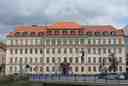
Look for a large, cream-colored building with a red-tiled roof and rows of elegant windows lining the façade - you’ll find it right beside the main road, with its impressive…Leer másMostrar menos
Look for a large, cream-colored building with a red-tiled roof and rows of elegant windows lining the façade - you’ll find it right beside the main road, with its impressive entrance facing the intersection. Welcome to the Faculty of Education at Masaryk University! Just imagine: the year is 1946, the war has only recently ended, and this stately building is bustling with hope and new beginnings. Around you, the scent of freshly cut chalk and brand-new books fills the air as the very first teachers-to-be step nervously through that heavy front door - maybe hoping not to stumble over the marble stairs in front of their future professors. This faculty began as the fifth “child” of Masaryk University, set up thanks to a law passed on a spring day in April. They were racing against the clock: autumn of 1945 saw frantic preparations as the university gathered books, equipment, and - crucially - faculty members. Within a year, by October 1946, a scholar named František Trávníček was elected the dean during the very first teachers’ assembly. Can you picture the excitement and nerves as the faculty’s doors officially swung open for its inaugural lesson in November? If those walls had ears, they probably still echo with the sound of hopeful footsteps. But this was no ordinary school - it was built on the mission to shape new teachers for a world rebuilding itself. Now, not everything was smooth sailing. In the late 1940s, the shadow of politics stretched inside. The Communist Party started planting roots in 1947, eventually leading to strict new rules and the departure of many professors, including big thinkers like philosopher Jan Patočka. If you listen closely, you might almost hear the hurried rustle of removed books and secret worry in the halls. The curriculum was reshaped, Soviet texts were stacked high, and new academic rituals crept into everyday life. The building itself, Poříčí 7, appeared even earlier - between 1914 and 1916 - originally as a school for the city’s German population. In World War I, it turned into a military hospital, surely filled with groans and marching boots. Then, after 1919, it became a school for women teachers. It wasn’t until after World War II that it became the proud home of the Pedagogical Faculty. But just as teachers must adapt, so did this place. For a while in the 1950s, the faculty was separated from the university and transformed into a two-year teaching college, with teachers and students constantly shifting between sites. The question hung in the air: was this a real college or just a fancy high school? Yet, in 1964, the building - and the faculty - came back into the warm embrace of Masaryk University, and celebrations buzzed through the corridors. There was drama during the Prague Spring, with whispers of secret elections, more academic freedoms, and even a brief period when students could openly vote for their leaders! Of course, after 1969, the political chill returned and “normalization” brought with it stiffer rules and more faculty goodbyes. Fast-forward to the bustling present: these walls have witnessed everything from state exams to jazz concerts and art exhibitions. In 2014, a sparkling new canteen and students’ club opened up - I bet the students cheered louder than at any football match! There’s even a solar array on the other building’s roof and a special café (the Kafinet), dedicated to providing supportive work for people returning from mental health challenges. Look up at those windows and imagine: somewhere inside, a future Olympic athlete, a famous teacher, or a soon-to-be poet might be sipping coffee and dreaming about tomorrow. And if you spot a flash of orange - that’s the faculty’s signature color, a little nod to its distinctive heritage. So, next time you hear the phrase “passing the torch,” remember: here at the Faculty of Education, it’s not just a motto, but a living, breathing reality - and the spirit of teachers past and present, their hopes and struggles, are right here beside you. Just don’t get lost - or you might end up sitting in on a surprise chemistry lesson! Intrigued by the buildings, study or the structure? Explore further by joining me in the chat section below.
Abrir página dedicada →To spot the Church of St. Ulrich and Procopius, just look for a building with a reddish-brown roof and a small, simple tower, surrounded closely by other low grey-roofed houses at…Leer másMostrar menos
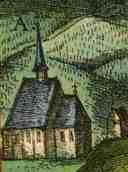
To spot the Church of St. Ulrich and Procopius, just look for a building with a reddish-brown roof and a small, simple tower, surrounded closely by other low grey-roofed houses at the corner where two streets meet. Now, let’s take a step back-way back-to the 1200s, when Brno’s streets weren’t filled with honking cars but with the gentle clopping of horse hooves. Standing right where you are now, you would have seen the Church of St. Ulrich and Procopius rising quietly at the crossroads of Václavská and Křížová. Picture the year 1243: townsfolk gather in front of sturdy stone walls, the scent of burning candles drifting from within. The church quickly became part of daily life, a comforting landmark, and in 1332 it gained some spiritual neighbors-the Cistercian nuns whose nearby monastery brought an extra dose of peaceful chanting and perhaps a little gossip! But as centuries passed, the story took a turn. In 1782, the Emperor decided that the monastery days were over and the church suddenly had new bosses-the Religious Fund. It sounds official, but sadly, it meant the grand old church was headed for retirement. And not the relaxing, sunny kind-by 1785, it was torn down, its stones carted away. Today, all that’s left is memory and a whisper in the cobblestones beneath your feet. Funny how buildings disappear but their stories linger, isn’t it? I guess even a church can ghost you!
Abrir página dedicada →
Mostrar 10 paradas másMostrar menos paradasexpand_moreexpand_less
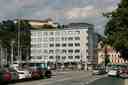
To spot Mendel Square, look for the broad open space surrounded by trams, buzzing cars, and a big gray building at the center, with crowds moving around in front of you. Right…Leer másMostrar menos
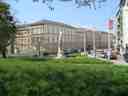
To spot Mendel Square, look for the broad open space surrounded by trams, buzzing cars, and a big gray building at the center, with crowds moving around in front of you. Right now, you’re standing at Mendel Square, or as the locals call it, "Mendlák"-the lively heart of Old Brno, where history and modern city life collide in the best possible way. Imagine yourself walking here over a hundred years ago. Across the square, you’d see the grand Starobrno Monastery paired with the towering Basilica of the Assumption of the Virgin Mary, both quietly watching over everything. Close by, the famous Starobrno Brewery was already bubbling with action! But hang on tight-things didn’t stay peaceful. Back at the end of the 1950s, Mendel Square was a green area, with a charming little park before the basilica, and a cozy line of old houses closing off the southern side. You could hear the as trams clanged their way along, curving past bakeries, restaurants, even an old tavern-what a deliciously noisy place! Secretly, a covered millstream flowed directly under your feet, keeping the area cool and mysterious. Everything changed in the early 1960s. The city decided to widen the square. Out came the wrecking balls, and down went those old Brno homes, the Starobrno Town Hall, and even the neighborhood tavern-bye-bye to pints and pies. Out of this chaos, tall gray panel buildings shot up, right before your eyes. The tram lines moved to the middle, the millstream disappeared under pavement, and Mendel Square took on its new, modern look. But why call it Mendel Square? Here’s the twist-Gregor Mendel, monk and scientist, lived and worked here. This is the place where he played with pea plants and, believe it or not, figured out the basic rules of genetics! Old Brno can proudly say: it helped invent the science of “why you might look like your uncle Bob.” So, next time you munch peas or look in the mirror, remember Mendel Square-the crossroads of Brno’s past, present, and future.
Abrir página dedicada →To spot the Starobrno Brewery, look for a large light-yellow building with bold red vertical stripes and a giant sign reading “Starobrno” right above the entrance; it’s hard to…Leer másMostrar menos
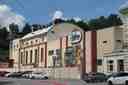
To spot the Starobrno Brewery, look for a large light-yellow building with bold red vertical stripes and a giant sign reading “Starobrno” right above the entrance; it’s hard to miss as it stretches beside the road with parked cars in front. Now, get ready to step into the legendary heart of Brno’s brewing world-right where hops, history, and more foam than a bubble bath all collide! Imagine the air filled with the scent of barley and yeast, while somewhere deep inside, golden liquid bubbles in ancient tanks. It all started long before anyone had even dreamed of a “pint with friends.” In 1243, King Wenceslas I thought, “You know what Brno needs? The right to brew beer!” And so, the city’s love affair with beer officially began. But our story truly takes root in 1325, when the Starobrno Brewery was founded right here, as a tiny operation beside a Cistercian nunnery. Picture medieval monks and nuns, stirring steaming vats of barley, probably thinking, “Amen-this is divine!” Fast forward a few centuries, and you’ve got gravestones from the 15th century popping up unexpectedly during renovations-because what’s a good brewery without a bit of mystery under the floorboards? Through fires, wars, and countless owners, the brewery survived and grew, finally earning the noble title “Altbrünner Brauerei” in the 1800s. By the 1980s, new bottling lines zipped into action, and the brewery stretched up into the slopes of Žlutý kopec, where it hums with life today. Now, Starobrno isn’t just about one kind of beer-oh, no, no! Their bubbling cauldrons have produced everything from the iconic Staré Brno (a lively, slightly bitter brew with hints of malt), to creamy dark lagers, and all the way to wild specialties like the “Baron Trenck,” which packs 14 degrees of brewing swagger! There’s a crisp, golden “Medium,” a powerful “Drak” that’s extra-hopped and guaranteed to slay your thirst, and even a “Nefiltrovaný Ležák,” unfiltered and full of vitamin B-if anyone ever tells you beer isn’t healthy, point them here! If you wander by at Easter, you might find folks clutching glasses of the legendary Green Beer, served only on Holy Thursday. Its herbal color is a closely guarded secret-rumor has it, the brewmaster won’t even tell his own mother! (Though the authorities did peek and discovered a little dash of food coloring, so not everything is magic.) Today, a river of Starobrno beer flows from here-over 900,000 hectoliters every year, filling pubs, celebrations, and picnics all across Moravia and beyond. And just for fun, they also whip up their own ZULU lemonades and a dangerously tempting beer brandy called BierBrand. So, as you stand here, listen closely… you might just hear the clatter of centuries, the whispers of ancient monks, and the lively cheers from every corner pub in Brno, all mingling in the echoing halls of the Starobrno Brewery. Cheers to history that’s best served cold!
Abrir página dedicada →To spot the Old Brno Monastery, look for a grand, white-walled building with a red-tiled roof and a distinct clock tower rising above, just ahead of you past the small fenced…Leer másMostrar menos
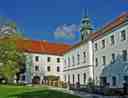
To spot the Old Brno Monastery, look for a grand, white-walled building with a red-tiled roof and a distinct clock tower rising above, just ahead of you past the small fenced garden and arched doorway. Now, let’s step back in time and imagine what this place has witnessed over the centuries. If you stand still and close your eyes for a moment, you might almost hear distant footsteps on the ancient stone floors and the soft toll of the monastery bell beneath this blue sky. The story of this monastery begins in the early 1300s with a royal widow-Eliška Rejčka. Picture her: a queen of both Bohemia and Poland, determined and clever, with dreams bigger than her crown. When her companion, the mighty Moravian governor Jindřich of Lipá, took a job in Brno in 1319, Eliška decided to create a legacy that would last through wars, fire, and centuries. She gifted her vast fortune to build this place in 1323 and brought in a group of Cistercian nuns-ladies from noble families, each with their own whispered family secrets and ambitions. Back then, this area was more swampy brooks and winding roads than polished gardens. The gothic Basilica of the Assumption of the Virgin Mary nearby, built from rough, red bricks, was new and grand-its candles casting golden light across the faces of nuns at prayer. Under its floor lies Eliška herself, in a tomb marked by a crown and the letter "E." She shares her resting place with Jindřich. Imagine: two lovers whose stories became part of the very stones you’re standing on. The monastery became wealthy, almost as rich as its founding queen, and the nuns turned it into a refuge. During storms of history-Hussite wars, Czech-Hungarian battles, and even the catastrophe of the Thirty Years’ War-the monastery was attacked, burned, rebuilt, and filled again with determined voices and the scent of fresh bread from the abbey kitchens. As centuries marched by, the building grew and adapted. In 1333, a hospital was added-a place where the suffering of Brno could meet the mercy of the sisters. Whenever another disaster arrived, the monastery somehow bounced back, its halls sheltering not just nuns but the secrets and scars of the city. All this changed in 1782, when Emperor Joseph II swept through the empire, closing monasteries that weren’t "useful enough." The Cistercian nuns left with heavy hearts, and their home was handed over to the Augustinians-a group with their own dramatic story. The Augustinians, who had started out across town at the Church of St. Thomas, packed up their treasures (including a piece of art called the Black Madonna), and settled here to continue their work. Think of this: the monastery was briefly transformed by the emperor’s reforms, then flourished again, sheltering musicians, scientists, poets, and more. During the 1800s, a quiet genius named Gregor Mendel lived and worked here, growing peas and slowly uncovering the secrets of heredity that would change science forever. If you listen hard, maybe you can hear the soft snip of scissors as Brother Mendel clips a pea pod, hidden in the cloister gardens. The famous composer Leoš Janáček grew up within these walls, his childhood echoing with Latin chants and organ music. Today, the Old Brno Monastery still hums with life. Since 2023, it’s been celebrated as a national cultural monument, and inside you’ll find the Mendel Museum, where visitors from around the world come to whisper in amazement at the laboratory that started it all. Just imagine the swirl of cloaks, the swish of scientific papers, the arguments over dinner, and the laughter of children growing up beneath stained glass and ancient arches. In all these years, the monastery has survived kings, emperors, and even skeptical scientists-so if you feel the urge to make a big change in your own life, remember: sometimes, the biggest legacies start with one determined person. Or maybe a few peas. Ready to keep exploring? Let’s see what stories the next stop will share!
Abrir página dedicada →To spot the Basilica of the Assumption of the Virgin Mary, look for a grand, reddish-brick Gothic church with a dramatic steep roof and tall, pointed arched windows, just behind…Leer másMostrar menos
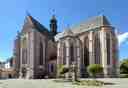
To spot the Basilica of the Assumption of the Virgin Mary, look for a grand, reddish-brick Gothic church with a dramatic steep roof and tall, pointed arched windows, just behind the trees across the parking lot in front of you. Now let’s imagine you’re standing here in the middle of Staré Brno in the 1300s, and the air is thick with the sound of hammers on stone and the flutter of banners in the breeze. The story of this basilica starts with Queen Eliška Rejčka, a woman so legendary that even in her old age, she was making big decisions from the comfort of her seat at Špilberk Castle-a bit like running a city from your favorite armchair, only with more medieval drama. Legend has it, Eliška couldn’t decide where to build a new monastery and church, so she did what any reasonable queen would do: she threw three banners from the Hladová Tower atop Špilberk Castle and waited to see where they’d land. The first one fluttered down right here, where you’re standing. Eliška took one look and declared it the chosen spot-talk about leaving things up to fate! The second banner, by the way, was swept away by the wind and vanished somewhere near Veveří… or perhaps it’s still out there, waiting for some lost tourist to find it. Construction of this fabulous brick basilica began in 1323, and it quickly became the heart of a bustling Cistercian convent. Don’t be fooled by the church’s quiet strength; the design is anything but simple. If you could see through the roof, you’d notice the whole thing is shaped like a giant cross-symbolic and practical, all at once! While stone was all the rage in Gothic architecture, Eliška’s builders took a bold turn and went with unplastered red bricks, inspired by other great churches from as far away as Cologne and Hesse. The only stone is in the decorative details, making for a look that’s both sturdy and elegant. Eliška herself was laid to rest beneath the altar of the Holy Cross, with the peaceful hush of prayers and candlelight all around. Fast forward to the reforms of Emperor Josef II in 1782, and the Cistercians were packed up and moved out, replaced by Augustinian friars. The basilica got a light baroque makeover courtesy of architect Mořic Grimm, but even with its new altars and ornate pulpit, the church never lost its medieval soul. Picture stepping inside: dark, crisscrossed stone vaults rise above you, sunlight slants through stained glass, and the walls glow in soft colors-especially in the presbytery, where golden and blue skies are painted above, dotted with stylized suns and busy little angels. The main altar gleams-just imagine the shimmer coming from the famous silver altar, originally crafted for the famed Black Madonna. This stunning silver creation has been moved more times than a traveling circus, which you might say has left it a little dented, but still dazzling. The Black Madonna, brought here in 1356 by Emperor Charles IV, became the city’s special protector. When Swedes besieged Brno in 1645, the townsfolk saw the Madonna appear above, spreading her protective cloak-giving everyone just enough courage to turn the invaders away. Forget Wi-Fi or superhero movies, this was divine intervention, medieval style! Take a look at the outside: those massive buttresses and delicate, flower-like details on the windows and doorways show off every century the basilica has stood here, watching over Brno through fires, wars, and celebrations. The southern face sports a big triangular shield with four coats of arms, marking the basilica’s royal connections to Moravia, Bohemia, Poland, and Carinthia-a sort of medieval family tree. And not too far from where you’re standing, you’ll spot a strange sculpture made out of old beer tankards in the shape of a pea. That’s a tribute to Gregor Mendel, the abbot and scientist whose pea experiments changed the course of genetics. Yes, there’s a little geekiness hidden amongst all the Gothic drama. So next time you see a banner waving in the breeze, remember-it just might be trying to choose the next great spot for Brno’s history. Until then, imagine the centuries of stories, prayers, and mystery that echo through those brick walls every single day.
Abrir página dedicada →In front of you is the charming Pellicova Street-just look for a gentle curve lined with pastel-colored historic houses, some with lovely ornate details and balconies, and the…Leer másMostrar menos
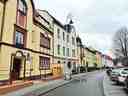
In front of you is the charming Pellicova Street-just look for a gentle curve lined with pastel-colored historic houses, some with lovely ornate details and balconies, and the occasional old-fashioned streetlamp leaning over the sidewalk like it’s whispering secrets. Welcome to Pellicova, a street that may seem peaceful now, but trust me, it’s had quite the dramatic life. Right where you’re standing, people have strolled, protested, and even plotted revolutions-although I promise, no pitchforks today! Imagine the 19th century: this was just a dusty path under the watchful eye of Spilberk Hill, with gardens tumbling down towards the noisy bakeries of Pekařská Street below. No name, no fuss, just a spot for the wind to play and the locals to grumble about muddy shoes. Then, little by little, things changed. In 1844, this street got its first name, “Under Spilberk,” which, let’s be honest, sounds more like a troll’s address than a Brno boulevard. But soon it got a fancier ring as “Spielberggasse,” until finally, in the new days of Czechoslovakia, it was renamed in honor of Silvio Pellico-a man whose life was anything but boring. Now, let’s talk about Silvio Pellico. He was an Italian writer, a romantic at heart, and a real-life revolutionary-a member of the Carbonari movement, fighting to free northern Italy from Austrian rule. Picture him, dashing and determined, only to get caught and sent right up to the big fortress you saw earlier-Spilberk Castle. From 1822 to 1830, Pellico’s “room” (if you can call a prison cell that) overlooked Brno. He spent years dreaming of freedom, scribbling away in secret, and probably inventing new ways to complain about the prison soup. Later, he poured his memories into the now-famous book, “My Prisons,” which became a sensation across Europe. In Italy, there are streets everywhere named for him-here in Brno, Pellicova is the only one outside his homeland. I like to think he’d be both shocked and amused by all these houses and the parade of parked cars. Fast forward. Around the end of the 19th century, things start to really pick up here. The first building you must spot is the baroque house close by, number nine-a survivor and a proud old timer. But the real talk of the town began in the 1890s with the construction of the Bethlehem Evangelical Church. This wasn’t just any church-it was the very first in Brno with services only in Czech, which drove the German-speaking locals absolutely bananas. Imagine the arguments in the street, the dramatic sighs, and maybe even a few flung sauerkraut dumplings. Suddenly, Pellicova became fashionable-even glamorous. Next door, you have the posh Art Nouveau home of Zdeněk Elger, the university rector. His house had such grand ambitions that it ended up with two street numbers, 8 and 8b-because why settle for one? Not to be outdone, along came Rudolf Gödel, a rich industrialist, building his own family villa (number 8a). His son, Kurt Gödel, would go on to become one of the world’s greatest mathematicians. Picture young Kurt racing down this very street, probably inventing new theorems before breakfast. In the early 20th century, Pellicova filled up with even more remarkable homes and residents. There are cubist façades, floral flourishes, and a rental house built by Marie Uherková that’s a real showstopper in creamy white with striking geometry. And on number 29/31, Viktor Putzker had a house crafted with classical elegance sprinkled with just enough Art Deco to make your heart skip a beat. Pellicova became such a posh address that even today, it’s one of the most expensive spots to live in Brno-the views, the peaceful one-way street, and the fresh air from the nearby Spilberk park all make it prime real estate. But despite its peaceful reputation, the street has its drama: hilly terrain that made builders curse and sweat, houses with extra floors on one side to keep up with the slope, and a famous staircase shooting sharply down from the church to Pekařská. The street has had its close-ups too! Filmmakers love it-the twisting lane, quirky buildings, and old-world charm have starred in detective dramas and even a war film. Listen closely: can you hear the ghostly director shouting, “Action!”? As you walk, let your eyes wander over the mix of styles-the baroque, the art nouveau, the functionalist blocks of the 20s and 30s, all blending together. Imagine the layers of history beneath your feet-rebels in chains, lovers at weddings, poets, professors, and maybe a mischievous mathematician or two. And remember: on Pellicova, every bend holds a secret and every house can tell a story-if only the lamplights would spill the beans. Shall we carry on to the next stop? Don’t worry, I promise not to test you on your rebel history!
Abrir página dedicada →To spot Park Studánka, look ahead for a gentle grassy slope with a historic stone pavilion, marked “FONS SALUTIS” above an arched entrance with an old, circular fountain in front,…Leer másMostrar menos
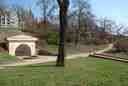
To spot Park Studánka, look ahead for a gentle grassy slope with a historic stone pavilion, marked “FONS SALUTIS” above an arched entrance with an old, circular fountain in front, nestled beneath leafless trees on the hillside. Welcome to Park Studánka, a place that whispers the secrets of Brno’s history every time the wind rustles its branches. Imagine standing here in 1818-this park was brand new, and if you squint, you might spot gentlemen with tall hats and ladies in flowy dresses taking a stroll. Back then, this whole hillside was part of the first public park ever created by the authorities in Bohemia and Moravia-how’s that for bragging rights? The centerpiece at your feet is the “Fons salutis,” which means “Spring of Health,” and locals once believed it bubbled up miraculous water. In fact, if you had a headache, some wise old auntie would march you down here, insisting a sip would have you right as rain. But the park’s story isn’t just elegance and health; it’s a bit of a split personality! In the 1940s, a big road carved this green oasis in two, leaving Denisovy sady up the hill and naming this lower side Studánka after the beloved spring. Through wars, empires, and even the occasional rowdy park picnic, this place has stayed a favorite Brno escape. So enjoy the peace, the shade, and if you listen closely, perhaps you’ll hear echoes of toasts to Napoleon’s defeat-or just a sparrow giggling at the history we’ve all made right here.
Abrir página dedicada →Look ahead for a simple, stone Gothic church with a tall, pointed roof and small windows, perched on a rocky rise-it’s easier to spot if you look towards the very end of Kopečná…Leer másMostrar menos
Look ahead for a simple, stone Gothic church with a tall, pointed roof and small windows, perched on a rocky rise-it’s easier to spot if you look towards the very end of Kopečná street. Now, imagine you’re standing on what once was called Rope-Maker’s Hill, where over 700 years ago, the Church of All Saints stood proud among the rocks. The story begins in 1260, when the place was given to some very grateful Cistercian nuns-lucky them, even if real estate was a bit more medieval back then! The church wasn’t huge, but it was special: a rectangle of quiet stone with a five-sided altar space, always echoing with chanting voices and the low hum of daily prayer. For centuries, life went on-until one fateful day in 1645, when Swedish soldiers rolled into Brno and the city was thrown into chaos. Imagine the rumble of cannons and the rush of people-sadly, the church did not survive the siege. Long after, curious explorers found old vaulted cellars beneath your feet. Some were so unstable they had to be filled, but a secret tunnel with a spring still remains, hidden like treasure. Today, part of the old church peeks out in a restaurant in Anenské terasy, while the rest sleeps peacefully under your feet in the park. They say if you listen closely on a quiet evening, you might even hear the gentle drip of that ancient spring below. Now, isn’t that a story worth raising a toast to?
Abrir página dedicada →To spot St. Anne's University Hospital and St. Anne's Church, just look across the grassy area toward the large, cream-colored building with ornate windows and detailed stonework…Leer másMostrar menos
To spot St. Anne's University Hospital and St. Anne's Church, just look across the grassy area toward the large, cream-colored building with ornate windows and detailed stonework running the length of Pekařská Street-it’s hard to miss! Welcome to St. Anne’s University Hospital and St. Anne’s Church, a place where the past and present meet in a grand stone embrace. Imagine you’re standing here not just in front of a hospital, but in the midst of centuries of stories-stories filled with healing, hope, and a dash of imperial drama. Let’s rewind all the way back to the year 1238. Picture this: Brno is a bustling medieval town. The first hospital here wasn’t quite what you imagine today-no ambulances, no antiseptic smell in the air. Instead, a generous townsman named Rudker and his wife Hodava decided to do a good deed. They set up a hospital for those in need, and soon it became a center not just for the sick, but for the caring spirit of Brno. Over time, the site grew into a hub for the fabled Knights Hospitaller and even had its own church, while medieval Brno bustled outside. As you glance around, try to imagine the sounds of horses’ hooves on the cobblestones and monks’ sandals sweeping over ancient paths. On the western side stood a Dominican convent with the original St. Anne’s Church. Nearby were lush gardens owned by Queen Elisabeth of Bohemia-imagine royal flowers blooming where medical students now rush in for their classes. Fast-forward to the late 18th century and hold on to your hat, because Emperor Joseph II had a habit for shaking things up. In 1782, he abolished the convent with a grand imperial flourish, and soon after, the whole place was transformed into a military hospital. Just imagine soldiers, bandaged and weary, lined up in the cool corridors that echoed with shouts and hurried footsteps. But the military didn’t stay long-by 1786, a new general hospital opened its doors here, and Brno’s citizens finally had a true place of care. Dr. Tomáš Pötzl, the very first director, had fresh challenges: his hospital had just 80 beds, and half of them were reserved for orphans, foundlings, and even the mentally ill. And you thought hospital administration was complicated today! There’s a funny twist, too. The hospital soon filled up and, during rough times, parts of it got nationalized-maternity wards, children’s homes, and yes, even a “mad house.” By the 1860s, the old buildings just weren’t enough to hold all the patients, so a bold new plan emerged. The famous Viennese architect Theophil Hansen was brought in to create the elegant stone wonder you see before you. Hansen himself oversaw the project, but when workers started digging, they found mysterious tunnels and hollow chambers underneath. For a minute, it seemed like the whole hospital might collapse into the earth! But no worries, the new foundations held, and hospital life continued-though with a few extra ghost stories for the night shift nurses. Through the years, St. Anne’s kept on growing. The end of the 19th century saw the addition of a pharmacy, an anatomical institute, and even a separate department just for eye care-so if you’d lost your spectacles, this was the place to come. Children’s care moved to a special new hospital up in Černá Pole, while the building here settled in as the heart of Brno’s medical miracles. Now, take a deep breath-here’s where things start moving fast! In 1919, with the birth of Masaryk University, the hospital became a teaching oasis: bright-eyed med students pouring in, stethoscopes around their necks, eager to learn and sometimes faint at the sight of their first real surgery. After World War II, the hospital got a new name-Regional Hospital, then eventually the Faculty Hospital. Each decade brought more clinics, more special wards, and even more reasons for Brno’s people to feel proud. Some services moved out when the massive Bohunice site opened in the 1980s, but St. Anne’s never lost its special place in the city’s heart. Today, listen closely and you might hear the quiet beep of modern machines and the brisk footsteps of doctors-the hospital is home to state-of-the-art research centers, such as the International Clinical Research Center opened in 2012. Here, scientists and doctors work side by side, searching for new cures and techniques, and often saving lives in ways those 13th-century monks would never have dreamed possible. So, as you stand here, remember: you’re looking at a living monument-a place where history, science, and compassion have walked hand in hand for nearly 800 years. And who knows, perhaps in a quiet corner, the ghost of Emperor Joseph II is keeping an eye on things, just to make sure everyone keeps their wards tidy! Onward to the next stop!
Abrir página dedicada →Look ahead-you’ll spot a giant, broad-crowned tree surrounded by benches right in front of the hospital canteen, standing tall and proud above the buildings and even the…Leer másMostrar menos
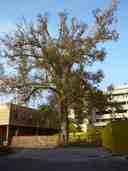
Look ahead-you’ll spot a giant, broad-crowned tree surrounded by benches right in front of the hospital canteen, standing tall and proud above the buildings and even the construction fences. Now, take a deep breath and look up at the legendary Plane tree of St. Anne’s! This isn’t just any tree-this leafy giant has been holding court here for over 130 years. With its trunk as thick as five people holding hands and branches reaching out like open arms, it’s seen more hospital drama than the doctors inside. Back in 2001, the Plane tree wasn’t just a local celebrity-it won the “Tree of the Year” award, giving it serious bragging rights over the other trees on the block. It was even featured on TV, in a show all about historic trees-so you’re basically standing in front of a nature superstar! Builders not only tiptoed around it while making the canteen, but they even brought in experts to give it a fancy ‘haircut’ in 1997, making sure it stayed healthy and photo-ready. They shortened its lower branches, so if it seems a bit trimmed, you know why! Imagine all the stories this tree has overheard from patients, visitors, and staff-standing strong through decades of changes, constructions, and quiet hospital nights. So, while it may not have a stethoscope, the Plane tree of St. Anne’s has definitely earned the title of hospital legend!
Abrir página dedicada →
Preguntas frecuentes
¿Cómo empiezo el tour?
Después de la compra, descarga la app AudaTours e ingresa tu código de canje. El tour estará listo para comenzar de inmediato - solo toca play y sigue la ruta guiada por GPS.
¿Necesito internet durante el tour?
¡No! Descarga el tour antes de empezar y disfrútalo completamente sin conexión. Solo la función de chat requiere internet. Recomendamos descargar en WiFi para ahorrar datos móviles.
¿Es un tour guiado en grupo?
No - esta es una audioguía autoguiada. Exploras de forma independiente a tu propio ritmo, con narración de audio reproduciéndose en tu teléfono. Sin guía, sin grupo, sin horario.
¿Cuánto dura el tour?
La mayoría de los tours toman 60–90 minutos para completar, pero tú controlas el ritmo completamente. Pausa, salta paradas o toma descansos cuando quieras.
¿Qué pasa si no puedo terminar el tour hoy?
¡No hay problema! Los tours tienen acceso de por vida. Pausa y continúa cuando quieras - mañana, la próxima semana o el próximo año. Tu progreso se guarda.
¿Qué idiomas están disponibles?
Todos los tours están disponibles en más de 50 idiomas. Selecciona tu idioma preferido al canjear tu código. Nota: el idioma no se puede cambiar después de generar el tour.
¿Dónde accedo al tour después de comprarlo?
Descarga la app gratuita AudaTours desde App Store o Google Play. Ingresa tu código de canje (enviado por email) y el tour aparecerá en tu biblioteca, listo para descargar y comenzar.
Si no disfrutas el tour, te reembolsamos tu compra. Contáctanos en [email protected]
Paga de forma segura con 


