
Tour de audio de Bakú: Ecos y leyendas de la Ciudad Vieja
Detrás de las bulliciosas calles modernas de Bakú, las sombras de catedrales desaparecidas se mezclan con historias de amor prohibido y poetas que moldearon imperios. Esta ciudad esconde secretos en sus palacios de cuento de hadas, cúpulas doradas y museos de ensueño, si sabes dónde buscar. Conecta tus auriculares para una aventura de audio autoguiada que desvela siglos de drama, rebelión, desamor y maravilla que la mayoría de los visitantes nunca notan. ¿Por qué la poderosa Catedral de Alexander Nevsky fue volada por los aires casi de la noche a la mañana? ¿Qué rumor susurrado convirtió el Palacio de la Felicidad de un símbolo de romance en un escenario de tragedia? ¿Y el cumpleaños de qué poeta olvidado provocó la salvaje transformación de un gran hotel en el tesoro literario de Bakú? Muévete a través del tiempo mientras los adoquines dan paso a salones de baile, batallas y celebraciones. Siente cómo cada paso te adentra más en una ciudad donde cada edificio tiene una voz secreta esperando ser escuchada. ¿Listo para perseguir los latidos que resuenan bajo la superficie de Bakú? Empieza a explorar ahora.
Vista previa del tour
Sobre este tour
- scheduleDuración 40–60 minsVe a tu propio ritmo
- straighten4.7 km de ruta a pieSigue el camino guiado
- location_onUbicaciónBakú, Azerbaiyán
- wifi_offFunciona sin conexiónDescarga una vez, úsalo en cualquier lugar
- all_inclusiveAcceso de por vidaReprodúcelo en cualquier momento, para siempre
- location_onComienza en Palacio de la Felicidad
Paradas en este tour
Coming up on your left, you’ll see a truly unforgettable building-just look for the palace with pointy towers and a grand entrance that almost looks like it belongs in a fairy…Leer másMostrar menos
Coming up on your left, you’ll see a truly unforgettable building-just look for the palace with pointy towers and a grand entrance that almost looks like it belongs in a fairy tale or maybe even Dracula’s vacation home. Its creamy stone walls, giant arched windows, and fancy carvings all come together to create an unmistakably Gothic silhouette. If you’re ever in doubt, just follow the curious glances of other passersby-everyone stops to admire its dramatic beauty. Now, let’s step back in time. Take a good look at this place and imagine the early 1900s: Baku’s oil boom is in full swing, carriages roll down the street, and the air’s thick with the excitement of a city overflowing with new wealth and wild ideas. This is the Palace of Happiness-a name that sounds like it’s straight from a storybook, right? And believe me, the real story is just as magical. Picture an oil baron, Murtuza Mukhtarov. He adored his wife Lisa, and on their trip to Europe, she marveled at a breathtaking Gothic mansion in France. She sighed and said, “How happy the people must be who live there!” Fast-forward to Baku-Murtuza secretly has blueprints brought all the way from France and, in under a year, surprises Lisa with her own palace in the heart of the city. Imagine her stepping out of the carriage, seeing this towered, fantasy-like castle suddenly hers. If that’s not romantic, I don’t know what is. Cupid himself would get jealous! At the very top, above the entrance, there’s even a statue of a Polish knight, Zawisza the Black-just a little extra touch of mystery. Over the years, this palace has seen happiness, drama, and even tragedy; it’s changed from a private love nest to a museum, a women’s club, and even a place for registering marriages. Not bad for just one lifetime under those spires, eh? If these walls could talk, they’d probably ask for another dramatic declaration of love, or maybe just compare notes on all those nervous grooms and giggling brides. Take a long look, let your imagination wander, and get ready to feel the echoes of grand gestures and timeless stories in the air around you. That’s the magic of the Palace of Happiness!
Abrir página dedicada →Take a look just ahead of you-if you were walking here a hundred years ago, you’d spot a giant, golden-crowned church rising above the city like a giant wedding cake. Those tall,…Leer másMostrar menos
Take a look just ahead of you-if you were walking here a hundred years ago, you’d spot a giant, golden-crowned church rising above the city like a giant wedding cake. Those tall, onion-shaped domes, sparkling and catching the sunlight, would have made it impossible to miss. The spire shot up into the sky, with crosses gleaming on top-it's almost like the kind of castle you’d draw as a child, only far grander, and made for grownups to marvel at. Now, let’s travel back in time together, right here in front of the old site of the Alexander Nevsky Cathedral, also known as “The Golden Church.” Imagine the busy streets of Baku in 1888, horses clopping past, townsfolk chattering, and church bells ringing in the distance. This place buzzed with excitement. The Russian Orthodox community had outgrown its tiny prayer spaces, and the governor decided it was high time for something magnificent. Some people weren’t thrilled with the chosen spot-it used to be an old, abandoned cemetery. For ten years, neighbors argued over whether a brand-new cathedral should be built here. But eventually, everyone put aside their differences, and the emperor himself gave the final "thumbs up" for construction. The first stone was laid with great ceremony. Picture the Emperor Alexander III and his family-future emperor included-standing alongside Baku’s Christian, Muslim, and Jewish leaders, tying together the city’s different communities. Now here’s something amazing: the emperor ran out of money, so the people of Baku stepped up. Nearly 75 percent of the donations came from Muslims, even the legendary oil baron Zeynalabdin Taghiyev chipped in 10,000 roubles. And the Jewish community? They contributed, too! It was a true group project-if only modern group projects went this smoothly, right? When it finally opened in 1898, this church was enormous-81 meters high, with domes, arches, and crosses all shimmering with gold. It could be seen from nearly everywhere. People called it “The Golden Church,” and for a time, it was the heart of Orthodox faith in the whole Caucasus. But its glory didn’t last forever. In the 1930s, the Soviet government wasn’t a fan of big religious buildings. One day, with a thunderous blast, the Alexander Nevsky Cathedral was blown to pieces, making way for modern Baku. Today, if you listen closely, you might still hear a faint echo of organ music or church bells in the wind. And right where you’re standing, the Bulbul School of Music now carries on the tradition of gathering voices together-though now it’s singing rather than prayer that fills the hall.
Abrir página dedicada →Ahead of you is the Nizami Museum of Azerbaijani Literature, and trust me, you can’t miss it! Just look up at the long, pale yellow building right in front-notice those tall white…Leer másMostrar menos
Ahead of you is the Nizami Museum of Azerbaijani Literature, and trust me, you can’t miss it! Just look up at the long, pale yellow building right in front-notice those tall white arches and rows of noble-looking poets standing guard on the balcony level? If you spot six statues calmly gazing over the square, congratulations, you’ve found it! The building’s elegant arches and tiled details almost make it look like a palace for books, don’t they? Now, as you stand before this grand museum, imagine you’re stepping into a storybook where the sidewalk is the first page. The place is named for Nizami Ganjavi, Azerbaijan’s most legendary poet-think of him as the Shakespeare of the Caucasus, but with a bigger beard. The museum was born in 1939, not far from all the city’s action, right at the entrance to the old city and only a stone’s throw from Fountains Square. But here’s where it gets a bit dramatic: this building wasn’t always a museum. It started life as a caravanserai in 1850, where silk traders and travelers could rest. Then it became the Metropol Hotel, where you might expect to see tired guests sipping tea and writing mysterious notes. Later, ministers and union workers buzzed about, stirring papers and ideas behind these walls. When the museum was finally established, it happened as part of the 800th birthday party for Nizami-imagine a party so important that entire buildings get renovated! But the opening had to wait until after World War II, so the whole place was buzzing with plans and anticipation. Can you picture the excitement when, in 1945, the doors finally swung open and people poured in, eager to see treasures that had waited for years? Today, this giant treasure chest holds more than 120,000 items, including precious manuscripts written by candlelight centuries ago. In fact, if you listen closely, you might just hear the rustle of ancient papers or the whisper of poets trying to rhyme something with “Ganjavi.” Don’t miss the statues out front: each one a famous Azerbaijani writer or poet, immortalized to remind us how powerful words can be. So as you gaze up at those statues, and maybe get inspired yourself, remember-inside, history and poetry aren’t just carefully kept, they’re still alive, waiting for the next curious mind to come along. And who knows, maybe you’ll leave here with a story or two of your own!
Abrir página dedicada →

Mostrar 9 paradas másMostrar menos paradasexpand_moreexpand_less
To spot the Armenian Church, just look straight ahead for a tall stone building with warm beige walls, a pointed dome, and an impressive bell tower with three large arches. It…Leer másMostrar menos
To spot the Armenian Church, just look straight ahead for a tall stone building with warm beige walls, a pointed dome, and an impressive bell tower with three large arches. It stands out against the modern glassy buildings nearby. You’ll notice the dark iron fence surrounding it, and if you’re facing a peaceful square with some trees and sparse greenery, you’re in the right place. Now, imagine yourself right in front of the Saint Gregory the Illuminator Church. Let’s step into its story. If these stones could talk, they'd have a lot to say, maybe even in three languages at once! Built between 1863 and 1869, this church has stood watch over Baku through fire, war, and more than a few storms. Picture a time when the air was full of the echo of footsteps and the songs from the church choir drifting out onto the street. Back in the day, you’d have found this place alive with community. Girls learning their first letters in the school next door, and people borrowing books from the little library-a rare treat before smartphones came along. But the story of this church isn’t all peace and quiet. In 1903, the churchyard was filled with shouts and marching boots as Russian soldiers came to fight Armenian activists. It got so tense you could almost hear the clang of sabers and the cries of people defending their home. Through wars, fires, and the dark nights of the Soviet campaigns, this church barely held on. Incredibly, it survived arson in 1989, with flames licking up the walls and priceless relics turning to ash. Yet somehow, by fate or by stubborn stone, the church refused to fall. Even when the cross was taken from the top, and the church turned into a billiard hall and a tea house, the building remained-a shell, but still standing. Today, the city has changed. You might spot more pigeons than people around. But look at those walls-scars and all-and you’re seeing history with your own eyes: the last visible Armenian monument in all of Baku. If you listen closely, maybe, just maybe, you can still hear a faint echo of the choir that once sang here, stubborn as ever, refusing to be silenced. All right! Ready to explore where the old fortress wall rises next? Let’s keep walking!
Abrir página dedicada →Take a look straight ahead-see those dazzling strings of lights hanging like grand chandeliers across the street? And on either side, the tall buildings are glowing with rows of…Leer másMostrar menos
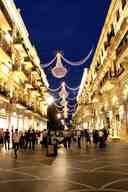
Take a look straight ahead-see those dazzling strings of lights hanging like grand chandeliers across the street? And on either side, the tall buildings are glowing with rows of balconies and bright shop windows. The street you're on is wide and paved with smooth patterns, and right now, it’s full of people strolling, chatting, and maybe even secretly pretending they're in a movie scene. If you see a place that feels as lively as a festival every night, with laughter echoing off the stone, you’ve found Nizami Street. Let’s imagine it’s the late 1800s. Instead of the hum of electric lights and the buzz of fashion stores, you’d hear the creak of wooden carts, the calls of market traders, and the shuffle of finely dressed oil magnates-yep, the first millionaires of the city. Picture silk merchants and photographers setting up their stands right here, where you’re standing. This place was once called Torgovaya Street-“the merchant street”-and even royalty would be impressed with the shopping! Merchants from distant lands came to trade silk, spices, and the latest Paris fashions. Oil barons built their palaces here, hiring top architects to make their buildings look as fancy as a wedding cake. One of them, Musa Naghiyev, was rumored to be so rich, he could have paved this whole street in gold-though, don’t try chipping at the pavement, just in case. Nizami Street stretches all the way from the city’s hills to the edge of “Black City,” where the oil wells once roared. Underneath this modern avenue is a river of stories: earthquakes that shook the city, new buildings rising higher each year, and waves of newcomers chasing dreams in the oil boom. A quick warning-if you catch the sweet scent of pastries or feel your wallet itching, that’s just Nizami’s charm in action. So look up, look around, and take a deep breath-this street has seen everything from royal parades to wild shopping sprees. You never know, the next shop window you peer into might just pop you back in time, and you’ll spot a poet or a tycoon haggling over jewels. That’s Nizami Street for you-the heartbeat of Baku, where history and hustle walk hand in hand. Keep moving, there’s no telling what treasure you’ll find next!
Abrir página dedicada →Here it is, right in front of you! Just look for that grand, pale stone building that wraps all the way around the corner-stretching a whole city block, dressed up with tall,…Leer másMostrar menos
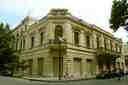
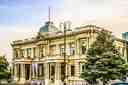
Here it is, right in front of you! Just look for that grand, pale stone building that wraps all the way around the corner-stretching a whole city block, dressed up with tall, arched windows and delicate black balconies. At either end, you can spot pointed white rooftops, almost like little crowns. This isn’t your average building. To be honest, it’s so grand, it looks like it's about to invite you to a masquerade ball. The sign on the corner reads “H.Z. Tagiyev Street”-that’s your cue that you’ve found it. Imagine standing here, a hundred years ago. The city bustled with carriages, horses’ hooves clacking along these cobblestones. This building once belonged to Haji Zeynalabdin Taghiyev-a superstar of oil, the Bill Gates of Baku! He built this mansion with the best that the world could offer: marble from afar, elegant furniture shipped across continents, and ceilings high enough for giants (each room rises more than 13 meters, so even Azerbaijan’s tallest dreams would fit). When the Russian troops swept into Baku in 1920, the house was seized within hours. No time for packing or goodbyes-just imagine the echoes in those grand ballrooms as new footsteps hurried across the floors. In Soviet times, this place had more wardrobe changes than a pop star. It was a bank, then a commissar office, and during World War II, its treasures were boxed up and hidden away. But history has a funny way of shining through. Now, this mighty building is the keeper of Azerbaijan’s story-from ancient archaeology (think: mummies, armor, and pottery dug up from the earth) to the tales of empire, oil booms, and revolution. So as you stand here, just think: behind these sturdy stone walls, the air is thick with secrets-whispers of grand dinner parties, hurried revolutions, and lost treasures waiting to be found. And who knows, maybe the next secret is just waiting for you to step inside. Shall we? To expand your understanding of the the building, memorial museum of haji zeynalabdin taghiyev or the museum funds, feel free to engage with me in the chat section below.
Abrir página dedicada →Right in front of you is the Baku Fortress Wall! To spot it, just look for the tall, rugged stone wall with its chunky battlements-those tooth-like shapes running along the top.…Leer másMostrar menos
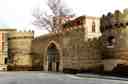
Right in front of you is the Baku Fortress Wall! To spot it, just look for the tall, rugged stone wall with its chunky battlements-those tooth-like shapes running along the top. There’s an arched gate with heavy iron bars, almost looking like it’s daring you to peek inside. The wall curves around the corner, strong and sturdy, and a round tower stands guard, watching over the street. It's like a giant stone hug around the heart of old Baku. Now, imagine yourself back nearly 900 years ago. The year is 1139, and the new wall you’re standing in front of is being finished under the orders of Shirvanshah Manuchohr III. The blocks are rough, the air smells of dust and fresh mortar, and everywhere there’s the clanking of hammers. You can almost hear the panic of townsfolk rushing behind these walls as a warning horn sounds from that very tower. In those days, the fortress was the city’s ultimate shield. The walls-so thick you could race two horse carts across their tops-wrapped 1500 meters around the city. There were two mighty gates, one facing the wild Caspian Sea and the other open to dry land, as if inviting both friends and foes for a tricky game of hide-and-seek. Travelers in the Middle Ages described a double wall, meaning attackers would have to survive not just one, but two rings of stone! The inner wall you see now, survived centuries of battle and a makeover or two-Baku has had more facelifts than a celebrity on a reality show. The fortress has seen earthquakes, invasions, power struggles, even a Russian Navy attack that ended very badly for the bold Russians. Their ships burned in the harbor while Baku stood firm, its defenders cheering from the ramparts. Time marched on and, eventually, the fortress lost its military purpose. By 1867, it was officially retired-sort of like an old war hero who’s seen too much action but still deserves respect. Some walls were knocked down for ‘better air movement’-at least, that’s what the paperwork said. But the stones you see right now? Survivors. They hold stories of sieges and celebrations, kings and conquerors, and the daily dramas of Baku’s past. So, as you gaze up at these ancient stones, imagine the clang of swords, shouts of guards, the rushing feet of messengers, and the wind that’s carried secrets across these walls for centuries. If these stones could talk, they’d probably have more gossip than all the cafes in Baku put together.
Abrir página dedicada →Right in front of you is Baku’s Old City, known as İçərişəhər. To spot it, just look for those ancient stone walls rising up, almost like a protective arm curving around the heart…Leer másMostrar menos
Right in front of you is Baku’s Old City, known as İçərişəhər. To spot it, just look for those ancient stone walls rising up, almost like a protective arm curving around the heart of Baku. You’ll see narrow, winding cobblestone streets slipping through heavy arched gates, old minarets peeking from behind the roofs, and neat rows of mismatched stone houses-each one holding centuries of secrets. The sunlight bounces off the golden stone, giving everything a warm glow. It’s like stepping onto the set of a time-travel adventure. Let’s take you back a few centuries, shall we? Imagine dust swirling as camels arrive at the bazaar, the air filled with the sounds of craftsmen hammering, market sellers shouting about pomegranates and silk, and the echo of prayers from ancient mosques. At one point, everybody wanted a piece of this place-kings, traders, invaders-even the Russians moved in and left their mark; that’s why you might see a little European flair here and there. If you could peek inside these walls in the year 1806, you’d see 7,000 people at work and play-almost all ethnic Tats-debating who’s luckier: those inside (proud natives, of course), or the so-called “barefoot people” from outside the walls. You might get a little jealous of their shortcut access to spices, mosques, and the snazziest bathhouses in town. Heck, even a military barracks lived here for a while. It’s not all stone and sunlight, though. The Old City is packed with mystery-twists, turns, hidden courtyards, and legends about towers that might be older than everyone says. Some think parts go back to the 7th century. No one knows for sure-a little bit of a historical cliffhanger! But with every step, you’re walking through Baku’s history. Enter here, and you’re not just a visitor-you’re a time traveler, dodging ghosts of clever shopkeepers and maybe avoiding the odd loose cannon-ball (don’t worry, they don’t roll around anymore). And remember, if you find yourself getting lost in all these narrow alleys, don’t panic. That just means you’re doing it right. After all, no adventure story ever started with, “Everything went exactly as planned.” Ready to explore? Let’s see if you can find where the real stories are hiding. To expand your understanding of the neighbourhoods, education or the world heritage site, feel free to engage with me in the chat section below.
Abrir página dedicada →Ahead of you stands the magnificent Palace of the Shirvanshahs. To spot it, just look for a cluster of sandy-golden stone buildings rising from the greenery, crowned with multiple…Leer másMostrar menos
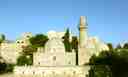
Ahead of you stands the magnificent Palace of the Shirvanshahs. To spot it, just look for a cluster of sandy-golden stone buildings rising from the greenery, crowned with multiple domes and a tall, round minaret with a balcony. There are a mix of smooth and geometric stone shapes. You can’t miss its castle-like walls and the tall cypress trees that peek out among the ancient architecture. Now, picture this: it’s the 15th century. You’re just outside one of the grandest palaces ever built in Azerbaijan. The sun is beating down on the sandy stones, and you can almost hear the echoes of silk slippers along the palace corridors. This place was once the home of the powerful Shirvanshah dynasty-imagine rulers in flowing robes, merchants arriving with treasures, and the air buzzing with secrets. The palace is actually a whole complex-there’s the main palace building, a council hall known as Divanhane, royal burial vaults, a mosque topped with a minaret, and even the resting place of a famous Sufi mystic. There’s a mysterious dervish mausoleum, twisting corridors, and the faint scent of history everywhere. If these walls could talk, they’d probably spill stories about ancient battles, hidden treasures, and why the king’s favorite chef was only allowed in after midnight. It used to be completely surrounded by sturdy walls and towers, like something from a fairy tale. Today, you can only imagine the guards pacing up above, keeping an eye out for trouble. Back in the day, people believed the wells here had magical healing powers-so if your feet are tired, maybe you’re just standing on the right spot! And did you know, this masterpiece, along with the Maiden Tower, is a UNESCO World Heritage Site? Not bad for a palace that doesn’t even have its own fancy inscription above the door! Whether you see it as a mighty royal residence or a sacred center for Sufi wisdom, the Palace of the Shirvanshahs still stands strong, whispering wild tales from its old stones. Don’t worry, though-no ghostly sultans have tried to shoo away tourists… at least, not recently! Ready to delve deeper into the architecture, in culture or the gallery? Join me in the chat section for an enriching discussion.
Abrir página dedicada →Look ahead-right in front of you stands a grand, two-story building with pale golden stone, tall windows, and elegant columns lining the entrance. Notice the decorative sculptures…Leer másMostrar menos
Look ahead-right in front of you stands a grand, two-story building with pale golden stone, tall windows, and elegant columns lining the entrance. Notice the decorative sculptures up near the rooftop and the unique dome with a spire rising at the center. If you spot a mansion that looks like it came out of a fairy tale about artists and old royals, you’re in the right place! This is the National Art Museum of Azerbaijan. Now, as you stand in front of these impressive doors, imagine the quiet buzz of anticipation echoing inside. This museum, founded in 1936, is Baku’s treasure chest-holding over 15,000 artworks, everything from ancient ceramic bowls decorated with mysterious symbols, to shimmering gold-embroidered velvet hats, to paintings that span centuries. The museum is housed in two 19th-century buildings, and one used to be the home of a wealthy oil baron. And trust me, in Baku, oil barons didn't know how to do things halfway! The outside is grand, but inside is where things get colorful. Over 3,000 items are permanently on display in 60 rooms, but just imagine-there are 12,000 more in storage. It’s like a never-ending game of hide and seek with art. You’ll find ancient lamps and glazed tiles from the Seljuq era, pieces of a 13th-century castle, and books so old they almost whisper secrets when you walk past them. For a taste of drama, in 1993, works were stolen right from the museum-thankfully, they were recovered, so nothing is missing from this tale. Rustam Mustafayev, the Azerbaijani theater artist for whom the museum is named, would love how lively and creative this place remains. Each exhibit is filled with color, from glowing gold embroidery-made with real gold thread-to costumes, jewelry, and carpets that dazzle visitors. The hats, or "arakhchins," and “arkhaligs” are decorated with petals and stars… if you wore one to your local grocery store, you’d definitely turn heads. This place doesn’t just celebrate Azerbaijani art, either. There’s stunning work from across Europe and the East-France and Germany to Japan and Egypt. If you listen closely, maybe you’ll hear the shuffle of feet from artists who traveled the Silk Road. Even the museum’s library is a treasure trove-nearly 9,000 books and rare editions on everything from miniature painting to the secrets of astronomy. So, if you get lost in these halls, don’t worry-it just means you’re exploring Baku’s entire artistic history, all under one roof. And let’s be honest, if you try on all the embroidered hats, we won’t judge. If you're keen on discovering more about the collection, architecture or the the collection of antique and medieval art of azerbaijan, head down to the chat section and engage with me.
Abrir página dedicada →If you look straight ahead, you’ll spot the Sheikh Ibrahim Mosque-it’s the low, sturdy stone building right in front of you, blending gently into the ancient street. Notice the…Leer másMostrar menos
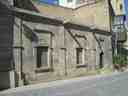
If you look straight ahead, you’ll spot the Sheikh Ibrahim Mosque-it’s the low, sturdy stone building right in front of you, blending gently into the ancient street. Notice the three big windows set in rectangular frames, their latticework like intricate little puzzles, and the doorway shaped almost like a secret portal. It might not reach for the sky like some grand mosques, but it holds centuries of stories in its solid walls. Imagine yourself walking these cobblestones about 600 years ago. People hurry by with news of the sultan, merchant stalls line the street, and the warm scent of bread drifts from some nearby oven. In the year 1434-back when knights and poets shared the same legends-this very mosque rose up, commissioned by a generous man named Haji Amirshah ibn Yagub, during the reign of Shirvanshah I Ibrahim. That’s where it gets its name: after Sultan Sheikh Ibrahim himself. There’s even an inscription above the door that tells this story-like a stone tweet from the 15th century. Now, the Sheikh Ibrahim Mosque is wrapped in more layers than an onion! After centuries of prayers, whispers, and children’s laughter, it saw the tough days of the Soviet era when people couldn’t come here to worship. What was once a spiritual heart of the neighborhood stood silent-except, maybe, for the pigeons holding their own little gatherings on the roof. After Azerbaijan gained independence, the mosque was declared a protected monument. And today, it’s filled again-not with daily prayers, but with the sound of learning, serving as a madrasa where students soak up centuries of wisdom. You’ll spot the mosque’s powerful stone dome if you step to the side, and if you look at the front closely, see how the wall is divided into three decorative frames, almost like old picture frames, each with its own window and a touch of European flair blended with Eastern mystery. The entrance, shaped in a pointed portal, invites you in like a smiling guardian. Every stone, every line of carving, every silent pause-these are all threads in the rich tapestry of Baku’s Old City. And here you are, standing just where sultans and scholars once stood. Not bad for a day’s stroll, right?
Abrir página dedicada →Look ahead, just past the trees in the plaza, and you’ll see it: a massive, jet-tall cylinder of dark, weathered stone rising up from the ground like a giant drum. The Maiden…Leer másMostrar menos
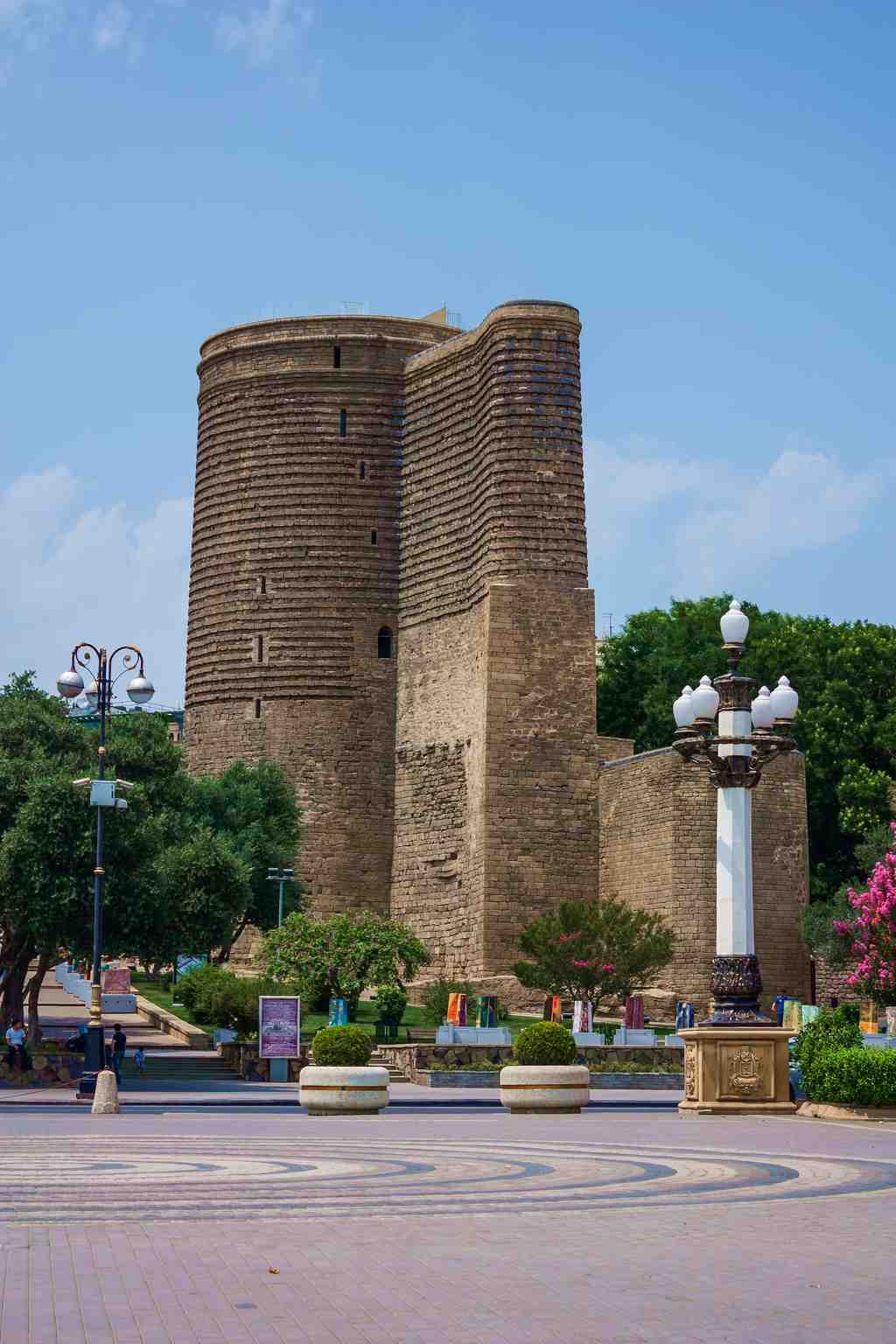
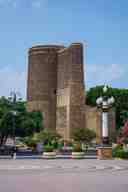
Look ahead, just past the trees in the plaza, and you’ll see it: a massive, jet-tall cylinder of dark, weathered stone rising up from the ground like a giant drum. The Maiden Tower is easy to spot-its strange, rounded form stands at the edge of Old City, far taller than the garden pines and lamp posts. See that ancient, ribbed pattern running around the tower’s body? Those brick lines wrap the structure like the rings of a long-living tree. And yes, it looks like it’s hiding secrets behind its thick walls. Alright, get ready for a little bit of time travel. You’re now standing in front of the legendary Maiden Tower, or “Qız qalası,” one of the most mysterious and iconic buildings in all of Azerbaijan. This mighty stone tower has been watching over Baku since at least the 12th century, and possibly much, much longer. Some folks say it’s so old, even the stones might forget how they got here. This tower isn’t just famous-it’s a superstar. You’ll find its image everywhere in Azerbaijan, from banknotes to official documents. But there’s more to it than just good looks; the inside holds a museum telling the story of Baku’s evolution from ancient settlement to modern city. If you pop up to the rooftop (and I highly recommend it!), you’ll be rewarded with sweeping views: zig-zagging alleys, proud minarets, Baku Boulevard, the Isa bek Hajinski House, and the glittering expanse of the bay. Not to mention some prime real estate for photos, so make sure your phone’s charged. But what’s a tower without a few legends? The Maiden Tower is drenched in old stories-some so dramatic they inspired epic ballets and sweeping plays. Composer Afrasiyab Badalbeyli even wrote a ballet about it in 1940, which got a glitzy remake in 1999. There’s talk of princesses leaping, messages hidden in stone, and ancient fires blazing here on top of what was once the sea’s edge. Back then, new land was just forming, perfect for city walls and palaces-and this tower, built not just as a fortress, but maybe as a Zoroastrian fire temple. Imagine the flames flickering through seven exits at the top, each marking a path to the heavens. Historians love to argue about the Maiden Tower. Some say its bottom layers were set down as far back as the 4th or 5th centuries, and the place might have once been an astronomical observatory-those odd stone nubs around the sides might even count the days of the month. Regardless of legend or timeline, this spot was chosen for strength: beneath you lies rock sloping to the sea, hidden wooden girders for earthquakes, and walls so thick you’d need a battering ram and a strong cup of coffee to break through. The tower’s real name remains a mystery-its ancient Kufic inscription is high on the southern wall. Was it really built by the architect whose son later made the Mardakan Round Tower? Or was it a different genius altogether? So as you stand here, in the shade of the Maiden Tower, take a deep breath and let your imagination wander. Maybe you’ll feel the whisper of past centuries, or catch a glimpse of a legend. Either way, Baku wouldn’t be Baku without it! To expand your understanding of the legends and mysteries, architecture or the restoration, feel free to engage with me in the chat section below.
Abrir página dedicada →
Preguntas frecuentes
¿Cómo empiezo el tour?
Después de la compra, descarga la app AudaTours e ingresa tu código de canje. El tour estará listo para comenzar de inmediato - solo toca play y sigue la ruta guiada por GPS.
¿Necesito internet durante el tour?
¡No! Descarga el tour antes de empezar y disfrútalo completamente sin conexión. Solo la función de chat requiere internet. Recomendamos descargar en WiFi para ahorrar datos móviles.
¿Es un tour guiado en grupo?
No - esta es una audioguía autoguiada. Exploras de forma independiente a tu propio ritmo, con narración de audio reproduciéndose en tu teléfono. Sin guía, sin grupo, sin horario.
¿Cuánto dura el tour?
La mayoría de los tours toman 60–90 minutos para completar, pero tú controlas el ritmo completamente. Pausa, salta paradas o toma descansos cuando quieras.
¿Qué pasa si no puedo terminar el tour hoy?
¡No hay problema! Los tours tienen acceso de por vida. Pausa y continúa cuando quieras - mañana, la próxima semana o el próximo año. Tu progreso se guarda.
¿Qué idiomas están disponibles?
Todos los tours están disponibles en más de 50 idiomas. Selecciona tu idioma preferido al canjear tu código. Nota: el idioma no se puede cambiar después de generar el tour.
¿Dónde accedo al tour después de comprarlo?
Descarga la app gratuita AudaTours desde App Store o Google Play. Ingresa tu código de canje (enviado por email) y el tour aparecerá en tu biblioteca, listo para descargar y comenzar.
Si no disfrutas el tour, te reembolsamos tu compra. Contáctanos en [email protected]
Paga de forma segura con 


