Audioguía de Melbourne: Aventura Académica por Parkville
Un esqueleto momificado una vez resonó en los pasillos de los edificios universitarios más grandiosos de Melbourne, susurrando secretos perdidos en el tiempo. Desbloquea una audioguía autoguiada por Parkville, donde el arte, la ciencia y el escándalo chocan en rincones que la mayoría de los visitantes nunca encuentran. Escucha cómo la piedra y el acero revelan historias enterradas que se esconden a plena vista. ¿Qué violenta trama política se desarrolló en un aula llena de especímenes médicos? ¿Quién desapareció bajo los escalones de mármol del Edificio Frank Tate, y por qué los funcionarios intentaron encubrirlo? ¿Cómo una extraña colección en el Museo Ian Potter desató un debate en toda la ciudad sobre la belleza y la verdad? Traza tu propio camino a través de céspedes, arcadas y cámaras ocultas. Cada rincón palpita con viejas rivalidades, curiosidades inquietantes y sorpresas luminosas. Descubre el corazón secreto de Parkville mientras caminas donde pocos se atreven a mirar. Atrévete a seguir los susurros momificados: tu viaje a las historias ocultas de Parkville comienza ahora.
Vista previa del tour
Sobre este tour
- scheduleDuración 40–60 minsVe a tu propio ritmo
- straighten3.1 km de ruta a pieSigue el camino guiado
- location_on
- wifi_offFunciona sin conexiónDescarga una vez, úsalo en cualquier lugar
- all_inclusiveAcceso de por vidaReprodúcelo en cualquier momento, para siempre
- location_onComienza en Museo de Arte Ian Potter
Paradas en este tour
To spot the Ian Potter Museum of Art, look for a striking, modern building made of sleek grey and silver panels, featuring bold shapes and a funky three-dimensional artwork on its…Leer másMostrar menos
To spot the Ian Potter Museum of Art, look for a striking, modern building made of sleek grey and silver panels, featuring bold shapes and a funky three-dimensional artwork on its facade near the big trees and tram lines. Welcome to the Ian Potter Museum of Art, or “The Potter” as the cool kids-okay, really everyone-likes to call it! Imagine stepping into a space where art has been buzzing with excitement since 1972. The building you’re gazing at now is the museum’s stylish suit, opened in 1998, brought to life by the famous architect Nonda Katsalidis and his dream team of designers. It’s so unique that even Melbourne’s seagulls might stop and stare. Now, behind these crisp, smooth walls, the Potter has been nurturing some of Melbourne’s richest collections, from mesmerizing contemporary wonders to historical gems. Artists, students, and curious visitors have wandered these spaces, their footsteps echoing up and down the halls, while masterpieces are lovingly cared for, catalogued, and protected away from any wild weather or, let’s be honest, misplaced coffee cups. In 1999, all those efforts paid off: the museum bagged the Victorian Architecture Medal and the Melbourne Prize for changing the face-and spirit-of the city. If you listen carefully, you might even hear whispers of creative energy swirling around the building. So take a moment to breathe in that mix of old and new, and get ready-this place is definitely more than a pretty face. And did I mention? It’s a guaranteed selfie winner!
Abrir página dedicada →To spot the Old Pathology Building, just look for the grand two-storey stone building with pointed gables, tall lancet arches, and a slate roof right in front of you on Grattan…Leer másMostrar menos
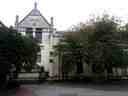
To spot the Old Pathology Building, just look for the grand two-storey stone building with pointed gables, tall lancet arches, and a slate roof right in front of you on Grattan Street. Now, let’s step back in time to the year 1885. Imagine the clang and clatter of stonemasons' hammers as they build this striking structure right before your eyes. This isn’t just any building; this is the heart of medical discovery at the University of Melbourne, designed in the Neo-Gothic style to make even the bravest students feel a little bit like they’re heading off to Hogwarts-but with more anatomy lessons and fewer magical beasts! Classes at the University started in 1853, and by the early 1880s, Professor H. B. Allen was dreaming of a grand medical school. His pride and joy? A museum packed full of thousands of pathology specimens, some odd enough to make even the toughest students queasy. Allen’s ambition turned these walls into the ultimate science classroom-just imagine glass jars lined up, holding secrets of past epidemics and medical marvels. When Peter MacCallum took over, he brought even more excitement and founded the Society of Pathology and Experimental Science in 1930. Science marched on-and the need for laboratories grew as the university’s medical school tackled the major health mysteries of the twentieth century. Students filed through these hallways, learning to battle diseases in an era when epidemics swept through like Melbourne’s wild winter winds. Take a look at those bluestone plinths, sturdy buttresses, and sharply pointed arches-this building was deliberately made to match the rest of the campus in that Gothic “seriously smart” style. But behind those dignified facades, imagine the bustling life: students, professors, maybe even the odd nervous bat, all playing their part in a story that continues today. This place isn’t just stone and slate. It’s a living testament to Australia’s very first medical school and the endless curiosity that has shaped more than a century of learning right here in Parkville.
Abrir página dedicada →To help you spot the Frank Tate Building, just look for the creamy brick structure with tall vertical windows and the unique curved glass brick wall right beside the wide steps…Leer másMostrar menos
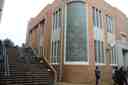
To help you spot the Frank Tate Building, just look for the creamy brick structure with tall vertical windows and the unique curved glass brick wall right beside the wide steps going up on your left-trust me, it’s hard to miss! Now, as you stand in front of this bold, Art Deco beauty, let me take you on a journey back to the late 1930s-imagine the sound of polished shoes tapping on the steps as Melbourne’s best and brightest rushed inside for their lessons at the old Melbourne Teachers' College. The man behind this building, Percy Edgar Everett, knew how to make an entrance-he designed the Frank Tate Building to stand out with its creamy bricks, tall vertical ribs, and those nearly Tudor-style windows reaching heavenward. If you squint a little, you might almost see echoes of the Hogwarts Great Hall… or maybe that’s just the Melbourne fog playing tricks! When it first opened in 1940, this building was an expansion of the original 1888 College to the south, a melting pot for would-be teachers learning their craft. And its name? That’s a tip of the hat to Frank Tate-a real hero of Victoria’s education system who worked tirelessly from 1902 to 1928 to make schools better for everyone. He believed training teachers well would change lives, and, as legend has it, was always the first in and last out of the staff room, probably with a strong cup of tea in hand! Jump ahead to 1968, and this poor building got half-swallowed by a Brutalist-style plaza rising to its north: the kind of thing you’d expect to find supervillains plotting on. The construction created new steps and ramps so that students wouldn’t get lost in a maze of entrances-though honestly, you could make a whole student scavenger hunt out of it. Time ticked on, and in 2010 the Frank Tate Building had its own glow-up, led by Cox Architecture. No one’s hiding away here anymore-it’s been reimagined as a student centre, with open lounges for study groups, performing arts spaces, cutting-edge labs, seminar rooms, and even a very modern printing station for those “I-can’t-believe-I-left-it-this-late” assignment panics. Lift access for all was added, so nobody misses out on reaching the top floor. In 2012, the building even scooped up a prestigious award for its next-level learning labs. From the passionate days of teacher training to the buzzing hub of university life today, the Frank Tate Building has always worn many hats-but never lost its style. Go on, give those glass bricks a nod of appreciation as you pass; they’ve seen a few generations come and go!
Abrir página dedicada →
Mostrar 12 paradas másMostrar menos paradasexpand_moreexpand_less
You’ve arrived at the Australian Mathematical Sciences Institute-affectionately known as AMSI-where math isn’t just a subject, it’s an adventure. Let’s step into the story…Leer másMostrar menos
You’ve arrived at the Australian Mathematical Sciences Institute-affectionately known as AMSI-where math isn’t just a subject, it’s an adventure. Let’s step into the story together. Picture this: it’s the early 2000s, and across Australia, mathematicians are longing for more teamwork, better teaching, and brighter, bolder ideas. In 2002, AMSI springs to life here on the Parkville campus, inspired by global leaders like the Fields Institute and the Pacific Institute for the Mathematical Sciences. This makes AMSI a bit like the “league of extraordinary numbers!” You’re now standing before what’s become a powerhouse of math collaboration-imagine lively halls abuzz with students debating equations, and researchers plotting graphs so big, you’d need a football field to roll them out. AMSI brings together not just the University of Melbourne, but almost every major university in Australia, plus heavyweights like CSIRO, the Bureau of Meteorology, the Bureau of Statistics, and even the Defence Science and Technology Organisation. If you’re going to fight the war on boring math, this is your all-star squad. AMSI didn’t stop at research. In 2004, its ICE-EM program began transforming school education, building math texts and teacher resources for kids in years 5 to 10. Thanks to government funding in 2009, these resources grew-reaching teachers nationwide and even launching “Maths: Make your career count,” which encourages students to see math as their ticket to a bright, logical future. And get this: researchers here collected data from every state to compare how Year 12 students tackled math. It was a bit like collecting match stats for the nation’s brainiest athletes. Then there’s the Research & Higher Education side, with programs like the ACE Network connecting students with online courses across the country, and a yearly Summer School where young math lovers gather to sharpen their logic skills. Imagine warm summer air, and the sound of chalk tapping, as students from different universities learn side-by-side. But AMSI isn’t just about the classroom. Its industry programs put math into action for businesses big and small. Through the AMSI Intern program, postgrad students don lab coats (or sometimes just a good spreadsheet) and solve real problems for companies, guided by expert mentors. All of this goes to show: whether you’re dreaming of solving mysteries with numbers or building bridges with logic, AMSI’s doors are wide open. So as you stand here, surrounded by the future of Australian mathematics, just remember-next time you hesitate over a math problem, you’re in ‘count’ry with some mighty clever company.
Abrir página dedicada →Look just ahead for a bold cream-brick building with a tall, decorated central tower and lots of vertical lines-its dramatic entrance faces you right where the trees…Leer másMostrar menos
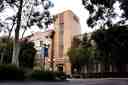
Look just ahead for a bold cream-brick building with a tall, decorated central tower and lots of vertical lines-its dramatic entrance faces you right where the trees part. Welcome to the Chemistry Building, where the whiff of experiments past seems to linger in the air a little longer than usual-don’t worry, that’s probably just the history! Back in 1938, when jazz was on the radio and hats were a must, Percy Edgar Everett designed this modernist, gothic marvel for Melbourne University. While most of campus was expanding fast, this place was built to look like something straight out of a wizarding school-Harry Potter has nothing on these bold towers and intricate brickwork! The genius behind the inside story was Professor Ernst Johannes Hartung, a chemist who wanted everything just right for research, so he rolled up his sleeves and designed much of the interior himself. Imagine bustling corridors filled with the clink of glassware and the rumble of excitement as Chemistry’s greatest minds got to work. The Masson Theatre here once had giant rolling blackboards so tall you’d half expect them to topple over-maybe they rolled away when no one was looking! Nowadays, slick renovations have brought the labs firmly into the 21st century, but bits of that original inter-war character remain. So take a moment: you’re standing at a place where science and style truly collided-with a bit of drama thrown in for good measure.
Abrir página dedicada →Look for a striking, two-storey stone building with pointed, turret-like gables and tall windows framed by leafy trees - you’ll spot it just ahead, quietly showing off its grand…Leer másMostrar menos
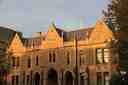
Look for a striking, two-storey stone building with pointed, turret-like gables and tall windows framed by leafy trees - you’ll spot it just ahead, quietly showing off its grand Gothic style! So here we are, right in front of the Old Physics Conference Room and Gallery - and let me just say, you’re standing where scientific revolutions once sparked! If you close your eyes for a moment, you might almost hear the shuffle of students’ boots and the creak of heavy wooden doors back in the late 1880s. This impressive building went up between 1886 and 1889, when Melbourne’s love for dramatic Gothic architecture was matched only by its excitement for new discoveries. It was designed by the famous architects Reed, Henderson, and Smart - kind of the rockstars of their day, although I doubt they had groupies waiting outside the labs! Originally, this was the School of Natural Philosophy, and its foundation professor, Henry Andrew, must have felt like a wizard in a Victorian fairy tale, teaching students about the hidden patterns of the universe in these very halls. Picture old-school labs full of clinking glass, fizzing chemicals, and students busy on experiments, all in a room so grand it almost made you forget about homework. When the city of “Marvellous Melbourne” was booming, the University invested big in cutting-edge science, determined to put Australia on the research map. If you stare up at the buttressed stone walls and square-headed windows, you might notice the little details proudly showing off their neo-Gothic flair - those turreted gable ends look like they’re expecting a late-night visit from Dracula himself! But hold onto your hat, because this place hasn’t always been as calm as it seems. The late 19th century hit a rough patch: Melbourne’s big dreams stalled with the Great Depression of 1891, construction funds dried up, and - would you believe it? - the university was rocked by a legendary fraud scandal involving the registrar. Fortunately, the thirst for knowledge was stronger than corruption, and the building continued to evolve. Around you once stood a vast lecture theatre, added in 1889, and another wing appeared in 1891. But progress isn’t always gentle: some parts were demolished in the 1940s and again in the 1970s, all in the name of the university’s master plan. During the years of Australia’s scientific golden age, professors like Thomas Lyle and T. H. Laby added invaluable touches: new laboratories for modern research, and even a Commonwealth X-ray and radium lab in the swirling midst of the 1930s. Imagine the scientific excitement as people experimented with X-rays before the age of wireless internet (or TikTok dance challenges)! All these layers of history add up, making this gallery and conference centre not just an architectural beauty, but also a survivor of changing times, clashing styles, and, I swear, more renovations than your average inner-city café. Soak up the atmosphere - you’re looking at the living memory of scientific adventure in Melbourne, where every stone and slanted rooftop has a secret to share! Yearning to grasp further insights on the historical and cultural significance, influences or the description? Dive into the chat section below and ask away.
Abrir página dedicada →To spot the Baillieu Library, look for a long, modern-looking building faced with rows of large, green-tinted windows and salmon-red panels, surrounded by trees and a bike rack in…Leer másMostrar menos
To spot the Baillieu Library, look for a long, modern-looking building faced with rows of large, green-tinted windows and salmon-red panels, surrounded by trees and a bike rack in front, just off the pathway. Welcome to the Baillieu Library, the beating heart of books and brains at the University of Melbourne. If you listen closely, you might almost hear the soft shuffle of pages and the hum of ideas-this place has witnessed more frantic assignment typing than a hundred coffee shops combined! Step up and picture it-back in the late 1950s, this very spot was an enormous construction site. In March 1957, workers from Prentice Builders began laying the foundations for what would become, quite literally, the first purpose-built university library in all of Australia. This visionary building opened its doors in 1959, thanks to the generosity of the Baillieu family-hence the name. William Lawrence Baillieu’s legacy lived on thanks to the trust that made this possible. Architect John Scarborough, a lecturer at the Uni, drew up the first plans all the way back in 1945, and with the help of a dream team of architects and librarians, he brought academic ambition to architectural life. When it opened, students and staff eagerly wheeled over 150,000 books from the Old Quadrangle library to their sleek new home, probably hoping the bookshelves here wouldn’t creak quite so much. The Baillieu was a modern marvel for its day. Picture the East façade’s “glass curtain wall,” with its slightly mysterious opaque spandrel panels-almost like the library is peeking out at the lawn, keeping an eye on everyone cramming for exams. Inside, you could sink into designer chairs by Grant Featherston, and yes, some of these original Mitzi chairs are still waiting quietly for a weary student or an art-loving visitor. The opening was a grand event: Prime Minister Robert Menzies did the honors himself, and Lord Baillieu unveiled an inscription in the foyer, marking the start of an era. And for a dramatic flourish, a curved wall behind the swirling circular staircase now bears the words of their opening speeches-a real spiral of history in the heart of the library! Over the years, the Baillieu kept growing, a bit like a goldfish that never stops outgrowing its bowl. In fact, the foundations were once laid strong enough to support a nineteen-story tower-imagine all the lost students wandering those upper floors! Though the tower dream never became reality, the building did sprawl outwards, with big expansions in the early 1970s. There’s even a bridge in the sky-an aerial link over to the Brownless Biomedical Library, just in case you need a fast track between art history and anatomy. Inside, the Baillieu is not just a maze of bookshelves, though there are plenty of those-five public floors stacked with knowledge, artistic treasures, and comfy study spaces. There’s a Percy Baxter Collaborative Learning Centre alive with chatter and tapping keyboards, a state-of-the-art Graduate Study Room, and hundreds of nooks and crannies for every type of bookworm or quiz-crammer. But the real jewels here are hidden in its special collections. Imagine holding a rare book from the 15th century, or leafing through a music manuscript its composer never dreamed would travel this far. There’s a treasure trove: the Rare Books Collection with a quarter-million volumes; a Rare Music Collection; even European prints dating back to the Renaissance. These treasures live in “closed-access” rooms-climate-controlled paradises for paper. Don’t forget the University of Melbourne Archives, either-storing the collective memories of Victorian businesses, political unions, and trailblazing individuals, from Malcolm Fraser’s records to Germaine Greer’s personal papers, all accessible in the inviting Reading Room. Is it any wonder so many movies and TV shows have filmed here? This truly is Melbourne’s own Hogwarts, just with more electronic journals and fewer talking portraits. Among the art and artefacts, there’s a sculpture in the lobby named Areopagitica. It echoes the ancient cry for freedom of speech-and perhaps the modern plea for less group work. Downstairs, the ground floor even boasts an 1880s Alexandra Printing Press, gifted to the library by devoted “Friends of the Baillieu.” The Friends have long helped fill these shelves with rare volumes and artifacts, gathering regularly for cultural events, always on the lookout for the next great literary adventure. And then there are the stories-millions of them. From silent, pre-exam study sessions to wild musings whispered behind the shelves, the Baillieu Library has been the backdrop to decades of student memories. So take a deep breath and soak in the atmosphere-who knows, maybe you’ll hear the walls whisper a secret or two. Ready to chase down your next fascinating fact? Let’s move on!
Abrir página dedicada →Look ahead for a tall, light brown brick building with rows of rectangular windows and bold white framing-its impressive overhanging roof makes it easy to spot! Alright, step…Leer másMostrar menos
Look ahead for a tall, light brown brick building with rows of rectangular windows and bold white framing-its impressive overhanging roof makes it easy to spot! Alright, step right up and soak in the sight of the University of Melbourne’s Faculty of Medicine, Dentistry and Health Sciences! Picture this: it’s 1858, and Anthony Brownless, a determined doctor with a Scottish accent you could almost trip over, is toughing it out on the edge of the Australian bush, sketching out the beginnings of Melbourne’s School of Medicine. Back then, stethoscopes were as rare as good WiFi in the outback, and the university was still finding its feet. Now, as you stand here, try to imagine horses clopping along the muddy paths, students in old-fashioned coats, and the sharp, clean snap of a lecture hall door opening. Flash forward to the turn of the century; by 1901, the simple school had swaggered into being the Faculty of Medicine, just as Australia itself became a federation. In the postwar period, things really started to move. A government report in 1956 complained that medical education needed a serious jump-start, and the University of Melbourne led the charge, becoming a powerhouse for training not just Victoria's doctors but mentoring medical schools from Monash to Malaysia. The city was buzzing, and the faculty became the heart pumping out new ideas, discoveries, and, let’s be honest, some pretty tired medical students. The faculty’s expansion was, quite literally, mind-blowing. In 1989, it married up medicine and dentistry-no cold feet at this wedding-and after that, even more minds joined in, like psychologists, physiotherapists, and nurses. By 2001, the world’s first School of Population and Global Health was added, and even social workers moved in, so you could say the faculty became a real melting pot for anyone wanting to help people, fix people, or figure out why people behave the way they do! Today, the faculty boasts 52 sub-organisations underneath its wide umbrella-if you can name a medical specialty, they probably have a door with that name on it around here. Some of the world’s smartest researchers work in these halls: over 1,400 of them, crafting new knowledge on everything from how hearts beat best after surgery, to prosthetics that let amputees actually feel the world again. In fact, the University of Melbourne was ranked 9th in the world for clinical, preclinical, and health subjects in 2018. Impressive, right? But don’t get too intimidated-rumor has it even ranking 25th in the world for the medical school in 2021 didn’t make the students any less nervous about their exams! Hidden away in these walls you’ll find every sort of department, from obstetrics to optometry, psychiatry to pediatrics, and there’s even a lively Centre for Youth Mental Health for when exams cause a temporary sense of dread. Legends were made in the faculty labs-like the Stentrode, a brain implant that can help people move limbs with their thoughts, and surgical trickery that actually lets heart surgeons use less blood in operations. Imagine that-the future happening just behind these bricks and windows! But you can’t have such a big operation without a little drama. In 2010, the faculty faced criticism from students after it shifted its main medical course from undergraduate to postgraduate, making some folks worry that it would be harder for students from all backgrounds to join the ranks of future life-savers here. Yet, the faculty powered on, and today it’s an enormous academic ecosystem-the largest faculty at the university! Oh, and here’s a quirky fact: the Melbourne School of Psychological Sciences started with a humble paper written in 1888. Since then, it’s grown into one of the nation’s biggest psychology departments. There’s barely a field in medicine or health sciences that hasn’t found a home in this sprawling hub of learning. From the thunk of new research breakthroughs, to the nervous murmurs that fill exam season, the Faculty of Medicine, Dentistry and Health Sciences has always been alive with energy, ideas, and a good bit of healthy competition-you could almost say it has more heartbeats than a doctor could count! So take a moment and soak it up. You’re standing in front of Melbourne’s real-life medical engine room-who knows what world-changing discovery is being dreamt up inside right now? Want to explore the faculty structure, research or the criticisms in more depth? Join me in the chat section for a detailed discussion.
Abrir página dedicada →To spot the Royal Women’s Hospital, look ahead for a striking pair of modern white buildings with dark stripes-almost like giant bookends-rising up behind the leafy trees and…Leer másMostrar menos
To spot the Royal Women’s Hospital, look ahead for a striking pair of modern white buildings with dark stripes-almost like giant bookends-rising up behind the leafy trees and sitting right on the corner where taxis and ambulances are often parked out front. Alright, picture this: You’re standing where over a century and a half of history pulses beneath your feet. The Royal Women’s Hospital first opened its doors in 1856, back when Melbourne was a city of horse-drawn carts, and the fashion was less “activewear” and more “bonnets and bustles.” Back then, two bold doctors, Richard Tracy and John Maund, realized that not every woman could afford safe childbirth, so-with a determined crew of ladies led by Frances Perry-they turned a humble Eastern Hill home into a refuge for mothers in need. Just imagine the clatter of carriage wheels outside as women from all walks of life made their way for care. Its original name was quite a mouthful: the “Melbourne Lying-in Hospital and Infirmary for Diseases Peculiar to Women and Children”-let's just say the signwriter deserved a medal! In 1858, the hospital packed up and shifted to Carlton, growing into a buzzing hub where nurses and midwives across Australia came to learn. Fun fact: this was the first specialist teaching hospital in the Southern Hemisphere, paving the way for medical education-with a little bit of “hands-on learning” long before it was trendy. Fast-forward to the 20th century and beyond-after a few name changes, plenty of life-changing moments, and royal praise in 1954-the hospital moved right here in 2008, into this state-of-the-art, futuristic complex. Now, not only does it help deliver over 7,000 babies a year, but it offers everything from cancer care to genetic counseling, and treats women’s health issues from endometriosis to menopause. You’re also standing beside the Frances Perry Private Hospital-a sister hospital named for the woman whose compassion sparked it all-both still buzzing with life and laughter, just like they have for over 160 years.
Abrir página dedicada →To spot the Royal Melbourne Hospital, look for a sprawling cluster of multi-story brick and glass buildings stretching along Grattan Street, with a noticeable circular building…Leer másMostrar menos
To spot the Royal Melbourne Hospital, look for a sprawling cluster of multi-story brick and glass buildings stretching along Grattan Street, with a noticeable circular building and tall hospital wings surrounding it. Imagine you’re standing here on Grattan Street, facing this vast, bustling complex that almost feels like a city within a city. Close your eyes for a second and listen - you might catch the buzz of conversation, the rumble of ambulances arriving, or even the distant whirr of a helicopter landing on the hospital’s rooftop helipad. You’re not just outside any hospital; you’re at the front doors of the Royal Melbourne Hospital, one of Australia’s true giants of medicine. It all began way back in 1848, when Melbourne was still struggling to shake off its “wild west” gold rush days and the city needed a place for the sick to find refuge. The first hospital sprang up on the corner of Swanston and Lonsdale Streets-a far cry from this modern hub. Picture old carriages rattling by, nurses in long starched aprons, and gas lamps flickering against the night. By the early 20th century, the Melbourne Hospital was bursting at the seams, so it was knocked down and rebuilt on a grander scale, even swallowing up a few more city blocks in the process. But in the 1930s, they needed a bigger, better base, so the hospital spread out to where you stand now. Here, on Grattan Street, the Royal Melbourne Hospital opened its doors during World War II. In fact, the place was still under construction when the U.S. Army’s 4th General Hospital swooped in, setting up a temporary barracks with tents in Royal Park, just north of this spot. For two war-torn years, American soldiers were treated here until the hospital was finally finished, and in December 1944, doctors and patients moved in for good. It was the stuff of movies: convoys, soldiers, nurses, and doctors all bustling around new, echoing hallways-no doubt with a few “where’s the X-ray room?” moments to boot. Through the decades, the Royal Melbourne Hospital earned a reputation for saving lives and pushing medical boundaries. Today, it’s one of Victoria’s busiest, and definitely not a place for hypochondriacs! With one of the largest Emergency Departments in the state, it’s a magnet for ambulances day and night. It’s a trauma centre, a leader in research (you’ll find top brains here, often working on robotics, infectious diseases, and even robotic surgery-yes, like real-life sci-fi!), and a lifeline for patients needing everything from stroke and cardiac care to cutting-edge transplants. If you hear an alarm or the swoosh of emergency doors, you’re listening to the heartbeat of the hospital in action. It’s also a place of learning and teaching. It’s always crawling with students in crisp white coats, sitting in on everything from emergency simulations to daily grand rounds-where the drama of real cases gets dissected with a bit less blood, and a lot more brainpower. Fancy yourself as a future doctor or nurse? Don’t worry, there’s enough training here to keep you busy for decades (and probably enough coffee inside to keep you awake for just as long). The hospital hasn’t stood still, either. It’s seen new wings, fresh faces in charge, and groundbreaking studies every year. Leaders like Professor Shelley Dolan, who took the helm after a worldwide search, help drive the hospital’s mission forward, while legends like Professor Christine Kilpatrick AO, who retired in 2023, are still remembered for shaping its story. So as you stand here, listening to the pulse of this sprawling hospital, remember: you’re looking at more than bricks and glass. This place has witnessed everything from wartime drama to midnight emergencies, from medical breakthroughs to laughter in the corridors. It’s a living, breathing part of Melbourne’s heart-and that’s something you can really feel. Want to explore the services and specialties provided, postgraduate training, the clinical school and nursing education or the fellowship positions in more depth? Join me in the chat section for a detailed discussion.
Abrir página dedicada →To spot the Florey Institute of Neuroscience and Mental Health in front of you, look for a large, pale rectangular building with black-framed windows set in a grid pattern, and a…Leer másMostrar menos
To spot the Florey Institute of Neuroscience and Mental Health in front of you, look for a large, pale rectangular building with black-framed windows set in a grid pattern, and a section out front displaying the name “Howard Florey Institute” in bold letters above a low wall, with leafy trees and bushes gathered around its base. Now, as you’re standing here, try to imagine a place where some of the biggest scientific mysteries about our brains are tackled every single day-a building that practically hums with electric curiosity (and maybe more than a few espresso machines inside). The Florey, as it's affectionately known, isn’t just any research institute. It’s named after Howard Florey, the Aussie scientist who helped turn penicillin from moldy bread into the world’s most famous superhero medicine, saving millions of lives. Step back to 1947, and picture Dr. Derek Denton and his brilliant crew, all in white lab coats and thick-rimmed glasses, tinkering away to understand how our bodies manage salt and water-a kind of biological plumbing mystery, really. Fast forward to 1971, and the Victorian Government officially launches this institute in Florey’s honor, hoping to unravel even trickier puzzles, like how our brains work…and what happens when they don’t. Originally, this place was a detective agency for hormones and bodily fluids-studying everything from aldosterone (the salty hormone) to the mysterious hormone called Relaxin, which probably sounds like something we all could use a little more of. But by the late 1990s, the Florey had a new quest: brain disorders. Imagine scientists racing against time to crack codes behind Parkinson’s, addiction, epilepsy, and more. In 2007, the building itself got a glow-up as brainpower from other institutes moved in, and by 2012, it became the Florey Institute of Neuroscience and Mental Health as we know it today-a sort of superhero team for the mind. It’s the largest brain research group in the southern hemisphere, staffed by an army of 600 scientists and students, now led by Professor Peter van Wijngaarden. Every day, inside these walls, people are brainstorming (pun fully intended!) about how to outsmart conditions like depression, schizophrenia, and Alzheimer’s. So, if you ever wondered where the best minds go to understand your mind, you’re looking right at it!
Abrir página dedicada →Look for a low, red-brick building nestled among greenery with a crisp white arched doorway and the words “Grainger Museum” carved above it-just down the path in front of…Leer másMostrar menos
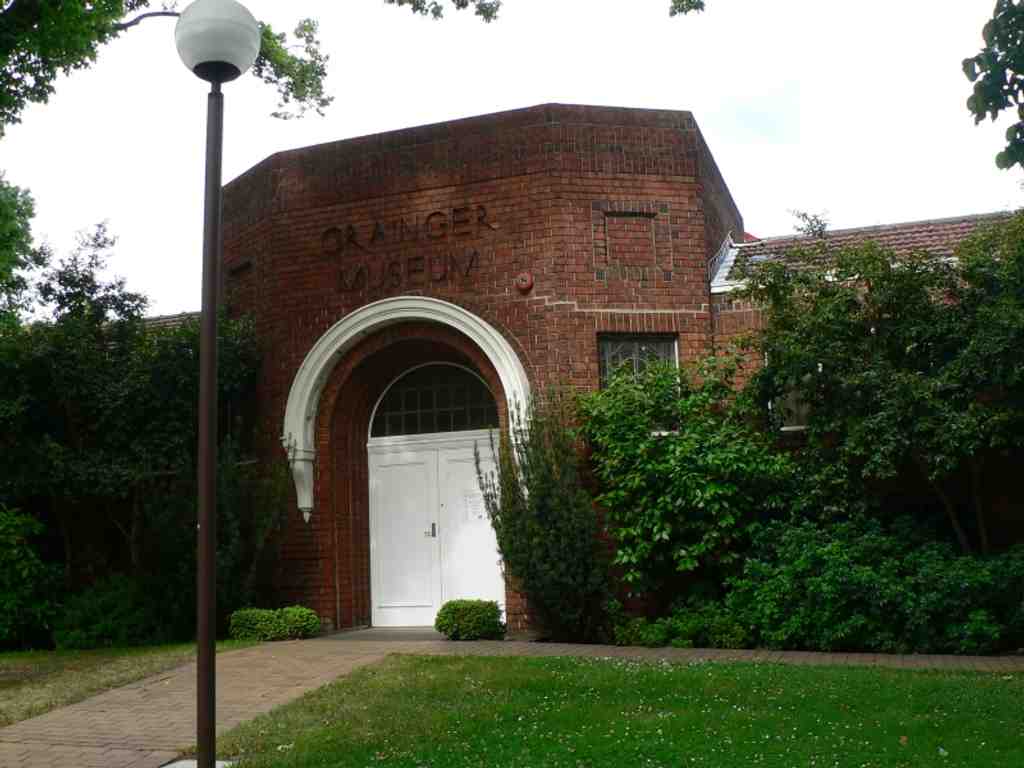
Look for a low, red-brick building nestled among greenery with a crisp white arched doorway and the words “Grainger Museum” carved above it-just down the path in front of you. Now, take a breath and get ready to step into one of Melbourne’s most peculiar treasures! The Grainger Museum isn’t just brick and mortar-it’s a time capsule, dreamt up by the famous composer Percy Grainger, who wanted his life’s story told by his own odds and ends. Picture it: in the 1920s, as jazz and cinema flickered through city streets, Grainger wrote home from across the world, insisting that all of his most private letters, musical scores, and even whips-yep, I’m serious!-should land right here, in his hometown. He gave this place the nickname “past-hoard-house” because “museum” just wasn’t quirky enough for him. The building you see was raised between 1935 and 1939 thanks to Grainger’s stubborn spirit, money, and the University’s support, making it Australia’s only museum designed for someone’s life story. The architect, John Gawler, brought Grainger’s vision to life, wrapping his story within these heritage-listed walls. Inside, every corner buzzes with stories: original manuscripts, sheet music covered in bold scribbles, strange homemade instruments for what Grainger called “Free music,” and even items from his infamous “Lust Branch.” His mother’s story, the wild letters he traded with famous composers across Europe, and relics from over 100,000 pieces in his collection add layers to this mystery. Behind locked cabinets are sound-making inventions and a bedside drawer’s secrets-now, that’s something you don’t see on every museum tour. If you time it right and visit on a Monday afternoon during uni semester, you’ll be greeted with memories that feel as alive as the music inside. Past exhibitions have included everything from synthesizers to guitars to celebrations of Grainger’s friendships with stars like Nellie Melba. So, step closer, listen for the echoes of concerts past, and imagine a man whose life truly couldn’t be contained by one building-or by any ordinary English word!
Abrir página dedicada →Coming up in front of you is the Bio21 Institute - to spot it, look for a striking modern glass building that seems almost alive with people and energy; you’ll know you’ve found…Leer másMostrar menos
Coming up in front of you is the Bio21 Institute - to spot it, look for a striking modern glass building that seems almost alive with people and energy; you’ll know you’ve found it when you see tall glass walls and metal features reflecting the sky, often with a buzz of activity inside. Now, as you stand here, picture the scene in 2006: a swirl of scientists, engineers, and university staff shuffling papers, eager to make history. The Bio21 Institute is bustling-a bit like a hive, but instead of bees, it’s packed full of researchers in lab coats, each with wild ideas and even wilder hair! Suddenly, in steps a crowd from CSL, one of Australia’s bio-pharma powerhouses. Fifty scientists wheel their suitcases right through those doors, looking a little nervous, like new students on their first day. The mission? To join forces and blend the best methods, minds, and high-tech magic that only a place like Bio21 could offer. The University of Melbourne, along with the Victorian Government, poured their hopes (and funding) into this center, dreaming of breakthroughs in biotechnology and molecular science. Even the walls seem to hum with excitement! This isn’t just a research building-it’s a pulsating hub where molecules, mysteries, and maybe a dash of caffeine come together, all in the name of making discoveries that might change the world. So take in the energy and remember-you’re standing at the epicenter of Melbourne’s scientific adventure!
Abrir página dedicada →To help you spot WEHI, look ahead for a sleek, modern building adorned with its distinctive logo-a prism-like icon with intersecting beams, paired with the simple words “WEHI…Leer másMostrar menos
To help you spot WEHI, look ahead for a sleek, modern building adorned with its distinctive logo-a prism-like icon with intersecting beams, paired with the simple words “WEHI brighter together” right at the entrance. Now, as you stand here, you’re right outside Australia’s oldest medical research institute, a place that’s been quietly changing the world for over a century. Imagine stepping back in time to 1915: the city hums with the sounds of trams and horse-drawn carts, and a determined philanthropist named Eliza Hall, heart heavy with the loss of her husband Walter, decides to use part of her fortune to help humanity. That single gesture-perhaps with a faint rustle of old paper as the trust was signed -planted the seeds for what would become WEHI. In its earliest days, the institute almost didn’t survive. The outbreak of World War I swept its first director-designate, Gordon Mathison, away to Gallipoli, where fate took a tragic turn and he never returned. In the meantime, Melbourne Hospital lent floors in their grounds to this tiny new research outpost, but when times got tough, those floors even went to the fledgling Commonwealth Serum Laboratories. Life wasn’t easy, but just when you think the story might end in dusty archives, hope arrives with the appointment of Sydney Patterson, and later, Charles Kellaway-a pair of true believers with big ideas, bigger ambition, and probably a suitcase full of test tubes. Picture the city in the Roaring Twenties, researchers bustling through the doors, beakers clinking, chalk on blackboards, and Kelaway charting bold new territory-finally erecting the institute’s own building alongside the new Royal Melbourne Hospital in 1942. The world’s eyes began to turn to Parkville, because the young research team wasn’t just making notes-they were making history. Then comes Sir Frank Macfarlane Burnet, director from 1944 to 1965. Here’s a bloke so clever he picked up a Nobel Prize for immunology in 1960. I mean, what have you done before lunchtime? His work on immune tolerance and clonal selection redefined how the world understood the immune system-basically fighting disease with brainpower and a dash of stubborn Aussie creativity. And while Burnet was busy bringing home scientific gold, his successor, Sir Gustav Nossal, was creating a bigger, bolder WEHI: a place where armies of scientists unraveled mysteries from cancer to malaria, focusing on how cells live, die, and sometimes, refuse to follow the rules. And while the research heated up, so did the discoveries! Professor Donald Metcalf’s work on colony-stimulating factors helped more than 10 million cancer patients across the globe-a legacy written in hope, one life at a time. But WEHI wasn’t done growing. Flash forward to the twenty-first century, and the institute nearly doubled its size in 2012 with a brand new west wing-imagine scores of builders and experts, a symphony of drills and laughter as Parkville made room for more brains all in the name of better science. By 2015, with a fresh look and a new motto-brighter together-they’d even made naming themselves a bit easier! These walls house over 750 brilliant minds, all attacking the toughest medical riddles-from blood, breast, and ovarian cancers to autoimmune and infectious diseases like malaria and HIV. WEHI is structured into 14 research divisions, each bristling with experts focused on everything from bioinformatics and chemical biology to epigenetics, inflammation, and clinical translation. Their influence even stretches into the University of Melbourne and La Trobe University campuses, sharing discoveries, educating the next generation, and hosting over 60 PhD candidates determined to make their mark. With linkages to the Gene Technology Access Centre, they encourage even high schoolers to pipette their way toward the future. Sprinkle in a few major prizes-like the Florey Medal and the Bettison & James Award-and you get the sense this place collects trophies almost as quickly as solutions. So as you take in the clean lines and new glass out front, remember that inside, there’s a buzzing hive of researchers, conference rooms echoing with laughter and the clink of coffee cups, and hundreds of tiny test tubes waiting for their next eureka moment. Who knows-maybe history’s next big discovery is happening just inside those doors. If you're keen on discovering more about the research, education or the awards, head down to the chat section and engage with me.
Abrir página dedicada →To spot Frances Perry Private Hospital, just look ahead for a striking modern complex with clean white and black geometric patterns and tall glass windows, standing boldly near…Leer másMostrar menos
To spot Frances Perry Private Hospital, just look ahead for a striking modern complex with clean white and black geometric patterns and tall glass windows, standing boldly near the street behind rows of leafy green trees-with plenty of taxis and a clear “Ambulance Entry” sign at ground level. Now, as you stand in front of Frances Perry Private Hospital, picture yourself stepping into a story that’s both modern and rich with history. Imagine the clang and clatter of 1970s Melbourne, the city buzzing with life as busy doctors and excited families crossed the steps of a new building named after Frances Perry, one of the original champions for women’s healthcare in the city. Back then, private maternity care was a rare thing-Frances Perry House was there to give women who didn’t quite fit the ‘free public bed’ criteria a space to welcome new life with dignity. Fast forward to the 70s, when Medibank arrived and you might think this house would pack its bags, but oh no-it kept ticking along, quietly working its magic for new generations. In 1997, Frances Perry House truly became its own boss, going fully private. Then, when the Royal Women’s Hospital packed up and trekked from Carlton to Parkville in 2008, Frances Perry House followed along like a loyal companion, determined to keep serving women with everything from obstetrics to plastic surgery. It’s more than just a hospital-it’s a living tribute to pioneers, a place where every newborn wail is a little echo of history. No pressure, but if you listen closely, you might just hear the cheers, worries, and laughter of families from decades past mixing with the city sounds.
Abrir página dedicada →
Preguntas frecuentes
¿Cómo empiezo el tour?
Después de la compra, descarga la app AudaTours e ingresa tu código de canje. El tour estará listo para comenzar de inmediato - solo toca play y sigue la ruta guiada por GPS.
¿Necesito internet durante el tour?
¡No! Descarga el tour antes de empezar y disfrútalo completamente sin conexión. Solo la función de chat requiere internet. Recomendamos descargar en WiFi para ahorrar datos móviles.
¿Es un tour guiado en grupo?
No - esta es una audioguía autoguiada. Exploras de forma independiente a tu propio ritmo, con narración de audio reproduciéndose en tu teléfono. Sin guía, sin grupo, sin horario.
¿Cuánto dura el tour?
La mayoría de los tours toman 60–90 minutos para completar, pero tú controlas el ritmo completamente. Pausa, salta paradas o toma descansos cuando quieras.
¿Qué pasa si no puedo terminar el tour hoy?
¡No hay problema! Los tours tienen acceso de por vida. Pausa y continúa cuando quieras - mañana, la próxima semana o el próximo año. Tu progreso se guarda.
¿Qué idiomas están disponibles?
Todos los tours están disponibles en más de 50 idiomas. Selecciona tu idioma preferido al canjear tu código. Nota: el idioma no se puede cambiar después de generar el tour.
¿Dónde accedo al tour después de comprarlo?
Descarga la app gratuita AudaTours desde App Store o Google Play. Ingresa tu código de canje (enviado por email) y el tour aparecerá en tu biblioteca, listo para descargar y comenzar.
Si no disfrutas el tour, te reembolsamos tu compra. Contáctanos en [email protected]
Paga de forma segura con