Seattle Audio Tour: Aromen, Wälder und Geschichten von North Beacon Hill
Unter dem alltäglichen Trubel Seattles birgt North Beacon Hill dramatische Geheimnisse – ein Wald, einst berüchtigt für Gefahren, ein Zen-Heiligtum, das sich im Verborgenen befindet, Tunnel, die von unerzählten Geschichten widerhallen. Jede Ecke hier deutet auf Kämpfe hin, die sowohl im Schatten als auch im Licht ausgetragen wurden. Diese selbstgeführte Audiotour führt durch Straßen, die die meisten Besucher nur flüchtig sehen, und lüftet Geheimnisse im übersehenen Herzen der Stadt. Lassen Sie Legenden der Einheimischen, vergessene Skandale und unerwartete Schönheit jeden Schritt füllen. Wer verschwand spurlos in der Dunkelheit des Dschungels? Welche geheimen Verhandlungen am Beacon Hill Station änderten die Richtung der Stadt über Nacht? Warum läutet ein bestimmter Gong im Dai Bai Zan Cho Bo Zen Ji an einem einsamen Nachmittag jeden April? Durchqueren Sie wechselnde Landschaften und verstrickte Vergangenheiten – spüren Sie den rauen Charme der urbanen Wildnis, die Stille eines plötzlichen Heiligtums. Sehen Sie North Beacon Hill, wie es nur wenige je gesehen haben: lebendig mit Rebellion, Spannung und unerzähltem Wunder. Hören Sie jetzt zu – Seattles verborgene Geschichten warten in den Schatten.
Tourvorschau
Über diese Tour
- scheduleDauer 30–50 minsEigenes Tempo
- straighten3.6 km FußwegDem geführten Pfad folgen
- location_onStandortSeattle, Vereinigte Staaten
- wifi_offFunktioniert offlineEinmal herunterladen, überall nutzen
- all_inclusiveLebenslanger ZugriffJederzeit wiederholen, für immer
- location_onStartet bei The Jungle
Stopps auf dieser Tour
If you’re standing here right now, just look through the thick, leafy trees and you’ll spot the skyline of downtown Seattle in the distance, with a twisty tangle of freeway lanes…Mehr lesenWeniger anzeigen
If you’re standing here right now, just look through the thick, leafy trees and you’ll spot the skyline of downtown Seattle in the distance, with a twisty tangle of freeway lanes and rush-hour traffic humming right beneath the green hillside-welcome to The Jungle! Let’s step back and take you on a journey through this peculiar place, officially called the East Duwamish Greenbelt. Here you stand on the wild, wooded edge of Beacon Hill, looking over a stripe of green squeezed between roaring highways. Beneath you lies a strip of tangled blackberry bushes and trees sprawling across 150 acres, stretching all the way from South Dearborn Street down to South Lucile Street. The wild greenery is thick enough that it almost swallows up the sound of the city, but you can still hear the constant drone of cars as they speed along I-5 and I-90. This urban forest, with its messy undergrowth and maple trees, has long been Seattle’s hidden refuge-and trouble spot. People have lived off the land here since at least the 1930s, taking shelter in makeshift camps. But as time went on, The Jungle became something quite infamous. By the 1990s, city officials and neighbors were getting more and more frustrated with the encampments springing up like mushrooms after rain. Want to guess how much trash they carted out in 1994? A whopping 120 tons-that’s nearly as much as a herd of elephants! Yet, the sweep-and-cleanup operations weren’t just city business as usual. They were sudden, often catching the area’s residents off guard, and sometimes transformed hidden havens into ghost towns overnight. Still, the need for a place to go never vanished, and every attempt to evict campers just popped up new versions of The Jungle elsewhere. Some say Seattle’s now-famous “tent cities” were born out of these evictions, making the city a reluctant innovator in urban encampments. Inside The Jungle, neighborhoods formed, each with its own vibes and vices. Near the freeway’s concrete underbelly, the area dubbed “The Caves” became a bustling corner near a methadone clinic, while farther south, alcohol flowed more freely. Elsewhere, campers tucked themselves away in brambly thickets, shrouded in privacy and mystery. In 2016, a count found over 200 tents nestled in these woods and an estimated 400 people calling it home. By race, it was almost evenly divided between Black and white residents, and a striking 80 percent were men. But not all was peaceful in this urban forest. The Jungle is infamous for more than blackberry thorns-over the decades, it’s gained a dark reputation as a haven for crime. Tragically, in the late 1990s, the area was the scene of serial murders, and deaths from accidents and violence continued to haunt local headlines. Even the rodents here, like rats busy scampering underfoot, get more press coverage than your average city mouse. Police and emergency crews have visited hundreds of times: 750 reported incidents over just five years, 500 were urgent medical calls. Drug deals-crack, meth, heroin-have been busted in tents in the heart of the greenbelt. Some folks tried to see a silver lining here: in 2011, Seattle built a paved bike trail through the forest, added lights, fences, and a dash of optimism. But the area’s troubles were stubborn and deep-rooted. In 2016, a gunfight broke out, shaking the city and prompting another mighty cleanup, fences topped with razor wire, and more million-dollar solutions. Today, efforts to “solve” the Jungle continue, but in true Seattle fashion, every answer sprouts another question. Even now, as you stand at the edge-maybe a little wary, maybe a bit curious-you’re witnessing a living symbol: a wild patch of city where Seattle’s toughest challenges are right out in the open. So, whether you see it as an urban wilderness, a crisis spot, or just a belt of green among skyscrapers, The Jungle tells a story you won’t forget anytime soon.
Eigene Seite öffnen →You’re now standing right in front of Musang, and I have to say, you picked a spot that tells an incredible story - so buckle up, because this isn’t just any restaurant. Imagine…Mehr lesenWeniger anzeigen
You’re now standing right in front of Musang, and I have to say, you picked a spot that tells an incredible story - so buckle up, because this isn’t just any restaurant. Imagine the savory scents: crispy buttermilk fried chicken, golden pork lumpia dipping into tangy sawsawan, and short rib kare-kare that glistens with peanut butter bagoong. Go ahead - let your nose wander, even if your stomach starts grumbling! But Musang is about much more than just a mouth-watering menu. It all started in 2017, when Chef Melissa Miranda had a fusion of two things: Filipino flavors and big dreams. She kicked off Musang as a pop-up brunch series, which is basically like if your friend’s breakfast party suddenly became the event everyone talked about. Out of that same energy, she joined forces with other Filipino chefs in the area - folks like Chera Amlag and Aaron Verzosa - to launch the ILAW Coalition, all about supporting Filipino American entrepreneurs in Seattle. Now here’s where things get dramatic: by 2019, Melissa decided it was time for Musang to have a real home. But instead of waiting for a fairy godparent with a giant wallet, she turned to the community and raised over $75,000 on Kickstarter - with some leftover for good luck. That campaign was a hit, the restaurant opened just in time… for the world to shut down due to the pandemic. While you might expect the story to get gloomy there, Musang actually shone the brightest. Melissa and her crew started cooking up over 200 free meals every day for folks in need - and thanks to donations and grants, the generosity just kept coming. Even after reopening, Musang kept up the good work, making sure no neighbor felt left out or hungry. They even created Musang’s Little Wildcats - a program teaching kids about Filipino food in the most hands-on, messy, and delicious way possible. All this heart didn’t go unnoticed. Musang snagged “Restaurant of the Year” and landed chef Miranda on Food & Wine’s best new chefs list. And if you ask Seattle’s foodies, they’ll tell you eating here feels like being at a friend’s dreamy dinner party - and trust me, it’s one you’ll never forget. And hey, if you hear singing coming from inside, maybe it’s just Musang’s flavor inspiring another musical number about Filipino classics perfected right here on Beacon Hill!
Eigene Seite öffnen →Beacon Hill Station is easy to spot: just look towards the southeast corner of Beacon Avenue South and South Lander Street, where a sturdy brick building towers above glassy…Mehr lesenWeniger anzeigen
Beacon Hill Station is easy to spot: just look towards the southeast corner of Beacon Avenue South and South Lander Street, where a sturdy brick building towers above glassy entrance doors, flanked by colorful cut-metal banners waving above the sidewalk. Alright, you’re standing here at the gateway to Beacon Hill’s underground world-this is no ordinary station, you know. Beacon Hill Station is a marvelous burrow 160 feet beneath your feet, Seattle’s deepest transit stop, like an elevator ride straight to Middle-earth-but no orcs or hobbits, just trains and commuters! Now, let’s rewind a bit. The ground you’re standing on today almost missed out on light rail magic. Back in the ancient era of flared pants and groovy tunes-the 1970s!-city planners wanted rail lines to dance around Beacon Hill via Georgetown and South Park instead. But the dream changed shape over the years; by the late ‘90s, transit bosses took their pencils and drew a bold tunnel right beneath Beacon Hill. The trick was, could they actually pull it off? Well, with a deep breath, a firm budget (and then some surprise overages), plus a dash of Seattle stubbornness, they said: “Let’s dig.” And dig they did-a test shaft was bored in 2003, where engineers found layers of ancient ice-age glacial deposits. Then came the star of the show: a 360-ton tunnel-boring machine called the "Emerald Mole," custom-made in Kobe, Japan. On a chilly January day in 2006, they launched this monster with ceremony and fanfare. Imagine it: giant metal teeth gnawing away at the hill, inching forward day after day, as curious neighbors peered from their windows and the ground vibrated ever so slightly. Building Beacon Hill Station wasn’t all smooth sailing-oh no! There were tense moments, protests breaking out for more local contracts, and even a serious train yard accident that brought safety into sharp focus. Crews battled mud that tried to wriggle into unwanted places, and guess what? When some construction dirt turned out to be too caustic, they had to decontaminate 60,000 cubic yards of it. One thing’s for sure, Beacon Hill refuses to give up its secrets easily. After countless months-actually, five years-of stubborn digging, engineering headaches, and a few windstorms (one even toppling those colorful metal banners out front), the station was ready. It opened on July 18, 2009, and the neighborhood celebrated as if the world’s finest pizza shop had opened next door. That opening weekend, anyone could ride the train free. Soon enough, Beacon Hill became not just a deep station but a vital heartbeat: part of Sound Transit’s 1 Line, carrying people between the airport and downtown Seattle every day, practically around the clock. This spot’s flavor isn’t just the trains or the feat of engineering. Take a look at the art all around you outside and deep below: Carl Smool’s sidewalk “carpets,” metal banners, a wild vent screen with patterns inspired by Aztec design, and art underground flashing with the mysteries of deep sea and outer space. A wall of portals even shows images from the Hubble Telescope and microscopes, so you might say you’re literally surrounded by the universe. If you were inside during a train’s whoosh through the tunnel, look out for Dan Corson’s color-bursting Space Forms, floating overhead like little aquatic aliens. There’s also Bill Bell’s Light Sticks, a blink-and-you-miss-it display: images fly by in the tunnel, just a flash from a deck of cards. You’re officially part of a moving art gallery down there. By the way, the elevators here work like rocket ships-four high-speed lifts rocket you down 160 feet in about 20 seconds. That’s fast enough to make your ears pop and your coffee tremble! Today, Beacon Hill Station isn’t just a tunnel and a train-it’s Beacon Hill’s front door to the city, surrounded by homes, businesses, a public library two blocks south, and El Centro de la Raza just steps away. Each day, thousands come and go, not realizing the ground beneath their shoes has enough stories to fill every seat on a rush-hour train. Alright, let’s keep exploring-your next destination is just a short stroll away!
Eigene Seite öffnen →
7 weitere Stationen anzeigenWeniger Stationen anzeigenexpand_moreexpand_less
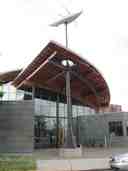
Look for a sleek, modern building made of stone and glass with a dramatic wooden overhang and a tall spire out front topped by a silvery metal sculpture shaped like a ship-if you…Mehr lesenWeniger anzeigen
Look for a sleek, modern building made of stone and glass with a dramatic wooden overhang and a tall spire out front topped by a silvery metal sculpture shaped like a ship-if you see the boat above the entrance, you’ve found the Beacon Hill Branch Library! Alright, take a deep breath and imagine you’re stepping into a storybook that’s come to life, right here on Beacon Avenue. Once upon a time, the Beacon Hill library was squeezed into a rickety old building that looked more like a tired corner store than a home for stories-more books piled up than there were shelves to hold them! Fast-forward to 2004 and-abracadabra!-thanks to a citywide “Libraries for All” campaign, this brand new library rose up with elegant stone from the same quarry as Seattle’s famous Central Library. And talk about personality: it’s topped by an eye-catching kinetic sculpture, a shimmering “Dream Ship” that seems ready to set sail right through a hole in the roof. Keep your eyes out for quirky touches, like haiku poems carved into stones and rain spouts shaped like raven beaks. But even libraries aren’t safe from critics-one columnist poked fun at its wild design and “phony multiculturalism.” Still, in 2017, it leveled up with new goodies for laptop lovers and a fresh modern makeover. Today, while the crowds aren’t what they once were, this place remains a beacon-pun intended-of discovery, learning, and just a dash of Seattle drama.
Eigene Seite öffnen →You’ve found yourself in front of Homer, a true gem of Beacon Hill-and trust me, there’s no ancient Greek poet inside, just some very happy foodies and, once upon a time, a golden…Mehr lesenWeniger anzeigen
You’ve found yourself in front of Homer, a true gem of Beacon Hill-and trust me, there’s no ancient Greek poet inside, just some very happy foodies and, once upon a time, a golden retriever named Homer who inspired the name. Step a little closer. Do you smell the delicious scents of roasted veggies and spiced lamb drifting from the open kitchen? That’s outdoor diners settling into the sidewalk patio for some “Middle East-meets-Northwest” goodness. Homer opened in 2018, the brainchild of Logan Cox and Sara Knowles Cox, who decided to bring that warm, Mediterranean vibe-think saffron, tahini, and a healthy dose of romance-to Seattle, and Beacon Hill said yes, please! The wallpaper and wall molding are so charming that if you squint, you might picture you’ve slipped into a Hamptons bed and breakfast-except here, the stars are wood-fired vegetables, tangy dips, and small plates that encourage sharing (and a little bit of friendly fork-fencing). Awards and glowing write-ups have practically piled up at the door-first as Eater Seattle’s readers’ choice for Restaurant of the Year in 2018, and later scooped up top nods from GQ, The Infatuation, and Seattle Metropolitan magazine. In fact, it’s the place to go for date night, gluten-free feasts, and any night you want to feel special… or maybe impress a certain someone. And don’t worry if you’re not here on the weekend-it’s buzzing with happy eaters all week long. So, inhale deeply, maybe let your stomach grumble a little, and imagine what magic might happen on those plates just beyond the door. Ready for your next stop?
Eigene Seite öffnen →To spot Bar del Corso, just look for a round sign with a golden artichoke and purple thistle flower on a black background-if you’ve reached the spot with that delicious symbol,…Mehr lesenWeniger anzeigen
To spot Bar del Corso, just look for a round sign with a golden artichoke and purple thistle flower on a black background-if you’ve reached the spot with that delicious symbol, you’re in the right place! Alright, you’re standing in front of Bar del Corso, a true neighborhood gem that’s been making the air on Beacon Avenue smell like fresh-baked pizza and adventure since 2011. Chef Jerry Corso opened these doors with a wink and a dream: bringing authentic Italian flavors to Seattle, no passport required. Imagine inside, the oven blazing, risotto balls sizzling, and maybe-just maybe-a cod fritter quietly plotting its escape from the fryer (spoiler: it never makes it). As you linger, the savory scent of grilled octopus mingles with the chatter of regulars debating if the asparagus with hazelnut sauce is better than the antipasto. Bar del Corso keeps things simple: a short menu, honest and bold. But beware… the waits here can test the patience of even the most stoic Italian grandmother. Still, what’s a little wait when you’ve been named to Conde Nast Traveler and Time Out’s top 21 restaurants, and even Seattle Met says their cocktails are not just an option-they’re a necessity? You can almost feel the buzz of a hundred stories, each echoing off these walls, promising a plateful of something memorable. This isn’t just dinner, it’s a slice of Beacon Hill’s beating heart-one bite, one laugh, and one fantastic meal at a time.
Eigene Seite öffnen →Take a good look at Familyfriend in front of you-if the aroma of grilled goodness hasn’t pulled you inside yet, let me set the scene. It’s December 2023, and the doors open for…Mehr lesenWeniger anzeigen
Take a good look at Familyfriend in front of you-if the aroma of grilled goodness hasn’t pulled you inside yet, let me set the scene. It’s December 2023, and the doors open for the very first time under a simple sign on Beacon Avenue. Elmer Dulla, the owner, is buzzing around, probably humming a tune, because this place hosts karaoke nights and always has a reason to sing. Inside, it’s a single-story building with the warmth of a true gathering place-think laughter, clinking cutlery, and a chorus of “I Will Survive” coming from some very enthusiastic regulars. Now, let’s talk food magic. The menu reads like an island love story with a Seattle twist. You’ll see batchoy ramen steaming in its bowl, bulgogi sizzling, and classic chicken adobo so comforting it might just give you a hug. Then comes the star: the corn soup, which doesn’t just have fans-it has fanatics. Imagine a golden broth warmed with chili oil, brimming with sweet corn, chicken, scallions, and crispy fried garlic on top. In 2024, The Infatuation’s food critics named it one of Seattle’s best soups, and their smashburger took the top prize for Best Burger in all of Seattle! You’re standing at a place where culture, comfort, and karaoke collide. Hungry or not, your inner foodie is about to start singing, too. Shall we head off to our next stop-hopefully without accidentally launching into a power ballad?
Eigene Seite öffnen →To spot the Dai Bai Zan Cho Bo Zen Ji, look ahead for a peaceful entry with wooden railings, a large metal bell hanging beside the door, and a circular stone feature in front of a…Mehr lesenWeniger anzeigen
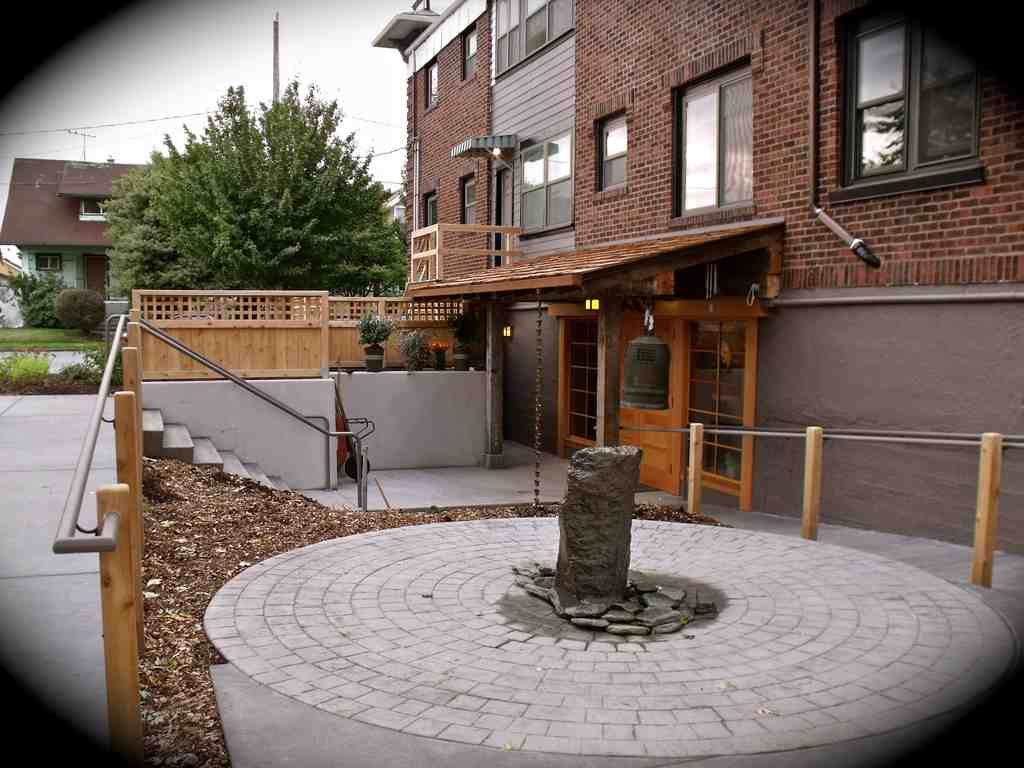
To spot the Dai Bai Zan Cho Bo Zen Ji, look ahead for a peaceful entry with wooden railings, a large metal bell hanging beside the door, and a circular stone feature in front of a modest brick building. Welcome to Dai Bai Zan Cho Bo Zen Ji, the “Listening to the Dharma Zen Temple on Great Plum Mountain”-and what a mouthful that is! As you stand here, imagine the soft chime of the temple bell greeting you at sunrise. This temple’s story starts with a boy who became a monk at just age eleven-pretty early to give up Saturday morning cartoons-Genki Takabayashi. He trained for nearly twenty years at Daitoku-ji, a famous Rinzai Zen temple in Japan, before Seattle’s Zen crowd invited him over in the late 1970s. By 1983, after perfecting his Zen skills (and probably his tea ceremony finesse), he founded this very temple. Genki led Chobo-ji until 1997, sharing koans and quiet wisdom, before retiring to Montana, where he passed away in 2013. But the story doesn’t freeze in time like an unmoving stone. Genjo Marinello took up the abbot’s role in 1999. Genjo’s Zen journey started back in 1975, and he’s been everywhere-training in Japan, learning from Zen masters, and eventually earning full dharma transmission, which is kind of like Zen’s version of winning “best in show.” Beyond temple walls, Genjo has served as a psychotherapist, Buddhist pastor in state prisons, and even as an emergency spiritual team member-tough job, but someone’s got to keep Seattle’s karma on track! Today, Chobo-ji hums with activity: daily meditation, weekly lessons in Zen, Dharma talks, and intense week-long retreats called sesshin where silence reigns so deeply you can hear your thoughts echo. Take in the tranquil courtyard-the stone and bell, symbols of attention and clarity. This place is a gentle invitation: listen closely, breathe deeply, and maybe, just maybe, discover something new about yourself-and if not, at least you’ll leave really, really calm.
Eigene Seite öffnen →Up ahead, you’ll spot the Beacon Food Forest by looking for a big, grassy hillside bustling with people, wheelbarrows, and gardening action right at the edge of Jefferson Park,…Mehr lesenWeniger anzeigen
Up ahead, you’ll spot the Beacon Food Forest by looking for a big, grassy hillside bustling with people, wheelbarrows, and gardening action right at the edge of Jefferson Park, near where the land dips down with trees and city views off to your left. Alright, welcome to the Beacon Food Forest-one of Seattle’s quirkiest and tastiest hidden gems! If you take a deep breath, you might just catch a whiff of earth and fresh woodchips, and maybe even the laughter of volunteers hard at work. Imagine back in 2009, a small group of dreamers-students, gardeners, and activists-standing on this very patch of grass, huddled over sketches for a "food forest" they hoped would become something much bigger than just a neighborhood garden. At that time, their ideas sounded as wild as planting apple and hazelnut trees on the moon. But with a bit of Seattle’s famous determination (and coffee), plus a $20,000 city grant, the adventure started digging roots. Picture them hatching their plans over at OmCulture in Wallingford and running permaculture classes at a raw vegan farm, all while gathering support from local gardeners and curious neighbors. By 2012, the first 1.75 acres of this food jungle were planted, with apples, pears, plums-you name it! But here’s where it gets really interesting: the land you’re standing on belongs to Seattle Public Utilities-not exactly the neighbor you’d expect when you’re planting edible forests. Even so, the city cheered them on, tossing in a juicy $100,000 in support and letting these garden pioneers turn this stretch into, reportedly, America’s largest food forest on public land. Wander through, and you’ll see it’s not just fruit and veggies. Off to one side is the "sust̓əlǰixʷali" Traditional Indian Medicine garden-a living tribute to Indigenous plants, crafted for both medicine and sovereignty, its very name meaning “a place where medicine is created” in the Lushootseed language. There are P-Patch plots just like you’d see in other city gardens, and nearly everything here is open to harvest-yep, you can just pick lunch right from a tree, though you should leave the special food bank plot be. During the pandemic, the forest pumped up veggie production to help food banks. And did you know this spot has even been the punchline on “The Late Late Show with Craig Ferguson”? Apparently, L.A. wanted a food forest, but instead of apples, you’d be hand-feeding Kardashians! So look around, listen for that buzzing energy-would you believe all this started as a wild idea and a few shovels? You’re now standing in a living story, one delicious bite at a time.
Eigene Seite öffnen →You’ll spot Jefferson Park stretching out ahead of you-just look for a rolling landscape sprinkled with big old trees and wide open lawns, with a hint of city skyline if you peek…Mehr lesenWeniger anzeigen
You’ll spot Jefferson Park stretching out ahead of you-just look for a rolling landscape sprinkled with big old trees and wide open lawns, with a hint of city skyline if you peek through the branches. Alright, here we are-Jefferson Park, the grand finale of our tour! Just imagine this spot over a hundred years ago: it wasn’t the peaceful, green escape you see today. In fact, back in 1892, it was the site of a “pesthouse”-that’s a not-so-cozy way of saying an isolation hospital. Now, don’t worry, no ghostly coughs tonight! In 1898, the land belonged to Seattle, with wild plans for a reservoir and even a cemetery. Luckily, it became a park instead, and in 1908, was named for none other than Thomas Jefferson himself. Picture the Olmsted Brothers walking around, planning winding paths and that 18-hole golf course-teeing off the same spot as famous golfer Fred Couples years later. When 1915 rolled around, you’d hear the sharp as the course opened to the public for the first time. World War II brought some serious excitement: anti-aircraft batteries lined the grounds, G.I.s shot some hoops in a recreation center, and tents popped up for soldiers and their visiting families. After the war, the park returned to its playful roots, with playgrounds, a new lawn bowling green, and a fresh nine-hole golf course-as if nothing ever happened, except maybe a stray helmet or two under the bushes. Fast-forward through the decades, and this park never stopped evolving. Your feet are now on land supported by 624 concrete columns, thanks to the covered reservoir beneath, and the sound of skateboard wheels echoes from the skate space sculpture, opened in 2014. And don’t forget-just steps away is the Beacon Food Forest, a seven-acre garden where anyone can pluck a berry or an apple. Today, Jefferson Park is the beating heart of Beacon Hill, home to walking paths, ballfields, playgrounds, and that famous golf course. You’re standing on a patchwork of stories-wild plans, wartime secrets, joyful play, and even the occasional epic frisbee throw. Not a bad place to wrap up our adventure, right?
Eigene Seite öffnen →
Häufig gestellte Fragen
Wie starte ich die Tour?
Laden Sie nach dem Kauf die AudaTours-App herunter und geben Sie Ihren Einlösecode ein. Die Tour ist sofort startbereit – tippen Sie einfach auf „Play“ und folgen Sie der GPS-geführten Route.
Benötige ich während der Tour Internet?
Nein! Laden Sie die Tour vor dem Start herunter und genießen Sie sie vollständig offline. Nur die Chat-Funktion benötigt Internet. Wir empfehlen den Download über WLAN, um mobiles Datenvolumen zu sparen.
Handelt es sich um eine geführte Gruppentour?
Nein – dies ist ein selbstgeführter Audioguide. Sie erkunden unabhängig in Ihrem eigenen Tempo, wobei die Audioerzählung über Ihr Telefon abgespielt wird. Kein Reiseleiter, keine Gruppe, kein Zeitplan.
Wie lange dauert die Tour?
Die meisten Touren dauern 60–90 Minuten, aber Sie kontrollieren das Tempo vollständig. Pausieren Sie, überspringen Sie Stopps oder machen Sie Pausen, wann immer Sie wollen.
Was, wenn ich die Tour heute nicht beenden kann?
Kein Problem! Touren haben lebenslangen Zugriff. Pausieren Sie und setzen Sie sie fort, wann immer Sie möchten – morgen, nächste Woche oder nächstes Jahr. Ihr Fortschritt wird gespeichert.
Welche Sprachen sind verfügbar?
Alle Touren sind in über 50 Sprachen verfügbar. Wählen Sie Ihre bevorzugte Sprache beim Einlösen Ihres Codes. Hinweis: Die Sprache kann nach der Tour-Generierung nicht mehr geändert werden.
Wo greife ich nach dem Kauf auf die Tour zu?
Laden Sie die kostenlose AudaTours-App aus dem App Store oder von Google Play herunter. Geben Sie Ihren Einlösecode (per E-Mail gesendet) ein, und die Tour erscheint in Ihrer Bibliothek, bereit zum Download und Start.
Wenn Ihnen die Tour nicht gefällt, erstatten wir Ihnen den Kaufpreis. Kontaktieren Sie uns unter [email protected]
Sicher bezahlen mit