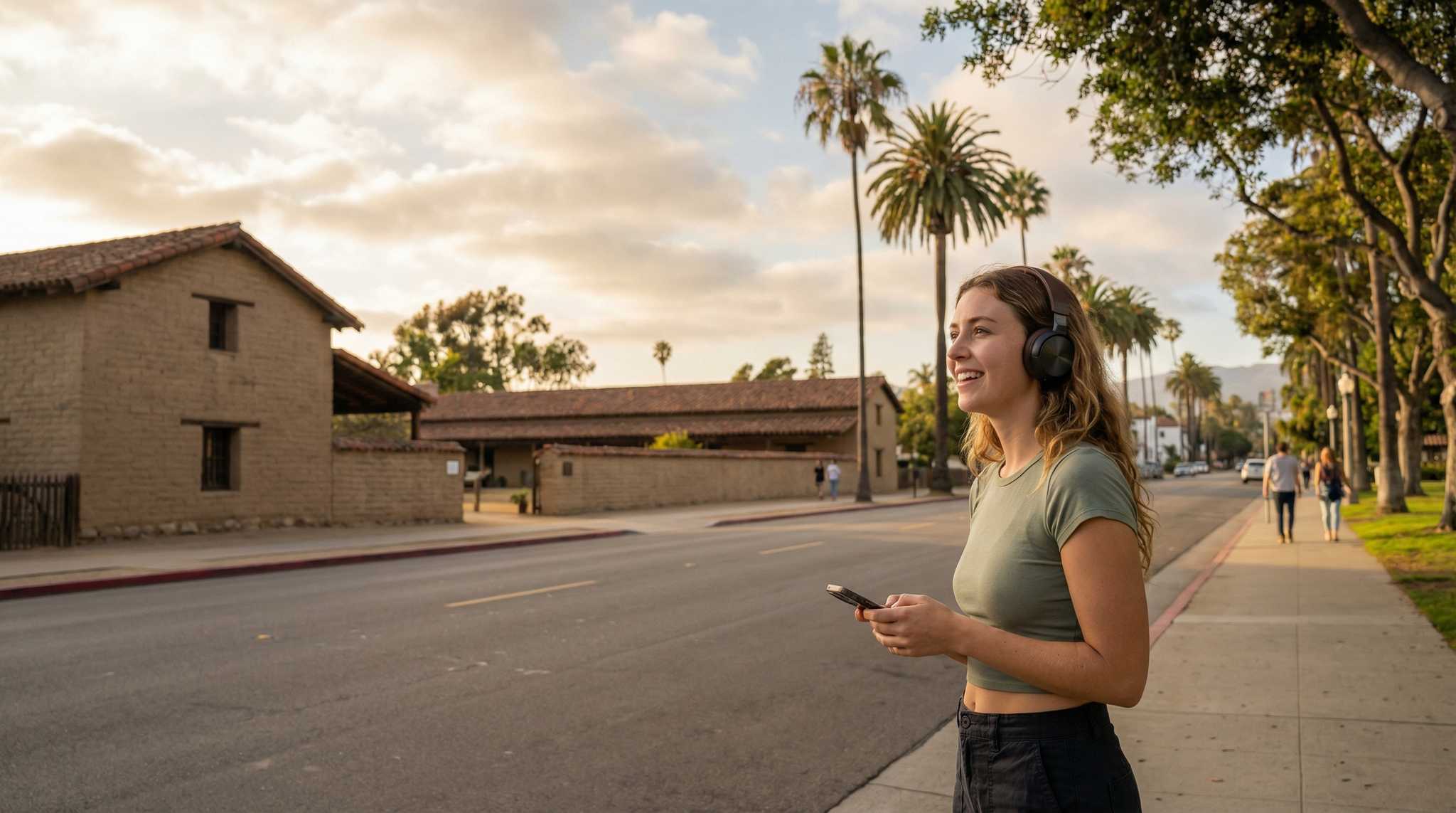
Santa Barbara Audiotour: Legenden, Wahrzeichen & Theater enthüllt
Ein spanischer Glockenturm durchschneidet den blauen Himmel von Santa Barbara und birgt Geheimnisse, die älter sind als Kalifornien selbst. Hinter der Schönheit sonnenbeschienener Torbögen und gefliester Hallen hallen Machtkämpfe und geflüsterte Skandale durch das Herz der Stadt. Diese selbstgeführte Audiotour entführt Sie von den sonnenverwöhnten Hauptstraßen in versteckte Innenhöfe und steinerne Festungen. Entdecken Sie Geschichten, die in Reiseführern kaum erwähnt werden, und stehen Sie dort, wo die Vergangenheit sich weigert, begraben zu bleiben. Warum erschütterte ein Gerichtsverfahren die ganze Stadt an einem Nachmittag? Wer verschwand spurlos hinter den Mauern des Presidio? Welcher Sitz im Arlington Theatre ist für immer von einem berüchtigten Bühnenkollaps gezeichnet? Streifen Sie von palmengesäumten Plätzen zu schattigen Festungen. Folgen Sie den Spuren von Rebellen, Träumern und jenen, die gefährliche Grenzen überschritten haben. Jede Wendung enthüllt Drama, Intrigen und Santa Barbara, wie Sie es noch nie gesehen haben. Entdecken Sie die bestgehüteten Geheimnisse der Stadt. Drücken Sie Play und tauchen Sie ein in die Geschichte.
Tourvorschau
Über diese Tour
- scheduleDauer 40–60 minsEigenes Tempo
- straighten3.1 km FußwegDem geführten Pfad folgen
- location_onStandortSanta Barbara, Vereinigte Staaten
- wifi_offFunktioniert offlineEinmal herunterladen, überall nutzen
- all_inclusiveLebenslanger ZugriffJederzeit wiederholen, für immer
- location_onStartet bei Faith Mission
Stopps auf dieser Tour
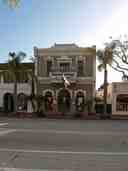
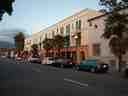
To spot the Faith Mission, look for a stately two-story building with intricate white decorative trim, arched windows, and a prominent balcony above the entrance-it’s right along…Mehr lesenWeniger anzeigen
To spot the Faith Mission, look for a stately two-story building with intricate white decorative trim, arched windows, and a prominent balcony above the entrance-it’s right along bustling State Street, set apart by its elaborate, old-fashioned metal facade. Now, imagine yourself back in 1889, the scent of ocean air mixed with the dust of horse-drawn carriages clattering down State Street. Here stands the Faith Mission, a beacon of hope and a true rarity! This building was the last of its kind in southern Santa Barbara County, showing off its fancy Eastlake and Italianate touches, which basically meant it wanted to dress a little fancier than its neighbors. The metallic decorations on the facade are like a jewelry box display for architects-a real show-off and proud of it! When you hear its original name, “Faith Mission,” you might think people gathered here for grand sermons or choir practice. Well, you’d be right, but it was also a lifeline for “erring young men” who needed a second chance. Reverend E.J. Scudder and his wife, tireless souls from Boston, brought this mission to Santa Barbara with little more than grit and faith. Even after the Reverend’s passing-cue dramatic organ music-his wife kept the work going, offering bread and beds to the city’s wayward or wandering folk. And get this: folks did jobs around town to earn tickets for meals and lodging, an idea that was charity and city clean-up crew all rolled into one. Picture the early days: young men lining up in their best hand-me-downs, hoping to get a meal, maybe picking up a broom or helping out at the docks in exchange for a night’s sleep under a real roof. The smell of soup drifting up to the public library on the upper floor-added just a month after the building opened. Of course, they only accepted the least “offensive” books, so no wild westerns or mushy romance novels here. The place became a hub for welfare and charity work, quietly serving stews and good advice, and occasionally the grand sermon-maybe a little too much of the “fire and brimstone” on cold, rainy nights. But time marches on and history loves a plot twist! This building morphed into the Hotel Savoy around 1929, swapping Bibles for bed sheets and, by World War II, even turned a little rowdy when it housed servicemen with a taste for trouble. Later, during the neon-lit 1980s, this place rocked as the Savoy Theater, beating with music, laughter, and maybe the ghost of a sermon echoing backstage. Today, behind its handsome, historic face, it’s all piano bars and nightlife. But if you listen carefully, you might still hear the faint sound of an old hymn in the walls, mingled with the shouts of pool players and the clink of drinks-proof that every building has a soul, and this one certainly knows how to keep a beat!
Eigene Seite öffnen →To spot the Virginia Hotel, just look to the southern side of West Haley Street for a stately three-story, L-shaped building with arched windows on the top floor and a distinctive…Mehr lesenWeniger anzeigen
To spot the Virginia Hotel, just look to the southern side of West Haley Street for a stately three-story, L-shaped building with arched windows on the top floor and a distinctive row of palm trees and green shutters stretching along the sidewalk. Alright, welcome to the Virginia Hotel, your second stop-and one with a history as lively as Santa Barbara itself! Imagine you’re standing here nearly a century ago. Before 1925, this spot actually held not one, but two hotels-one built in 1916 by Charles Maas, the other in 1922 by Freas Hayman. These neighbors got along so well that they had a secret handshake-well, not exactly, but they did connect on the upper floors. But then in 1925, boom! The city’s notorious earthquake shook downtown Santa Barbara to its core, leaving these hotels battered and the street in ruins. Now, as the dust settled and hammers started flying, Maas and Hayman hired Clifford Denman, an architect from Los Angeles, who looked at the wreckage and said, “Let’s turn this disaster into a masterpiece.” With a wave of creativity, he united the two buildings under one grand facade in the fresh, elegant style of Spanish Colonial Revival-arches on the first level, a sea of white stucco, and those gorgeous arched windows you see above. Even the palm trees out front give the place that touch of Mediterranean magic. At the same time, Denman slyly kept hints of their dual personalities-notice the different window designs on each part of the building. After all this transformation, the Virginia was one of the first ever buildings approved by the city’s new Architectural Advisory Committee, sparking a whole movement that changed Santa Barbara’s look forever. Though the hotels operated separately for years-the ultimate “close but not too close” relationship-they finally merged officially in 1977. After a short nap in the late ‘90s, the Virginia was lovingly restored and now stands proudly as one of the city’s most beloved historic hotels. From earthquake survivor to architectural icon, this spot is proof that sometimes, shaking things up leads to something even better.
Eigene Seite öffnen →To spot the Arlington Hotel, look ahead for an elegant, three-story building set back from the street, with a long wraparound veranda, a lot of windows, and a tall observation…Mehr lesenWeniger anzeigen
To spot the Arlington Hotel, look ahead for an elegant, three-story building set back from the street, with a long wraparound veranda, a lot of windows, and a tall observation tower rising up at one end-surrounded by lush gardens and big old trees. Alright, imagine standing here in the late 1800s-horses clip-clopping down State Street, palm trees swaying, and ahead of you: the grandest hotel on this whole stretch of the West Coast. The Arlington Hotel is the kind of place where carriages would arrive with important guests-presidents, royalty, and maybe even someone who invented a new kind of chair. Built in 1875, this enormous palace took up five whole acres! It was a three-story marvel, gleaming with gas lights at night, warmed by dozens of fireplaces, and with “pure mountain stream water” (the first Santa Barbara spa water, if you will). Back then, the Arlington wasn’t just a place to sleep-it was the center of Santa Barbara’s social universe. There was a reading room where you’d catch gentlemen pretending to read the paper while sneaking glances at the latest arrivals, a billiard room with the muffled sound of balls clinking, and even a speaking tube so you could, quite literally, pipe up your room service order directly to the kitchen. Talk about high tech for the 1870s! Over the years, the Arlington became so popular, especially after the railroad finally arrived in 1887, that they had to build an annex to house the flood of new guests. Presidents Harrison, McKinley, and Roosevelt slept here, maybe dreaming up national policy or, more likely, wondering if the breakfast came with unlimited toast. Even Princess Louise, Queen Victoria’s daughter, checked in, probably marveling that she made it all the way to California with her royal luggage intact. But the Arlington’s luck was as up and down as a see-saw. Late one summer evening in 1909, a fire broke out and turned this majestic hotel into a heap of smoldering ruin by morning. The guests, mostly out for dinner, escaped-but all that was left were the lonely brick chimneys. Undaunted, Santa Barbara brought in a fancy Los Angeles architect to build a new, fireproof Arlington for $1.5 million-this time with Spanish-Mission style towers, brick, and steel. The new Arlington Hotel reigned supreme until June 29, 1925, when the ground trembled, the sky filled with dust, and the city shook in a massive 6.3 earthquake. If you were here, you’d hear timbers snapping, beams crashing down, and the thunderous roar of a water tank in the bell tower falling- placed there to fight fire, ironically, but instead ending two lives that morning. The earthquake changed Santa Barbara, clearing the way for new city planning standards and, here on this spot, allowed the Arlington Theatre to rise from the dust. So next time you come for a movie, give a little nod to the grand old hotel whose spirit just might still haunt the popcorn stand!
Eigene Seite öffnen →
9 weitere Stationen anzeigenWeniger Stationen anzeigenexpand_moreexpand_less
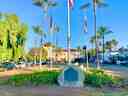
To spot Plaza de la Guerra, look for a wide grassy area dotted with tall palm trees, several flagpoles waving above a large commemorative stone, and a historic white building set…Mehr lesenWeniger anzeigen
To spot Plaza de la Guerra, look for a wide grassy area dotted with tall palm trees, several flagpoles waving above a large commemorative stone, and a historic white building set just behind it. You’re now standing in front of the famous Plaza de la Guerra, a place where Santa Barbara’s heart has been beating for centuries. Imagine the sun shining down on these palms, a light breeze carrying laughter and music-suddenly, it’s Fiesta time, and the plaza is bursting with life! Every August, this spot transforms into a festival wonderland, with booths of sizzling food, music echoing through the air, and kids darting between stands (sometimes clutching glass-blown treasures from long-gone booths of the 1950s-let’s not ask how many survived the walk home!). Of course, things weren’t always this festive. Go back to the days of Mexican Alta California, and this plaza was already the main gathering spot, right in front of the historic de la Guerra Adobe. Over generations, families like the prominent Guerras held court here, shaping the city’s story. It’s the same square beneath your feet, though the sounds have changed-from the jingling of spurs and murmurs in Spanish to car engines and Mariachi bands. Today, you might spot a Fiesta dancer’s dress swirling or the sparkle of a parade. Who knew Santa Barbara’s most dramatic tales and silliest souvenirs all took root right here?
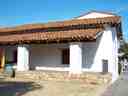
Eigene Seite öffnen →Look for a long, white adobe building with a thick clay tile roof and sturdy columns, sitting just behind a rock-faced wall right beside the sidewalk. Here you are in front of…Mehr lesenWeniger anzeigen
Look for a long, white adobe building with a thick clay tile roof and sturdy columns, sitting just behind a rock-faced wall right beside the sidewalk. Here you are in front of the Casa de la Guerra, once the grandest home in town. In the days of dusty streets and iron-spoked wagon wheels, José de la Guerra y Noriega - the fifth commandant of the Presidio and California legend - called this place his casa grande, or “big house." Locals probably stared up in awe: this was no ordinary adobe! While most folks squeezed into cozy one-room homes, José’s thirteen-room mansion must have seemed almost like a palace. Picture candles flickering inside, the scent of tortillas in the kitchen, laughter echoing across the patio. But it wasn’t all parties. Once, there was even a secret "altito" office where José stored his money and made big decisions - you’ll have to use your imagination, because that little building vanished long ago! Even the earth couldn’t shake the house’s legacy, though an 1857 earthquake gave it a pretty good try. When José’s health failed, his son Pablo stepped in, trading old adobe columns for fancy Victorian wooden ones - imagine the neighborhood gossip as wood replaced stone and the style of Santa Barbara started to shift. Today, you stand before a place restored to look as it did in the 1800s, where the walls hold tales of family, resilience, and change. If only these adobe bricks could talk! For now, they whisper history to those who pass.
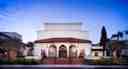
Eigene Seite öffnen →To spot the Lobero Theatre, look for a charming white building with a red-tile roof and five graceful arches at the entrance-just ahead of you in the heart of downtown. Take a…Mehr lesenWeniger anzeigen
To spot the Lobero Theatre, look for a charming white building with a red-tile roof and five graceful arches at the entrance-just ahead of you in the heart of downtown. Take a moment to imagine 1873 Santa Barbara: dusty roads, adobe walls, and the faint sound of a horse trotting by. Suddenly, a grand entrance appears-welcome to the Lobero Theatre, born from José Lobero’s dream to fill this Californian town with unforgettable music. Back then, it began as a humble opera house inside a refurbished adobe schoolhouse. Can you picture the excitement as the first crowd gathered, fanning themselves in the warm evening air, waiting for the curtain to rise? But as decades rolled by, the old opera house grew tired, even creaky-some folks might say it was doing its own interpretive dance! In the 1920s, the city called in two master architects, George Washington Smith and Lutah Maria Riggs, who gave the theatre a whole new look, wrapping it in the Spanish Colonial Revival style you see today. The Lobero threw open its doors in 1924, matching the city’s fresh, unified, Mediterranean flair. Since then, legends and rising stars alike have graced the stage, filling the air with laughter, music, and the occasional offbeat tuba solo. With nearly 250 events every year-hosting everything from magical chamber music to dazzling summer concerts-this theatre is more alive than ever. The only thing missing is your applause!
Eigene Seite öffnen →Look out for a charming, low-slung brick building with a red-tiled roof and bold red-framed windows and doors, just across the sidewalk-a palm tree and bright red details will…Mehr lesenWeniger anzeigen
Look out for a charming, low-slung brick building with a red-tiled roof and bold red-framed windows and doors, just across the sidewalk-a palm tree and bright red details will help you spot Jimmy’s Oriental Gardens. Alright, let’s travel back in time together. Imagine it’s 1947: here you are, at Jimmy’s Oriental Gardens, the final new arrival on Santa Barbara’s “new Chinatown” block. The air smells of sizzling garlic and soy sauce, drifting out onto Canon Perdido Street as hungry diners crowd inside. This place was the heart and soul of Chinatown, the last reminder of a bustling block that once housed Chinese stores, laundries, and a bustling rooming house. But Jimmy’s was more than just a restaurant-it was a home, a piece of living history. Jimmy Chung, a young man from China with big dreams and a knack for great food, opened his first spot, the Friendly Cafe, back in 1936-imagine the sounds of plates clinking, laughter, and greetings in English and Chinese echoing off the brick walls. When the Friendly Cafe was done, Jimmy didn’t hang up his apron; he boldly opened the Oriental Gardens in 1940, moving a few times before finally landing right here. Behind the restaurant, a humble two-story house let Jimmy and his wife Nuey raise their five kids-the Chung family, all part of this grand adventure. Now, Santa Barbara didn’t always have it easy for its Chinese community! Workers first arrived here in the 1860s to carve out Stagecoach Road, serving as laborers, cooks, and hotel hands, settling in and building what became “Old Chinatown.” By the time Jimmy’s was built in 1947, the neighborhood had changed, but his restaurant stayed-like a lantern glowing through the decades. It was famous for its cocktails, ping-pong games, and family warmth until it closed in 2006, when son Tommy retired. In 2014, Jimmy’s story got a spotlight in the film “Grasshopper for Grandpa,” a tribute to heritage, food, and family-one of the last traces of Chinatown’s once-vibrant pulse, still whispering stories just beyond these red doors.
Eigene Seite öffnen →To spot the Rafael Gonzalez House, look ahead for a single-story, U-shaped adobe building perched on a small hill, with wide shady wooden verandas and thick whitewashed walls…Mehr lesenWeniger anzeigen
To spot the Rafael Gonzalez House, look ahead for a single-story, U-shaped adobe building perched on a small hill, with wide shady wooden verandas and thick whitewashed walls behind an inviting green garden. Imagine being here in 1825, when Rafael Gonzalez himself might have been welcoming guests through these heavy wooden doors, the thick adobe walls cool against the California sun. If you listen closely, you might hear the gentle rustle of leaves and the distant clop of hooves as horses pass along Laguna Street. This house was a symbol of both prestige and cozy family life, with its original packed-earth floors kept swept and sturdy, and lively gatherings under the terra cotta roof tiles. Rafael, who became alcalde-or town leader-in 1829, would’ve seen all kinds of visitors: local citizens, traveling merchants, maybe even a few nosy neighbors peeking over those garden walls. After Rafael’s death, his daughter Francisca lived here for nearly 60 years, filling these seven rooms with family and tradition. Over time, the house saw new life-its echoing halls turned commercial-then lovingly restored, roof shingled and tile laid. Even today, as a private residence, you can still sense the layers of history; every breeze carries a secret, every sunbeam tells a story. Soak it in-you’re standing at a living piece of Mexican California, where the past refuses to stay quiet!
Eigene Seite öffnen →Take a look just ahead-you're about to spot a cluster of sturdy, earth-toned adobe buildings with thick walls and red tile roofs, nestled behind humble fences right at the corner…Mehr lesenWeniger anzeigen
Take a look just ahead-you're about to spot a cluster of sturdy, earth-toned adobe buildings with thick walls and red tile roofs, nestled behind humble fences right at the corner of Canon Perdido and Anacapa Streets, across from the post office; that’s the legendary Presidio of Santa Barbara. Alright, picture this: It's the early morning of April 21st, 1782. Spanish soldiers, padres, and Chumash workers are bustling around in the salty breeze-everyone’s hands deep in mud, hay, and hard labor. Suddenly, a bell rings, and the blessings of Padre Junípero Serra echo out over the embryonic walls. If you squint, can't you almost see the volunteers moving about, the sound of adobe bricks thudding into place and military boots crunching on gravel as the very last Spanish outpost in the entire New World rises, brick by brick? The Presidio’s thick adobe walls, 330 feet on each side, formed a square fortress meant to protect the fledgling town from whatever fortune-or misfortune-sailed its way along the California coast. The coast seemed inviting to pirates and foreign navies, so Governor Felipe de Neve chose this spot for safety, shelter, and, conveniently, access to building material-and maybe so the soldiers wouldn’t have to hike too far if they forgot their lunches. Inside the Presidio's quadrangle, 61 officers and men set up their lives, guided by the capable hand of José Francisco Ortega-the Presidio's first comandante, who oversaw the livestock and orchards and even directed irrigation canals. Under his watch, the sand and sycamores became the town’s first farm. The very first fields grew wheat tended by local Chumash, led by Chief Yanonalit. That’s right-a cereal-sly beginning for Santa Barbara, brought to you by teamwork! Ortega’s successor, Felipe de Goicoechea, carried on the construction, bringing families to settle, and soon this little chunk of Spain-in-America was a thriving heart for early Santa Barbara. Imagine standing here two centuries ago: Adobe soldiers’ quarters hugged two sides, the open plaza buzzed with children’s laughter and orders barked out for drills, and the chapel stood bravely at one end-a beacon for worship, weddings, and the occasional civic event-even today you might catch a concert or a ceremony echoing through its restored walls. During its heyday, the Presidio was never besieged by enemies, but it faced the fierce troubles of nature itself: powerful earthquakes from time to time shook these walls so hard that the original chapel (the town’s main church until 1857) was ultimately destroyed by the Fort Tejon earthquake-a reminder that in California, even the saints have to brace themselves for tremors. By 1846, things at the Presidio had gone a bit quiet-military life had slowed down, and the old fortress was slowly being reclaimed by time. Then the Mexican-American War rolled in, bringing a dash of drama. John C. Frémont outfoxed his rivals by sneaking over the muddy San Marcos Pass and surprising the practically empty Presidio from behind. Not a shot was fired-the Californio garrison was down in Los Angeles, and the Presidio simply surrendered on a blustery December day. Talk about anticlimactic! Over the years, the Presidio’s purpose shifted, from fortress to farm to faded relic. It provided land for two lively churches-Our Lady of Sorrows-both still standing today, holding onto their Catholic legacy. But the Presidio itself refused to fade. In 1963, local citizens stepped in, forming the Santa Barbara Trust for Historic Preservation with a simple mission: save the fortress! Today, this place is an active archaeological site and a fascinating museum, living right in the heart of downtown. Here, you’ll find original remnants like El Cuartel-the second oldest building in California-and the visitor center in the old Cañedo Adobe. The rest of the quadrangle has been lovingly reconstructed, stone by stone, so you can walk through authentic soldiers’ quarters and the Presidio Chapel, where music and even modern weddings sometimes bring new echoes to old walls. Stand quietly for a moment-let your imagination fill the courtyard with marching men, clattering swords, the scent of orange blossoms from the mission orchards, and voices of Chumash families and Spanish settlers. You’re standing where Santa Barbara truly began-with a dream defended by thick adobe and a strong community spirit. If you're keen on discovering more about the contemporary setting and use, mexican-american war or the preservation, head down to the chat section and engage with me.
Eigene Seite öffnen →To spot the Covarrubias Adobe, just look for the rustic L-shaped building with thick adobe walls, a red-tiled roof, and a shady courtyard with a simple fountain right in…Mehr lesenWeniger anzeigen
To spot the Covarrubias Adobe, just look for the rustic L-shaped building with thick adobe walls, a red-tiled roof, and a shady courtyard with a simple fountain right in front. Welcome to one of Santa Barbara’s oldest treasures: the Covarrubias Adobe, standing since 1817-older than your average internet meme! Picture yourself right here over 200 years ago, when Don Domingo Carrillo, a local leader, hired Chumash laborers to build this sturdy home for his wife, Concepción Pico Carrillo. Imagine the fresh adobe bricks being laid and cattle ambling by as the sun rose over a dusty, Spanish California morning. Now, here’s where the family drama gets juicy. Concepción wasn’t just anyone-she was the sister of Pío Pico, the very last Mexican governor of California. The adobe was the heart of a lively household, echoing with laughter and, probably, the occasional sibling rivalry. Later, their daughter married José María Covarrubias, a Frenchman who became a political powerhouse. He was private secretary to California’s last governor, a state assembly member for years, and even a judge. The adobe, in its time, was filled with whispered secrets, bustling politicians, and maybe even a few heated debates over tamale recipes. The adobe changed hands as generations passed. When Domingo Carrillo died in 1837, his wife held strong, living here until her last days. For nearly a century, descendants of the original families filled these rooms with stories, triumphs, and some grand fiestas, no doubt. But in 1920, it all took a turn: historian John Southworth swooped in, patched things up, and even moved another adobe right next door. Suddenly, this stately home was an antique shop, then a swinging restaurant-nightclub-just imagine the clinking glasses and bursts of laughter! With World War II, the Covarrubias Adobe became a hub for the British War Relief Society. Later, it became many things-a chamber of commerce, the headquarters for quirky clubs, and even the office for Santa Barbara’s National Horse and Flower Show. Each era left its echo here, mixing the musty scent of old books with clattering typewriters and, maybe, someone’s leftover tea. Today, the Santa Barbara Historical Society keeps this place humming. It’s used for community gatherings, celebrations, and stories-just like yours right now. Stand here and feel the layers of California history around you: the adobe’s sun-warmed walls, the leafy shade, and the whispered memories of a house that’s truly seen it all.
Eigene Seite öffnen →To spot the Santa Barbara Historical Museum, look for a rustic adobe building with sturdy wooden beams, a clay-tiled roof, a sunlit courtyard, and a bubbling central fountain…Mehr lesenWeniger anzeigen
To spot the Santa Barbara Historical Museum, look for a rustic adobe building with sturdy wooden beams, a clay-tiled roof, a sunlit courtyard, and a bubbling central fountain right in front-just follow the sound of trickling water and the inviting shade from the wide porch. Picture yourself standing under this warm Californian sun as the light dances off terracotta tiles and the breeze stirs the scent of potted geraniums. Now, let’s set the scene: it’s 1932, right in the depths of the Great Depression, when a plucky group of Santa Barbara locals rolled up their sleeves to save their city’s story. Inspired by the treasures of the past-Spanish, Chumash, Mexican, Yankee, and even Chinese relics-they formed what’s now known as the Santa Barbara Historical Society, determined to keep their shared history alive. At first, the Society’s home wasn’t this sprawling, sun-drenched space. Nope-they squeezed everything into the courthouse “tower” room! Imagine climbing all those stairs with a trunk full of antiques-if only step counters existed back then. Years ticked by, and the society gathered more relics and more fans, launching newsletters, collecting artifacts, and eventually outgrowing every space they moved into. When classes of membership started, the number of people wanting a peek into this treasure trove grew fast-just shows you can’t keep a good story locked away! There’s a touch of mystery and adventure in how they hopped from one historic home to another. For a while, their headquarters was a grand old house built by Horatio Gates Trussell in 1854-the kind of place where you’d expect to hear the echo of boots and petticoats, or maybe the faint creak of a swinging door. And believe it or not, at one point, they even negotiated with the Franciscans at the Santa Barbara Mission for a corner of the mission cloister-talk about holy history! But the dream was always for a place to call their own. In the early 1960s, the Society landed a 99-year lease on this very ground, and in 1965, the museum building opened-with 25,000 square feet to showcase stories. To add even more flavor, they acquired not one but two old adobes next door: the Covarrubias Adobe, which now hosts lectures and the bustling Docent Council, and the Historic Adobe, base for the legendary Rancheros Visitadores. From then on, the museum blossomed. There were oral history programs capturing the actual voices-hopes and laughter, memories of triumph and hardship-of more than 500 locals. The museum rolled out fancy upgrades like climate control (because, let’s be honest, even old artifacts don’t like to sweat), and revamped displays tracing Santa Barbara’s colorful story all the way back to the 15th century. So, as you stand here today, you’re on the grounds of a living time capsule-one built by a community’s love for its past, and now ready to reveal secrets from centuries ago. Take a deep breath, step inside if you’re curious, and don’t be surprised if you feel history whispering in the sun-dappled courtyard.
Eigene Seite öffnen →To spot the Santa Barbara County Courthouse, just look for the grand white stucco building with dramatic red-tile roofs, towers rising above lush palm trees, and a sweeping green…Mehr lesenWeniger anzeigen
To spot the Santa Barbara County Courthouse, just look for the grand white stucco building with dramatic red-tile roofs, towers rising above lush palm trees, and a sweeping green lawn-standing proudly in front of you like the castle of a Spanish fairytale. Ah, welcome, traveler! As you’re standing here, take a deep breath of that fresh coastal air and just imagine you’ve stepped back in time-because the Santa Barbara County Courthouse isn’t just a building, it’s a living legend. Picture yourself here in 1929, the scent of wet paint and fresh-cut grass swirling while workers, still dusty from the last earthquake, put the finishing touches on what architect Charles Willard Moore once called “the grandest Spanish Colonial Revival structure ever built.” But let’s rewind a bit-way back to 1850, just as California became the 31st state. The county was brand new, and its first courthouse? Well, it was basically an adobe house with “county business inside, coffee outside.” As Santa Barbara boomed, they ditched that adobe for a Greek Revival courthouse in 1872, a fancy classic style. But fate had a twist-imagine the ground suddenly shaking. In 1925, an earthquake rolled through town, leaving those Greek columns trembling in their boots. So, the county launched a grand competition for a new courthouse, and the Spanish Colonial Revival style, fresh from San Diego’s 1915 exposition, won the day. Construction began in 1926-can you hear the echoes of chisels and hammers ringing off that white stone? By 1929, what rose on this spot was not just a courthouse, but a castle fit for a city determined to reinvent itself. Red tiled roofs, iron balconies, and towers soaring above-every inch designed to honor both Spanish Andalusia and the sun-baked beauty of Santa Barbara’s coast. You’re standing on the edge of the Sunken Gardens, once the basement of the old courthouse, now a lush lawn home to everything from concerts and classic weddings (including some famous ones-politicians, celebrities-though the palm trees promised me, “no secrets leave this garden.”). More than 200 plant species thrive here-and if the scent of orange blossoms gets you daydreaming, blame the citrus trees. Now, look at that mighty arch-it’s actually 39 feet tall, topped with stonework carved by local artisans, and guarded by a delightful fountain called “The Spirit of the Ocean.” Legend has it the figures represent Santa Barbara’s deep connection to both land and sea, emerging like guardians from the surf. Step inside and you’d find yourself wandering tiled halls glowing with hand-painted art; the floors are terracotta, and the wall tiles were shipped all the way from Tunisia by artist Jacob Chemla. Don’t trip over the chandeliers-each one is unique, like a snowflake that took a detour to Spain. But the crown jewel awaits upstairs: the Mural Room. Designed as the Board of Supervisors’ chamber, its walls are drenched in colorful scenes-explorer Cabrillo landing, Franciscan friars building the mission, fiestas that shimmer with life. All that, from the paintbrushes of Dan Sayer Groesbeck and ceilings twinkling with detail, done by Italian artist Giovanni Smeraldi. And if you’re a fan of drama, the old jail cells on the top floors once held some of Santa Barbara’s rowdier folks. Prisoners had a view of those tower clocks-a rare, four-sided Seth Thomas masterpiece, lovingly kept ticking by a hidden geothermal field beneath your feet, keeping things cool long before “green energy” was cool. The Courthouse has lived many lives-as a seat of justice, a keeper of the county’s deepest secrets, a venue for grand celebrations, and even a local marriage hotspot. It’s endured threat and triumph, rolling earthquakes and quiet afternoons, always soaring above the city as both fortress and welcoming palace. Scroll through decades and you’ll find docents giving tours, artists painting the sky, and couples saying “I do” in the shadow of history. So as you stand here, remember: beneath your feet, a geothermal river hums with energy; above your head, bells might chime the hour; and all around you, stories old and new are waiting to be told. The Santa Barbara County Courthouse is living proof that beauty, resilience, and a little bit of Spanish magic really can stand the test of time. Exploring the realm of the courthouse building, architecture or the interior? Feel free to consult the chat section for additional information.
Eigene Seite öffnen →
Häufig gestellte Fragen
Wie starte ich die Tour?
Laden Sie nach dem Kauf die AudaTours-App herunter und geben Sie Ihren Einlösecode ein. Die Tour ist sofort startbereit – tippen Sie einfach auf „Play“ und folgen Sie der GPS-geführten Route.
Benötige ich während der Tour Internet?
Nein! Laden Sie die Tour vor dem Start herunter und genießen Sie sie vollständig offline. Nur die Chat-Funktion benötigt Internet. Wir empfehlen den Download über WLAN, um mobiles Datenvolumen zu sparen.
Handelt es sich um eine geführte Gruppentour?
Nein – dies ist ein selbstgeführter Audioguide. Sie erkunden unabhängig in Ihrem eigenen Tempo, wobei die Audioerzählung über Ihr Telefon abgespielt wird. Kein Reiseleiter, keine Gruppe, kein Zeitplan.
Wie lange dauert die Tour?
Die meisten Touren dauern 60–90 Minuten, aber Sie kontrollieren das Tempo vollständig. Pausieren Sie, überspringen Sie Stopps oder machen Sie Pausen, wann immer Sie wollen.
Was, wenn ich die Tour heute nicht beenden kann?
Kein Problem! Touren haben lebenslangen Zugriff. Pausieren Sie und setzen Sie sie fort, wann immer Sie möchten – morgen, nächste Woche oder nächstes Jahr. Ihr Fortschritt wird gespeichert.
Welche Sprachen sind verfügbar?
Alle Touren sind in über 50 Sprachen verfügbar. Wählen Sie Ihre bevorzugte Sprache beim Einlösen Ihres Codes. Hinweis: Die Sprache kann nach der Tour-Generierung nicht mehr geändert werden.
Wo greife ich nach dem Kauf auf die Tour zu?
Laden Sie die kostenlose AudaTours-App aus dem App Store oder von Google Play herunter. Geben Sie Ihren Einlösecode (per E-Mail gesendet) ein, und die Tour erscheint in Ihrer Bibliothek, bereit zum Download und Start.
Wenn Ihnen die Tour nicht gefällt, erstatten wir Ihnen den Kaufpreis. Kontaktieren Sie uns unter [email protected]
Sicher bezahlen mit