
New York City Audio-Tour: Helden, Hoffnung und Wolkenkratzer im Finanzviertel
Tausend Geschichten rasen durch diese Stahl-Canyons, wo Vermögen gemacht wurden, Türme einst fielen und die Geschichte ihre Meinung immer wieder ändert. New Yorks Finanzviertel verbirgt mehr als Börsenticker und eilige Schritte – hier birgt jeder Block ein Geheimnis, das es zu entdecken gilt. Auf dieser selbstgeführten Audio-Tour enthüllen Sie die Kraft unerzählter Geschichten und schlüpfen in Gassen, die die meisten Besucher nie bemerken. Finden Sie den wahren Puls Manhattans, Schicht für Schicht. Was versetzte die Wall Street an einem bitteren Morgen ins totale Chaos? Welche Symbole, die in den Liberty Tower gemeißelt sind, bergen Hinweise auf ungelöste Geheimnisse? Warum erscheinen jeden Monat auf mysteriöse Weise Blumen an derselben Stelle neben dem 9/11 Memorial? Verfolgen Sie politische Schlachten, die als Architektur getarnt sind, folgen Sie den Schatten der Rebellion und beobachten Sie, wie Jahrhunderte am Wasserrand kollidieren. Erleben Sie das Drama, den verborgenen Kummer und die Hoffnung des Viertels mit jedem Schritt. Sind Sie bereit, durch die Geheimnisse zu gehen, die New York nie ganz preisgibt? Ihre Geschichte beginnt jetzt.
Tourvorschau
Über diese Tour
- scheduleDauer 30–50 minsEigenes Tempo
- straighten0.5 km FußwegDem geführten Pfad folgen
- location_onStandortNew York, Vereinigte Staaten
- wifi_offFunktioniert offlineEinmal herunterladen, überall nutzen
- all_inclusiveLebenslanger ZugriffJederzeit wiederholen, für immer
- location_onStartet bei Liberty Tower
Stopps auf dieser Tour
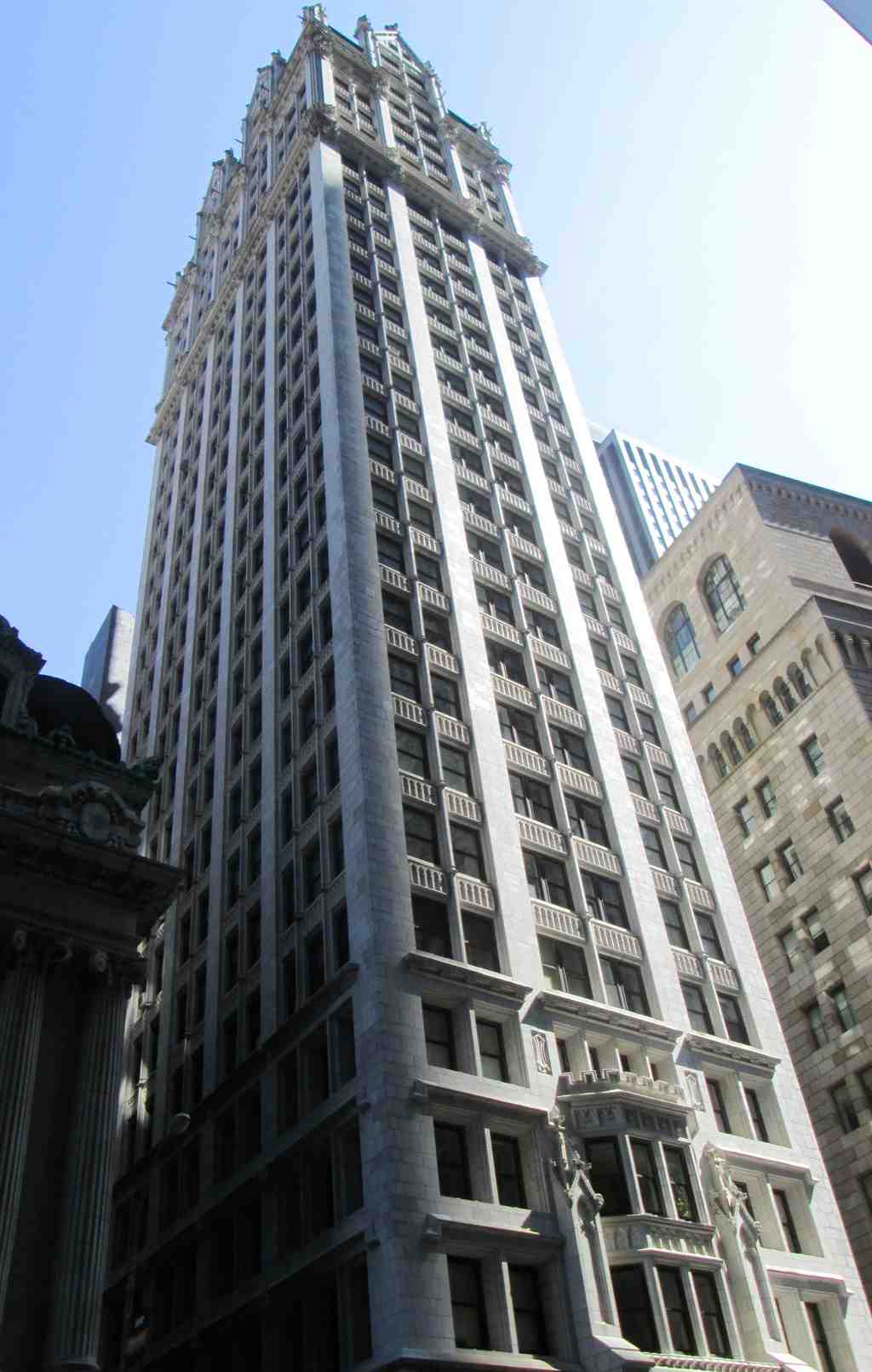
Rising above the narrow streets at 55 Liberty Street, the Liberty Tower is easy to spot by its striking white terracotta facade, completely adorned with whimsical creatures and…Mehr lesenWeniger anzeigen
Rising above the narrow streets at 55 Liberty Street, the Liberty Tower is easy to spot by its striking white terracotta facade, completely adorned with whimsical creatures and capped by a soaring, castle-like top-just look up for a narrow, 33-story skyscraper that gleams differently from the neighboring stone buildings. Standing here, you’re right at the foot of a legend-a tower that, when it first opened its doors in 1910, was declared the world’s tallest building with such a slender footprint, like a sword thrusting into the Manhattan sky. Imagine the early 1900s, noisy with construction all around and the city’s skyline changing before your eyes. This tower, designed by Henry Ives Cobb, was both a feat of engineering and artistry. Not only did it rise with a steel skeleton-the latest modern marvel-but Cobb decided to dress it entirely in white terracotta, giving the building a dazzling, almost fairy-tale appearance, covered in birds, alligators, gargoyles, and fantastical ornament. Even now, if you glance along the upper walls, you can sometimes catch a glint of sunlight off a dragon or an eagle perched in the masonry. Back when the building was brand new, one of its very first tenants was a young Franklin Delano Roosevelt, whose law office sat on the second floor-before he ever dreamed of the presidency. But behind those storied doors, intrigue simmered. In 1917, as World War I brewed, this building hosted German spies using a rented office as a cover while they plotted to draw the United States into a war with Mexico and Japan. The scheme unraveled with the dramatic revelation of the Zimmermann Telegram, changing the course of world history right from these very corridors. Within a decade, the entire skyscraper was snapped up by the Sinclair Oil Company. Imagine the flurry of business in the smoky boardrooms, where deals for oil rights made here would echo all the way to Washington D.C. and erupt into the infamous Teapot Dome Scandal-a tale of bribery and political intrigue that rocked the 1920s. And when the financial power shifted Midtown and companies like Sinclair moved north, the Liberty Tower changed hands again and again, sometimes bustling with over a hundred busy tenants. But by the late 1970s, as Wall Street’s fortunes flickered, the glory days of the Liberty Tower seemed to flicker with them. At one point, the building stood two-thirds empty, abandoned, and hardly anyone believed it could revive. Enter architect Joseph Pell Lombardi, who saw possibility where others saw decay. He bought the tower for under a million dollars, launching one of the city’s first office-to-residential transformations. Picture the dusty, echoing offices ripped out and reborn as New York’s tallest co-ops south of Canal Street-the start of a whole new way to live downtown. Take a step back and look up-the base, shaft, and castle-like crown rise in perfect columns, each section with its own details. Try to pick out the vertical piers, or the rows of small windows as the stories climb higher. At the very top, green copper roofs recall the turrets of a storybook castle. Below your feet, the tower is anchored with foundations drilled nearly a hundred feet to bedrock, overcoming quicksand and hardpan. Special caissons had to be sunk just to hold this tall, slender marvel aloft in a city eager for height. Through every transformation, Liberty Tower has clung fiercely to its identity. Its restoration in the 1990s and again after September 11th-a day the tower sustained heavy damage just steps from Ground Zero-became a monumental challenge of its own, as residents worked together to save the storybook creatures clinging to the walls. Now, not only does it look as fantastical as it did over a century ago, it’s officially recognized as a New York City Landmark and part of the Wall Street Historic District. Here you are, at the crossroads of money, mystery, scandal, and resilience-where a slender, white terracotta tower once crowned the skyline, and still stands guard over Liberty Street, whispering stories through every gargoyle and bird set in stone. Yearning to grasp further insights on the site, architecture or the critical reception? Dive into the chat section below and ask away.
Eigene Seite öffnen →
Häufig gestellte Fragen
Wie starte ich die Tour?
Laden Sie nach dem Kauf die AudaTours-App herunter und geben Sie Ihren Einlösecode ein. Die Tour ist sofort startbereit – tippen Sie einfach auf „Play“ und folgen Sie der GPS-geführten Route.
Benötige ich während der Tour Internet?
Nein! Laden Sie die Tour vor dem Start herunter und genießen Sie sie vollständig offline. Nur die Chat-Funktion benötigt Internet. Wir empfehlen den Download über WLAN, um mobiles Datenvolumen zu sparen.
Handelt es sich um eine geführte Gruppentour?
Nein – dies ist ein selbstgeführter Audioguide. Sie erkunden unabhängig in Ihrem eigenen Tempo, wobei die Audioerzählung über Ihr Telefon abgespielt wird. Kein Reiseleiter, keine Gruppe, kein Zeitplan.
Wie lange dauert die Tour?
Die meisten Touren dauern 60–90 Minuten, aber Sie kontrollieren das Tempo vollständig. Pausieren Sie, überspringen Sie Stopps oder machen Sie Pausen, wann immer Sie wollen.
Was, wenn ich die Tour heute nicht beenden kann?
Kein Problem! Touren haben lebenslangen Zugriff. Pausieren Sie und setzen Sie sie fort, wann immer Sie möchten – morgen, nächste Woche oder nächstes Jahr. Ihr Fortschritt wird gespeichert.
Welche Sprachen sind verfügbar?
Alle Touren sind in über 50 Sprachen verfügbar. Wählen Sie Ihre bevorzugte Sprache beim Einlösen Ihres Codes. Hinweis: Die Sprache kann nach der Tour-Generierung nicht mehr geändert werden.
Wo greife ich nach dem Kauf auf die Tour zu?
Laden Sie die kostenlose AudaTours-App aus dem App Store oder von Google Play herunter. Geben Sie Ihren Einlösecode (per E-Mail gesendet) ein, und die Tour erscheint in Ihrer Bibliothek, bereit zum Download und Start.
Wenn Ihnen die Tour nicht gefällt, erstatten wir Ihnen den Kaufpreis. Kontaktieren Sie uns unter [email protected]
Sicher bezahlen mit 


