Milwaukee Audio-Tour: Legenden, Wahrzeichen & Getränke in Juneau Town
Unter den Kupferdächern und Neonlichtern von Milwaukee liegt ein Stadtzentrum, in dem Gerichtsurteile einst Schlagzeilen machten und Kabarettgeheimnisse noch nach Mitternacht wabern. Diese selbstgeführte Audio-Tour führt durch die verborgenen Gänge und lebhaften Treffpunkte von Juneau Town und lädt dazu ein, die Geschichten der Stadt, die sie verborgen hält, genauer zu betrachten. Erleben Sie die Schichten der Geschichte, die die meisten Besucher nie hören. Wer riskierte alles bei einer Mitternachts-Auseinandersetzung im Bundesgericht? Warum sorgte eine Aufführung des Repertoiretheaters einst tagelang für Gesprächsstoff in der Stadt? Welcher skandalöse Cocktail in der Bar This Is It! löste ein Prohibitionsgerücht aus, das sich hartnäckig hält? Bewegen Sie sich durch geschichtsträchtige Straßen, wo politische Dramen und stille Revolutionen dauerhafte Spuren im Charakter Milwaukees hinterließen. Entdecken Sie mit jedem Schritt geflüsterte Geschichten und wilde Feiern, die den Geist der Stadt prägten. Drücken Sie auf Play und lüften Sie die Geheimnisse, die zwischen den alten Steinen und hellen Leuchtreklamen von Juneau Town warten.
Tourvorschau
Über diese Tour
- scheduleDauer 40–60 minsEigenes Tempo
- straighten3.0 km FußwegDem geführten Pfad folgen
- location_onStandortMilwaukee, Vereinigte Staaten
- wifi_offFunktioniert offlineEinmal herunterladen, überall nutzen
- all_inclusiveLebenslanger ZugriffJederzeit wiederholen, für immer
- location_onStartet bei Chase Tower
Stopps auf dieser Tour
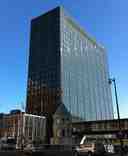
Look for a tall, dark green building right on the corner of East Wisconsin Avenue and North Water Street, next to the Milwaukee River-you can’t miss its sleek, modern look rising…Mehr lesenWeniger anzeigen
Look for a tall, dark green building right on the corner of East Wisconsin Avenue and North Water Street, next to the Milwaukee River-you can’t miss its sleek, modern look rising over downtown. Take a moment to gaze up-yes, way up!-at the 22-story Chase Tower. Imagine it’s 1961, and Milwaukee’s skyline has just been shaken up by this modern giant, then called Marine Plaza. With its sharply dressed International Style, the building has a certain James Bond vibe; you half expect someone in a suit to pop out and hand you a secret dossier. Back then, at 288 feet, it was the second-tallest in the city-only beat out in 1973 by the U.S. Bank Center. Locals watched as technology and ambition became concrete and glass right by the river. Over the years, the tower has played host to a parade of important tenants, from the bustling Marine Bank days, to the era of Bank One Plaza, and now the big Chase Bank at the heart of it all. Down below, there's even an underground vault-so if you’ve got any spare gold bars, you know where to keep them! Modern Milwaukeeans hustle through a maze of eateries and radio studios-yep, you’re right near Milwaukee Public Radio's home base. Above, lawyers, bankers, and retirees keep things lively. To keep everyone moving, skywalks connect the Tower not just to parking, but even across the river. No need to brave Wisconsin snow if you don’t want to! Since Group RMC took over in 2021, the Tower’s gotten a major glow-up, with glittering lounges and a slick fitness center-fancy enough to make even the vault jealous. Every floor, every lobby has a new shine, making this former Marine Plaza a true Milwaukee classic ready for its next chapter. So, next time you hear someone call it “just an office building,” you’ll know it’s a little more than meets the eye.
Eigene Seite öffnen →To spot the United States District Court for the Eastern District of Wisconsin, look for a grand building often marked with the official seal featuring a bald eagle holding olive…Mehr lesenWeniger anzeigen
To spot the United States District Court for the Eastern District of Wisconsin, look for a grand building often marked with the official seal featuring a bald eagle holding olive branches and arrows-just ahead, you’ll notice its formal, stately presence right in front of you. Alright, welcome to the heart of federal justice in Milwaukee! Imagine the year is 1870-horses clop down dirt streets, gas lamps flicker, and Milwaukee has just gained its own federal court. This place has seen all kinds of mysteries unravel, from suspenseful legal showdowns to the quiet shuffle of important papers. Now, this court isn’t just any courthouse. It’s one of only two federal districts in Wisconsin, with its main headquarters right here and a strong northern outpost up in Green Bay. On any given day, judges and lawyers inside are busy with all sorts of cases-except for wild patent battles or big claims against the government, which get whisked away to different courts for a little extra drama. As you stand here, the current chief judge, Pamela Pepper, is making the big decisions and keeping the courtroom in line (no gavel-throwing allowed-unless it’s a really tough Monday). Over the decades, the chief judge position has passed like a hot potato-rotating every seven years, or when a judge gets to the magical age of 70. It’s almost like a judicial relay race! Soak in the strong sense of justice, the swirl of judges’ robes, and the quiet tension beneath its impressive stonework. From Green Bay’s forests to Milwaukee’s city blocks, this courthouse connects over twenty counties, holding stories you might never hear-but you’re standing right where they unfold
Eigene Seite öffnen →To spot the Northwestern Mutual Tower and Commons, just look up-way up!-for a shimmering, glassy skyscraper that stretches boldly into the sky. Imagine yourself standing here…Mehr lesenWeniger anzeigen
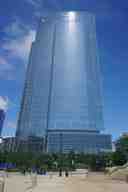
To spot the Northwestern Mutual Tower and Commons, just look up-way up!-for a shimmering, glassy skyscraper that stretches boldly into the sky. Imagine yourself standing here back in 2013. The old 16-story Northwestern Mutual building, a loyal but tired office block, is about to get the boot. Suddenly, there’s the sound of demolition-old walls tumbling to make way for something bold. By 2017, at a jaw-dropping $450 million, this shining blue tower is finished, reflecting clouds and ambitions alike. It’s the second-tallest building in Milwaukee, rivaled only by the U.S. Bank Center. The grand opening in August 2017 was all glitz and celebration-imagine the pride swirling through the city that day. But Northwestern Mutual wasn’t done yet! In 2015, they announced another skyscraper, the 34-story 7Seventy7, bringing residents, retail, and parking into the heart of downtown. That went up a year after this tower, in 2018. Milwaukee’s skyline would never be the same! So next time you see your own reflection in this giant glass marvel, remember the vision, hard hats, and maybe a few coffee-fueled late nights that went into building it. Not bad for a view, huh?
Eigene Seite öffnen →
11 weitere Stationen anzeigenWeniger Stationen anzeigenexpand_moreexpand_less
To spot the Cathedral of St. John the Evangelist, just look for the tall, creamy-yellow brick tower with a green copper dome and cross peeking above the trees across from…Mehr lesenWeniger anzeigen
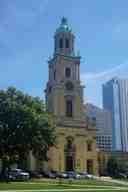
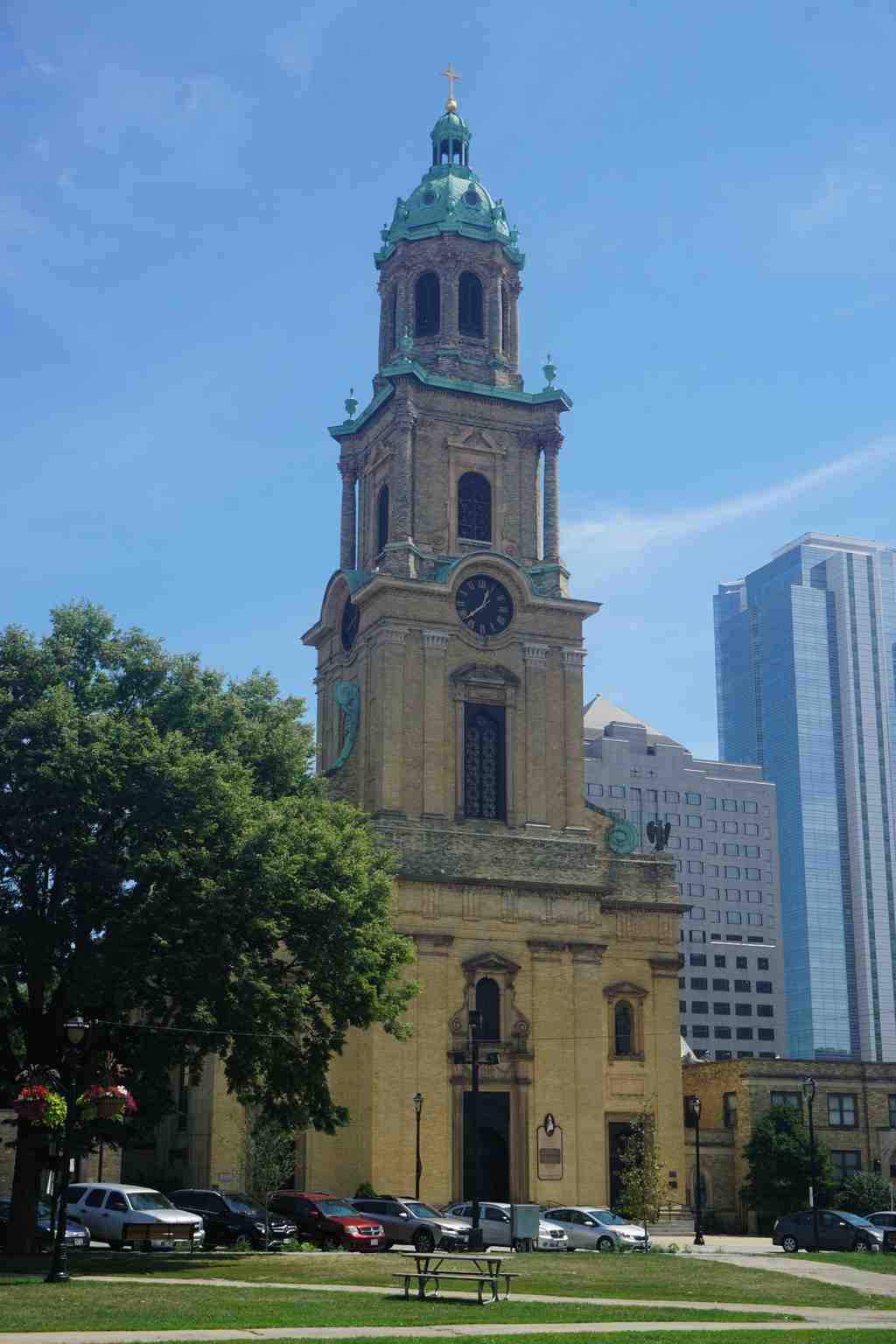
To spot the Cathedral of St. John the Evangelist, just look for the tall, creamy-yellow brick tower with a green copper dome and cross peeking above the trees across from Cathedral Square Park. Now that you’re standing before this grand cathedral, let’s take a stroll down Milwaukee’s memory lane-no time machine needed, just your imagination and maybe a little neck stretch to take in that tower! Back in 1837, before the city even dreamed of skyscrapers, St. John’s parish became Milwaukee’s first Roman Catholic congregation. For years, the faithful squeezed into a nearby little church until Archbishop John Henni landed a prime slice of land right here in 1844. With $30,000 in hand-a king’s ransom at the time, if you didn’t spend it all on cheese-they began construction. Only five years later, in 1852, the cathedral was dedicated to John the Evangelist, and Milwaukee had itself a spiritual home as solid as they come. Take a closer look at that creamy brick-it’s called Cream City brick, made right here in Milwaukee, and it gives the cathedral its sunny glow even on a cloudy day. The architect, Victor Schulte, clearly had a thing for the “Zopfstil” or “pigtail” style-a less showy German Renaissance Revival look, a little protest against those fancy Baroque churches that were all the rage elsewhere. It’s like they said, “We’ll take our faith strong but our buildings sensible!” Look up at the three-story tower. The lower part is the original design from the 1840s-simple, sturdy flat columns marching up to the clock. Back in the day, it had a much shorter steeple, but after a few decades, someone declared it unsafe-probably after one too many anxious glances on windy days. So, in 1893, George Ferry and Alfred Clas designed the taller stages above the clock, giving it that dramatic domed crown you see now. Disaster struck in 1935 when a fire consumed almost everything-stained glass, mural paintings, even a prized pipe organ. The flames got so hot, even the walls looked nervous. Only the tower, thanks to a determined fire chief, survived the inferno. But Milwaukee’s spirit was tougher than a Wisconsin winter, and by 1942, they’d rebuilt in time for Christmas Eve Mass. Inside today are glowing stained glass windows, a tomb-like baptismal pool, and a controversial fiberglass crucifix that stirred a holy debate during the cathedral’s 2002 renovation. Modern touches and old traditions sit side by side-a reminder that Milwaukee’s landmark doesn’t just survive history, it keeps reinventing it!
Eigene Seite öffnen →Directly ahead, you'll spot a welcoming patch of green surrounded by trees, with the striking tower of the Cathedral of St. John the Evangelist peeking out behind, framed by…Mehr lesenWeniger anzeigen
Directly ahead, you'll spot a welcoming patch of green surrounded by trees, with the striking tower of the Cathedral of St. John the Evangelist peeking out behind, framed by downtown’s shiny skyscrapers. Now, picture yourself standing here back in the 1800s, surrounded by the sounds of hammering and shouting as the city’s very first courthouse rose up from this very ground, all thanks to Solomon Juneau-one of Milwaukee’s founders-donating the land in 1836. At that time, instead of musicians and food trucks, you would’ve seen a sturdy courthouse, a jail, and once, even a wild scene when a crowd of 5,000 surged forward to rescue Joshua Glover, a runaway slave, in a powerful act of defiance. The grassy patches you see today were once the last bit of home troops touched before heading off to the Civil War, or maybe the first place they embraced loved ones on return. When the courthouse was replaced in 1939, the site was transformed into the park you’re standing in now-a lively patch of city life, where jazz floats on summer evenings and the city’s Christmas tree glows every winter. Oh, and if you notice a gentle breeze, maybe it’s the whispers of those long-ago freedom fighters and soldiers… or just the free Wi-Fi!
Eigene Seite öffnen →To spot This Is It!, look for a classic brick building on the corner of Jefferson and Wells, usually marked by bright rainbow signage and an iconic martini glass logo that really…Mehr lesenWeniger anzeigen
To spot This Is It!, look for a classic brick building on the corner of Jefferson and Wells, usually marked by bright rainbow signage and an iconic martini glass logo that really pops against the more traditional surroundings; just follow the color and cheer! Alright, you’ve made it to This Is It!-don’t let the playful nickname “Tits” throw you off, this place is all heart! Picture yourself standing here in front of a building that’s been quietly making history since 1915. The doors you see have welcomed folks since 1936, but in 1968, something magical happened-June Brehm and her business partner, Michael Latona, turned this spot into a safe haven for Milwaukee’s LGBT+ community. Basically, walking into This Is It! was like stepping through a rainbow-colored wormhole to a time when courage and togetherness were needed most. Back then, being “out” wasn’t easy-nerves frayed, secrets whispered-but June made sure her bar was always waiting with a warm greeting, a strong drink, and a community that had each other’s backs. After taking over solo in 1970, June poured decades of love and laughter into every inch of these walls. August nights might have drifted with the sound of clinking glasses and Motown hits, especially after her son, Joseph, joined her at the helm, bringing new energy. Imagine them together through the decades: bright-eyed in bell-bottoms in ’70s Milwaukee, then quietly shepherding the community through the haze of the AIDS crisis, heartbreaks, and moments of rallying hope. And through it all, This Is It! never missed a beat-never closed down, not even for a serious crisis (except, of course, to unclog a stubborn drain or slap on a lick of paint!). When June passed away in 2010, Joseph kept the torch burning with passion, before passing it to George Schneider when illness made that no longer possible-George, a man who joked he was “the custodian of a huge amount of history and their legacy,” kept the spirit alive, lighting up the corner with more drag, more laughter, and double the dance floor after a major expansion in 2019. After George joined forces with Wisconsin’s own drag superstar, Trixie Mattel, in 2021, things got just a little more fabulous. Whether you came for the show bar, the unexpectedly epic dance floor, or the brand-new performance space, you knew this was where the party-and the story-kept growing. The bar even became Milwaukee’s only LGBT+ bar to welcome 18+ guests on special nights, thanks to a Visual and Performing Arts license. And let’s not forget the rainbow crosswalk out front-after two years of work by George and the city, the intersection itself now sparkles with paint as bright as the stories inside. This Is It! was always more than a bar. Fundraisers, like their storied “Pink Hat Parties,” helped support everyone from the Milwaukee LGBT Community Center to the Aids Resource Center of Wisconsin and even the local symphony. It was here that the community could learn its own story, thanks to exhibits made in partnership with the Wisconsin LGBTQ History Project. This place earned shoutouts from senators, mayors, and even won a permanent place on Milwaukee’s “must-visit” list for making everyone-absolutely everyone-feel at home. Sadly, in March 2025, the party had to end after nearly 60 years, shut down by tough times from COVID and street construction. But the echo of clinking glasses, drag queens’ laughter, and June’s welcoming spirit still seem to buzz in the air. If you listen closely, you might catch a whisper of the old days-proof that pride, love, and a stiff martini always were Milwaukee’s best recipe for history.
Eigene Seite öffnen →To spot the site of the Milwaukee Police Department bombing, look for a spot where historic Milwaukee architecture meets a somber air-a place that was once bustling with the…Mehr lesenWeniger anzeigen
To spot the site of the Milwaukee Police Department bombing, look for a spot where historic Milwaukee architecture meets a somber air-a place that was once bustling with the commotion of officers but today stands as a quiet testament to a tragic day in the city’s past, right near the intersection of North Broadway and East Wells Street. Alright, hold onto your hat and maybe double-check your shoelaces-because you’re standing right where one of the most explosive moments (literally!) in Milwaukee’s history occurred. Picture it: It’s a cold November morning in 1917, the city is buzzing with World War I nerves, jazz just starting to pop up in ballrooms, and everyone’s got their eyes peeled for trouble. But no one guessed the trouble would come wrapped as a mysterious package, left next to an evangelical church in the Third Ward. Along comes Maude L. Richter, a social worker with nerves of steel, who thinks, “This box shouldn’t be here!” She drags it inside, and soon it’s in the hands of Sam Mazzone, the church janitor. Instead of ignoring it-which, let’s face it, would have been safer-Sam decides to take it down to the police station, right here at Oneida and Broadway. He thinks the officers will know what to do. The timing, though, couldn’t have been more unlucky. Just as Lieutenant Robert Flood is about to lead a room full of officers through a routine inspection, they gather curiously around the strange package. In one world-shattering instant, it explodes. The blast is so powerful it rocks the building and echoes through much of Milwaukee, drawing crowds of thousands to the devastated station. When the dust settles, nine officers and a civilian-Catherine Walker, who was simply there to report a robbery-have lost their lives. The shocking part? The people responsible for this attack were never caught. Back then, fingers pointed toward the Galleanist anarchists-radicals already in trouble after a chaotic rally in Bay View just months before. Some say Mario Buda, a notorious bombmaker, and his friend Carlo Valdinoci, were behind it. The trial of eleven Italian anarchists for the earlier Bay View clash was forever haunted by the mystery and grief of the bombing. Even the famous lawyer Clarence Darrow ended up defending some of them! For over 80 years, this very spot marked the deadliest day for law enforcement in American history-until September 11. It’s a reminder of the unpredictable times, the dangers of the era, and, perhaps, that it’s always best to call the bomb squad.
Eigene Seite öffnen →You’ll spot the Milwaukee Repertory Theater by its striking red brick facade with grand arched windows and an impressive, modern entrance labeled “Trammell Crow Pavilion” on your…Mehr lesenWeniger anzeigen
You’ll spot the Milwaukee Repertory Theater by its striking red brick facade with grand arched windows and an impressive, modern entrance labeled “Trammell Crow Pavilion” on your right side as you approach Wells Street. Right in front of you stands a place where Milwaukee’s imagination bursts to life-welcome to the Milwaukee Repertory Theater, lovingly called “The Rep” by locals. Just imagine: on a cool evening, the building’s golden lights spill onto the sidewalk, banners flutter, and the sweet buzz of pre-show excitement fills the air. This theater isn’t just a building-it’s an ever-evolving story, starring Milwaukee’s people since 1958. The Rep’s story began when it was founded as the Fred Miller Theatre Company. Picture a small company full of ambition, practicing lines in a cramped space on Oakland Avenue, trying not to bump into each other. Eventually, they moved to the grand Performing Art Center downtown in 1968, and by 1974, they’d expanded even further-converting a humble warehouse on Court Street into an experimental stage. That little side-street gem became a playground for wild creative ideas and a launching pad for daring new playwrights. But it wasn’t all champagne and standing ovations. By 1987, The Rep landed here, along the east bank of the Milwaukee River, moving into this bold Associated Bank Theater Center. If these bricks could hold a tune, they’d probably belt out scenes from every hit the Rep’s produced-fifteen productions a year, drawing every kind of theatergoer, from first-timers to the 15,000-strong base of loyal subscribers. Here, the Ellen & Joe Checota Powerhouse Theater can transform from a classic, proscenium stage to a thrust stage that juts right into the audience. There’s also the cozy Herro-Franke Studio Theater and the Stackner Cabaret, where you can sip a drink while the music and laughter swirl around you. Every December, the Rep’s annual production of A Christmas Carol at Pabst Theater draws cheering families, teary-eyed regulars, and more than a few Scrooges who claim they’re “just there for the hot chocolate.” The Rep has seen some tough times-one year battling $400,000 of debt, wondering if the curtain would ever rise again. Just when it seemed the plot thickened too much, ticket sales soared by sixty percent, and a single donor swooped in with half a million dollars. A comeback fit for the big screen, don’t you think? Over the decades, nearly 150 brand-new plays and musicals have premiered here. Legends have graced the Rep’s stages: Betty White, Rita Moreno, John Carradine-imagine those dressing rooms echoing with last-minute pep talks and nervous energy! Even playwright Ayad Akhtar and actor Chris Noth have left their mark. If you’re feeling dramatic, don’t worry, you’re in good company. Today, the Rep welcomes as many as 275,000 people each year, hosting school groups, community events, and pioneering accessibility upgrades. Thanks to a massive $80-million campaign, the new renovation will soon unveil the 152,500 square-foot Associated Bank Theater Center, a cutting-edge space ready to welcome the next generation of theater magic and the 20,000 students expected to fill its halls annually. Awards? This place has shelves full, from Time Magazine’s “Top Ten Theater of the Year” for Moby Dick in 2002, to BroadwayWorld Milwaukee's repeated honors, to the New York Times bragging about its must-see new work. Teachers, students, actors, and audience alike-they all find a home here. Local volunteers pitch in, and even if you’re not a Broadway star, you can take acting classes or join in lively debates after the show. Standing here, you’re at the heart of a living, breathing tradition, where Milwaukee’s stories are still being told, reimagined, improvised, and celebrated. And with that kind of history, you never know which future legend might be pacing the lobby, lines in hand, just waiting for their cue.
Eigene Seite öffnen →To spot the Pabst Theater, just look for a grand, ornate brick building with arched windows, intricate gold detailing, and a bold sign reading "PABST THEATER" high above the black…Mehr lesenWeniger anzeigen
To spot the Pabst Theater, just look for a grand, ornate brick building with arched windows, intricate gold detailing, and a bold sign reading "PABST THEATER" high above the black and gold ironwork canopy right in front of you. Welcome to the Pabst Theater, Milwaukee’s own “Grande Olde Lady”-but trust me, she’s not here to hand out cookies, she’s here to dazzle! Picture yourself standing in 1895: horses clop down the cobbled street, the lights of Milwaukee shimmer against Lake Michigan, and excitement buzzes in the air as crowds spill through these very doors for opening night. The original opera house here was destroyed by fire-twice, if you can believe it. That’s right, Frederick Pabst, the famous beer baron, said, “Enough!” and rebuilt his dream theater stronger, sparklier, and as close to fireproof as 1890s technology could manage. The Pabst was born for grandeur-giant marble staircases, plush cherry-red seats, and a chandelier heavy enough that you’ll look up and be glad you remembered your lucky rabbit’s foot. Inside, the theater holds about 1,300 people with two elegant balconies wrapping around a drum-shaped auditorium-perfect for catching whispers, laughter, and, occasionally, an actor forgetting his lines. Its gold leaf proscenium arch frames everything from thundering orchestras to slapstick comedies and cutting-edge documentaries. Even Sergei Rachmaninoff, Laurence Olivier, and ballerina Anna Pavlova graced this stage. If those walls could talk, they’d be trilingual in music, laughter, and applause. Now, the Pabst Theater not only looks like something out of a European fairy tale-thanks to architect Otto Strack’s eye for German Renaissance glory-but was packed with innovations: electric organ, ice-powered air conditioning, and one of America’s first fire curtains. And get this: a massive hydraulic orchestra pit rises up like magic for the musicians, so no trombone player gets left behind. As you gaze at the building, picture the names of Aristotle, Beethoven, and Shakespeare inscribed high above, keeping a watchful eye on all the drama below-not to mention the gigantic Austrian crystal chandelier that has lit up Milwaukee’s finest nights for over a century. Milwaukee’s German roots ran deep here-the city once nicknamed “German Athens”-and the Pabst kept those traditions alive through years of schnitzel, opera, and eventually, the switch to English as the world changed outside. The result? One of the best-sounding, most opulent theaters in America, still bustling today with over 100 events a year. So, as you stand before these golden doors, take a bow-this is a place where legends are born and every night feels like opening night!
Eigene Seite öffnen →To spot Milwaukee City Hall, just look for the huge tan-brick building with grand arched windows, a tall tower crowned by a clock, and a striking copper spire rising into the…Mehr lesenWeniger anzeigen
To spot Milwaukee City Hall, just look for the huge tan-brick building with grand arched windows, a tall tower crowned by a clock, and a striking copper spire rising into the sky-it’s towering right ahead of you! Now, pause for a moment on the sidewalk and take in this gothic beauty-built in 1895, Milwaukee City Hall was once the tallest building in town (and let’s be real, it was probably the show-off of the city skyline for nearly 80 years). Picture this: you’re in the late 1800s, the streets are full of excited chatter about the new Flemish Renaissance Revival design-those pointy gables, deep arches, and dramatic clock tower stretching to 350 feet, rivaling even the European city halls of Hamburg or Amsterdam. The architect, Henry C. Koch, must’ve had sore arms from waving blueprints around, insisting it be perched on over 2,500 white pine piles to keep it floating above Milwaukee’s marshy ground. If you look closely, the four “beer stein” turrets flanking the clock are little architectural nods to Milwaukee’s German heritage-it’s like the building itself is ready to raise a glass and shout “prost!” And if you had lived here in the early 1900s, the whole neighborhood echoed with the mighty chime of Solomon Juneau’s bell. This bell isn’t your average jingle-it weighs more than an elephant parade and had to be hoisted in by folks who crafted diving suits for Great Lakes explorers! Each time it rang, it celebrated a city milestone or rung in the New Year with gusto. But there’s always some drama in City Hall’s story. In 1929, a fire climbed the heights of the clock tower, forcing a major rebuild. And by the 2000s, time (and gravity) were taking their toll-chunks of stone sometimes dropped down, giving passersby a bit too much excitement! For nearly two years, City Hall wore a hat of scaffolding while every brick and bell was painstakingly restored, culminating in a $60 million lawsuit-worthy project that could rival any reality renovation show. City Hall isn’t just famous for paperwork-it was Milwaukee’s symbol until a certain fancy art museum wing came along in 2001. Its tower marquees once welcomed visitors and flashed messages for every occasion, even getting a cameo in the opening credits of "Laverne & Shirley." Now, even though its lighted letters have become museum pieces, City Hall-as striking as ever-remains an icon, watching over streetcars, buses, and everyone waiting for the next chapter in its 120-year Milwaukee tale.
Eigene Seite öffnen →The Marcus Center in front of you is a striking, modern building with light-glowing blue and violet towers, large glass windows along the entrance, and bold banners that make it…Mehr lesenWeniger anzeigen
The Marcus Center in front of you is a striking, modern building with light-glowing blue and violet towers, large glass windows along the entrance, and bold banners that make it unmissable as you look straight ahead on North Water Street. Welcome to the heart of Milwaukee’s stage magic! Here you stand, right outside a place where some of the city’s wildest ballet leaps, most dramatic orchestra crescendos, and a few tap-dancing ghosts from “The Phantom of the Opera” have all taken a spin. The Marcus Performing Arts Center has looked a bit like a futuristic castle since 1969, thanks to Chicago architect Harry Weese, who went all-in on the bold, rough-edged Brutalist style. When the lights come on in the evening, these cool blue-glowing walls might have you convinced you’ve walked into a high-tech dream. But let’s rewind a moment. Back in the 1940s, Milwaukee decided to create a true War Memorial for art, music, and, let’s face it, sometimes some very questionable acting choices in community theater! It took a couple decades of planning, but once construction started in 1966, there was no stopping it. When the doors finally opened in September 1969, Milwaukee threw a gala fit for an opera, featuring Donizetti’s “Lucia di Lammermoor,” ballet stars, and the booming symphony. The guest list? Only the greats: Duke Ellington, Louis Armstrong, the New York Philharmonic-seriously, if they’d put a trampoline in there, you could’ve bounced right into music history. Since then, the Marcus Center’s Uihlein Hall-a 2,125-seat marvel named after the famous Schlitz brewing family-has roared with everything from Broadway blockbusters to jazz icons like Ella Fitzgerald and Oscar Peterson. And if you listen closely, you might just catch a ghostly strum from when the Grateful Dead electrified the stage here in the ‘70s or a twang leftover from Johnny Cash and June Carter Cash’s heartfelt duets. It’s not just about the main event inside, though. The Marcus Center’s multiple theaters and halls each have their own style, from the intimate Todd Wehr Theater to the stylishly revamped Wilson Theater at Vogel Hall and the riverside Peck Pavilion-perfect for a summer night with music in the air and, if you’re lucky, a cool breeze from the Milwaukee River. Speaking of breezes, rumor has it the building was so impressive it grabbed an architecture award right out of the sky in 1970. A fun fact: the gardens outside feature sculptures and art, so if the show’s ever too dramatic, you can escape outside for a tranquil stroll. Inside, over the years, the building’s lit up like a canvas, with evening “light paintings” inspired by Georgia O’Keeffe. So whether you’re here to see the Milwaukee Ballet pirouette their way through a classic, catch a kids’ show, or just marvel at the changing colors and glass, you’re in good company. Oh, and a tip: don’t try singing opera on the steps-security’s seen it all. Ready to chase the next act? Let’s continue our adventure!
Eigene Seite öffnen →You’ll spot the Grohmann Museum by looking for the building with a big, rounded glass front topped by a green dome-and if you see a row of bronze workers sculpted along the…Mehr lesenWeniger anzeigen
You’ll spot the Grohmann Museum by looking for the building with a big, rounded glass front topped by a green dome-and if you see a row of bronze workers sculpted along the rooftop, you’re looking right at it! Alright, picture yourself standing at the edge of Milwaukee’s past and present, right here in front of the Grohmann Museum. With that dome shining above and a parade of sturdy laborers frozen in action on the roof, it almost feels like they’re inviting you inside to clock in for a shift-or maybe just to appreciate art’s hard work for a day. This museum isn’t just another gallery-it’s a powerhouse tribute to over 400 years of human labor. It all began with businessman Eckhart Grohmann, who, in a move that likely surprised his accountant, gifted his vast art collection to the Milwaukee School of Engineering in 2001. Along with the paintings and sculptures, he donated the funds to transform an old 1924 auto dealership building-so you’re actually standing by what once might’ve been the coolest showroom in town. Take a moment to imagine the gleam of vintage cars, maybe covered in a bit more oil than elegance, nestled where masterpieces now hang. Grohmann’s collection, as the story goes, is a love letter to work itself-tough, skilled, ingenious, and just a little bit dirty around the edges. There are over 2,000 paintings, sculptures, and works on paper from Europe and America, all showing what it means to sweat, toil, and create. From the muscle-powered world of 17th-century artisans-picture blacksmiths, potters, and workers whose job descriptions probably included things like “not losing a finger”-to the roaring age of water, steam, and finally electricity, it’s almost like a visual time machine of industry. And if you need a brush with celebrity, the Grohmann is home to the largest collection of Carl Spitzweg’s art in the United States. Inside, you’ll find a gallery dedicated to this German Romantic painter-his most famous work is “The Bookworm.” There’s even a special version on loan from the Milwaukee Public Library. So if you spot someone lingering just a bit too long by a painting of a guy surrounded by books, you’ve found a Spitzweg superfan-or maybe someone taking a study break with style. Many of the pieces here were commissioned by factory owners wanting to show off the golden glow of industry. But don’t be fooled-some artists slipped in more honest views, even local Wisconsin painters like Carl von Marr and Richard Lorenz, capturing workers on good days and bad. There’s even art tackling big questions about the downside of industrialism and machines. Think grit and glory, all on one gallery wall. Now, no museum is complete without a splash of controversy. A few featured artists, like Erich Mercker, had ties to some less savory regimes-yep, the Nazis. The museum didn’t dodge the issue; in 2014 they hosted an exhibit laying out the facts-part confession, part art history lesson, part “what were they thinking?” It’s a reminder that even a gallery about labor isn’t all paint and pretty frames. Inside, it’s not just artwork on the walls: German artist Hans Dieter Tylle designed both the ceiling painting and the floor mural in the entry hall, so don’t forget to look up and down-or you might miss a whole piece of the story. With more than 50 temporary exhibitions hosted since opening, ranging from steelwork and shipbuilding, to even the trials and triumphs of Milwaukee’s own Little League teams, the Grohmann is always finding new ways to show that hard work-whether you’re melting metal, planting seeds, or just swinging a bat-is worth celebrating. So, next time you grumble about your job, remember: in here, work is literally a work of art. For further insights on the labor art collection, carl spitzweg or the exhibitions, feel free to navigate to the chat section below and inquire.
Eigene Seite öffnen →Just ahead, on your right, you’ll spot a pale yellow-brick building with a huge white arched sign reading “Val. Blatz Brewing Co.”-paired with a decorative round sign for the…Mehr lesenWeniger anzeigen
Just ahead, on your right, you’ll spot a pale yellow-brick building with a huge white arched sign reading “Val. Blatz Brewing Co.”-paired with a decorative round sign for the Blatz House Offices, so you definitely can’t miss it. Picture this: The year is 1850, and Milwaukee is still a young, muddy city where horses outnumber automobiles by, well, a million to zero. Now, right on this very spot, Valentin Blatz, a savvy German immigrant, rolled up his sleeves to start brewing beer next door to the established City Brewery. Back then, there were no craft beer flights or Instagrammable cans-beer was brewed daily for thirsty locals who’d line up with their mugs, eager for a taste. When Johann Braun, owner of City Brewery, passed away in 1852, Blatz grabbed the chance to merge both breweries, and suddenly, his tiny operation was cranking out hundreds of barrels every year. The little brewery grew faster than you can say “prost!” By 1868, Blatz was pumping out 16,000 barrels and sending Milwaukee lager wafting through the air. But fate, as it likes to do, threw a curveball in 1872-a fire roared through the brewery, destroying much of it. Out of the ashes, Blatz rebuilt with cutting-edge technology, determined not just to survive but to thrive. Picture shiny new brewing equipment and, by 1875, the first-ever bottling department in Milwaukee. This meant Blatz beer could travel far beyond the city-suddenly, people all across America were sipping from bottles stamped “Blatz,” all thanks to some clever packaging and a little Milwaukee gumption. Over the decades, the Valentin Blatz Brewing Company was always at the party-through booms and busts, the wild days of Prohibition, and even the infamous brewery strikes. During Prohibition, when beer was illegal, Blatz wasn’t about to let a little legislation spoil the fun. Instead, they whipped up near beer, sodas, and even malt soap-because nothing says rebellious like getting clean with a hint of hops, right? When Prohibition ended in 1933, Blatz was ready to roll. Their permit number, WIS-U-712, is the kind of fact that makes beer trivia champions swoon. In the postwar years, Blatz’s iconic jingles echoed through homes: “Kegs, Cans, or Bottles, all taste the same. The three best is one beer-Blatz is the name.” It was the soundtrack of Milwaukee summers and blue-collar barbecues everywhere. Even Marlon Brando cracked open a Blatz in “The Wild One”-the beer was practically a star on its own. The company changed hands a few times-moving from Pabst to G. Heileman to Stroh, back to Pabst, and now brewed by Miller under contract. But through all the legal battles-including a headline-grabbing anti-trust case that shut Blatz down in 1959-the beer and its legacy lived on. Look up at those stout, German Renaissance Revival buildings around you, with their round arches and ornamental brickwork. They were built to last, just like the stories fermented behind these walls. Today, the old Blatz bottling building is part of the Milwaukee School of Engineering, and the office building has morphed into condos. The signs still gleam, a tribute to the beer that put Milwaukee on the map. So, cheers to old Blatz-Milwaukee’s favorite premium beer, even if you’re just enjoying the history of where it all began.
Eigene Seite öffnen →Look for a striking, old stone building with a grand arched entrance and bright red doors set between two tall chimneys-right across from the street, just behind the trees. Now,…Mehr lesenWeniger anzeigen
Look for a striking, old stone building with a grand arched entrance and bright red doors set between two tall chimneys-right across from the street, just behind the trees. Now, imagine it’s 1890 and you’re stepping into the hustle of Milwaukee’s beer boom, with the scent of malt wafting in the air. This very building, with its robust Romanesque arches and strong stone face, once buzzed with the business of the Valentin Blatz Brewing Company. Legend has it, Valentin Blatz, the man behind the name, wanted an office that wouldn’t make him feel small-so this place was built at three-quarters scale. That way, he felt right at home among the bigwigs, literally! Peek up inside and you’d find a painted ceiling window featuring the city’s beer legends-Schlitz, Miller, Pabst, and Blatz himself-with poor Gottlieb Heileman painted far away because he built his brewery somewhere else. Blatz even had a cut-out of his own face so he could spy on his workers-talk about keeping an eye on things! The building had a three-story walk-in safe, perfect for keeping all that beer gold secure. Today, the Milwaukee School of Engineering calls it home, where the past’s spirit meets tomorrow’s inventors. Imagine all the stories these sturdy walls could tell-of beer, ambition, and a little bit of Milwaukee mischief.
Eigene Seite öffnen →
Häufig gestellte Fragen
Wie starte ich die Tour?
Laden Sie nach dem Kauf die AudaTours-App herunter und geben Sie Ihren Einlösecode ein. Die Tour ist sofort startbereit – tippen Sie einfach auf „Play“ und folgen Sie der GPS-geführten Route.
Benötige ich während der Tour Internet?
Nein! Laden Sie die Tour vor dem Start herunter und genießen Sie sie vollständig offline. Nur die Chat-Funktion benötigt Internet. Wir empfehlen den Download über WLAN, um mobiles Datenvolumen zu sparen.
Handelt es sich um eine geführte Gruppentour?
Nein – dies ist ein selbstgeführter Audioguide. Sie erkunden unabhängig in Ihrem eigenen Tempo, wobei die Audioerzählung über Ihr Telefon abgespielt wird. Kein Reiseleiter, keine Gruppe, kein Zeitplan.
Wie lange dauert die Tour?
Die meisten Touren dauern 60–90 Minuten, aber Sie kontrollieren das Tempo vollständig. Pausieren Sie, überspringen Sie Stopps oder machen Sie Pausen, wann immer Sie wollen.
Was, wenn ich die Tour heute nicht beenden kann?
Kein Problem! Touren haben lebenslangen Zugriff. Pausieren Sie und setzen Sie sie fort, wann immer Sie möchten – morgen, nächste Woche oder nächstes Jahr. Ihr Fortschritt wird gespeichert.
Welche Sprachen sind verfügbar?
Alle Touren sind in über 50 Sprachen verfügbar. Wählen Sie Ihre bevorzugte Sprache beim Einlösen Ihres Codes. Hinweis: Die Sprache kann nach der Tour-Generierung nicht mehr geändert werden.
Wo greife ich nach dem Kauf auf die Tour zu?
Laden Sie die kostenlose AudaTours-App aus dem App Store oder von Google Play herunter. Geben Sie Ihren Einlösecode (per E-Mail gesendet) ein, und die Tour erscheint in Ihrer Bibliothek, bereit zum Download und Start.
Wenn Ihnen die Tour nicht gefällt, erstatten wir Ihnen den Kaufpreis. Kontaktieren Sie uns unter [email protected]
Sicher bezahlen mit