

Bowling Green Audio Tour: Echos des Erbes und verborgene Geister
Einst kräuselte sich Rauch über der Innenstadt von Bowling Green, während Whiskeyfässer im Geheimen reiften und Geschäfte hinter Ziegelfassaden abgeschlossen wurden. Unter den belebten Straßen dieser Stadt verbergen sich Geschichten, die dem eiligen Auge verborgen bleiben. Diese selbstgeführte Audiotour lädt zu einer tieferen Erkundung von Bowling Green ein. Vorbei an der Corsair Artisan Distillery, dem Downtown Commercial District, der Henry Hardin Cherry Hall und vielem mehr enthüllen Sie Legenden, die den meisten Besuchern entgehen. Warum änderte ein einziger nächtlicher Streit im Commercial District den Verlauf einer Kommunalwahl? Welches kryptische Symbol wurde in den Grundstein der Cherry Hall gemeißelt und wer platzierte es dort im Schutze der Dunkelheit? Welches Corsair-Rezept verschwand angeblich während der Prohibition, nur um Jahrzehnte später in einem verstaubten Hauptbuch wieder aufzutauchen? Verfolgen Sie den Puls der Stadt von geflüsterten Kontroversen bis hin zu großen Ambitionen. Jeder Halt enthüllt Drama, Rebellion und lebendige Geheimnisse, die im Herzen von Bowling Green verborgen sind. Drücken Sie auf Play und treten Sie ein, wo die mutigsten, kühnsten und gerissensten der Stadt ihre Spuren hinterlassen haben.
Tourvorschau
Über diese Tour
- scheduleDauer 30–50 minsEigenes Tempo
- straighten4.3 km FußwegDem geführten Pfad folgen
- location_onStandortBowling Green, Vereinigte Staaten
- wifi_offFunktioniert offlineEinmal herunterladen, überall nutzen
- all_inclusiveLebenslanger ZugriffJederzeit wiederholen, für immer
- location_onStartet bei Bowling Green Baseballstadion
Stopps auf dieser Tour
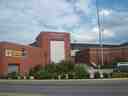
You’ll spot Bowling Green Ballpark by the big red-brick stadium walls ahead of you, with “BOWLING GREEN BALLPARK” written high up on the central block like it’s signing its own…Mehr lesenWeniger anzeigen
You’ll spot Bowling Green Ballpark by the big red-brick stadium walls ahead of you, with “BOWLING GREEN BALLPARK” written high up on the central block like it’s signing its own autograph. Take a second and just listen... even when it’s quiet, ballparks feel like they’re holding their breath, waiting for the next crack of a bat. This place seats 4,559 fans, right here in downtown Bowling Green, and it’s home to the Hot Rods, the city’s minor league team with a name that practically demands a little swagger. The big moment came on April 17, 2009... opening night. They called it Citizens First Opening Night, and the crowd didn’t just show up, they poured in: 6,886 people, standing room only. That’s the kind of turnout that says, “Yeah, we’ve been missing baseball.” And they had been-Bowling Green hadn’t had pro baseball in 67 years. Talk about a long off-season. That first game had ceremony stacked on ceremony: a bunch of “first pitches,” and then the starting lineup got driven onto the field in locally owned vintage hot rods. Because if your team is called the Hot Rods and you don’t do that, the universe files a complaint. The Hot Rods won, 8 to 4, and downtown got its groove back. Architecturally, it’s got quirks too: the right-center field wall curves inward-concave-because there was already a road behind it, and the ballpark basically said, “Fine, we’ll work around you.” Add a massive right-center scoreboard, an LED ribbon in left field near a picnic spot, lawn seating, and kid zones-including a splash pad-and you’ve got a stadium that knows its audience. It’s not just baseball, either: conference tournaments and big-name concerts have rolled through, turning this field into a pretty flexible stage. When you’re set, Cecelia Memorial Presbyterian Church is a 3-minute walk heading southeast.
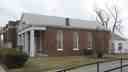
Eigene Seite öffnen →On your left, look for the low red brick church with a simple white front porch and a row of tall, pointed-arch windows. This is Cecelia Memorial Presbyterian Church at 716…Mehr lesenWeniger anzeigen
On your left, look for the low red brick church with a simple white front porch and a row of tall, pointed-arch windows. This is Cecelia Memorial Presbyterian Church at 716 College Street, and it’s been holding its ground here since 1845... which, in Kentucky years, is basically “since forever.” Picture the town back then: fewer cars, more mud, and the kind of quiet where you can hear a screen door close from half a block away. This one-story brick building was among Bowling Green’s earliest Christian churches, a place where people came to steady themselves-through fast-growing town life, hard seasons, and all the everyday worries that don’t show up in history books. And the name? It honors Cecilia Lillard, an original member. Not a king, not a general... just a person who mattered enough to be remembered in the very title. In 1979, the church earned a spot on the National Register, making its story official. When you’re set, Corsair Artisan Distillery is a 3-minute walk heading southwest.
Eigene Seite öffnen →
8 weitere Stationen anzeigenWeniger Stationen anzeigenexpand_moreexpand_less
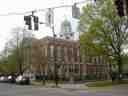
On your right, look for the big red-brick courthouse with tall arched windows, wrapped in a black iron fence, and topped by a white clock tower with a green dome. This is the…Mehr lesenWeniger anzeigen
On your right, look for the big red-brick courthouse with tall arched windows, wrapped in a black iron fence, and topped by a white clock tower with a green dome. This is the Old Warren County Courthouse, built in 1868, and it still carries itself like it knows it’s the best-dressed building on the square... because for a long time, it was. The style is Italianate, which is a fancy way of saying: dramatic windows, strong lines, and a tower that makes sure the whole town can tell time whether it asked to or not. Back in 1874, folks bragged it was one of the most elegant courthouses in Kentucky, and it cost about $125,000 then... roughly $3 million in today’s money. The inside got heavily reworked over the years, but the outside stayed remarkably true to its post-Civil War look, right down to this Victorian iron fence and those limestone posts. In 1977, it earned a spot on the National Register of Historic Places, basically the grown-up version of getting a gold star that actually matters. When you’re ready, the William H. Natcher Federal Building and United States Courthouse is a 5-minute walk heading northwest.
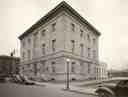
Eigene Seite öffnen →On your left, look for the solid, three-story white limestone building with a heavy, blocky ground level and a big classical cornice up top, like a stone layer cake with very…Mehr lesenWeniger anzeigen
On your left, look for the solid, three-story white limestone building with a heavy, blocky ground level and a big classical cornice up top, like a stone layer cake with very straight posture. This is the William H. Natcher Federal Building and United States Courthouse, sitting at 241 East Main Street. It opened in 1912, back when the federal government liked its public buildings to look unshakable… because nothing says “your mail is safe” like a small fortress. Originally, this place was the United States Post Office and Courthouse, pulling double duty: letters and law, stamps and sentencing. Architecturally, it’s Renaissance Revival, which is a fancy way of saying it borrows old-world balance and symmetry, then cleans it up for an American main street. Notice how each side is treated seriously… no “best face for the camera” here. Along the bottom, that rusticated base uses chunky, deeply lined stone blocks that make the building look anchored to the ground. Above that, the details run in long horizontal bands, and the roofline is finished with a bracketed cornice and a neat parapet-like the building put on a crisp hat before leaving the house. Some buildings wear sweatpants; this one wears a suit. If you’re near the main entry, keep an eye out for the more decorated doorway: there’s a transom with a carved American eagle perched above, doing its best “federal authority” pose. The windows are set into limestone surrounds with keystones, and on the east side there are taller, monumental windows-those are there to light the star of the interior show: the staircase. Inside, the craftsmanship is where this place really flexes. The curved marble stair is original to 1912, starting as a double-return staircase up to a mezzanine before it tightens into a single, winding climb. It’s dramatic in the way only marble can be dramatic… quiet, sleek, and absolutely certain it’s in charge. The marble wainscot even follows the curve of the walls, and the stair hall rises three stories, lit by those big windows you can spot from outside. The building grew with Bowling Green. In 1941, as postal needs expanded, a one-story addition went on-practical, not flashy. Then in the 1960s, the postal service moved out, and the courts and other federal offices took over full-time. In 1977, it was listed on the National Register of Historic Places as part of the Downtown Commercial District, in part because it’s a strong example of its style… and in part because it stands as a kind of local reminder: the federal government is here, even if it’s quietly filing paperwork. In 1994, it was renamed for William Huston Natcher, a Kentucky congressman who served from 1953 to 1994-four decades of showing up, doing the work, and leaving his name on a building that already knew a thing or two about endurance. When you’re ready, St. Joseph’s Catholic Church is a 13-minute walk heading northwest.
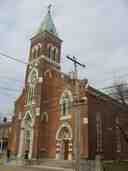
Eigene Seite öffnen →On your right, look for the tall red-brick church with white stone trim and a green, pointed steeple topped by a cross. This is St. Joseph’s Catholic Church, sitting here at 434…Mehr lesenWeniger anzeigen
On your right, look for the tall red-brick church with white stone trim and a green, pointed steeple topped by a cross. This is St. Joseph’s Catholic Church, sitting here at 434 Church Street like it’s been patiently holding its spot in Bowling Green forever… because, in a way, it has. The parish’s story really kicks off in the 1850s, when a young seminarian named Joseph DeVries was sent here to keep a growing Catholic mission from fizzling out. He was only about twenty-two when the request came down from the bishop in Louisville, which is a pretty strong vote of confidence… or a very polite way of saying, “Good luck, kid.” By 1859, the community put up a small frame building meant for a boys’ school, but on Sundays it pulled double duty as a place for Mass. The deed was clear: this church was for the Catholic people of Warren County. And then came the bigger dream-this brick sanctuary you’re looking at, designed and built under Francis Leopold Kister, a master German architect. Construction didn’t exactly go smoothly. The Civil War interrupted the work, and early on the walls weren’t even plastered when Easter Mass was celebrated. Nothing says commitment like worshiping in a building that’s still basically under construction. A serious, tangible symbol of that determination arrived as a bell-six hundred pounds of it-cast all the way up in Troy, New York, then hauled down to Kentucky and blessed in 1863. That’s not a casual online order. And originally, the steeple shot up to about 142 feet, the tallest in the city at the time-an architectural way of clearing your throat and saying, “We’re here.” The early years weren’t gentle. Father DeVries died unexpectedly, and he was buried under the main altar-marked by a marble slab in the sanctuary. Then in 1902, a fire badly damaged the church. Out of that came something beautiful: fresco paintings added to the interior, created by Charles and Guido Leber from Louisville. Even disaster, apparently, couldn’t resist redecorating. The parish put down deeper roots in 1912 by opening a school next door, staffed by the Sisters of Charity of Nazareth for fifty-five years. During World War I, the community raised aid by selling handmade paper carnations made by disabled veterans-about twenty-five cents each, roughly eight or nine dollars today-red if your mother was living, white if she’d passed. A small flower carrying a lot of weight. And then, because history loves drama, a cyclone in 1923 tore down the steeple. What you see now is the replacement: that pyramidal top rising to around 87 feet-practical, sturdy, and still handsome. In 1975, St. Joseph’s landed on the National Register of Historic Places for its architectural and historical importance. Inside, the parish once noted the original 1898 organ was still intact-white quarter oak casing, eighteen ranks of pipes-because of course a place like this keeps its voice. When you’re ready, the Eloise B. Houchens Center is a 14-minute walk heading southeast.
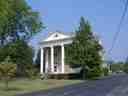
Eigene Seite öffnen →On your right, look for the bright, temple-like house with four tall white columns holding up a triangular front porch roof. This is the Eloise B. Houchens Center, a Greek…Mehr lesenWeniger anzeigen
On your right, look for the bright, temple-like house with four tall white columns holding up a triangular front porch roof. This is the Eloise B. Houchens Center, a Greek Revival beauty that looks like it’s waiting for a toga party to start... but it’s been busy doing real community work for over a century. It went up around 1904, built by Francis L. Kister, a local builder with serious skills and a résumé that included a stint as Bowling Green’s mayor. He even helped build St. Joseph’s Catholic Church, so the man clearly didn’t mind big projects. The Kister family lived here for 38 years, and later it became a welcoming “home away from home” for the Girls Club for more than two decades. By 1975, a nonprofit formed to rescue and preserve it, protecting details like inlaid wood floors, carved fireplaces, and glossy woodwork that still feels proud to be original. In 1980, it earned a spot on the National Register of Historic Places. When you’re set, Hines House (Bowling Green, Kentucky) is a 2-minute walk heading northwest.
Eigene Seite öffnen →On your left, look for the wide paved parking lot with a big, bare-branched tree in front and a light-colored, older two-story house sitting back from the street. This spot is…Mehr lesenWeniger anzeigen
On your left, look for the wide paved parking lot with a big, bare-branched tree in front and a light-colored, older two-story house sitting back from the street. This spot is the missing tooth in a very old smile. Around 1840, Reverend James Davis Hines built what became known as the Hines House right here, when Bowling Green was still more porch-sitting than traffic-light. Picture hand-hewn timbers, oil lamps, and the kind of quiet where you can hear footsteps on floorboards. Over time, the house changed hands: Hines sold it, N. E. Goodsall owned it next, and in 1859 Goodsall’s heirs passed it along to Doctor Albert Covington... a pretty classic Kentucky story of sermons, sales, and a physician making house calls. By 1979, the place was so rare it earned a spot on the National Register of Historic Places... one of the last survivors of its era. Then, on February 12, 1995, someone set an intentional fire, and the house was lost. History doesn’t always get a graceful ending. When you’re ready, W.H. Everhardt House is an 11-minute walk heading southwest.
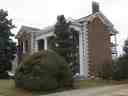
Eigene Seite öffnen →On your right, look for a tall red brick house with crisp white trim, a deep front porch held up by columns, and a big chimney rising above the roofline. This is the W. H.…Mehr lesenWeniger anzeigen
On your right, look for a tall red brick house with crisp white trim, a deep front porch held up by columns, and a big chimney rising above the roofline. This is the W. H. Everhardt House at 1223 College Street, built in 1879... when Bowling Green was still putting on its post-Civil War “we’re doing fine” face. And nothing says “doing fine” like an Italianate home: tall, elegant proportions, fancy brackets tucked under the roofline, and that porch that practically invites a slow, important walk up the steps. You can picture a summer evening here: the air thick and warm, the porch catching a little breeze, and the house standing like a quiet status symbol made of brick and confidence. A full century later, in 1979, it landed on the National Register of Historic Places... basically the historic equivalent of getting your name on the good list. When you’re ready, Henry Hardin Cherry Hall is about an 8-minute walk heading southwest.
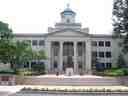
Eigene Seite öffnen →Look straight ahead for the big, pale stone building with a classic columned entrance and a green-capped cupola on top, sitting up the steps like it knows it’s the main character.…Mehr lesenWeniger anzeigen
Look straight ahead for the big, pale stone building with a classic columned entrance and a green-capped cupola on top, sitting up the steps like it knows it’s the main character. Welcome to Henry Hardin Cherry Hall, one of Western Kentucky University’s signature sights. If you’re standing here long enough, you’ll probably hear it before you leave... the belltower up top. It’s not just decoration: inside that cupola are 25 chimes that ring every fifteen minutes, and on the hour they play a longer tune, which is basically the campus’s way of saying, “You’re late, but we’ll do it in a nice melody.” Cherry Hall was finished in 1937, built with New Deal-era Public Works Administration funding... a moment when the country was trying to build its way out of hard times. A Louisville architect named Brinton B. Davis drew up the plan. Folks called him “the hill builder,” because he shaped so much of this campus. And this was his showpiece: three floors plus a basement, originally packed with about fifty classrooms, sixteen labs, and sixty offices. It even held the bookstore and the post office... a one-building life system for students who were running on pencils, stamps, and hope. It’s named for Henry Hardin Cherry, the educator who started the Bowling Green Normal School, the seed that grew into WKU. He died not long after the building was completed... which gives the place a quiet, bittersweet edge. Today, the labs are gone, turned into more classroom space, and Cherry Hall is home to English, History, Religion, Philosophy, and University Experience... plus the Forensics Team, a serious bunch with serious trophies. And in 2006, arson damaged the lower floors. Repairs were made, classes were back the next semester, and arrests came the following June. In 1979, Cherry Hall landed on the National Register of Historic Places. Standing here at the steps, with that belltower watching the time... it’s hard to argue.
Eigene Seite öffnen →

Häufig gestellte Fragen
Wie starte ich die Tour?
Laden Sie nach dem Kauf die AudaTours-App herunter und geben Sie Ihren Einlösecode ein. Die Tour ist sofort startbereit – tippen Sie einfach auf „Play“ und folgen Sie der GPS-geführten Route.
Benötige ich während der Tour Internet?
Nein! Laden Sie die Tour vor dem Start herunter und genießen Sie sie vollständig offline. Nur die Chat-Funktion benötigt Internet. Wir empfehlen den Download über WLAN, um mobiles Datenvolumen zu sparen.
Handelt es sich um eine geführte Gruppentour?
Nein – dies ist ein selbstgeführter Audioguide. Sie erkunden unabhängig in Ihrem eigenen Tempo, wobei die Audioerzählung über Ihr Telefon abgespielt wird. Kein Reiseleiter, keine Gruppe, kein Zeitplan.
Wie lange dauert die Tour?
Die meisten Touren dauern 60–90 Minuten, aber Sie kontrollieren das Tempo vollständig. Pausieren Sie, überspringen Sie Stopps oder machen Sie Pausen, wann immer Sie wollen.
Was, wenn ich die Tour heute nicht beenden kann?
Kein Problem! Touren haben lebenslangen Zugriff. Pausieren Sie und setzen Sie sie fort, wann immer Sie möchten – morgen, nächste Woche oder nächstes Jahr. Ihr Fortschritt wird gespeichert.
Welche Sprachen sind verfügbar?
Alle Touren sind in über 50 Sprachen verfügbar. Wählen Sie Ihre bevorzugte Sprache beim Einlösen Ihres Codes. Hinweis: Die Sprache kann nach der Tour-Generierung nicht mehr geändert werden.
Wo greife ich nach dem Kauf auf die Tour zu?
Laden Sie die kostenlose AudaTours-App aus dem App Store oder von Google Play herunter. Geben Sie Ihren Einlösecode (per E-Mail gesendet) ein, und die Tour erscheint in Ihrer Bibliothek, bereit zum Download und Start.
Wenn Ihnen die Tour nicht gefällt, erstatten wir Ihnen den Kaufpreis. Kontaktieren Sie uns unter [email protected]
Sicher bezahlen mit 


