
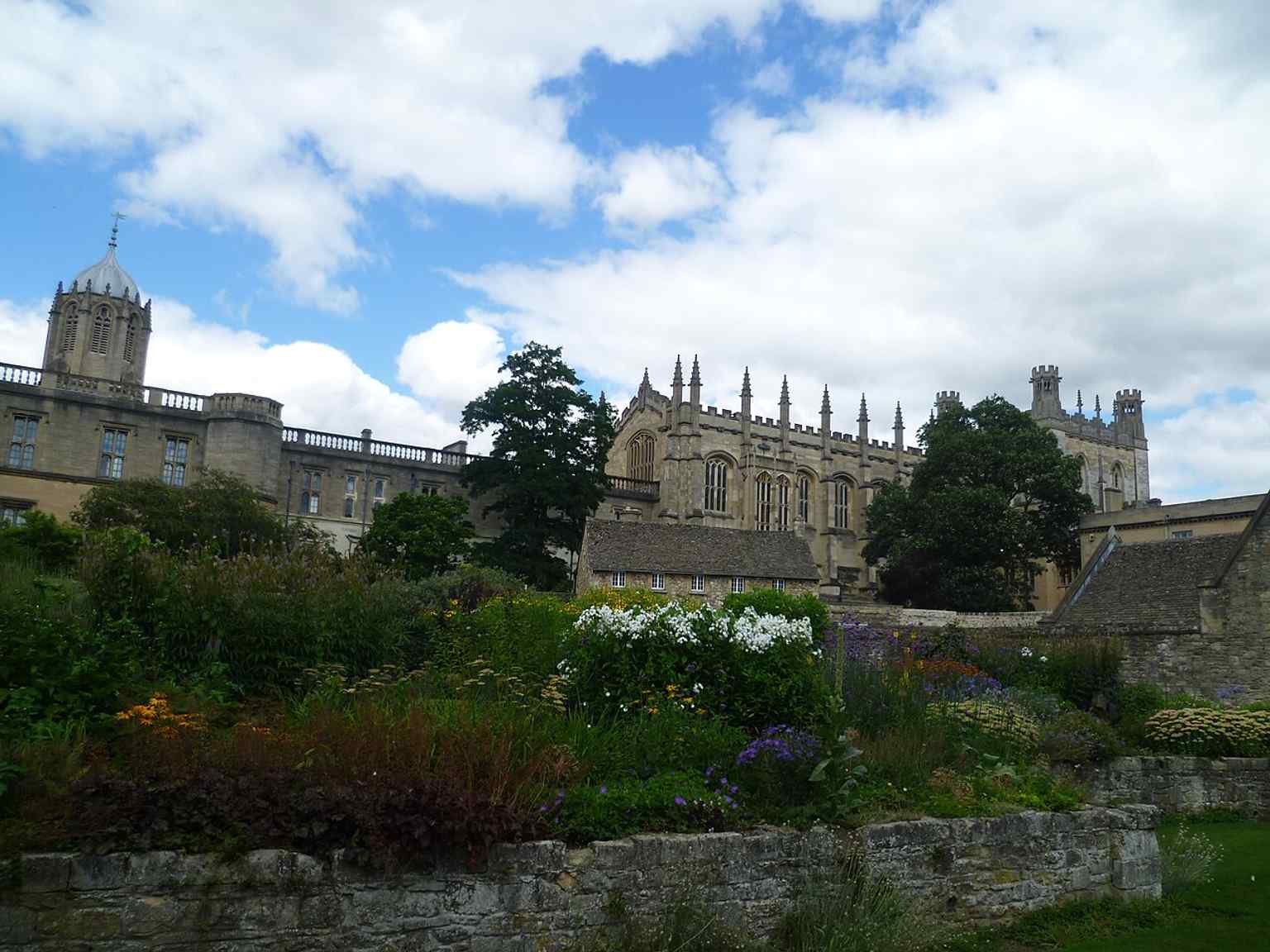
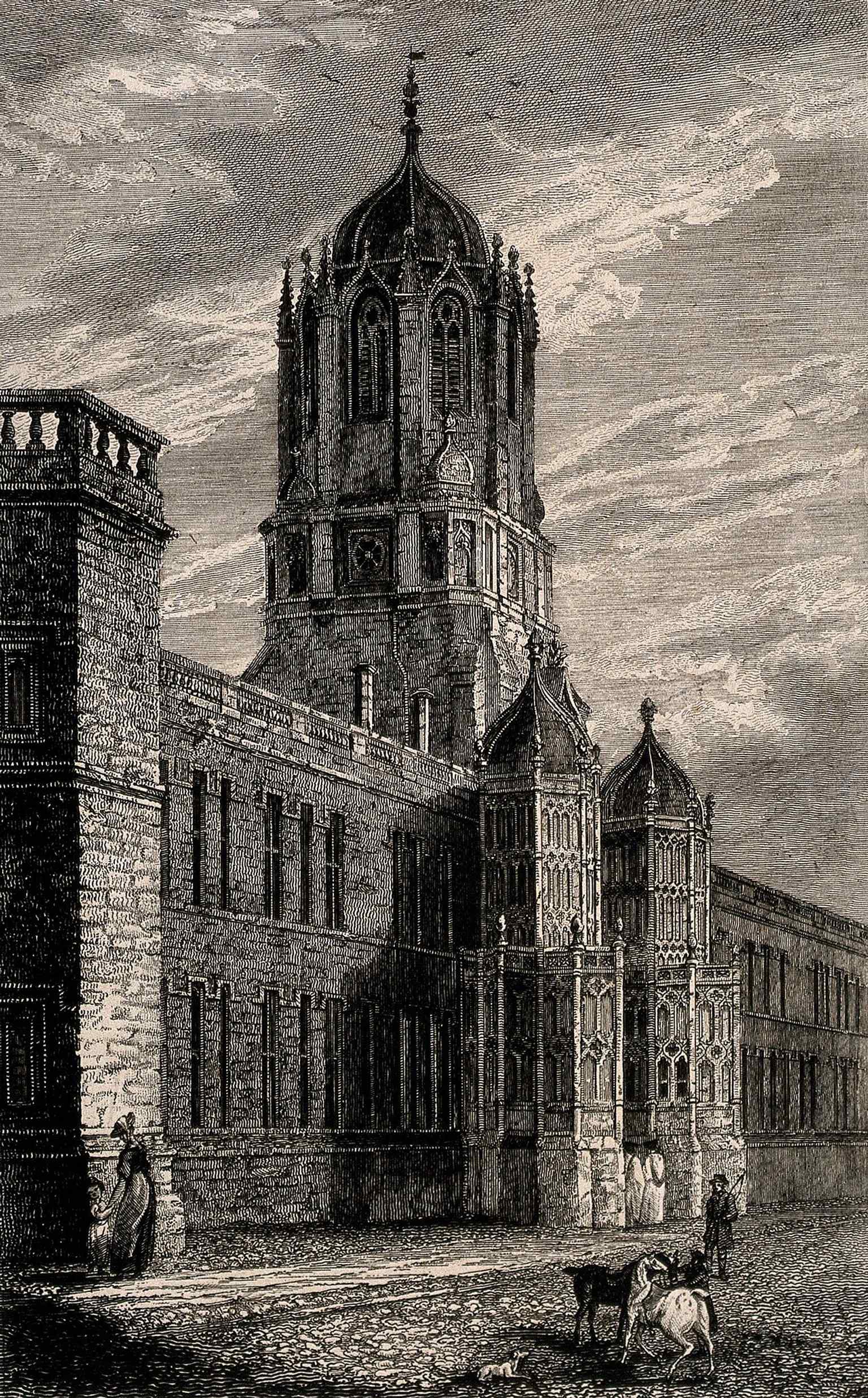
Christ Church is a broad stretch of honey-colored stone with tall Gothic windows and, above the entrance, the square-topped landmark of Tom Tower.
What you’re looking at is one of Oxford’s stranger masterpieces: a college, a cathedral, and a royal statement piece all folded into one. Christ Church is the only Oxford college that also serves as a cathedral - in other words, the official church seat of a bishop. Oxford does love an exception to the rule.
The story starts in fifteen twenty-five, when Cardinal Thomas Wolsey chose this site for a grand new college on the land of St Frideswide’s Priory. He planned on a lavish scale, then lost the king’s favor in fifteen twenty-nine, and the whole scheme stalled half-finished. Henry the Eighth stepped in, refounded it more than once, and in fifteen forty-six turned it into Christ Church, tying together university life and the new Church of England in one neat Tudor package.
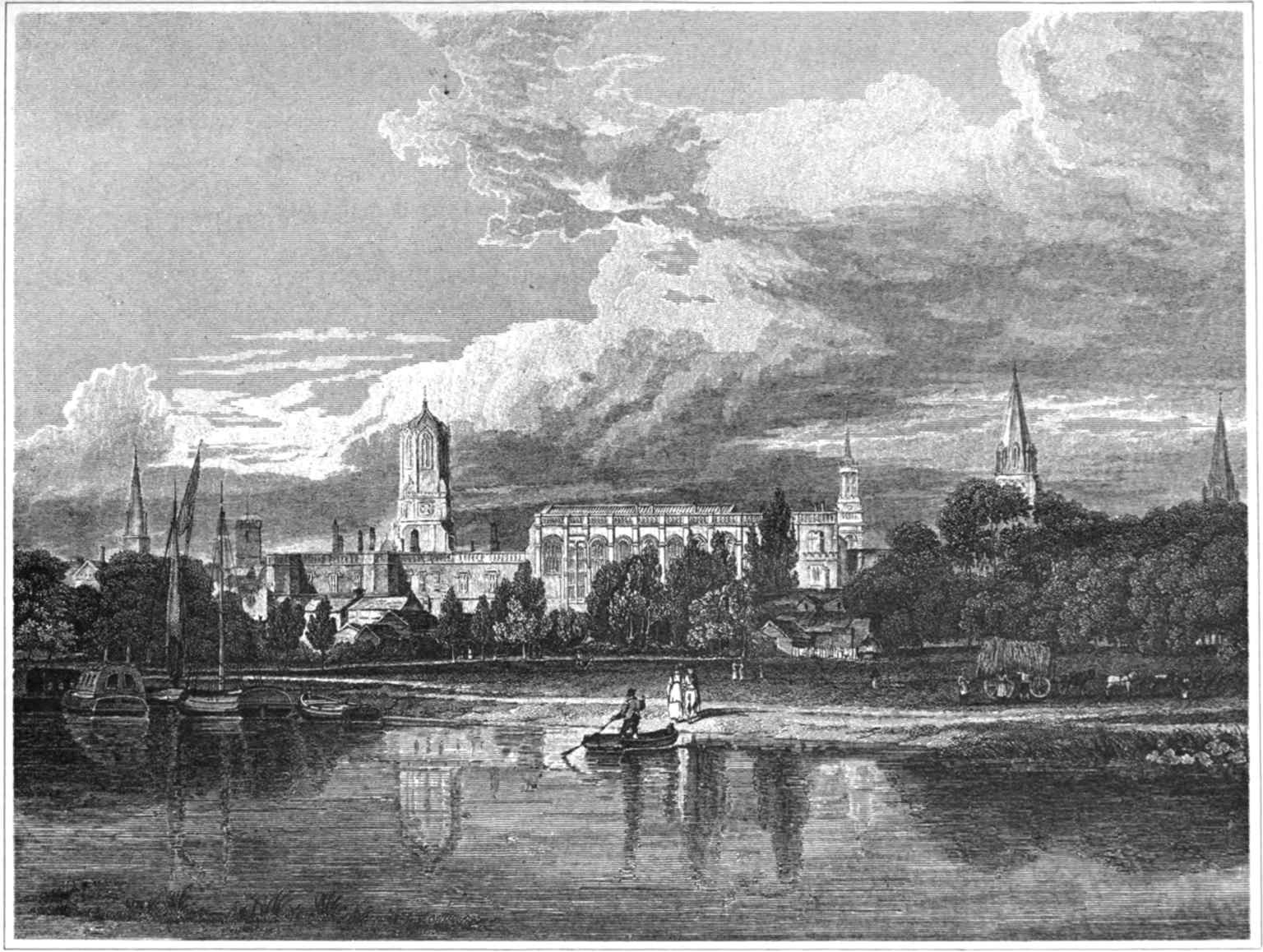
That scale still shows. The grounds cover about one hundred and seventy-five acres, including the Meadow, and inside sits Tom Quad, the largest quadrangle in Oxford - a quadrangle just meaning a four-sided courtyard enclosed by buildings. If you check the before-and-after image, you can see how the skyline from the Meadow stayed strikingly familiar while the riverside setting grew fuller around it.
Christ Church has never been short on drama. During the English Civil War, King Charles the First used the Deanery here as his palace, and the Great Hall became his parliament chamber. A parliamentarian cannon even fired a nine-pound shot that struck the north wall in sixteen forty-five. If you want a look inside, the image of the Great Hall on your screen is worth a glance.
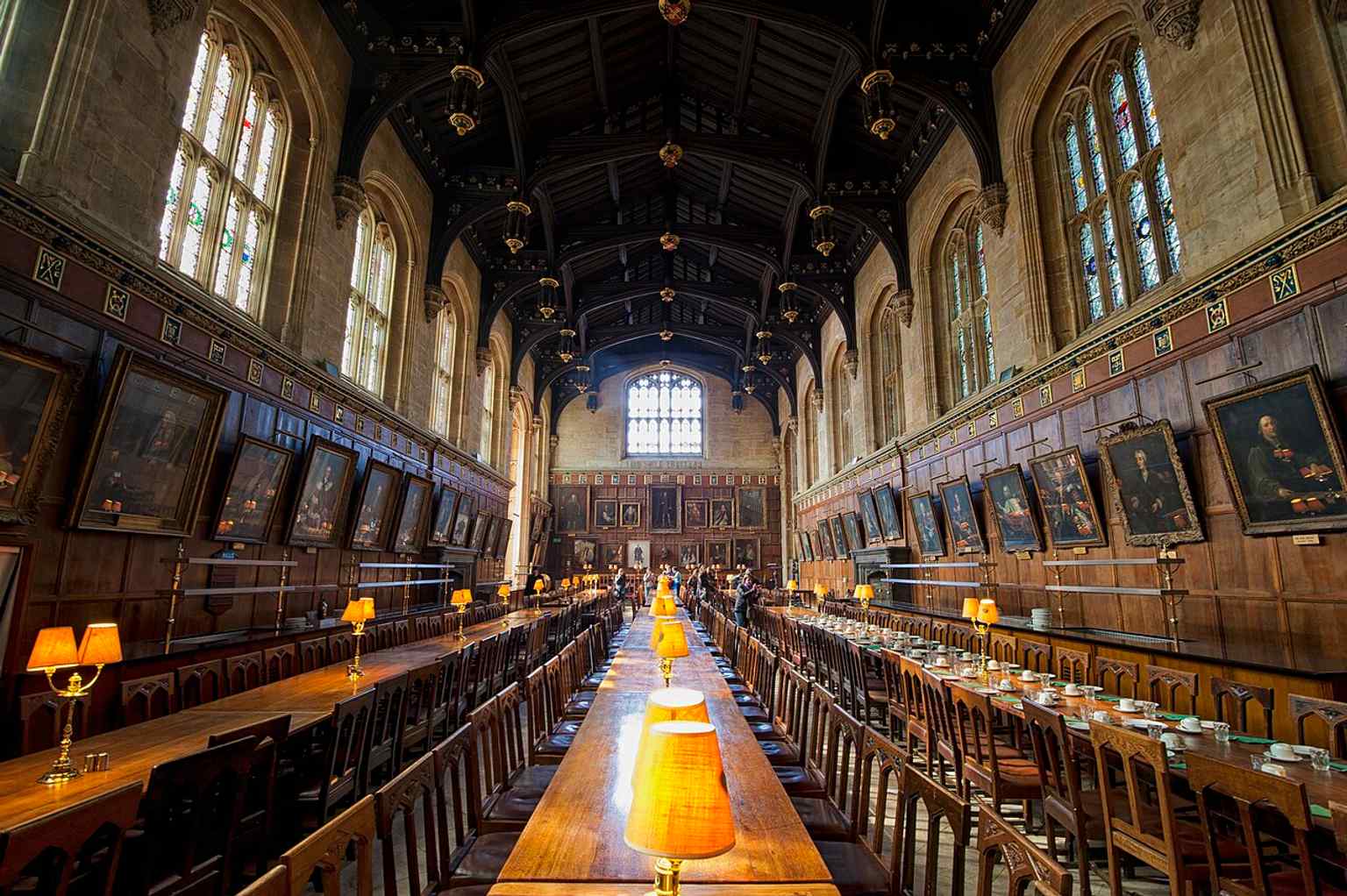
The place also leaks into popular culture. Parts of it helped shape the visual world of Harry Potter and The Golden Compass, and long before that, Lewis Carroll - whose real name was Charles Dodgson - taught mathematics here. He spun the first Alice story for the dean’s daughter, Alice Liddell, during a boat trip nearby. Oxford, naturally, turned even children’s fiction into a matter of scholarly intrigue.
And then there’s Albert Einstein. In the early nineteen thirties, fleeing Nazi Germany, he came here as a research fellow with rooms overlooking Tom Quad - the very rooms once used by Lewis Carroll. Christ Church paid him four hundred pounds a year, roughly thirty thousand pounds today. He appreciated the refuge, but not the rituals. He hated the formal dinner jacket, refused to wear socks, and grumbled in his diary, “Not even a carthorse could endure so much.” Fair enough. More generously, when he left for the United States in nineteen thirty-three, he suggested his salary should help other German-Jewish refugee scholars escape Europe and find posts here.
For centuries Christ Church admitted only men; women first enrolled in nineteen eighty. Today it has hundreds of students, a famous choir, a major art collection, and a tourist count that runs into the hundreds of thousands each year. Grand, devout, political, literary, and a little absurd... that’s Christ Church in one sentence.
Christ Church feels like Oxford concentrating very hard on being Oxford. When you’re ready, head on toward the Museum of Oxford for the city’s story at street level.






.JPG)

