

Luzern Audio-Tour: Melodien, Marmor und Mythen am See
Unter Luzerns postkartenreizendem Charme schlummern jahrhundertealte Geheimnisse hinter steinernen Löwen und eleganten Türmen – eine Stadt, die ebenso sehr auf Rebellion und Intellekt wie auf Wasser und Holz gebaut ist. Auf dieser selbstgeführten Audio-Tour reisen Sie jenseits der polierten Reiseführerrouten. Entdecken Sie die ungeschriebenen Geschichten, die in Universitätsgebäuden, schattigen Plätzen und stillen Bibliotheken verborgen sind, wo einst Intrigen und Inspiration aufeinanderprallten. Welcher Skandal hallte einst durch die Korridore der Universität Luzern und bedrohte ihr Fundament? Wer schnitzte Schmerz und Erinnerung in das Löwendenkmal – und warum sind seine Narben unvollendet? Welcher verbotene Band verschwand über Nacht aus der Universitätsbibliothek und löste eine fieberhafte Suche aus? Bewegen Sie sich durch Luzerns Puls, verfolgen Sie Intrigen und Gerüchte von gepflasterten Kreuzungen bis zu großen Hörsälen. Genießen Sie Schatten und Sonnenlicht, während jeder Schritt ein Netz aus Ehrgeiz, Kunstfertigkeit und Protest enthüllt, das das Schicksal der Stadt neu schrieb. Beginnen Sie jetzt – und lassen Sie Luzerns verborgene Geschichten unter Ihren Füßen erwachen.
Tourvorschau
Über diese Tour
- scheduleDauer 40–60 minsEigenes Tempo
- straighten3.0 km FußwegDem geführten Pfad folgen
- location_on
- wifi_offFunktioniert offlineEinmal herunterladen, überall nutzen
- all_inclusiveLebenslanger ZugriffJederzeit wiederholen, für immer
- location_onStartet bei Kultur- und Kongresszentrum Luzern
Stopps auf dieser Tour
10 weitere Stationen anzeigenWeniger Stationen anzeigenexpand_moreexpand_less
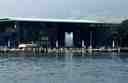
To spot the Lucerne Festival, just look ahead for a striking black modern building with a sweeping flat greenish roof, perched by the lakeside, and a bold fountain gushing up…Mehr lesenWeniger anzeigen
To spot the Lucerne Festival, just look ahead for a striking black modern building with a sweeping flat greenish roof, perched by the lakeside, and a bold fountain gushing up nearby-impossible to miss with its contemporary edge set against the sparkling water. Step right up and welcome to the Lucerne Festival-where the city's heart beats with the rhythm of world-class music! Imagine for a moment, it’s 1938. The world outside is tense, shadows are growing longer in Europe, but here in Lucerne, under the open sky in Richard Wagner’s garden, something wonderful is about to happen. Picture elegantly dressed men and women gathering around, excitement in the air, when suddenly, maestro Arturo Toscanini lifts his baton and a new festival is born: an orchestra formed from the best musicians across Europe, uniting for harmony, not just notes. Since then, this stunning site and the festivals it hosts have grown into something truly legendary. Founded by visionaries Ernest Ansermet and Walter Schulthess, the Lucerne Festival is now one of the most electrifying classical music experiences in the world. And yes, it’s where the biggest stars-the Berlin Philharmonic, Vienna Philharmonic, Anne-Sophie Mutter, Sir Simon Rattle-come out to play. You don’t have to be a music expert to enjoy it. It’s for the dreamers, the curious, the families, the young, the old-literally anyone with ears! Its main home is right in front of you: the bold Culture and Congress Centre, with its roof as wide as a symphony’s embrace. Take a breath and imagine August arriving; for a whole month, Lucerne is alive with the whirl and thrill of over a hundred concerts! There are symphonies roaring, delicate chamber music twinkling, workshops and events everywhere you look, and the sound of applause echoing through the lakeside air. Over the years, festival themes have sparked imagination-think “Identity,” “Childhood,” “Power,” and even “Crazy” in 2021! And coming up soon: “Open End,” so make sure your musical curiosity is endless. Here, the old masters and the wild new voices share the stage, and sometimes the unexpected emerges-like the legendary inflatable Ark Nova concert hall, making its European debut here soon. See? Lucerne knows how to throw a party even a composer would die for. Let’s not forget the famous Lucerne Festival Orchestra, born in 2003, bringing together superstar musicians, chamber players, and passionate music teachers from around the world. Under legends like Claudio Abbado-and more recently Riccardo Chailly-the orchestra has continued the festival’s original dream: unity, creativity, and that unmistakable electricity when music speaks louder than words. What about the future? Well, the festival is about to welcome a new director, Sebastian Nordmann, who’ll step up after 2025. Under his baton, the music will keep flowing, and new stars will emerge, maybe even discovered right here at the Lucerne Festival Academy. Founded by the great Pierre Boulez, the Academy trains the next generation of composers, conductors, and musicians. Their dedication keeps the festival buzzing with fresh energy every single year. And hey, Lucerne doesn’t just stick to summer! There’s the clever Lucerne Festival Forward in autumn, where contemporary music and digital creativity take center stage, often inviting the public to have a say in programming. And if you come in spring, you’ll catch the Mendelssohn Festival-think old scores, young talents, and, yes, passionate debates about who played that tricky passage best. The Lucerne Festival also reaches out to inspire children, youth, and whole families with its “Music for Future” program-because you never know when a child humming along in the back might become the next superstar soloist. So, take another glance at the shimmering lake, let the music in your imagination rise, and picture yourself at the heart of it all-where old meets new and every note is part of Lucerne’s living, playful, ever-surprising symphony.
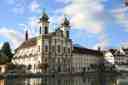
Eigene Seite öffnen →To spot the Jesuit Church, just look across the Reuss River for a magnificent white and cream-colored building crowned with two tall, green onion-shaped domes-it’s like a giant,…Mehr lesenWeniger anzeigen
To spot the Jesuit Church, just look across the Reuss River for a magnificent white and cream-colored building crowned with two tall, green onion-shaped domes-it’s like a giant, baroque layer cake topped with elegant lanterns. Now, let me whisk you back in time! Imagine the year is 1666: powdered wigs are all the rage, and the city of Lucerne is bustling with ideas and excitement. Right where you’re standing, the recently arrived Jesuits-a spirited group known for their energy and elaborate architecture-wanted to build something that would amaze the whole of Switzerland. Their dream? The very first great baroque church in all the land. You’d be absolutely right to think they didn’t aim small. Legend has it that for years, locals gossiped, pointing across the river and saying, “What on earth are they up to, stacking stones like that?” They watched as the skilled builders, possibly from far-off Vorarlberg-perhaps Michael Beer or Michael Thumb-piled stone upon stone, raising the grand skeleton of what’s now before you. It only took three years for the main frame to rise, but the magic truly happened inside. The Jesuit father Heinrich Mayer dreamed up dazzling, swirly stucco decorations, turning simple chapels into sparkling baroque wonders-these are the oldest examples of their kind in Switzerland, real baroque trailblazers! Inside, you’ll find a hall filled with light-thanks to the high, arched windows shining through onto golden altars and fluffy clouds painted on the ceiling. If you stepped in, you’d be greeted by scenes of Saint Francis Xavier himself, the Jesuits’ patron saint, looking heroic as he charges through the world in a cart pulled by, get this, an elephant, a camel, a horse, and even a cheetah. Now that’s what I call traveling in style! Each animal represented a different continent the Saint brought his message to-a little like a 17th-century Around the World in 80 Days, but with fewer suitcases and more halos. The high altar, designed long ago by Christoph Bruck, draws your eyes up, up, up-three layers of columns, gilded rays, and, crowning it all, the all-seeing Eye of God bursting from a sunburst. Across the nave, saints and angels beam at you from the walls. Don’t forget to squint up at the fresco, painted by the Torricelli brothers, where those traveling animals hustle their holy passenger through the clouds. I bet you’ve never seen a cheetah in church before! It wasn’t all easy, though. The church builders and decorators battled time, tastes, and even financial woes. Baroque excess was everywhere, but budgets were not quite so divine. And the iconic twin towers you see? They weren’t added until 1893-imagine the church sitting here for over two centuries, feeling slightly underdressed, before finally getting its jaunty green domes thanks to Heinrich Viktor von Segesser. The facades beneath them are divided in neat layers: pilasters, porticos, and tall, classy windows-all coming together with swirly balustrades that make the church look ready for a royal parade. For centuries, the church has stood not only as a house of prayer but as a stage for art and music. Step inside, and you’ll hear the gentle hum of the Metzler organ-built in 1982, but echoing pipes from a much older Goll organ. Some registers have sung here since the 1800s, filling the nave with sound as golden and grand as the church’s looks. But the Jesuit Church isn’t just all piety and prayer. Lucerne’s citizens have gathered here for celebrations, ceremonies, and even a bit of movie magic. In one Swiss film, it starred as the coronation church for a would-be empress of Switzerland-a final flourish for a building that still knows how to steal the scene. So as you stand here, take a moment to soak in the layers of history: centuries of ambition, creativity, and maybe just a dash of holy showmanship. After all, as the locals say, if you’re going to build a church on the riverbank where the whole town can see it, you’d better make it unforgettable! To expand your understanding of the architecture, equipment or the organ, feel free to engage with me in the chat section below.
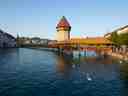
Eigene Seite öffnen →To spot the Chapel Bridge, just look out over the river-you can't miss the long, covered wooden bridge bursting with colorful flowers along its sides and the tall, octagonal Water…Mehr lesenWeniger anzeigen
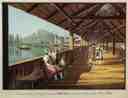
To spot the Chapel Bridge, just look out over the river-you can't miss the long, covered wooden bridge bursting with colorful flowers along its sides and the tall, octagonal Water Tower standing proudly at its center. Now, as you stand by the river’s edge, you’re witnessing one of Lucerne’s oldest and most beloved treasures: the Chapel Bridge, or as the locals call it, Kapellbrücke. Imagine the year is 1365. The air smells of fresh timber and lake water, and the city’s defenses need strengthening. The townsfolk build not just any crossing, but a grand covered walkway of wood stretching across the Reuss, connecting the old and new sides of Lucerne. On dark nights centuries ago, you might have caught the muffled steps of guards patrolling this bridge, keeping watch for danger from the water. But the Chapel Bridge isn’t just about war and defense. As centuries pass, it becomes a haven for townspeople-the perfect spot to exchange news, flirt in the shadows, and, yes, sometimes complain about the weather (that particular Swiss specialty). During the 15th century, benches appear, and the bridge transforms into a bustling social hub. By then, it wasn’t just a handy footpath or a military solution-it was also an outdoor gallery! Above your head were more than a hundred triangular paintings telling the tales of Lucerne, the Swiss Confederation, city heroes like the mighty Giant of Reiden, and even the good deeds (and sometimes misdeeds) of past city leaders. No other city in Europe decorated its bridges quite like this; Lucerne had cornered the market on “art you can walk under.” Look closer at the center and you’ll see the proud, octagonal Water Tower, built slightly before the bridge around 1300. This stone guard has been everything from a prison (not a great Yelp rating), to a treasure safe, to a secret archive. If its walls could talk, they’d tell of echoing footsteps, lost keys, and maybe a few unhappy prisoners. These days, the only thing you’re likely to find there are souvenirs and the laughter of visitors. The bridge’s length has shifted over the years, thanks to riverbank expansions and city projects. Originally, it was even longer! As the city grew and the landscape changed, chunks were removed, and its pointy roof adjusted to line up neatly with the new quay. It used to connect directly to St. Peter’s Chapel on the north bank-which is exactly where the name “Chapel Bridge” comes from. Through the centuries, the bridge saw high waters, storms, and the wear-and-tear of market carts and gossiping townsfolk. It got its biggest scare in August 1993, when, late at night, a careless flick of a cigarette sparked a furious blaze. Flames devoured most of the bridge in minutes, and nearly 80 of those precious history paintings went up in smoke. Lucerne awoke to the acrid smell and the sight of their beloved symbol in ruins. But Lucerne wasn’t about to let a little fire keep it down-locals, experts, and art lovers jumped into action, rebuilding the bridge and restoring what artwork they could. By spring the next year, the Chapel Bridge was back, good as new, its remaining painting panels glimpsed between charred reminders of that dramatic night. As you walk the bridge, imagine the grand restoration after the fire-a careful puzzle of charred wood and fresh timber, where some paintings are original survivors, some are faithful copies, and all are fiercely protected by city pride. Every year, during the local carnival, the bridge gets draped in festive paintings created by Lucerne’s musicians and artists-a change of wardrobe for the old star. So, take a stroll: listen to the water below and the city’s chatter, picture the lives that have crossed here through centuries. Under the roof, above the swans, step inside Lucerne’s living storybook-the Chapel Bridge, a bridge that’s survived wars, storms, and fire, all the while keeping the heart of the city connected. And hey, if you feel a bit dramatic while you cross, just remember you’re walking under the watchful eyes of Swiss heroes, rebellious artists, and that lucky Giant of Reiden!
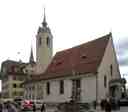
Eigene Seite öffnen →To spot St. Peter's Chapel, just look for the building with the tall, narrow white tower topped by a green spire and the simple, reddish-brown tiled roof-it's right in front of…Mehr lesenWeniger anzeigen
To spot St. Peter's Chapel, just look for the building with the tall, narrow white tower topped by a green spire and the simple, reddish-brown tiled roof-it's right in front of you, with a little fountain at its side and a modest arched entrance. Now, let me take you back in time as you stand before Lucerne’s oldest church inside the old city walls-St. Peter’s Chapel, or as the locals affectionately call it, the “Chappele.” Believe it or not, this quiet little chapel has watched the drama of Lucerne unfold for nearly nine centuries. Its first mention in official documents dates all the way back to 1178, but there’s a good chance that even before Lucerne was officially a city, a humble wooden chapel stood right where you are standing now. They say Irish wandering monks, probably inspired by wanderlust and strong tea, once chose this spot to build a church dedicated to Peter, the guardian with keys-so even from the start, no one would ever lose their way. In the Middle Ages, St. Peter’s Chapel wasn’t just the oldest kid on the block; it was the heartbeat of city life. Picture this: tall city walls, bustling medieval markets, the distant calls of the waterbirds on Lake Lucerne, and the murmured prayers and oaths echoing from inside these very walls. The townspeople gathered here to hold citizen meetings, swear fealty on the city’s constitution, and plot the future of Lucerne. You’ve probably never heard of a medieval “swearing day,” but here, the fate of the city would turn on the words spoken out loud in this chapel. Early architecture records are a bit fuzzy-medieval architects didn’t leave behind blueprints for digital tour guides. But we do know that by the mid-1200s, they were already rebuilding and redecorating. By 1376, the roof needed a makeover, a bit like a medieval Do-It-Yourself project, and in 1511 the church got another grand reopening with a special blessing after some work on the tower. But the real transformation happened in the 1700s-gone were the medieval Gothic windows, replaced by tall, simple rectangular ones that let in unembellished sunlight. The interior design took a step into the Baroque trend, with a richly decorated stucco ceiling and dazzling new altar, almost as if the old chapel had decided to dress up for a masquerade ball. Step inside, and you’d be surrounded by a treasure trove of stories carved and painted in wood and stone-a mix of saints, apostles, and even a precious crucifix from the 1300s, the oldest large-scale sculpture in the whole of Lucerne. Imagine it hanging on the north wall, surrounded by paintings that mark moments in Christ’s life and delicate medallions telling Mary’s tale. There’s St. Peter himself, holding the keys no one else can seem to keep track of, his friend Paul, and a royal Mary with child. There’s even a memorial for brave but unlucky Lucerne soldiers who lost out at the Battle of Arbedo against Milan back in 1422-history is everywhere here. Music would occasionally echo from the gallery above. The organ, sadly silent since 2018, once roared to life on festival days. Outside, bells forged as far back as the 17th century would ring out over the city, calling the faithful to prayer and sometimes just marking time for the city’s daily grind. But St. Peter’s wasn’t just a church. Over the years, it became a gathering place for communities from all over the world-French, Tamil, Italian, and now English-speaking Catholics have all called it their spiritual home, lighting candles, celebrating weddings, baptisms, and perhaps pausing to remember loved ones. Today, the City Pastoral team runs things, making this not only a place for old traditions but also a home for new ideas-group conversations at lunchtime, discussions about art and spirituality, and a welcoming space for anyone searching for hope or a quiet moment. The chapel hall has changed many times, each era adding another beautiful layer to what you see now. Look up at the ceiling, breathe in the old stone, and let your imagination paint the centuries around you. From city council deals to chapel dramas, from medieval oaths to modern-day prayers-St. Peter’s Chapel has heard it all, and if walls could talk, I think they’d both laugh and cry. So, take a moment here-close your eyes, listen for the echoes, and thank St. Peter for those keys. Because without him, we’d probably all still be outside trying to get in!
Eigene Seite öffnen →To spot the Hofbrücke, look for a long, roofed wooden bridge stretching over the water, its sturdy beams forming a tunnel, and if you glance above you, you’ll see triangular…Mehr lesenWeniger anzeigen
To spot the Hofbrücke, look for a long, roofed wooden bridge stretching over the water, its sturdy beams forming a tunnel, and if you glance above you, you’ll see triangular painted panels tucked into the rafters. Now, as you stand here, close your eyes for just a moment and imagine the echo of wooden footsteps and the gentle creak of planks beneath heavy boots and clacking heels. Picture yourself in the 13th century: Lucerne looks very different. The lakefront was much wider, and directly in front of you stretched the city’s pride and joy-the Hofbrücke, or, as the locals once called it, the “Lange Brücke,” the Long Bridge. At an impressive 385 meters, it connected the quarter around the Church of St. Leodegar with Lucerne’s bustling Old Town, resting on 121 columns, and no, they didn’t hire any bored beavers for the construction! But the Hofbrücke was never just another bridge. It was the city’s longest, acting as both a lifeline and a fortress passageway in times of trouble. Imagine, in stormy nights, lantern light flickered inside, casting shadows on the faces of travelers and guards huddled under its shelter. It soared above the water, packed with townsfolk, merchants and, occasionally, some rather nervous geese. What made the Hofbrücke unique, and frankly the envy of bridges everywhere, was its extraordinary gallery of paintings. Around 1550, with a stroke of genius (and a decent dose of civic pride), the city’s leaders decided not just to cover the bridge, but to tell a story inside it-a story painted in over 460 triangular images, pressed into the wooden gables overhead. Passersby would gaze up, and, in the flickering candlelight or sunlight, see tales from the Bible unfurl, picture by vivid picture, as if the entire bridge had become a magical storybook above their heads. The families of Lucerne weren’t shy either; if you paid for a painting, your family crest, your name, even your hopes and dreams got their spot in the corners. Nearly 239 paintings adorned the bridge at its peak, and the townspeople probably argued about whose painting was the best-just like family photos in the living room. By 1835, the bridge began its final bow, bit by bit dismantled, though its art endured, tucked away in museums and depots. Today, only 113 of those magical panels remain. The Hofbrücke fundamentally changed how bridges-and maybe even people-told their stories, inspiring Lucerne’s other famous bridges, like the celebrated Chapel Bridge. So as you stand here, imagine the laughter, the religious pilgrims, the hurried steps over troubled water, and above all, the painted tales that once watched over every soul who crossed, blending Lucerne’s past with each step forward into its future.
Eigene Seite öffnen →To spot St. Leodegar in the Courtyard, simply look for the two tall, thin towers rising high above everything else, with a grand stone staircase leading up to an intricate white…Mehr lesenWeniger anzeigen
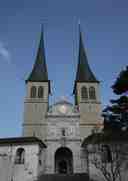
To spot St. Leodegar in the Courtyard, simply look for the two tall, thin towers rising high above everything else, with a grand stone staircase leading up to an intricate white façade and a golden clock in the center. Welcome to St. Leodegar in the Courtyard! Imagine for a moment, you are standing before Lucerne’s answer to Hogwarts-but instead of magic wands, this place is filled with stories, legends, and the chime of bells echoing across centuries. These twin towers shoot up 69 meters like two stone rockets determined to puncture the Swiss sky, each corner decorated with gargoyle-style dragons glaring down in stony silence, daring anyone to disturb their centuries-old nap. Close your eyes for just a heartbeat, and picture this: in the whispers of morning fog, southern German nobles gathered here in the year 735, determined to build a tiny monastery and dedicate it to Saint Maurice, a warrior so holy he probably could have blessed a cheese fondue and made it into a feast. But history is never simple-twenty years later, King Pepin the Short donated servants to the monks, and by 800 that first little monastery flickered out, only to be resurrected, like a good hero in a fairy tale, in 850. Eventually, the church found its heart in Saint Leodegar himself, who became the patron and namesake of the church. Centuries rolled by and rulers traded hands; the Habsburgs even owned this land for a dramatic spell until Lucerne reclaimed it. And then came the Renaissance, that era of flamboyance and peril. Here, as the Thirty Years' War raged across Europe, Lucerne saw something rather miraculous: while others were busy with battles, townsfolk and Jesuit architects were busy building one of the grandest churches north of the Alps, right here! But not all stories in church history are solemn. On Easter Sunday 1633, a rather unlucky roofer was asked to shoo away some snooping jackdaws from the choral tower. In true slapstick fashion, his effort ended with the roof-and the entire Romanesque basilica-bursting into flames. With the church burned down, the townspeople didn’t sit and brood; they called in a Jesuit named Jakob Kurrer from Ingolstadt and started rebuilding straight away! Maybe they should have left a “no birds allowed” sign, just in case. When you look up, the two majestic towers you see now are survivors from the Middle Ages, robust and square. But in between, the white façade that gleams before you is Renaissance at its finest-elegant, almost theatrical, with Corinthian columns and massive arched doors. Over the entrance, you’ll see statues of Lucerne’s superstar saints: Leodegar with his trusty drill (don’t ask-let’s just say the tool is part of his legend), and Mauritius waving his flag like a champion. Three styles-gothic, Renaissance, and baroque-all meld together like a cake with layers from every Swiss grandma’s recipe. Step inside and you’re greeted by airy columns, one of Switzerland’s most impressive late-Renaissance altars made of black marble, golden light spilling in through enormous rosette windows, and a choral stall carved with almost as much passion as a chocolate-maker pouring pralines. Don’t miss the legendary organ, hidden above the western entrance-complete with a rain machine, so organists can whip up a thunderstorm just for fun. That’s what I call a real “Swiss weather forecast.” St. Leodegar is also famous for its treasury: a secret chamber filled with priceless chalices, silver busts of saints, and relics so precious, they can only be shown under strict supervision. My personal favorite? The kneeling silver figure of Saint Nicholas of Flüe, which narrowly escaped being melted down for wartime repairs. Sometimes, even saints need a lucky break. Even the grave halls and surrounding chapels are steeped in history, with the tombs of influential Lucerne families and the city’s oldest timber house nearby. Every year, strange and wonderful ceremonies unfold here, from the Hofsamichlaus-Lucerne’s own St. Nicholas wrapped in trumpet fanfares and followed by a cheerful band of children-to processions of solemnity and joy. So take a moment right here. Imagine hundreds of years of footsteps in this courtyard-monks chanting, craftsmen hammering, townsfolk gasping at flames, organ music rolling like thunder, and bells calling out over the lake. If walls could talk, these ones would never be quiet. And between you and me, always watch out for the birds on Easter. To delve deeper into the exterior of the hofkirche, interior or the treasury and lucerne abbey treasury, simply drop your query in the chat section and I'll provide more information.
Eigene Seite öffnen →Directly ahead, you’ll see a striking glass-wrapped, polygonal building-look for a hexagonal shape with tall windows and modern touches; you really can’t miss it! Now, if you’re…Mehr lesenWeniger anzeigen
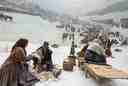
Directly ahead, you’ll see a striking glass-wrapped, polygonal building-look for a hexagonal shape with tall windows and modern touches; you really can’t miss it! Now, if you’re standing in front of the Bourbaki Panorama, you’re about to step into a story so massive, it literally wraps around you. Picture this: It’s the winter of 1871. Snow covers the ground as far as the eye can see. Imagine the crunch of boots on icy earth. Here, 87,000 worn-out French soldiers are trudging through the mountains, desperate, hungry, and exhausted after the Franco-Prussian War. They have one hope: to cross into Switzerland for safety. As you walk towards the entrance, know that this building was made for something extraordinary-a 360-degree painting, measuring an unbelievable 112 meters long. That means the history here isn’t just in a dusty frame; it swirls around you, painted with all the drama and emotion the 19th century could muster. Created by Edouard Castres in 1881, this panorama is more than a picture; it’s a swirling, life-sized snapshot of hope, despair, and unexpected human kindness. What makes this painting so powerful? Not just its size, but its story. It shows the moment General Bourbaki’s army, battered by war, finally makes its way across the border into Switzerland after signing the Treaty of Les Verrières. You won’t just see faceless crowds-look closely and you might spot, cleverly painted into the scene, both Edouard Castres himself (disguised as a Red Cross helper) and the future famous painter Ferdinand Hodler (appearing as a Bernese soldier). You could say it’s the world’s oldest cameo appearance! But here’s where things get really interesting: At the foot of the giant painting, the ground itself rises in shapes and textures-a three-dimensional recreation of the snowy border. As you step onto the viewing platform, you’re surrounded by soldiers being tended to by Swiss villagers, horses, campfires radiating heat into the cold air, and the sounds of distant marching. The effect is so convincing, it’s as if you’re standing on the frontier yourself, caught between fear and relief. And why does this moment matter? This isn’t just a war story-this painting is also an accusation, a silent shout against the horrors of battle. It honors the first humanitarian actions of the Red Cross, as Swiss villagers rush to help the exhausted and wounded. In fact, the compassion shown here helped build the myth-maybe even the reality-of Switzerland’s famous humanitarian spirit. But let’s not pretend it’s always been easy for the Bourbaki Panorama. When it first arrived in Lucerne in 1889, it was a blockbuster hit, drawing crowds as if it were a Hollywood movie. Then the cinema came along, bringing sounds and moving pictures that started to steal the spotlight. The panorama fell on hard times and, believe it or not, the building even hosted the first mechanized parking garage in continental Europe-with its own rotating platform (yes, like a giant turntable for cars!). During transformations, sections of the painting sadly got trimmed at the top, yet the heart of the story remains. Fast forward to the late 20th century and the once dull space gets a second chance. After years as a garage, the old building is reborn-restored, revitalized, and now wrapped in a shimmering glass “coat” from renovations done in the 1990s. The old panorama, battered by time and parking fumes, finally gets its dignity back. Even in 2024, restoration work continues as new technology brings the painting to life in ways its original artist could never have dreamed of. Over two months, teams replaced the aged and water-stained lighting sails with 1,600 square meters of brilliant new fabric, making sure the sunlight bathes the painting evenly. The old halogen spotlights gave way to energy-saving LEDs, keeping the colors true and the heat at bay. And up on the platform, original benches from 1889-yes, you can literally sit in history-were lovingly restored, with the central chandelier now shining brighter and more elegantly than ever before. And this place? It’s not just for art-lovers or history buffs! The Panorama now hosts city library shelves, eco-advice desks, bustling cinemas (complete with their working carousel platform), restaurants, and shops-it’s a buzzing house of media, culture, coffee, and imagination. The story of the painting, the people it depicts, and even its own wild, twisty journey makes it a living legend. Remember, what you’re looking at is not just a Swiss national treasure, but also a registered European cultural monument. So gaze up, let your imagination step back to a snowy battlefield, and see if you can sense the hope and generosity that made this place unforgettable. And don’t forget-history is often closer than you think. Sometimes, it’s even wrapped around you! Wondering about the painting, building or the restoration 2024? Feel free to discuss it further in the chat section below.
Eigene Seite öffnen →If you look straight ahead into the rock face, you’ll spot a giant lion carved into the cliff, lying mournfully on his side, with a shield under his paw and another resting…Mehr lesenWeniger anzeigen
If you look straight ahead into the rock face, you’ll spot a giant lion carved into the cliff, lying mournfully on his side, with a shield under his paw and another resting nearby-it’s almost like he’s guarding them right before your eyes. Welcome to the Lion Monument, or as the locals say, the Löwendenkmal! Now, you might be thinking, “That’s a seriously sad-looking lion for a city known for chocolate and mountain views.” Well, you’re right. Carved directly into this sandstone cliff by Lukas Ahorn in 1821-but designed by the famous Danish sculptor Bertel Thorvaldsen-this lion tells one of the most heartbreaking stories you’ll find in all of Switzerland. Let’s flash back to the year 1792. Revolutionary Paris is in chaos-the air thick with shouting and the clang of swords. The Swiss Guards, proud and loyal soldiers hailing from Switzerland, were stationed at the Tuileries Palace, protecting King Louis XVI and his royal family. These men wore bright red uniforms and carried with them centuries of tradition. But on August 10, the revolutionary mobs rushed the palace, and chaos erupted. As bullets flew and smoke choked the corridors, the Guards valiantly stood their ground. Their ammunition dwindled, their numbers thinned. Deep in the melee, King Louis managed to scribble a note, telling his Guards to retreat-talk about sending the memo a little late! Around 760 Swiss Guards died during that desperate stand or were massacred after surrendering. Those who survived often faced a grim fate, with many dying in prison or in the bloody September Massacres. Only a handful managed to escape the city, and a lucky detachment sent to Normandy before the attack had missed the carnage entirely-proof that sometimes being sent on an errand really can save your life. But this lion? He isn’t just any cat. Mark Twain, the famous American writer, called him “the most mournful and moving piece of stone in the world.” Can you see why now? His head droops in sorrow, a broken spear piercing his shoulder. His paw rests protectively on a shield with the fleur-de-lis, symbol of France, and beside him lies the Swiss cross-two nations tangled together by fate’s cruel joke. If you listen closely, maybe you can even imagine the drip of the stream that trickles into the tranquil pond at his feet, mirroring that serene exhaustion after great loss. This monument came about because one Swiss officer-Karl Pfyffer von Altishofen-had survived. Why? He was on leave back in Lucerne. Some people have all the luck! He wrote a book about the Guards’ bravery, stirring hearts all across Switzerland. The public's reaction was so strong that they organized a collection, mostly from noble European pockets, to make a monument worthy of their sacrifice. That’s how Thorvaldsen got the gig, and how Ahorn found himself chiseling this ten-meter-long, six-meter-high lion into a Lucerne quarry. The inscription above the lion reads: Helvetiorum Fidei ac Virtuti-“To the loyalty and bravery of the Swiss.” And just below, you’ll see the names of the officers who fell and the numbers: 760 died, 350 survived. It wasn’t just a monument; it was a monument with math included. When it first appeared, not everyone was happy. Some Swiss folks worried it was too much a celebration of old monarchies and not enough about Swiss independence. In fact, the controversy got so intense that rumor had it-someone threatened to saw off one of the lion’s paws in protest! Can you imagine the world’s most mournful lion waking up to find itself with one less paw? Now that would be a real cat-astrophe. But the lion remained, stoic and dignified, and over the years captured the hearts of writers like Mark Twain and dramatists, school children, and curious tourists who came by the millions to gaze at his sorrowful face. The monument has even inspired copies-one in Atlanta, Georgia, for example, though that one had a much rockier reputation, literally and politically. So, as you gaze at this noble beast, think of those wild days in revolutionary France. Picture soldiers in striking red, their courage shining amidst chaos, their story now set in silent stone. Maybe, if you listen hard enough, you’ll hear not just the mournful sigh of a dying lion, but the echoes of history-where loyalty, bravery, and a touch of drama are never far behind. Wondering about the background, memorial or the reception? Feel free to discuss it further in the chat section below.
Eigene Seite öffnen →

Häufig gestellte Fragen
Wie starte ich die Tour?
Laden Sie nach dem Kauf die AudaTours-App herunter und geben Sie Ihren Einlösecode ein. Die Tour ist sofort startbereit – tippen Sie einfach auf „Play“ und folgen Sie der GPS-geführten Route.
Benötige ich während der Tour Internet?
Nein! Laden Sie die Tour vor dem Start herunter und genießen Sie sie vollständig offline. Nur die Chat-Funktion benötigt Internet. Wir empfehlen den Download über WLAN, um mobiles Datenvolumen zu sparen.
Handelt es sich um eine geführte Gruppentour?
Nein – dies ist ein selbstgeführter Audioguide. Sie erkunden unabhängig in Ihrem eigenen Tempo, wobei die Audioerzählung über Ihr Telefon abgespielt wird. Kein Reiseleiter, keine Gruppe, kein Zeitplan.
Wie lange dauert die Tour?
Die meisten Touren dauern 60–90 Minuten, aber Sie kontrollieren das Tempo vollständig. Pausieren Sie, überspringen Sie Stopps oder machen Sie Pausen, wann immer Sie wollen.
Was, wenn ich die Tour heute nicht beenden kann?
Kein Problem! Touren haben lebenslangen Zugriff. Pausieren Sie und setzen Sie sie fort, wann immer Sie möchten – morgen, nächste Woche oder nächstes Jahr. Ihr Fortschritt wird gespeichert.
Welche Sprachen sind verfügbar?
Alle Touren sind in über 50 Sprachen verfügbar. Wählen Sie Ihre bevorzugte Sprache beim Einlösen Ihres Codes. Hinweis: Die Sprache kann nach der Tour-Generierung nicht mehr geändert werden.
Wo greife ich nach dem Kauf auf die Tour zu?
Laden Sie die kostenlose AudaTours-App aus dem App Store oder von Google Play herunter. Geben Sie Ihren Einlösecode (per E-Mail gesendet) ein, und die Tour erscheint in Ihrer Bibliothek, bereit zum Download und Start.
Wenn Ihnen die Tour nicht gefällt, erstatten wir Ihnen den Kaufpreis. Kontaktieren Sie uns unter [email protected]
Sicher bezahlen mit 


