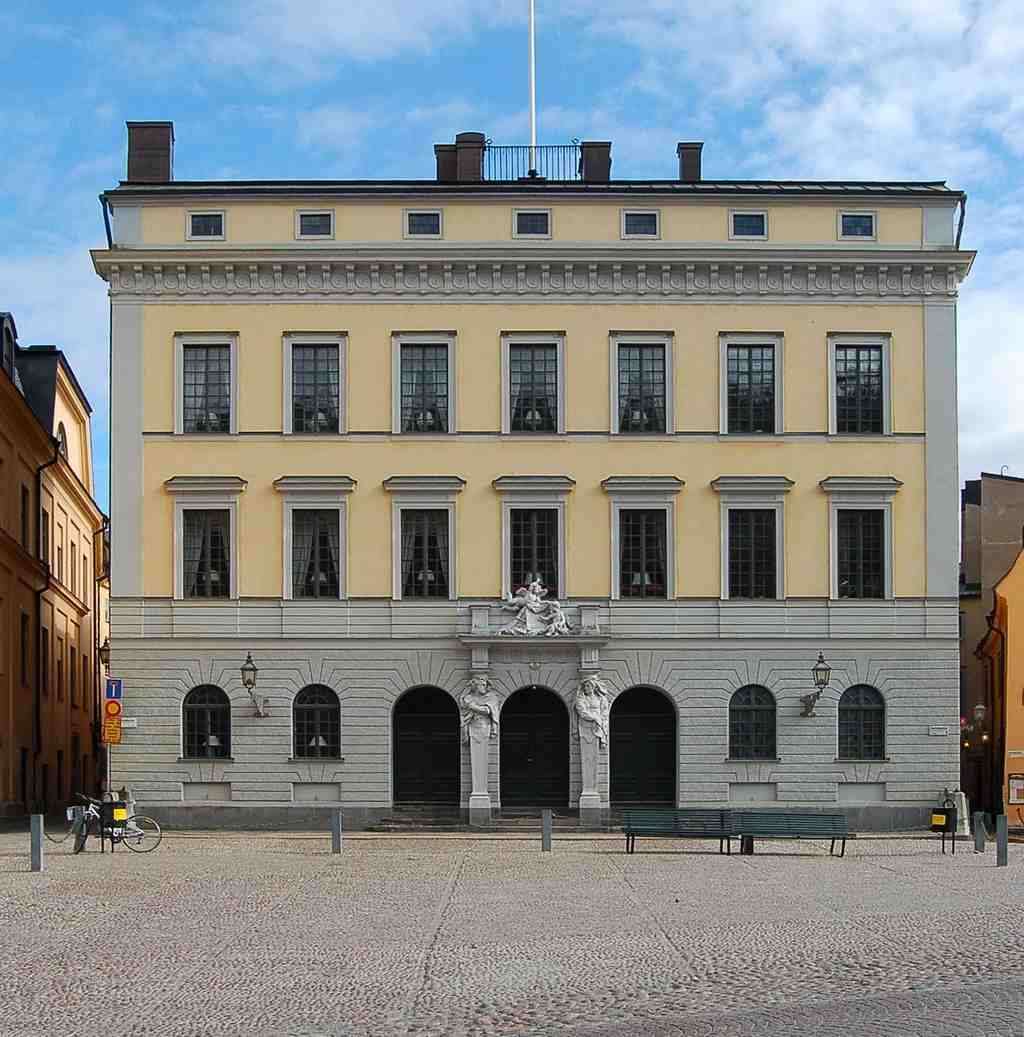
Look to your right for a rectangular building with a textured grey stone ground floor and smooth yellow upper stories, easily identifiable by the two sculpted stone figures standing guard on either side of the central doorway.
This is Tessin Palace. Back in 1692, Nicodemus Tessin the Younger was thirty eight years old and at the absolute peak of his career. He was the royal architect to King Karl the Eleventh, the man responsible for shaping the grand vision of Stockholm. Naturally, the kingdom's top architect needed a home that matched his status.
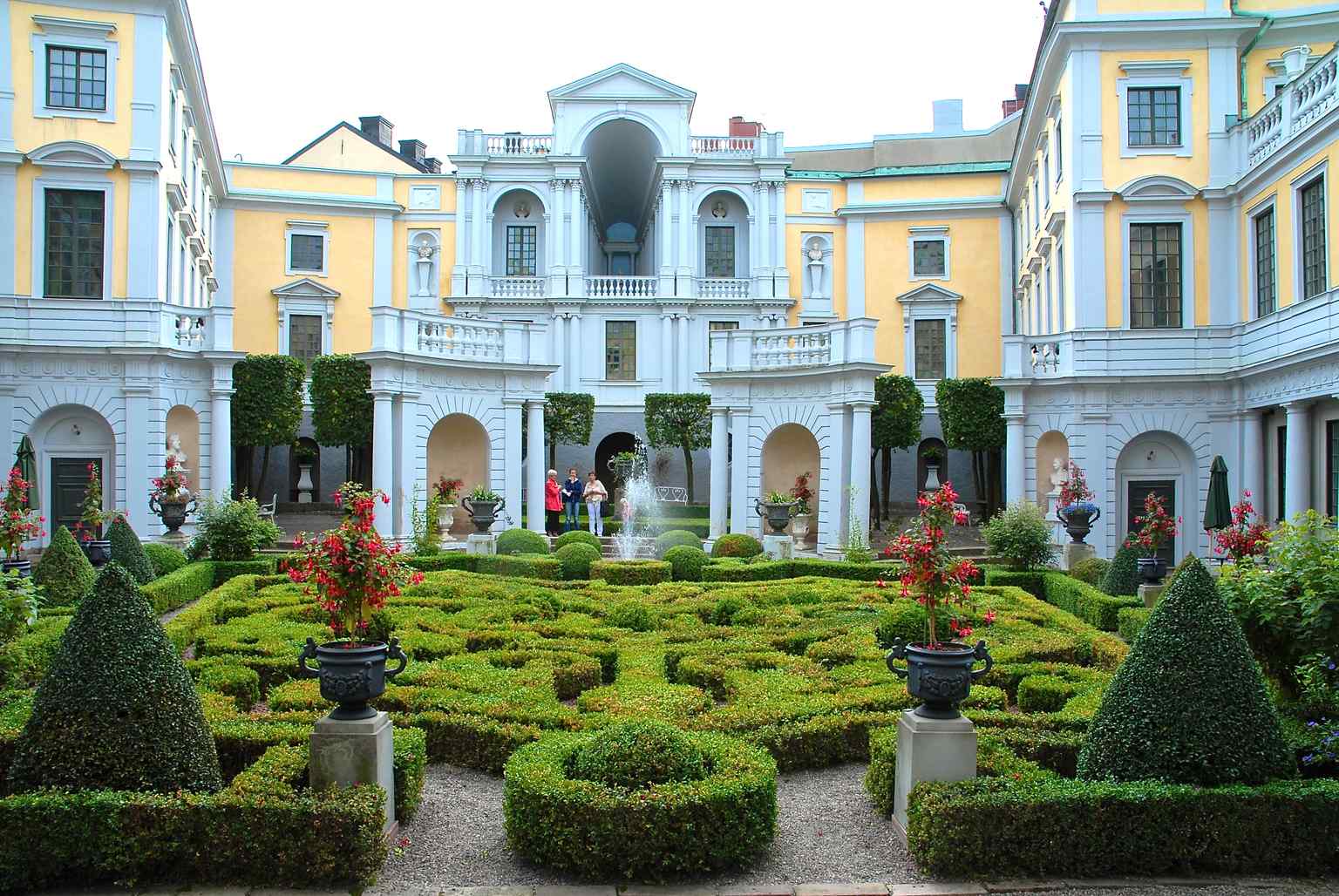
He bought this plot of land right across from the royal castle. There was just one problem. The plot was small and awkwardly shaped. For an architect obsessed with classical rules and perfect symmetry, this was a nightmare. But Tessin was brilliant. He employed a classic French layout called entre cour et jardin, a term meaning simply between courtyard and garden. By placing a small forecourt, the main house, and the garden all on a single straight axis, he created an illusion of total order out of an uneven patch of dirt.
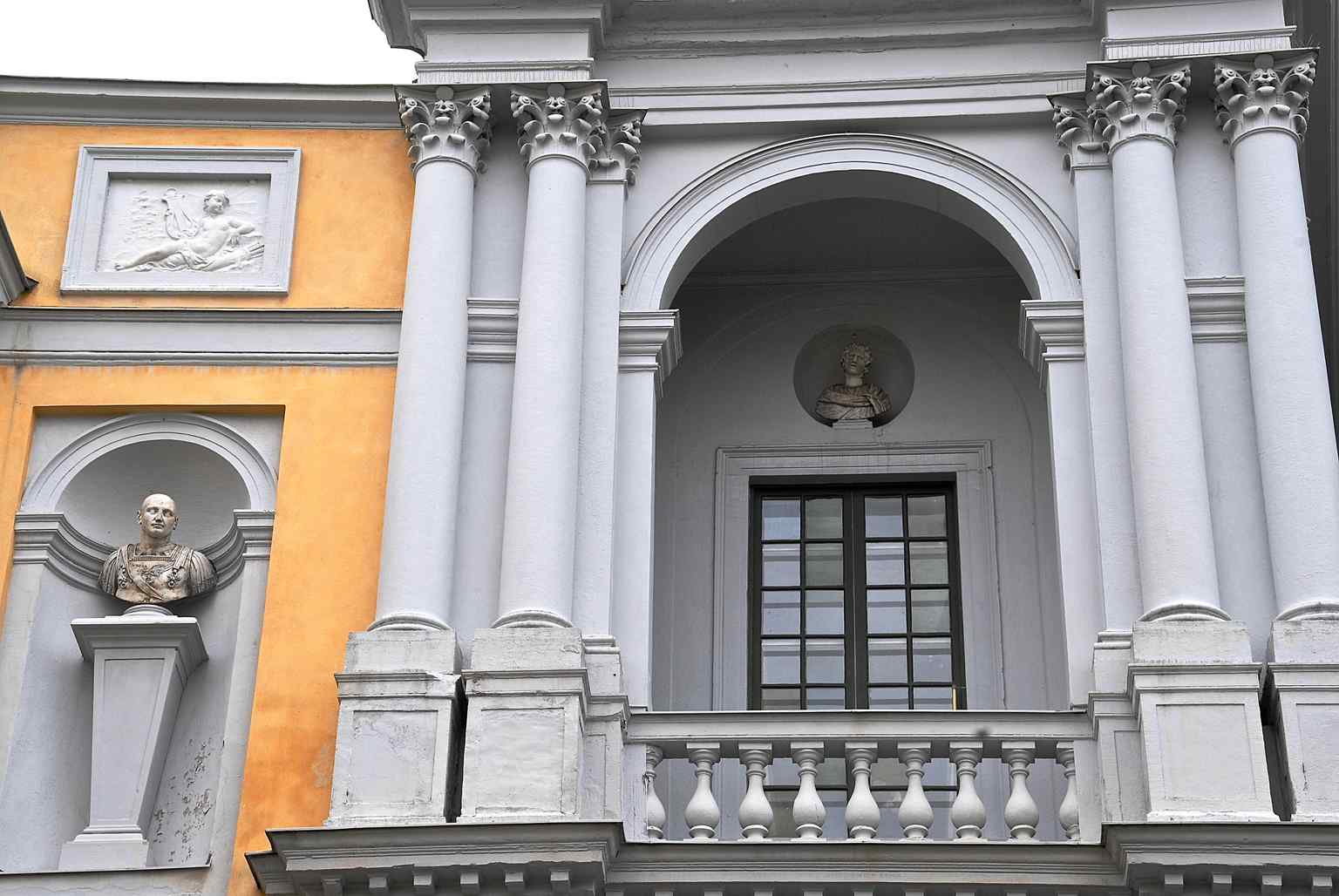
Take a look at the first image on your screen to see how Tessin styled the exterior. He rejected French tastes for the outside, preferring the more restrained Roman Baroque style of Michelangelo. Notice those two carved male figures flanking the door. These are known as atlantes, a type of structural column shaped like a man, and here they use their sheer stone strength to hold up the architectural elements above the entrance.
Now check the second image to see his garden trickery. Tessin used forced perspective, narrowing the garden walls and adding a fake colonnade at the very back, making the tiny, irregular space look vast and perfectly symmetrical.
But brilliance often comes with a heavy price. When Tessin died, his son Carl Gustaf inherited the masterpiece. Carl Gustaf wanted to transform the palace into the cultural epicenter of Stockholm. He hired architects for lavish upgrades and bought world class art in Paris, laying the foundation for Sweden's National Museum. It also completely bankrupted him. Drowning in debt and locked in a bitter political conflict with the royal family, Carl Gustaf was forced into the heartbreak of selling his father's magnificent creation in 1755.
The man who bought it, a wealthy merchant named Gustaf Kierman, fared even worse. Just a few years later, a rival political faction took power. They used Kierman as a scapegoat for a financial crisis, stripped him of his wealth, and sentenced him to a brutal diet of bread and water before throwing him into a fortress prison. He died there a broken man.
The state eventually bought the property for three hundred thousand copper dalers, an old currency that equals roughly sixteen million Swedish krona today. By the late 1700s, it became the headquarters for the city's police chief, who turned this elegant palace into the dark center of a massive political spy network monitoring the citizens of Stockholm.
It seems the walls of this architectural triumph have always harbored a bit of tragedy and ruthless ambition. Speaking of heavy legacies and the burdens passed down by the powerful, let us move on. Your next stop, Axel Oxenstierna's Palace, is just a three minute walk away.