
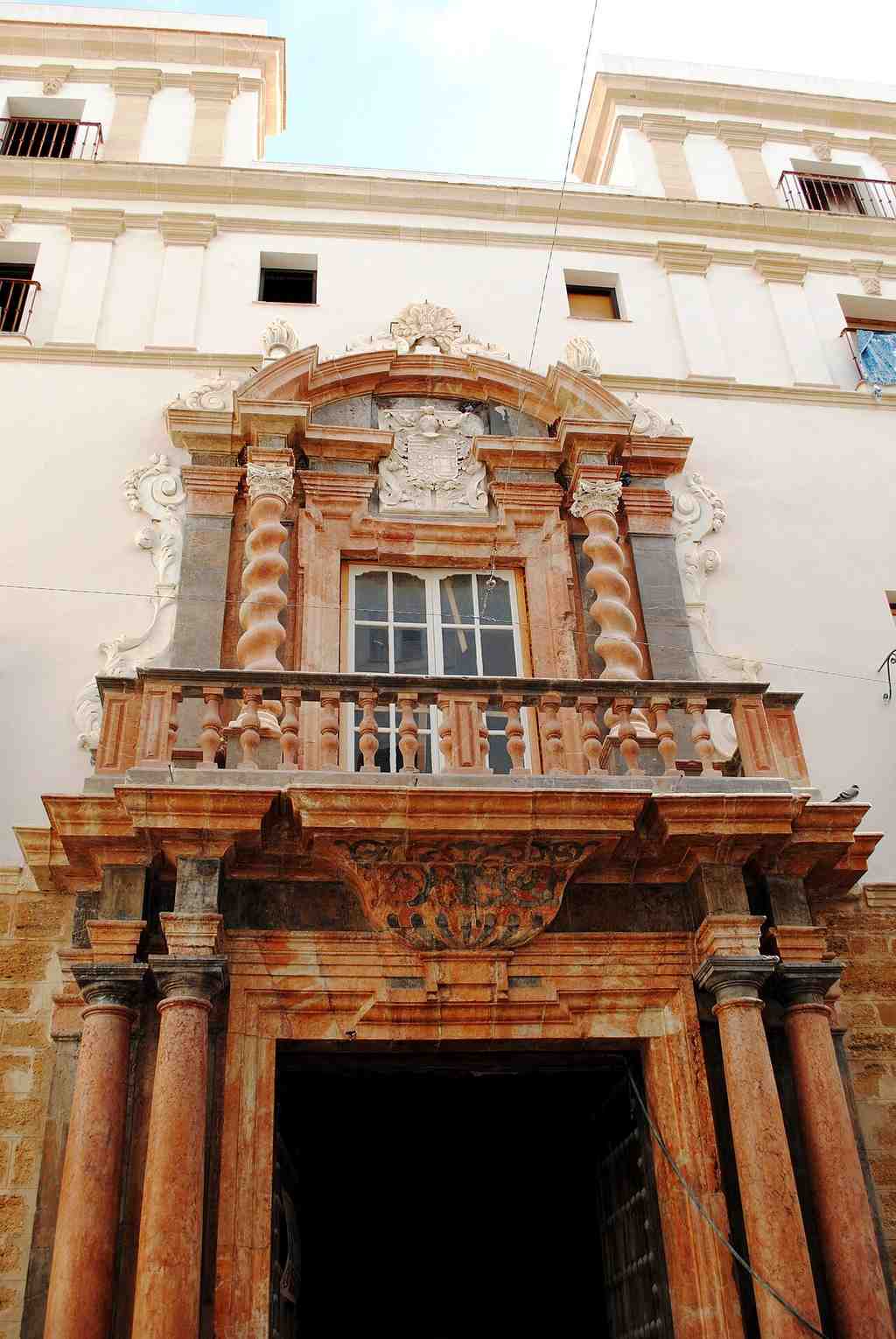
Suchen Sie zu Ihrer Rechten nach einer hohen Fassade in Almagra-Rot, die mit hellem Stein eingerahmt ist, einem prächtigen zweistöckigen Marmorportal und zwei Aussichtstürmen auf dem Dach. Dies ist das Haus des Admirals (Casa del Almirante), und es verdeutlicht genau, was Cádiz mit dem Geld aus dem Transatlantikhandel anstellte: Es wurde in Architektur verwandelt, die absolut kein Interesse an Bescheidenheit hatte. Gut so. Ende des siebzehnten Jahrhunderts gab die Familie von Diego de Barrios, einem Admiral der Indienflotte, dieses Palasthaus hier am kleinen Platz von San Martín in Auftrag. Es entstand aus dem Handel der Stadt mit Amerika, als Cádiz Vermögen umschlug, die groß genug waren, um selbst Stein ehrgeizig erscheinen zu lassen. Der Stil ist Barock, was auf gut Deutsch Dramatik, Bewegung und Dekoration bedeutet, die sich weigert, still zu sitzen. Der Star der Show ist das Portal. Es stammt aus Genua in Italien, wurde in rotem und weißem Marmor in der Werkstatt der Familie Andreoli gemeißelt und dann hier vom Baumeister García Narváez zusammengebaut. Wenn Sie einen Blick auf das Bild in der App werfen, können Sie sehen, wie sich das Portal fast wie ein Adliger, der erwartet, bemerkt zu werden, nach vorne drängt.
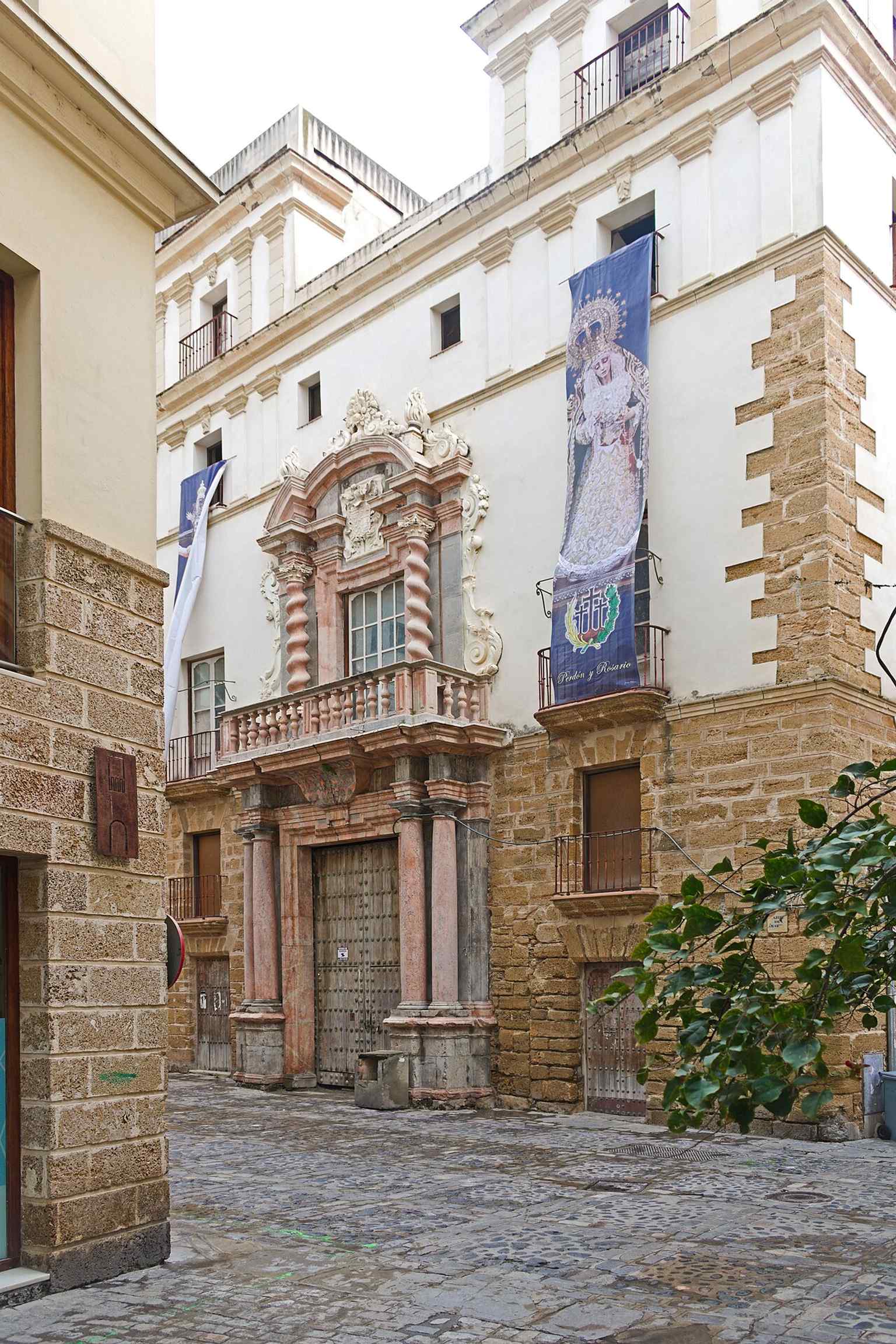
Look closely at its two levels. Down below, the entrance is flanked by paired Tuscan columns - the Tuscan order is the plain, sturdy classical style, though here even “plain” feels rather dressed up. Above that, a balcony sits inside a frame of Solomonic columns, the twisted corkscrew kind, topped by a curved broken pediment - that split, arched crown - holding the family coat of arms. And above the whole composition, those two rectangular mirador towers rise at the ends of the roofline. They were lookout towers, useful in a port city where wealth arrived by sea and people liked to keep an eye on it.
The house itself worked like a machine for commerce and status. The ground floor stored goods. The mezzanine handled offices. The grand main floor housed the family. The top floor went to servants. Efficient, hierarchical, and very honest about it.
You can’t step inside at the moment, but the interior still matters. At its center sits a rectangular patio, slightly off to the right of the entrance, with galleries resting on arches and reddish Genoese marble columns. In one side of that patio stood two white marble wellheads, each octagonal, some panels carved with masks. Even the wells had better tailoring than most buildings. From the patio, a monumental staircase rises in two flights under an oval dome set on pendentives - those curved triangular supports that let a round dome sit over a square space. The steps are marble, the handrail turned mahogany, and upstairs the main salon still preserves a painted family coat of arms on the ceiling.
The façade also uses ostionera stone, Cádiz’s shell-rich local stone, on the lower sections and corners, while the rest is plastered and painted that deep reddish almagra color. So the whole building becomes a conversation between local material and imported luxury... which is Cádiz in a nutshell, really.
You can admire the exterior at any hour, though the house itself remains closed pending possible restoration as a hotel.
In Cádiz, even a doorway could serve as a résumé.
Take a moment with that marble swagger, and when you’re ready, we’ll head on to the next stop.





