
Look for a pale stone civic façade with a broad rectangular front, evenly spaced windows, and a formal arched entrance that gives it the air of a building trying very hard to behave itself.
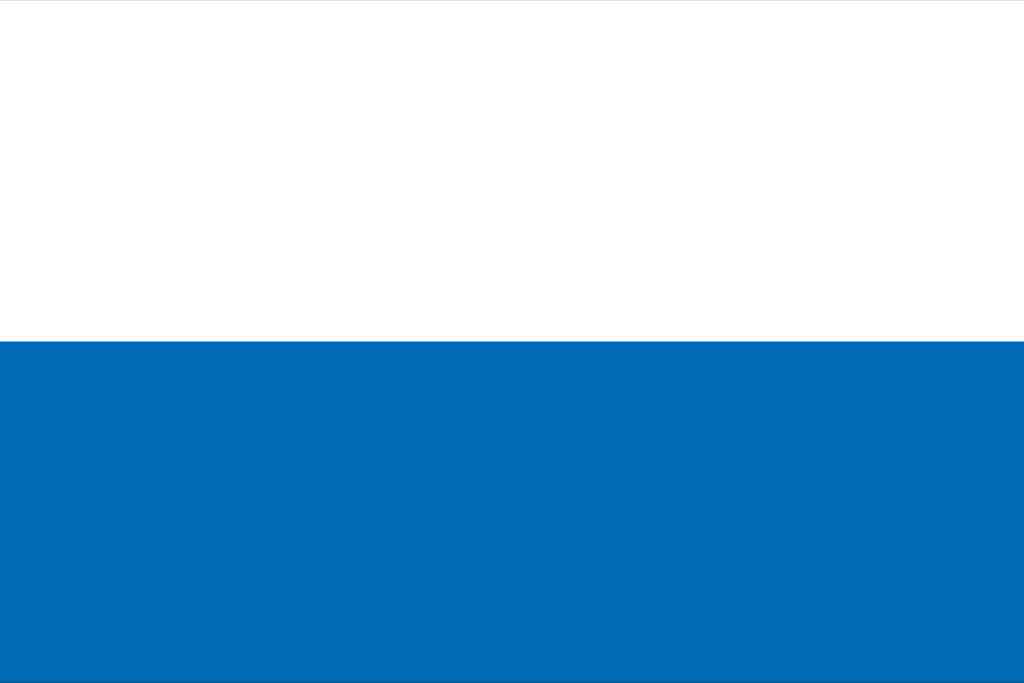
Now here is the twist in Kraków’s story: this place stands for something you cannot lay with brick alone. The Free City of Cracow experiment began after the Congress of Vienna in eighteen fifteen, when Europe’s big powers played cartographer with a heavy hand and created a tiny republic here. Officially, it called itself the Free, Independent, and Strictly Neutral City of Cracow and its District. That is one of the great overachiever names in political history. “Strictly neutral” was doing a lot of work.
In theory, Kraków ran itself. In practice, Russia, Prussia, and Austria hovered over it like three nosy landlords sharing one apartment key. Still, this little statelet mattered far beyond its size. It covered Kraków and the surrounding district, including hundreds of villages, and it became a Polish-speaking, mostly Catholic republic with a strong Jewish community and a surprising amount of nerve.
Prince Adam Jerzy Czartoryski helped shape the first constitution. He knew imperial diplomacy inside out, so he tried a delicate trick: give Kraków real self-government while making it acceptable to the empires circling it. That compromise let the city act as a Polish political refuge. The Jagiellonian University became a meeting ground for students from the partitioned lands, and ideas moved through town the way contraband moved through the borders: quietly, quickly, and with excellent timing.
And contraband, oh yes, that was part of the magic. The Free City had very low taxes and no customs duties, meaning fees charged on goods crossing borders. Traders loved it. Weavers from Prussian Silesia used Kraków as an outlet to dodge tariffs, and merchants shuttled goods between three empires. For a while, this city became a real laboratory for economic liberalism, which is a fancy way of saying people here made money by being clever while governments elsewhere made rules by being grumpy.
But freedom here came with invisible strings. After the November Uprising of eighteen thirty to eighteen thirty-one, when Kraków helped smuggle weapons into Russian-controlled Poland, the empires tightened the leash. In eighteen thirty-three they imposed a harsher constitution, cut the powers of the local assembly and senate, and curbed press freedom. By eighteen thirty-six, Austrian control reached the police. A republic that had looked nimble started finding lead weights tied to its ankles.
Stanisław Wodzicki, the first president of the Senate, captures the contradiction perfectly. He leaned toward Russia and played cautious politics, yet he also helped establish the Kraków Scientific Society and oversaw the building of the Kościuszko Mound, honoring a patriot who fought the very imperial order Wodzicki was trying to accommodate. That is Kraków in one man: compromise at the desk, patriotism in the soil.
Then came eighteen forty-six. A rising broke out. Jan Tyssowski led briefly, Edward Dembowski became its most dramatic figure, and the rebels even promised universal suffrage and an end to feudal burdens. Bold stuff. But the revolt collapsed, Austria annexed the Free City on the sixteenth of November, eighteen forty-six, and the experiment ended.
So as you stand here, remember: cities are not only made of stone façades and towers. They are also made of constitutions, bargains, smuggled hopes, and people who keep inventing room to breathe. In about two minutes, we’ll head to Saint Mary’s Church, where faith, pride, and public life rise into the skyline together. If you plan to go inside this venue later, its hours are generally from late morning or morning until late afternoon, every day.




