
Lima Audio-Tour: Von Helden zur Kunst
Eine jahrhundertealte Uhr schlägt über dem Universitätspark, während sich Schatten vergessener Rebellionen über seine belaubten Wege ziehen. Limas monumentales Herz schlägt mit Geheimnissen, die sich direkt hinter den Denkmälern verbergen. Diese selbstgeführte Audio-Tour führt Sie durch Plätze, Krypten und große Säle, die die meisten Touristen kaum zu Gesicht bekommen, und enthüllt unerzählte Geschichten hinter jedem Stein. Warum brachen die Flammen des Protests immer wieder am Rande dieser Universitätsmauern aus? Welche heldenhaften Gebeine ruhen in der kühlen Stille unter dem Panteón de los Próceres? Und welcher Mitternachtsskandal brachte beinahe die marmorne Würde des Justizpalastes zum Einsturz? Verfolgen Sie politische Umwälzungen und stille Akte des Mutes, während Sie sich von leuchtenden Gärten zu hallenden Korridoren bewegen. Mit jedem Schritt erleben Sie Limas reiche Vergangenheit, die direkt unter Ihren Füßen lebendig wird. Bereit, das wahre Lima zu entdecken? Die verborgene Stadt wartet – beginnen Sie Ihre Reise jetzt.
Tourvorschau
Über diese Tour
- scheduleDauer 40–60 minsEigenes Tempo
- straighten4.5 km FußwegDem geführten Pfad folgen
- location_on
- wifi_offFunktioniert offlineEinmal herunterladen, überall nutzen
- all_inclusiveLebenslanger ZugriffJederzeit wiederholen, für immer
- location_onStartet bei Universitätspark, Lima
Stopps auf dieser Tour
In the 19th century, the Casona was the residence of the viceregal Real Convictorio de San Carlos. However, the university took over the premises in the mid-1870s. Later, in 1966,…Mehr lesenWeniger anzeigen
In the 19th century, the Casona was the residence of the viceregal Real Convictorio de San Carlos. However, the university took over the premises in the mid-1870s. Later, in 1966, San Marcos relocated to its current campus, leaving the park's historic buildings to be occupied by the Chamber of Deputies, which is now the Congress of the Republic. Throughout the 20th century, the park witnessed numerous student demonstrations and riots. But it wasn't until the 1980s and 1990s that University Park underwent a much-needed renovation. During this time, ornamental pools were added, and a perimeter fence was built. As you explore the park, you'll come across various monuments, including the Torre Alemana, a magnificent clock gifted to Lima by the city's German community during Peru's Centennial of Independence in 1921. Next to the Casona de San Marcos, you'll find the Panteón de los Próceres. Let's take a look at some of the park's notable monuments. Firstly, the Monument to Sebastián Lorente, a striking sculpture made of bronze and granite. Created by the Peruvian sculptor José Luis F. Agurto, it was unveiled on September 15, 1924, at the park's east end. Another remarkable monument is dedicated to Hipólito Unanue, an influential figure in Peru's independence movement and a renowned politician and doctor. This monument, made of exquisite Italian marble, stands proudly in front of the Casona de San Marcos. It was crafted by the Spanish sculptor Manuel Piqueras Cotolí and inaugurated on July 29, 1931. Lastly, near the clock tower, you'll find the Monument to Bartolomé Herrera. This bronze and marble masterpiece was presented as a gift by the German government and was unveiled in 1922. It was crafted by the talented Spanish sculptor Gregorio Domingo. So, as you stroll through University Park, take in the beauty of its monuments, enjoy the lush greenery, and relive some of Lima's significant historical moments. Take your time to soak up the atmosphere before we proceed to our next exciting stop on our tour!
Eigene Seite öffnen →Originally, this church belonged to the Jesuit novitiate of San Antonio Abad. However, after the Jesuits were expelled from Spanish territories, the church was transferred to its…Mehr lesenWeniger anzeigen
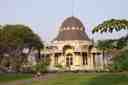
Originally, this church belonged to the Jesuit novitiate of San Antonio Abad. However, after the Jesuits were expelled from Spanish territories, the church was transferred to its current location. The building went through a series of transformations throughout its history, including being rebuilt following the devastating Lima-Callao earthquake in 1746. In 1876, the church became the Chapel of the Universidad Nacional Mayor de San Marcos, a prestigious university in Lima. However, it was in 1924 that the crypt underneath the altar was designated as the final resting place for the heroes of the Peruvian War of Independence. In recognition of this, the church was appropriately renamed the "Panteón de los Próceres." It's important to note that this "Panteón de los Próceres" should not be confused with the one located at the Presbítero Maestro cemetery. That particular Panteón is where the remains of the heroes from the War of the Pacific in 1879 are honored. Inside the Panteón de los Próceres, you'll find beautifully painted murals by the talented artist José Sabogal, adding a touch of artistic grandeur to this significant place. The crypt holds the remains of 24 heroes of the Peruvian War of Independence, along with 41 effigies that serve as a collective tribute to their legacy. As you explore this hallowed ground, take a moment to reflect on the sacrifices made by these brave individuals who fought for Peru's independence. Their stories echo through the halls of this crypt, and their memory is preserved here for generations to come.
Eigene Seite öffnen →
9 weitere Stationen anzeigenWeniger Stationen anzeigenexpand_moreexpand_less
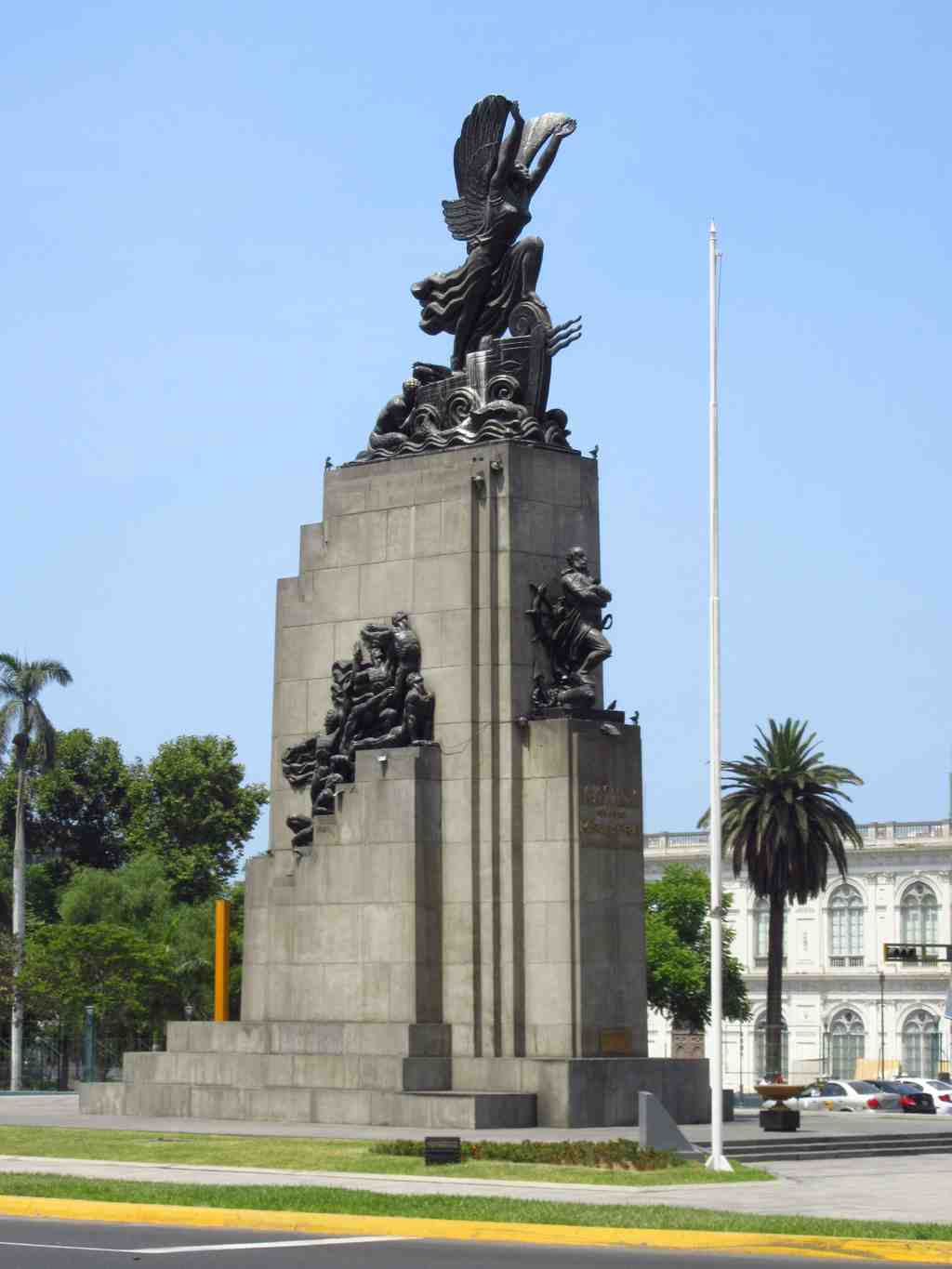
The monument was designed by the talented Spanish sculptor Victorio Macho and was inaugurated on October 28, 1946, during the government of President José Luis Bustamante y…Mehr lesenWeniger anzeigen
The monument was designed by the talented Spanish sculptor Victorio Macho and was inaugurated on October 28, 1946, during the government of President José Luis Bustamante y Rivero. It is even considered a movable property part of Peru's Cultural Heritage. The monument itself is truly impressive. It consists of a four-sided granitic monolith, symbolizing the land of Peru, with vertical stretch marks and ascending stands that represent the sea. At the center of the monument stands a sculpture of Admiral Miguel Grau Seminario, adorned in his sailor uniform, with his arms crossed and surrounded by a helm and ship anchors. On the pedestal beneath the sculpture, you will find a dedication that reads: "To the glory of the great admiral of Peru Miguel Grau, the Millennium Peruvian." The side faces of the monument feature symbolic sculptures depicting men struggling to reach great heights. At the back of the monument, there is a commemorative plaque honoring the Battle of Angamos, the naval engagement in which Admiral Grau lost his life. And to top it all off, the monument is crowned with an allegorical sculpture of fame, raising its arms towards the sky in a clamor for immortality. This sculpture is driven in a mythical ship by tritons and sirens. The Monument to Miguel Grau Seminario holds great significance for the people of Lima and the nation as a whole. It serves as a constant reminder of Admiral Grau's bravery and sacrifice during the War of the Pacific. And across from the square where the monument stands, you'll find the starting point of the Paseo de los Héroes Navales, a beautiful promenade honoring Peru's naval heroes. Shall we continue our fascinating journey through Lima?
Eigene Seite öffnen →Now, let's dive into the history of this extraordinary place. Back in the day, this park occupied the space where the south gate of the Walls of Lima, Puerta de Guadalupe, once…Mehr lesenWeniger anzeigen
Now, let's dive into the history of this extraordinary place. Back in the day, this park occupied the space where the south gate of the Walls of Lima, Puerta de Guadalupe, once stood. In the 1870s, President José Balta had the walls demolished as part of his ambitious plan to modernize the city. This made way for the creation of a park that would serve as the venue for the Lima International Exhibition of 1872, and alongside it, the Exhibition Palace was built (which is now home to the Lima Art Museum). The park's design was a stunning collaboration between Manuel Atanasio Fuentes and Italian architect Antonio Leonardi. They created a neo-Renaissance masterpiece that included the construction of pavilions, a zoo, and various other buildings. Interestingly, during the War of the Pacific, the park took on a military role. It served as a garrison and hospital for Peruvian forces before being overrun and used as headquarters for the Chilean troops. Such historical significance! Moving forward, in honor of Peru's centenary of independence, Augusto B. Leguía commissioned the construction of additional structures, such as the Byzantine Hall and the building that now houses the Ministry of Transport and Communications, which is planned to become the Metropolitan Museum of Lima in the future. Now, you may notice that part of the park was incorporated into the Civic Centre of Lima in 1961, resulting in the demolition of the Panopticon of Lima. However, fear not, for this beloved park still retains its original essence and charm. Sadly, during the 1970s, the Park of the Exposition experienced a period of decline. But in the 1990s, under the administration of Alberto Andrade, it underwent a marvelous restoration. Lakes were added, along with the creation of an amphitheater, further enhancing its allure. Andrade even renamed the park as Gran Parque de Lima, although it later reverted to its original name. So, my dear traveler, as we stroll through this enchanting park, take a moment to appreciate its rich history, cultural significance, and the rejuvenation it went through. Enjoy the beauty that surrounds us and let's continue our exploration of Lima's captivating landmarks!
Eigene Seite öffnen →The statue portrays a standing female figure, adorned in a light tunic and wearing a laurel wreath on her head. It is placed on a 4.30 meter high pedestal, giving it a commanding…Mehr lesenWeniger anzeigen
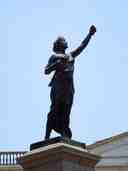
The statue portrays a standing female figure, adorned in a light tunic and wearing a laurel wreath on her head. It is placed on a 4.30 meter high pedestal, giving it a commanding presence in the plaza. In fact, both the sculpture and the Plaza Francia were declared a monumental urban environment in 1972, recognizing their cultural significance. In 2018, La Libertad was declared Cultural Heritage of the Nation, solidifying its importance in Peru's history. The statue has a fascinating backstory tied to the celebration of Peru's Centennial of Independence in 1921. Various foreign colonies in Lima planned to gift something to the city for this milestone event. Among them, the French colony intended to give a sculpture that was initially meant to be placed in the Plaza Mayor. However, due to delays, they were unable to present their gift on time. In 1925, the project for the statue was revived and a new commission, led by French engineer Michel Fort, was formed to raise funds for the work. A competition was held in Rome to select the sculptor, and René Bertrand-Boutée emerged as the winner. He had a remarkable portfolio of bronze sculptures and busts to his name. The installation of the statue and its base was carried out by Florentino Palma, using white granite from Amancaes. Additionally, four ornamental chandeliers made of bronze and iron, standing at 4.55 meters tall, accompanied the sculpture. A bronze plaque was also cast and carved, which read "Homage from the French colony to the Republic of Peru on the first centenary of its Independence." Over the years, the location of the Statue of Liberty has undergone changes. Initially, it was placed in the Plaza de la Libertad, which was built by the government in 1922. The inauguration ceremony was attended by President Augusto B. Leguía, the Archbishop of Lima, Emilio Lissón, and the diplomatic representatives of France. In 1935, the sculpture was moved to its current location in Plaza Francia, previously known as Plaza de la Recoleta. It stands near the facades of the Manrique Hospice and the Church of the Sacred Hearts (Recoleta). The statue is oriented in such a way that Liberty points with her raised torch towards the east, embracing the new day and symbolizing freedom. So, as you stand here in front of the Statue of Liberty, take a moment to appreciate the history and the symbolism it represents for the people of Lima and Peru as a whole.
Eigene Seite öffnen →Construction of the theater began in 1911 and was completed in 1914. The architect behind this impressive structure was Claude Sahut, a French architect who also designed and…Mehr lesenWeniger anzeigen
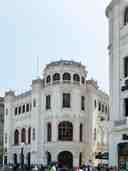
Construction of the theater began in 1911 and was completed in 1914. The architect behind this impressive structure was Claude Sahut, a French architect who also designed and built various other works in Lima during the early 20th century. The theater was inaugurated with its first play, "Los Fantoches," performed by the "Fabregas" Theater Company. During its early years, the theater hosted a wide range of shows and performances by small theater companies, both local and international. However, in 1921, it shifted its focus to film screenings and gradually became exclusively for film reproduction by 1927. In an effort to adapt to its new role as a cinema and enhance its appearance, the theater underwent a remodeling process in 1936. This included the removal of independent boxes on the first floor and the addition of another floor to the structure. These changes aimed to create a more harmonious look with the surrounding buildings. In 1972, the theater was expropriated by the Revolutionary Government of the Armed Forces of General Juan Velasco Alvarado and later declared a National Monument, becoming part of the Immovable Cultural Heritage of the Nation. Unfortunately, in the 1980s and 1990s, the theater fell into decline and became an adult movie theater due to the economic crisis and the decline of cultural spaces in Lima. However, in 2004, the Teatro Colón was auctioned and acquired by the Theater Directorate of the Ministry of Culture. A project called "Proyecto Cultural Colón Theater" was established in 2005 with the goal of restoring the deteriorated structure and transforming it back into a cultural space. The Teatro Colón's facade stands out with its soft lines and elegant design. Its interior is described as small but elegant, with simple and artistic decoration. The architecture offers a graceful and cheerful atmosphere, complemented by a beautiful view over the now-disappeared Plaza Zela. Today, the Teatro Colón is located in front of San Martín Plaza, between the Giacoletti Building and the Club Nacional. It serves as a physical reminder of Lima's vibrant cultural heritage and is a testament to the rich history and resilience of this captivating city. Shall we move on to our next stop?
Eigene Seite öffnen →The history of this church dates back to the early 17th century when the first chapel was built in the area. It was financed by a Spanish man named Luis de Ojeda, known as 'Luis…Mehr lesenWeniger anzeigen
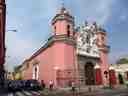
The history of this church dates back to the early 17th century when the first chapel was built in the area. It was financed by a Spanish man named Luis de Ojeda, known as 'Luis Pecador'. Initially, the chapel was connected to an orphanage, which is where it gets its name from, and it was dedicated to the Virgin of Atocha. In 1612, it was elevated to the status of a vice-parish. Over the years, the church has undergone several changes. In 1657, the church was intervened but the details of the alterations remain unknown. The layout of the church changed significantly in 1685, with a different and inverse plan. Unfortunately, in 1687, the church was devastated by earthquakes, leading it to be used as a warehouse and stable for several decades. In 1742, a new church was planned, designed by Manuel de Torquemada and built by Cristóbal de Vargas. However, the second structure collapsed during the earthquake of 1746, which occurred the same year it was completed. Interestingly, the current construction's plans correspond to those of the collapsed church. The Sacred Heart Church was inaugurated on April 6, 1766, with the design attributed to the Jesuit priest Juan Rehr. What makes this church unique is its elliptical plan, similar to the Catholic temples in Austria, making it the only Catholic temple in Peru and Latin America with this design. It is built in the Rococo limeño style, with late Baroque ornamentation. The light blue vaulted roof, from the beginning of its construction, was intended to imitate the nuances of the sky. The main façade is adorned with twin bell towers and features an exquisite combination of curved and straight lines, creating a striking visual appeal. Inside the church, you will find the subchoir, nave, and presbytery, along with four shallow niche chapels around the curvature. The side cover, added in the 19th century, showcases a neoclassical design, offering a blend of architectural styles within the church. The Sacred Heart Church is not only a significant landmark in Lima but also a testament to the architectural beauty and historical importance of this iconic city.
Eigene Seite öffnen →
Bewertungen
Häufig gestellte Fragen
Wie starte ich die Tour?
Laden Sie nach dem Kauf die AudaTours-App herunter und geben Sie Ihren Einlösecode ein. Die Tour ist sofort startbereit – tippen Sie einfach auf „Play“ und folgen Sie der GPS-geführten Route.
Benötige ich während der Tour Internet?
Nein! Laden Sie die Tour vor dem Start herunter und genießen Sie sie vollständig offline. Nur die Chat-Funktion benötigt Internet. Wir empfehlen den Download über WLAN, um mobiles Datenvolumen zu sparen.
Handelt es sich um eine geführte Gruppentour?
Nein – dies ist ein selbstgeführter Audioguide. Sie erkunden unabhängig in Ihrem eigenen Tempo, wobei die Audioerzählung über Ihr Telefon abgespielt wird. Kein Reiseleiter, keine Gruppe, kein Zeitplan.
Wie lange dauert die Tour?
Die meisten Touren dauern 60–90 Minuten, aber Sie kontrollieren das Tempo vollständig. Pausieren Sie, überspringen Sie Stopps oder machen Sie Pausen, wann immer Sie wollen.
Was, wenn ich die Tour heute nicht beenden kann?
Kein Problem! Touren haben lebenslangen Zugriff. Pausieren Sie und setzen Sie sie fort, wann immer Sie möchten – morgen, nächste Woche oder nächstes Jahr. Ihr Fortschritt wird gespeichert.
Welche Sprachen sind verfügbar?
Alle Touren sind in über 50 Sprachen verfügbar. Wählen Sie Ihre bevorzugte Sprache beim Einlösen Ihres Codes. Hinweis: Die Sprache kann nach der Tour-Generierung nicht mehr geändert werden.
Wo greife ich nach dem Kauf auf die Tour zu?
Laden Sie die kostenlose AudaTours-App aus dem App Store oder von Google Play herunter. Geben Sie Ihren Einlösecode (per E-Mail gesendet) ein, und die Tour erscheint in Ihrer Bibliothek, bereit zum Download und Start.
Wenn Ihnen die Tour nicht gefällt, erstatten wir Ihnen den Kaufpreis. Kontaktieren Sie uns unter [email protected]
Sicher bezahlen mit 


