
Heidelberg Audio Tour: Köpfe, Mythen & Flussrhythmen
Ein einziger Stein in Heidelbergs Altstadt birgt die Geheimnisse von Jahrhunderten, während weltverändernde Durchbrüche in gläsernen Laboren gleich um die Ecke widerhallen. Diese selbstgeführte Audiotour führt Sie durch versteckte Innenhöfe, geschichtsträchtige Hörsäle und Gesellschaften, die nur wenige Außenstehende je zu Gesicht bekommen. Lassen Sie vergessene Skandale, Legenden und Entdeckungen die stilleren Ecken der Stadt in lebendigen Farben malen. Welches explosive Ereignis zwang die Pädagogische Hochschule, ihre eigenen Regeln über Nacht neu zu schreiben? Welcher geheime Pakt am Deutschen Krebsforschungszentrum steigerte seinen weltweiten Einfluss – und veränderte das Schicksal eines Wissenschaftlers für immer? Und warum flüstert die WKStV Unitas Ruperto Carola immer noch von einem Duell, das furchtbar schiefging? Bewegen Sie sich zwischen schattigen Gassen und dem Glanz des Flussufers, während sich Geschichten entfalten und Wahrheiten mit Mythen kollidieren. Erleben Sie Heidelbergs lebendigen Puls durch akademische Streitigkeiten, politische Intrigen und die gespenstischen Spuren der Revolution. Entdecken Sie die bestgehüteten Geheimnisse der Stadt – beginnen Sie jetzt zuzuhören und tauchen Sie unter die Oberfläche.
Tourvorschau
Über diese Tour
- scheduleDauer 30–50 minsEigenes Tempo
- straighten5.8 km FußwegDem geführten Pfad folgen
- location_onStandortHeidelberg, Deutschland
- wifi_offFunktioniert offlineEinmal herunterladen, überall nutzen
- all_inclusiveLebenslanger ZugriffJederzeit wiederholen, für immer
- location_onStartet bei Max-Planck-Institut für medizinische Forschung
Stopps auf dieser Tour
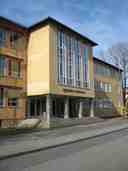
In front of you is a tall, pale yellow building with a striking row of vertical windows above its front entrance, standing just off the street with the name “Bunsen-Gymnasium”…Mehr lesenWeniger anzeigen
In front of you is a tall, pale yellow building with a striking row of vertical windows above its front entrance, standing just off the street with the name “Bunsen-Gymnasium” clearly visible above the columns. Imagine you’ve just stepped into a whirlwind of young ambition and old stories! Welcome to the Bunsen-Gymnasium, a school with a spirit as colorful as the yellow façade you see, named after the legendary chemist Robert Wilhelm Bunsen, whose scientific spark once lit the halls of Heidelberg’s university nearby. But don’t worry, you won’t need a Bunsen burner to enjoy this story. Back in 1940, things were rather different here. The world was weighed down by war, but even in such heavy times, Heidelberg had education on the mind. The Bunsen-Gymnasium was born as the Robert-Bunsen-Schule-a daughter school of the Philipp-Lenard-Schule, which would later be called Helmholtz-Gymnasium. But the building was often on the move: from the former teachers’ training institute across town, to sharing cramped quarters with Helmholtz-Gymnasium, all before finally finding a true home in the Neuenheimer Feld, the very edge of academic Heidelberg. During the early years, the school could be called “boys only - with a Latin twist”-classes brimmed with young men decoding ancient texts. It wasn’t until 1969 that brave girls strode in, beginning with just one class focused on French, while the other classrooms still echoed with Latin recitations and the English alphabet. Full coeducation wasn’t embraced until the groovy days of 1973-yes, believe it or not, by then you could have a roaring game of dodgeball with both boys and girls on the same team. You might notice the building itself has grown up alongside its students, with extensions added in 1955, 1965, and 1971. Then in 2016, the school opened a sparkling new wing for the sciences, earning architects a prize for their smart design. So, if you detect a whiff of scientific excitement today, it’s not just leftover chemistry experiments-it’s the pride of a school at the cutting edge. Despite all the evolution, Bunsen-Gymnasium never forgot its roots in both language and science. Today’s students can soak up French or English, or dive deep into math and the sciences. It’s even part of an elite AbiBac program, meaning graduates can roam not just Heidelberg, but also the avenues of Paris and beyond, their diplomas glowing on both sides of the Rhine. The ties run strong with schools in France, including a partner campus in Wissembourg, and students collect French language certificates like some people collect stamps. Here, classroom learning blends with the world outside. The local physics institute even supplies the school with up-to-date weather data-so, if you hear students arguing whether it’s going to rain, they probably have the stats to back it up. Budding sports scientists from Heidelberg’s university get teaching practice here too, creating lessons that leave both students and teachers gasping for breath-but always smiling. A roll call of alumni could fill trophy cabinets from Cambridge to Columbia and beyond. You’re following in the footsteps of Nobel Prize laureates, innovative journalists, artists, top judges, and even basketball stars. All this, just beyond the big windows where, at this very moment, someone inside might be solving a tricky math problem, learning their first words in French, or perhaps dreaming of the day their own name might be part of the Bunsen legacy. Now, let’s see what the rest of Heidelberg has to offer! Exploring the realm of the building, location, courses or the cooperation? Feel free to consult the chat section for additional information.
Eigene Seite öffnen →
8 weitere Stationen anzeigenWeniger Stationen anzeigenexpand_moreexpand_less
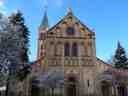
To spot St. Raphael in front of you, look for a large yellow-brick church with a grand, symmetrical facade crowned by statues, a striking green-topped bell tower with a clock, and…Mehr lesenWeniger anzeigen
To spot St. Raphael in front of you, look for a large yellow-brick church with a grand, symmetrical facade crowned by statues, a striking green-topped bell tower with a clock, and rows of elegant arches-right in line with the trees and Werderstraße. Now, let’s step into the story of St. Raphael, a church with roots as deep as its stones and bells are resonant. Imagine the end of the 19th century: the Neuenheim neighborhood of Heidelberg is bustling, swelling with people, and-plot twist-the old local church belongs to the Protestants! But the Catholics kept multiplying until they simply needed a home of their own. This is how St. Raphael was born, not out of thin air, but out of a pressing need and a wave of new arrivals. Take a moment to soak in the facade. Those yellowish bricks, the round arches reaching for the sky, and that ornate facade-well, they’re straight out of Italy’s architectural playbook. If you squint, you might almost feel the spirit of Pisa’s grand cathedral peeking through the arches. The pyramid-roofed tower to your left channels Venice, too, and on top, a group of statues keep watch; if you're thinking, “That looks kind of heavenly,” you’re onto something! But here’s where the story takes a turn for the touching-St. Raphael isn’t just named after any angel. The church was built in part thanks to the generosity of a grieving family, who donated a large sum to honor their son, Raphael Slidell von Erlanger, a zoology professor who left this world too soon. His memory, and even his epitaph, live on here. The parish inherited its unusual name in his honor, so you’re not just looking at any St. Whatever-this is a St. Raphael with a very personal backstory. Now, travel back to the first Christmas in the nearly finished church, in 1904, with excitement shimmering through the chilly winter air. A year later, Archbishop Thomas Nörber made it official with a blessing-and probably a very grand hat. Through wars, reforms, and changing times, the church has adapted. The original grand altars are gone, and the interior has seen modern touches-keeping the faith but ditching some of the furniture. During the 1960s, St. Raphael was remodeled in line with new traditions, and the latest renovations just two decades ago brought a deep blue ceiling, inspired by old medieval dreams. Look inside if you can-the north-side stained-glass windows have survived from the early days, showing saints in glowing color. On the south side, you’ll see windows that replaced those lost in World War II; they now tell Angel Raphael’s story from the Old Testament. Oh, and if you hear music, it might be the mighty organ, installed in 2016 with a whopping 32 registers-imagine the sound shaking the pews! And finally, don’t miss the five bells above. The oldest-the proud survivor of two World Wars-weighs over a ton. When it rings, it echoes with the hope and gratitude, loss and love, woven into the story of St. Raphael, the church with a heart as big as its bells are loud.
Eigene Seite öffnen →You’ll spot the Astronomical Computing Institute right ahead of you-a modern, cream-colored building with large square windows framed in grey, peeking out from behind a few trees…Mehr lesenWeniger anzeigen
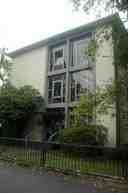
You’ll spot the Astronomical Computing Institute right ahead of you-a modern, cream-colored building with large square windows framed in grey, peeking out from behind a few trees and shrubs. Now, imagine you’ve landed at a place where minds are so sharp they can map the stars themselves! The Astronomical Computing Institute, or ARI as the locals call it, has quite the cosmic backstory. The fun began way back in 1700-just imagine powdered wigs and twinkling candlelight-when the first astronomers, led by Gottfried Kirch, started tallying up the stars in Berlin. Fast-forward to 1874: with astronomers scrambling to keep up with the ever-growing number of calculations, Wilhelm Foerster said, “Let’s build a whole institute!” And they did, right next to the Berlin Observatory. Here, amid the whir of pencils on paper, stargazers mapped the heavens! When Berlin became too hot to handle during wartime, the institute’s brains (and their precious calculations) were whisked away to the quiet countryside and, finally, to peaceful Heidelberg after World War II. Since then, ARI has become the international headquarters for figuring out exactly where the stars and planets will be-down to the tiniest fraction of a second. Their calculations fill entire yearbooks, calendars, and even guide stargazers across the world. They’re also the masterminds behind stellar catalogues, so precise that if an alien needed directions to Earth, ARI could probably help. Oh, and a fun tidbit: there’s even an asteroid named after ARI-and after a hundred years, they threw a “star-studded” 300th birthday bash right here! So while the building may look calm and quiet, inside, cosmic mysteries are being worked out every single day.
Eigene Seite öffnen →In front of you is a broad, modern bridge spanning the Neckar River with green railings and a row of tall flagpoles, easy to spot as it stretches across to the hillside…Mehr lesenWeniger anzeigen
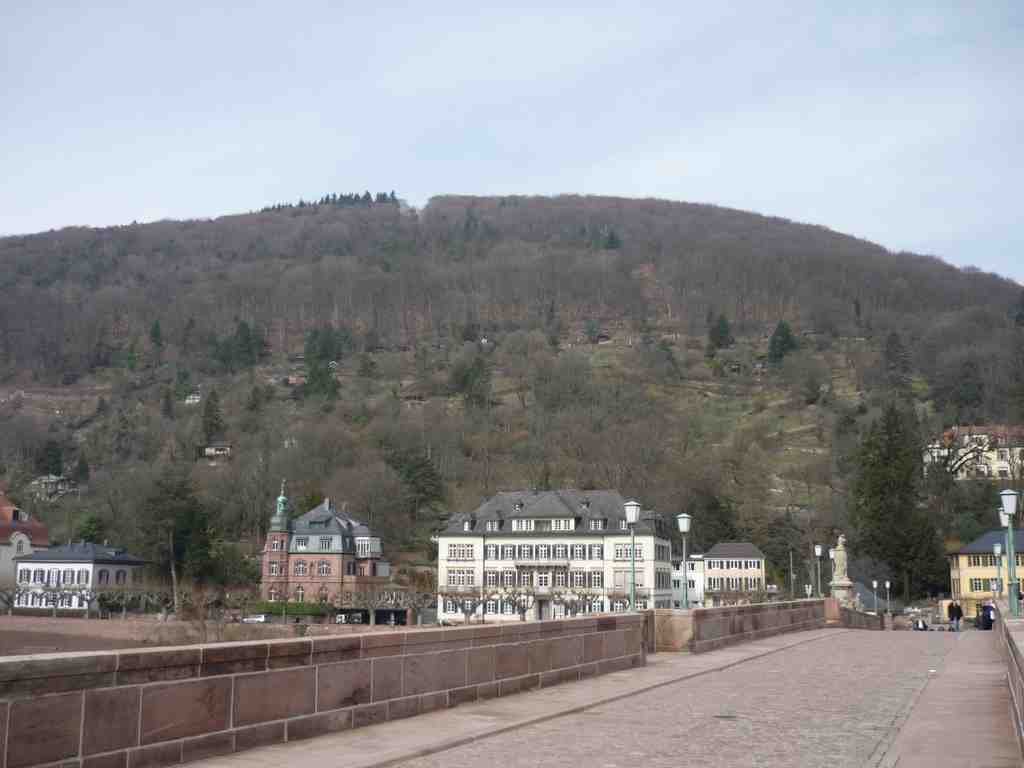
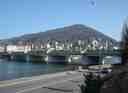
In front of you is a broad, modern bridge spanning the Neckar River with green railings and a row of tall flagpoles, easy to spot as it stretches across to the hillside neighborhood of Neuenheim. Now, take in the cool air sweeping off the Neckar - this bridge is more than just concrete and steel, it’s a time machine disguised as a shortcut. If you’d been here around 2,000 years ago, you might have squelched through a muddy river ford nearby while Roman soldiers built the very first bridges to tame the wild waters. Even back then, this stretch of river was a prime spot for crossing, and sharp-eyed Romans took full advantage in the 80s… the 80s AD, that is! Fast-forward to the 13th century and travelers floated across by ferry, feeling every wobble as they clung to barrels and ropes. As centuries rolled on and horse carts rattled louder in old Heidelberg, city leaders knew the medieval ferry just wouldn’t cut it. In 1877, the mighty “Friedrichsbrücke” rose here - grand, modern, and at 243 meters, long enough to make even the bravest carriage-horse break a sweat. By 1905, traffic was ballooning, so the bridge got a major facelift: extra lanes, streetcars, and a grand reopening in honor of Grand Duke Friedrich I. For a brief moment, it really was “the new bridge,” though drivers still grumbled about cobblestone potholes. But history had one more river to cross: World War II. Retreating armies blew up the bridge in 1945, silencing years of footsteps and rumbling carts. In the chaos that followed, American forces cobbled together a temporary wooden bridge so shaky it was nicknamed “Wooden Friedrich” - and when local mushrooms started attacking the foundations, well, let's just say the bridge had a real fungi problem. By the late 1940s, Heidelberg rallied again, giving birth to the concrete, beam-style span now before you. Crafted to fit the valley’s grand landscape, it fits in like a keystone rather than a sore thumb. It finally got its new name in 1964, honoring Theodor Heuss, a beloved President who’d walked these planks himself. And you can thank the work crews of the 1990s for the bridge’s sleek new look - built broad enough for trams, traffic, and those grumbling drivers who never seem satisfied. So next time you cross, give a nod to the Romans, the rowers, the mushroom battlers, and everyone who turned this bridge into the heart of Heidelberg!
Eigene Seite öffnen →Look directly across the grassy Neckarwiese towards the river and you'll spot the Heidelberg Rowing Club as a modern, pale building with large, glassy windows and a sign that…Mehr lesenWeniger anzeigen
Look directly across the grassy Neckarwiese towards the river and you'll spot the Heidelberg Rowing Club as a modern, pale building with large, glassy windows and a sign that proudly reads "Heidelberger Ruderklub 1872 e. V." above the entrance. Now, let’s spin the tale of the Heidelberg Rowing Club! Picture yourself standing here in the early morning mist-back in 1872, when mustaches were wild and boats were mainly powered by tea and stubbornness. A few adventurous souls from the Bismarck boat group got together and decided rowing needed an upgrade, so they founded the original club. What started as the “Deutscher Flaggen-Club” soon became the anchor for all Heidelberg rowing, pulling in every local rowing enthusiast by 1875. Just five years later, the club celebrated its very first out-of-town regatta victory. Imagine the cheers and the slap of oars on water echoing through the valley. But the club didn’t just float by on nostalgia. In 1928, two brave members-Heinrich Bender and Rudi Wild-packed their rowing dreams and headed off to compete at the Olympics in Amsterdam. Fast forward to the year 2000, when this very boat house, the club’s luxurious ninth home, opened its doors to let even more Heidelbergers chase river glory. Today, you’d find nearly 450 active members gliding up and down the club’s stretch of the Neckar, from the venerable Old Bridge to the Wehrsteg footbridge, every May organizing the grand Heidelberg regatta that attracts rival rowers from near and far. This club has never been one to snooze by the riverside-its trophy shelf is groaning under the weight of victories: from the 1891 Frankfurt island title, to world championships, European titles, sprint victories in the 2000s, and strong showings even in the fierce Bundesliga. But wait-rowing isn’t the only game here. That “rowdy” energy spills out onto the rugby field! Thanks to Edward Hill Ullrich, who translated rugby rules into German (because, let’s face it, Germans love good rules), the HRK birthed the very first dedicated rugby group in the country. In summer, they rowed; in winter, they played rugby. And boy, did that tradition pay off! 14 rugby championship titles, 3 cup victories, and a mountain of youth and women’s titles later, the HRK rugby squad turned from scrappy side to legend. They even snagged a spot in the European Challenge Cup-though, after a little drama with club ties and some complicated sports politics, that particular adventure ended with club officials giving the referee a very stern look. So, whether your heart beats to the slap of oars or the pounding feet on a rugby field, the Heidelberg Rowing Club has room for both the river’s calm and the pitch’s chaos. Sometimes, when the teams meet after a long day, you’ll hear laughter as loud as any cheer for a winning goal.
Eigene Seite öffnen →To spot the Philosopher’s Trail, look up the hillside rising across the river from the Old Town; you’ll notice a rugged, tree-lined path snaking through the greenery above the…Mehr lesenWeniger anzeigen
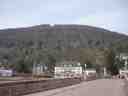
To spot the Philosopher’s Trail, look up the hillside rising across the river from the Old Town; you’ll notice a rugged, tree-lined path snaking through the greenery above the handsome villas-if you’re near the old bridge, you just need to look slightly right and upwards at the slopes, and there it is. Now, let’s step into the story-take a deep breath, because what you see ahead was once the secret stage for some of Germany’s greatest thinkers to hatch wild ideas, poetic verses, and maybe daydream about skipping class. Imagine this: the Philosopher’s Trail, just about two kilometers long, starts out with a wickedly steep and winding climb-so steep, in fact, that your thoughts might be more about catching your breath than pondering the mysteries of life, at least on the first seven hundred meters! That lower half winds past some of Heidelberg’s fanciest addresses, where, back at the dawn of the 20th century, the esteemed Physical Institute of the university settled in, safely tucked away from city tremors. Keep walking and you’ll pass where renowned zoologist Hugo Merton lived-before he was forced to flee Nazi Germany and seek safety in England. Nobel Prize-winning physicist Hans Jensen, too, roamed here, picking out buildings for the university in the 1950s. So if you feel your brain buzzing along the way, don’t be surprised: you’re sharing the path with intellectual heavyweights. But here’s where it levels out-and so do your chances of both catching your breath and catching the best view in town! As you meander along the nearly flat main stretch, you’ll find the quaint Philosopher’s Garden, almost a hidden lookout. Lean on the stone wall, and behold: the Neckar River below, the red rooftops of Heidelberg’s Altstadt, the regal Heidelberg Castle, and far across the Rhine plain. Look closely for a metal plaque inviting you to reflect on the nature of truth-no pressure, right? Just the kind of philosophical brain-teaser that would have fit right in with the thinkers who made this place famous. You’ll pass a bust of Joseph von Eichendorff, a romantic poet who studied here for a spell, with one of his poems engraved near your feet. At the far end is the Hölderlin memorial, marking where the poet sang Heidelberg into literary eternity. And if you wander just a bit more, there’s a stone commemorating the tiny Engelskirche church, lost to time. Of course, if you fancy a challenge, try the Snake Path-zigzagging up in true “Indiana Jones meets grad student” style. But no matter which route you wander, every stone, tree, and view has a story of students, philosophers, poets, and a dash of romantic mischief. Legend says the name came from those early students, taking breaks from dry textbooks to stroll, debate, and, probably, steal a kiss or two under the grapevines. Here, you’re in good company-who knows what ideas the trail will spark in you today!
Eigene Seite öffnen →
Häufig gestellte Fragen
Wie starte ich die Tour?
Laden Sie nach dem Kauf die AudaTours-App herunter und geben Sie Ihren Einlösecode ein. Die Tour ist sofort startbereit – tippen Sie einfach auf „Play“ und folgen Sie der GPS-geführten Route.
Benötige ich während der Tour Internet?
Nein! Laden Sie die Tour vor dem Start herunter und genießen Sie sie vollständig offline. Nur die Chat-Funktion benötigt Internet. Wir empfehlen den Download über WLAN, um mobiles Datenvolumen zu sparen.
Handelt es sich um eine geführte Gruppentour?
Nein – dies ist ein selbstgeführter Audioguide. Sie erkunden unabhängig in Ihrem eigenen Tempo, wobei die Audioerzählung über Ihr Telefon abgespielt wird. Kein Reiseleiter, keine Gruppe, kein Zeitplan.
Wie lange dauert die Tour?
Die meisten Touren dauern 60–90 Minuten, aber Sie kontrollieren das Tempo vollständig. Pausieren Sie, überspringen Sie Stopps oder machen Sie Pausen, wann immer Sie wollen.
Was, wenn ich die Tour heute nicht beenden kann?
Kein Problem! Touren haben lebenslangen Zugriff. Pausieren Sie und setzen Sie sie fort, wann immer Sie möchten – morgen, nächste Woche oder nächstes Jahr. Ihr Fortschritt wird gespeichert.
Welche Sprachen sind verfügbar?
Alle Touren sind in über 50 Sprachen verfügbar. Wählen Sie Ihre bevorzugte Sprache beim Einlösen Ihres Codes. Hinweis: Die Sprache kann nach der Tour-Generierung nicht mehr geändert werden.
Wo greife ich nach dem Kauf auf die Tour zu?
Laden Sie die kostenlose AudaTours-App aus dem App Store oder von Google Play herunter. Geben Sie Ihren Einlösecode (per E-Mail gesendet) ein, und die Tour erscheint in Ihrer Bibliothek, bereit zum Download und Start.
Wenn Ihnen die Tour nicht gefällt, erstatten wir Ihnen den Kaufpreis. Kontaktieren Sie uns unter [email protected]
Sicher bezahlen mit 


