
Chemnitz Audiotour: Marx, Meisterwerke & Mythen des Zentrums
Eine Stadt, in der bombardierte Fassaden kühne Innovationen und Jahrhunderte der Rebellion verbergen, Chemnitz pulsiert mit Geheimnissen direkt unter ihrer Oberfläche. Erkunden Sie das Herz des Zentrums mit dieser selbstgeführten Audiotour und entdecken Sie Geschichten, an denen die meisten Besucher einfach vorbeigehen. Jedes Wahrzeichen enthüllt Schichten von Konflikt, Kreativität und stiller Revolution. Welches verzweifelte Komplott entwirrte sich einst hinter den verzierten Mauern der Technischen Universität Chemnitz? Welcher Schatten fiel über die Jakobikirche, nachdem ein Skandal die Gemeinde erschüttert hatte? Warum schwärmen Kunstliebhaber von einem einzigen verlegten Pinselstrich in den Kunstsammlungen Chemnitz? Bewegen Sie sich durch große Plätze und stille Korridore, während Sie Geschichten von Machtkämpfen, gestohlenen Meisterwerken und geflüsterten Verraten verfolgen. Die Stadt wird sich mit jedem Halt neu formen und Drama und Schönheit an Orten enthüllen, wo Sie es am wenigsten erwarten. Entdecken Sie den unruhigen Geist von Chemnitz. Beginnen Sie Ihre Reise und lassen Sie die verborgenen Geschichten der Stadt um sich herum aufsteigen.
Tourvorschau
Über diese Tour
- scheduleDauer 40–60 minsEigenes Tempo
- straighten3.6 km FußwegDem geführten Pfad folgen
- location_onStandortChemnitz, Deutschland
- wifi_offFunktioniert offlineEinmal herunterladen, überall nutzen
- all_inclusiveLebenslanger ZugriffJederzeit wiederholen, für immer
- location_onStartet bei Karl-Marx-Monument
Stopps auf dieser Tour
Look straight ahead for an absolutely enormous bronze head sitting on a dark granite pedestal-if you can spot the biggest noggin around, you’ve found the Karl Marx…Mehr lesenWeniger anzeigen
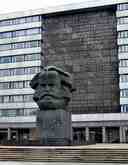
Look straight ahead for an absolutely enormous bronze head sitting on a dark granite pedestal-if you can spot the biggest noggin around, you’ve found the Karl Marx Monument! Welcome to the mighty “Nischel,” as locals call it-which, in fun Saxon slang, just means “the head”! This monument isn’t just a head-turner; it’s actually the second-largest portrait bust in the entire world, only topped by a Lenin head somewhere out in Siberia. Now, imagine you’re standing here back in 1971-there’s a crowd of a quarter million people, the air buzzing with excitement and hopeful chatter, and you can hear the faint echo of voices bouncing off the stone buildings all around. Why such a big head, you ask? Well, after World War II, Chemnitz was renamed Karl-Marx-Stadt to match the new era under socialism. The city was being rebuilt, and it needed a new face-preferably a very, very big one! Soviet sculptor Lev Kerbel whipped up 17 different designs, everything from full-body statues to what you see here. Believe it or not, they picked the head-only version because, if they’d chosen a full-body statue and put you at eye level, you’d be staring straight at Marx’s shoes. Not very inspiring, right? Shoe business aside, this head was cast in Leningrad, then chopped into 95 pieces, packed up, and shipped over to be welded together right here. That’s some assembly required. Pay close attention to the wall behind Mr. Marx’s imposing beard. You’ll see the mantra “Proletarians of all countries, unite!” from the Communist Manifesto, and it’s written in four different languages: German, English, French, and Russian. This wall itself is a masterpiece, put together by a talented group including the graphic artist Helmut Humann, and covered with over 170 metal plates-hydronalium if you want to impress your friends with metal trivia. All this grandness didn’t come without a bit of drama, of course. The actual welding had to be done by the VEB Germania company because the original Soviet technique just wasn’t up to scratch. If they hadn’t stepped in, Karl’s noggin might have fallen to pieces-now there’s a headache you don’t want! Fast forward to the grand unveiling in 1971: communist leaders, curious onlookers, and even Karl Marx’s great-grandson attended. There were banners, a special postage stamp, and so much excitement you’d think the head was about to wink at everyone. Through all the ups and downs of history, this monument stayed put-even after reunification, when there was a real debate over scrapping it or even shipping it off to Cologne. But Chemnitz has always loved its “Nischel.” In fact, locals couldn’t resist calling the road here “Nischelgasse”-that’s “Head Alley” for you. The Karl Marx Monument has seen its fair share of moments: festival parades, dramatic student art projects (they even had plans to let people walk inside the head!), and even a starring role in a music video. Sometimes it’s the backdrop for protests, other times, it’s the canvas for art and banners with messages about unity and change. Even the famous phrase on the wall has seen modern updates, like banners reading "Chemnitz is neither grey nor brown" as a stand against extremism. So as you stand here, just imagine the stories these stones could tell-all the passionate speeches, the bursts of confetti, the late-night discussions, and the ever-watchful gaze of Karl Marx, quietly observing life in Chemnitz for over 50 years. And don’t forget-this city used to call itself “Stadt mit Köpfchen,” the “City with Brains,” as a little nod to the original big thinker standing right in front of you. Ready for the next stop on our journey through history? Off we go-just try not to let that stern look intimidate you!
Eigene Seite öffnen →Right ahead, you’ll spot an elegant, sand-colored building with grand columns and a rounded façade topped by a striking black dome - that’s the Chemnitz Opera House, sitting…Mehr lesenWeniger anzeigen
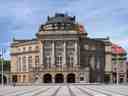
Right ahead, you’ll spot an elegant, sand-colored building with grand columns and a rounded façade topped by a striking black dome - that’s the Chemnitz Opera House, sitting proudly on Theaterplatz. Picture yourself here in 1909, when crowds would have gathered in their finest clothes, gossiping under the glow of gaslights, eager to experience a night at the brand-new Stadttheater, thanks to the design of architect Richard Möbius. Imagine the excitement! This was Chemnitz turning itself into a real cultural hub, squeezed between the grand King Albert Museum and the dignified St. Peter’s Church. But drama wasn’t just on stage: during World War II, the opera house suffered heavy damage and the music nearly fell silent. Yet, from 1947, the city’s residents rolled up their sleeves - including a determined man named Kurt Hemmerling - and set to work rebuilding. By 1951, applause once again filled the hall. From there, legends like Carl Riha took the director’s chair, infusing the place with flair and innovation for decades. The ’60s brought even more magic, with visionary minds like Harry Kupfer and Christine Mielitz pushing the boundaries of what opera could be. The house kept evolving, and from 2006, director Bernhard Helmich dusted off forgotten operatic treasures and placed them back in the limelight. And let’s not forget those jaw-dropping technical feats: a twisting stage, lightning-quick changeovers, and enough space for 714 spectators (plus room for a few in wheelchairs-no concert left behind!). After a bold renovation at the turn of the 1990s by Peter Koch and later Günter Hauptmann’s team, the opera house became one of Europe’s showiest, most modern stages. Next time you see a set spinning wildly, you’ll know: that’s Chemnitz, keeping the curtain lifted on centuries of stories. And don’t worry-no one’s ever been upstaged by a fancy revolving platform… at least, not yet!
Eigene Seite öffnen →
10 weitere Stationen anzeigenWeniger Stationen anzeigenexpand_moreexpand_less
To spot St. Peter’s Church, look for the striking neo-Gothic building ahead with tall spires, a grand pointed tower soaring into the sky, and a large arched entrance framed in…Mehr lesenWeniger anzeigen
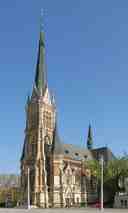
To spot St. Peter’s Church, look for the striking neo-Gothic building ahead with tall spires, a grand pointed tower soaring into the sky, and a large arched entrance framed in sandstone and brick right in front of you. Now, as you stand before St. Peter’s Church, imagine Chemnitz in the late 1800s. This wasn’t always the proud landmark you see now; at first, the local St. Petri community had to split away from another church, and, believe it or not, they were without a home for a whole decade. It took a creative contest-over 50 architects put pen to paper-but Hans Enger from Leipzig drew up the winning vision. Construction kicked off in 1885, right here on land that the city council generously donated. By 1888, the church stood completed, costing a cool 700,000 marks-imagine how many coffee cups that would buy! The result is more than just bricks and mortar; you’re looking at a true masterpiece combining sandstone, brick, and iron, stretching nearly 60 meters long and crowned by a magnificent spire that rises up 82 meters. Picture workmen lifting the golden cross to the very top-82 meters high-with the whole town watching, probably holding their breath and hoping the wind didn’t blow it away. Move closer to the entrance and you’ll spot the splendid main portal, guarded by statues and topped with a mighty relief above the arch, sculpted after designs by Werner Stein from Leipzig. That relief carries a message, “Come to me, all who are weary and burdened,” echoing a sense of welcome through time. On each side, smaller staircase towers cling to the main spire, and if you peek around the sides, you’ll discover polygonal little chapels hugging the altar space-almost like the church is wrapping its arms around its sacred heart. Let’s step, at least in our minds, into the church. Inside, there was room for 1,200 people-imagine the crowds at holidays and the cheerful chaos when everyone showed up in their Sunday best. Light streams through giant mosaic windows, filtered and colorful, making the nave glow gently by day, while in the apse, tall, pointed windows display vivid scenes from Christ’s life-his birth, crucifixion, and resurrection-all painted by master glass artists from Düsseldorf. The altar, pulpit, and baptismal font aren’t just simple furniture: they’re carved from eye-catching French limestone and serpentine, so white you might squint. There’s even more detail: two reliefs showing Isaac’s sacrifice and Christ in Gethsemane; statues of the four Evangelists clustered by the pulpit, plus Luther and Melanchthon keeping a watch from above the organ balcony. The baptismal font? That honor goes to an architect from Chemnitz himself, Theodor Roschig. Speaking of organs, St. Peter’s original pipe organ had nearly 4,000 pipes and came alive with music in 1888, built by Friedrich Ladegast’s celebrated workshop. Over the years, the organ saw not one, but two major overhauls. In the 1970s, the organ nearly vanished for good-at one point it was literally cut off from its power when the church had to close due to structural problems. But, like a phoenix (or perhaps more accurately, like a stubborn old piano), it survived. In 2008, after a spectacular restoration helped along by fundraising efforts-let’s just say, it was a “Queen for Chemnitz”-music rang out again on the church’s 120th birthday. And the bells? Oh, the bells have quite the tale! The first set of bronze bells thundered out B-flat major but lost two members during World War II when they were seized for metal. Only the middle bell stayed behind, its powerful tone carrying a scripture inscription: “Jesus Christ, yesterday and today and the same forever.” Later, after another Chemnitz church was destroyed and couldn’t be rebuilt, St. Peter’s inherited its three steel bells-so in a twist of fate, even its voice bridges the city’s turbulent history. Standing here today at Theaterplatz, you’re at the crossroads of faith, artistry, and history. And if the church’s dramatic journey from idea to icon teaches us anything, it’s that determination (and a good architect!) can truly move mountains-or at least, build spires that reach for the clouds!
Eigene Seite öffnen →Standing here in front of the Chemnitz University of Technology, you’re actually gazing at the heart of a living, ever-transforming campus with roots stretching back to 1836.…Mehr lesenWeniger anzeigen
Standing here in front of the Chemnitz University of Technology, you’re actually gazing at the heart of a living, ever-transforming campus with roots stretching back to 1836. Picture the 19th century: chemists with wild beards, clever mechanics, and students in woolen coats hustling towards what was then a humble “Gewerbschule,” or trades school. Back in those days, science smelled more like machine oil and hot metal tickled your nose than coffee from the student café. The university quickly grew-a magnet for innovation. Soon, it absorbed a Baugewerkenschule (a construction engineering school), a factory design school, and a master craftsmen’s academy. Legend has it, these four schools managed to get along under one very hardworking director… Kind of like a juggling act before PowerPoint existed! By 1878, they united bureaucratically under the impressive name “Kasse der Technischen Staatslehranstalten.” Long, yes, but it must’ve looked great on letterhead. The most eye-catching building before you is the Eduard-Theodor-Böttcher Building. This beauty, with its facade of granite, porphyry, and sandstone, was named after Professor Böttcher, a mechanical genius and the school’s long-serving director. Above the massive doors, stone figures hold the tools of different trades-compasses, gears, books-while medallion portraits depict scientific superstars like Galileo, Leibniz, Humboldt, Berzelius, and James Watt. There are even two statues: one holds a gear and a compass for Technic, and another, with a book raised, stands for Science. It’s basically a game of “guess the subject” brought to life! Inside, under vaulted ceilings and past marble busts, students have scurried between lectures for centuries. There’s also a favorite: the “Altes Heizhaus” or Old Boiler House. In the late 1800s, it heated the building through a network of underground tunnels-some say it was the Hogwarts of Chemnitz. After a major makeover, it’s now a fancy event space. Out front, decorated lions stand guard on the roof, as students joke that the noble beasts are watching for latecomers. The university’s journey through the 20th century reads like a dramatic novel. After World War II, it survived closures, name changes, and-yes-a Communist-era department for Marxist-Leninist studies where ideological training became as important as engineering equations. By 1953, it had evolved into the “Hochschule für Maschinenbau Karl-Marx-Stadt”-focused on engineering, before finally earning full university status in 1986. Science and research have driven impressive leaps here. Whether it’s the FC3 Fuel Cell Conference, major hydrogen innovation projects, or building partnerships across Europe, Chemnitz has always stayed ahead of the curve. The university was even congratulated by Thai Princess Maha Chakri Sirindhorn for its international alliances-definitely not your everyday school dignitary visit! The campus stretches into modern neighborhoods and is full of surprises. The old spinning mill-reborn as the university’s library in 2020-was once fireproofed with iron and stone, housing sixty thousand spindles. Today, you can study among stacks of over a million books, in a space where, once upon a time, the clatter of looms would have been deafening. Despite all its transformations, Chemnitz University of Technology remains a lively spot for more than 8,000 students from all over. There’s even a legendary campus nickname: the “Orangerie” for the bright, cheerful auditorium. The city and university work hand in hand to fight for fairness-winning national awards against violence and prejudice after hard times shook Chemnitz in 2018. So, as you gaze at this grand façade, remember: every roaring lion, historic bust, and echoing corridor holds the stories of curious minds, tireless inventors, and more than a few exams survived on caffeine and courage. And if you’re ever lost, rumor has it, just follow the students-they always seem to know where the best cafeteria deals are! Exploring the realm of the structure, campus or the personalities? Feel free to consult the chat section for additional information.
Eigene Seite öffnen →Right in front of you, you’ll spot a broad, modern street lined with tidy rows of young trees and boxy, pale-grey apartment blocks with balconies, flanked by low-slung shops and…Mehr lesenWeniger anzeigen
Right in front of you, you’ll spot a broad, modern street lined with tidy rows of young trees and boxy, pale-grey apartment blocks with balconies, flanked by low-slung shops and the twin tracks of a tram slicing right through the middle-if you look left and right, it's unmistakably the Road of Nations. Now, imagine you’re standing in a place that’s been at the heart of Chemnitz’s transformation-a street that’s seen it all, from the ashes of World War II right through to the bustling life of the modern city. This is no ordinary road! The Road of Nations, or Straße der Nationen, stretches like the spine of the city, connecting the historic Neumarkt to the Emilienstraße, weaving together stories of survival, revolution, and a bit of architectural ambition. Picture it: After the Second World War, Chemnitz’s old center was almost entirely flattened by bombing. Locals fiercely debated how to rebuild. Should the new city rise on the old crisscross of medieval streets, or start fresh, with bold new avenues forming a giant cross at the center? The so-called Ring-Fighters wanted to bring back the historic ring road, but the “Crusaders” (now, they didn’t wear real armor or anything) demanded two wide, straight avenues to give Chemnitz a brand new heart. When the city got its new name-Karl-Marx-Stadt-and became a “Socialist Model City,” you can almost hear the architects sharpening their pencils! Out went the intricate old street plan, in came the sprawling, symmetrical designs of socialist modernity. The 1960s plan officially paved the way for the new center you’re walking through today-with the crossroads of the Road of Nations and Karl-Marx-Allee set as the pulsating nucleus. But the Road of Nations wasn’t just about showing off political ideals. Unlike Karl-Marx-Allee, which paraded power and pageantry, this street was designed to be alive with shops, apartments, and, crucially, real people. It even took inspiration from the Lijnbaan in Rotterdam-the very first pedestrian zone in Europe! Can you imagine that sense of futuristic hope, with city planners dreaming up a street buzzing with shoppers, workers, and laughter? Stretching from the Neumarkt past the Red Tower, the old Post Office, and all the way to the buzz of Theaterplatz, this road flourished as Chemnitz’s commercial lifeline. Over time, the mix of homes and businesses, plus its legendary tramway, made the street a true center of daily life. Though today it’s quieter than in its heyday, you can still sense that legacy in the careful mix of concrete, commerce, and humanity all around you. So next time you grab a coffee or hop on a tram here, give a nod to those dreamers-Crusaders, architects, and all-who dared to draw a new Chemnitz from the ruins… and maybe were just a little too obsessed with straight lines!
Eigene Seite öffnen →Look for a striking, curved building with long ribbons of windows and an Art Deco vibe-just ahead on the corner where the glass and stone wrap around the block. Welcome to the…Mehr lesenWeniger anzeigen
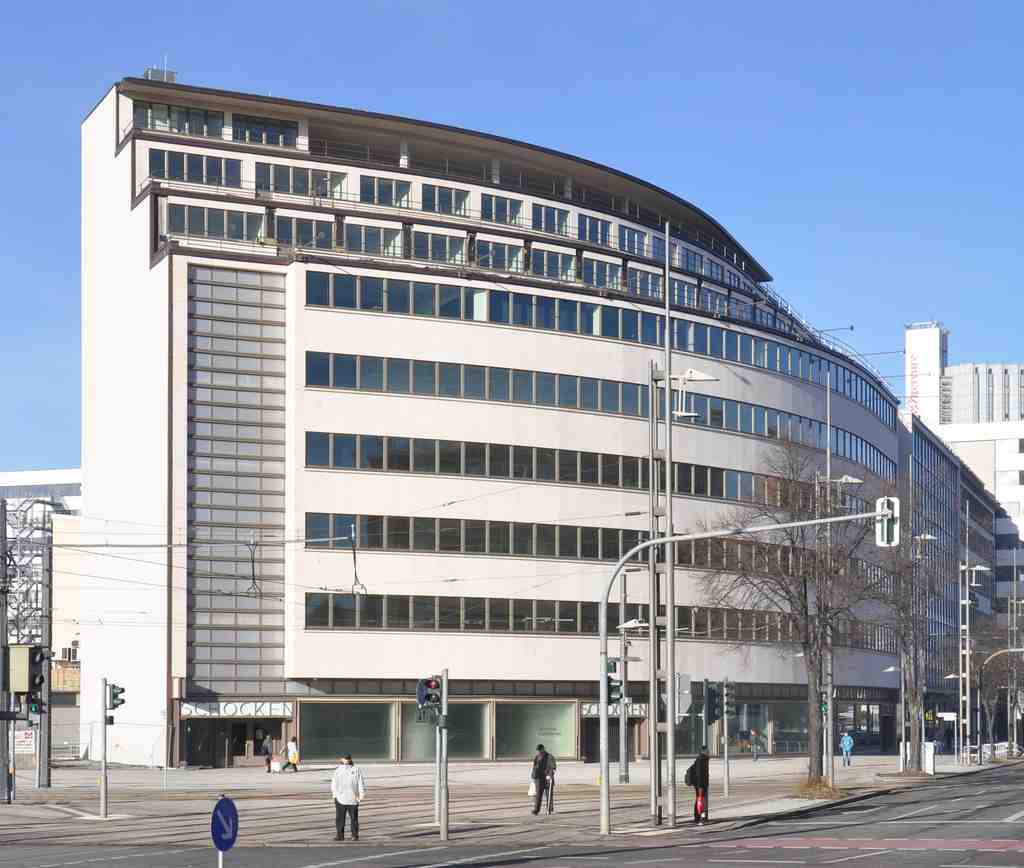
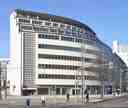
Look for a striking, curved building with long ribbons of windows and an Art Deco vibe-just ahead on the corner where the glass and stone wrap around the block. Welcome to the State Museum of Archaeology Chemnitz, or smac! Right now, you’re standing in front of a building with more past lives than a cat on a trampoline. Imagine it’s 1930: this spot bursts with shoppers, the air thick with excitement and the latest 1920s fashion. This elegant structure, designed by the famous architect Erich Mendelsohn for the Schocken brothers’ department store, drew folks from far and wide. They flocked to its curved façade, the glass shimmering, fancy goods tempting through enormous display windows. If you listen close, you might just hear the echoes of bustling feet and clattering streetcars outside--as people crossed the busy intersection, bags brimming with dreams. But beneath this sleek exterior lies a story of grit, courage, and transformation. After a glamorous beginning, fate turned dark in the 1930s. Suddenly, the bustling store was blacklisted by the authorities, the Schocken family forced to leave everything behind and escape persecution. The once-proud building endured war, new owners, and decades of reinvention-becoming, at one point, everything from an office for pension funds to a state-run department store. Then, after years of standing empty, the old store finally found its purpose once more-a house for Sachsen’s deep, layered story. Now, inside these walls, you’re not just looking at 20th-century architecture. You’re stepping through a time machine! Imagine: 300,000 years of Saxony’s human history, spread across three dramatic exhibition levels. On the first floor, you’ll meet the first hunters gathering by ancient rivers-see stone tools older than your great-great-great-grandparents (and let’s face it, probably sharper than your kitchen knives!). The oldest finds, like the Markkleeberg tools and a delicate slate tablet from Groitzsch featuring wild horses, invite you into a world where survival wasn’t just an option-it was a talent. There’s even a “Glass Neanderthal” who, I promise, won’t judge your modern haircut. Venture up, and the next layer immerses you in the land of early farmers and extraordinary inventions. Picture the clacking sound as bowsaws cut into one of Europe’s oldest wooden constructions-yes, a 7,000-year-old well made of timber from Zwenkau! Peer at pottery set with birch bark and pitch, probably tougher and more stylish than anything from today’s homeware stores. And don’t miss the ancient clay figures-a male idol from Zschernitz standing next to the Venus of Zauschwitz, one bearded, the other mysterious, both giving you their best “statue face.” Mirrors transform your image, so you can see yourself as a real Iron Age or Roman-era Saxon-hopefully without the ancient laundry smell. The third floor bursts into the noise and color of medieval lives. Along one wall, 1,200 everyday objects rescued from city excavations whisper tales of forgotten families, trades, and hidden dreams. And just when you think you’ve seen it all, the drama of Saxony’s mining heritage roars to life-pickaxes, lamps, and a treasure trove of old documents blend the clang of metal with the rustle of parchment. This floor even houses a treasure chamber for written heritage-documents usually locked away, brought into the light just for you. One thing that unites it all is a floating, ever-changing landscape model of Saxony in the heart of the museum. Lights flicker, revealing how villages, cities, and mountains changed with time-like a cinematic map come alive. If you’ve ever wanted to play “Godzilla, but for good,” this is your chance! So, whether you’re following the trails of early hunters, listening for department store gossip, or pondering life in medieval Chemnitz, remember: this building, like the stories inside, has always adapted, survived, and inspired. And who knows? Maybe, in another hundred years, someone will tell a tale about your visit here! Intrigued by the permanent, exhibitions or the awards? Explore further by joining me in the chat section below.
Eigene Seite öffnen →You’re now standing in front of one of Chemnitz’s most astonishing secrets-a forest frozen in stone, with roots tangled not just in the earth, but deep in time. Welcome to the…Mehr lesenWeniger anzeigen
You’re now standing in front of one of Chemnitz’s most astonishing secrets-a forest frozen in stone, with roots tangled not just in the earth, but deep in time. Welcome to the Petrified Forest of Chemnitz, a gateway to a world more than 291 million years old! Let’s imagine, for a moment, the roar of a monstrous volcano, Zeisigwald, erupting with such fury that it turned an entire, lush green woodland into a natural time capsule. That’s right-one powerful eruption buried trees, ferns, and even horsetails in volcanic ash and rocks. Over countless millennia, the silica in that ash seeped inside, slowly turning plants and trunks into stone. This miracle of nature makes Chemnitz home to one of Europe’s greatest fossil treasures. You know you’re in a special place when even the local mayor in the 1500s became obsessed! Georgius Agricola, a wise scholar and mayor, marveled at the discovery of ancient tree trunks turned to stone beneath the city’s streets. Picture the scene-back in those days, these tree fossils were used as, of all things, building materials! Makes you wonder what their property brochures must have looked like: “Now featuring petrified living room beams, guaranteed not to rot!” Fast-forward a couple of centuries, and now you’ve got jewel inspectors in powdered wigs scouring the countryside for hidden treasures. In 1740, Inspector David Frenzel stumbled across these petrified giants and, like any good scientist, began arguing whether these ancient stumps were oaks, beeches, or perhaps just giant toothpicks. Soon, the city couldn’t keep up with all the amazing finds, and one particularly grand trunk-imagine a 3.7-meter tall “log”-needed 28 horses to drag it out of the ground in 1752. That’s some serious horsepower! This celebrity tree even graced the royal displays at Dresden for nearly a century, becoming a symbol for the city’s fascination with prehistoric life. And while it met an unfortunate end in revolutions and a big fire, its legacy is still alive today. But this forest isn’t made up of your ordinary trees. We’re talking prehistoric giants-tree ferns called Psaronia, spiky clubmosses, seed ferns, massive horsetails-some so bizarre that even scientists are still scratching their heads. In fact, one fossilized horsetail found here was so unique, it was named Fossil of the Year in 2010-kind of like winning an Oscar, but for staying very, very still for almost 300 million years. It’s not just towering trunks, either. They’ve found petrified roots, ancient leaves, and even the bones of creatures roaming these ancient woods: giant millipedes as long as a child’s bicycle, odd reptile-like climbers, and wriggling early amphibians that looked like something out of a cartoon. Imagine the city workers’ surprise when, instead of pipes, they hit a fossilized forest under their feet during railway construction or new housing projects! The best of these finds call the Museum of Natural History home, but here by the Petrified Forest monument, you get a real sense of Chemnitz’s crazy prehistoric surprise-our stony trees are even on the museum’s logo! The forest is still making headlines, too: new discoveries from recent digs have changed what we know about life and extinction millions of years ago. So, when you look at these silent guardians, imagine the cataclysm that turned an ancient forest into a fossil wonderland, preserved through fire, ash, and chance. Who knew geology could rock this hard?
Eigene Seite öffnen →Right in front of you, the Stadthalle Chemnitz is hard to miss with its bold, blocky modernist design, a unique honeycomb-patterned façade atop rose-hued stone, and the towering…Mehr lesenWeniger anzeigen
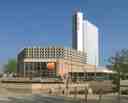
Right in front of you, the Stadthalle Chemnitz is hard to miss with its bold, blocky modernist design, a unique honeycomb-patterned façade atop rose-hued stone, and the towering white hotel rising behind-just follow the shimmering glass and sharp geometry ahead. Imagine it’s 1974: bell-bottoms are fashionable, disco is taking over, and right here, in the heart of what was then Karl-Marx-Stadt, the brand-new Stadthalle buzzes with anticipation. Built between 1969 and 1974 as a miracle of modern functionality, this enormous multipurpose hall was conceived as the city’s beating cultural heart-a place where everyone, from grandmothers in pearls to cheeky rockers in leather, could lose themselves in music, dance, and spectacle. If these bold Rochlitz porphyry walls (all 4,000 square meters of them!) could talk, they’d have enough stories to fill a soap opera. Since its grand opening, Stadthalle has seen nearly sixteen million visitors sweep through its doors-an ocean of applause for classical concerts, raucous rock gigs, glamorous balls, glittering galas, TV extravaganzas, and brainstorm-fueled congresses. That’s a lot of lost umbrellas and unforgettable nights! Even now, it’s run by C3 Chemnitzer Veranstaltungszentren, which, thanks to a twist in the plot, also manages the romantic Wasserschloss Klaffenbach venue since 2006-a story for another day! Inside, you’ve got choices: the Grand Hall seats 1,828, ready for thunderous standing ovations, and the more intimate Small Hall with 560 seats, perfect for those who like to be close enough to count the orchestra’s bow ties. But it’s not just what goes on inside-the building itself is a living artwork! Legendary architect Rudolf Weißer and his creative crew gave Chemnitz a new urban landmark, with an iconic triangle-patterned roof and the kind of raw concrete finish that makes architecture students drool. The dramatic look carries into the interior, and in the big foyer’s flood of light you’ll spot Fritz Cremer’s thought-provoking sculpture celebrating Galileo, as well as a kaleidoscope of color in Horst Zickelbein's wild scientific mural. Don’t miss the musical magic in the foyer’s reliefs by Christa Sammler, or wander outside to discover sculptures hidden in the Stadthallenpark. Oh, and here’s a musical secret: the Stadthalle houses one of Europe’s largest pipe organs in a non-religious building-67 registers and a whopping 5,536 pipes! Every year, crowds gather here for epic symphony concerts and the annual organ shows; I hear even Santa is a fan. So linger a little, soak up the energy, and listen, if the wind’s right, you might just hear the after-echo of a thousand standing ovations.
Eigene Seite öffnen →You’re looking for a tall, pointed tower with a cross and gold ball at the very top, long stained glass windows below, and a striking roof that almost looks like it’s wearing a…Mehr lesenWeniger anzeigen
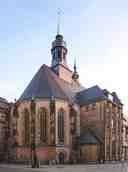
You’re looking for a tall, pointed tower with a cross and gold ball at the very top, long stained glass windows below, and a striking roof that almost looks like it’s wearing a wizard’s hat-spot it rising proudly just ahead on your left. Welcome to St. Jakobi Church, one of the oldest standing churches in Chemnitz and a master storyteller in stone. Imagine, over 800 years ago, this spot was home to a snug little Romanesque church-but don’t picture anything too fancy, more of a sturdy rectangle with a square choir and a chunky western tower. When archaeologists dug here in the 1950s, they unearthed these ancient foundations, finding stones and fragments like a puzzle from the 12th century-though no time machine was discovered, unfortunately. Fast forward to the 1200s, the church did what every growing city dreams of-it upgraded to early Gothic! The choir was expanded, complete with buttresses that make it look like it’s bracing for a giant dance competition. By the 1350s, after a city fire gave architects a rather loud nudge, the church was reborn as a mighty hall church-imagine five bays, three naves, and a whole lot of pointed arch drama. Here’s a twist: After demolishing the old west tower, they moved the bells to a conveniently unoccupied stone tower nearby, cleverly dubbed the “Hoher Turm”-or, as the locals might call it, “the spare bell tower.” That’s still the one ringing out today. By the early 1400s, St. Jakobi really started to show off. They replaced their choir for something grander, wrapping colonnades around nine sides of a 16-sided polygon, as if the building was spinning in a Gothic waltz. Inside, you'll find a dazzling network vault in the main choir-think of it as architectural lacework, inspired by grand designs in Bohemia and beyond. Outside, take a close look at those buttresses with rich ornamentation, all topped by a gleaming slate roof with intricate details. This church has more plot twists than a soap opera. The Reformation swept through in 1539, and the church’s interior had to keep up with new Lutheran styles-bye-bye to the many side altars, and hello to a shiny new pulpit and wooden galleries. But Chemnitz had another surprise in store: in 1617, a fierce fire raced through town, consuming the church’s roof and even sending parts of the bell tower crashing down! The interior mostly survived, but the choir filled up with private prayer cubicles like spiritual phone booths. Over centuries, artists and donors have “tweaked” the inside-empowerments, altars, and at one point, a gigantic late-Gothic altar that later went missing except for a few precious remains. The 1800s saw a wave of Gothic nostalgia sweep through, so St. Jakobi got a dramatic new façade, complete with four apostles on buttress duty and a flood of decorative stonework-although local critics weren’t always thrilled by the elaborate makeover. By 1912, the church was ready for its next bold look. Four new statues appeared above the main entrance, symbolizing the motto “Pray and Work”-one scholar, one worker, one mother, and one merchant. And, in classic church humor, the apostles were relocated to the back. They even added portraits of Luther and local scenes to keep things modern. Nothing, however, could prepare St. Jakobi for 1945. The city center was devastated by bombing raids. Here, the church’s timber roof burned thoroughly, its interior gutted, and the iconic tower collapsed into the ruins of the old town hall. Yet, the resilient people of Chemnitz cobbled together emergency roofs and gradually, stone by stone, brought back their church. By the late 20th century, the congregation debated-should they keep the flat emergency ceiling, or recreate the original, majestic vaults? In the end, they rebuilt the ribbed Gothic ceiling with modern techniques, echoing the spirit of the original builders. Inside today, St. Jakobi is crowned by a splendid late Gothic altar, pieced together from rescued fragments and lovingly restored. The pulpit and baptismal font both found their way here via other churches-so you might say, even the furniture could tell stories of travel and adventure! Its bells still ring out-one of them even survived World War II, making it a real local celebrity. And now, this wonderful old church is open every day-not just for worship, but for concerts, art exhibitions, and curious wanderers just like you. So, as you stand here, take in all those layers: the ancient stones beneath you, the soaring choir above, the echoes of devotion, disaster, and renewal. St. Jakobi is not just a church; it’s a survivor with a well-earned sense of dramatic flair (and, perhaps, a habit of always coming back for a reunion special).
Eigene Seite öffnen →Directly ahead, you’ll spot a grand reddish-brick building with soaring arched windows, crowned by a central glass clerestory and a dome, standing tall right where the cobblestone…Mehr lesenWeniger anzeigen
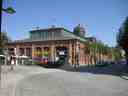
Directly ahead, you’ll spot a grand reddish-brick building with soaring arched windows, crowned by a central glass clerestory and a dome, standing tall right where the cobblestone street bends. Imagine Chemnitz in December 1891, a city buzzing with excitement as the “Belly of Chemnitz”-that’s what locals lovingly call this market hall-opens its doors for the very first time. Built in record time-just 18 months-on a plot once home to the old city wall, this market hall was a wonder of modern construction with its steel skeleton, glossy black sheet metal roof, and a splash of Neo-Romanesque, Neo-Renaissance, and even a touch of Neo-Baroque flair. Picture entering through one of those four mighty gateways, stepping into a cavernous hall where the smell of fresh bread, cheese, and flowers swirls overhead and every direction is alive with chatter from 358 market stalls, carefully organized with wide lanes so everyone-shoppers, grandmas, even the odd horse cart-could find their way. Under those arched windows, merchants hauled their goods to and from the vast cellars below, connected by broad stairs and old-school lifts-one even hydraulic! Down there, behind rows of wooden partitions, the city’s produce and goods waited in chilled semidarkness for the morning rush. But the good times weren’t to last forever-after surviving world wars and years as a warehouse during the GDR, this old hall was left almost forgotten and crumbling until a heroic restoration in the mid-90s brought it rumbling back to life. For a while, people packed in for food and culture-but oh, fickle fortune! It closed again in 2007, only to rise once more in 2011, this time filled with new shops, a clinic, a bike store, restaurants, and comedy shows upstairs. Even now, perched next to granite-bedecked Seeberplatz and the historic Bierbrücke, the Market Hall stands as a cheerful survivor-a place made for market hustle, laughter, and the ever-changing spirit of Chemnitz. So, take a deep breath of history, and-why not-imagine what delicious mischief you might have gotten up to, trading secrets with the local cheese vendor a century ago!
Eigene Seite öffnen →



Häufig gestellte Fragen
Wie starte ich die Tour?
Laden Sie nach dem Kauf die AudaTours-App herunter und geben Sie Ihren Einlösecode ein. Die Tour ist sofort startbereit – tippen Sie einfach auf „Play“ und folgen Sie der GPS-geführten Route.
Benötige ich während der Tour Internet?
Nein! Laden Sie die Tour vor dem Start herunter und genießen Sie sie vollständig offline. Nur die Chat-Funktion benötigt Internet. Wir empfehlen den Download über WLAN, um mobiles Datenvolumen zu sparen.
Handelt es sich um eine geführte Gruppentour?
Nein – dies ist ein selbstgeführter Audioguide. Sie erkunden unabhängig in Ihrem eigenen Tempo, wobei die Audioerzählung über Ihr Telefon abgespielt wird. Kein Reiseleiter, keine Gruppe, kein Zeitplan.
Wie lange dauert die Tour?
Die meisten Touren dauern 60–90 Minuten, aber Sie kontrollieren das Tempo vollständig. Pausieren Sie, überspringen Sie Stopps oder machen Sie Pausen, wann immer Sie wollen.
Was, wenn ich die Tour heute nicht beenden kann?
Kein Problem! Touren haben lebenslangen Zugriff. Pausieren Sie und setzen Sie sie fort, wann immer Sie möchten – morgen, nächste Woche oder nächstes Jahr. Ihr Fortschritt wird gespeichert.
Welche Sprachen sind verfügbar?
Alle Touren sind in über 50 Sprachen verfügbar. Wählen Sie Ihre bevorzugte Sprache beim Einlösen Ihres Codes. Hinweis: Die Sprache kann nach der Tour-Generierung nicht mehr geändert werden.
Wo greife ich nach dem Kauf auf die Tour zu?
Laden Sie die kostenlose AudaTours-App aus dem App Store oder von Google Play herunter. Geben Sie Ihren Einlösecode (per E-Mail gesendet) ein, und die Tour erscheint in Ihrer Bibliothek, bereit zum Download und Start.
Wenn Ihnen die Tour nicht gefällt, erstatten wir Ihnen den Kaufpreis. Kontaktieren Sie uns unter [email protected]
Sicher bezahlen mit 


