
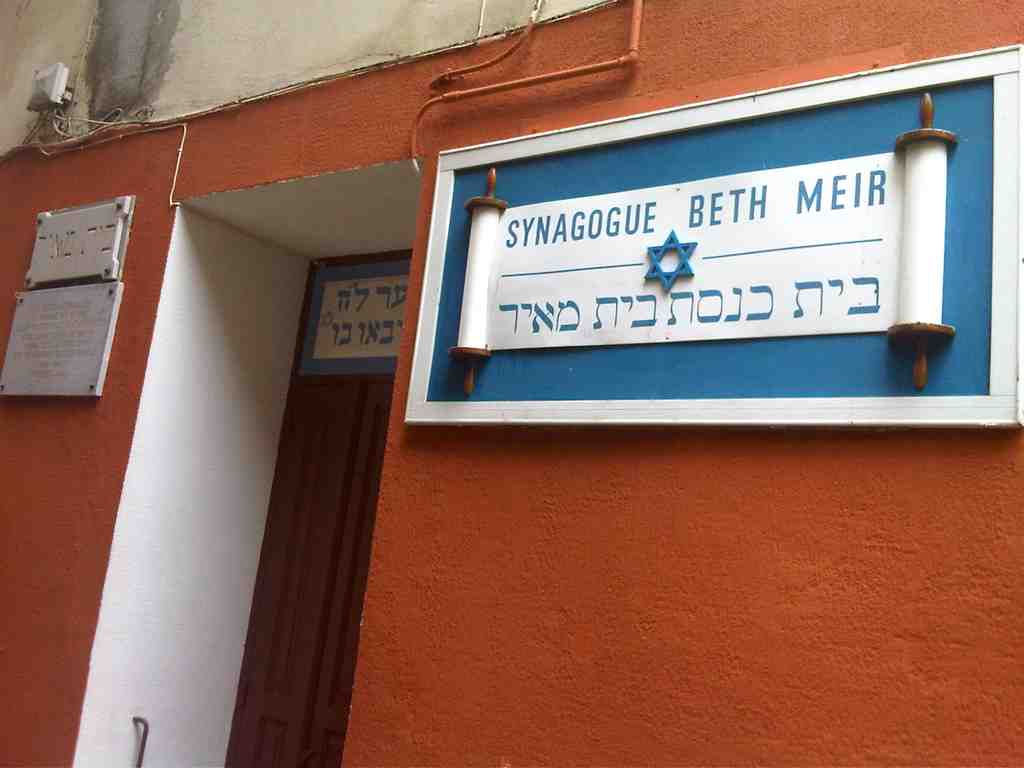
On your right, look for a modest pale-stone ground-floor façade with a simple rectangular entrance, its restrained historic frontage marked as the synagogue of Beth Meir.
Its discretion is part of its meaning. This synagogue does not announce itself with grandeur; it keeps faith in the intimate scale of the old town. Beth Meir, founded in nineteen thirty-four at number three rue du Castagno, grew from exile, survival, and a very stubborn choice to remain.
The story begins far from Bastia. During the First World War, Jewish families of Algerian and Moroccan origin were living in Tiberias and Aleppo, then part of the Ottoman Empire. Some held French citizenship through colonial-era legal arrangements, and when they refused to serve alongside the Germans, the Ottoman authorities expelled them in the summer of nineteen fifteen. They left through Beirut and Jaffa on two American ships, endured a rejected stop in Crete, and finally reached Ajaccio on French vessels on the fourteenth of December, nineteen fifteen. There were seven hundred and forty-four refugees, including about two hundred children.
Ajaccio received them with remarkable solidarity. The prefect, Monsieur Henry, the mayor, Monsieur Pugliesi-Conti, and the Alliance Israélite Universelle organised shelter in the former Catholic seminary. Children went to school. Rabbi Jacob Aknine of Tiberias led worship. Yet tensions grew inside the refugee group, and in February nineteen sixteen about one hundred and eighty Moroccan Jews moved here to Bastia, settling in the new port docks and in the citadel.
Here, they met another community already in place: the Turchinos, around one hundred and fifty Jews who had fled Constantinople in the eighteen nineties and chosen Bastia, the island’s great commercial port. Together they built firmer foundations. They formed the Jewish religious association of Bastia, named Salomon Bensamoun chief rabbi, and improvised a larger synagogue in a room at the docks. The nearby community of Livorno sent a Sefer Torah, a handwritten scroll of the first five books of the Bible, the heart of synagogue worship.
Many refugees sailed back toward Palestine on the fourth of August, nineteen twenty, but not all. Some families stayed in Corsica. Others returned later, having found hardship and violence there. Then came Rav Meir Toledano. His younger brother had briefly taken refuge here and spoke so warmly of Bastia that Toledano arrived in nineteen twenty-four with his wife and children and gave this synagogue its decisive impulse. He named it Beth Knesset Beth Meir, honouring Rabbi Meir, one of the great sages of the Mishnah, the foundational written collection of Jewish oral teaching.
Behind this modest frontage lies an apartment adapted for prayer. It was never designed as a synagogue, yet its Pisan-style rooms offered a striking sacred space, especially the double barrel-vaulted ceilings painted by Guy-Paul Chauder. The main prayer room opens onto a women’s room and a beth midrash, a house of study, with a welcoming hall and kitchen completing the whole.
During the Second World War, even under Italian and German occupation, no French Jew in Corsica was deported to the Nazi extermination camps. Men from Bastia were interned at Asco, and families in southern Corsica endured restrictions, but Prefect Paul Balley helped protect the community. That memory still shapes the island’s reputation as an island of the righteous.
Beth Meir remains quiet for much of the year, yet it endures as a precious sign of belonging in Bastia’s historic heart.
When you are ready, continue on toward Saint-Charles-Borromée, carrying this small, steadfast story with you.




