
Dann kam der Krieg. Am neunten September neunzehnhundertdreiundvierzig besetzten die Widerstandsführer Raoul Begnini und Etienne Léo Micheli das Rathaus. Deutsche Truppen eroberten es später am selben Tag zurück, aber Bastia wurde am vierten Oktober befreit.
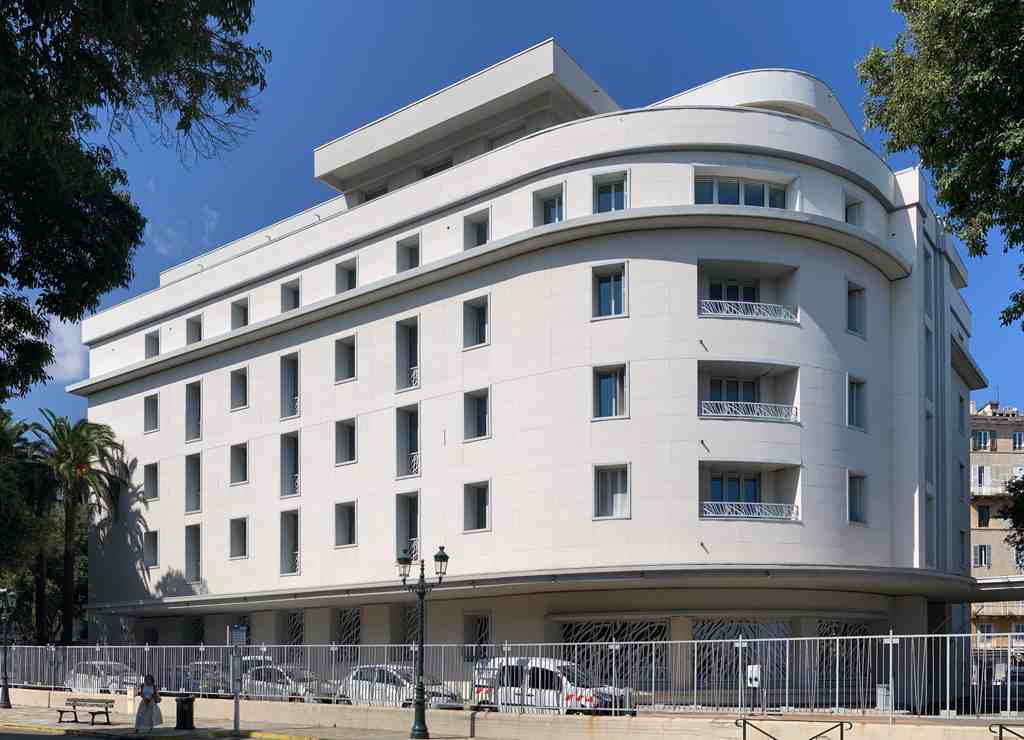
Das Gebäude vor Ihnen gehört zum nächsten Kapitel. Gaston Castel entwarf es als Hôtel Impérial mit weißen Betonpaneelen und der markanten geschwungenen Fassade; es steht auf dem Gelände des Hôtel Cyrnos, einem Jugendstilhotel, das neunzehnhundertelff fertiggestellt und bei amerikanischen Bombenangriffen im Oktober neunzehnhundertdreiundvierzig zerstört wurde. Der Staat nutzte dieses Gebäude als Unterpräfektur und dann als Präfektur, bevor der Rat es neunzehnhundertzweiundachtzig übernahm. Das Außenfoto auf Ihrem Bildschirm fängt diese selbstbewusste Kurve wunderbar ein.
Then came war. On the ninth of September, nineteen forty-three, resistance leaders Raoul Begnini and Etienne Léo Micheli seized that town hall. German troops retook it later the same day, but Bastia gained liberation on the fourth of October.
The building before you belongs to the next chapter. Gaston Castel designed it as the Hôtel Impérial, with white concrete panels and that bold curved frontage; it stands on the site of the Hôtel Cyrnos, an Art Nouveau hotel completed in nineteen eleven and destroyed in American bombing in October nineteen forty-three. The state used this building as the sub-prefecture and then the prefecture before the council took it over in nineteen eighty-two. The exterior photo on your screen neatly catches that confident curve.
The offices generally open on weekdays from eight to noon and from half past one to five. Bastia’s city hall tells a quiet story of reinvention, with authority always finding a new shape. When you are ready, continue toward Place Saint-Nicolas and let the square broaden the tale.




