
Tartu Audio-Tour: Echos von Gelehrten, Heiligen und Kellern
Unter Tartus ruhigem Charme verbirgt sich eine Stadt, die von verschwundenen Königreichen, revolutionärem Theater und rebellischen Schriftstellern geprägt ist, deren Worte eine Nation formten. Diese selbstgeführte Audio-Tour lädt Sie ein in die geheimen Geschichten und dramatischen Momente, die sich durch die gepflasterten Straßen ziehen – und enthüllt die kühnen Charaktere und wilden Ereignisse, an denen andere Reisende einfach vorbeigehen. Welches verzweifelte Wagnis gingen Tartus Herrscher ein, als feindliche Armeen an Dorpats Toren donnerten? Warum suchten Flammen immer wieder Vanemuines Bühnen heim – und welches gespenstische Lachen hallt noch immer hinter der Bühne wider? Und welche verbotene Geschichte, versteckt im Estnischen Literaturmuseum, brachte die Stadt einst zum Flüstern? Schreiten Sie durch politische Intrigen und ungelöste Geheimnisse und spüren Sie jedes Echo von Rebellenrufen bis zu triumphalen Vorhangrufen. Jeder Halt enthüllt Schichten von Skandal, Mut und kreativem Feuer und lässt Sie vertraute Wahrzeichen in neuem Glanz erstrahlen. Bereit, den Samtvorhang zurückzuziehen und Tartus verworrenen Geschichten die Hauptrolle zu überlassen? Beginnen Sie Ihre Reise jetzt.
Tourvorschau
Über diese Tour
- scheduleDauer 40–60 minsEigenes Tempo
- straighten4.0 km FußwegDem geführten Pfad folgen
- location_on
- wifi_offFunktioniert offlineEinmal herunterladen, überall nutzen
- all_inclusiveLebenslanger ZugriffJederzeit wiederholen, für immer
- location_onStartet bei Woiwodschaft Dorpat
Stopps auf dieser Tour
Created by good old King Zygmunt III Waza (whose beard was almost as impressive as his territory), the Dorpat Voivodeship was carved from the Dorpat Presidency after the truce of…Mehr lesenWeniger anzeigen
Created by good old King Zygmunt III Waza (whose beard was almost as impressive as his territory), the Dorpat Voivodeship was carved from the Dorpat Presidency after the truce of Jam Zapolski. Five districts made up this land: Dorpat, Oberpahlen, Lais, Kirrumpah, and Neuhausen - try saying those five times fast! The voivode, or governor, ran things from right here in Dorpat, though the grand political debates took place in the sejmik far away in Wenden. Still, this spot buzzed with decisions and drama. You could say politics here was livelier than a Tartu student bar on karaoke night. But not everything was peaceful. In the 1620s, Sweden swept in and conquered the area in the middle of one of Europe’s endless wars. Imagine the distant rumble of hooves and the anxious shouts as the town capitulated to Swedish forces. The official voivodeship dissolved years later, turning into Swedish Livonia. Still, folks kept up the tradition of appointing “fictitious” voivodes for a long time - because who doesn’t love a fancy, pointless title? The line of voivodes and castellans reads like a who’s who of regional bigwigs, from Jan Abramowicz and Gerard Denhoff, all the way to the Leszczyński family. Some had only months in power - a bit like trying to keep Wi-Fi working in a medieval fortress. So, as you stand here, let yourself feel the energy, rivalry, and high drama that once filled these cobblestone streets. Ready to step into Tartu’s next juicy story? Let’s go!
Eigene Seite öffnen →To spot the Estonian Literary Museum, look across the street for a large, elegant pink building with tall chimneys and white window trim, sitting proudly behind the leafy shadows…Mehr lesenWeniger anzeigen
To spot the Estonian Literary Museum, look across the street for a large, elegant pink building with tall chimneys and white window trim, sitting proudly behind the leafy shadows of the trees. Welcome to the beating heart of Estonia’s stories-the Estonian Literary Museum! Right now, you’re standing in front of a building that has held more than just books; it’s been a home for folklore, secrets, and the voices of centuries. Can you imagine, more than 100 years ago, a group of passionate Estonians gathered right here, determined to keep their language and legends alive while the world around them changed? You can almost hear the gentle, persistent shuffling of old paper and whispered discussions about the importance of culture and identity. Let’s journey back in time. This building’s journey started in 1909 when the Archival Library opened its doors, with just 10,000 volumes. That number seems huge-until you realize their collection now towers at over 800,000 books and periodicals. If you stacked all those books, you'd need a ladder... actually, you’d need a new building! The walls in front of you keep not only tales written in Estonian, but works in Russian, German, Jewish, and many more voices. And as if that’s not enough, there are pamphlets, maps, and even pamphlets about maps! But wait, there’s more! If you’re hearing a faint rhythmic tap or a trace of music, maybe it’s just your imagination-or maybe it’s the spirit of the Folklore Archives at work. Founded in 1927, this department holds songs and dances, fairy tales from Finno-Ugric peoples, festive customs, secret jokes, and even graffiti! Yes, scholars here once decided to document not only the most dignified traditions, but the scribbles on the schoolyard wall. That’s dedication! They wanted to capture the true story of everyday life. Of course, a country is more than stories or songs alone. Since 1929, the Cultural History Archives have gathered everything from manuscripts fit for a king to crinkled birthday cards, family photos, and scratchy old film reels. University professors, passionate societies, and curious children all donated bits and pieces, mixing noble history with cheerful everyday moments. If these walls could talk, you’d get recitals, ghost stories, debates, and maybe a few dramatic pauses. The true iron core of this museum, though, is its modern heartbeat-its digital databases. Picture this: more than 50 databases quietly humming away while containing everything from runic songs, to 1935’s “1,001 Children’s Games,” to mysterious “Droodles” (which are Estonian doodles, naturally). By 2016, these digital vaults contained a mind-blowing 65 terabytes of data, and they’re pushing toward double that. Imagine all those files dancing invisibly over your head! The most central and curious of all is Kivike, a sort of magical, digital attic where all these treasures come together. Want to find a folk story, a photograph, or a forgotten song? Kivike is the key, and the best part-it’s free to browse if you’re chasing inspiration or just a good story. But life hasn’t always been easy for this grand pink building. During World War II, the whole museum was split in two: imagine people hurrying down these very sidewalks, clutching crates of precious manuscripts under gray skies, unsure if their treasures would ever come home again. After the war, in 1946, the parts were reunited-a bit like the happy ending of a heartfelt novel. Since 1957, the museum has marked every December with lively “Kreutzwald days to remember,” named for Friedrich Reinhold Kreutzwald, an Estonian literary titan. Imagine the echo of laughter, passionate debate, and perhaps a dramatic reading or two, bouncing off the library's old walls. And like all epic stories, the museum’s title and tasks have morphed through thick and thin, surviving Soviet control, finally reclaiming its original name-and its destiny-after Estonia regained independence. Today, under the guidance of Piret Voolaid, its mission is clear: collect, preserve, celebrate, and share the stories of Estonia. Whether you’re hoping to read, dance, sing, or just explore, the Estonian Literary Museum isn’t just a building-it’s living history, still growing with every voice, every laugh, and every secret tucked inside. Now, you can almost hear the next chapter turning, can’t you? Interested in a deeper dive into the structure, databases or the directors? Join me in the chat section for an insightful conversation.
Eigene Seite öffnen →

12 weitere Stationen anzeigenWeniger Stationen anzeigenexpand_moreexpand_less
Look ahead for a striking, modern building with bold black and white maze patterns all over its facade-if your brain suddenly feels like it’s solving a puzzle, you’re in the right…Mehr lesenWeniger anzeigen
Look ahead for a striking, modern building with bold black and white maze patterns all over its facade-if your brain suddenly feels like it’s solving a puzzle, you’re in the right spot! Welcome to the National Archives of Estonia, where the past is stored with more care than a squirrel hiding nuts for winter! Standing in front of this futuristic building, try to imagine: tucked behind those walls are treasures not of gold, but of stories-millions of them, as old as kingdom crowns and as fresh as yesterday’s news. This place, completed in 2017, is colossal; it covers a whopping 13,599 square meters, with six floors stacked like a giant archival sandwich. The archives extend deep inside, running through 26 separate repositories and long corridors that could probably double as a setting for a suspenseful movie-imagine racing through there as the clock ticks down, searching for some forgotten royal birth certificate! But the real magic isn’t just the sheer amount of space. It’s what’s inside. There are about 8.8 million records here, with the oldest dating way back to 1240-if those documents could talk, they’d have gossip from centuries ago on everyone from medieval knights to 18th-century townsfolk. There are also films-nearly ten million metres’ worth, the oldest from 1908, capturing everything from serious parades to people in comically large hats riding impossibly small bicycles. Add to that more than half a million photos, 135,000 maps, 2,200 wax seals, and parchment documents that have survived wars, fires, and, perhaps most terrifyingly, the occasional spilled ink bottle. The purpose of all this? To keep the heartbeat of Estonia alive so anyone-from a professional historian to a curious schoolkid-can dig through stories of family, triumph, and tragedy. Maybe you want to know if your ancestors were mighty nobles or notorious pranksters; you’d come here! In fact, guidance for tracing your family tree is free in the Saaga portal, and you can even request help electronically-no dusty shelves or mysterious mustached archivists blocking your way. But things haven’t always been this high-tech or accessible. During Soviet times, the archives were run from Moscow, with Estonian records managed as city archives. Rewind to 1920, after Estonia declared independence, and you’d find local archivists finally gathering up historical documents, trying to keep them safe and in local hands. Once Estonian independence returned, however, these archives blossomed into a true treasure chest-crowned the National Archives in 1999. With new laws in 2012, Estonia made the bold jump into digital preservation, ensuring that even in the age of cloud computing, memories won’t simply fade away with the next software update. And just think-each time you walk past this building, inside, someone might be discovering an ancestor’s secret, finding proof for an old family legend, or just giggling over a forgotten hairdo in a 1930s photo. So go ahead, take a breath, and listen-the hum of the past is alive in there, and, between you and me, every document is just waiting for its next chapter to unfold. Curious about the organization, collections or the publications? Don't hesitate to reach out in the chat section for additional details.
Eigene Seite öffnen →To spot Tartu Cathedral, just look ahead for a massive red-brick structure with tall, fortress-like ruins, large arched windows, and crumbling walls-it's towering proudly above…Mehr lesenWeniger anzeigen
To spot Tartu Cathedral, just look ahead for a massive red-brick structure with tall, fortress-like ruins, large arched windows, and crumbling walls-it's towering proudly above the path on this hill. Welcome to the legendary Tartu Cathedral! You’re standing right before its mighty face-imagine these bricks whispering to you, because oh, if these walls could talk, they’d have more tales than your favorite history book! This spot has always been a seat of power: long before the cathedral, this hill, Toomemägi, crackled with the energy of ancient Estonian warriors defending their pagan stronghold. Picture the clash of swords, the cries of defenders, and the earth shaking with each battle drum. Then, in 1224, the Christian invaders swept in, changing the course of Tartu’s history forever. No time was wasted-upon this strategic hill, the Christians laid the stone foundations for a mighty bishop’s fortress, and soon after, a grand Gothic cathedral rose up, its towers once so tall that a French traveler swore they matched Notre-Dame in Paris! Can you imagine peering up at spires that soared higher than any building for miles around? Once completed at the end of the 15th century, these fortress-like towers watched over the whole city below, a truly awe-inspiring sight fit for Saints Peter and Paul, the cathedral’s patrons. But here’s a twist worth a gasp: the cathedral didn’t just see prayers and processions. The mid-1500s brought the wild winds of the Reformation-a time when folks got a little too enthusiastic about starting over, let’s say. On one stormy day in January 1525, Protestant iconoclasts tore through these very halls, smashing statues and leaving the cathedral battered. Abandonment followed, and by the time the Livonian War shattered Tartu again, the once-majestic church was left crawling with weeds and echoing with memories, not music. Even after new rulers-Polish, Swedish, and Russian-marched through the city, nobody had the heart (or maybe just the money) to fix this mighty ruin. In the 1620s, if you’d wandered here, you might’ve found the grand nave serving as… a barn! Fancy a bale of hay in the house of God? But Tartu’s people never let the graveyard around the ruins go; burials continued here right up until the 1700s. An afterlife bonus: eternity with a view! But wait, there’s a new chapter, starring, believe it or not, students and scholars. In 1802, Tsar Alexander I founded a university here, and a bold architect had a wild idea-build the university library right inside the cathedral’s skeleton. Study hard, party like a medieval bishop! Between 1804 and 1807, they wedged a three-story library into these old stones. Later sections became a museum packed with university treasures: rare books, quirky scientific instruments, and stories from Tartu’s thinkers. During Estonia’s more recent history, this place has been everything from a church again to university offices-even the art department left its creative mark! And the ruin still stands, its walls patched and protected, with the northern tower for a while recycled as a water tower. A spiritual, cultural, and architectural sponge, Tartu Cathedral has adapted to every new tune played by the city around it. Step out into the parkland, and you’re treading on layers of time. Toomemägi itself has been lovingly sculpted into a park filled with monuments, a shady spot for poets, scientists, and locals alike. Stroll past the monument to Karl Ernst von Baer or the bust of Kristjan Jaak Peterson-here’s where Estonia’s science, poetry, and heart converge in leafy reverence. And if you cross the Angel Bridge, listen for the quiet hum of the present meeting the past. So next time you see ivy trailing down a wall or hear silence in these colossal arches, remember: this is more than an old ruin. Tartu Cathedral is a restless spirit in bricks, always reinventing itself-barn, fortress, library, museum, sanctuary-watching over the city and greeting every new age with arms (well, arches!) wide open. Fascinated by the decline of the cathedral, university or the toomemägi? Let's chat about it
Eigene Seite öffnen →Ahead of you, look for a long flight of wooden steps climbing up a grassy hill surrounded by tall trees-this is Toomemägi, or Toome Hill. Welcome to Toomemägi! If you listen…Mehr lesenWeniger anzeigen
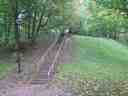
Ahead of you, look for a long flight of wooden steps climbing up a grassy hill surrounded by tall trees-this is Toomemägi, or Toome Hill. Welcome to Toomemägi! If you listen closely, maybe you can hear the whispers of ancient times carried on the wind through these trees. This hill isn’t just a peaceful green spot; it’s where Tartu itself was born. Imagine, back in the 7th century, local folks building wooden walls right where your feet are now standing-always watching, always ready, their eyes sharp for any sign of danger from the valley below. Later on, powerful bishops added their own castle on top, perhaps hoping to sleep better at night, protected by thick stones and loyal guards. Now, Toomemägi is home to stories at every turn-from the silent watch of Tartu Cathedral’s ruins to the quirky Gunpowder Cellar (which sounds like the perfect place for a secret superhero lair, don’t you think?). As you wander, you might spot Devil’s Bridge and Angel’s Bridge-yes, on one hill!-so if you suddenly feel a bit braver or luckier, you’ll know which bridge you just crossed. And high above, old observatories and statues of scholars remind us of all the brilliant minds shaped here. Toomemägi truly is a place where old battles, great discoveries, and a touch of magic still linger in the air.
Eigene Seite öffnen →Up ahead, you’ll spot Hugo Treffner Gymnasium as a grand, pale cream building with tall windows and classic white columns-look just to your left for a stately entrance marked by…Mehr lesenWeniger anzeigen
Up ahead, you’ll spot Hugo Treffner Gymnasium as a grand, pale cream building with tall windows and classic white columns-look just to your left for a stately entrance marked by an arched doorway and a flag fluttering nearby. Now, let me whisk you back in time! Imagine it’s the late 1800s, and the streets around you are alive with the footsteps of students whose dreams are as big as the city itself. Hugo Treffner, a man with a name worthy of a superhero and a mustache to match, founded this very school in 1883. Get this-he wasn’t even Estonian by birth; his family had roots in Austria and once mingled with royalty before fleeing here during the Thirty Years’ War. There must be a hidden royal crown in the attic somewhere, right? Just kidding… or am I? When the school opened its doors, it was unusual for its time. Instead of being just for the privileged, it welcomed everyone-even peasants. Secondary school education for all! No age restrictions. Classrooms quickly filled with students, and sometimes the lessons were taught in German, sometimes in Russian. Don’t worry, I’ll stick to English for you! The building you see now wasn’t the original-back then, classes met in rented rooms that probably had more echoes than students. In 1886, Treffner bought a proper house for his school, and then he kept expanding, like a man determined to beat Tetris with real bricks. The students here weren’t just bookish; many became active in underground nationalistic groups during the Estonian national awakening. Picture midnight meetings and whispered plans. Some went on to form the famous literary group Young Estonia-so it wasn't just science and math, but poetry and revolution echoing through the halls. The early 1900s brought more changes than a teenager’s playlist. The school switched to Russian, survived crop failures that made students drop out, but always bounced back, stronger and busier each year. When Hugo Treffner died in 1912, he left behind a school beloved by students-so treasured that his family and faculty squabbled (politely!) over who’d run it next, passing the leadership around like a hot potato until it finally found stability again. The First World War, war for Estonian independence-this place saw it all. In 1919, after merging with Alexander Gymnasium, the school gained a new library and treasures from its “sibling” school. Over 200 of its own students went off to fight for Estonia’s freedom, and sadly, seven never returned home. There’s a seriousness beneath all the light through these windows. By the roaring twenties, with over a thousand students, Hugo Treffner Gymnasium had become one of Estonia’s most prestigious schools. But thanks to new government rules, the school chose to accept only the best-no more than needed. If you hear an imaginary bell now, that’s history calling! During the Soviet era, the school survived multiple identity changes, even being known as Tartu Secondary School No. 4 for a while. The years that followed saw the blooming of secret clubs, jazz orchestras-yes, jazz!-and all-boy antics, until 1954, when girls (finally!) joined the ranks, bringing grace and twice as many lost mittens in the winter. In the 1960s, the school leaned hard into science-opening special classes in math and physics, building the reputation it holds to this day. Through years of Soviet stagnation and Estonia’s rebirth, Hugo Treffner Gymnasium stood strong, even surviving a fire in 1998 that damaged its southwest wing. In true Treffner fashion, that disaster finally convinced everyone to renovate the building-at a whopping cost, but the result? The gleaming beacon of academic ambition you see today. Oh, and here’s a fun fact to end on: some of Estonia’s brightest minds walked through these doors-writers, politicians, artists, scientists, and a few future prime ministers who probably snuck out during lunch. The school today only accepts students for forms 10 to 12, prepping them for university, with plenty of exchanges and international friendships. Sometimes, students even get to skip the entrance exam if they’ve conquered a national science olympiad. Not a bad trade for a bit of brainpower, eh? Every stone and window here has witnessed the march of history, echoing with the laughter, struggles, and dreams of students determined to change the world. So, linger for a moment-who knows, maybe an idea or two will find you and make you feel like a Treffnerian, even if just for today! Ready to delve deeper into the curriculum, partnerships with schools from abroad or the notable alumni? Join me in the chat section for an enriching discussion.
Eigene Seite öffnen →To spot the Von Bock House, look left along Ülikooli Street for a tall building painted in soft yellow and dark pink, with a giant mural of the Tartu University’s main building…Mehr lesenWeniger anzeigen
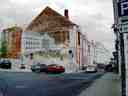
To spot the Von Bock House, look left along Ülikooli Street for a tall building painted in soft yellow and dark pink, with a giant mural of the Tartu University’s main building stretching across its brick side-if you see an old painting come to life on a wall, you’ve found the spot! Now, imagine yourself standing at the heart of Tartu, where the echoes of history meet the vibrant colors of today. The Von Bock House has seen it all! After the devastating Great Fire of Tartu in 1775-when the city, then called Dorpat, must have smelled like a gigantic bonfire-the people needed to rebuild. Out of the ashes rose this very house, crafted by the architect Johann Heinrich Bartholomäus Walther, who must've enjoyed difficult names and dramatic ceilings. Picture the first owner, Christina Wilcke, giving a hopeful look as her new home takes shape, the brick walls slowly replacing the charred remains of what was there before. But soon, Colonel Magnus Johann von Bock took the reins. Don't let the fancy name fool you-his family estate wasn’t even in Tartu, but in Jõgeva County! Still, the Von Bock House quickly became a stage for grand gatherings. Just imagine the laughter and music floating down the hallways, bouncing off extravagant plaster ceilings as guests admired the labyrinth of black and white checkerboard tiles on the staircase, designed to dazzle even the most hard-to-impress visitors. Things took a twist almost as dramatic as a soap opera. The Bock family handed the building over to Tartu University, and suddenly this house was part party palace, part intellectual headquarters! Between 1783 and 1786, dusty bookshelves, high-ceilinged lecture halls, and echoing debate rooms claimed the space. In the floral-papered rooms with sweeping murals, the future leaders and thinkers of Estonia may have drifted from sleepiness to inspiration depending on the length of the lectures-and the severity of the stoves! It didn’t stop there. After Colonel von Bock’s death in 1807, the university made the house its own. Over the years, the Von Bock House has worn many hats-a medical center, a veterinary school, and even the library for the learned society of Estonia. This scholarly group was devoted to lighting a fire (a nice metaphorical one this time) under Estonian culture and education. You could say the walls here learned a thing or two themselves! Fast forward to the 21st century, and Von Bock House was looking a little worse for wear. Thanks to a massive restoration in 2006-2007, led by Merje Müürisepp, its colors were revived in cheerful yellow and bold pink. But the true showstopper is the gigantic mural you see before you, a perfect copy of an 1860 lithograph by Louis Höflinger. Look for the tiny painted figures bustling about and horses trotting by-the past is parading right before your eyes! That’s not paint peeling-it’s history peeking through! Four years after the renovation, cracks appeared in the plaster, as if the building itself wanted to remind everyone it still has plenty of stories to tell. Standing here, you can see the mural and, further down the street, the real university main building, mirroring each other through time. So next time someone asks you about Tartu, you’ll know the punchline: what’s better than a mural of a university? Having the university itself within mural-view distance!
Eigene Seite öffnen →To spot the Heino Eller Tartu Music College, look straight ahead for a striking building where soft yellow curves meet a sharp, modern brick facade with a glass entryway-all…Mehr lesenWeniger anzeigen
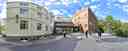
To spot the Heino Eller Tartu Music College, look straight ahead for a striking building where soft yellow curves meet a sharp, modern brick facade with a glass entryway-all nestled beside leafy trees and students wandering by with instrument cases. Now, pause for a moment and imagine you're standing at this very spot in the year 1919. The world is just catching its breath after the chaos of war, and right here, a little miracle is starting: the founding of Tartu’s first true music school. Back then, the halls weren’t humming with jazz jam sessions or the echoes of grand pianos-yet! But very soon, a man named Heino Eller arrived, slinging sheet music and inspiration wherever he went. He wasn’t just a teacher-he was a musical wizard, the kind who could coax melodies out of thin air and, let’s be honest, probably made his piano students sweat a little. Under Eller’s guidance, young dreamers like Eduard Tubin and Olav Roots transformed dusty practice rooms into laboratories of sound, laying the foundation for the famous “Tartu School of Composition.” You might even imagine the music theorists of the day-Karl Leichter and friends-huddled over dense scores, arguing whether a melody should turn left or right at the next bar. As you stand here, listen closely; if you’re lucky, you might catch the ghost of a violin solo wafting from a window, a note of history still lingering in Tartu’s air. And remember: here, every brick and note is part of a story that’s still being played!
Eigene Seite öffnen →Barclay Square will be right ahead of you-just look for an open area surrounded by grand old buildings, and in the heart of the square, you’ll spot a tall monument standing…Mehr lesenWeniger anzeigen
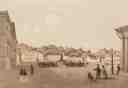
Barclay Square will be right ahead of you-just look for an open area surrounded by grand old buildings, and in the heart of the square, you’ll spot a tall monument standing proudly above everything else. As you stand here, imagine Barclay Square bustling with life, the clip-clop of horses’ hooves echoing across the cobblestones as townsfolk gather beneath the towering statue at the center. This statue honors Michael Andreas Barclay de Tolly, a legendary Russian Imperial officer. Now, Barclay wasn’t your average officer-he was the kind of guy who could march an army through a snowstorm and still have time for a clever strategy or two. During the Napoleonic Wars, he outsmarted the mighty Napoleon himself! You can almost feel the tension of the past right here: officers in sharp uniforms, whispers of secret plans, and the hopeful buzz of victory in the air. The square was once the place to gossip, meet neighbors, and even catch a glimpse of a parade-imagine that, a square where history steps out from behind every tree and monument! So take a big breath, and as the wind rustles the leaves in this park today, picture those old days when great minds gathered here, and legends were born. And hey, if you see a pigeon acting like a general, maybe it’s Barclay checking in on his troops!
Eigene Seite öffnen →If you look ahead, you’ll spot Tartu’s heart: a vibrant old town with red-tiled rooftops lining the winding Emajõgi river, a graceful arched white bridge, and the tall church…Mehr lesenWeniger anzeigen
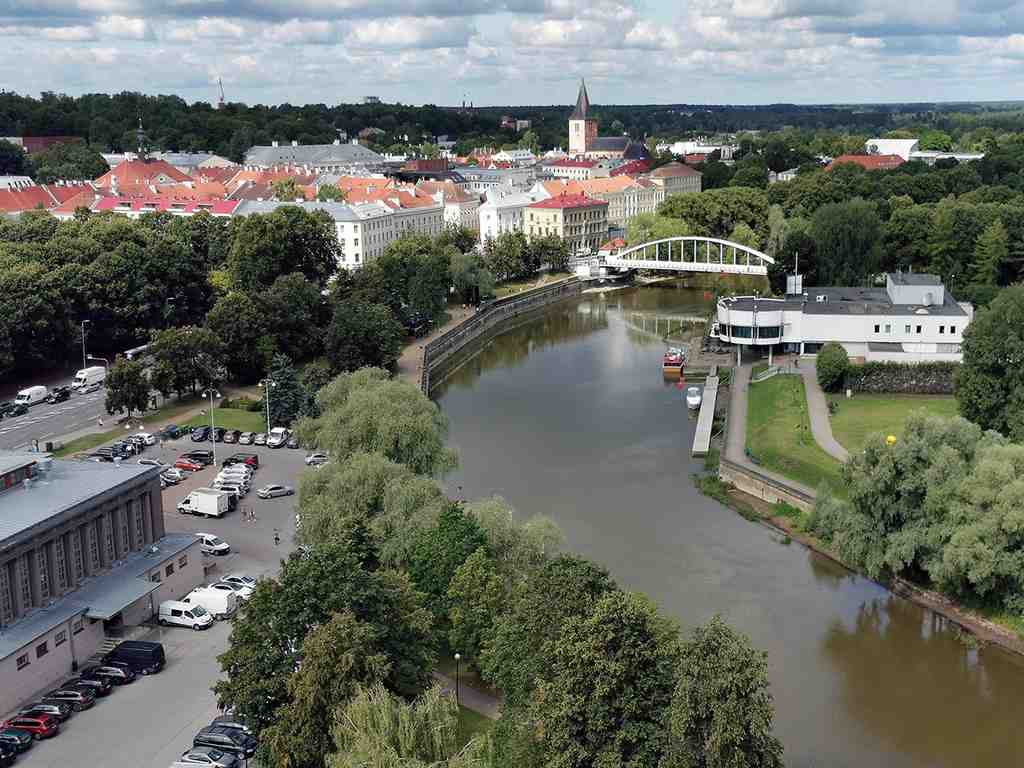
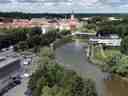
If you look ahead, you’ll spot Tartu’s heart: a vibrant old town with red-tiled rooftops lining the winding Emajõgi river, a graceful arched white bridge, and the tall church spire poking up above the canopy of trees-just follow the river and the hum of city life. Welcome, traveler, to Tartu-Estonia’s “Athens on the Emajõgi”, and the country’s lively, intellectual soul! Picture this: the cobbles under your feet have felt footsteps for over a thousand years, and the breeze over the river carries whispers from Vikings, Teutonic knights, and university students alike. Long before universities and cafés, the story began with a wooden stronghold built by brave locals as early as the 7th century, rising right here on Toome Hill. Imagine muddy boots, tense faces peering over wooden palisades, and traders from distant lands setting up shop by the riverbank! In the year 1030, Grand Prince Yaroslav the Wise (talk about a name to live up to!) invaded, set up a fort, and named this “Yuryev”-but as fate would have it, the Estonian tribes were having none of it. Over the next two centuries, Tartu was burned, rebuilt, raided, and rebuilt again, like a Viking soap opera. Fast-forward to 1224: the fort falls to the Teutonic Knights. Now the place is called Dorpat, and becomes a medieval power player-trading wool, grain, and gossip-with German merchants flocking in. The Hanseatic League badge is pinned to the chest of the city, church bells chime, and somewhere a juggler is probably annoying the bishop. But it wasn’t all peace: in 1262, Prince Dmitri of Pereslavl storms the city, smashes houses, but can’t quite conquer that stubborn bishop’s fortress on Toome Hill. Throughout the Middle Ages, Dorpat bounces from Polish-Lithuanian to Swedish to Russian hands-each era leaving its own mark in stories, language, and (judging from the architecture) a little confusion about color schemes. By 1632, under Swedish rule, a genius idea: let’s build a world-class university! So, Gustavus Adolphus of Sweden signs the paperwork, students queue up, and suddenly Tartu is the brainiest place in the Baltics. You can almost hear the scratch of quills and the mutter of philosophers debating where socks disappear to. The city becomes the birthplace of legendary Estonian Song Festivals, poets, and inventors-some even say the river water here makes you a little more clever. Tartu had rough patches too. In the 18th century, Peter the Great’s armies swept in and the fireworks were less than festive-whole neighborhoods went up in smoke, and later in the Soviet era, tanks replaced buses and secrets lurked in every shadow. But through it all, Tartu’s spirit stayed as resilient as a cat with nine lives. After Estonia regained independence, the city put effort into restoring its fairytale charm. Now you’ll see the quirky Tigutorn tower, bold new museums, bustling nightclubs, and students everywhere-if you toss a rock, chances are you’ll hit either a scientist or someone who’s missed three lectures in a row. Every summer, the Hanseatic Days festival brings jousting knights back to the old squares, handicraft markets, laughter, and music swirling with the scent of pastries. But Tartu isn’t just brains, parties, and history-this is a city of river mists, of green parks in the middle of ancient ruins, of cozy cafés whispering poetry and jokes over steaming mugs, of sports fans and Dota 2 champions. And at its core, it’s a friendly, welcoming place, proud yet humble, playful yet wise-a city that, like a good novel, rewards every wanderer with a new story on every corner. So as you gaze out across the water, the rooftops, and the busy bridges, know that you’re standing in the very heart of Estonian culture, history, and imagination. Tartu doesn’t just tell you history-it invites you to become part of its next chapter. Welcome to Tartu, and may your adventure here be legendary! Intrigued by the names and etymology, geography or the economy? Explore further by joining me in the chat section below.
Eigene Seite öffnen →

Häufig gestellte Fragen
Wie starte ich die Tour?
Laden Sie nach dem Kauf die AudaTours-App herunter und geben Sie Ihren Einlösecode ein. Die Tour ist sofort startbereit – tippen Sie einfach auf „Play“ und folgen Sie der GPS-geführten Route.
Benötige ich während der Tour Internet?
Nein! Laden Sie die Tour vor dem Start herunter und genießen Sie sie vollständig offline. Nur die Chat-Funktion benötigt Internet. Wir empfehlen den Download über WLAN, um mobiles Datenvolumen zu sparen.
Handelt es sich um eine geführte Gruppentour?
Nein – dies ist ein selbstgeführter Audioguide. Sie erkunden unabhängig in Ihrem eigenen Tempo, wobei die Audioerzählung über Ihr Telefon abgespielt wird. Kein Reiseleiter, keine Gruppe, kein Zeitplan.
Wie lange dauert die Tour?
Die meisten Touren dauern 60–90 Minuten, aber Sie kontrollieren das Tempo vollständig. Pausieren Sie, überspringen Sie Stopps oder machen Sie Pausen, wann immer Sie wollen.
Was, wenn ich die Tour heute nicht beenden kann?
Kein Problem! Touren haben lebenslangen Zugriff. Pausieren Sie und setzen Sie sie fort, wann immer Sie möchten – morgen, nächste Woche oder nächstes Jahr. Ihr Fortschritt wird gespeichert.
Welche Sprachen sind verfügbar?
Alle Touren sind in über 50 Sprachen verfügbar. Wählen Sie Ihre bevorzugte Sprache beim Einlösen Ihres Codes. Hinweis: Die Sprache kann nach der Tour-Generierung nicht mehr geändert werden.
Wo greife ich nach dem Kauf auf die Tour zu?
Laden Sie die kostenlose AudaTours-App aus dem App Store oder von Google Play herunter. Geben Sie Ihren Einlösecode (per E-Mail gesendet) ein, und die Tour erscheint in Ihrer Bibliothek, bereit zum Download und Start.
Wenn Ihnen die Tour nicht gefällt, erstatten wir Ihnen den Kaufpreis. Kontaktieren Sie uns unter [email protected]
Sicher bezahlen mit 


