AudaTours logoAudaTours

Graz Audio-Tour: Eine kulturelle Reise durch das Herz der Inneren Stadt

Audioguide13 Stopps

Eine Kupferkuppel glänzt über Kopfsteinpflastergassen, während jahrhundertealte Geheimnisse in schattigen Ecken lauern. Die Innere Stadt von Graz ist nicht nur malerisch – sie verbirgt Rivalitäten, verbotene Schätze und Skandale hinter jeder vergoldeten Fassade. Diese selbstgeführte Audio-Tour enthüllt die Geschichten, die in stumme Steine und geschäftige Banken gemeißelt sind, und offenbart Schichten, an denen die meisten Besucher einfach vorbeigehen. Erkunden Sie in Ihrem eigenen Tempo, mit offenen Augen für verlorene Momente und ungelöste Geheimnisse. Welche unbezahlbaren Relikte verschwanden einst hinter Museumsmauern während einer Stadt im Aufruhr? Warum spaltete sich eine auf Einheit gebaute Bank unter Druck immer wieder? Und welche geheime Rebellion brennt noch immer in den Farben jener umstrittenen Buntglasfenster? Schreiten Sie durch Epochen voller Machtspiele, künstlerischer Revolte, zerbrochenen Friedens und geflüsterter Verschwörungen. Wandern Sie durch Gassen, wo Ehrgeiz auf Ruin traf und gewöhnliche Grazer das Schicksal von Imperien prägten – eine kühne Tat nach der anderen. Lassen Sie die Straßen ihre Wahrheiten erzählen. Beginnen Sie Ihre Entdeckung jetzt, bevor die Echos verblassen.

Tourvorschau

map

Über diese Tour

  • schedule
    Dauer 40–60 minsEigenes Tempo
  • straighten
    3.3 km FußwegDem geführten Pfad folgen
  • location_on
    StandortGraz, Österreich
  • wifi_off
    Funktioniert offlineEinmal herunterladen, überall nutzen
  • all_inclusive
    Lebenslanger ZugriffJederzeit wiederholen, für immer
  • location_on
    Startet bei Universalmuseum Joanneum

Stopps auf dieser Tour
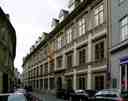
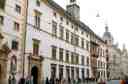
  1. Look for a grand, long neobaroque building with rows of tall windows and an ornate entrance; you’ll spot it on your left along Raubergasse, beneath an elegant flag fluttering from…Mehr lesenWeniger anzeigen

    Look for a grand, long neobaroque building with rows of tall windows and an ornate entrance; you’ll spot it on your left along Raubergasse, beneath an elegant flag fluttering from the doorway. Welcome to the Universalmuseum Joanneum, where the story of Styria leaps out from every stone! Imagine you’ve just arrived in the early 1800s - the scent of leather books, minerals, and ink drifting through these hallways, and the whole city buzzing with the excitement of discovery. This place isn’t just a building, it’s the very heart of scientific curiosity in Austria. Back in 1811, Archduke Johann, a fellow who would’ve put your local trivia champion to shame, decided he wanted the people of Styria to have a window into the past, present, and wonders of the natural world. So he opened Austria’s first museum right here, filling it with treasures from his own private collections - coins, sparkling minerals, and relics that could outshine your grandma’s jewelry box! Now imagine the hum of voices echoing through the galleries, as young students listened eagerly to great scientists like Friedrich Mohs - yes, the guy who invented the Mohs scale of mineral hardness, right in these very halls! Suddenly, a piece of quartz isn’t just a rock on a shelf - it’s part of a groundbreaking discovery! But the Joanneum grew, and boy, did it grow fast. Over the decades, it spread across Graz, swallowing up collections of everything from fossils to folk costumes. The place kept running out of room, so by the late 19th century, it spilled into this grand Neutorgasse building you’re standing before - stately pillars, high windows, and a kind of grandeur that makes it clear: knowledge truly is power. Of course, things weren’t always as peaceful as the flutter of that flag outside. During World War II, art and valuables belonging to Jewish collectors were seized, and some of these precious objects ended up here. After the war, the Joanneum took hard looks at its past, setting up groups to return stolen pieces to the families who lost them - a reminder that even the grandest walls carry both triumph and sorrow. Today, if you peek inside, don’t be surprised if you get lost among four and a half million objects! The museum is packed with natural wonders, prehistoric fossils, ancient coins, and even armor from the days when knights protected Styria against invading armies. In fact, not far from here is the world’s only preserved armory of its kind, echoing with the metallic clink of swords and armor - it’s a real knight’s playground! But there’s more than swords and stones. If you like something a bit lighter, upstairs you’ll find a vibrant collection of folk objects that tells the story of how Styrian people lived, loved, and laughed centuries ago. There’s even a “smoking room” (don’t worry, no one’s puffing away now), and a hall bursting with the colorful traditional outfits called “tracht.” If that’s not enough, pop over to the old Capuchin cloister inside the Paulustor, and get swept back to the rural world of pre-industrial Styria, captured in thousands of photos and artifacts. Fast-forward to the digital age, and the Joanneum is leading the way again - with a huge multimedia collection knee-deep in millions of photos and audio recordings. If you ever wondered what Graz sounded like before cars and smartphones, there’s probably a wax cylinder or vintage tape buzzing with the answer. During its bicentennial in 2011, the Joanneum unveiled dazzling new galleries, and even dug deep - literally - building a three-story underground depot and a modern entrance for the 21st century. So every time you walk past this stately facade, imagine layers upon layers of history, science, and culture right under your feet. Who knew a place that holds everything from ancient armor to contemporary paintings also packs in a few secrets and scandals? If these walls could talk, they’d probably demand their own exhibition! And with an army of 500 passionate staff bustling around, there’s always another story, another treasure, or at least another cup of coffee to discover in the Universalmuseum Joanneum. Ready to step into the next chapter of Graz’s story? Let’s continue - adventure is just down the street!

    Eigene Seite öffnen →
  2. Back in 1886, long before anyone was worried about Wi-Fi signals or online banking passwords, communities in what’s now southern Austria faced a big problem: how could ordinary…Mehr lesenWeniger anzeigen

    Back in 1886, long before anyone was worried about Wi-Fi signals or online banking passwords, communities in what’s now southern Austria faced a big problem: how could ordinary people get a fair loan without needing a fortune or, say, a secret treasure map? Enter Friedrich Wilhelm Raiffeisen’s big idea: create credit unions, owned by the people, to help each other out. A revolutionary concept at the time-sort of like inventing the ATM, but with more mustaches and less plastic. Soon, the idea took hold. By 1894, there were already 19 of these “Darlehenskassen,” or loan funds, sprouting up in Steiermark. Imagine the buzz… neighbors pooling their resources, fighting off greedy lenders, and discovering the joys (and headaches) of group decision-making. Jump ahead to 1900. The farmers and merchants of Styria needed more than loans-they needed organization. So, they formed the “Verband der landwirtschaftlichen Genossenschaften in Steiermark”-a mouthful, I know-but basically, it was the Avengers for local agriculture and lending. This group kept a watchful eye on the Raiffeisen credit unions-think of it as the financial grammar police, making sure all the commas, and the coins, were in the right place. By 1927, the Great Depression sent shockwaves everywhere-even through Graz. Money and goods weren’t seeing eye-to-eye anymore. So the organizations split their focus: one branch took care of cash, the other of goods, and the “Landesverband der steirischen Raiffeisenkassen” was born-the direct ancestor of the bank you see now. And their first HQ? A rather modest house at Eisernes Tor 3. Who would have thought banking empires could start so humbly? In 1935, they upgraded to the grander house at Kaiserfeldgasse 5-making all the nearby squirrels jealous, no doubt. Names shifted nearly as often as the Austrian weather. By 1942, it became Raiffeisen-Zentralkasse Steiermark, and soon after, it even absorbed the “Steirische Bauernkasse,” combining rural clout with downtown savvy. But wait-it’s not all smooth deposits and sunny portfolios! After the Second World War, the organizations untangled again, splitting yet still closely tied, like family members who just couldn’t resist a good board game or, well, a merger. The techno wave crashed in during the 1970s, as Raiffeisen set up its very first computer center (which probably filled an entire room but could barely calculate your pizza bill). By 1989, the bank officially became “Raiffeisen-Landesbank Steiermark.” Fast forward to 2014, and a brand new central hub rises-now housing about 800 minds under one very busy roof. Today, Raiffeisen-Landesbank Steiermark serves as the beating heart of the region’s financial network. It’s a bank, a service center, a business hub, and-judging by its size-maybe even a decent hide-and-seek arena. With over 900 employees, partnerships across 56 local Raiffeisen banks, and more customers than there are cows in Styria, it’s the biggest financial player in southern Austria. So, standing here, you’re not just outside a bank-you’re in the presence of over a century’s worth of teamwork, crisis, innovation, and yes-a few legendary board meetings. Alright, time to check your wallet-just in case the building’s history makes all the cash disappear!

    Eigene Seite öffnen →
  3. To spot the Graz parish church, look up and ahead for a tall cream-colored building with a richly decorated baroque tower topped by a striking green copper dome and golden…Mehr lesenWeniger anzeigen

    To spot the Graz parish church, look up and ahead for a tall cream-colored building with a richly decorated baroque tower topped by a striking green copper dome and golden cross-it stands out right along the street amidst the shops and bustling crowds. Now, as you stand in front of this grand church, take a deep breath and imagine what it must have felt like in 1440, when the very first stones were laid down-back when Emperor Frederick III himself started the idea! Graz was a different world then: less trams, more horses, and nobody arguing about parking spaces. This humble spot began as a small chapel called Corporis-Christi, but soon those energetic Dominicans took over and thought, "Why not make it a bit bigger?" So, in 1478, they gave it a long, dramatic chancel to match the lofty dreams of a growing city-a project so ambitious it wasn't finished until 1520! Honestly, imagine the builders back then complaining, “Are we done yet?” But change never stopped here! In 1585, when the town’s main parish church-today’s cathedral-was handed over to the Jesuits, the Dominicans were gently told to pack up, and suddenly, this church became the city’s spiritual heart. The style is a fun mishmash of centuries: inside, true gothic arches from times when monks barely had a penny for candles; outside, a facade that’s all about baroque drama-swirls, ornate details, and a fancy bell tower courtesy of Josef Stengg from the late 1700s. That copper steeple sparkles in the sun like it’s wearing a green wizard’s hat. Inside, you’d spot altars that have swung wildly through history-first baroque, then swapped in the nineteenth century for delicate neo-gothic ones. Only one original survived: the extravagant St. John Nepomuk chapel, plus a heavenly picture by Tintoretto himself! The windows you see are newer, with a story that could make any history lover’s jaw drop. In World War II, bombs shattered the original medieval glass. When the dust settled, the city called in Albert Birkle-a rebel artist whose work was banned by the Nazis. He brought the resurrection and suffering of Jesus to glass, but-here’s the twist-he boldly painted Hitler and Mussolini as the villains among Christ’s tormentors! Controversial? Oh yes! A scandal in the ‘50s, these stained-glass windows are still almost shocking. And if you love music, just picture the mighty Rieger organ inside, completed in 1970; its pipes climb the towers and its sound can shake the dust out of your shoes. All of that, right here, squeezed between cafes and fashion shops-pretty divine address, isn’t it?

    Eigene Seite öffnen →
10 weitere Stationen anzeigenWeniger Stationen anzeigenexpand_moreexpand_less
  1. To spot the Graz Country House, just look ahead for a long, light-colored Renaissance building with rows of arched windows and a distinctive tower with a greenish clock on top,…Mehr lesenWeniger anzeigen

    To spot the Graz Country House, just look ahead for a long, light-colored Renaissance building with rows of arched windows and a distinctive tower with a greenish clock on top, right on the bustling Herrengasse street. Now that you’re standing outside, let me take you back to the 16th century-a time of fancy hats, dueling nobles, and a bit of architectural one-upmanship. Close your eyes for a moment and picture the street as it was nearly 500 years ago. The Graz Country House, or “Landhaus,” first started taking shape around 1527, becoming one of Central Europe’s earliest showstoppers of the Renaissance. Just imagine the clatter of boots and the swish of cloaks as the city’s powerful landowners swept in to their grand new headquarters. At the corner of Herrengasse and Landhausgasse once stood a humble citizen’s house, but the ambitious Styrian nobles quickly transformed it-because, as history shows us, nothing says “influence” quite like a huge building with arcades and courtyards. The architects kept adding on: first came a few Renaissance touches, then sweeping arches, airy glass walkways, and, eventually, not one, but three buzzing inner courtyards where you could almost hear whispers of secret deals and political drama swirling in the air. The masters behind this feat were a true Renaissance dream team, including the Italian architect Domenico dell’Allio, who was so good at building fortresses and palaces that no one dared question his taste in decorative columns. He championed those graceful round-arched windows and designed the famous three-story arcaded courtyard. Legend has it the courtyard was one of Graz’s social hotspots-today it hosts everything from open-air concerts to a magical ice nativity scene every Advent, twinkling with fairy lights. Now, for a bit of mystery! Take a good look to your right as you stand by the entrance-you’ll notice an old copper plaque, the “Rumortafel.” Since 1588, it’s been warning folks not to get too rowdy or, as it eloquently puts it, “cause a ruckus” when important meetings were happening inside. Imagine a time when heated debates needed this official reminder-otherwise, you’d risk a fine for bickering too loudly. Suddenly, your last office meeting doesn’t seem so intense, does it? The Graz Country House wasn’t built in one go-over centuries, it grew, mutated, and swallowed up old houses like a particularly hungry dragon. The Rittersaal, or Knights’ Hall, was added in the first floor to host magnificent assemblies. Three floors up, noblemen gathered by fireplaces beneath stucco ceilings decorated with the coat of arms of Styria, painted somewhere around 1650, then covered up and forgotten for centuries until a burst of mid-20th-century curiosity revealed them again. By the baroque period, the interiors were glittering with ornate gilded stoves and elaborate frescos. Here’s a fun detail: the main entrance’s stone archway is one of the oldest Renaissance gateways in Graz-its huge, metal-clad doors have watched centuries of history march through, from richly dressed barons to modern tourists like you. For a while, all the weapons and armor of the local army were even stored inside the Landhaus-until it got too crowded and they built the neighboring Arsenal instead. If you listen carefully, you might imagine echoes of clanking swords and heavy boots hurrying up the stairwells. Up on the roof, don’t miss the copper-plated clock tower crowned by a weather vane in the shape of a panther, symbolizing Styria. The bell inside, cast in 1586, has survived every war and melted cannon order ever since-quite the lucky escape artist. Even now, this building is the beating heart of Styrian politics, with the Landtag parliament still gathering in the baroque assembly room, the “Landstube.” If you peek inside, you might spot grand mirrors, blazing chandeliers, and lively murals depicting everything from ancient battles to an allegorical “Blessing of Peace”-a wish this old house has always carried. Over the centuries, the Graz Country House has been a courthouse, a fortress, a parliament, and a social playground, all stitched together by generations of master builders who somehow managed to keep the whole place unified and harmonious. Blending old and new, grand and cozy, mysterious and welcoming, it stands here as a true witness to Graz’s colorful and dramatic history. So give those old doors a wink of respect-you never know what secrets are hiding behind them!

    Eigene Seite öffnen →
  2. Look straight ahead to spot a grand, light-colored building with an ornate façade, several small towers, and a central clock topped by a dramatic dome-this is the Graz Town Hall,…Mehr lesenWeniger anzeigen

    Look straight ahead to spot a grand, light-colored building with an ornate façade, several small towers, and a central clock topped by a dramatic dome-this is the Graz Town Hall, standing proudly at the Hauptplatz. Welcome to one of Graz’s most dramatic stages-the Town Hall! If you’re standing here on the Hauptplatz, let your eyes wander over those sculpted columns and the mighty dome that reaches up into the sky like the city’s own birthday cake, candles and all. But make no mistake, this building is more than just pretty architecture; it's a storybook filled with drama, politics, and even the odd stubborn landlord! Imagine the year is 1450. Graz’s very first town hall is tucked away in the Judengasse, but the city’s ambitions soon outgrow its cramped chambers. So, by 1550, they build a new town hall on this very spot in a simple Renaissance style-so simple, in fact, that it was only decorated at the corners! Not exactly selfie-material, right? But it was practical, housing not only the city government but also the main guard and, up on the third floor, a jail where you wouldn’t want to spend the night. I bet the echoes there were more haunting than charming... Fast forward to the 1800s. Graz is on the move, and with that, the city knocks down the old hall to put up a modern, classicist beauty. The price tag? 150,000 Gulden! How did they raise so much money? Well, they introduced a new tax-on wine! That’s right, every sip helped pay for bricks and mortar. You could say the city was built on the foundations of good cheer-literally! Remember that the next time you order a glass here. But the Town Hall just kept growing, like a bureaucratic beanstalk. In 1887, architects Alexander Wielemans and Theodor Reuter dreamed up a new expansion-though not everyone was thrilled. Some owners on Herrengasse simply refused to give up their buildings, and their stubbornness shaped the awkward outlines of the Town Hall you see today. I suppose even mayors have to pick their battles! By the 1960s, the grand, historicist façade was at risk of being modernized away-flattened and simplified in favor of something more 'classical.' But Graz’s residents weren't letting their beloved landmark lose its identity. In a massive public vote in 1966, eighty-three percent chose tradition over trend. The façade you see now-with its statues, curving domes, and bold central projection-remains as the people wanted it, as if the building itself heaved a sigh of relief and settled back to admire the view. You’ll notice, lined up above the main entrance, a cast of stone characters posing as if for a class photo. These niches once held a galaxy of Austrian heroes and four big allegories: “Art,” “Science,” “Trade,” and “Industry.” Many were lost in 1922 during a simplification frenzy-only two “Landsknechte” (that’s foot soldiers) and a lone bust remain from the old days. Thankfully, the missing figures have been recreated and are back to inspire passersby and perhaps the next wave of ambitious citizens. Step closer to the front doors and imagine passing under those four dramatic allegorical statues-who knows, with enough imagination, you might just get a civic blessing on your way in! To one side, a long-standing bookshop once waited to tempt local readers, and on the other, a branch of the Styrian Savings Bank still claims its place-its tenure dating all the way back to when the bank helped pay for the Town Hall in the 1800s. Talk about loyalty perks! Inside, there’s a treasure trove of council chambers and winding corridors. Up on the first floor, above the vaulting entrance hall, lies the wedding room-a place that, in recent years, has seen love celebrated in every form, a living symbol of Graz’s embrace of diversity. Higher still, the council meeting room vaults up a double story, its raised balcony witnessing speeches through thick and thin-perhaps never more dramatically than when a certain dictator addressed the crowds from there in the 1930s. Curiously, the Town Hall is almost a village in itself: offices stretch along Herrengasse and Schmiedgasse, city councillors hatch their plans, and in tucked-away corridors, you’ll spot boards dedicated to Graz’s trailblazing women as well as rotating art and photography exhibitions. Now, imagine sneaking up the twisting hidden staircase onto the roof. Past the gothic clock mechanism, with its massive airshaft and labyrinth of pipes, you eventually step onto a balcony with a view fit for royalty. If you squint and the wind is right, you might even hear the city’s warning sirens echo overhead on a test day. So give the building a wave and tip your hat to centuries of city stories, decisions, and daydreams, all quietly swirling behind that stately stone face.

    Eigene Seite öffnen →
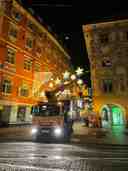
  3. To spot Sporgasse, just look ahead for a charming, narrow street lined with colorful buildings-on your left you'll see a bold orange facade with bright holiday lights, and on your…Mehr lesenWeniger anzeigen

    To spot Sporgasse, just look ahead for a charming, narrow street lined with colorful buildings-on your left you'll see a bold orange facade with bright holiday lights, and on your right, a white building adorned with ornate stucco, all leading you into a lively walkway beneath arches and decorations. Let’s transport ourselves back-way, way back-because you’re standing on a street that actually predates Graz itself! Imagine Roman sandals marching right where your shoes are now, along the bustling Strata Hungarica, a vital trade route connecting distant empires. Sporgasse may look like a cheerful shopping haven today, but it has seen everything from sword-forging blacksmiths to medieval knights clanking about (though I hope they didn’t stop for a shoe sale). Breathe in the energy: centuries ago, this was the turf of spur makers and weaponsmiths, giving the street its name. By 1346, folks were calling it "Sporergasse," before getting bored with extra syllables and switching to the snappier “Sporgasse” around 1600. These days, you’re more likely to be run over by a hurried jogger than a horse, but the echoes of history are everywhere. Now, don’t blink, because this street is a living museum of architecture! Swing your eyes to the Luegg House on the corner. Its thick baroque plasterwork and long arched gallery look straight out of a cake baker’s wildest dreams. Directly across, notice a building jazzed up with golden flowers and art-nouveau faces peering down-maybe debating your sense of style. Take a few steps up and you’ll find age-old shops, like the bakery from 1596-sweet treats here are older than Austria itself! Up the hill, the old Teutonic Knights’ house sits with its courtyard paved in smooth Mur stones, echoing stories of duels and secret meetings. And just a bit further, a former Augustinian monastery hides as the “Stiegenkirche,” like a shy giant behind a modest door. At the top? The “Goldene Pastete” inn, one of Graz’s oldest, with a unique Renaissance bay window. Peer across to the mysterious Palais Saurau, where, legend says, a “falling Turk” sculpture tells a tale all its own. Sporgasse isn’t just a street-it's a time machine with the best window shopping. Ready to keep walking or do you need to stop for a pastry break first?

    Eigene Seite öffnen →
  4. Right in front of you rises the Graz Clock Tower, a striking white tower perched high on the Schlossberg, easily spotted thanks to its dark timber balcony, large pointed roof,…Mehr lesenWeniger anzeigen

    Right in front of you rises the Graz Clock Tower, a striking white tower perched high on the Schlossberg, easily spotted thanks to its dark timber balcony, large pointed roof, and, most importantly, the two massive clock faces with oversized golden hands-just look uphill, and there it is, watching over the city! Now, get ready-because the story of this tower is packed with twists, drama, and even a heroic dog. The Clock Tower stands 28 meters tall and has guarded Graz for centuries, its roots going back all the way to the 1200s! Can you picture it? Imagine the clatter of armor and horses on cobblestone as medieval guards build early fortifications on this very hilltop-. Back in 1265, a much smaller, fortress-like tower marked this spot, a lifesaver during enemy attacks. But by 1569, the tower got a facelift, gaining huge dials-each more than five meters across-plus a wooden balcony where fire watchers prowled day and night, their eyes searching for flames in the city below. If you're wondering what makes this clock so unique, here’s a fun twist: the big hand shows the hours, and the little one shows the minutes. Why? Because in the old days, knowing what hour it was-especially from far away-was much more important than tracking the minutes. It’s simple… and seriously confusing, if you’re used to regular clocks. Speaking of confusion, Graz almost lost this proud symbol after Napoleon’s troops besieged the city in 1809. Imagine cannonballs whizzing overhead--and one of the very first shots smacking right into this tower! But the Grazers loved their clock so much that when the French demanded the city tear down its fortifications, they scraped together enough money to ransom the tower and keep it standing. The Graz Clock Tower keeps busy. It’s home to three ancient bells, each with a story: One chimes the hour and dates all the way back to 1382, oldest in the city. The fire bell was the original emergency alert system-horses, buckets, people dashing through the streets. And then there’s the “Rogue’s Bell,” which once signaled last call at local taverns-but long ago, it tolled for those on their way to the gallows. Over the centuries, the tower has weathered storms, rain, and even the odd renovation crisis. Just a few years ago, they discovered damp earth gnawing away at the walls, making emergency repairs necessary. Parts were even wrapped in scaffolding and giant billboards to pay the bills-modern problems for a medieval relic. But the tower’s quirks don’t stop with clocks and cannons. Down by the lush Rosengarten you’ll find a tribute to Gerold Walzel, who wrote the Graz students’ song, lyrics about gazing dreamily from this very hilltop. Oh, and keep an eye out for the Stone Dog, perched below. Legend says this pup once saved a princess from kidnappers with his bark, earning an immortal place on Graz’s mountain. So, as you stand here and gaze up at the Graz Clock Tower, listen for the clang of the old bell, peer out over the city roofs, and just imagine all the stories sleeping beneath the wooden eaves and golden hands of Graz’s favorite timekeeper.

    Eigene Seite öffnen →
  5. To spot the Styrian Folklore Museum, just look for a large white building with a simple, almost monastic facade, tall windows with metal grids, and a red-tiled roof-it’ll be right…Mehr lesenWeniger anzeigen

    To spot the Styrian Folklore Museum, just look for a large white building with a simple, almost monastic facade, tall windows with metal grids, and a red-tiled roof-it’ll be right in front of you, just behind the low wall and archway leading inside. Now, picture yourself standing outside this historic building, once a Capuchin monastery, now the Styrian Folklore Museum-a time machine disguised as a quiet, whitewashed structure, humming with stories just beneath its surface. Don’t be fooled by its simple exterior; inside, worlds collide! This museum is always on the move, just like the people and traditions it celebrates. Let’s step back in time to the late 1800s, when curious collectors from the Landesmuseum Joanneum began gathering everyday objects that told the story of ordinary life in Styria. By 1913, Viktor Geramb-the ultimate “culture detective”-turned this modest collection into a full-blown museum here on Paulustorgasse. Geramb didn’t want a dusty old attic full of stuff-oh no! He dreamed of creating a living, breathing stage that would whisk visitors into the heart of Styrian countryside life. If you listen closely, you might almost hear the cheerful clatter of pots, the swish of traditional skirts, and the laughter from smoky kitchens long past. In those early days, Geramb arranged farm tools, furniture, and costumes to recreate rustic scenes right inside the city. He believed every object had a story and a perfect spot, so when you walk through the museum, you’re not just looking at things-you’re walking into actual moments from another time. He became a bit of a local legend, collecting regional treasures and even founding the Styrian Heimatwerk, all to safeguard and share the soul of Styria. But history isn’t all apple strudel and folklore festivals. In the 1930s, the museum grew, thanks to some political connections-a new wing was built, adding modern exhibition and event spaces, including the “Heimatsaal,” which hosts up to 150 guests to this day. For decades, the Styrian Heimatwerk found its home here, spinning together crafts, clothing, and community. The museum never stands still-recently renovated for the Steiermark Schau 2021, it now buzzes with fresh energy. The newest permanent exhibition, “Wie es ist,” explores what it’s really like to live, work, and dream in Styria today. It’s a patchwork of stories, big questions, and shifting perspectives: What shapes us? How do we weather life’s changes and crises? How do we find our tribe or keep hope alive in tricky times? Each gallery is like a mini-museum, luring you into different worlds-sometimes asking more questions than it answers. Don’t miss the showstoppers: The 500-year-old “Rauchstube,” a reconstructed smoky farmhouse kitchen that’s seen more stews than you’ve had hot dinners. Then there’s the “Trachtensaal”-42 lifelike figures in dazzling regional costumes, charting fashion from ancient Rome to the 19th century. Created by talented artists and reimagined again and again, this hall tells the evolving tale of identity and belonging. If you linger here, who knows-maybe you’ll leave with a little Styrian spirit (no lederhosen required)! So take a deep breath, step up to the gate, and get ready-inside, centuries of stories are waiting just for you.

    Eigene Seite öffnen →
  6. To spot the Forum Stadtpark, look straight ahead for a long, white, modern building with a distinctive horizontal structure and wide glass windows, nestled among the trees at the…Mehr lesenWeniger anzeigen

    To spot the Forum Stadtpark, look straight ahead for a long, white, modern building with a distinctive horizontal structure and wide glass windows, nestled among the trees at the edge of the grassy park. Welcome to the Forum Stadtpark! Imagine it’s 1958. We’re right here in Graz’s city park, and this spot was buzzing-not with art lovers, but with whispers of demolition. The building in front of you was once a sleepy café, destined to crumble, until a bold band of artists, writers, and jazz musicians decided it was the perfect stage for their dreams. They marched up to City Hall with their creative hats on, only to get a polite “no thank you.” But-and here’s where the drama hits-public outcry exploded! Newspapers, politicians, even other artist collectives rallied to save the old café, and with a last-minute scramble for funding, the Forum Stadtpark was born in January of 1959. Picture those early days with me: chilly mornings spent hammering, painting, and arguing over what “contemporary art” would mean in this place. Founders like Othmar Carli, Alfred Kolleritsch, and Gustav Zankl envisioned not just a building, but a living forum-one where architecture, painting, literature, photography, jazz, and wild debate all mixed like coffee and sugar. Even today, as you stand here, that creative spirit pulses through these glass walls. The Forum Stadtpark is a bit of a shapeshifter. Depending on the day, it becomes an exhibition hall, a concert stage, a theater, a music club, a cinema, or even a gigantic artwork all its own. If you hear lively sounds drifting through the air, don’t be surprised-it might be a poetry reading, a cutting-edge concert, or a heated debate about the future of art. One of the club’s core beliefs is that art should stir things up-it shouldn’t turn inward, but rather tangle joyfully and sometimes messily with real-world questions. Over the decades, the forum’s leaders, from Heidrun Primas to Markus Gönitzer (as of 2023), have stuck to this mission. They support experimental work, and most events throw open their doors for free, inviting everyone-starving student, curious tourist, restless local-right into the whirlwind. Did you know this place isn’t just a home for visual artists? Forum Stadtpark is legendary for its cross-pollination. Architecture meets photography, theater sparks up with literature, and society’s tough questions get the full artistic treatment. Here, writers have launched legendary magazines-like the celebrated “manuskripte” and “Schreibkraft”-and even the Camera Austria photo journal first snapped into life within these walls. Now, imagine festival season in Graz: in the 1960s and '70s, the Forum Stadtpark played host to the avant-garde’s wildest dreams. It wasn’t just a show-and-tell for paintings or poems. It was a raucous arena for jazz sessions in the basement “Musiclub,” film festivals where the projectors hummed late into the night, and performances that left audiences scratching their heads, or sometimes howling with laughter. And like a good story, the Forum kept reinventing itself. The 2000s brought a dramatic glow-up: a whole new upper floor was added, shining bright white above the historic outline, as if the building itself wanted to leap higher and shout, “Art is for everybody!” That rooftop is now a buzzing terrace, perfect for summer evenings and experimental gathering. The expansion never touched the park’s precious green footprint-local law has forbidden new building in the park since 1867! Instead, the architects built upward, preserving the T-shaped ground plan that you can still see today. Inside, a team of around forty passionate souls keeps the engine running-from managers to artists to part-time helpers. Each year, they pull off up to 200 events, welcoming more than 20,000 visitors who come for everything from raucous club nights to sharp-witted political debate. Local and international artists call Forum Stadtpark their launchpad, knowing this place has a history of giving outsiders, newcomers, and rebels a stage. So, as you look at this crisp white icon surrounded by greenery, know you’re seeing a masterpiece built not just of steel and glass, but of hope, struggle, and a big, artistic bear hug for Graz and the world. And if you find a free event inside, don’t hesitate-step in and join the never-ending conversation! Exploring the realm of the programme and structure, self-image and magnitude or the architecture? Feel free to consult the chat section for additional information.

    Eigene Seite öffnen →
  7. Straight ahead, you’ll spot Graz City Park by finding the grand cast-iron fountain bursting with water, surrounded by old gas lanterns, manicured hedges, flowerbeds, and plenty of…Mehr lesenWeniger anzeigen

    Straight ahead, you’ll spot Graz City Park by finding the grand cast-iron fountain bursting with water, surrounded by old gas lanterns, manicured hedges, flowerbeds, and plenty of tall, leafy trees shading benches. Welcome to Graz City Park, where history, relaxation, and a touch of fairy tale magic are waiting to greet you! Take a deep breath and let’s imagine what it was like back in the 1800s. Instead of the peaceful scene you see now, this spot was once a military glacis-a stretch of open land used for drills and defense, definitely more boots and bayonets than birds and benches. But people in Graz had bigger dreams for this space. The city council, led by the ambitious Mayor Moritz Ritter von Franck, decided that grazing soldiers should make way for strolling citizens. If only all city planning meetings had such dramatic plot twists. Securing the land wasn’t a walk in the park-pun very much intended! For years, negotiations with the military went back and forth, with land swaps and deals sharper than a gardener’s spade. Finally, in 1868, Graz traded the Feliferhof (imagine cows looking a bit confused at soldiers moving in) for this prime stretch of now-priceless green. And so, with deals done and plans drawn, the vision for Graz’s City Park started to blossom. The very first blueprint didn’t just include flowerbeds and trees, but even a grand Kursalon (because what’s a park without a fabulous place to dance or grab a lemonade?), and-wait for it-a water pipeline! The city’s “Verein zur Stadtverschönerung”-that’s the rather fancy-sounding Beautification Society-took up the spade, held competitions, and gave out prizes to the best designs. It was like Graz’s very own “Park Idol.” The first tree was planted in 1870, accompanied by great hope: could beautiful nature lower the bubonic plague of high mortality rates that troubled Graz back then? Not quite magic, but shade was certainly an improvement! With time, Graz realized rules are made to be broken (gently). Originally, no buildings were to pop up here-except one Kursalon-until the city thought: “Wouldn’t this be a great spot for the new university?” Seems like everything in Graz just wants to be where the green grass grows! A key vision of the park was to mimic the style of an English garden. Picture double alleyways on old embankments, rare and exotic trees (the kind that make botanists swoon), and rows of iron benches-600 of them, which is enough for a good old-fashioned game of musical chairs. As the shadows lengthened and dusk settled, the park’s gas lanterns would flicker on, their warm light catching on the branches. In the 1970s, those lanterns switched loyalties to electricity, but the elegant posts remain. Today, try to imagine the gentle clink and echo as you stroll past the 1,989 trees-yes, someone actually counted them! Over time, the park has become a living gallery. You can bump into stone busts of the likes of Johannes Kepler, Peter Rosegger, and Robert Hamerling. It’s like a “who’s who” of Styrian culture, except everyone’s remarkably quiet. At the center stands the magnificent Stadtparkbrunnen. This fountain has a story worthy of its own blockbuster: designed by Jean-Baptiste-Jules Klagmann, with bronzes cast by Antoine Durenne, it was a star of the 1873 Vienna World Fair-think of it as the Beyoncé of fountains! Graz snagged this beauty after Vienna turned it down, negotiating a ten-year installment plan (take note, shoppers) and in 1874 it arrived on five train cars, cheered and admired by a crowd of eager townsfolk. On the name day of Emperor Franz Joseph I, Graz’s mayor ceremonially turned on the water, and the city has never looked back-well, except maybe to admire that beautiful fountain some more. After the scars of World War II, the fountain returned in sparkling glory, thanks to the donations of Graz’s citizens. There’s even a protective fence, because after all those years, you want your bronze statues to stay put. The park continued to grow and change: busts were added, music pavilions erected, open-air art flourished, and spaces were cleared for big events-imagine crowds gathering, the trees rustling, and bikes zipping past on the new cycle paths. Even today, debates swirl about the future, with everyone wanting their slice of the green. So, take a moment here-close your eyes and let the echoes of the past blend with the lively present. The City Park of Graz isn’t just a patch of grass and a few benches; it’s a living story, growing and blossoming along with the heart of the city itself. To expand your understanding of the origin, formation or the planned expansion, feel free to engage with me in the chat section below.

    Eigene Seite öffnen →
  8. To spot the Schauspielhaus Graz, look for a grand cream-colored building on the corner, with elegant arched windows, a decorative triangular pediment, and banners above the…Mehr lesenWeniger anzeigen

    To spot the Schauspielhaus Graz, look for a grand cream-colored building on the corner, with elegant arched windows, a decorative triangular pediment, and banners above the entrance on Freiheitsplatz-impossible to miss with its stately, classic facade against the street! Now, let’s step back in time together as you stand before these storied walls. Imagine the year is 1774, and the city is bustling with excitement-horses clatter on cobbles, chatter fills the square, and construction dust swirls through the air. The people of Graz, longing for art and entertainment, are witnessing the first stones of a brand-new theater being laid, in the hope that, as Count Orsini once said, “A well-ordered play is a true school for manners and language.” Little did they know, their theater would survive as the heart of Styrian culture for centuries to come! After a few fiscal headaches and plenty of dramatic meetings (and I don’t mean the plays!), the original building was completed in 1776. Created by Joseph Hueber, the so-called “landscape master mason” of Graz, it first faced Hofgasse, with ornate doors and stately balconies-perfect for sneak peeking the crowd or making a grand exit, if you ask me. The opening night was a sensation, drawing a parade of directors and theater-goers who treated the stage like a lightning rod for both classical and contemporary drama. But, as with any good drama, disaster struck: on Christmas Day in 1823, a fire ravaged the theater, leaving only the main and central walls standing and plunging the city’s artists into despair. Imagine the flames leaping against the morning sky and the people of Graz whispering in the streets-was this the end of their beloved stage? Thankfully, hope wasn’t lost. With help from fundraising as creative as selling old cannons in Trieste (I’d call that dramatic irony), they rebuilt, with updates by imperial architects like Peter von Nobile and, later, Professor Meißner, who designed a fancy new heating system-no more cold toes during a tragic monologue! As the years passed, both the building and the creative minds within continued to evolve. Even the city’s layout shifted-Freiheitsplatz, the square before you, was created to give the theater room to breathe, and grand sandstone coats of arms were set into the facade, each telling its own story of the local nobility. The Schauspielhaus has weathered more ups and downs than most heroes on stage. After yet another closure in 1953 for safety reasons, it was given a loving restoration, preserving its classic charms while adding a brand-new stage house, and reemerged in 1964 with Hamlet raising the curtain. Inside, you’d find a foyer with a striking wall tapestry from the 1960s-and, of course, that hush of anticipation only a theater can create. This building isn’t just a relic; it’s alive and thriving. Today, you’ll find three stages- from the grand Haus Eins to the intimate Haus Drei-hosting everything from bold modern premieres to reinterpretations of classics. In fact, the Schauspielhaus is renowned for championing new voices, digging up lost gems-like the witty works of Christiane Karoline Schlegel-and sparking lively debates with fierce contemporary pieces, including prizewinners at the prestigious Nestroy Theater Prize. Even the modern era sees innovation: just recently, the theater embraced inclusivity and accessibility, welcoming everyone to the magic of live performance. With directors, actors, and playwrights from around the world, productions here have toured everywhere from Berlin to Moscow to Vienna, earning applause, accolades, and maybe the occasional bouquet-thrown, not at the actors, but at the sheer history of this fantastic place. So as you look up at those cast-iron masks of Comedy and Tragedy and admire the softly glowing stone, remember: you’re standing before a survivor, a showman, and a true icon of Graz. If these walls could talk, they’d probably demand better lighting and a round of applause-just like any good actor. Now, ready to take a bow and head to our next stop?

    Eigene Seite öffnen →
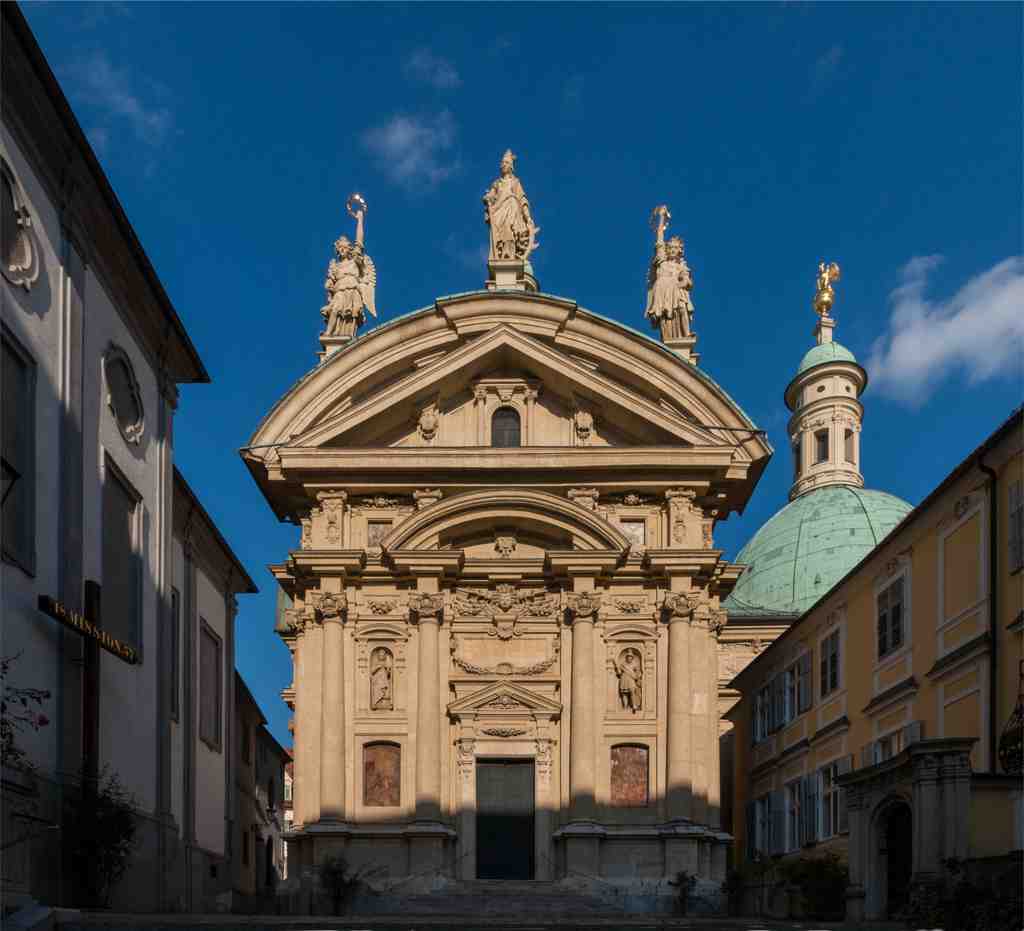
  9. You’re looking for a grand pale stone building straight ahead with lots of sculpted columns, angels perched along the roof, and a huge greenish dome next to a tall turret capped…Mehr lesenWeniger anzeigen

    You’re looking for a grand pale stone building straight ahead with lots of sculpted columns, angels perched along the roof, and a huge greenish dome next to a tall turret capped by a golden scepter and eagle-just keep your eyes slightly upward to catch those details against the sky. Welcome to the epic Mausoleum of Emperor Ferdinand II! Imagine stepping back to the 1600s. The air is thick with the scent of stone dust and fresh lime mortar as workers scramble around scaffolding, chiseling and hauling-the emperor wants his final resting place, right next to Graz Cathedral, to be nothing short of jaw-dropping. There’s the sound of hammers echoing across the square. Ferdinand II, Holy Roman Emperor, decided this was not just a family tomb; oh no, this was going to be a declaration of faith, power, and Habsburg glory to all of Europe. He hired Giovanni Pietro de Pomis, an energetic artist and architect from northern Italy (who, interestingly, loved a good project-he actually designed another huge mausoleum just a little south in Ehrenhausen). So here’s your first odd twist: Ferdinand wanted his grand mausoleum built over an old graveyard and chapel dedicated to St. Catherine… and two completely different buildings had to be mashed together. The result? An architectural marvel blending Renaissance, Mannerism, and that swirling, dramatic Baroque style that makes you want to twirl your cape every time you walk past. As you look at the front, don’t miss the over-life-sized St. Catherine above the doorway, flanked by two angels, with proud religious symbols everywhere. The cross-shaped church is all about Christian strength; the oval crypt chapel behind is a sneaky symbol for resurrection and eternal life. Above the domes, look for the gold scepter, imperial eagle, sword, and orb-just in case anyone passing by forgot the Habsburgs ruled a massive chunk of Europe! Here’s a little art joke from history: When Kepler, the famous mathematician, lived in Graz, he figured out how to draw a perfect ellipse-and that math inspired part of this structure’s unusual oval dome. Yes, you could say Ferdinand’s tomb is built on “solid math and eternal glory.” But talk about project delays: Construction started in 1614… and stopped, and started, and stopped again. De Pomis died before it was finished; then another architect, Pietro Valnegro, took over and-you guessed it-added the slender bell tower. By the time the church was officially consecrated and furnished, almost a hundred years had passed. Kind of makes waiting in line at the post office seem quick, right? And what about the inside? It’s a feast for your senses: stucco cherubs peeking down at you, gleaming altars, and bright ceiling frescoes showing Emperor Leopold rescuing Vienna from the Ottoman Turks. The marble crypt itself holds Ferdinand II, his beloved first wife Maria Anna, and their young son Johann Karl-each tucked into their own niche, marked by somber inscriptions. Before you say “rest in peace,” here’s an unexpected twist-Ferdinand’s heart and bowels were actually kept apart in special urns, then later moved to Vienna and buried separately. Talk about family not sticking together! Years later, the crypt also became a temporary home for the bishops of Graz, as if the Habsburgs wanted some company for eternity. The ornate “Holy Tomb” sculpture inside is considered one of Austria’s most spectacular late-Baroque artworks-filled with angels, prophets, and even a reclining Christ. You might even catch the gentle toll of new bells, tuned in the 2000s to harmonize with Graz’s great cathedral next door. Through all this, the Mausoleum stood witness to centuries of war, religious battle, restoration, and quiet devotion. Today, as sunlight glints off the golden scepter atop the dome, you’re sharing the view that once dazzled courtiers, priests, and power-hungry royals alike. It’s a place both grand and mysterious-reminding us that, in Graz, even the afterlife comes with an epic sense of style. And if the ghosts of emperors still roam, let’s hope they appreciate all the renovations!

    Eigene Seite öffnen →
  10. To spot the Halle für Kunst Steiermark, look for a bright, modern white building with a tall wall of glass windows and a bold sign above the entrance reading “HALLE FÜR…Mehr lesenWeniger anzeigen

    To spot the Halle für Kunst Steiermark, look for a bright, modern white building with a tall wall of glass windows and a bold sign above the entrance reading “HALLE FÜR KUNST”-plus, if you see a bright purple flag fluttering nearby, you’ve made it! Welcome to the finale of our Graz adventure, the Halle für Kunst Steiermark-though don’t worry, there’s no test at the end! Picture yourself standing on these steps, with reflections glinting on the glass panes and perhaps the murmur of excitement from art lovers drifting out as you approach. But this building, sparkling in the light, comes to you wrapped in a most unusual story-one that spans over a century, rattles with debate, crackles with resistance, and bursts open with artistic creativity. Let’s rewind the clock and set the scene. It all began at the dawn of the 20th century, as local art societies dreamed up a home for creativity-a Künstlerhaus, or artists’ house. Back in 1903, art lovers started gathering coins, every penny tucked away like a hopeful promise into a construction fund. By 1909, city leaders agreed on a spot in the city park for this new cultural haven. But no good story is without a twist! Suddenly, nearly 1,300 esteemed citizens whipped up a petition against the location, egged on by a member from the City Beautification Committee-talk about an artistic cliffhanger. Discussions snowballed, alternative sites were hotly debated, and it was clear that even art could stir up passions strong enough to ruffle the city’s proper collars. Money continued to trickle into the fund, and by 1938, the dream seemed within reach-until history struck a sour note. With Austria’s annexation, the art societies were shut down and their precious savings were seized. The dream, it seemed, had been packed away with the dust of war. Yet, as if artists and dreamers could ever be kept down, after the war ended, the societies rose again in 1948 like creative phoenixes. They demanded their assets-seized by the Nazis-back, not to line pockets, but to build the Künstlerhaus at last. Here’s a fun bit of trivia: One society even gave up the right to reclaim its funds in exchange for permanent say in the exhibitions. If that’s not teamwork, I don’t know what is! Finally, in 1951, amid the city’s slow recovery from the devastation of war, the building went up at Burgring 2. It was literally constructed from the rubble-old bricks reborn into halls that would soon echo with creative energy. Designed by architect Robert Haueisen and inspired by the famous Wiener Secession, this free-standing temple to contemporary art was meant to show off the very best of Styrian and Graz artistry. When it opened in 1952, the first director was the painter Leo Scheu-a man whose own past was tangled in tumultuous times. Inside, the building feels like a sculptor’s daydream-high and open halls, a striking apse to the north with its slightly raised floor, columns supporting the soaring ceiling, and sunlight streaming through those vast panes. There’s even a ramp snaking gently beside the main steps as if to say, “all are welcome; bring your vision.” Over the years, so many artists and art societies shared this space, like the Künstlerbund Graz and the Sezession Graz, each leaving their creative fingerprint. But the plot thickens! From 2003 to 2012, it was part of the Universalmuseum Joanneum, opening its walls to international talent. Grand exhibitions blazed here-one year, Le Corbusier’s designs filled the hall; another, the art of Paris between 1900 and 1959. And let’s not forget: for decades, the famous “Dreiländer-Biennale Trigon” brought together artists from Austria, Italy, Yugoslavia, and-over time-many other lands, turning these halls into an artistic crossroads. Of course, where there’s art, there’s drama! In the 2010s, new leadership by Sandro Droschl brought international flair and a sprinkle of controversy. When local artists saw their display time squeezed, they staged a clever protest-submitting dozens of blank canvases, like a silent chorus for lost opportunities. Fortunately, budgets were raised, the building underwent yet another transformation, and in 2021 it reemerged with its current name: “Halle für Kunst Steiermark,” a beacon of creative freedom and modern energy. As you stand here, imagine all the arguments, debates, brushstrokes, and bright ideas that have shaped these very walls. Behind its graceful facade, the Halle für Kunst Steiermark holds a living, breathing history-a space where Graz, Austria, and the broader world come together to celebrate the ever-evolving adventure of art. And who knows? Maybe your own footsteps will inspire the next chapter here!

    Eigene Seite öffnen →

Häufig gestellte Fragen

Wie starte ich die Tour?

Laden Sie nach dem Kauf die AudaTours-App herunter und geben Sie Ihren Einlösecode ein. Die Tour ist sofort startbereit – tippen Sie einfach auf „Play“ und folgen Sie der GPS-geführten Route.

Benötige ich während der Tour Internet?

Nein! Laden Sie die Tour vor dem Start herunter und genießen Sie sie vollständig offline. Nur die Chat-Funktion benötigt Internet. Wir empfehlen den Download über WLAN, um mobiles Datenvolumen zu sparen.

Handelt es sich um eine geführte Gruppentour?

Nein – dies ist ein selbstgeführter Audioguide. Sie erkunden unabhängig in Ihrem eigenen Tempo, wobei die Audioerzählung über Ihr Telefon abgespielt wird. Kein Reiseleiter, keine Gruppe, kein Zeitplan.

Wie lange dauert die Tour?

Die meisten Touren dauern 60–90 Minuten, aber Sie kontrollieren das Tempo vollständig. Pausieren Sie, überspringen Sie Stopps oder machen Sie Pausen, wann immer Sie wollen.

Was, wenn ich die Tour heute nicht beenden kann?

Kein Problem! Touren haben lebenslangen Zugriff. Pausieren Sie und setzen Sie sie fort, wann immer Sie möchten – morgen, nächste Woche oder nächstes Jahr. Ihr Fortschritt wird gespeichert.

Welche Sprachen sind verfügbar?

Alle Touren sind in über 50 Sprachen verfügbar. Wählen Sie Ihre bevorzugte Sprache beim Einlösen Ihres Codes. Hinweis: Die Sprache kann nach der Tour-Generierung nicht mehr geändert werden.

Wo greife ich nach dem Kauf auf die Tour zu?

Laden Sie die kostenlose AudaTours-App aus dem App Store oder von Google Play herunter. Geben Sie Ihren Einlösecode (per E-Mail gesendet) ein, und die Tour erscheint in Ihrer Bibliothek, bereit zum Download und Start.

verified_user
Zufriedenheit garantiert

Wenn Ihnen die Tour nicht gefällt, erstatten wir Ihnen den Kaufpreis. Kontaktieren Sie uns unter [email protected]

Sicher bezahlen mit

Apple PayGoogle PayVisaMastercardPayPal

AudaTours: Audioguides

Unterhaltsame, budgetfreundliche, selbstgeführte Stadtrundgänge

App ausprobieren arrow_forward

Beliebt bei Reisenden weltweit

format_quote Diese Tour war eine großartige Möglichkeit, die Stadt zu sehen. Die Geschichten waren interessant, ohne zu konstruiert zu wirken, und ich liebte es, in meinem eigenen Tempo erkunden zu können.
Jess
Jess
starstarstarstarstar
Tbilisi-Tour arrow_forward
format_quote Das war eine solide Art, Brighton kennenzulernen, ohne sich wie ein Tourist zu fühlen. Die Erzählung hatte Tiefe und Kontext, übertrieb es aber nicht.
Christoph
Christoph
starstarstarstarstar
Brighton-Tour arrow_forward
format_quote Habe diese Tour mit einem Croissant in der einen Hand und null Erwartungen gestartet. Die App schwingt einfach mit einem mit, kein Druck, nur man selbst, Kopfhörer und ein paar coole Geschichten.
John
John
starstarstarstarstar
Marseille-Tour arrow_forward

Unbegrenzte Audioguides

Schalten Sie Zugriff auf JEDE Tour weltweit frei

0 Touren·0 Städte·0 Länder
all_inclusive Unlimited erkunden