AudaTours logoAudaTours

莫里斯敦语音导览:革命的回响与非凡人生

语音指南12 景点

在莫里斯敦绿地,一个古老的堡垒就在您的脚下,革命的低语在此回荡,在今日人群的欢声笑语之下。这个自助语音导览将带您穿梭于莫里斯敦错综复杂的街道,深入隐秘的角落,揭示每个历史地标背后的秘密,而这些地标往往被大多数游客匆匆略过。谁曾在长老会教堂公墓的月光下策划了一场煽动性的逃亡?何种神秘疾病曾席卷贾贝兹·坎普菲尔德医生宅邸的房间,永远改变了美国医学的进程?为何在一个寒冷的1月夜晚,一位神秘陌生人出现在绿地,手中紧握着一封用红蜡封印的褪色信件?穿梭于一个政治冲突、低语的背叛和未解之谜塑造了国家命运的世界。每一步都让您以全新的视角揭示刻在墙壁和墓碑上的故事,将莫里斯敦从一个宁静的小镇变为戏剧与发现的舞台。历史永不平静。立即解锁莫里斯敦的隐藏深度。

导览预览

map

关于此导览

  • schedule
    持续时间 40–60 mins按照自己的节奏
  • straighten
    3.5 公里步行路线跟随引导路径
  • location_on
  • wifi_off
    离线工作一次下载,随处使用
  • all_inclusive
    终身访问随时重播,永久有效
  • location_on
    从 贾贝兹·坎普菲尔德医生故居 开始

此导览的景点

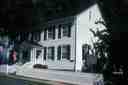
  1. To spot the Dr. Jabez Campfield House, look for a charming, two-story white colonial home with black shutters and a white picket fence on Olyphant Place-there’s even an American…阅读更多收起

    To spot the Dr. Jabez Campfield House, look for a charming, two-story white colonial home with black shutters and a white picket fence on Olyphant Place-there’s even an American flag hanging by the door to wave you in. Now, as you stand before these historic walls, let’s travel back more than 250 years to a much younger Morristown. The year is 1765. Imagine the fresh smell of timber and the gentle creak of the wooden steps as Dr. Jabez Campfield, a young doctor with big hopes (and maybe an even bigger wig), leads his new wife Sarah Ward across the threshold. Picture rolling green fields instead of busy streets, the faint jingle of a horse’s harness nearby, and the hopeful murmur of townsfolk waiting for his medical advice. But hold onto your hats! Because this quiet house was about to become the beating heart of Revolutionary history. When smallpox swept through Morristown in 1777, it was Dr. Campfield who bravely inoculated soldiers right inside this home, helping save countless lives. So if these walls could talk, they’d probably cough and then thank the good doctor for his medical skills. Two years later, during another long, bitter winter, this house became a “flying hospital.” Imagine the hurried footsteps of surgeons, the clatter of supplies, and the anxious whispers as medical teams worked day and night-sometimes to the backdrop of snow howling outside. That winter brought not just hardship, but a little romance too. Dr. John Cochran, Surgeon General of the army, stayed here with his wife-and, as fate would have it, their niece Elizabeth Schuyler showed up. Alexander Hamilton, up-and-coming aide to George Washington, visited so often that poor Dr. Cochran couldn’t catch a nap on his own sofa! Hamilton and Elizabeth’s love blossomed here, filling the rooms with laughter, secret conversations, and probably a few awkward “do you mind?” looks from the adults. After the Revolution, the house didn’t rest. It saw doctors trained, children raised, and-even after changing hands, being moved, and rotated-it survived all manner of changes. In 1923, it was saved by the Daughters of the American Revolution, who restored it with care and filled it with treasures: original furniture, Campfield and Hamilton family artifacts, and even 18th-century medical gear you wouldn’t want your doctor to use today. And outside? A garden burst into color for the centennial of women’s suffrage. Today, as you stand here, you’re not just seeing old wood and glass. You’re standing where revolutionaries healed, heroes fell in love, and the past still lingers-waiting for its next curious visitor.

    打开独立页面 →
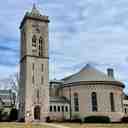
  2. To spot the First Presbyterian Church, look for a grand stone building straight ahead, featuring a tall, square bell tower topped with a small green spire and grand arched windows…阅读更多收起

    To spot the First Presbyterian Church, look for a grand stone building straight ahead, featuring a tall, square bell tower topped with a small green spire and grand arched windows circling its main hall. Right where you’re standing, generations have gathered on this very spot since 1733-long before smartphones or even streetlights-when the first worshippers met under the open sky. Now, imagine the wind carrying the sound of hymns as the community grew. The church earned its royal stamp of approval from King George II of Britain in 1756-talk about VIP status! But it’s the current building, finished in 1894, that really turns heads. Its sturdy Romanesque arches and the sparkle of stained glass by Louis Comfort Tiffany lend a sense of awe; you half-expect a medieval knight to stroll out the front doors. The story doesn’t end there: in 1840, the congregation split in two-perhaps there was a debate over who brought the best casserole to the church picnic. The Second church eventually became the South Street church, faced a fiery disaster, and then rose from the ashes in its own stone glory. In 1925, the two reunited, bringing everyone back together under what is now the Presbyterian Church in Morristown-a testament to resilience, creativity, and good old-fashioned neighborly spirit.

    打开独立页面 →
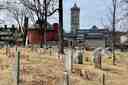
  3. To spot the Presbyterian Church Cemetery, look for a gentle hillside sprinkled with old, weathered gravestones just beside a grand stone church with a tall clock tower rising in…阅读更多收起

    To spot the Presbyterian Church Cemetery, look for a gentle hillside sprinkled with old, weathered gravestones just beside a grand stone church with a tall clock tower rising in the background. If you step closer, you might feel like you’re traveling back in time-maybe because some of these gravestones have stood here since 1731, watching centuries roll by beneath their mossy faces. This isn’t just any cemetery; it’s a place where stories are thick in the air, a final resting ground for everyone from Revolutionary War soldiers to congressmen and inventors. In the heart of the cemetery, there’s a mass grave-imagine, over 150 brave fighters from the American Revolution who succumbed to smallpox in 1777, buried together during a dark and desperate winter. Among the stones, you’ll find the names of folks like Silas Condict, who helped build a new nation, and Jacob Ford Jr. with his wife Theodosia-whose mansion once served as General Washington’s home during a cold, uncertain war. So as you look around, remember: beneath your feet is a tapestry of secrets and legends, each stone a chapter, each shadow a whisper from Morristown’s deep, daring past. And don’t worry-no ghosts on the tour today, just a little history chilling in the shade!

    打开独立页面 →
再显示 9 个站点显示更少站点expand_moreexpand_less
  1. As you stand here in front of what’s now a Charles Schwab location, let’s turn back the clock and stroll into the bustling heart of Morristown, right about when high collars were…阅读更多收起

    As you stand here in front of what’s now a Charles Schwab location, let’s turn back the clock and stroll into the bustling heart of Morristown, right about when high collars were all the rage and everyone seemed to know someone named Hoffman. The grand building across from the Green, known as the Hoffman Building-or “The Arnold,” as it once proudly declared above the entrance-stood tall with its striking Dutch neck gables and arched windows. Picture the scent of fresh bread and a hint of pipe tobacco drifting out onto the busy street, as shoppers bustled in and out of Adams & Fairchild Grocers and the well-dressed folk got fitted at P. H. Hoffman & Son clothiers. This landmark was brought to life in the 1890s thanks to Philip H. Hoffman, a true Morristown entrepreneur. But here’s a twist: the site used to be home to Arnold’s Tavern, a legendary old inn that almost met the wrecking ball. Julia Keese Colles, a history-loving hero, swooped in and arranged to move the entire tavern-talk about dedication! The carpenter John T. Allen then got to work, creating a building whose style would make any Dutch architect do a double take. Inside The Arnold, life buzzed with stories. An organist taught piano to students above the shops, and one local fellow’s bicycle was even stolen straight from the hallway-lock your bikes, folks, history has taught us well! People lived, celebrated weddings, lost and found things, and even shopped for typewriters-imagine that clack-clack-clack echoing upstairs. By the 1960s, the Hoffman Building gave way to modernity, replaced by today’s brick structure. But if you listen closely to the hum of the street, maybe-just maybe-you’ll catch a faint melody of history, and perhaps the soft jingle of a bicycle bell rolling through time.

    打开独立页面 →
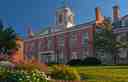
  2. To spot the Morris County Courthouse, look for a stately three-story red brick building with arched windows, cream-colored trim, and a grand golden-domed cupola right in front of…阅读更多收起

    To spot the Morris County Courthouse, look for a stately three-story red brick building with arched windows, cream-colored trim, and a grand golden-domed cupola right in front of you, rising above neatly kept gardens. Picture yourself standing on Washington Street in 1827-the air smells faintly of fresh brick and dusty brownstone as workers put the finishing touches on this very courthouse, a brand new marvel after the older ones outgrew their homes on the Morristown Green. Just imagine the clang of hammers and the buzz of excitement filling the street as architect Lewis Carter’s design takes shape, blending Greek Revival pillars and classic Federal style. The courthouse you see now has held countless stories of justice, debate, and even a bit of courtroom drama-definitely more excitement than jury duty snacks! Over time, it’s witnessed the history of not just Morristown, but all of Morris County, earning its spot on the National Register of Historic Places in 1977. Today, the courthouse is a hero of the Morristown Historic District-standing strong and proud, just waiting to see who will walk up those steps next.

    打开独立页面 →
  3. Right in front of you, you’ll spot the Morristown Green-just look for the wide, open park framed by old, leafy trees, lamp posts, benches, and a mix of stonework and greenery,…阅读更多收起

    Right in front of you, you’ll spot the Morristown Green-just look for the wide, open park framed by old, leafy trees, lamp posts, benches, and a mix of stonework and greenery, sitting at the very heart of town and surrounded by the busy streets and buildings. Welcome to the Morristown Green! Take a deep breath and soak in the atmosphere-because believe it or not, you’re standing on two and a half acres that have been through a wild journey for more than three centuries. Imagine, way back around the year 1000, this spot thrived with Munsee Lenape people. Just picture them moving through these woods, hunting for wolf or elk and fishing for mussels in the cool waters of the Whippany River. Now that’s fresh produce-no supermarket needed! But things changed dramatically by the 1700s. This very green patch was declared public space in 1715, and it quickly became…the town’s original multitasker! Picture cows, sheep, and horses munching away where you’re standing, townsfolk wandering through, and children perhaps daring each other to climb some of these old trees. By the time the Revolutionary War swung through, this tranquil park had seen it all-militia marching, soldiers camping, and even a jail right here. Oh yes, this wasn’t just a park; it was home to Arnold’s Tavern, George Washington’s temporary headquarters. Legend has it he used the tavern’s new extension for war councils and, when business was done, the odd dance or two. If those walls could talk, they’d have some toe-tapping tales! Hold on to your hat, though-because the Green wasn’t always home to peaceful picnics. In the 18th and early 19th centuries, this was the stage for public executions. The last one was so infamous that more than 12,000 people showed up! The story of Antoine Le Blanc is a real local dark legend: after his terrible crime, the roads around the Green were jammed with wagons and people peering from rooftops, all to watch justice being delivered. Every time you walk across these paths, just remember-at least what you’re stepping on now is grass, not a crowd of 19th-century rubberneckers! But don’t worry, Morristown Green isn’t only about serious history. Over time, townsfolk decided it should be a “common forever,” so they replanted trees, put up fences, and transformed it into the gathering place you see today. If you look around, you’ll spot more than just green grass-there are important statues here! One statue, The Alliance, shows George Washington, Lafayette, and Hamilton deep in discussion-a bronze “selfie” of a pivotal moment from the Revolution. There’s also a Civil War monument and a unique tribute to Morris Frank and Buddy, the first seeing-eye dog team, who helped launch a movement for guide dog training right here in Morristown. Community events now fill up the Green all year long. The Festival on the Green brings the whole town together for food, music, and friendly chaos, while the annual Christmas Festival turns this park into a tiny winter wonderland with Santa’s House and sparkling lights. If you’re lucky, you might wander through during Moonlight Movies, or catch a passionate speech or a blood drive. The Green’s motto has always been to keep the community at its heart, whether you’re here for a celebration or a cause. Today, as you stand among the soft rustle of leaves and the laughter of people enjoying a sunny afternoon, you’re part of a living tradition-Morristown Green is the patchwork quilt of town memory, pulsing with stories from every era. Keep walking, and who knows? You might just hear George Washington planning his next big dance.

    打开独立页面 →
  4. Here we are, facing the Mayo Performing Arts Center-Morristown’s shining stage for star power and community spirit! Imagine it’s December 23, 1937: the smell of popcorn drifts…阅读更多收起

    Here we are, facing the Mayo Performing Arts Center-Morristown’s shining stage for star power and community spirit! Imagine it’s December 23, 1937: the smell of popcorn drifts down the street, searchlights sweep the night sky, and people in their finest hats line up for the grand opening of “Nothing Sacred.” This place was the crown jewel of Walter Reade’s movie empire! But like a dramatic twist in a play, the glory days faded and by the 1980s the old Community Theatre sat deserted-its seats empty, its screen silent, and a thick blanket of dust over everything. Enter 1994: after nearly a decade in hibernation, the theatre roared back with a spectacular gala, starring the Kirov Orchestra and piano maestro Alexander Slobodyanik. Confetti, applause, and a shot at a new life. Not even the stubborn New Jersey summers could stop the show-thanks to a cool renovation in 2007, including, at last, air conditioning! The air was even cooler when Liza Minnelli herself helped celebrate the big reopening. Upstairs, new restrooms and an art gallery beckon-no more grumbling stomachs or crossing-your-legs jitters in long lines! In 2011, it took on a new name to become Mayo Performing Arts Center, and it’s still the heartbeat of Morristown arts. Even catching the bus here feels like you’re headed for an adventure.

    打开独立页面 →
  5. Right in front of you, you’ll spot a stately, two-story red-brick mansion with tall white columns at the entrance-just look for the large sign on the lawn that reads Macculloch…阅读更多收起

    Right in front of you, you’ll spot a stately, two-story red-brick mansion with tall white columns at the entrance-just look for the large sign on the lawn that reads Macculloch Hall. Now, let’s take a stroll through the heart of Morristown’s historic district, a patchwork quilt of remarkable stories, grand homes, and quirky characters. This district wasn’t just plopped onto the National Register of Historic Places for looking pretty-it's a living scrapbook full of drama, invention, and even a dash of eccentricity. Imagine the sound of horse-drawn carriages clattering down these old streets as you gaze at nearly every style of grand architecture you can think of. Dating back to 1810, Macculloch Hall’s classic brick and Federal-style lines are as dignified as a judge at a pie-eating contest. Vail Mansion, meanwhile, was built for the president of AT&T-rumor has it he never even slept there, so I hope nobody changed the Wi-Fi password! Granite, marble, and grandeur-he just handed it over to the town. Churches, libraries, and charming summer cottages like The Kedge fill the district with a mix of faith, learning, gossip, and stubborn pride. Over time, this area grew from 50 to over 350 buildings, doubling its size and throwing its arms open even wider to new stories and people-listen for laughter, late-night debates, and maybe the faint bell from a century-old trolley. Every brick here has seen a piece of America’s great adventures-and let’s admit it, some truly unforgettable mustaches too!

    打开独立页面 →
  6. To spot the Morristown and Morris Township Library, just look ahead for a grand, castle-like stone building with tall windows and a clock perched above an arched entryway-trust…阅读更多收起

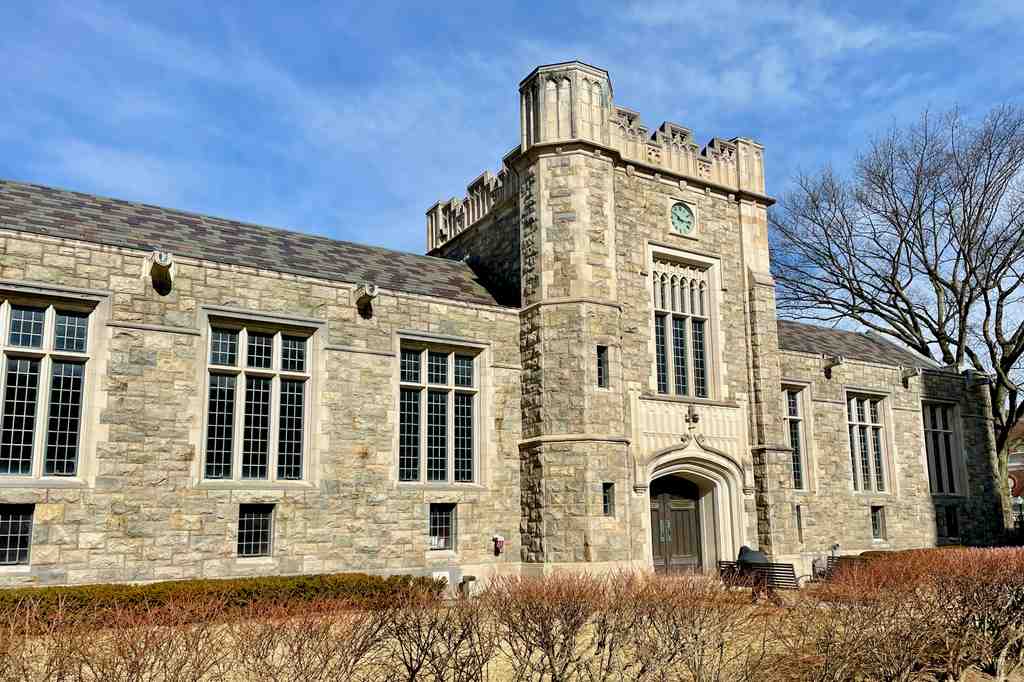
    To spot the Morristown and Morris Township Library, just look ahead for a grand, castle-like stone building with tall windows and a clock perched above an arched entryway-trust me, you can’t miss it! Now, as you stand at the entrance, imagine the centuries swirling together behind those thick stone walls. The story of this library begins in 1792-not with a fancy building, but with a group of folks swapping books among themselves, probably hoping nobody dog-eared the pages! Picture a chilly evening, candlelight flickering, and 97 determined readers gathering to share 96 precious books-a treasure trove for colonial Morristown. By 1812, local book lovers formed their own Library Association, dreaming big. That dream started to come true in 1866, when the effort was officially incorporated as the Morristown Library and Lyceum. By 1875, the collection had swelled to over 8,000 volumes, enough for any serious bookworm to lose themselves in. But then, disaster struck-a fire in 1914 turned shelves and stories alike into ashes. The library lost nearly everything, except for its spirit and a bit of insurance money. Hope wasn’t lost, though: the trustees scooped up land for a new home, and fate sent them a guardian angel by the name of Grinnell Willis. Willis, a retired textile merchant still grieving his late wife, built the new, fireproof library as a loving tribute to her-and to the kindness this town showed her. So, in 1917, this magnificent castle of learning opened with 8,000 volumes and just four staff members, ready to start anew. Step inside and you’ll find more than just shelves and silence-there’s a sense of adventure hiding in every corner. Up in the reference room, a giant golden eagle gazes down, saved from a 1920 armory fire-talk about a lucky escape! Peer at the custom fire screen by blacksmith Samuel Yellin, where swirling designs and the initials ‘M’ and ‘W’ tell their own story. Even the staircase speaks, with brass panels naming soldiers from World War I. And yes, there’s a wild side: in the 1990s, the library’s rules made headlines-after a man was banned for, let’s say, being too aromatic, a legal battle over the First Amendment raged, ending with huge settlements and a lesson in freedom of access. Today, the library is bigger, brighter, and more inclusive than ever. So whether you’re in the mood for history, a giant eagle, or maybe a bit of legal drama, this is the place where Morristown’s stories all come together.

    打开独立页面 →
  7. Look for a grand white house with lots of black shutters, a steep mansard roof, and a sun-drenched glass conservatory gracing one side-right on the corner, framed by towering…阅读更多收起

    Look for a grand white house with lots of black shutters, a steep mansard roof, and a sun-drenched glass conservatory gracing one side-right on the corner, framed by towering evergreens. There it stands, the Thomas Nast Home, or as he liked to call it, Villa Fontana-a Second Empire beauty just waiting for you to imagine the smell of fresh ink and the sound of scratching pens from the 1870s. Picture yourself in Morristown, just after the Civil War, where the quiet air outside is suddenly interrupted by scribbles and shouts of laughter upstairs as Thomas Nast dreams up his next big cartoon. Nast lived and worked right here, in a cozy upstairs bedroom, turning ordinary news into powerful satire for Harper’s Weekly. This is the home where he created unforgettable images: yes, Santa Claus as we know him, plus the donkey and elephant for the Democrats and Republicans-so if you're still wondering who to thank for those political animal mascots, it's the man who lived behind that solid wooden door. Nast’s art wasn’t always a laughing matter, though. His sharp ink took down political machines like Boss Tweed and Tammany Hall. You can almost sense the tension of the day as angry politicians tried to outwit a cartoonist armed with nothing but paper and a wicked sense of humor. While Nast brought joy to many with his plump, jolly Santa, his illustrations of immigrants-especially the Irish-sparked plenty of controversy. As the world changed, tastes shifted, and his star faded; Nast finally accepted a post in Ecuador, where his incredible journey ended. But the walls here still hold echoes of American legends and artistic rebellion. As you stand in front of the crooked dormers and pilastered corners, imagine Nast sketching a future few could have predicted-one where his characters would outlive him for generations.

    打开独立页面 →
  8. To spot the Glanville Blacksmith Shop, look for a two-and-a-half-story red brick building with a bold semi-octagonal front bay, right at the corner with a big painted sign on the…阅读更多收起

    To spot the Glanville Blacksmith Shop, look for a two-and-a-half-story red brick building with a bold semi-octagonal front bay, right at the corner with a big painted sign on the facade-it's hard to miss! Now, imagine you're standing here in the late 1800s-you’d hear the furious clang of hammer on anvil, smell the hot scent of metal, and maybe even dodge the occasional startled horse as J.P. Glanville set up his blacksmith shop in 1895. The building you see today shimmered into existence in 1901, with Frank J. Glanville, iron tongs in hand, forging horseshoes and wagon wheels right inside these brick walls designed in Colonial Revival style. Picture the warm glow of the forge lighting up the faces of townsfolk as they brought in everything from plows to buggy axles for repair. And here’s a twist: in 1905, next door, a state-of-the-art livery stable sprung up-think of it as Morristown’s original “parking garage,” where horse-drawn carriages jostled for space and stable boys dashed around in a blur. This was a place of sweat, sparks, and stories, in the very heart of town. It’s a bit quieter now, but if you listen closely, you might still catch the ghostly ring of hammer and hoofbeats echoing down Bank Street.

    打开独立页面 →
  9. To spot the Mount Kemble Home, look for a charming two-and-a-half-story cream-colored house with green shutters, bright red doors, a long porch with white railings, and a tall…阅读更多收起

    To spot the Mount Kemble Home, look for a charming two-and-a-half-story cream-colored house with green shutters, bright red doors, a long porch with white railings, and a tall flagpole right in front. Now, standing here on the front lawn, imagine yourself whisked back to 1826 when the air was filled with the sound of hammers and saws building this very house. Over the years, what started as a stately residence became an ever-evolving home, its walls stretching and creaking as new wings and fresh coats of style were layered on-first Federal, then a whiff of Carpenter Gothic, and finally a splash of Colonial Revival for that touch of old-school grandeur. But here’s where the story hits a rather heartwarming twist: in 1890, seven determined women from the local Presbyterian Church banded together and turned this fancy address into a sanctuary for “Worthy and Destitute Women.” Yes, you could say this place has worn many hats... or bonnets! In 1905, thanks to Alfred R. Whitney’s generosity, the old mansion was given a south wing and a new name-the Old Ladies Home, where wit and wisdom multiplied like the houseplants on the porch. Finally, in 1940, it got its current name, the Mount Kemble Home. So as you stand here, imagine lives led with dignity, laughter echoing down the hallways, and the beautiful old house continuing its work as a place of welcome, shelter, and hope. And who knows-if you listen closely, you just might catch the giggle of some cheeky past resident who found a second chance inside these walls!

    打开独立页面 →

常见问题

如何开始导览?

购买后,下载 AudaTours 应用并输入您的兑换码。导览将准备好立即开始--只需点击播放并按照 GPS 引导的路线行驶即可。

导览期间我需要互联网吗?

不需要!开始前下载导览并完全离线享受。只有聊天功能需要互联网。我们建议在 WiFi 下下载以节省移动数据。

这是导游带领的团体游吗?

不是--这是自助语音导览。您按照自己的节奏独立探索,通过手机播放音频解说。没有导游,没有团体,没有时间表。

导览需要多长时间?

大多数导览需要 60-90 分钟才能完成,但您完全控制节奏。随时暂停、跳过站点或休息。

如果我今天无法完成导览怎么办?

没问题!导览具有终身访问权限。随时暂停和恢复--明天、下周或明年。您的进度已保存。

有哪些语言可用?

所有导览均提供 50 多种语言版本。在兑换代码时选择您的首选语言。注意:导览生成后无法更改语言。

购买后我在哪里访问导览?

从 App Store 或 Google Play 下载免费的 AudaTours 应用。输入您的兑换码(通过电子邮件发送),导览将出现在您的资料库中,准备下载并开始。

verified_user
满意保证

如果您不喜欢该导览,我们将退款。请联系我们 [email protected]

安全结账使用

Apple PayGoogle PayVisaMastercardPayPal

AudaTours:语音导览

有趣、经济实惠、自助徒步导览

试用应用 arrow_forward

深受全球旅行者喜爱

format_quote 这次导览是游览这座城市的绝佳方式。故事很有趣,感觉不太照本宣科,我喜欢能够按照自己的节奏探索。
Jess
Jess
starstarstarstarstar
第比利斯导览 arrow_forward
format_quote 这是了解布莱顿的一种可靠方式,感觉不像游客。解说有深度和背景,但并未过度。
Christoph
Christoph
starstarstarstarstar
布莱顿导览 arrow_forward
format_quote 一手拿着羊角面包,零期望地开始了这次导览。这款应用真的很适合你,没有压力,只有你、你的耳机和一些很酷的故事。
John
John
starstarstarstarstar
马赛导览 arrow_forward

无限语音导览

解锁全球每个导览的访问权限

0 导览·0 城市·0 国家
all_inclusive 无限探索