
科瓦利斯语音导览:创新、传奇与俄勒冈州立大学先驱之路
踏上引人入胜的旅程,探索科瓦利斯充满活力的核心,带您前往雷瑟体育场,感受俄勒冈州立大学橄榄球赛的激情。漫步于山谷图书馆鼓舞人心的殿堂,那里是知识与创新的中心。探索俄勒冈州立大学理学院的尖端研究和充满活力的氛围。在一次难忘的旅程中,体验大学精神、学术卓越和社区魅力的独特融合!
导览预览
关于此导览
- schedule持续时间 30–50 mins按照自己的节奏
- straighten4.3 公里步行路线跟随引导路径
- location_on
- wifi_off离线工作一次下载,随处使用
- all_inclusive终身访问随时重播,永久有效
- location_on从 社区大厅(俄勒冈州立大学) 开始
此导览的景点
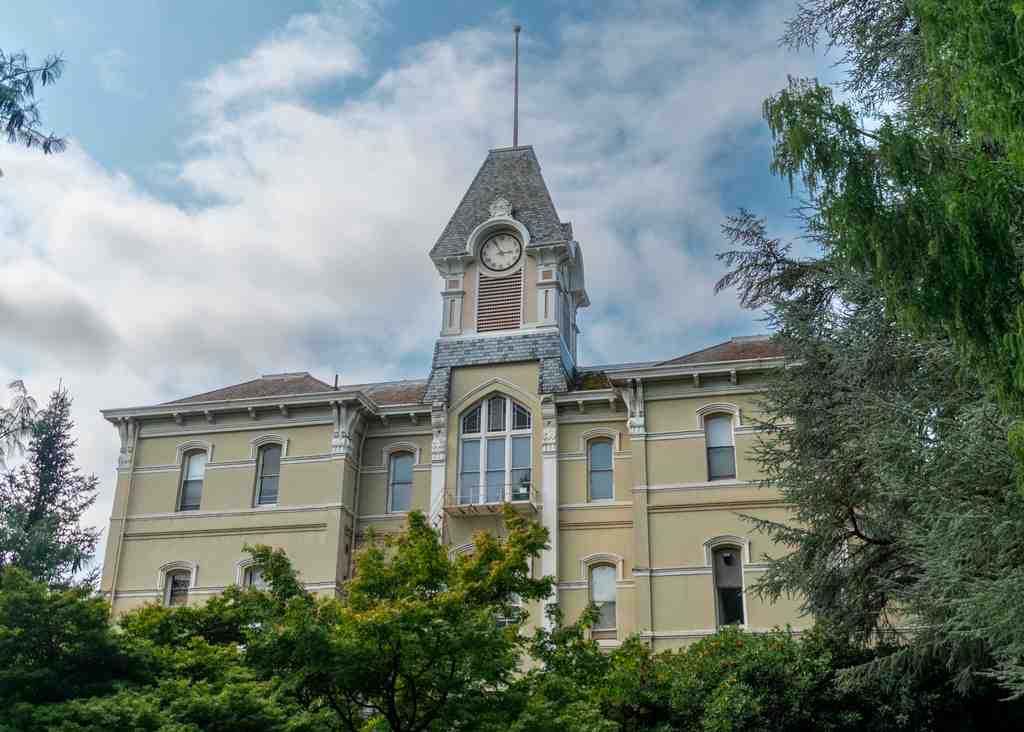
To spot Community Hall, just look for a large, creamy-yellow building with elegant arched windows, a steep, pointed clock tower, and a patch of green lawn out front, shielded by…阅读更多收起
To spot Community Hall, just look for a large, creamy-yellow building with elegant arched windows, a steep, pointed clock tower, and a patch of green lawn out front, shielded by tall, old trees-if you see the clock, you’re in the right place! Now, as you stand here, imagine stepping back well over a century, just as the city of Corvallis was shaking off its wagon dust and looking for a touch of grandeur. This building-originally just called the “Administration Building,” but known by many names since-is the oldest on the campus, and truly the beating heart of Oregon State University. If these walls could talk, oh, the stories they’d tell (and probably a few complaints about squeaky stairs). Let’s set the scene in 1880. Back then, Corvallis was a modest outpost, and the college wasn’t even a college as we know it today. The land you’re standing on had already seen plenty of drama-a carpenter, who’d been stiffed on his bill, slapped a lien on the very first building here. The sheriff marched in and sold it all away! Rev. Orceneth Fisher took over for the Methodist church, and soon after, the dream of a grand educational campus started to take root. Now, here’s where things get tense: the state government wanted to turn the place into Oregon’s official agricultural college (yes, home of future Beavers!), but they didn’t want to pay for the fancy new digs. So, they threw down a challenge that sounded impossible: “Benton County folks-you raise $25,000 for this new building, or it’s not happening.” Mind you, this was back when $25,000 was an eye-watering amount, and the county had only 1,400 households. But, against all odds and with a lot of bake sales (okay, I made up the bake sale part), the community pulled together and raised every last penny in less than two years. Talk about teamwork! By August 1887, the cornerstone was set with full Masonic fanfare-robes, rituals, and all. In 1889, at the start of the last year as “State Agricultural College of Oregon,” this building opened its doors. When the new term rolled around in 1890, it had a fresh name, “Oregon Agricultural College,” echoing with the clatter of boots and books. Over the decades, the name and the students changed, but the spirit of Community Hall stuck around. Even the governor marked “Benton Hall Day” in 1987-and, in 2017, the building got a new name to reflect the togetherness at its core: Community Hall. Imagine all the dreams, doubts, and laughter that echo through these halls-a living time capsule, right in the center of Beaver Nation.
打开独立页面 →To spot The Valley Library, just look ahead for a large, six-story building with striking red brick, sharp white trim, and a shiny rotunda on the left-it’ll be hard to miss with…阅读更多收起
To spot The Valley Library, just look ahead for a large, six-story building with striking red brick, sharp white trim, and a shiny rotunda on the left-it’ll be hard to miss with all that gleaming glass reflecting the sky. Welcome to The Valley Library, the heart and brain of Oregon State University! Imagine you’re standing here in 1887-it would’ve taken quite the treasure hunt to find the library back then, since it was just a humble corner in the old Administration Building, filled with only a few thousand carefully guarded books. Picture a gentle hush in the air, the muffled sound of shoes shuffling across wooden floors, and the scent of old paper filling small, sunlit rooms. Fast forward to the early 1900s, and the book collection was booming-thanks to brave and bookish pioneers like May Warren and Ida Kidder, the first full-time and professionally trained librarians. They wrangled volumes and tamed pamphlet piles, keeping their eyes peeled for lurking dust bunnies and the occasional sneaky student trying to check out one too many books. By 1918, the library was finally granted its own grand home, which is now known as Kidder Hall-not a bad upgrade from sharing space with administrative paperwork and serious faces. When the big move happened, a temporary trellis was strung up between two buildings, forming a bridge for the mountain of books to make their way to their new residence. You could probably hear the creak of wagon wheels and the thunk of books being stacked back then. Over the decades, the library changed a lot. In 1941 it got a fresh new wing, and by the 1950s, it was so packed, even two-story reading rooms were chopped into singles to fit more knowledge. There was even a mural added by Fairbanks, a donation worth thousands of dollars, and rare collectibles like books from the 1600s and a Bible from 1769-talk about ancient secrets and papery mysteries! But the story doesn’t stop there. By the 1960s, Oregon State’s library was bursting at the seams. Plans rolled out for this very building where you’re standing now, originally named the William Jasper Kerr Library-after a president who lasted so long, they probably had to check the library archives just to remember when he started! It took a leap of imagination (and a fair bit of construction noise), but the current structure rose up here on Jefferson Street, with future floors cleverly planned and waiting for more shelves and, of course, more students pulling all-nighters. When the dust settled, the library became the bustling hub of campus, holding treasures like the Nobel Prize-winning Linus Pauling’s personal papers, dazzling Don Quixote-style murals, and thousands of government secrets-well, not the spy kind, but plenty of maps! By 1999, after a massive $47 million renovation, the building was renamed The Valley Library, honoring F. Wayne Valley, one-time OSU football star-turned-philanthropist (so yes, you could argue this library has some extra muscle behind it). That same year, it was chosen as the Library of the Year by the Library Journal, making it the MVP of academic libraries-take that, overdue fines! Today, The Valley Library holds over 1.4 million volumes, a whopping 14,000 serials, and stacks of maps and government documents that could map out the entire state… or, at the very least, help you ace your next geography test. Step inside, and you’ll find a symphony of activity: quiet students working on the sixth floor-the official Silent Zone, home to the most serious scholars-lower floors bristling with whirring computers, the gentle grind of espresso machines, and the happy clicking of keyboards in the Student Multimedia Studio. There’s even a 3D printing station tucked amid the books, ready to create everything from fancy bookmarks to homework-saving inventions. Hidden among the books are rare treasures: linocut illustrations, 4,111 books and 2,230 boxes from Linus and Ava Helen Pauling, and 200,000 photographs capturing the university’s wildest and weirdest days. You’ll find remnants of Oregon’s hops and brewing history, thanks to the library’s quirky and delicious special collections. Art lovers will be in heaven too-over 120 pieces decorate the halls, turning every staircase into an impromptu gallery walk. So as you stand outside, take one last look at those white columns and the glassy rotunda, and imagine: this building isn’t just a box for books, it’s a living time machine, a community brain, and a treasure vault with plenty of secrets left to discover. And don’t worry, rumor has it the only ghosts you’ll meet inside are the echoes of students trying to return books a hundred years late!
打开独立页面 →If you’re looking for Goss Stadium at Coleman Field, just find the large scoreboard flanked by tall orange signs that spell out OREGON STATE, standing above a stretch of green…阅读更多收起
If you’re looking for Goss Stadium at Coleman Field, just find the large scoreboard flanked by tall orange signs that spell out OREGON STATE, standing above a stretch of green field and framed by trees in the background. Alright, you’re standing in front of a real piece of Oregon State University’s heart and history-Goss Stadium at Coleman Field. Just take a deep breath; you’re about to step into the oldest continuous ballpark in the nation, with over a century’s worth of echoes still trapped between these seats and fences! Imagine it’s April 1907, and the very first game is about to begin right here. The grass is so new you can almost smell the fresh cut, and the cheers of the crowd bounce off the nearby academic halls. Back then, the field wasn’t even officially named yet, but year after year, as the local traditions grew-like the annual alumni bonfire-everyone just started calling it Coleman Field after beloved coach Ralph Coleman. Now, Coach Coleman left such a mark here, it’s as if his spirit does laps around the bases every game. Thirty-five years as head coach will do that. By the late 1930s, local newspapers were already calling it Coleman Field, and by the ’40s, it was a legendary stop for baseball enthusiasts across the region. Of course, things weren’t always smooth sailing. In the 1960s, there were whispers that the field might be moved out by the west side of Parker Stadium, now Reser Stadium. The tension must have been thick as a mitt full of pine tar-imagine the Beavers having to leave their home right in the middle of campus! But tradition held on tighter than a catcher’s glove. In 1981, the field got a bit of a facelift after some much-needed improvements. Then came 1986, when tragedy and memory melded together. The Scott Halbrook Memorial Scoreboard was added, honoring a freshman outfielder lost too soon. That scoreboard stood tall until 2006, watching over thousands of fans until a new era of big screens and video replays began. A real turning point arrived in the late ‘90s, when generous donors John and Eline Goss stepped up with a remarkable $2.3 million gift. This was the remodel that took the creaking bleachers and the old concession stands and transformed them into what you see today-Goss Stadium at Coleman Field. The Beavers could finally stop worrying about being evicted by the academic side of campus. March 12, 1999, the stadium reopened with all its new bells and whistles, and you can bet the fans cheered even louder than before. Ever played baseball under the stars? The Beavers hadn’t, until lights were added in 2002. Their first-ever home night game was a 4-1 win over top-ranked Stanford. Not bad for a debut! From there, the upgrades kept coming. In 2006-after the Beavers clinched their first national championship-a state-of-the-art scoreboard complete with video replays replaced the old memorial scoreboard. And let’s talk about turf-the field switched to FieldTurf, except for a smudge of dirt on the mound, turning the infield a flashy dark orange, a real treat for the eyes. But it wasn’t just about looks! In 2008, the stadium grew down the baselines, adding seats and topping out at a whopping 3,587 fans. The expansion included the now-famous Omaha Room, a suite with killer views, hosting everything from anxious parents to gleeful alumni. There’s an academic center too, and don’t miss the Oregon State Baseball Hall of Fame-both tucked right under the Omaha Room. Oh, and it’s not just Beavers who have fun here-since 2007, the Corvallis Knights of the West Coast League have called this place home for summer games. If you wander by near sunset, you’ll notice something quirky: the diamond faces southeast, which means left-side fielders have to squint into the setting sun. Not your textbook design, but hey, it keeps things interesting! Crowds roar, bats crack, and memories stack up. In some seasons, the Beavers have averaged over 2,600 fans per game, finishing with record-breaking home records and hosting NCAA regional and super-regional tournaments-13 regionals and 8 super-regionals to be exact! Each echo of excitement is layered with stories-close games, championship dreams, hard-fought losses, and the lasting footprints of star players like Jacoby Ellsbury, who dropped a $1 million donation to fund new renovations, clubhouse, and even a beer garden because, let’s face it, every stadium needs one good place to celebrate victory or, on the rare occasion, a rain delay. So, as you look at Goss Stadium today, know that it’s more than bleachers and turf. It’s the very pulse of OSU baseball, where every home run, every sunset, and every wild cheer adds to a story over 100 years in the making. Can you feel the anticipation in the air? That’s the sound of history, still being written one pitch at a time.
打开独立页面 →
再显示 8 个站点显示更少站点expand_moreexpand_less
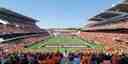
To spot Reser Stadium, just look up-the towering, modern grandstands packed with orange-clad fans rise above everything else nearby, making it the tallest manmade structure in…阅读更多收起
To spot Reser Stadium, just look up-the towering, modern grandstands packed with orange-clad fans rise above everything else nearby, making it the tallest manmade structure in Corvallis and casting a mighty shadow over the southwest corner of campus. Alright, welcome to the roar and pride of Corvallis: the legendary Reser Stadium! Stand here and let your senses sink into a place where every football season turns the air electric and the whole city seems to pulse with orange-and-black energy. Imagine the rumble of a crowd going wild as the Beavers take the field. That sound isn’t just for show-Reser has been echoing with Oregon State spirit since it first opened its gates back in 1953. But let’s rewind the clock for a second. Back when your grandparents were probably still sneaking candy into matinee movies, the Beavers played at Bell Field. The dream for a new stadium began in 1948, when the university’s leaders and alumnus Charles T. Parker gathered together with a vision-and, let’s face it, probably a few hopeful football jokes. They rolled up their sleeves to raise the funds, and by 1953, students could swap their homework for heart-pounding home games on these very grounds. Ironically, the first game here might have started the stadium’s magical streak: Oregon State beat Washington State 7-0, and a chilly November homecoming turned instantly warm with victory. For decades, the stadium was known as Parker Stadium-honoring the guy who helped bring this concrete dream to life. But since 1999, it’s been called Reser Stadium, in tribute to generous alumni Al and Pat Reser. If you listen carefully, you might hear a whisper of history from Parker Plaza, just between Reser and Gill Coliseum, where the old name is still celebrated during pregame festivities. Now, as you stand here, picture this massive arena stretching over 12 stories high-really, if you lived in Corvallis and dropped your phone from the top, it’d have enough time to text you for help on the way down! Out of all buildings between Eugene and Salem, Reser is king of the skyline. Of course, the stadium itself has gone through as many makeovers as a movie star. Grandstands have grown and shrunk, roofs have risen, press boxes have come and gone, and in 2023, the brand-new southwest grandstand debuted-bigger in size but with a cozier 35,548 capacity, so every cheer gets trapped inside and makes your bones vibrate. The field below, now FieldTurf, was once lush grass, then AstroTurf, then more brands than a sneakerhead’s closet. Clearly, Oregon State has always had a thing for keeping up with the latest in “green carpet” technology. Look around for the quirks and legends! Ever seen a chainsaw so big it could star in a horror movie? Find it in Reser’s Terrace-revving up the crowd in a delightfully over-the-top way. There’s also the Ironman Statue in the southwest corner, honoring the almost mythical 1933 “Iron Men” team-eleven players, sixty gritty, grueling minutes, and they held the top-ranked, two-time defending national champion USC Trojans to a scoreless tie. It’s said to be the only time in NCAA history a top team was held down by just 11 iron-willed warriors. Don’t miss “Beaver Fans 1”-bronze sculptures of fans, bursting out of the brick towers at the east entrance, frozen in the moment of a Beaver touchdown. They embody the kind of “can’t believe my team just did that!” joy you’ll see on game days. And in the plaza, shimmering at an angle, the “Electric Field” sculpture takes the shape of a metal football, glowing with play diagrams and showing off the geometry and drama that football fans love. Big games, rivalry roars against the Oregon Ducks, and record-breaking crowds aren’t the only things going down here-Reser has hosted everything from commencements to big open-air concerts like “Dam Jam,” where the beats and bass seem to bounce right off the stands. If you imagine a fireworks show of high-fives, laughter, and music-Reser Stadium is where it happens. So, whether you’re here to see a game, attend a graduation, or just soak up a slice of local history, Reser Stadium is more than concrete and steel. It’s Corvallis’s castle, a playground of dreams, and, on the right Saturday, the loudest place in Oregon. Just remember to practice your touchdown dance before you leave! Curious about the expansion and upgrades, notable features or the attendance records? Don't hesitate to reach out in the chat section for additional details.
打开独立页面 →To spot the Oregon State University College of Liberal Arts, look ahead for a sturdy, practical building with large shaded windows and a lively atmosphere of students coming and…阅读更多收起
To spot the Oregon State University College of Liberal Arts, look ahead for a sturdy, practical building with large shaded windows and a lively atmosphere of students coming and going-right in the heart of campus. Alright, time to dig into a story where creativity and curiosity have always ruled the day! Imagine the crisp air of Corvallis, the buzz of campus chatter, and the smell of coffee drifting from student backpacks. You’re now standing in front of a place that’s as dynamic as a jazz concert and as thoughtful as a poetry reading: the College of Liberal Arts. The roots of this college go all the way back to 1865, not long after the Civil War-when towns were dusty, and horses outnumbered cars by a wide margin. Even then, students were already pleading, “Let us learn more than just cows and calculus!” And the university listened, opening up liberal arts coursework to adventurous minds. Soon, the air was filled with the sounds of music practice and paintbrushes swishing on canvases. By 1901, a department of music had blossomed, led by Gerard Taillandier, who traded in the California sun for Oregon drizzle just to inspire students. Within a couple of years, the walls echoed with both the rhythm of art and the melodies of budding musicians. Fast forward a bit and you get the birth of journalism classes in 1913, the campus newspaper in 1896-originally called “The Beaver,” which is the kind of name that makes you want to gnaw right into a good story! But, in every hero’s tale, there’s a twist. As America’s Industrial Revolution cranked up, everyone wanted to be the next great scientist or engineer. In 1914, state policies and shrinking budgets tried to push the arts into the background. But the arts wouldn’t give up so easily. Picture professors sneaking literature and music into the curriculum like kids sneaking snacks behind the bookshelf. Through wars, hard times, and tighter budgets-especially during the Great Depression-the college kept its creative fires burning. By World War II, the need for more than just slide rules became clear as thousands of returning veterans arrived, searching for purpose and picking up liberal arts majors that stretched from psychology to poetry. And their professors? Legends in their own right. Charles B. Mitchel, a speech professor, was so dedicated he started both the theatre and speech departments, and then helped launch Oregon’s first public radio station. Try to imagine the excitement as the very first radio broadcasts crackled out, bringing a whole outside world of stories to campus. The 1960s and '70s saw the College really strut its stuff-adding programs in English, history, anthropology, and even Russian studies. Remember KOAC, that early radio station? It eventually became the headquarters for Oregon’s public broadcasting and was such a big deal it even won not one, but two Peabody Awards. Of course, like all great epics, there were battles. In the 1990s, an infamous property-tax cut-Ballot Measure 5-threatened to chop away beloved programs. Some schools, like technical journalism and religious studies, were slashed, but the college’s ingenuity meant new programs soon rose up-like the digital communication arts major and a revived religious studies option. Never count a creative mind down for long! Now, stop and take a breath because you’re standing next to the legacy of all those restless artists, actors, writers, and change-makers. In 2024, a brand new $75-million Center for the Creative Arts opened its doors as a beacon for dreams and performances, giving thousands of students a stage-sometimes literally. This place has shaped Olympic gold medalists, actors from "Fuller House" and "Little House on the Prairie," Pulitzer Prize-winning poets, groundbreaking journalists, and more. From voice acting pioneers at Disney, to bestselling authors and influential legislators-OSU’s College of Liberal Arts has sent creative waves rolling far beyond Corvallis. So, as you stand here, think of all the stories that have started in these halls, every laugh echoing in a rehearsal room, every argument in a philosophy class, and every note of music shimmering through a practice window. The liberal arts, much like a good mystery, always leave you wanting to discover what’s next. And spoiler alert: the next chapter could belong to you! Interested in knowing more about the academics, student and program awards or the budget cuts
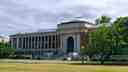
打开独立页面 →Right ahead, you’ll see a grand red-brick building with tall white columns, an arched entrance, and a white dome on top-just look straight at the stately structure standing at the…阅读更多收起
Right ahead, you’ll see a grand red-brick building with tall white columns, an arched entrance, and a white dome on top-just look straight at the stately structure standing at the end of the broad sidewalk. Welcome to the Memorial Union-affectionately called the “MU” by generations of Oregon Staters. Imagine yourself back in the 1920s, when two determined veterans, Warren Daigh and Tony Schille, walked these very grounds with a dream brewing between them. They’d returned from World War I, their hearts heavy from the loss of friends, and they wanted a place that would honor those who’d fallen. The MU isn’t just a student hub-it’s a living memorial, built with spirit and sweat, dreaming big on every brick. But how do you put up something this majestic without a millionaires’ club? Here’s the twist: students back then decided, “We’ll pitch in!” So, they voted for a fee-three dollars every term-and mixed it with gifts from friends, family, and anyone rooting for OSU. All together, they raised about $750,000-a mountain of money for the time! Ground was broken on March 3, 1926, and the doors swung open to the public two years later, with a dedication that brought the campus to a hush. Now, imagine Lee Arden Thomas, former Oregon State student, sketching out the plans with pride-his masterpiece far from ordinary. This building isn’t just pretty on the outside with its neoclassical style and white granite trims: inside, it bursts with life. There’s a ballroom echoing with laughter, study spaces filled with good-natured grumbling during finals, a bowling alley, bustling shops, and the aroma of cafeteria comfort food drifting through the halls. Today’s MU is still the smallest in the whole Pac-12, but it’s big in heart and memory. So next time you duck inside for a coffee or find yourself dancing at a campus celebration, remember: this building was made with courage, community, and a little bit of “let’s make this happen” magic. Now, isn’t that a story worth sharing?
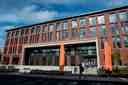
打开独立页面 →To spot the Oregon State University College of Business, just look for a striking, modern four-story brick building lined with tall windows-it stands boldly with a wide entrance…阅读更多收起
To spot the Oregon State University College of Business, just look for a striking, modern four-story brick building lined with tall windows-it stands boldly with a wide entrance and two bright orange flags on either side to catch your eye. Now, let’s dive into the story behind these walls-and don’t worry, I promise not to make you do any surprise accounting homework! Imagine it’s the late 1800s-the world is shifting fast, horse-drawn carriages roll on muddy roads outside Corvallis, and at Oregon State University, students are learning their first lessons in business, perhaps dreaming of invention, commerce, or maybe just a better way to balance their pocket money. That was more than a century ago-1898, to be exact-and it kicked off a legacy that’s become one of the state’s oldest public business schools. Time marches on and so does business at OSU. The very first business degree was awarded in 1904, and soon after, a vision for the future started to take shape. The School of Commerce was born, guided by a determined dean named John Andrew Bexell, a man so committed to OSU business students that he stuck around for over two decades. Under his watch, the program changed names more times than a business student changes their major: it became the Division of Business and Industry, then the School of Business and Technology, and finally settled as the School of Business. From the beginning, OSU stood a little taller-offering Oregon’s only public business degree until 1914. Picture back-to-back eras with deans who might as well have set up camp in their offices-Clifford Maser, for instance, clocked in for 24 years, and Earl Goddard stuck around for 15. Even when the business program hit a rough patch during the Great Depression, it rebounded stronger than ever. Through the decades, what started as basic business instruction grew into a dazzling menu: from accounting and finance to graphic design, hospitality, management, and even interior design-yes, they make spreadsheets and rooms look good. Fast forward to 2014-cue the sound of hard hats and power tools. This gleaming 100,000-square-foot wonder, Austin Hall, opened after a whopping $55 million investment, thanks to the generosity of OSU alumni Ken Austin and his wife Joan. Just imagine the excitement on dedication day: students bustling by, faculty grinning with pride, Kilimanjaro-sized coffee cups clutched in nervous hands as new futures began inside. And those Austin names? They’re a fixture here, lending their moniker not only to the building, but also to groundbreaking entrepreneurship and family business programs, all thanks to the Austins’ incredible support for the university. Today, the College of Business is buzzing more than a stock market on earnings day! Nearly 4,000 students are pushing boundaries, exploring everything from business analytics (yes, OSU teaches this in Portland too), to executive leadership, to entrepreneurship, and even a Ph.D. for those who dream of diving deep into accounting or innovation. And did I mention OSU’s famous online offerings? Whether you’re in Corvallis or curled up in your pajamas on another continent, you can join the Beaver business family. But what’s a great business school without legendary alumni? OSU’s produced everything from Medal of Honor recipients and state governors to E-Trade co-founders, restaurant CEOs, movie stars, and even a brewer behind 27 breweries-talk about a recipe for success! So as you stand here, let the energy wash over you-imagine the bright students heading to class, the sense of tradition in the air, and the endless, entrepreneurial spirit stretching all the way back to 1898. Maybe you’ll catch a future billionaire, inventor, or simply a business buff on their way to change the world. Or maybe just someone late for their marketing exam! Either way, this is where business dreams take shape at OSU-and you’re standing right at the heart of it.
打开独立页面 →Look for a striking, modern building made of red brick and glass, with crisp lines and large windows-right at the corner where the stop sign peeks out from behind leafy green…阅读更多收起
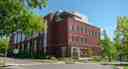
Look for a striking, modern building made of red brick and glass, with crisp lines and large windows-right at the corner where the stop sign peeks out from behind leafy green trees. Here you are, standing before the mighty Linus Pauling Institute! If this building could talk, it would tell you tales of the microscopic heroes inside your food-vitamins, minerals, and all those hidden nutrients battling for your health. The institute’s mission might sound almost superhero-like: they’re here to unlock the powers of micronutrients and phytochemicals, all in the name of keeping you healthy and fighting off disease. Who knew spinach and blueberries could have such dramatic flair? This all began in California back in 1973, when the world-famous scientist Linus Pauling and his friends founded the Institute of Orthomolecular Medicine-which, let’s admit, is a bit of a tongue-twister. Soon after, it got a makeover as the Linus Pauling Institute of Science and Medicine, before making its grand journey up to Oregon after Pauling’s passing. Maybe it traded in palm trees for pine needles, but the sense of adventure didn’t stop! In 2011, the Linus Pauling Science Center opened these gleaming brick and glass doors, and now it’s the largest academic building on campus, almost as if the nutrients needed more room to stretch out. Step closer, and you might imagine a bustling world inside-researchers puzzling over vitamin mysteries, chasing clues about oxidative stress and inflammation, all while probably wishing they had a snack. Today, under the leadership of nutritionist Emily Ho, the institute isn’t just about science in the lab; it’s got an online trove of nutrition knowledge for everyone, plus a newsletter, outreach adventures, and even research awards. So, if you feel a sudden urge for a salad or a burst of curious energy-don’t worry, it’s just the power of micronutrients and science working their magic in the air around you! Shall we continue? Your next adventure is just ahead!
打开独立页面 →To spot the Oregon State University Radiation Center, look ahead for a low, brick building with a long row of tall silver-trimmed windows and a sign on the lawn by the entrance…阅读更多收起
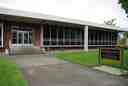
To spot the Oregon State University Radiation Center, look ahead for a low, brick building with a long row of tall silver-trimmed windows and a sign on the lawn by the entrance that reads “Radiation Center, 3451 SW Jefferson Way.” Alright, time to add a little excitement to your campus walk-welcome to the Oregon State University Radiation Center, where science gets so intense, it literally glows! This seemingly quiet building might look like your average campus hall, but step a little closer, and you might imagine hearing a faint hum from all the buzzing research inside. Now, let’s turn back the clock to the late 1960s. The year is 1967, and tucked over here on the west side of campus, OSU is preparing to flip the switch on something big-a TRIGA Mk. II nuclear reactor, which sounds like a robot from the future, but is really a peaceful powerhouse for science. This reactor isn’t just humming away on its own; surrounded by thick concrete and graphite, it’s quietly supporting all kinds of experiments, from chemistry and civil engineering to geology and even ocean sciences. If you imagine the sounds of excited chatter and clinking glassware-well, you’re not far off. The mission here is simple but powerful: to support the entire university with research, teaching, and service projects that need access to radiation or radioactive materials. It’s not a mad scientist’s lair-though it has just the right number of secret-sounding labs and mystery-but a place where bright minds come together for good. The beating heart of the center is the Oregon State TRIGA Reactor, which can chug steadily along at a thermal output of 1.1 megawatts-or pulse up to an electrifying 3000 megawatts for a split second. That’s a flash of energy strong enough to make your hair stand on end-if you were allowed near it, of course! Thankfully, only trained professionals get that close, and most of what happens here takes place behind sealed doors and layers of protection. This reactor isn’t a one-trick pony: it features six in-core irradiation facilities with names straight out of a sci-fi script. Some of these are the Central Thimble, the CLICIT, and the “Lazy Susan”-yes, a Lazy Susan, only instead of serving up snacks, it hands out neutron flux in neat circles! Can you picture samples spinning slowly, bathed evenly in invisible rays? You won’t see or feel a thing out here, but through these clever devices, researchers test minerals for age, create medical isotopes for hospitals, and even help forensic experts solve crimes. Speaking of crime-busting: the reactor here once helped analyze evidence in the case of the infamous I-5 Bandit-a serial killer. A beam of neutrons, a bit of radioactive wizardry, and suddenly clues that were once invisible became clear as day. It’s a reminder that what happens in this quiet building can have real-world impacts, sometimes in the most dramatic ways. But don’t worry, safety isn’t just an afterthought. For over a decade, this center has hosted HAZMAT radiological training-teams learning how to handle emergencies, overseen by the Oregon Department of Energy. If anything ever goes wrong (which, knock on wood, it doesn’t), there’s a rapid-response security force ready in moments. And now, OSU’s own campus Public Safety guards the facility-no need for capes, but maybe a cool utility belt or two. The reactor also boasts some impressive neutron beam ports-think tunnels that channel intense streams of neutrons and gamma rays out for experiments. Beam port #3 is especially popular, used in neutron radiography, which is basically an X-ray vision for scientists. Behind those panes of glass and layers of shielding are controls that would look at home in a sci-fi movie, with safety features galore-like automatic shutdowns if anyone gets too curious with the doors and shutters. But not everything here is old school! You’ll find projects studying how to sterilize medical equipment, develop new treatments for cancer, track fission in tiny minerals, and even figure out how old a rock is just by peering at particle tracks. In all, around 70% of the projects here depend on the reactor, drawing students and experts from all over the world. So the next time you pass by, know that within these calm, brick walls beats the pulse of cutting-edge science, flashing brilliantly-albeit invisibly-through all corners of campus and, sometimes, the world. And remember, while it might not have a glowing green core like in the movies, the real magic is happening just out of sight-carefully, quietly, and with a spark of Beavers science!
打开独立页面 →
常见问题
如何开始导览?
购买后,下载 AudaTours 应用并输入您的兑换码。导览将准备好立即开始--只需点击播放并按照 GPS 引导的路线行驶即可。
导览期间我需要互联网吗?
不需要!开始前下载导览并完全离线享受。只有聊天功能需要互联网。我们建议在 WiFi 下下载以节省移动数据。
这是导游带领的团体游吗?
不是--这是自助语音导览。您按照自己的节奏独立探索,通过手机播放音频解说。没有导游,没有团体,没有时间表。
导览需要多长时间?
大多数导览需要 60-90 分钟才能完成,但您完全控制节奏。随时暂停、跳过站点或休息。
如果我今天无法完成导览怎么办?
没问题!导览具有终身访问权限。随时暂停和恢复--明天、下周或明年。您的进度已保存。
有哪些语言可用?
所有导览均提供 50 多种语言版本。在兑换代码时选择您的首选语言。注意:导览生成后无法更改语言。
购买后我在哪里访问导览?
从 App Store 或 Google Play 下载免费的 AudaTours 应用。输入您的兑换码(通过电子邮件发送),导览将出现在您的资料库中,准备下载并开始。
如果您不喜欢该导览,我们将退款。请联系我们 [email protected]
安全结账使用 


