AudaTours logoAudaTours

诺里奇语音导览:一场穿越时空与传统的旅程

语音指南15 景点

一座诺曼城堡高耸于诺里奇之上,其庞大的主楼在宁静的石面下紧握着数百年的秘密。转入古老的巷道,你会遇到饱经风霜的教堂,它们闪烁着燧石的光芒,充满神秘。走进这座充满叛乱、皇室戏剧乃至百货公司王朝的城市——每个角落都隐藏着旅行指南中从未提及的故事。 这是您在诺里奇的自助语音冒险之旅,揭示了编织在著名街道中的隐藏传说和奇特真相。 当愤怒的暴民围攻诺里奇城堡时,是谁坚守了数月?为什么一场爆炸打破了施洗者圣约翰教堂(Maddermarket)内的平静?Jarrolds又是如何从法国帽商发展成为城市权力掮客的? 穿梭于中世纪的拱顶和熙熙攘攘的购物大厅,追溯叛乱和丑闻。从饱经战火的石头到闪闪发光的商店橱窗,漫步其间,发现失落的声音。当每个秘密都鲜活起来时,诺里奇在您脚下焕然一新。 现在就开始吧——诺里奇最古老的石头已准备好低语它们的故事。

导览预览

map

关于此导览

  • schedule
    持续时间 40–60 mins按照自己的节奏
  • straighten
    4.2 公里步行路线跟随引导路径
  • location_on
  • wifi_off
    离线工作一次下载,随处使用
  • all_inclusive
    终身访问随时重播,永久有效
  • location_on
    从 诺里奇城堡 开始

此导览的景点

  1. Look ahead and slightly up the hill-can you spot that enormous stone cube, rising above the trees with neat rows of arches carved into its pale walls? That’s Norwich Castle! Its…阅读更多收起

    Look ahead and slightly up the hill-can you spot that enormous stone cube, rising above the trees with neat rows of arches carved into its pale walls? That’s Norwich Castle! Its solid, almost blocky shape sits right on top of a grassy mound, with proud battlements lining the roof and a flag flying high. There’s a modern glass structure to the right, but your eye can’t miss the huge Norman keep at the centre. Now, imagine yourself standing here on a chilly morning in 1067. Suddenly, hoofbeats echo up the hill. William the Conqueror’s soldiers dash past, busy building what would soon be the mightiest fortress East Anglia had ever seen. Stone by stone, Norwich Castle rose from the earth, built to keep the newly-conquered city safely in Norman hands. But this castle hasn’t just stood here looking pretty. It’s been a prison, a scene of sieges and rebellion, even a safe haven for desperate people chased by angry mobs. Picture the clank of metal as prisoners were marched in, and the excited hush when a rebellion nearly toppled the Norman rulers. Norwich has seen it all-from medieval chaos and brave stand-offs to the silent patience of museum visitors today. And here’s a twist worthy of a Hollywood blockbuster: In 1075, the castle was attacked by its own townsfolk, loyal to a rebellious earl, while the earl’s courageous wife Emma held out inside for three nail-biting months. You could almost hear the tension in the air. When peace finally came, Emma and her people walked out unharmed-no doubt with a sigh of relief and maybe a secret recipe for siege survival bread. So, while it might look quiet now, Norwich Castle’s walls are bursting with stories-a real-life legend you can see and touch. Ready to storm the next stop, adventurer? Let’s march on!

    打开独立页面 →
  2. Look ahead and to your right-you’ll spot a striking, weathered building of deep, almost charcoal flint, with pale stone edges making the windows and corners pop. The windows…阅读更多收起

    Look ahead and to your right-you’ll spot a striking, weathered building of deep, almost charcoal flint, with pale stone edges making the windows and corners pop. The windows stretch up high in two neat rows: big, medieval glass panes below and a line of smaller, arched ones marching above. The tall, square tower rises above it all, topped with battlements and little stone points like a fairy-tale castle that’s here for business, not just beauty. Directly on the street, you’ll see bikes lined up and a little black iron fence running along the edge. The walls look textured and a bit sparkly thanks to the flint, and if the sun is shining, you might even see it glimmer. That’s Maddermarket’s St John the Baptist church right in front of you. Now, let’s step back in time. Imagine the whispers of a thousand footsteps echoing where you now stand-this old church has seen them all, from medieval worshippers to a Greek Orthodox choir! The first stones were tucked into place sometime in the 14th century, but there’s a hint that an even older church may have stood here hundreds of years before that. The sturdy tower, patched together with grit and dreams, was mostly rebuilt in 1822, but the bones, well, they’re ancient. You’ll notice how wide the church is, almost a squat rectangle made even more intriguing by the battlement-topped tower at the west end. Peek at the side and look out for buttresses holding the walls, three tall windows with stone tracery like frozen spiderwebs, and if your sharp eyes spot an old, faded sundial along the south wall-congratulations, you’ve found a relic from the 17th or 18th century! But not all was calm here. In 1876, an explosion tore through the interior, shattering much of the beautiful stained glass. I wonder if the ghosts of the glassmakers were watching, probably shaking their heads and saying, “Really, again?” After that, the church gathered treasures-furniture from all over Norfolk, statues, paintings, and even a massive wooden surround for the altar traveled here from another church. Inside there’s a painting of the Last Supper that might have been made by a Renaissance master, and a carousel-well, a revolving lectern from Italy. The font, pulpit, and sparkling colored marble came in the Victorian era, while the ceiling beams curve above like the ribs of a great sleeping beast. And to top it all off, the church was nearly shortened for Queen Elizabeth I’s fancy parade-at least, so the legend says. Turns out, she probably never swept through here in her ruff, demanding more space for her horses. But doesn’t it make for a good story? So pause here, soak up the centuries of stories hiding in these stones, and maybe give a little nod to the Duchess of Norfolk, the painter Joseph Stannard, and Walter Monck, whose memorials rest nearby. No matter what century you’ve arrived from, St John the Baptist, Maddermarket, is ready to welcome you into the fold of Norwich’s living history. Now, when you’re ready, just say the word and we’ll amble on to our next stop!

    打开独立页面 →
  3. If you look straight ahead, you can’t miss it: the grand white-fronted building curling around the corner. The entrance is framed by elegant pillars, with curved glass windows…阅读更多收起

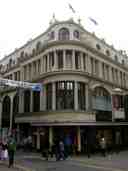
    If you look straight ahead, you can’t miss it: the grand white-fronted building curling around the corner. The entrance is framed by elegant pillars, with curved glass windows reflecting the shape of the street. Above you, three purple flags flap gently at the top level, making the whole building look almost like a proud ocean liner ready to set sail. Just under the flags, take in those rounded, arched windows, lined up smartly in a row-like eyes keeping an eye on the shoppers of Norwich. And, of course, you’ll see the name JARROLDS gleaming above the busy doorway. Welcome to the legendary Jarrold Group! Just imagine the street bustling,, and the smell of new books and sweet perfumes drifting from inside. This isn’t just any department store: Jarrolds is practically woven into the very fabric of Norwich. The family behind it, the Jarrolds, were once newcomers fleeing from France, bringing their hopes (and excellent taste in hats) across to England. We’re talking the 1700s-a time when wigs were fashionable and Norwich had more sheep than taxis. Picture this building back in 1905, freshly built and dazzling under new electric lights, with curious crowds gathering outside, anxious to see what wonders awaited inside. The great George John Skipper designed it, wrapping up its edges in creamy “baroque” style-big on drama, big on personality. Think flouncy stonework, swirling statues, and a façade that says, “Shop here and you’ll never be bored.” But Jarrolds is more than shopping! The family dabbled in just about everything: from publishing the first copy of Black Beauty (horse not included), to sponsoring a football stand, and even lending sheriffs and Mayors to the city. You could say the Jarrolds are the Swiss Army knife of Norwich-always turning up where you least expect them! Oh, and if you hear a cheerful chime-maybe it’s the echo of Norwichians past, bustling through these doors, hunting for a perfect hat, a book, or simply a good old gossip by the perfume counter. Soak up the lively atmosphere, and let’s get ready for our next stop. The bustle of Norwich Market is up next, and who knows-you might catch a bargain or two.

    打开独立页面 →
再显示 12 个站点显示更少站点expand_moreexpand_less
  1. Look straight ahead and you’ll spot Norwich Market right in front of you. It’s a brilliant burst of colour-just look for the sea of striped canopies in red, yellow, green, and…阅读更多收起

    Look straight ahead and you’ll spot Norwich Market right in front of you. It’s a brilliant burst of colour-just look for the sea of striped canopies in red, yellow, green, and blue. Stalls are tucked close together in neat rows, making a vivid patchwork right in the shadow of the tall clock tower and the grand brick City Hall. If you see crowds moving between these cheerful stalls, you’ve found it! The market stretches across the square, so just follow the lively buzz and those eye-catching awnings. Welcome to Norwich Market, the heart of city life for nearly a thousand years! Imagine standing here way back in the 11th century-Norman merchants unloading wagons, the laughter of townsfolk, and the shouts of vendors blending together in a lively symphony. This market wasn’t always here. After the Norman conquest swept across England in 1066, Norwich was transformed. The old Anglo-Saxon market at Tombland moved here, and this space became the city’s new center of action. Stalls selling everything from fresh produce to fabrics marked the beginning of a trading hub that would help Norwich become one of medieval England’s biggest, busiest cities. Sometimes, I think the market only slows down when someone drops the last piece of cheese. Through the centuries, Norwich Market survived wars, plague, famine-you name it. At one point, the city’s population plummeted by over 50%. But Norwich folks, tough as old boots, kept trading, rebuilding, and reinventing the market. By the 1400s, even a Guildhall popped up next door to help keep shoppers in line and arguments about turnip prices under control. By Georgian times, Norwich was the place to be. This was where people went to see and be seen-especially on Gentleman's Walk, right here near the market. Fancy shops and bustling coaching inns worked their magic, making this a must-visit spot for anyone with a bit of spare coin and, ideally, a fancy hat. Of course, the market’s appearance has gone through more changes than a chameleon at a disco. In the 1930s, new rows and a shiny new City Hall arrived, and after much debate (and probably a few tea-fuelled arguments), the current layout was finished in the early 2000s. Today, with around 200 stalls, it’s one of Britain’s largest. So take a deep breath-can you smell the flowers, fresh bread, and sizzling street food? Listen close, and you might just hear the echo of merchants past, wondering where all these colourful nylon backpacks came from. Enjoy exploring the living, breathing history of Norwich Market-a city within a city, right under your feet. Wondering about the foundation, norwich market in the middle ages or the other uses of the market square in tudor and stuart england? Feel free to discuss it further in the chat section below.

    打开独立页面 →
  2. If you look up ahead, you can’t miss it-St Peter Mancroft stands tall and proud, right next to the busy Norwich marketplace. The church has a pale, stone face with tall arched…阅读更多收起

    If you look up ahead, you can’t miss it-St Peter Mancroft stands tall and proud, right next to the busy Norwich marketplace. The church has a pale, stone face with tall arched windows and a mighty square tower topped with a spire that looks like it’s reaching for the sky. To spot it, look for the biggest, grandest building in the square, with a checkerboard of light and dark stone and huge doorways inviting you in. Here we are, standing in front of St Peter Mancroft, Norwich’s largest church after the two cathedrals. Imagine you’re here in medieval times, with market bustle and carts rumbling over cobbles. The church sits on a gentle slope, giving it that bit of extra pride-like it knows it’s special! This grand place has been here in one form or another since Ralph de Gael first built it over 900 years ago, but what you see now dates back to the 1400s-so we’re talking old enough to have kept secrets even from your nan. Take in its towering west end, sparkling in the sun with ashlar stone. It’s so tall that you might regret agreeing to climb all those steps later! Inside, you’d find medieval glass windows, not quite in their original spots. Over the centuries, the windows have moved more than some people do in their lifetime! The oldest is the Toppes Window-imagine brilliant colors telling tales of Jesus, the Virgin Mary, and even a cameo from Norwich’s own Robert Toppes with his two wives. The glass has survived wars, storms, and Victorian tweaks, so every spark of light through them is a whisper from ages past. Somewhere under the old choir stalls, workers once found mysterious L-shaped trenches stuffed with earthenware jars. No, not forgotten lunch leftovers-acoustic jars, designed to improve church sound before microphones were trendy. Even the silverware is special here: glittering cups and treasures linked to Sir Thomas Browne, a real Renaissance character. And if you’re lucky, you might hear the deep, warm rumble of the new organ, installed in 1984, shaking the air just like it has for centuries of weddings, funerals, and the occasional not-so-subtle snore during sermons.

    打开独立页面 →
  3. If you look just ahead, you’ll spot the Theatre Royal’s bold white facade rising above the street, with shiny glass panels and the name "THEATRE ROYAL" announced in big letters…阅读更多收起

    If you look just ahead, you’ll spot the Theatre Royal’s bold white facade rising above the street, with shiny glass panels and the name "THEATRE ROYAL" announced in big letters across the top. The entrance sweeps along on your right, and it feels almost like it’s waiting for a glorious red carpet event. To make sure you’re in the right spot, look for the bright show posters fluttering in the wind out front and people gathering as if about to step into an exciting story. Standing here, you might hear a little hum-like the bustling chatter of theatre-goers and the creak of old wood as if centuries of drama still echo in the air. And let me tell you, the Theatre Royal has seen just as much drama off-stage as on it! Imagine: in 1758, Thomas Ivory designed this very theatre, inspired by London’s grand Drury Lane. Back then, a thousand people would squeeze in under the soft glow of candles-hoping none of the actors forgot their lines or set fire to their wigs. This spot has literally risen from the ashes-twice! In 1934, flames lit up Norwich as the theatre burnt down. Less than a year later, it sprang back, almost as if the show couldn’t bear to end. Not even bombs in World War II could keep this stage quiet for long. Rumor has it, the stars who’ve graced these boards-like Cary Grant, Sarah Siddons, and even Charlie Chaplin-sometimes whispered their most famous lines backstage, hoping for a sprinkle of good luck. During the 1900s, audience numbers dipped when everyone became obsessed with cinema and, later, television. To keep people coming, the theatre tried everything-boxing matches, film screenings, and some rather raucous rock & roll. Picture the confusion when someone showed up dressed for Hamlet and instead found a wrestling match! The nearby city council actually rallied to save this place, proving Norwich folks aren’t afraid of a little drama in real life. Now, after a sparkling refurbishment in 2007, the Theatre Royal still welcomes the curious and the courageous, with Stephen Crocker at the helm, making sure the spotlight never fades. So, as you stand here, imagine yourself as part of the audience from any generation-holding your breath as the curtains rise, the lights dim, and stories old and new spring to life.

    打开独立页面 →
  4. Look ahead for a building that could easily double as a movie set for epic tales-a giant stone cathedral with pointy towers that seem to poke holes in the sky. You’ll know you’ve…阅读更多收起

    Look ahead for a building that could easily double as a movie set for epic tales-a giant stone cathedral with pointy towers that seem to poke holes in the sky. You’ll know you’ve arrived when you spot rows of tall, arched windows and a grand, almost fortress-like exterior, all crafted in creamy stone. The main entrance will be right in front of you, flanked by those distinctive, triangular gables and ornate carvings that almost dare you to imagine what’s inside. You’re now standing before the Cathedral Church of St John the Baptist. Just imagine the sound of footsteps echoing through these huge doors over a hundred years ago. This place was built between 1882 and 1910-not long ago in “cathedral years”-and believe it or not, it all started when the Duke of Norfolk wanted to say “thank you” to the universe for marrying Lady Flora. I guess a fancy dinner just wouldn’t cut it. The cathedral sits on the site of the old Norwich City Gaol, so right where you stand, the clang of cell doors must have once rung out. Today you’ll only hear the soft hum of prayer and maybe a cheeky pigeon flapping by. This is the headquarters for the Catholic Bishop of East Anglia too, so it’s kind of the “mothership” for Catholics around here. Inside, there’s the Duckett Library with walls lined by 3,000 religious books. Just think-if you’re ever short of bedtime reading, you’ve got options. But bring your best polite voice! Inside the grounds, you’ll also find the Narthex, the friendliest visitor centre you’ll ever meet: it’s stuffed with things to do, bite, or buy. There’s even a garden-though if the weather is funny, you might want to sprint for the refectory’s warm tea and cakes. And you’re not imagining things if you spot another big cathedral in Norwich. There are actually two! Makes it twice as likely you’ll get lost, but at least you’ll always be near a tower or two. Now, soak in the atmosphere. Who knows what stories the stones could tell if they ever learned English?

    打开独立页面 →
  5. If you look ahead, you'll spot a building that's clearly not your average modern concert hall. The Norwich Arts Centre is right in front of you, nestled behind some black…阅读更多收起

    If you look ahead, you'll spot a building that's clearly not your average modern concert hall. The Norwich Arts Centre is right in front of you, nestled behind some black railings, with tall, thin gothic windows set in ancient, dark flint stone walls. There’s a silver roof and a small, pointy spire poking up, as if the building’s trying to see what’s happening on the street. The sign by the gate says “Café Open,” so you know you’re in just the right place. If you see some bikes parked out front and a leafy tree on your right, you’ve arrived. Standing here, you’re looking at a building with more history than a rockstar has guitar picks. Don’t let the stone walls and gothic windows fool you-this place is less “shhh,” more “let’s rock.” Norwich Arts Centre sits in an old church, St Swithin’s, dating all the way back to 1349-imagine all the footsteps, prayers, and music that have bounced off these stones over centuries! Back in the day, this spot was all pews and sermons, but now it’s all about gigs and good times. It’s been everything from a slum church to a schoolroom, a warehouse to, finally, a buzzing home for live music and theatre. The building might look a little haunted by history-who knows, maybe some medieval choirboys are still humming in those arches. In the late 1970s, some bold souls wanted to give Norwich an alternative arts venue, so with a little help from the council, they took this former church and turned it into a springboard for creativity. The walls have shaken with the likes of Nirvana, Oasis, Coldplay-yep, even some bands you’d pay ten times the ticket price for now. And comedians too, just in case you thought it was all guitars and drum kits. One heated night in 1991, there was even a dramatic bit of rock history here-a member of the Manic Street Preachers got so passionate after a gig that he carved “4 Real” into his own arm! Now, don’t try that at home-or here. If you wander inside, the church’s old features are mostly gone, except for ten stone monuments still holding their stories. One is for Willam Abbott, who survived the Battle of Bunker Hill, so this old place isn’t just about art and music-there are ghosts of history, revolution, and resilience around every corner. Today, the Norwich Arts Centre is a charity, a place for the bold, the curious, and the downright creative. Not bad for a small venue that once held sermons instead of synthesizers. And who knows-stand here long enough, and you might hear the faint buzz of an amp mixing with the wind.

    打开独立页面 →
  6. If you look just ahead, towering above the rooftops and catching the morning sun, you’ll spot St Laurence’s Church by its striking, grey flint tower. It stands boldly between the…阅读更多收起

    If you look just ahead, towering above the rooftops and catching the morning sun, you’ll spot St Laurence’s Church by its striking, grey flint tower. It stands boldly between the modern buildings, showing off those classic medieval features: tall, slender windows, a hint of battlements along the top, and even a little turret with a pointy spirelet. To make sure you’re looking at the right spot-just follow the road, glance up above the brick buildings, and there it is: a true slice of Norwich history reaching into the blue sky. Right, time to imagine yourself back to the 1400s, striding up the street where St Laurence’s Church was a hive of activity. This old church has seen everything-weddings, whispers, even the odd disaster! Built between 1460 and 1472, and towering 112 feet high, St Laurence’s has stood through plagues, civil wars, and far too many cold winters (without central heating, mind you-saints preserve us). See the great west door at the base of the tower? Imagine entering it as a medieval tradesperson, breathless from the climb up St Benedict’s Street, peeking warily at the carvings above: St Edmund, bravely being pelted with arrows, and St Lawrence, showing why he’s the patron saint of cooks by getting himself grilled-talk about a hot seat! Above you, there’s the big Perpendicular style window, once filled with colourful glass, and niches where saints would have stood, keeping an ever-watchful eye. You’d also spot the battlements at the top, almost as if the church is ready for a battle it never got. Listen carefully on the wind-if you hear a bell, you’re hearing metal cast by William Revel nearly 700 years ago. Apparently, he could make a bell ring so true it might wake even the sleepiest vicar (or snoozing medieval congregation). Inside, giant stone pillars rise up, holding up the grand hammerbeam roof, while carved angels look down. There’s a little mystery and sadness here, too: by the late 1800s, many pews started emptying, and by 1968, St Laurence’s doors were closed for good-except, of course, to curious souls like you. Before you move on, think of all the echoes in these walls: chants, laughter, music. One special echo is the voice of Sarah Glover, inventor of the Norwich sol-fa singing system-a legend in music, remembered on her own brass plaque. So, next time you hear a bell or spot a lone old church on a Norwich street, give a nod to St Laurence’s-it’s survived centuries of bustle and is still standing tall, keeping watch over Norwich, and ready for your next adventure. And with that, let’s continue onward, because Norwich has plenty more secrets to share!

    打开独立页面 →
  7. Right ahead of you is Strangers’ Hall. To spot it, look for the striking old building with creamy-yellow walls, bold black timber frames, and a jumble of pretty, diamond-paned…阅读更多收起

    Right ahead of you is Strangers’ Hall. To spot it, look for the striking old building with creamy-yellow walls, bold black timber frames, and a jumble of pretty, diamond-paned windows. The steep, tiled roof and the tall brickwork below hint at secrets stashed away for centuries. It might look a bit like something from a Tudor detective story-which, to be fair, is practically what it is. Now, as you stand here, picture the buzz of 16th-century Norwich all around you. This house has been here for over 700 years-long enough to hear a lot of interesting gossip! Strangers’ Hall has played many roles. Think of it as the jack-of-all-trades of Norwich: home to important mayors, a busy merchant’s headquarters, and later, a safe haven for Protestant refugees known as “the Strangers.” Don’t worry, no need to hide-there aren’t any secret passwords to get in nowadays. Step closer, and you might almost catch a whiff of spices from the cellars where goods used to be stored, or the echo of distant footsteps on the ancient undercroft below. There are three courtyards twisted around the building, perfect for sneaking a peek at who’s coming in, just like the porter used to do from his little window. Inside, a grand Georgian dining room waits for ghostly banquets, and the grand Oak Room upstairs looks over gardens that once bustled with traders and merchants. Why the name “Strangers’ Hall?” Most people say it’s because of the Protestant refugees from the Low Countries who made Norwich their new home in the 1500s-imagine them, arriving with new skills and fabrics, fleeing Spain’s anti-Protestant ruler, and trying not to get their clogs caught in the mud. At one point, their numbers were so high they made up a third of the city’s population! Some say the name comes from other kinds of guests-even a Sir Lestrange Mordaunt popped up as a possible inspiration. Through fire, fortune, and a whole parade of mayors and merchants, Strangers’ Hall has survived, patched, polished, and crammed with stories. Today, it stands as a museum of home life, waiting to show you the Norwich of old. So take a deep breath, get your imagination ready, and if you hear a creak-well, that’s just the house stretching its ancient bones. Or is it?

    打开独立页面 →
  8. Right ahead of you is Norwich Cinema City-hard to miss with its mix of old and new. If you’re looking for it, keep your eyes peeled for the rustic flint stone walls and arched…阅读更多收起

    Right ahead of you is Norwich Cinema City-hard to miss with its mix of old and new. If you’re looking for it, keep your eyes peeled for the rustic flint stone walls and arched windows on your right. The roof slopes steeply, and the entrance sits beneath a dark wooden canopy that feels like something out of a secret society's lair. If you spot the big “Cinema City” sign against a reddish-brick building, you’ve definitely arrived. Now, just imagine the world outside fading away as you step into a place where anything could happen-a medieval merchant’s house transformed into a palace of stories. You’re actually standing in front of Suckling House, a building with bits dating back to the 14th century. If these ancient stones could talk, they’d have a blockbuster script ready-full of merchant deals, tight-lipped secrets, and maybe a little medieval mischief. Funny thing is, the very spot that now hosts popcorn-munching film fans once belonged to the Suckling family in the 1500s. And remember to look up at that grand façade; the street-facing side is from an 18th-century makeover, a time when ruffles and wigs were all the rage. In 1925, Stuart Hall was added-a place built to fit over 400 people, all eager to be swept away by the light and magic of cinema. Before long, it wasn’t just about movies: this was a hall where Norwich, with all its quirks and characters, came together for a slice of culture. Cinema City is no ordinary film house. Sure, you’ll catch the latest art-house drama or maybe that quirky French comedy-but the walls themselves are part of the experience. Wander through and you might grab a drink where a medieval merchant once counted his gold, or snack on chips in a centuries-old vaulted room that’s finally open to the public. And don’t let the classic architecture fool you-inside, there are three top-notch screens, both digital and film projectors, and the kind of cozy seats that make you never want to leave. Education is in the air, too, as Cinema City runs film courses and special events through its education arm, Cinema Plus. Famous faces love it here as well. In 2013, for their 35th birthday, none other than actor John Hurt became the cinema’s patron-so the next time you settle in for a film, know you’re in good company. So, take a deep breath and soak up the history. You’re standing at the crossroads of Norwich’s past and present, where stories leap from the screen and every stone has a secret to share. Just don’t try to order eel pie at the bar; that dish disappeared around the same time as the last Suckling! Ready to catch a film, or feel like you’ve already stepped into one?

    打开独立页面 →
  9. To help you spot the Norwich University of the Arts, look for a bold, creative sign that practically shouts “art” at you. The words are big, black, and blocky - made from playful…阅读更多收起

    To help you spot the Norwich University of the Arts, look for a bold, creative sign that practically shouts “art” at you. The words are big, black, and blocky - made from playful patterns of dots, stripes, and crisscrosses - all set against a blazing yellow background. It’s not shy; it’s as if the building itself wanted to dress up for art class! So, keep your eyes peeled for the splash of yellow and the most unique lettering in the city center - that’s your cue. Standing here now, you’re right at the heart of creativity in Norwich. The Norwich University of the Arts, or NUA for short, is where imaginations run wild and no idea is too outlandish. It’s been shaping artists since 1845, back when Queen Victoria was just getting used to the idea of photographs. Try to imagine those early students, brushes and pencils in hand, maybe even wearing rather serious expressions as they prepared to change the art world. Back then, Norwich needed skilled designers for its booming industries, and a group of local painters said, “Why not make Norwich famous for art?” And they did! Now, more than 175 years later, the place is buzzing with painters, photographers, game designers, filmmakers, and fashionistas. In fact, if walls could talk, you’d hear stories of epic last-minute projects, paint splatters that look suspiciously like modern art, and midnight brainstorms that turn into masterpiece exhibitions. Inside these buildings, students bring wild ideas to life - imagine the click-clack of keyboards mixing with the hum of a forge, the whirr of a 3D printer, and the giggles from a stop-motion animation studio. There’s even a workshop where metal sings and wood shouts as it’s shaped and carved. NUA is smaller than some universities, but what it lacks in size, it makes up for in wild, creative energy. Its graduates go out to design dazzling magazines, beautiful buildings, jaw-dropping video games, and movie magic. And who knows? Maybe the next Banksy or Stella McCartney is peeking out of those windows right now, thinking deep thoughts about paint, pixels, and… probably lunch. And if you ever hear a nervous “clunk” from nearby, that’s just another sculpture being moved into place, ready to surprise Norwich - and maybe make people scratch their heads and say, “That’s art?” That’s the magic of NUA: if you can imagine it, you just might see it taking shape right behind these bold yellow walls. Intrigued by the buildings, organisation and structure or the research? Make your way to the chat section and I'll be happy to provide further details.

    打开独立页面 →
  10. If you look just above the low rooftops, you’ll spot a sturdy, square tower of ancient flint and brick. That’s St Mary the Less, almost hidden away like a quiet secret. The tower…阅读更多收起

    If you look just above the low rooftops, you’ll spot a sturdy, square tower of ancient flint and brick. That’s St Mary the Less, almost hidden away like a quiet secret. The tower isn’t flashy - it’s grey and crumbly, trimmed with old stone and weathered bricks, and wedged between much newer buildings. You might need to tilt your head up, almost like you’re peeking over the neighbours’ fences to say hello to someone who’s been around for centuries. Now, picture yourself back in medieval Norwich - bustling feet, maybe a few horses and carts, and this church standing right in the thick of it. St Mary the Less started its life all the way back in the 1200s. But rather than retire after a few hundred years, it decided to take on new hobbies. When its parish closed in 1544 (and you thought your last job ended suddenly), the church welcomed Dutch cloth merchants. Can you imagine rolls of brightly coloured fabric, the rustle of trade, and the scent of wool all mixing together inside these ancient walls? But the church still wasn’t done reinventing itself. In 1637, it became a home for Walloon and French Protestants - l’Église Protestante Française de Norwich - offering a place of hope and safety to people chased from their homes. Their voices, prayers, maybe even a few secret worries, all woven into the stonework. Later, the building changed hands again and again - Swedenborgians, a Catholic Apostolic church, and eventually, yes, a furniture warehouse (where-let’s be honest-pews probably became chairs and confessionals might have doubled as storage closets). And speaking of mysteries: St Mary the Less is still full of stories, but now it’s a little forgotten, sitting on the Historic England Heritage at Risk Register. Its roof is in need of repair, its doors not always easy to find, and yet, if these stones could talk, they’d have enough tales to keep you up all night wondering. Who knew one tower, a bit hidden from the street, could have lived so many lives?

    打开独立页面 →
  11. You’re nearly at Norwich Cathedral now, and trust me, you can’t miss it! Look up ahead for a spectacular spire soaring high into the sky. If it feels like you’re craning your neck…阅读更多收起

    You’re nearly at Norwich Cathedral now, and trust me, you can’t miss it! Look up ahead for a spectacular spire soaring high into the sky. If it feels like you’re craning your neck to see the very top, you’re in the right place-it’s the second tallest spire in England, after all. The building itself is a creamy, pale stone with thick Norman walls lined with rows of arched windows. Just a warning: if you thought you could win a game of “who can spot the biggest building” in Norwich, this cathedral has already claimed the crown. Now, imagine standing here hundreds of years ago. The year is 1096. Stone blocks are clinking and scraping as they’re hauled ashore from the River Wensum by tired workers. This mighty cathedral is about to rise on the orders of Bishop Herbert de Losinga-one of the earliest ambitious builders in Norwich (and a chap who, fun fact, bought his job as bishop with a tidy sum of gold, which was considered a bit naughty even back then). All around you, the air would’ve buzzed with the chants of Benedictine monks, since the cathedral was part of a busy priory. Over the centuries, Norwich Cathedral survived riots, fires, lightning strikes-you name it. In fact, the spire up there today replaced the original wooden one, which famously toppled in a storm and then, later, another was struck by lightning, setting off a fiery disaster that turned some of the cream-coloured stone bright pink. Medieval Norwich folks would’ve watched that and thought they needed more than just rain to fix it. If you could wander these cloisters at night, you’d hear whispers about the incredible stones overhead. Hidden amongst the carvings, you’ll spot bosses-little sculptures that have survived wild mobs and iconoclasts, and which might just be the world’s greatest collection if you believe the experts. Some folks say they still watch over the cathedral, especially when no one’s looking. During the English Civil War, the echo of heavy boots and angry shouts rolled through these halls as a mob burst in and smashed sacred symbols. The cathedral has picked itself up each time, stone by stone, carrying a little bit of every story in its walls-from ancient Anglo-Saxons to choirs filling the nave with song today. So, next time you catch sight of that spire piercing the sky, remember: you’re looking at nearly a thousand years of history, mystery, disaster, and hope, all wrapped up in stone. And, as you head on to the next stop, check the pigeons aren’t plotting to conquer that spire. They haven’t managed it yet, but you never know! For a more comprehensive understanding of the ministry, art works and treasures or the music, engage with me in the chat section below.

    打开独立页面 →
  12. You’ve made it to the final stop: the Great Hospital! Take a good look at these ancient buildings spread out under the shade of the big old trees beside the River Wensum. Can you…阅读更多收起

    You’ve made it to the final stop: the Great Hospital! Take a good look at these ancient buildings spread out under the shade of the big old trees beside the River Wensum. Can you hear the gentle trickle of the river just around the bend? This is Norwich’s answer to a 13th-century “dream retirement village,” but with a lot more bells and Latin songs. Back in 1249, a caring bishop named Walter de Suffield built this place-then called Giles’s Hospital-so that priests, poor boys, and sick or hungry folks would have a roof over their heads. Imagine the cobbled courtyards centuries ago, with hungry boys clutching their books, hoping for a hearty dinner and maybe a lesson in Latin. Speaking of singing for your supper, bright boys who picked up Latin quickly could train as choristers…and maybe, one day, become a priest. Not a bad career option, considering the local job market was “Medieval Times: Difficult.” Instead of long, complicated rituals, the Augustinian monks who lived here kept things simple, so they could focus on caring for people. Still, every day there were three masses to sing-one for the bishop’s soul, and don’t forget the weekly special for Saint Giles. Even medieval priests had busy schedules. No weekends off here! Through the years, this place has grown. First there were cottages, then sick wards, then shiny new flats. Every new generation brought new ideas-just imagine the conversations: “Sorry, Prior, but do you really expect me to share my cottage?” Even today, the Great Hospital is still a living community. You’re standing in front of nine listed buildings, each with their own stories. St Helen’s House next door has its very own painting by a famous artist, but apparently, even paintings like their privacy, so St Helen’s wasn’t part of the hospital at first. Sixty-five different “Masters” have run this place since 1256. The first was Hamon de Calthorpe, and these days, it’s Gina Dormer. You could say everyone here has aged gracefully-with the help of a good roof, tasty meals, and maybe just a choir song or three each evening. So as you stand here, just imagine the hustle and bustle, the footsteps on stone, and maybe the odd grumpy priest wishing someone else would ring the bell for morning prayers. The Great Hospital is more than just old stone-it’s centuries of kindness, a dash of drama, and a whole lot of Norwich heart. Well done, traveler, you’ve completed the Norwich tour! If only I could give you a souvenir-but at least you’ve taken home centuries of stories. Safe travels, and watch out for any ghostly monks on your way home-they might just need help with their Latin homework!

    打开独立页面 →

常见问题

如何开始导览?

购买后,下载 AudaTours 应用并输入您的兑换码。导览将准备好立即开始--只需点击播放并按照 GPS 引导的路线行驶即可。

导览期间我需要互联网吗?

不需要!开始前下载导览并完全离线享受。只有聊天功能需要互联网。我们建议在 WiFi 下下载以节省移动数据。

这是导游带领的团体游吗?

不是--这是自助语音导览。您按照自己的节奏独立探索,通过手机播放音频解说。没有导游,没有团体,没有时间表。

导览需要多长时间?

大多数导览需要 60-90 分钟才能完成,但您完全控制节奏。随时暂停、跳过站点或休息。

如果我今天无法完成导览怎么办?

没问题!导览具有终身访问权限。随时暂停和恢复--明天、下周或明年。您的进度已保存。

有哪些语言可用?

所有导览均提供 50 多种语言版本。在兑换代码时选择您的首选语言。注意:导览生成后无法更改语言。

购买后我在哪里访问导览?

从 App Store 或 Google Play 下载免费的 AudaTours 应用。输入您的兑换码(通过电子邮件发送),导览将出现在您的资料库中,准备下载并开始。

verified_user
满意保证

如果您不喜欢该导览,我们将退款。请联系我们 [email protected]

安全结账使用

Apple PayGoogle PayVisaMastercardPayPal

AudaTours:语音导览

有趣、经济实惠、自助徒步导览

试用应用 arrow_forward

深受全球旅行者喜爱

format_quote 这次导览是游览这座城市的绝佳方式。故事很有趣,感觉不太照本宣科,我喜欢能够按照自己的节奏探索。
Jess
Jess
starstarstarstarstar
第比利斯导览 arrow_forward
format_quote 这是了解布莱顿的一种可靠方式,感觉不像游客。解说有深度和背景,但并未过度。
Christoph
Christoph
starstarstarstarstar
布莱顿导览 arrow_forward
format_quote 一手拿着羊角面包,零期望地开始了这次导览。这款应用真的很适合你,没有压力,只有你、你的耳机和一些很酷的故事。
John
John
starstarstarstarstar
马赛导览 arrow_forward

无限语音导览

解锁全球每个导览的访问权限

0 导览·0 城市·0 国家
all_inclusive 无限探索