
利奇菲尔德音频之旅:利奇菲尔德遗产音频之旅
三座尖塔划破利奇菲尔德的天空,但在它们警惕的目光下,这座城市隐藏着流传数百年的故事——沼泽般的主教池塘、被禁止的发明,以及战争的阴影仍在花朵和雕像间回荡。通过自助音频导览解锁这些秘密,它将日常角落变成戏剧和发现的剧场——找到大多数游客错过的故事、细节和隐藏的痕迹。 灯塔公园的哪个关键时刻让沼泽一夜之间变成了备受喜爱的游乐场?为什么战争纪念碑上圣乔治的凝视会引发关于古老斯塔福德郡世仇的低语?伊拉斯谟·达尔文书房里草草写下的哪项发明引发了一场蔓延至英格兰之外的丑闻? 从天鹅出没的绿叶公园,到承载着勇气的纪念碑。漫步在红砖墙后酝酿着天才与反叛的宁静小巷。每一步都揭示着平静表面下涌动的历史——令人惊讶、感动、难以忘怀。 敢于以新的视角看待利奇菲尔德。您的神秘之旅现在开始。
导览预览
关于此导览
- schedule持续时间 40–60 mins按照自己的节奏
- straighten2.9 公里步行路线跟随引导路径
- location_on
- wifi_off离线工作一次下载,随处使用
- all_inclusive终身访问随时重播,永久有效
- location_on从 灯塔公园 开始
此导览的景点
To spot Beacon Park, look for wide, open lawns bursting with neat, colorful flowerbeds, winding paths, and statues-plus, you’ll see the three sharp spires of Lichfield Cathedral…阅读更多收起
To spot Beacon Park, look for wide, open lawns bursting with neat, colorful flowerbeds, winding paths, and statues-plus, you’ll see the three sharp spires of Lichfield Cathedral peeking over the trees in the background. Take a deep breath as you stand here: you’re smack in the heart of Lichfield’s beloved Beacon Park, where birds might be chattering overhead and kids’ laughter drifts across the grass. But if you’d been here a few centuries ago, you might have needed wellies-because what’s now lush parkland was once waterlogged swamp and a glimmering lake, buzzing with swans. Back in the 14th century, the Bishop’s Fish Pool stretched across much of this land, with “The Moggs”-spongy marshes-teeming with birds and insects. The bishops didn’t just enjoy the scenery; they protected their swans here, with nesting pens and all! That history still trails into today in the street names you’ll spot around here: Swan Road and Swan Mews tip their hats to those feathered residents. But let’s leap forward to Victorian Lichfield, when the townsfolk dreamed of something grander than muddy fields. Using muddy silt dredged from Minster Pool, they raised the ground, drained away the muck, and in 1859, unrolled the Museum Gardens next to a brand-new Free Museum and Library. Imagine the excitement then: people fluttering in their best hats, gazing at the fountain-gifted by the local chancellor and flanked by lions made of stone-listening to the city band on a fresh-built bandstand. The central gardens and the wider park grew and grew. Thanks to generous locals-especially Colonel Swinfen Broun, who gifted acres of his estate-Beacon Park stretched wider each decade, “swallowing up” Beacon House’s gardens, adding fish ponds, and eventually becoming the 69-acre hub of play and relaxation you see today. The park’s monuments each whisper their own story if you listen closely. There’s a proud statue of King Edward VII, in coronation robes-standing as a tribute to loyalty and city pride. Nearby, you’ll find a stern bronze Captain Edward Smith, the captain of the Titanic. His statue, not far from the western entrance, was raised in 1914 after the tragedy; people across the nation contributed pennies and pounds to remember the man who guided the great ship on its fateful voyage. There’s even a marker for Colonel Swinfen Broun himself-a solid sandstone block keeping watch by the pool-reminding everyone that generous hearts can shape a city. And speaking of shaping, Beacon Park didn’t always sparkle like this. During both World Wars, it saw dramatically different days-athletics, dancing, even military occupation. While armies bivouacked in Beacon House, cannon and captured guns decorated the gardens, only to be sent for scrap in the next world crisis. Still, after the fighting ended, the local people flocked here to celebrate peace, dance, and remember. Fast forward to modern times, and you can practically feel the park’s pulse. Today, it’s one of the top 10 green flag parks in the UK-quite a glow-up for an old marsh! Come during festival season and the grass hums with music, car shows, circuses, and the grand Lichfield Proms. Sporting souls can try everything from tennis to golf, test their balance on the crazy golf course, or bowl on greens that echo with nearly a century of friendly competition. Now, imagine the Museum Gardens as Victorian families would have seen them: swirling geometric flower beds, the air filled with scents of crushed grass and blooming petals. Restored fountains sparkle where children play, and statues-some restored at great expense-keep silent vigil while new generations roll hoops, share secrets, and picnic under the centuries-old trees. So whether you’re here for quiet reflection, to marvel at monuments, or just to take a break from the bustle of city life, remember: every step you take in Beacon Park is on land that’s been drained, raised, gifted, and loved. Even the swans would be impressed-if a little annoyed at losing their pond! To expand your understanding of the monuments and sculpture, recreational uses or the entertainment uses, feel free to engage with me in the chat section below.
打开独立页面 →To spot the Erasmus Darwin House, just look for a grand, red-brick Georgian townhouse with bright white window frames and arched Venetian-style windows-it’s directly in front of…阅读更多收起
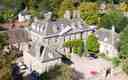
To spot the Erasmus Darwin House, just look for a grand, red-brick Georgian townhouse with bright white window frames and arched Venetian-style windows-it’s directly in front of you, a little set back from the street behind a leafy brick wall and garden. Welcome to Erasmus Darwin House! Imagine yourself here nearly 250 years ago, on a brisk morning in Lichfield. The freshly built Georgian house stands tall-far grander than the medieval timbered home Erasmus first bought. Back then, instead of a driveway, there was a deep, tangled ditch running in front of the house-once the moat of the Cathedral Close! Visitors would have crossed over a wooden bridge Darwin himself built, brushing past lilacs and rose bushes that hid the terrace from curious townsfolk. Now, Erasmus Darwin wasn't just any local. He was a doctor, an inventor, a poet, and, quite frankly, the kind of dinner party host who made sure his guest list was top-notch. Ever heard of Josiah Wedgwood, Benjamin Franklin, or James Watt? If you had strolled by this very house in the 1700s, you might have spotted those famous faces gathered inside, laughing, debating, and even plotting up wild new inventions. Upstairs, you might have heard Erasmus scribbling poetry or grand ideas about science-sometimes at hours when decent folk would be asleep. And while the world outside could be unpredictable-weather, politics, or just Lichfield’s never-ending parade of gossip-inside this house, a very different kind of magic brewed. Lots of brainpower, and probably a few strong cups of tea! Between his medical rounds, Erasmus helped brainstorm the Trent and Mersey Canal and puzzled out ideas about evolution, centuries before his grandson Charles Darwin made it famous. Today, this house isn’t just frozen in time. Step inside, and you’ll find newly relaunched exhibition rooms filled with hands-on gadgets, a parlour with a grandfather clock that’s seen more history than most of us ever will, and cozy armchairs with headphones where Erasmus himself reads you poetry. During festivals or the city’s heritage weekend, crowds wander the cellars or admire the lush Georgian herb garden-complete with a relief sculpture of Darwin, so lifelike it seems he could step right out for a chat. So as you stand here and picture it all, just imagine the house buzzing with voices, ideas, and maybe, just maybe, a few top-secret inventions!
打开独立页面 →
再显示 12 个站点显示更少站点expand_moreexpand_less
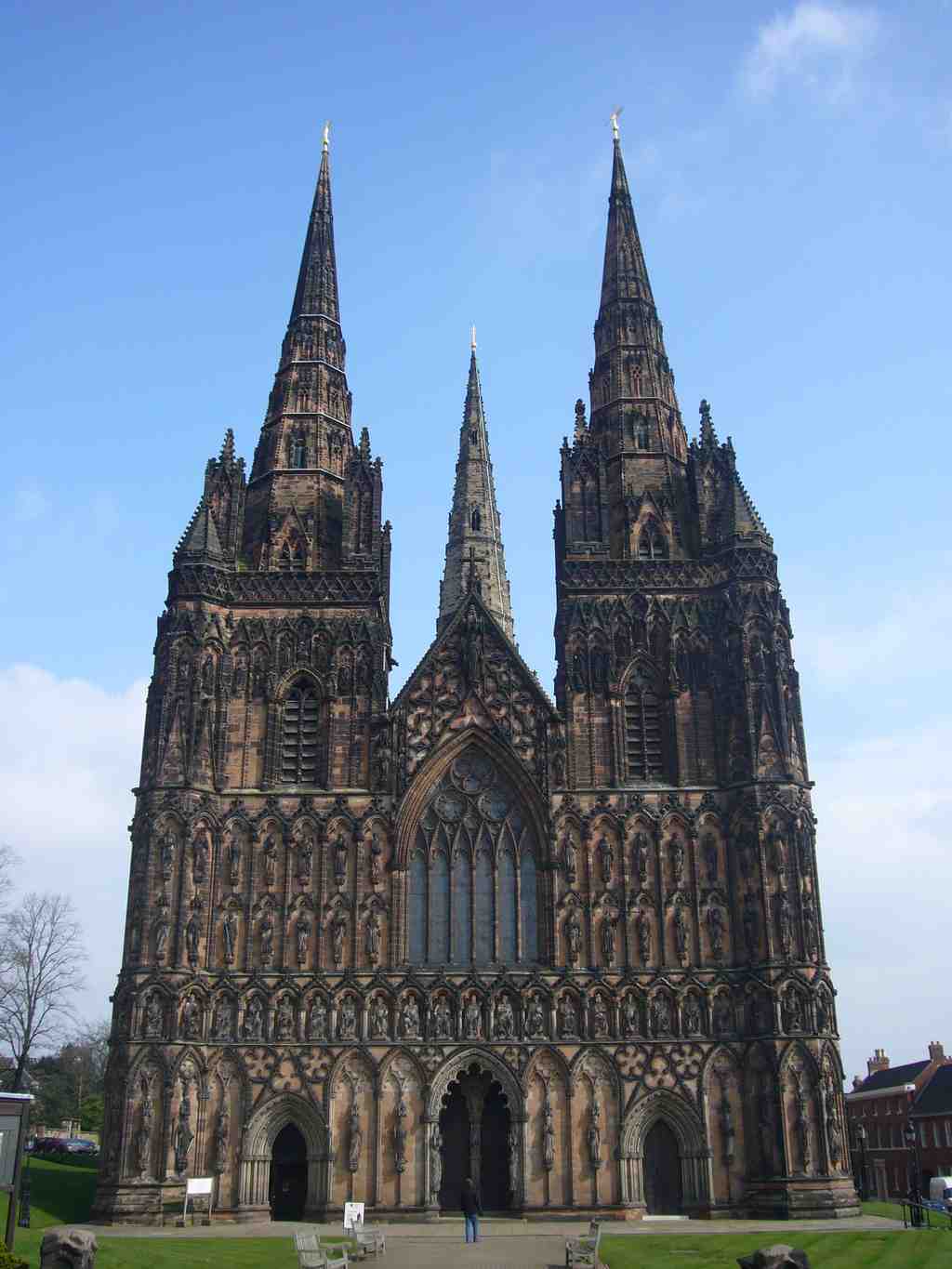
To spot Lichfield Cathedral, just look ahead for the dramatic trio of pointed, reddish stone spires soaring boldly from intricate, carved facades-the tallest one in the…阅读更多收起
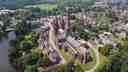
To spot Lichfield Cathedral, just look ahead for the dramatic trio of pointed, reddish stone spires soaring boldly from intricate, carved facades-the tallest one in the centre-towering over the green lawn in front. Welcome to Lichfield Cathedral! Now, take a quiet moment and listen: through the centuries, this mighty red sandstone giant has seen enough drama to fill a season of a medieval soap opera. Picture yourself standing here over 1,300 years ago, when there was little more than a humble shrine to St Chad, a beloved bishop whose burial drew pilgrims from all around. The first echo of chanting monks would have drifted through the air, mingling with the murmur of hopeful visitors. Fast-forward a few centuries-now you’re in the early 700s, and the diocese of Mercia is thriving. Imagine the building work, the clink of chisels on stone, as an early cathedral rises on these very foundations. Kings and queens-some friendlier than others-pass through, while whispers swirl that Offa, the mighty king, once finagled to raise his local bishop’s status above even Canterbury’s, just to show off a bit. It didn’t last long, but it made for some awkward tea parties. By the 13th century, clouds of dust fill the air. The cathedral’s shape transforms spectacularly-choir first, then west through transepts, nave, and that dazzling Lady Chapel at the east. Those soaring spires (“The Ladies of the Vale,” as locals fondly call them) slowly stretch towards the sky. If you look upwards now, the 253-foot central spire might leave your neck feeling rather medieval, too. Of course, Lichfield Cathedral couldn’t escape England’s wild centuries. In the 1640s, the English Civil War crashes in like a storm. Imagine cannon fire and the desperate clang of swords-the cathedral’s walls become a fortress, its windows a shimmer of fragile stained glass. Siege after siege rains down destruction, smashing glass, shattering statues, and even collapsing the central spire. Legend has it that a deaf mute, John Dyott, took out a nobleman with a remarkably lucky musket shot-talk about making some noise for history! But even after chaos, Lichfield rises again, gaining new life under the careful hands of Bishop Hacket and later, the Victorian master-restorer George Gilbert Scott. Scott adores detail: just look at those intricate carvings on the west front! Statues of saints, kings, and even a Queen Victoria gaze down, thoroughly unimpressed by today’s passing traffic. And while Lichfield’s stained glass was smashed to bits, ingenuity saved the day. See the Lady Chapel’s glowing windows? They feature some of the world’s finest medieval Flemish glass-rescued from a dissolved abbey in Belgium, shipped here in 1803 like sparkling treasure. Even now, colors spill across sacred stone, as if the cathedral itself has learned to store up every rainbow after every storm. The story doesn’t stop with bricks and glass. Hidden treasures abound, from the Lichfield Gospels-ancient manuscripts, complete with Old Welsh notes in the margins-to the recently discovered Lichfield Angel, a carved stone from the 700s once painted in bright, heavenly hues. It survived burial, breakage, and the march of centuries, keeping a silent eye on whichever bishop or prankster walked by. And in recent years, Lichfield Cathedral made history again: during the COVID-19 pandemic, it transformed from house of prayer to vaccination centre, echoing with the gentle conversations and little hopeful sighs of people coming in for their jabs. It’s hard to imagine the original monks would have guessed “public health hub” when they founded it, but perhaps they would’ve been proud. So, whether you’re drawn by spire, stone, story, or sheer stubborn survival, Lichfield Cathedral stands as a remarkable reminder-of the deep, sometimes wild, always surprising heart of English history. Now, take a deep breath and let the centuries roll over you. Don’t worry, none of the kings or monks bite… anymore! For a more comprehensive understanding of the overview, dean and chapter or the music, engage with me in the chat section below.
打开独立页面 →To spot the Bishop's Palace, just look ahead for an impressive, symmetrical stone mansion with a grand entrance, tall chimneys, a classical triangular pediment above the doorway,…阅读更多收起
To spot the Bishop's Palace, just look ahead for an impressive, symmetrical stone mansion with a grand entrance, tall chimneys, a classical triangular pediment above the doorway, and a sweep of arching steps surrounded by leafy greenery-it’s tucked in the north-east corner of the Cathedral Close, easy to spot with its stately windows and charming ivy. Now, take a deep breath-you’re standing in front of over 300 years of shifting fortunes, grand designs, and a few ghost stories, too. The Bishop’s Palace before you is a real survivor, and if its walls could talk, well, they’d probably start with a sigh of relief at still being here. Let’s go back in time-imagine it’s the early 1300s, and Bishop Langton is walking these grounds in flowing robes, planning a palace that would be envied all across England. The original building had a great hall so vast-100 feet by 56 feet-it ranked among the biggest in the land, with a carved wooden roof gleaming in gold and murals that captured the dramatic highs and lows of King Edward I: coronations, marriages, battles, and even his funeral. What a setting for a banquet, with flickering candlelight bouncing off gilt carvings as medieval guests swapped stories and perhaps a few cheeky jokes. In those days, the palace was like its own fortress, stretching along the east wall of Cathedral Close and wrapped in a sturdy wall. There were private quarters for the bishop, a Lady’s Chamber that probably saw more intrigue than the pages of any history book, and a two-storey chapel. The upstairs was reserved for the bishop himself, while his staff (and I’m sure a few nosy onlookers) had to sneak in from below. They even had their own gateway into a courtyard-a posh address if ever there was one. But not all stories here are glitter and gold. Fast forward to the stormy decades of the English Civil War in the 1640s. The thunder of cannon fire echoed off these stones as the cathedral close endured not one, not two, but three deadly sieges in just three years. The palace itself was ravaged; its magnificent halls burned out, timber roof collapsed, and what was left was just a haunting shell-where the wind, and maybe a ghost or two, could slip quietly through empty corridors. Bishop Hacket, ever resourceful, repurposed bits of the ruined structure to patch up another house nearby. You have to admire that “waste not, want not” attitude, right? When peace returned, the palace lay in ruins for decades, a solemn reminder of the chaos. But in 1684, new life was ordered for the old site-a fresh start, a dash of architectural flair, and a sprinkle of stubbornness. Dean Addison led the charge, and within just 18 months (which, let’s be honest, is less time than it sometimes takes to sort out British roadworks), the Bishop’s Palace was standing proud again, gleaming in grey ashlar stone. Designed by Edward Pierce, a man who had worked with none other than Christopher Wren, the building you see now is pure Queen Anne style elegance, with its seven-window front, dormer windows peeking from the low roof, and a classical pediment keeping everything in perfect symmetry. But the saga doesn’t end there. For years, bishops rather stubbornly refused to live here-perhaps still haunted by tales of smashed windows and stormy nights. Instead, lucky tenants moved in, including the literary Anna Seward. In the late 1860s, Bishop Selwyn fell in love with the place, adding a gothic chapel and two wings. For nearly a century, bishops lived here, until 1953, when the palace became part of Lichfield Cathedral School. As you stand here, notice the north and east, where the remains of the old defensive ditch still linger-silent witnesses to centuries of drama. The rear garden hides the base of a medieval column, rescued from the past and set out like a mysterious artifact. Layers upon layers of history sit quietly underfoot: laughter from grand feasts, the distant boom of cannons, the hum of schoolchildren today. So, next time someone asks if these ancient buildings have stories to tell, you can say: “Oh, you have no idea!”
打开独立页面 →To spot The Sleeping Children, just look to the southeast corner of Lichfield Cathedral-you’ll see a white marble sculpture of two young girls resting together on a bed, nestled…阅读更多收起
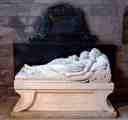
To spot The Sleeping Children, just look to the southeast corner of Lichfield Cathedral-you’ll see a white marble sculpture of two young girls resting together on a bed, nestled below a black marble plaque. Now, let’s step quietly into this corner of the cathedral, as if we’re tiptoeing into a secret, moonlit bedroom from the early 1800s. In front of you lies the Sleeping Children-two sisters, Ellen-Jane and Marianne Robinson, forever frozen in slumber. Their faces are peaceful, leaning softly together, arms entwined in a brotherly hug, and if you look closely, you’ll spot delicate snowdrops clutched by the younger sister-a symbol of innocence and hope. Why are they here? Their story might make you reach for a tissue, or at least give your heart a gentle squeeze. It all began over two hundred years ago. Picture a loving mother, Ellen-Jane Robinson, who, in just three short years, lost her husband and both her beloved daughters. Her husband, Reverend William Robinson, was a man of faith, a clergy member at this very cathedral, but heartbreak struck when he fell ill with tuberculosis and passed away in his prime. No sooner had the widow tried to find new footing than fate played another cruel trick. On a trip to Bath in 1813, young Ellen-Jane, the older daughter, suffered a tragic accident. While getting ready for bed-close to the same age as children you might hear laughing in a schoolyard-her nightdress caught fire. Despite all her mother’s desperate efforts, she did not survive her wounds. If that wasn’t enough, soon after, little Marianne too grew frail and passed away far from home, in London. What was a mother to do, with grief as her only company? Ellen-Jane found a way to keep her children close-not just in her heart, but for all to see. She visited Francis Chantrey, a renowned sculptor, and asked him to capture her daughters as she remembered them best: drifting into dreams together in each other’s arms. Chantrey, touched by her vision and determined to do justice to the memory, set to work. The result is what you’re gazing at now-a masterwork so moving, it wowed crowds in London before taking its rightful place here in 1817. It’s not only a story of loss, but a mother’s fierce love, enduring through marble and memory. And above the sisters, if you raise your eyes, you’ll see another reminder of the family: the dark plaque for their father, who, perhaps, is still looking out for his girls. So, as you stand here, let the silence settle and imagine a time when the cathedral’s shadows held this sorrow-but also a beauty so deep, poets and even the BBC couldn’t help but share the tale. Who knew history could make us both weep and wonder?
打开独立页面 →Right ahead of you, you’ll spot Minster Pool stretching out like a calm mirror between the cathedral’s spires and the leafy trees lining its banks-just look for the glistening…阅读更多收起
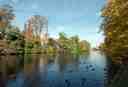
Right ahead of you, you’ll spot Minster Pool stretching out like a calm mirror between the cathedral’s spires and the leafy trees lining its banks-just look for the glistening water between Bird Street and Dam Street, with the dramatic cathedral rising over the north side. Now, take a moment to let your eyes wander over the rippling surface of Minster Pool. Ducks paddle by like local celebrities, occasionally sidling up for a portrait opportunity. But today, you’re not just seeing a pretty pond-you’re standing by a survivor with nearly a thousand years of history behind every gentle wave. The story of Minster Pool begins back in the wild, boggy landscapes of the 11th century, when this spot wasn’t so much the centerpiece of Lichfield as it was a marshy inconvenience. Locals must have had quite the time trying to keep their shoes clean. But necessity breeds invention-or, at least, it convinces people to build dams. To power a hard-working mill on Dam Street, folks dammed the eastern end of what was then just a soggy stream, and in doing so, created the broad, shining Minster Pool you see today. Before long, this was much more than just a mill pond; it became a key part of Lichfield’s defenses. Imagine the cathedral rising behind sturdy stone walls, its reflection caught in the still water, as centuries ago invaders circled the Close during the Civil War sieges. The pool became a moat, making the fortified cathedral a challenge for any would-be attackers. If you listen closely, you might almost hear the echoes of distant clanking armor and the shouts of defenders rallying at the walls. But that’s not even the end of Minster Pool’s talents! Over time, Lichfield’s brooks-Leamonsley and Trunkfield-gathered in this gentle valley, funneling from the west through Beacon Park and the Museum Gardens, until they finally slipped beneath Bird Street to enter Minster Pool’s waiting arms. It’s as if the city’s very veins run into this pool, drawing life and movement from the surrounding hills. See that broad avenue on the south side? That’s not just a path-it’s the legacy of poet Anna Seward, who, in the late 1700s, convinced the city to transform this area from a muddy, smelly hazard (yes, it doubled as a sewer!) into a landscaped walk for townsfolk and travelers. Just imagine Georgian ladies strolling here in their long skirts, fanning themselves with one hand and pinching their noses with the other, until Anna brought forth her inspiration: “Let’s make this beautiful!” So, the pool was sculpted into a sweeping serpentine curve, and "New Walk" became a highlight of the town, rather than something you tried to avoid on windy days. Now you might be thinking, “Okay Andy, but I don’t see a mill or a drawbridge!” You’re right! The original Castle mill, once grinding grain, malt, oil, rye, and wheat, was finally demolished in 1856 after so many transformations, it probably forgot what it was supposed to do anymore. By then, the pool was up for more changes too. There was even a not-so-popular plan to fill it in for public gardens, but Lichfield folk, fiercely loyal to their pool, protested so fiercely the proposal quickly sank-unlike the pool itself! In the Victorian age, the streets were continually improved. Bishop Langton, way back in 1310, had split an even larger pool into two by building a causeway-one side became Bishop’s Fish Pool, the other, this Minster Pool. He even fortified the north bank with strong walls and added a hefty drawbridge on the south end, right by Dam Street. Knights and bishops alike must have clopped across the stone bridge, casting lingering glances at the water below. When Lichfield’s main road needed something sturdier, Joseph Potter came along in 1816 and built the bridge you see today: three stone arches, iron railings, and a couple of stylish lamp pylons, letting coaches roll straight into town instead of trundling all the way round Stowe Pool. Time, mud, and the odd cannonball left by the Civil War (yes, those were found when they dredged the pool in 1855!) have layered history thick here. Even today, those waters carry a hundred stories. And if you walk along the northern Garden of Remembrance or pause by the memorials along Minster Walk, you’ll feel how this pool gathers not only brooks, but the city’s memory-dedicated to those lost in wars and loved by picnickers, poets, and passersby. In 2011, Minster Pool got the VIP treatment: dredged, fortified, and gifted with fresh benches and up-lighters that make those linden trees glow at night. So, whether you’re here for the history, the ducks, or just a moment’s peace beside the water, you’re not just looking at a pool-you’re gazing into the very heart of Lichfield. And you didn’t even have to bring a boat or a medieval army to enjoy it!
打开独立页面 →To spot St Mary’s Church, just look across the market square for the grand stone building with soaring pointed arches and a tall spire that seems to stretch straight up into the…阅读更多收起
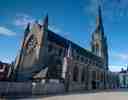
To spot St Mary’s Church, just look across the market square for the grand stone building with soaring pointed arches and a tall spire that seems to stretch straight up into the sky. Welcome to St Mary’s Church-where history isn’t just set in stone, it’s practically bursting through it! Imagine standing here centuries ago, with the bustling market all around you, the fading scent of bread, livestock, fresh produce-I know, it probably smelled a bit different back then! St Mary’s has been the beating heart of Lichfield’s market square longer than most of the pigeons have had feathers. People believe a church has stood proudly on this spot since 1150, back when Lichfield was just finding its feet-and its bishops were laying out the town, building churches, and probably hunting for the best pie in the square. The first church was likely built of timber and whatever sturdy bits they could find. But life was unpredictable; in 1291, flames swept through the town, devouring homes, market stalls, and even this very church. Out of the ashes, a new St Mary’s rose in the 14th century-a medieval beauty with aisles, grand arches, a west tower, and, oh yes, a dramatic spire. That spire, however, turned out to be a little... accident-prone. It crashed down not once, but three times! Folk in Lichfield probably got used to glancing up nervously when it was windy-just in case gravity decided to win another round. This wasn't just any old church. By the late 1300s, St Mary’s became the church of Lichfield’s most important guild-the Guild of St Mary and St John the Baptist. This wasn’t just about praying; the guild pretty much ran the show in town, organizing fairs, running charities, and making sure nobody cheated at dice (or at least, not too obviously). Here in the north side lies the resting place of Anthony Dyott and his family. The Dyotts were Lichfield’s local VIPs-owners of Freeford Manor, and if you peek into the north chapel, you’ll find it still dedicated to them. By the 1700s, structural headaches meant the medieval church was torn down. In its place, between 1716 and 1721, came a brand-new design-neoclassical, elegant, and paid for by enthusiastic townsfolk passing round the collection plate. Even the young Samuel Johnson (who later became a rather famous wordsmith) grew up in a house across the square, probably watching the masons through the window as he tried not to get caught skipping chores. Oddly enough, the church ended up with a Victorian Gothic tower at one end and a neoclassical nave at the other-a real architectural mash-up, you might say, like putting jam on your fish and chips. When the Victorians caught the rebuilding bug in the 1800s, the church body was replaced again, now in glorious Derbyshire sandstone, complete with those dramatic arches and the spire you see before you. This was serious Gothic revival, designed by James Fowler-though we can’t say for sure if he pinched any ideas from earlier sketches. The inside was brightened with colourful decorations by Charles Bateman, making it a riot of Victorian style inside and out. Now, don’t let all this grandeur fool you-by the 20th century, the crowds dwindled, the city centre quietened, and St Mary’s church risked joining history’s long list of ‘Gone But Not Forgotten’. But Lichfield folk are nothing if not determined. In the 1980s, the church was transformed into a vibrant community space: the ground floor became home to Lichfield Library (which now houses more than 200,000 books!) and the top floor morphed into The Hub-a lively spot with a speciality coffee shop, art gallery, exhibitions, and a space buzzing with music, performances, laughter, and maybe the odd library shush. And the bathing in history doesn’t stop there! The church register safely holds the baptism record of none other than Samuel Johnson himself, while the Dyott Chapel is still used for worship. Above you, sturdy walls and a spire that’s braved centuries of storms-and the occasional collapse-hold stories of faithful villagers, grand guilds, and now, readers, coffee-lovers, and art fans too. St Mary’s has always adapted, always welcomed everyone, truly a beating heart in the centre of Lichfield. So take a look up at those arches, imagine the chimes of the 18th-century bell, and feel proud to be standing in a place that’s survived fire, falling spires, and the march of time-yet still feels every bit alive with the spirit of the city! Now, anyone fancy a ghost story?
打开独立页面 →You can spot Lichfield ahead by looking out for its dramatic mix of soaring cathedral spires, bright Georgian facades, half-timbered historic houses, and a bustling townscape…阅读更多收起
You can spot Lichfield ahead by looking out for its dramatic mix of soaring cathedral spires, bright Georgian facades, half-timbered historic houses, and a bustling townscape opening up beneath the wide Staffordshire sky. Alright, time for Lichfield’s grand tale-and believe me, it’s one for the ages! Picture this: you’re standing at the heart of a place where echoes from over a thousand years swirl through the air. Lichfield isn’t just a city, it’s a living scrapbook of English history, with layers upon layers waiting for a curious explorer like yourself. If the streets seem a bit ladder-shaped, that’s on purpose-the town was planned that way nearly 900 years ago by a clever bishop named Roger de Clinton, who wanted everything lined up just so… Smart, unless you’re playing hide and seek. Now, let’s travel back to the smoky past. The area’s very first residents were, well, a bit Flint-stonesque. Evidence of Mesolithic flint tools means that this very ground was worked thousands of years ago! Fast forward, and you’d hear the clanging of Roman swords at Letocetum, just south of here, where soldiers washed off the road dust in grand bathhouses, swapped gossip, and plotted the next leg of imperial conquests. But Lichfield itself really started making a ruckus in 669 AD, thanks to a humble bishop named Chad of Mercia. He set up his bishopric here, turning Lichfield into the spiritual capital of the mighty Mercian kingdom. The faithful soon flocked in, seeking the relics of St Chad and hoping for miracles-or at least, a decent spot to pray. That sacred buzz never really left. The medieval cathedral still towers above you, its three spires sometimes called “the Ladies of the Vale”-watch out, sometimes they say you can hear a distant church bell ripple through the city on a windy day! Oh, but don’t relax just yet! Life in Lichfield wasn’t all peaceful hymns and Sunday markets. This city’s been at the crossroads of some serious drama. In the 9th century, fierce Danish Vikings stormed the area, plundering and leaving the cathedral in tatters. Later, during the English Civil War, the city’s allegiance was split-cathedral folk rooting for the king, while many townsfolk secretly tucked Parliamentarian flags under their cloaks. The cathedral close became a battleground, echoing with musket fire. Picture it! The central spire was destroyed, but never fear-it was beautifully restored after the monarchy made a comeback. The cathedral stands proud to this day, scarred yet glorious, like a knight with a shiny new helmet. The city flourished as a bustling market hub, especially in the Georgian era. Samuel Johnson, the chap who wrote the first proper English dictionary, was born here. There must be something in the Lichfield air, because the city attracted all sorts of brainy folks-famous actors, scientists, poets and even a few wild philosophers. Johnson himself called it a "city of philosophers"-and to be fair, it’s still a good spot for a deep thought, especially if you’re standing outside the birthplace museum of Samuel Johnson, or strolling past Erasmus Darwin’s house. As you walk these cobbled streets, notice the 230-plus listed buildings. Lichfield is proud of its red-brick Georgian charm-built after a huge fire swept through town in 1291 (don’t worry, that’s long past). The Market Square has seen everything from wild celebrations and solemn markets to the, er, occasional heretic trial. The city even burned a fella at the stake in 1612 for claiming he was the Saviour of the world. Not recommended if you want to enjoy market day, by the way. Today, the old city centre still feels like a hidden gem: you’ll find serene parks like Beacon Park, shimmering Minster Pool, and sweeping views from St Michael on Greenhill. Yet, listen closely, and the distant hum of buses and chatter from the market remind you-Lichfield is still a lively community, balancing centuries-old traditions with everyday life. So, as you look around at these medieval spires, Georgian windows, and bustling town scenes, remember-Lichfield is both ancient and full of energy, a place where history walks with you whispering, "Do you hear the echoes too?" Now, on to our next landmark… Let’s see what secrets wait there! Yearning to grasp further insights on the toponymy, governance or the geography? Dive into the chat section below and ask away.
打开独立页面 →To spot the Hospital of St John Baptist without the Barrs, just look for a long row of tall, red-brick chimneys standing smartly along St John’s Street-there’s nothing else quite…阅读更多收起
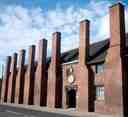
To spot the Hospital of St John Baptist without the Barrs, just look for a long row of tall, red-brick chimneys standing smartly along St John’s Street-there’s nothing else quite like it! Now, take a deep breath and imagine yourself back in medieval Lichfield, right outside the southern city gates, as dusk settles and the giant wooden doors clang shut for the night. In 1129, Bishop Roger de Clinton was really making things happen: he fortified the Cathedral Close, designed an all-new town, dug a mighty defensive ditch, and wrapped the city in tall stone walls. Lichfield quickly became a hotspot for pilgrims, drawn by the new cathedral that guarded the precious remains of St Chad. But here’s the twist-if you rolled up to the gates after 8 or 9 pm, tough luck! You’d have to wait until the gates opened at 7 am-unless, that is, you found shelter at St John’s, just outside the walls. This was no ordinary hospital-at this time, “hospital” meant a place of hospitality, for tired pilgrims and travelers who’d missed curfew. Bishop de Clinton ordered a priory to be built right here in 1135, and filled it with Augustinian Canons who promised to offer food and beds to anyone turned away by the city’s curfew. If you close your eyes, you might feel the wind tugging at your cloak and the crunch of gravel under the shoes of countless weary pilgrims, grateful for a warm fire and some bread. The chapel-still standing close by-hosted the evening prayers of holy men and travelers alike, a little oasis buzzing with whispered Latin and gentle candlelight. For three whole centuries, this place was the beating heart of comfort for Lichfield’s after-dark arrivals. Imagine the sounds-laughter, foreign accents, snores, prayers all mixing together. But as the centuries turned, the city walls became less of a barrier-the gates eventually fell into disuse and stayed open. So what to do with a shelter for stranded travelers when nobody’s stranded anymore? Enter Bishop William Smyth, a practical man with a soft spot for the city’s elderly. In 1495, he refounded St John’s as an almshouse for “thirteen honest poor men” who’d had a rough break in old age. Not only did each gentleman get his own cozy room and fireplace (hence those magnificent chimneys you see in front), but they received seven pence a week too. I bet even then, it wasn’t quite enough for a night out, but a fella could dream! The building’s brick front today, with those eight curious Tudor chimneys, marks an advance from the simple shared halls-each resident, for the first time, had warmth and privacy. The plaque above the entrance and the style of the buildings on either side tell stories from different centuries. The Masters Hall to your left was rebuilt again in 1720, its doorway and tablet reflecting the tidy taste of Georgian Lichfield. The adjacent chapel, at one point, nearly collapsed from neglect-almost like a sad chapter in an old library book. It was lovingly restored in the 19th century. Some walls were raised, new Gothic arcade arches were added, and the south wall enjoyed a set of sturdy buttresses. The stained glass, especially the “Christ in Majesty” window installed in 1984, bathes the chapel in colored light on sunny days. Imagine sunlight glowing through those windows, painting rainbows for prayers to float on. And the story marches on. In 1929, rooms were refitted to face a tranquil central quadrangle, with the hospital gradually opening its doors to married couples in the swing of the 1960s. Modern comforts arrived-gas heating, real bathrooms-finally putting those drafty medieval chills to rest. If you could peek inside today, you’d find a sculpture of ‘Noah and the Dove’ standing quietly in the courtyard, a gentle reminder that new beginnings were always possible here. And, if you ever wondered what happened to St John’s close to the Cathedral-you’ll find its newer cousin there, repurposed from the old Theological College, serving as a peaceful haven for the retired, right in the heart of Lichfield’s history. So next time you see those eight tall chimneys, imagine the generations of travelers, lonely gents, devoted canons, and hopeful couples who found a home here. If walls could talk, these might just clear their throats and recite an epic saga-minus the snoring, of course.
打开独立页面 →Directly in front of you, you’ll spot the Franciscan Friary site as a tranquil garden space, with stone slabs laid out in the grass showing the outline of ancient walls-just look…阅读更多收起
Directly in front of you, you’ll spot the Franciscan Friary site as a tranquil garden space, with stone slabs laid out in the grass showing the outline of ancient walls-just look for the classical-style portico marking the entrance near the library’s southwest corner. Now, take a deep breath and imagine that you’re standing at the gateway to another world-one where monks in grey habits once hurried through sandstone arches, laughter from the cloisters echoed against high stone walls, and the scent of woodsmoke drifted in the crisp Lichfield air. It all began way back in 1237, when a group of Franciscan Friars, known locally as the Grey Friars for their simple robes, arrived in town with a mission: live simply, help the sick and poor, and build a place to call home. The Bishop of Lichfield was so taken with these fellows that he gave them land, and King Henry III even threw in some oak trees-sounds like a royal housewarming gift, doesn’t it? You might imagine the friars working together, hammering beams and stacking sandstone blocks, while the city buzzed around them. Their efforts blossomed into a huge estate-there was a sprawling church, a peaceful cloister at its heart, a quiet dormitory for sleeping, and a lively refectory where the friars gathered to eat. The townsfolk adored the friars, showering them with support. In fact, in 1241, even the Sheriff helped keep them warm by providing clothes-now that’s what you call local government in action! But every good story has its twists. In 1291, with their friary almost complete, disaster struck-a fire raged through, turning their growing dream into ashes. The city’s response was swift and generous, and by 1301 the friary was rebuilt and back in action. Imagine the relief; the monks could once more walk the tranquil cloister, draw fresh spring water from the famous Crucifix Conduit, and look after the poor with renewed vigor. Life here wasn’t all solemn prayers; the friars’ simple way of life caught the mothers’ hearts and the city’s affection-they were the medieval good guys with a knack for gathering support. As the centuries passed, the timber buildings transformed into sturdy sandstone halls, and the church grew to epic proportions. Just picture it: the nave alone was 110 feet long-big enough for half of Lichfield to squeeze inside for a sermon! Yet, all this generosity led to a bit of an ironic twist: the Franciscan Friary, which aimed for poverty, gradually gained wealth. If only they could see the humor in their accidentally fat purse-more wealth than they ever intended. Fast forward to the days of Henry VIII, our famously unpredictable king. By the 1530s, he was running out of cash and had his eye on all that shiny church property. Thanks to Thomas Cromwell, the king’s loyal minister (and legendary party pooper), monasteries and friaries were shut down all across England. In 1538, after more than three centuries, the Franciscan Friary here was dissolved. Its church, cloister, and most buildings were demolished, torn down stone by stone. Only a couple of buildings survived-the Dormitory and the Bishop’s Lodging, which stubbornly stood their ground at the corner of the estate. If you listen closely, you might almost hear the echoing footsteps of owners that came after, as the surviving buildings became a cozy home for families for hundreds of years. The land changed hands, was remodeled and re-invented, until the 20th century, when Sir Richard Ashmole Cooper gave the plot to the city to lay out a new road-very handy for those traffic jams on Bird Street! Much was lost but not all. When the church site was threatened by new construction in the 1930s, archaeologists swooped in and uncovered the ruins, mapping out the ancient walls so you can now wander among them. The area became a Scheduled Ancient Monument, securing its place as a quiet slice of history for you to visit-slabs and stones laid out like a medieval treasure map beneath your feet. So take a look around-the site may feel peaceful now, but you’re standing on a spot pulsing with centuries of bustling life, noble generosity, fire and disaster, royal politics, and quiet persistence. The echoes of the friars linger in the gardens, and their legacy lives on every time the word “Friary” pops up on a Lichfield sign. You could say these monks, who set out for poverty, left behind a wealth of history-and that, perhaps, is the best kind of treasure.
打开独立页面 →To spot the Lichfield Clock Tower, just look ahead and you’ll see a tall, square stone tower with a pyramid-shaped roof, classic clock faces near the top, and a large arched…阅读更多收起
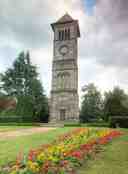
To spot the Lichfield Clock Tower, just look ahead and you’ll see a tall, square stone tower with a pyramid-shaped roof, classic clock faces near the top, and a large arched doorway at the base, standing proudly surrounded by neat green lawns and colorful flowerbeds. Now, let’s step back in time together and uncover the story of this grand tower standing before you. Imagine the year is 1863, horse-drawn carts clatter over cobblestones and the crisp air is filled with the chatter of townsfolk. Suddenly, the air is split with the sound of a brand-new clock chiming for the very first time. The Lichfield Clock Tower was the talk of the town-everyone wanted a clock tower after Big Ben made such a splash in London, and Lichfield was ready to join the trend. But the city had a few hiccups getting started. Should they stick it on the Guildhall? Plonk it in the Market Square? Or maybe use it to jazz up Samuel Johnson’s statue? After much um-ing and ah-ing, they decided to crown it right on top of the old Crucifix Conduit-an ancient spot that had been providing water to the Friary here since 1301! And let’s not forget: it was designed by Joseph Potter Junior, a fellow with a real eye for the Norman style. The funds? Generously provided by the Lichfield Conduit Lands Trust, who dug deep and handed over all £1200, which-let’s face it-was a princely sum back in the day. But trouble was brewing in timekeeping paradise. The tower originally had three clock faces. Someone thought, “Who needs a west face? There’s only one house behind us-it’s just the Friary.” Well, the proud tenant of the Friary took one look, marched over and demanded proper clock-viewing rights, so a fourth clock face was added. Even then, the poor clock ticked and tocked at its own pace until a talented clockmaker from Whitchurch, named Joyce, finally sorted its wayward gears in 1898. By the early 1900s, Lichfield had swapped horses for motorcars, and the streets grew as jam-packed as a Black Friday sale. The humble tower became a traffic headache, smack dab in the path of progress. When “The Friary” road was built in 1928, the whole tower had to uproot and march 400 meters to where you’re standing now, like a knight making way for a king. Through storm and sunshine, the tower stood tall, got spruced up in 1991, and now keeps watch as one of Lichfield’s most cherished landmarks-all thanks to the stubbornness, dreams, and (occasionally) ticked-off townsfolk of years past. So next time you check the time, remember: here in Lichfield, even the clocks have a tale to tell!
打开独立页面 →

常见问题
如何开始导览?
购买后,下载 AudaTours 应用并输入您的兑换码。导览将准备好立即开始--只需点击播放并按照 GPS 引导的路线行驶即可。
导览期间我需要互联网吗?
不需要!开始前下载导览并完全离线享受。只有聊天功能需要互联网。我们建议在 WiFi 下下载以节省移动数据。
这是导游带领的团体游吗?
不是--这是自助语音导览。您按照自己的节奏独立探索,通过手机播放音频解说。没有导游,没有团体,没有时间表。
导览需要多长时间?
大多数导览需要 60-90 分钟才能完成,但您完全控制节奏。随时暂停、跳过站点或休息。
如果我今天无法完成导览怎么办?
没问题!导览具有终身访问权限。随时暂停和恢复--明天、下周或明年。您的进度已保存。
有哪些语言可用?
所有导览均提供 50 多种语言版本。在兑换代码时选择您的首选语言。注意:导览生成后无法更改语言。
购买后我在哪里访问导览?
从 App Store 或 Google Play 下载免费的 AudaTours 应用。输入您的兑换码(通过电子邮件发送),导览将出现在您的资料库中,准备下载并开始。
如果您不喜欢该导览,我们将退款。请联系我们 [email protected]
安全结账使用 


