
斯旺西语音导览:愉悦山的城堡、文化和隐藏瑰宝
一座饱经风霜的城堡矗立在市中心上方,其石拱门守护着被遗忘的战役和午夜阴谋的秘密。不远处,一座有着罗马式微笑的老电影院隐藏着丑闻电影的胶片和斯旺西最黑暗夜晚的生存故事。拐角处,格林·维维安美术馆大胆的外墙闪耀着一个世纪的艺术反叛光芒。 参加这个自助语音导览,解锁大多数游客匆匆而过的故事——那些潜伏在小巷里、描绘在砖墙上、低语在画廊大厅里的故事。 在斯旺西城堡的阴影下,谁在绝望的围攻中冒着一切风险?什么传奇艺术品从格林·维维安的墙壁上消失得无影无踪?又是什么臭名昭著的电影在城堡电影院引起轩然大波,以至于官员们直接将其禁播? 沿着蜿蜒的街道和回荡的大厅前行,那里曾爆发过叛乱,也曾酝酿着现代丑闻。在每个转弯处,以全新的色彩、戏剧性和悬念感受斯旺西。 准备好追随塑造这座城市的石头和故事了吗?按下播放键,揭开其下的秘密。
导览预览
关于此导览
- schedule持续时间 40–60 mins按照自己的节奏
- straighten3.5 公里步行路线跟随引导路径
- location_on
- wifi_off离线工作一次下载,随处使用
- all_inclusive终身访问随时重播,永久有效
- location_on从 斯旺西城堡 开始
此导览的景点
If you look up ahead, you’ll spot Swansea Castle rising over the city square-the stone looks aged and proud, with arches at the top and old towers determined not to let go of…阅读更多收起
If you look up ahead, you’ll spot Swansea Castle rising over the city square-the stone looks aged and proud, with arches at the top and old towers determined not to let go of their secrets. The walls have a rugged, almost worn charm-picture the castle like a grand old storyteller, still standing after centuries of drama. To find it, just look towards Castle Square, right in the heart of the city centre. Stand back and let your eyes climb those tall, weathered walls, especially the L-shaped fragment with bold stone blocks and arched windows. Welcome to Swansea Castle! Can you feel the weight of history in the very air? Over 900 years ago, brave Norman knights in chainmail hurried across this ground, swords clanging and banners fluttering. Henry de Beaumont claimed this patch of land in 1107, building his wooden fortress right here, where the River Tawe once flowed. Imagine the rush of the river as it defended one side, while bustling market stalls and old Welsh cottages crowded around the other. But life wasn’t all grand feasts here. Just a few years later, Welsh warriors swept in, turning the place upside down, smoke clouding the sky and people shouting in the chaos. The motte-like a giant mound beneath the earth-was once nearly as wide as Cardiff’s! That’s bigger than a dragon’s wingspan, I’d say, and very handy in a siege. After many wild battles, desperate starvations, whispered betrayals, and even the odd bottle factory and workhouse, Swansea Castle became more of a tough old survivor than a mighty fortress. Imagine the Great Hall filled not with kings and queens, but with workers, and later anxious journalists tapping their typewriters. Dylan Thomas even strolled through here on lunch breaks, probably daydreaming. So as you stand here, let your imagination roam. Picture the cold stones echoing with marching feet, gossiping townsfolk, and the swirling mists of Wales creeping in by dawn. If walls could talk, I reckon these castle blocks would say, “Pull up a seat-I’ve got some stories you wouldn’t believe.” And if you see a crow perch on the ramparts, don’t worry-it’s probably just looking for the owner of a lost sandwich.
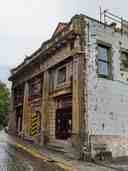
打开独立页面 →To spot the Castle Cinema, look for an old, proud building just off the corner of a cobbled street-it's right next to Swansea Castle! The front is grand and classical, almost like…阅读更多收起
To spot the Castle Cinema, look for an old, proud building just off the corner of a cobbled street-it's right next to Swansea Castle! The front is grand and classical, almost like something from Roman times, with thick columns and ornate carvings. The main doors are now painted with vivid “Lazerzone” signs and yellow caution stripes, but if you look up, just above eye level, you’ll spot the history still clinging to this place, from the detailed stonework to the big, slightly crumbling white-brick wall wrapping around the side. Alright, you're standing right in front of Swansea’s Castle Cinema-or as it’s known to many today, Lazerzone. Imagine the crunch of your shoes on this wet pavement--as you step closer to a building that’s seen more drama than a Hollywood blockbuster. Picture it: the year is 1913, and the doors swing open for the very first time. Folks in hats and long coats queue up, clutching their precious tickets, eager for the magic of the big screen. Back then, everything here was brand-new and full of hope-unlike my granddad’s old car, which is mostly full of old receipts and questionable smells. During the Second World War, bombs fell all around Swansea, but this building somehow survived it all. Imagine the roar and rumble as the city shook -yet when the dust settled, the Castle Cinema was still standing, like the last custard cream in the biscuit tin. Over the years, they jazzed the place up-a new screen, new seats, even some double seats at the back for, let’s say, ‘very close friends.’ In the 1970s, things got a bit cheeky with risqué films-but don’t worry, we’re keeping this tour family-friendly! When bigger, flashier cinemas opened nearby, the Castle tried to compete, showing every blockbuster they could get their hands on, with the sound booming from new Dolby Stereo speakers-though, fun fact, Monty Python’s “Life of Brian” wasn’t allowed here, either. Swansea City Council just didn’t have a sense of humor. In its later years, the cinema fought bravely, but bigger screens and comfier seats in multiplexes finally won the day. The last film ever shown here was “Doc Hollywood,” before the doors closed on cinema-goers for good. Now, Castle Cinema serves as Lazerzone-a place where echoes of laughter and shouts of victory still bounce off the old walls. So, while you stand here, picture: flickering film reels, crowds spilling from the doors, and maybe, just maybe, a laser gun battle happening inside. History with a hint of sci-fi adventure-only in Swansea!
打开独立页面 →Look just ahead-there it is! The Glynn Vivian Art Gallery stands out with its grand red-brick facade and bold stone trim, crowned with a classic triangular pediment above the…阅读更多收起
Look just ahead-there it is! The Glynn Vivian Art Gallery stands out with its grand red-brick facade and bold stone trim, crowned with a classic triangular pediment above the entrance. The gallery’s name is spelled out clearly in white letters on the side, so you can’t miss it. As you face it, take in those tall windows with ornate golden details and the sturdy black fence tracing the edge-this building definitely isn’t shy about showing off its personality. Now, imagine it’s the early 1900s, and the streets crackle with the energy of steam trains and horse-drawn carts. Glynn Vivian, a passionate art collector, surprises the city with a gift-his collection of paintings, drawings, and delicate china, plus a whopping £10,000 endowment. That’s a lot of paintbrushes! He personally lays the foundation stone in 1909, probably not expecting that the real party would come after he’d left the stage for good. When the doors finally swung open in 1911, the excitement must have been electric-Swansea had never seen anything quite like it. Designed in a bold Edwardian Baroque style by Glendinning Moxham, this gallery was built to impress. Locals gathered with bright eyes and fancy hats, ready to be swept away by a world of art. The first director, William Grant Murray, took the reins, making sure Glynn Vivian’s collection wasn’t just a dust-gathering bunch of curiosities. Inside, you’ll find treasures from European masters-paintings, drawings, even a vase from Meissen that’s so early, it almost didn’t know it was supposed to be porcelain. The gallery brims with Swansea china, European glass, and works by legends like Monet, Richard Wilson, Gwen John, Lucien Pissarro, and many more. Imagine, right here, you’re standing within arm’s reach of centuries of creativity and history. Of course, the life of an old gallery is never just stillness and quiet. A £6 million facelift in 2011 meant the doors stayed shut while builders clanged and hammered away, extending the excitement for years. But when it reopened in 2016, the streets outside echoed once again with the buzz of eager visitors-and probably a curator or two sighing in relief! So, next time you look at those solid stone columns, remember: this is Swansea’s own palace of creativity, built on one man’s love of art and kept alive by people itching to discover something wonderful. Now, shall we see what masterpieces are waiting inside or keep exploring? The adventure continues!
打开独立页面 →
再显示 10 个站点显示更少站点expand_moreexpand_less
Look ahead and you’ll spot Parc Tawe North right in front of you! You can’t miss it-there’s a tall sign by the roadside, topped with green roofs that stick out at sharp angles,…阅读更多收起
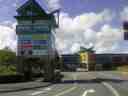
Look ahead and you’ll spot Parc Tawe North right in front of you! You can’t miss it-there’s a tall sign by the roadside, topped with green roofs that stick out at sharp angles, almost like they're calling you in for a bit of shopping or an adventure. The sign is stacked with colourful shop names like Homebase, JD Sports, and Lidl, and just behind it you’ll see a big building with a matching green trim. If you're still unsure, look for the bright yellow and blue Lidl sign, shining like a beacon of bargains under the wide, open sky. Now, just imagine you're standing where, not so long ago, you’d need your sea legs. Right under your feet was the old North Dock, opened in 1852. Back then, this place echoed with the sound of ship horns, clanging chains, and sailors shouting orders as Swansea buzzed with trade and the smell of salt, steam, and coal drifting through the air. But times changed, ships got bigger, and slowly the old dock got quieter-until one day, all you’d find here was an empty stretch, weeds pushing through the tarmac, and the wind howling like it missed the hustle. But Swansea knows how to bounce back! In the late 1980s, Parc Tawe rose from the remains, swapping rusty warehouses and empty cranes for the colourful blur of shops and families out for a good time. And just when you thought things couldn’t get more interesting, Plantasia popped up-a gigantic triangular greenhouse packed with tropical plants, bringing a touch of the jungle to rainy Wales. If it feels a bit warmer nearby, it's probably just all those palm trees doing their thing! Parc Tawe’s got everything from bargain hunting at Home Bargains to pet-shopping at Pets at Home. Hungry? You’ll find the UK’s first Denny’s here, along with a Costa drive-thru for that quick caffeine boost. And if you listen closely, maybe in the hum of the traffic or the chatter from the shops, you’ll hear the ghostly echo of dockworkers and ships, reminding you that Swansea’s always been a place on the move. And hey, if you get lost in here, just blame it on the old dock spirits-everyone needs an excuse for buying one more thing at B&M Bargains!
打开独立页面 →Look straight ahead for a large stone church with a tall, steeply-pitched roof and a big cross right at the very top. The front is decorated with five tall, narrow windows, and…阅读更多收起
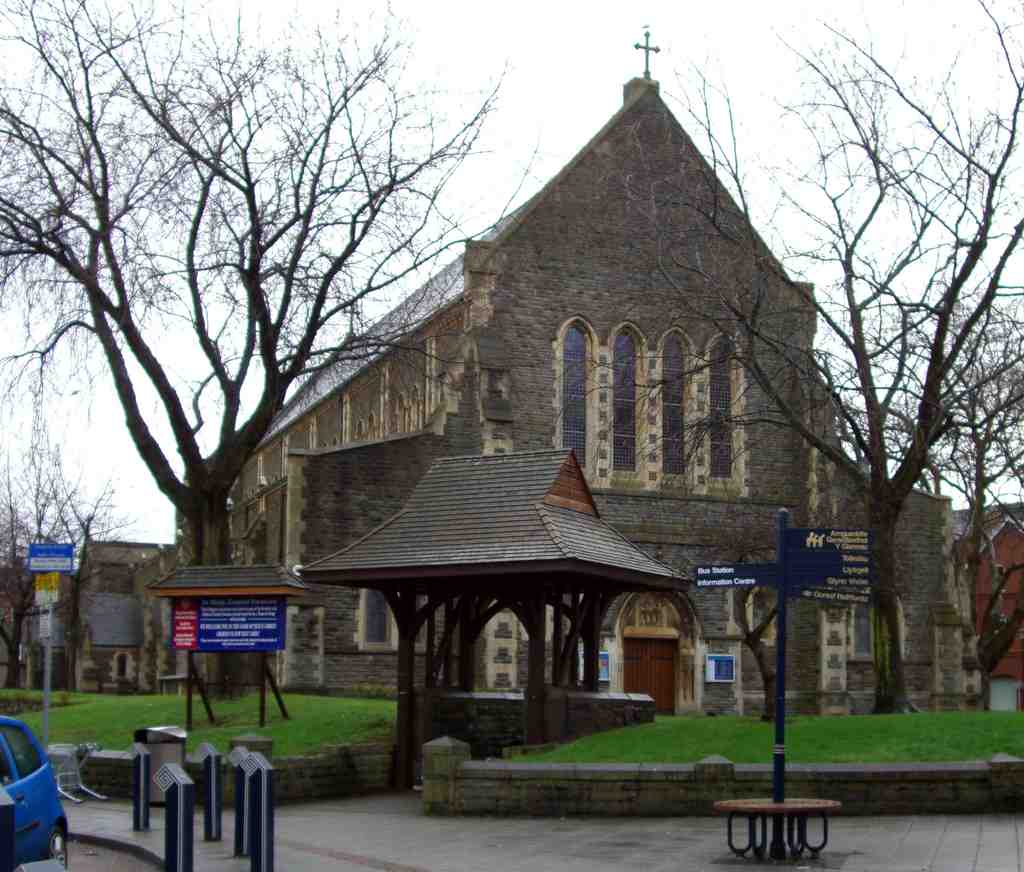
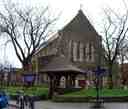
Look straight ahead for a large stone church with a tall, steeply-pitched roof and a big cross right at the very top. The front is decorated with five tall, narrow windows, and you’ll also see wooden shelter structures and signs out front. The church is set back a little from the street, with bare trees surrounding it, making it stand out even more against the sky. If you spot a building that looks like it could weather any storm, with walls of honest stone and peaceful stained glass, you’ve found the Swansea Minster. Take a second to imagine you’re stepping back through the centuries, standing right where generations of townsfolk have gathered for nearly 700 years. Swansea Minster-if you want to sound super posh, you can call it the Minster Church of St. Mary with Holy Trinity-isn’t just any church. This is the grand old heartbeat of Swansea. It’s seen everything from medieval bishops to modern city festivals, even getting officially named Wales’ first ever minster in 2024-so it literally just made history. Picture this: it’s a Sunday morning in the year 1739. Folks are waiting outside for church to begin, hats neatly in place. Suddenly, a rumble overhead--the entire roof of the nave gives way and comes tumbling down before the service even starts. Now, that's what I call an unexpected renovation! Amazingly, nobody inside was hurt (talk about heavens intervening). Over the years, the church kept being rebuilt and improved, getting gas lights with thirty-six lamps in 1822, a grand renovation in Victorian times, and a rather dramatic Blitz during World War II-when bombs nearly flattened it and the survivors had to pick up the pieces, brick by brick, in the 1950s. You see that sturdy tower? It holds eight great bells, as heavy as a small car, which were cast specially in 1959. When they ring out across the city, it’s like Swansea’s soul is singing. And for a bit of local mischief, there was once a creepy statue called the Swansea Devil peering over at the church from across the street, thanks to an architect who was incredibly grumpy about losing the church project. That’s right, even churches get their own local rivalries! For centuries, people have come here for comfort, for joy, and maybe for a peek at some truly quirky local history. And now you’re part of the story too. Soak up the peace, admire the old stones, and if you listen very carefully, you just might hear a distant bell calling out as it has for hundreds of years-. Ready to move on? Let’s see what adventures await just around the corner!
打开独立页面 →Alright, have a look straight ahead-do you see the tall, gothic towers rising up, looking a bit like something out of an old detective novel? That building in front of you, with…阅读更多收起
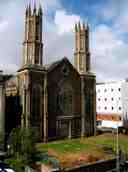
Alright, have a look straight ahead-do you see the tall, gothic towers rising up, looking a bit like something out of an old detective novel? That building in front of you, with its rows of pointed windows and dramatic stonework, is the future home of Swansea Mosque. It’s pretty hard to miss-just look for the twin towers poking up into the sky, almost as if they’re having a competition to see who can reach the clouds first. Right now, you’ll notice the stone façade looks weathered and grand, almost as if it’s hiding centuries of stories. Here’s where things get interesting. Swansea Mosque isn’t what you might expect-it’s not a domed building with a minaret, but instead, it’s tucked inside these two old terraced commercial buildings nearby on St. Helen’s Road. This place has been the heart of the Muslim community in Swansea since the 1980s, always adapting, always growing. But the real plot twist happens in front of the building you’re looking at now. This is the old St. Andrew’s Church, built in 1864 by Scottish immigrants-folk who packed their bags and crossed the border so long ago, carrying with them their faith, their hopes, and, apparently, a love for impressively tall towers. Over time, St. Andrew’s changed hands, shifting from the Scottish Presbyterians to the United Reformed Church, then falling into a bit of a sad state. There was even a fire back in 1964! Imagine the chaos-smoke curling out of those timber rafters, neighbours gasping out on St. Helen’s Road. The rear hall had to be rebuilt, so it got a bit of a facelift, too. Fast forward to 1997, and a Muslim charity steps in. It’s almost like the building gets a second chance at life-bought from a private owner, and little by little, plans for a new mosque take shape. Not everyone was thrilled about this new chapter, though. Back in 2004, things got heated when the British National Party decided to stir up trouble, handing out leaflets and objections. But Swansea’s spirit-always a little stubborn-kept things moving forward. So, as you stand here, imagine those first Scottish settlers with their drapery shops, the clang of church bells on a Sunday morning, the crackle of fire, and finally, today’s hopes for a welcoming mosque at the heart of the community. Funny how one building-just stone and glass-can hold so many different dreams across the years. Keep your eyes peeled as you walk; who knows what secrets those towers have heard?
打开独立页面 →Look ahead and you’ll spot the remains of a piece of real Swansea history: the famous Vetch Field. If you’re standing out front, you’ll notice a wide-open patch where grass used…阅读更多收起
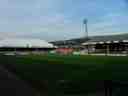
Look ahead and you’ll spot the remains of a piece of real Swansea history: the famous Vetch Field. If you’re standing out front, you’ll notice a wide-open patch where grass used to be, framed by what’s left of old stands. On one side, there’s a big, sloped roof-almost like a giant barn -and the remains of the steel floodlight tower reaching into the sky. It’s a place that might seem quiet now, but once, this field roared with life. Close your eyes for a moment and imagine it: the crowd’s excited chatter, the distant call of the vendors, and the thick smell of chips drifting on the wind. For nearly a century-from 1912 until 2005-this was the beating heart of Swansea football. This is where the Swans soared, the dreams of fans flew high, and the stands shook with every goal. But Vetch Field was more than just a home for Swansea City A.F.C. It was the place where Wales took on the world, with 18 national games played here, and a ground that even made room for rugby league and legendary boxing matches-like the night in 1960 when local lad Brian Curvis flattened a mighty Aussie to win the Commonwealth title. Don’t forget the music! Imagine The Who tearing up the night in ‘76 or Stevie Wonder hitting the high notes in ‘84. Maybe you’d even see your grandparents dancing where the penalty spot was. You might laugh to know it wasn’t named after a vegetable patch gone wild, but actually a vetch-a little legume. The pitch was so tough at first, players needed knee pads to survive. But the Vetch was always full of characters, noise, and some of the most passionate supporters anywhere in the league. As you look around, picture the Bank-the big terrace where the loudest fans stood-echoing with song and stamping feet. After 2005, when it was time to say goodbye, supporters claimed their little pieces of history-seats, bits of turf-anything to remember the magic. Legend has it you could still hear chants swirling in the Swansea air when the wind was right. This place may be quieter now, boarded up and memories buried beneath the grass, but for those who stood here, the Vetch was alive-more than bricks, more than wood, more than grass. It was Swansea’s soul on a Saturday afternoon, and you can almost hear those last cheers if you listen hard enough. If you're curious about the stands, redevelopment or the other uses, the chat section below is the perfect place to seek clarification.
打开独立页面 →
常见问题
如何开始导览?
购买后,下载 AudaTours 应用并输入您的兑换码。导览将准备好立即开始--只需点击播放并按照 GPS 引导的路线行驶即可。
导览期间我需要互联网吗?
不需要!开始前下载导览并完全离线享受。只有聊天功能需要互联网。我们建议在 WiFi 下下载以节省移动数据。
这是导游带领的团体游吗?
不是--这是自助语音导览。您按照自己的节奏独立探索,通过手机播放音频解说。没有导游,没有团体,没有时间表。
导览需要多长时间?
大多数导览需要 60-90 分钟才能完成,但您完全控制节奏。随时暂停、跳过站点或休息。
如果我今天无法完成导览怎么办?
没问题!导览具有终身访问权限。随时暂停和恢复--明天、下周或明年。您的进度已保存。
有哪些语言可用?
所有导览均提供 50 多种语言版本。在兑换代码时选择您的首选语言。注意:导览生成后无法更改语言。
购买后我在哪里访问导览?
从 App Store 或 Google Play 下载免费的 AudaTours 应用。输入您的兑换码(通过电子邮件发送),导览将出现在您的资料库中,准备下载并开始。
如果您不喜欢该导览,我们将退款。请联系我们 [email protected]
安全结账使用 


