AudaTours logoAudaTours

哈恩语音导览:帝国的回响与神圣的石头

语音指南12 景点

收复失地运动的阴影徘徊在哈恩蜜色的石头之间,圣徒和反叛者在大教堂高耸的塔楼下塑造着命运。这个自助语音导览将打开通往哈恩秘密的隐藏之门,让您漫步于狭窄的小巷和宏伟的广场,而未曾讲述的故事则从每一座建筑立面回荡。 当革命席卷西班牙时,绝望的市民为何曾将自己 barricade 在市政厅内?谁曾将一件神秘的圣物带入哈恩市中心,却在城市最神圣的游行中消失?又是什么丑闻将一名祭坛侍童、一件禁忌的宝藏和卡皮利亚圣母教堂的午夜钟声联系在一起? 沿着这些蜿蜒的路径,每一步都将揭开历史的面纱。体验令人惊叹的传说和政治冲突,它们为这座阳光普照的城市的每一个广场注入了新的活力。这段旅程将熟悉的街道变成了戏剧和发现的舞台。 现在就开始吧,让哈恩展现其真实面貌——就在那些大教堂的阴影之外。

导览预览

map

关于此导览

  • schedule
    持续时间 40–60 mins按照自己的节奏
  • straighten
    4.0 公里步行路线跟随引导路径
  • location_on
  • wifi_off
    离线工作一次下载,随处使用
  • all_inclusive
    终身访问随时重播,永久有效
  • location_on
    从 哈恩博物馆 开始

此导览的景点

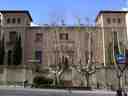
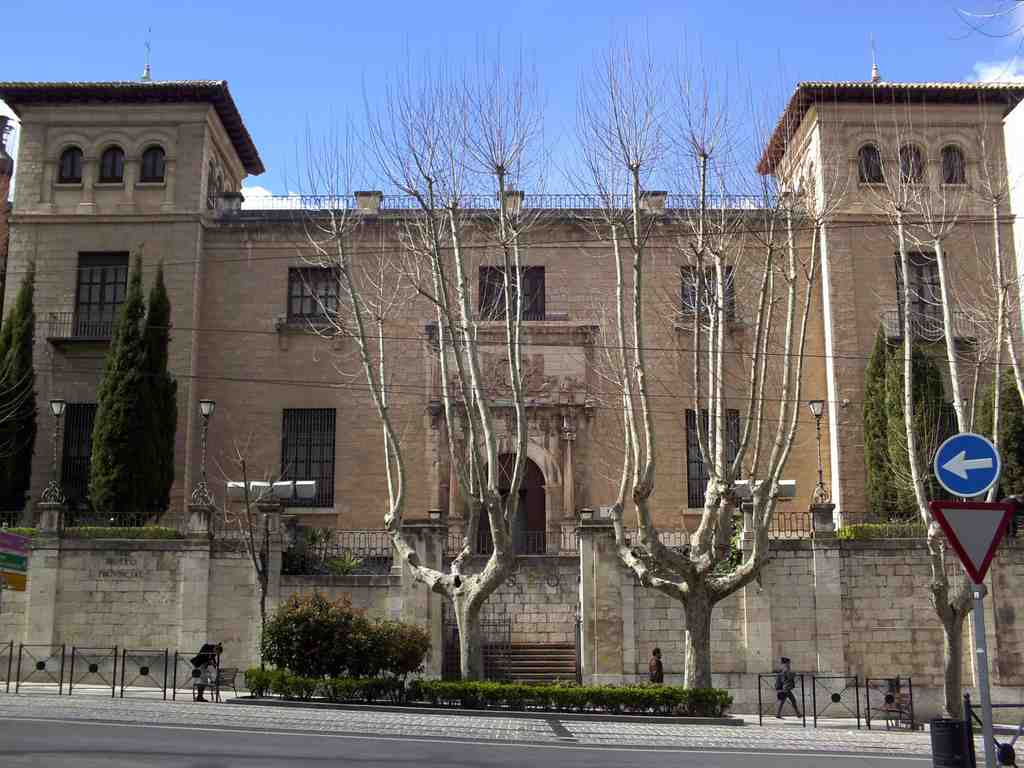
  1. To spot the Museum of Jaén, look for a grand stone building set above the street behind two stairways, with four tower-like corners and tall, bare trees in front-you really can’t…阅读更多收起

    To spot the Museum of Jaén, look for a grand stone building set above the street behind two stairways, with four tower-like corners and tall, bare trees in front-you really can’t miss its stately presence along Paseo de la Estación. Now, take a moment to stand still and let your imagination wander, because you’re gazing at a building that is something of a time traveler! The Museum of Jaén may look all stately and peaceful now, but inside and out, it tells a story that’s seen wild twists, high drama, and centuries of art and ambition rolled into its stone walls. It all began way back in 1846, when Jaén’s very first art-loving ancestor set up shop in a humble convent, determined to share rescued paintings snatched up during Mendizábal’s famous “Desamortización”-that’s a fancy word for when Spain took church property and decided it could use a bit of redecorating. Instead of collecting dust, those works got a new lease on life. By 1914, the growing collection needed a more dignified home and moved into the Palacio de la Diputación, where the energetic Alfredo Cazabán Laguna became director. But you can almost imagine the artwork whispering, “We need more room!” And so, in 1920, with some political muscle from the proud local José del Prado y Palacio, a big dream took shape right here on this very patch of land. Imagine the sound of chisels and hammers in the air as Antonio Flórez Urdapilleta, son of a famous architect, raised this bold new building-a square-shaped palace with strong, elegant stonework, proud corner towers, and a garden encircling it all. It's perched up on a platform, with those stairs inviting you to step up into history. The front entrance is pretty special-it actually has the ancient portal from the long-lost Pósito de Labradores, created in 1548 by Francisco del Castillo el Viejo! And that’s not all: venture inside, and you’d find a Renaissance doorway from the vanished Church of San Miguel, along with the stunning Iberian sculpture group from the Cortijo del Pajarillo. A real eye-popping treasure hunt of old Jaén, right under your nose! In 1969, another plot twist-two museums joined forces: the Bellas Artes and the Archaeological Museum. Suddenly, the building became a guardian of Jaén’s full cultural story, housing not only beautiful art from the 13th to the 20th centuries, but also ancient Roman mosaics, mysterious tombs, and relics that whisper tales of early civilizations-pottery, jewelry, and even a warrior in double armor. Where else can you see a 1:1 replica of an ancient burial chamber or stare down the fierce snout of the Iberian Wolf of El Pajarillo? These days, you can wander between paintings by Jaén’s most famous modern artists, see Roman sarcophagi, and discover jaw-dropping Iberian statues. The museum even stretches to neighboring buildings where temporary and permanent exhibitions keep the surprises coming-including the impressive Porcuna sculptures deep in the basement. Oh, and if you like a bargain, entry is free for EU citizens-but seeing the wonders inside? Absolutely priceless. So, next time you walk by those towers and the grand old portal, remember: you’re not just outside a museum, you’re standing at the crossroads of Jaén’s epic journey-from ancient times to the bright present, where the art never sleeps and the stories just keep getting better. Well, unless you’re here on a Monday-that’s when even history takes a siesta! Fascinated by the building, collections or the access and opening hours? Let's chat about it

    打开独立页面 →
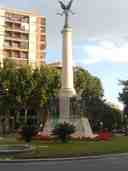
  2. The monument you’re looking for rises boldly right in the center of a roundabout, topped by a winged bronze statue on a tall white column-so just look for the soaring figure above…阅读更多收起

    The monument you’re looking for rises boldly right in the center of a roundabout, topped by a winged bronze statue on a tall white column-so just look for the soaring figure above the treetops and flowerbeds, facing the wide avenue of Paseo de la Estación. Welcome to the Monument to the Battles of Navas de Tolosa and Bailén! Imagine it’s 1912-you’re standing amid fanfare, with bands from Jaén and Linares parading music through the very streets around you. All eyes are on this brand-new monument, crafted by the local sculptor Jacinto Higueras, shining in the morning sun. But what’s all the fuss about? Well, this isn’t just a statue-it’s Jaén’s heroic shout-out to two of the most dramatic battles ever fought on Spanish soil. First, picture the thundering chaos of the Battle of Las Navas de Tolosa in 1212. The mighty Almohade army crossed over from Marrakech, their banners fierce in the wind, meeting the determined Christian forces on the plains not far from here. The clash was so intense you could almost hear the echo centuries later. If you peer closely, on one side of the monument’s base, you’ll spot burly warriors and the powerful surge of cavalry-the sculptor’s way of showing the tension and strength of that momentous day. Then, spin ahead several centuries to the Battle of Bailén in 1808. Here, the clever Spanish General Castaños outwits Napoleon’s seemingly unbeatable army, led by Marshal Dupont. Think of it-a myth-busting smackdown so shocking that even Napoleon’s soldiers dropped their baguettes in disbelief! The relief on the other side of the monument depicts the chaos and drama of Bailén: energy, movement, and a daring romantic vibe that would make even Hollywood jealous. Rising from the middle of all this is an Egyptian-style column crowned by the bronze figure of Athena-Nike, the Greek goddess of Victory, wings spread wide-like she’s about to leap right off and give you a high five for visiting. At the front, don’t miss the poetic inscription, a nod to Bernardo López García, forever binding words and memory to stone. Oh, and just behind you is the leafy Parque de la Concordia, once known as the Park of Victory-its cool shade and splashing fountains were designed as a green heart for Jaén, a dream that took decades to come true. Take a deep breath; there’s history all around you, and victory in the air!

    打开独立页面 →
  3. Alright, take a look in front of you-it’s not every day you stand by the swirling excitement of one of Jaén’s best-loved Holy Week traditions: the Brotherhood of the Borriquilla!…阅读更多收起

    Alright, take a look in front of you-it’s not every day you stand by the swirling excitement of one of Jaén’s best-loved Holy Week traditions: the Brotherhood of the Borriquilla! Picture this: it’s early Sunday morning, the air is cool but electric with anticipation, the streets are packed with people dressed in their best, palm fronds in hand. Suddenly, distant trumpets and the steady beat of drums begin to wind through the old lanes of Jaén. Time seems to slow as everyone waits for the procession that opens Semana Santa-the city’s breathtaking, week-long commemoration of Easter. This brotherhood-the very one you see here-bears the grand official name that’s longer than a Spanish lunch: The Royal, Illustrious and Fervent Franciscan Brotherhood and Confraternity of Nazarenes of Our Father Jesus of Health Entering Jerusalem, Holy Mary of Peace, St. Peter, St. John, and St. James the Apostles. Let’s just call them the Borriquilla for your tongue’s sake! Established in 1947, this brotherhood actually began life inside the Convent of the Barefooted Franciscan Nuns-although, between you and me, their shoes weren’t the only thing missing; at the start, it was all about faith, hope, and a touch of political influence, with founding members coming from teaching circles, youth organizations, and groups with links to Franco’s regime. Their first procession, back in 1950, must have felt like a leap into the unknown-Nazarenes marching with hearts pounding, the sun glinting off fresh tunics, the smell of wax and incense floating over the cobbles. Of course, the Borriquilla has had a few “detours” in its story-sometimes dealing with official oversight, other times with the thrilling excitement of change. By 1964, the brotherhood shook off its official guardians and passed the baton to a brand new council. Two years later, a pivotal vote gave the brotherhood its own elected Junta. In 1976, Spanish royal flair touched the Borriquilla itself-when Prince Felipe of Asturias agreed to be the Honorary Governor. You could say, this is the only procession in Spain with a royal seal that isn’t a Spanish stamp! Now, every Domingo de Ramos (Palm Sunday), the brotherhood sets out in a pageant of faith and artistry. Imagine 140 Nazarenes in white tunics, blue sashes, and capes, all swishing softly through the streets. Instead of candles, they carry palms, while children in Hebrew headscarves giggle and wriggle in the excitement. But the star of the procession? It’s the dramatic wooden scene on the paso (the float): Jesús himself, riding-what else?-a little donkey, the “borriquilla,” just as he entered Jerusalem. Crafted from cedar by Antonio Dubé de Luque in 2002, the statue looks left, arms open, as if blessing the city crowds who greet him. Surrounding him: Hebrew children, apostles waving palms, and-if you squint-maybe even the odd dragon, tucked into a cartouche on the float, referencing Jaén’s own legends. Let’s not forget María Santísima de la Paz, introduced in 1991. With a gentle, serene expression-just a hint of sadness beneath her emerald-green eyes-she glides beneath a burgundy canopy, silver dove soaring above as a sign of peace. If you peek inside the Church of Belén and San Roque, the brotherhood’s home, you’ll see colorful stained glass and altars dedicated to their beloved images. The spirit of community here is strong-especially among the brotherhood’s youth group. They don’t just practice faith; they throw themselves into everything from singing carols at nursing homes to leading meetings and giving talks to other groups across the city. Oh, and about that paso-it’s not just art, it’s a puzzle of craftsmanship. Between 2005 and 2018, every detail was lovingly brought to life; twisting columns, sculpted reliefs of saints, angels wrestling dragons, baskets lined with peacock-blue velvet so the costaleros-those strong men under the float-can keep marching. Lighting it all? No less than 46 flickering bulbs, glinting off gilded silver. And if you catch yourself humming a tune, don’t worry-the brotherhood even has its own soundtrack! Local composers wrote hymns for Jesus entering Jerusalem, Maria Santísima de la Paz, and others, ringing out along the streets as the float sways by. All this spectacle-and a community that’s weathered changes from dictatorship to democracy-is something you can feel right here, in the fresh nerves and timeless faith of Jaén every Holy Week. Next time you see a small donkey, just remember: it might be carrying the hopes of an entire city! Ready to delve deeper into the iconography, steps or the headquarters? Join me in the chat section for an enriching discussion.

    打开独立页面 →
再显示 9 个站点显示更少站点expand_moreexpand_less
  1. In front of you, you’ll notice a grand, dark wooden cross with a striking figure of Christ, surrounded by glowing golden candleholders and lush red flowers-just look toward the…阅读更多收起

    In front of you, you’ll notice a grand, dark wooden cross with a striking figure of Christ, surrounded by glowing golden candleholders and lush red flowers-just look toward the building with the large, square windows and you won’t miss the dramatic scene of the Congregation of the Vera-Cruz. Now, let’s travel back in time together, right here in the heart of Jaén, to a place where legends, faith, and the occasional thunderstorm have shaped the city’s spirit! This isn’t just any congregation-this is the Primitiva, Pontificia y Real Congregación del Santísimo Cristo de la Vera-Cruz y María Santísima de los Dolores. Try saying that five times fast! Founded all the way back in 1541, in the old convent of San Francisco, it’s the oldest penitential brotherhood in Jaén… and they’ve certainly earned their stripes, sometimes in rather stormy ways. Picture Jaén in the 1500s: dusty streets, the distant clang of church bells, and an air ripe with anticipation as people gather for the solemn processions of Holy Week. This brotherhood originally aimed to march on Holy Thursday night, with members known as the “brothers of blood and of light”-which, I know, sounds like either a rock band or the start of a mysterious novel. The congregation was so important, it even built its own hospital on Recogidas Street in 1550. Spiritual blessings poured in from popes like Paul III and Sixtus V-making this group basically the VIPs of Jaén’s religious world. Of course, with all that prestige came a little drama. They clashed with other brotherhoods over the years. Fights ranged from rivalries with the Cofradía de las Cinco Llagas, which eventually merged with them, to pushing and shoving with Soledad and the Sacrament brotherhoods. By 1726, things got so complicated they decided to merge a whopping seven brotherhoods into one, creating the “Congregation of the Seven Squads.” Sounds more like a superhero alliance, doesn’t it? Through the centuries, their main treasures have been the processional ‘pasos’-spectacular floats like the Oración en el Huerto, where Jesus kneels in prayer while the apostles sleep, and the striking Cristo de la Vera-Cruz, a copy crafted in 1950, inspired by the famous granadino crucifix by José de Mora. Each image, from the sorrowful María Santísima de los Dolores-five tears frozen on her cheeks-to the enigmatic Jesús Preso and the youthful San Juan Evangelista, tells part of Jaén’s living story. Speaking of stories, the congregation moved in 1836 after the Mendizábal confiscations and found its new home at the Basilica of San Ildefonso. In 1861, Queen Isabella II was so impressed she gave them their “Royal” title! By the mid-20th century, with new statutes and fresh images, they put on grander displays than ever, drawing inspiration from brotherhoods in Málaga and Seville. The congregation’s strongest protector after the Spanish Civil War? None other than the Civil Guard, who became their honorary elder-brother. Imagine, every year, their statues are escorted by the smart uniforms and serious faces of the Benemérita, while the band from the Civil Guard Academy of Baeza drums up an impressive soundtrack. Of course, not everything was smooth sailing-even Mother Nature showed up for the drama. In 1825, during a procession with their crucified Christ, a storm burst open just as they left, and thunder crashed above the crowd. Ever since, the congregation has been affectionately called the “Brotherhood of the Lord of Thunder.” If you ever hear thunder near Holy Week in Jaén, you might just be witnessing some divine drama at work! And, while this might sound all pageantry and processions, the congregation’s heart beats quietly all year through their charity work. For generations, their “Patronato de la Vera-Cruz” has focused on education-running a school and even a military studies center. Who would’ve thought a brotherhood of the 1500s would help kids with their homework today? Every Holy Week, these golden floats, flickering candles, and emotional faces stir the city: the paso of Jesús orando in Gethsemane with its baroque curves, the delicate silver palio of Dolores carried under a deep blue canopy, and the solemn march of crucified Christ. Songs written specially for them fill Jaén’s air, blending old hopes with new faiths. So, as you stand there, feel the centuries whispering through the plaza-the thunder, the drama, and the music of Jaén’s soul, all held together by a brotherhood that’s seen it all, and maybe weathered more storms than the city’s own walls. Fascinated by the iconography, suit of statutes or the i go through the official race? Let's chat about it

    打开独立页面 →
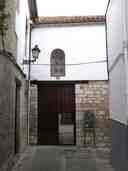
  2. Right in front of you, you’ll spot a white, stone-walled facade with a sturdy, studded wooden gate and, peeking above it, a simple statue of a saint nestled in a small alcove-just…阅读更多收起

    Right in front of you, you’ll spot a white, stone-walled facade with a sturdy, studded wooden gate and, peeking above it, a simple statue of a saint nestled in a small alcove-just look towards the big wooden door framed by historic masonry. Welcome to the Royal Monastery of Santa Clara, the oldest monastery in Jaén! Imagine you’re standing where medieval stories and secrets have swirled for centuries. Founded way back in the 13th century by none other than King Ferdinand III (known as "The Saint"-seriously, talk about a regal nickname), this place started life outside the city walls, but after a little “unfriendly visit” by attackers, it wisely moved in here for safety. The air is cool and filled with whispers of long-ago prayers; some say you can almost hear ancient sandals shuffling on the stone floor. On the monastery’s rear, imagine where an old Jewish synagogue once stood-until historic upheaval in 1391 transformed it into the church of Santa Cruz, and years later, the whole area was folded into this sprawling, peaceful convent as the Hebrew community moved on. The sisters of Santa Clara have watched over this place through thick and thin, embroidering, baking delightful sweets, and-ready for a quirky slice of Spanish tradition?-accepting eggs from hopeful brides and grooms praying for sunshine on their wedding day. Step inside the church (at least in your imagination) and picture a single grand hall-one long nave, crowned with intricate wooden ceilings so beautiful they look almost magical, their oldest beams whispering stories from centuries past. The altar’s centerpiece is a stature of Santa Clara herself, flanked by the mysterious Cristo de Bambú, a revered 16th-century sculpture whose name alone sounds like it should start its own detective agency. During the 1950s and 60s, this place even hosted the Congregation of the Holy Sepulcher while their home was being restored-Jaén’s own tale of religious musical chairs! Now, wander the peaceful outer patio: elegant lines, a lush garden, an ancient cypress towering up, and a statue of the Virgin Mary placed lovingly in the center. Two ancient stones hang on the walls, carved in Latin, showing a history that’s not just written but lived, one careful stone at a time. And just for good measure-keep an ear out for distant church bells or the laughter of cloistered nuns, floating gently over the garden’s walls.

    打开独立页面 →
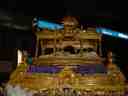
  3. To spot the Congregation of the Holy Sepulchre, look for the gleaming golden processional float adorned with intricate carvings, purple flowers, and a glass urn holding the statue…阅读更多收起

    To spot the Congregation of the Holy Sepulchre, look for the gleaming golden processional float adorned with intricate carvings, purple flowers, and a glass urn holding the statue of Christ at rest-an eye-catching display standing out against the backdrop of the city. Now, let me set the scene for you: imagine yourself in late 16th-century Jaén, when tempers ran as high as the city’s summer sun. It’s 1580, and a fierce feud is brewing inside the Convent of the Virgen Coronada between proud brotherhood members and some rather strict Carmelite friars. Just picture a group of robed men, fed up with the bossy new prior-Fray Diego de Coria-deciding, “That’s it, we’re moving out!” So, under the leadership of Alonso de Torres, out they go-probably with a few muttered complaints and a quick shuffle to take their precious statues and belongings along. Soon enough, a dramatic switcheroo happens. While the former cofrades are moving their things, the friars, maybe still fuming, decide to start a new brotherhood right in the same convent. They succeed, thanks to some paperwork, persistence, and maybe a little sweet-talking to church authorities. On June 22, 1580, it’s official: there’s a brand new Congregation, and to let all of Jaén know, they organize an extraordinary procession two days later. Imagine the streets filled with curious faces, candles flickering, and a sense of rivalry in the air! Over the years, this Congregation becomes a bit nomadic. In the 1600s, they leave the Hospital of San Juan de Dios, move to the Real Convento de Santo Domingo, and then, after even more drama and hesitation, settle in their current home-the Church of San Juan and San Pedro-back in 1695. At last, a place to call their own, where they could march out every Good Friday, giving Jaén a show that’s equal parts reverent and spectacular. But don’t think life quieted down! For decades, the Congregation clashed on and off with their rivals, the Brotherhood of Soledad, until a peace-pact in 1619 sorted out who could lead the Good Friday procession-and alternating years became the rule of thumb, peace at last… well, at least until the next little squabble. By the 1700s, the Congregation joins forces with the Servite Order, and in 1756, a royal surprise: King Ferdinand VI bestows on them the title of “Royal and Venerable” for their good works, especially for helping Jaén’s poorest. Not a bad honor, right? Let’s not forget their tradition of stunning processions. Their treasures include the “Calvario”-a dramatic scene with Christ on the cross, flanked by thieves, saints, and Mary herself. Then there’s the Santo Sepulcro-Christ laying peacefully in a lavish 18th-century baroque urn, and, of course, the elegance of Nuestra Señora de los Dolores, whose velvet and gold-embroidered cloak would make any fashionista jealous. In fact, she made history in 1928 as Jaén’s first image to appear under a canopy. And every Good Friday, when purple-robed members put on their pointed hoods and ceremonial belts, the streets of Jaén fill with the soft sound of feet, the shimmer of gold, and the lingering scent of incense. Even today, this brotherhood continues to leave its mark, not only with grand processions but even with a yearly newsletter packed with stories, research, and a sprinkle of good-natured competition. So as you stand here, imagine centuries of tradition echoing through these streets-rivalries, reconciliations, and a determination to honor the story of the Holy Sepulchre one Good Friday after another.

    打开独立页面 →
  4. To spot the Arab Baths of Jaén, look ahead for a building set below street level, with ancient brick archways and sturdy stone columns visible through the entrance. Now, as you…阅读更多收起

    To spot the Arab Baths of Jaén, look ahead for a building set below street level, with ancient brick archways and sturdy stone columns visible through the entrance. Now, as you stand here, imagine stepping back over a thousand years-close your eyes, and you might just hear the gentle trickle of water echoing under these arches. The Arab Baths of Jaén, also called the Baño del Niño, were built in 1002 on top of even older Roman ruins. Back then, townsfolk would gather here not just to get clean, but to gossip, plot, and soak away the heat of the Andalusian sun. Picture steam rising, voices bouncing off the walls, and the cool taste of spring water from the Magdalena-one of five famous bathhouses in old Jaén. But things didn’t stay peaceful for long! When the Christians took the city in 1246, the baths kept steaming for a while, but their fate changed when they were turned into tanneries. Yes, from sweet-smelling soaps to stinky leather-talk about a downgrade! Fast forward to the 16th century, and Don Fernando Torres de Portugal, Count of Villardompardo, decided his palace would sit right on top of the old baths, hiding them for centuries. For hundreds of years, everyone forgot about this underground wonder until-cue dramatic music-a surveyor named Enrique Romero de Torres rediscovered them in 1913. Imagine his delight brushing away dust to find history sleeping just beneath his feet! The baths have had their share of drama-wars stopped their first restoration, but don’t worry, in the end, the baths got the royal treatment, even winning international awards for their restoration. By now, you might even feel a little regal yourself, standing where Spain’s royals visited in 1990. And guess what? In 2019, new ancient paintings were discovered, proving these baths still have secrets to tell! As you look at these mighty arches, imagine centuries of footsteps echoing where you stand. Maybe you’ll add your own splash to history today-just don’t expect a bubble bath!

    打开独立页面 →
  5. Look for a solid, square-shaped brick tower and a taller stone bell tower, both rising above gently sloped tiled rooftops right in front of you-this is La Magdalena church,…阅读更多收起

    Look for a solid, square-shaped brick tower and a taller stone bell tower, both rising above gently sloped tiled rooftops right in front of you-this is La Magdalena church, standing bold even against the falling snow! Now, imagine you’re standing in a spot where centuries of footsteps echo under your own. La Magdalena isn’t just a church-it's a living timeline! Beneath your feet once lay the grand mosque of 825, where worshippers, led by Abd ar-Rahman II, would pause at a cool pool in the cloister to wash away the dust before prayers. The minaret they built now soars above you as the church’s bell tower, cleverly reshaped by architect Andrés de Vandelvira-proof that even stone can find a new purpose with a little medieval makeover! Walk a little further, and you’ll spot a statue of the infamous Lizard of Jaén, forever guarding the nearby plaza. Strange as it sounds, people once believed this creature haunted the city, and today, it stands as Jaén’s not-so-scary mascot. Inside, the church dazzles with arches, ribbed vaults, and art by the likes of Jacobo Florentino and Salvador de Cuéllar, including a vivid scene of Calvary and a gently kneeling Magdalene. The massive doors you see were carved in 1555-just imagine the hands that shaped them! Gothic spires, rich sculptures, mysterious legends, and a lizard for good luck-La Magdalena is full of stories just waiting for you to uncover.

    打开独立页面 →
  6. Right in front of you, you’ll spot the Convent of Santo Domingo by its grand, old wooden door framed by stone columns and a striking metal grill under an arched stone entryway,…阅读更多收起

    Right in front of you, you’ll spot the Convent of Santo Domingo by its grand, old wooden door framed by stone columns and a striking metal grill under an arched stone entryway, all facing onto the street-just look for the number “12” on the left side. Alright, take a deep breath and let’s step back in time together! Imagine the hustle and bustle of medieval Jaén in 1382. Picture this very spot, but instead of the city sounds you hear today, there’s the distant clopping of horse hooves on dusty streets, the low murmur of monks chanting, and the echo of footsteps as Dominican friars hurry through the courtyard, robes swishing. This complex started its life on the foundations of a Moorish governor’s palace-a gift from King Juan I himself to the Dominican monks! From palace intrigue and silk cushions to the quiet shuffling of friars, talk about a dramatic makeover. Soon after, the convent became more than a religious house-it turned into a center of learning, thanks to a very generous nobleman named Juan Cerezo and his wife, Francisca Peñalosa. Their donation-imagine, fifty thousand golden ducats!-turned this place into the region’s hotspot for studying, where future priests, scholars, and locals would gather. In 1629, with a sprinkle of papal paperwork and the blessing of Pope Urban VIII, it became the grand University of Santa Catalina Mártir. There must have been excited chatter as students argued over philosophy in the cloisters, and professors held lectures with their cloaks streaming behind them like academic superheroes! But life wasn’t all calm. The 19th century came crashing in like an unexpected school bell, and suddenly the monks were gone. The convent became a charity house, then transformed again into a men’s hospice for more than a century. You can almost hear the distant shuffle of feet, and the quiet snores echoing through those ancient hallways. Now, look up at that main façade-straight ahead. The design dates back to 1582, thanks to the clever architect Alonso Barba. Imagine this entrance bustling with students centuries ago. Peer at the sculptures set above the doorway-there’s Santa Catalina, Santo Tomás, and Santo Domingo peeking down, keeping an eye on everyone going in and out. Their stone faces have seen centuries come and go! The style is stately and mannerist, all framed by Corinthian columns and crowned by an elegant triangular pediment complete with the Order’s coat of arms. Beyond these walls, nestled on the side street, stands a Renaissance church-its rectangular nave once covered with painted frescoes, now hidden away to protect them for the future. There’s even a late Gothic chapel at the end, capped with ribbed vaults that must have made every whispered prayer ring louder. But the real hidden treasure? That’s the cloister. Imagine stepping through to a courtyard flooded with sunlight. Its arcaded walkways rest on sixty columns and twenty-eight perfectly rounded arches. Stand in the middle, and you’d find yourself surrounded by echoes of debates and secrets, punctuated only by the cooing of pigeons and the gentle splash of water. Gaze up: you’d spot balconies and allegorical windows with coats of arms from noble families and famous friars-sixteen windows, twelve balconies-each one with its own story. By the late 20th century, the convent transformed again into a labyrinth of historical records. As the Provincial Archive, it’s a guardian of Jaén’s secrets: ancient deeds, notary books, and even the legendary Catastro del Marqués de la Ensenada. The space brimmed with so many papers that, at one point, archivists could barely walk without tripping over the city’s forgotten stories. So, as you stand here, you’re not just outside another pretty old building. You’re where centuries of drama, learning, generosity, and reinvention collide-the living memory of Jaén itself. Now, shall we tiptoe onwards, or risk joining the archives ourselves as “lost and found”?

    打开独立页面 →
  7. It’s impossible to miss this landmark-just look straight ahead for an enormous golden stone facade with two towering bell towers, arched doors, ornate sculptures, and a grand…阅读更多收起

    It’s impossible to miss this landmark-just look straight ahead for an enormous golden stone facade with two towering bell towers, arched doors, ornate sculptures, and a grand staircase leading up from the square. Welcome to the mighty Jaén Cathedral! Imagine centuries of footsteps echoing across this vast plaza-noble ladies in flowing skirts, bishops in heavy robes, builders lugging stones and artists chiseling away-and you’re about to step into their world! Now, picture this: The year is 1246, and the sound of crowing roosters fills the early morning air. Castilian soldiers march into Jaén, and King Ferdinand III takes the city from the Moors. The mosque that once stood here is changed forever; now, it’s a church dedicated to the Assumption. But Jaén Cathedral was never one to settle for less. By the 16th century, it was time for a makeover-a big one! Giant columns rose in the Spanish Renaissance style, thanks to the brilliant Andrés de Vandelvira, who created wonders like the chapter house and sacristy, both full of dazzling detail. Over the years, more masters got involved, each leaving a style behind. The jaw-dropping facade you see, loaded with Baroque drama and lively sculptures carved by the hands of Pedro Roldán, didn’t even start getting built until 1660. If you think home renovations take forever, imagine waiting until 1724 for the final decorative touches! The cathedral has seen drama too: the huge Lisbon earthquake of 1755 made the walls shake, forcing a new addition-the Church of the Sagrario on your left, designed to stabilize the north side. Inside, you’d find one of Spain’s largest choirs, built in elegant Neoclassical style. And here’s a little treasure: a precious Veil of Veronica, thought to be from Siena in the 14th century, shown to the public every Good Friday. So take in the sight of this powerful building that inspired cathedrals across Spain and the Americas-if these walls could talk, they’d have far more stories to tell than even the noisiest of tour guides!

    打开独立页面 →
  8. If these palatial walls could talk, oh, the stories they would tell! Every decision about Jaén-new streetlights, waste collections, or the color of festival banners-has been…阅读更多收起

    If these palatial walls could talk, oh, the stories they would tell! Every decision about Jaén-new streetlights, waste collections, or the color of festival banners-has been hashed out in these rooms. Picture, for a moment, the grand old meeting chamber with 27 councilors in heated debate, raising voices, slamming desks, and trying not to spill their coffee on the minutes-democracy in all its electrifying glory! The make-up of those 27 seats has always been a moving target. Sometimes the Socialist Party (PSOE) took a strong lead; other times, the Popular Party (PP) roared ahead by just a few hundred votes. In recent years, there have even been new faces, like the regional party Jaén Merece Más and Vox, all clamoring for a say in this bustling city. Let’s go back in time. The late seventies and eighties were ruled almost exclusively by the Socialists. It was like the PSOE set up camp here, unfurling banners and planting their coffee mugs in the council chamber. Yet, as the years rolled through, the winds of change didn’t just rustle papers-they whipped up full-on political storms! It wasn’t all smooth sailing; there were tense moments, like a nail-biting vote in the late 80s when a motion of no confidence toppled a Socialist mayor, allowing Alfonso Sánchez Herrera of the then-Alianza Popular (the PP’s ancestor) to snag the big chair, thanks to a little deal with a party called the CDS. For a moment, alliances and rivalries danced as wildly as a Jaén feria! The seesaw continued into the 1990s. In dramatic style, a razor-thin vote margin in 1991 let Socialist José María de la Torre Colmenero return to power, only to have PP’s Alfonso Sánchez Herrera storm back again with a double helping of support by mid-decade. The competition got so tight that in some elections, the difference could be counted on your fingers-and maybe your toes! The late 90s and 2000s ushered in Miguel Sánchez de Alcázar Ocaña for the PP, who kept his spot even as Socialist hopes flickered-sometimes brighter, sometimes barely a spark. By 2007, a new twist! The Socialists didn’t just take the reins; they broke the glass ceiling. Carmen Purificación Peñalver became the city’s first female mayor-imagine the cheers, the hugs, the not-so-secret grumbles from her rivals! Jaén was buzzing, and local bars must have run out of tapas that night. And the excitement didn’t stop. Local coalitions and narrow victories kept the council lively. Sometimes the mayor changed more often than the street decorations-most recently when Julio Millán of the PSOE took over from Agustín González Romo of the PP not with an election, but with a motion of no confidence, just days into 2025. I guess in Jaén, the only thing more unpredictable than the council’s budget meetings is... well, the council’s leadership! But speaking of budgets-here’s a jaw-dropper for you: In 2023, Jaén officially had the highest per-person municipal debt in Spain. That’s right, almost 4,900 euros per person. I like to call it “owing more per capita than a teenager owes their parents after a shopping spree.” The size of the debt became such a talking point that political deals were made and broken over promises to fix it. It wasn’t just about new roads or parks anymore; it was about rescuing Jaén from its financial quicksand. Now, as you stand outside this palace of arguments, ambition, and, sometimes, audacity, look closely at the windows and balconies. Imagine the crowds gathering for big announcements, the slow stir of anticipation before an election, the bursts of laughter and applause echoing from inside… Even today, with democracy as lively as ever, emotions can run higher than the ever-present Spanish sun. Come on, let’s head to our next-and very grand-stop: the majestic Jaén Cathedral. But don’t worry, I promise not to make any budget jokes in front of the bishop!

    打开独立页面 →
  9. To spot the Palace of the Viscount of Los Villares, just look for a striking white building with a beautifully detailed stone doorway and a grand black balcony above it, standing…阅读更多收起

    To spot the Palace of the Viscount of Los Villares, just look for a striking white building with a beautifully detailed stone doorway and a grand black balcony above it, standing out along the street with tall windows and a touch of old-world nobility. Welcome to the Palace of the Viscount of Los Villares, or, as the locals love to call it, the palace with more titles than a medieval banquet! Take a moment to imagine the scene centuries ago: the city was full of noble families, their carriages rattling down these cobblestone streets, the air buzzing with secrets and stories, and right here stood this Renaissance gem-proud, ornate, and always dressed to impress. Look at the façade in front of you, with its three elegant floors, each lined with windows of different sizes and personalities, like a family portrait where even the smallest sibling gets a spot. The lower windows are grand and imposing, but the real star is the off-center entrance with its heraldic shields-warriors in plumed helmets gazing protectively down, as if daring you to share their secrets. That fancy balcony just above is the palace’s version of a red carpet, but don’t get any ideas about hosting your own royal wave! Step inside-if only with your imagination-and you’d find the heart of the palace: a peaceful, quadrangular patio, lined with graceful columns, its arches nearly touching the ground in a delicate curve. The air would be cooler, echoing with footsteps and the gentle murmur of noble guests. Tiny domed ceilings cup the corners, while upstairs, slender windows peek over the world below. There’s even a grand staircase-wide, sweeping, perfect for making dramatic entrances or fleeing from awkward encounters with rival nobles. Today, the palace is getting a second life; it’s being revitalized to become a cultural hub for the community. But as you stand outside, you can almost hear the faint laughter of those ancient lords and ladies, their footsteps and whispers tangled in the stone. And remember, in buildings like this, every window might hide a story and every echo might be a knight just a touch late for dinner!

    打开独立页面 →

常见问题

如何开始导览?

购买后,下载 AudaTours 应用并输入您的兑换码。导览将准备好立即开始--只需点击播放并按照 GPS 引导的路线行驶即可。

导览期间我需要互联网吗?

不需要!开始前下载导览并完全离线享受。只有聊天功能需要互联网。我们建议在 WiFi 下下载以节省移动数据。

这是导游带领的团体游吗?

不是--这是自助语音导览。您按照自己的节奏独立探索,通过手机播放音频解说。没有导游,没有团体,没有时间表。

导览需要多长时间?

大多数导览需要 60-90 分钟才能完成,但您完全控制节奏。随时暂停、跳过站点或休息。

如果我今天无法完成导览怎么办?

没问题!导览具有终身访问权限。随时暂停和恢复--明天、下周或明年。您的进度已保存。

有哪些语言可用?

所有导览均提供 50 多种语言版本。在兑换代码时选择您的首选语言。注意:导览生成后无法更改语言。

购买后我在哪里访问导览?

从 App Store 或 Google Play 下载免费的 AudaTours 应用。输入您的兑换码(通过电子邮件发送),导览将出现在您的资料库中,准备下载并开始。

verified_user
满意保证

如果您不喜欢该导览,我们将退款。请联系我们 [email protected]

安全结账使用

Apple PayGoogle PayVisaMastercardPayPal

AudaTours:语音导览

有趣、经济实惠、自助徒步导览

试用应用 arrow_forward

深受全球旅行者喜爱

format_quote 这次导览是游览这座城市的绝佳方式。故事很有趣,感觉不太照本宣科,我喜欢能够按照自己的节奏探索。
Jess
Jess
starstarstarstarstar
第比利斯导览 arrow_forward
format_quote 这是了解布莱顿的一种可靠方式,感觉不像游客。解说有深度和背景,但并未过度。
Christoph
Christoph
starstarstarstarstar
布莱顿导览 arrow_forward
format_quote 一手拿着羊角面包,零期望地开始了这次导览。这款应用真的很适合你,没有压力,只有你、你的耳机和一些很酷的故事。
John
John
starstarstarstarstar
马赛导览 arrow_forward

无限语音导览

解锁全球每个导览的访问权限

0 导览·0 城市·0 国家
all_inclusive 无限探索