AudaTours logoAudaTours

布尔戈斯语音导览:布尔戈斯的哥特式宏伟与历史魅力

语音指南13 景点

古老教堂的钟声响起,回荡在朝圣者悄无声息的脚步之上,仿佛时光流逝——布尔戈斯在其鹅卵石街道下守护着数百年的戏剧性故事。这个自助语音导览邀请您超越明信片上的景象,揭开大多数旅行者擦肩而过的故事。是什么低语的承诺驱使绝望的灵魂在圣莱斯梅斯修道院寻求奇迹?维纳河上的一场秘密辩论是否真的改变了布尔戈斯的命运?为什么主剧院的一个首演之夜引发了一场很少有人敢再提及的骚乱? 沿着河畔的低语和阴影下的过道追溯秘密历史,每一步都将您更深地带入丑闻、庆典和被遗忘的叛乱之中。从圣物到秘密会议,再到戏剧性的爆发,每一次转弯都让您重新发现布尔戈斯的脉搏。 准备好聆听石头从未吐露的秘密了吗?您进入布尔戈斯中心的旅程现在开始。

导览预览

map

关于此导览

  • schedule
    持续时间 40–60 mins按照自己的节奏
  • straighten
    3.1 公里步行路线跟随引导路径
  • location_on
  • wifi_off
    离线工作一次下载,随处使用
  • all_inclusive
    终身访问随时重播,永久有效
  • location_on
    从 圣莱斯梅斯修道院 开始

此导览的景点

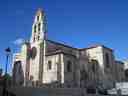
  1. To spot San Lesmes Abad, just look for a tall, stone Gothic church with a sturdy bell tower and a huge round window, right across from the public library in the Plaza de San…阅读更多收起

    To spot San Lesmes Abad, just look for a tall, stone Gothic church with a sturdy bell tower and a huge round window, right across from the public library in the Plaza de San Juan. Now, close your eyes for just a moment-well, actually, keep them open so you don’t trip! Imagine it’s the 14th century, and the city is buzzing with pilgrims on the Camino de Santiago, all roads eventually leading them right here. The air is cool with a mix of candle wax, stone dust, and-let’s be honest-a hint of medieval sweat. This very church rises before you, its Gothic arches reaching for the heavens. Whispers say the church holds something truly special: the remains of San Lesmes, or Adelelmus of Burgos, the city’s beloved patron. Legend tells of folks struggling on their pilgrimage and finding hope within these walls, sometimes even a miracle or two after a little chat with Adelelmus. Over the centuries, the old stones watched kings and paupers come and go, each leaving a story behind. By 2012, the church needed a spa day and got a fresh restoration, shining once again for all who pass. So next time you see a weary traveler, maybe give them a smile-San Lesmes would definitely approve! Shall we wander onward?

    打开独立页面 →
  2. Whoops, small detour! It seems like you’re expecting to hear about the Vena River in Burgos, but your fascinating story is actually about somewhere quite surprising: the Chamber…阅读更多收起

    Whoops, small detour! It seems like you’re expecting to hear about the Vena River in Burgos, but your fascinating story is actually about somewhere quite surprising: the Chamber of Deputies of Luxembourg. Well, since we’re still in Spain, let’s use a little imagination! Picture yourself standing on the riverbank, the sound of water bubbling gently at your feet. Now, while the Vena River in Burgos has watched over generations of local life, let’s take a creative leap. Imagine this river serving as a border between two mighty kingdoms-one run by fish, the other by ducks. Every five years, the current hosts dramatic debates: who gets the best sunbathing spots on the stones? Who gets to organize the next big river festival? They settle things just like in the Luxembourg Chamber of Deputies-with a vote! And speaking of votes, did you know that in Luxembourg, their parliament-the Chamber of Deputies-has 60 elected members? That’s a lot of voices, and everyone gets to choose their favorites; you could vote for as many candidates as there are seats in your neighborhood. It’s like being at a picnic and having as many sandwiches as you want, as long as you can carry them! Every new law or treaty, every budget, and yes, even constitutional changes, need the support of an absolute majority. So when it’s time to make a big decision, just like on this riverbank, you’d hear a murmur of voices rising, falling, until the final vote echoes out. Their official meeting place is not beside a river, but in the grand Hôtel de la Chambre in Luxembourg City-though if you ask me, a riverside parliament might be much more interesting. So, as you stand by the soothing Vena, just imagine all the secrets and dramas rivers like this might overhear. Who knows, maybe there’s a little fishy parliament meeting just beneath the surface, deciding who gets the juiciest worm!

    打开独立页面 →
  3. To spot the Principal Theatre, look for an elegant, historic building with large windows and ornate decorative touches right in front of you, often bustling with activity outside…阅读更多收起

    To spot the Principal Theatre, look for an elegant, historic building with large windows and ornate decorative touches right in front of you, often bustling with activity outside its grand entrance. Ah, welcome to one of Burgos’s cultural gems-the Principal Theatre! Now, let’s take a little imaginative journey… but, just so you know, if you start hearing applause or a dramatic piano tune in the background, you haven’t suddenly entered a musical-well, not unless you want to! Picture yourself across the world in the village of Shirali, where the world slows down 12 meters above the sea. The village’s name comes from Sanskrit-Shrivalli-meaning “wealthy,” though the real treasures here aren’t gold, they’re stories and devotion! Shirali is dotted with majestic temples: Chitrapur Math, the heart of the Chitrapur Saraswat Brahmin community, and the Maha Ganapathi Mahammaya Temple, which is like a spiritual home base for a colorful crowd of surnames-Kamaths, Bhats, Prabhus, and more. Can you hear the soft bells echoing through the humid air? While Burgos basks in the drama of theatre, Shirali is a real-life stage for rituals, traditions, and epic reunions. From here, travel is an adventure! Imagine hopping a bus on the legendary National Highway 66: not just a road, but a lifeline threading together far-flung cities-Bangalore, Mangalore, Goa, Mumbai-each with its own flavors and noises. And if you missed your stop? No worries-the rhythm of autorickshaws, the calls of station vendors, and the hum of the trains on the Konkan Railway will still get you there eventually. So, as you stand at the Principal Theatre, think of Shirali. A world where the drama is spiritual, the audience is devoted, and the climate? Always ready for a monsoon plot twist! Now, are you ready to move on, or shall we take an intermission?

    打开独立页面 →
再显示 10 个站点显示更少站点expand_moreexpand_less
  1. To spot the Caja de Burgos, look straight ahead for a large, ancient stone building with a massive wooden door framed by chunky stone columns, and decorated above with intricate…阅读更多收起

    To spot the Caja de Burgos, look straight ahead for a large, ancient stone building with a massive wooden door framed by chunky stone columns, and decorated above with intricate shields and an impressive sun emblem carved directly into the façade. Now that you’ve found it, let’s unlock the secrets of Caja de Burgos! Imagine the hustle and bustle of old Burgos, where this building stood as a guardian of people’s dreams and savings-back when the savings bank was called Caja de Ahorros Municipal de Burgos. Locals would have lined up here, clutching coins and hopes, placing their trust behind that great wooden door. But times change! During the stormy days of the European debt crisis, the humble savings bank needed strong allies. It joined forces with distant Caja Canarias, Cajasol, and Caja Navarra, coming together to form Banca Civica-think of it as the "super team" of Spanish banks. Not long after, CaixaBank stepped in, absorbing the lot like a giant vacuum! But don’t feel too sad for the old Caja de Burgos. In 2013, its heart lived on as a non-profit foundation. Now, instead of counting coins, it boosts local culture and inspires the next generation by handing out its “Excellent Youth” award. So as you stand here, picture the changing faces of Burgos-this building has seen fortunes rise, alliances form, storms come and go, and yet it still stands, steady as ever. And who knows? Maybe you’ll be next to leave your mark on Burgos’s story!

    打开独立页面 →
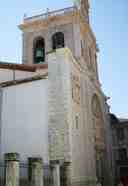
  2. To spot San Lorenzo el Real, just look ahead for a striking stone church with a tall, square bell tower and impressive Baroque details-its pale stone façade and green bells really…阅读更多收起

    To spot San Lorenzo el Real, just look ahead for a striking stone church with a tall, square bell tower and impressive Baroque details-its pale stone façade and green bells really stand out against the blue sky. Now, let’s set the scene: it’s the late 1600s on Calle Almirante Bonifaz. Imagine the sound of chisels and hammers as workers hustle to raise a new church. This is no ordinary church-it’s a big deal! Funded generously by a woman named Francisca de San Vítores (imagine the “fairy godmother” of Burgos), and designed by Bernabé de Hazas and Francisco del Pontón, this place was built to impress. It replaced a smaller, humbler building. The new church’s bell tower and grand entrance are just begging you to imagine the drama of old Jesuit sermons echoing through its halls. But-plot twist-what happens when the Jesuits get kicked out in the late 1700s? The whole church gets a new job as a parish church. I like to imagine the church saying, “Well, that escalated quickly...” Fast forward to 1945, and the place becomes home to the Brotherhood of Coronación de Espinas y de Cristo Rey, adding even more layers to its history. So, as you stand in front of this grand, time-worn stone, try to hear the ghosts of processions, sermons, and secrets that have all left their echoes right here. Pretty cool, don’t you think?

    打开独立页面 →
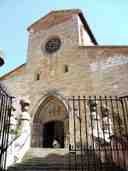
  3. To spot San Gil Abad, look right in front of you for a sturdy stone church with a big round rose window like a star above a pointed doorway, and steps leading up through an old…阅读更多收起

    To spot San Gil Abad, look right in front of you for a sturdy stone church with a big round rose window like a star above a pointed doorway, and steps leading up through an old black iron gate. Now, imagine yourself standing here in Burgos nearly 700 years ago. The air smells of damp stone, and the chatter of medieval merchants echoes along these very streets. San Gil Abad rises like a silent guardian, its walls thick and steady, its rose window both a work of art and a watchful eye. Long ago, in the 14th and 15th centuries, people would flock here for shelter, for stories, and-let’s be honest-for the best gossip in town. They say the shadowy corners of this church have listened to confessions, secrets, and probably some rather stubborn arguments about who makes the best churros. Declared a special protected site way back in 1931, this church has survived storms, wars, and a few pigeons with questionable manners-so don’t be shy, give her a smile. Picture monks bustling by, noble visitors riding up on horseback, and the heavy doors creaking open for a festival or a wedding. If these stones could talk, maybe they'd spill a medieval mystery or two-or at least tell you where to get the best view of Burgos. Ready to wander on? Let’s see what other secrets the city’s got waiting for us!

    打开独立页面 →
  4. To spot the Castle of Burgos, look up the grassy hill and you’ll see immense, weathered stone walls and tall round towers rising proudly above the city, their pale blocks almost…阅读更多收起

    To spot the Castle of Burgos, look up the grassy hill and you’ll see immense, weathered stone walls and tall round towers rising proudly above the city, their pale blocks almost glowing against the sky. Now, let’s step back in time-quite a bit, in fact! Imagine you’re standing on the mighty San Miguel hill, 75 meters above the city, with the wind whipping around ancient towers. Believe it or not, humans were gathering up here as early as 2000 B.C. They weren’t building castles yet, but they did leave traces of the very first Burgos settlement, right under your feet! Fast forward through the centuries, past beaker-wielding prehistoric peoples, iron-toting tribes, and suddenly, you’re in the midst of Roman times, watching the first stone walls take shape. But the real excitement boomed in the medieval era! You see, in the 9th century, Burgos was a constant tug-of-war between Christian and Muslim forces. Great rulers like Alfonso III and Count Diego Porcelos swooped in to claim it, fortifying these walls so heavily that medieval travelers wrote about the overwhelming feeling of safety within. Picture knights in shining armor, banners snapping in the breeze-oh, and a fortress that made everyone else just a bit jealous. “Whoever holds this castle,” they used to say, “holds the kingdom of Castile!” Transformations came along with every king and conqueror. Alfonso VIII made it more stylish, giving it a touch of the Mudéjar flair, while Henry IV fancied it up with palatial halls and chapels befitting true royalty. If you close your eyes, you might hear elegant music drifting out from grand chambers, or, maybe, the rather less elegant clanking of armor as guards changed shifts. But what’s a castle without a bit of siege drama? In 1474, Ferdinand the Catholic himself tried to bring these walls down by cutting off the water supply. Miners dug tunnels beneath your feet, hoping to collapse the castle or find the well. Speaking of the well-now there's an engineering marvel! It’s over 60 meters deep, swirling with a spiral staircase of three hundred thirty-five steps and glowing with a faint, enchanted light from scattered skylights. According to legend, whoever dared descend would feel they had stepped into a realm of magic and mystery. The Castle of Burgos wasn’t just a fortress or palace, though-it had a dark side as a state prison. Imagine the cold, thick walls echoing the footsteps of famous prisoners, like García II of Galicia or Alfonso VI of León and Castile. And then, there’s the tale of Infante Frederick, doomed by his own brother to die in a chest lined with sharpened irons-a story so grim, even the walls might sigh if they could. With the march of time, gunpowder replaced swords and bows. The castle even became Spain’s first gunner training school! Just try to picture 20 quintals of fresh gunpowder made each day-(Don’t get too close, unless you want your eyebrows singed.) The palace remained home to kings like Alfonso X, John II, and Henry III, their royal footsteps eventually replaced by whispers as the castle began to lose importance. But the hush didn’t last forever. Cue the Napoleonic Wars and… BOOM! June 1813, the French retreating from Burgos rigged the whole fortress with explosives. The resulting blast shook the city, destroying the castle, shattering church windows, and leaving some unfortunate French soldiers trapped in the rubble. Where you stand now, the earth trembled, and a thick, smoky silence spread across the ruins. Even after its destruction, the castle kept up with technology-believe it or not, it was part of a semaphore line, sending coded messages across the country long before texts or tweets. Today, with time’s passing, the castle is both playground and museum-an open-air echo of poets, soldiers, kings, and prisoners. Beneath your feet, tunnels twist and turn, hinting at secret adventures and mysterious history. So as you gaze at these battered stone walls under the open sky, let your imagination fill the gaps, and remember: every stone has a story here on the hill above Burgos.

    打开独立页面 →
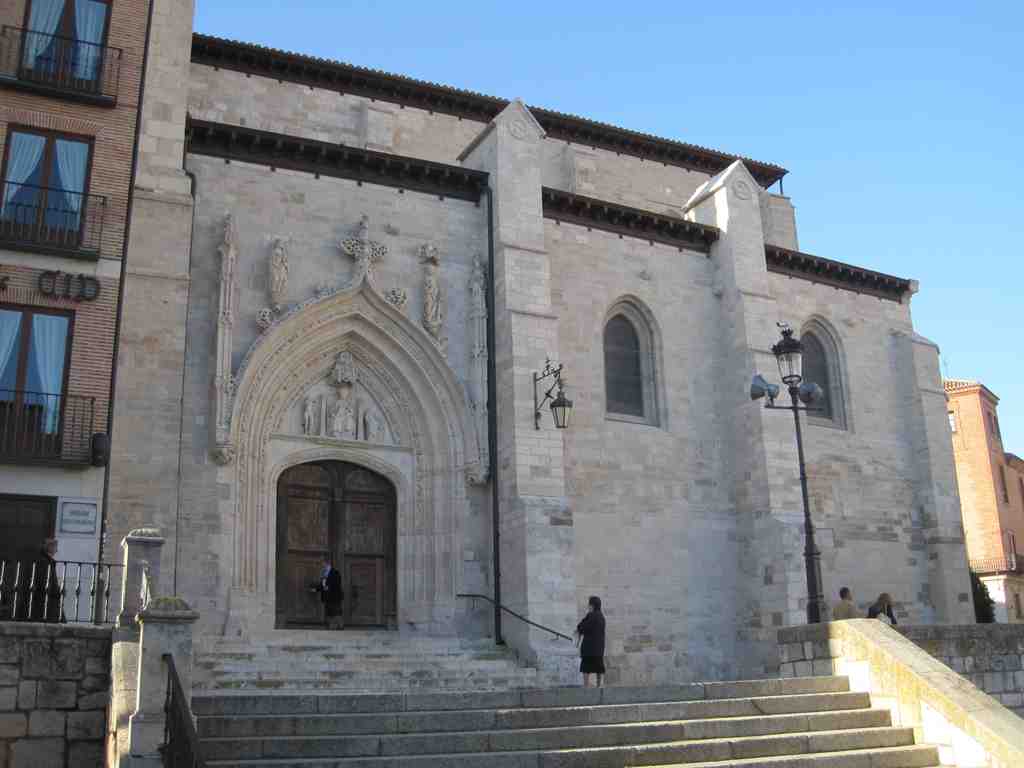
  5. Looking ahead, you’ll spot San Nicolás de Bari by its striking pale stone facade and tall wooden doors at the top of a wide stone staircase, framed by gothic arches and delicate…阅读更多收起

    Looking ahead, you’ll spot San Nicolás de Bari by its striking pale stone facade and tall wooden doors at the top of a wide stone staircase, framed by gothic arches and delicate carvings-just follow the steps up and you can’t miss it. Now, let’s imagine you’re standing outside here back in the early 1400s. Church bells are ringing, echoing down Fernán González street, and pilgrims from the Camino de Santiago shuffle past, their boots clicking on the cobblestone. San Nicolás de Bari was built in 1408, replacing a much older Romanesque church, and believe me, it caused quite a stir with its ambitious design! When you step inside-well, not just yet-picture being knocked off your feet by a colossal altarpiece. This isn’t just any old altarpiece: it’s 15.5 meters tall and made entirely of creamy, porous limestone; huge, luminous, and wildly different from the wood-carved altarpieces found across Spain. Master craftsmen Simón de Colonia and his son Francisco poured their talent into it-at the request (and hefty payment) of a rather generous merchant named Don Gonzalo Lopez de Polanco. Just imagine Don Gonzalo’s pride, showing all his wealthy friends this masterpiece paid for long before Netflix or Instagram could show it off for him! This church doesn’t just stop at jaw-dropping altarpieces. It’s home to Gothic tombs, Renaissance arches, and artwork bought thanks to the Polanco family’s deep purses. There’s even a whisper of mystery-how did they transport so much delicate stone from Hontoria de Cantera without a single truck in sight? If you listen closely, you might still hear, craftsmen at work shaping the only stone retable of its kind in all of late medieval Burgos. After centuries watching over travelers and townsfolk, San Nicolás de Bari was crowned a National Monument in 1917. Not bad for a church hidden just behind a cathedral! Go ahead, soak it all in-and don’t forget to look up, because you never know what secrets those ancient stones might be keeping.

    打开独立页面 →
  6. Look up at the top of the stairs ahead and you’ll spot the enormous, creamy limestone cathedral with its towering, needle-sharp spires that reach up into the sky like stone…阅读更多收起

    Look up at the top of the stairs ahead and you’ll spot the enormous, creamy limestone cathedral with its towering, needle-sharp spires that reach up into the sky like stone fingers-all you have to do is follow the staircase and gaze straight forward to see its breathtaking Gothic façade. Now, take a deep breath. You’re standing before the Cathedral of Saint Mary of Burgos, one of Spain’s most magnificent treasures, and-just between us-this place could tell a thousand stories, if only stone could talk! Picture the year 1221: knights with clanking armor, merchants bustling in the medieval market, and two grand figures-Ferdinand III of Castile and his trusted Bishop Maurice-marking this very ground for what would become the heart and soul of Burgos. The city, already bursting at the seams with ambition, needed a cathedral worthy of a capital, and the answer was a spectacular Gothic masterpiece, inspired by the latest styles from France. The early builders, some even rumored to be brought over on royal invitation from Champagne, set out to create a cathedral in the shape of a Latin cross, using creamy limestone hauled over from the quarries at Hontoria-no small task, given the cathedral’s truly enormous scale! While the very first stones went in under the watchful eye of the Bishop, progress was swift, and by the time the good bishop died (and got remixed into a few choir locations, like a grand game of “find the bishop”), great swathes of the church were already humming with prayers and the sound of chisels. But here’s where the plot thickens: after an initial burst of activity, the Burgos cathedral took a 200-year construction nap. Clearly, even in the Middle Ages, people liked to take their breaks! When builders and patrons returned, they did more than just dust off the plans-they created what you see before you: lavish spires, a jaw-dropping dome, and entire chapels like the dazzling Chapel of the Constable. In fact, the flamboyant spires on the façade were dreamt up in the 15th century by Juan de Colonia, a stonemason who quite literally reached for the stars. He was so ambitious, his spires out-Cologned Cologne Cathedral-though, between us, Cologne’s towers wouldn’t be finished for another few centuries. The cathedral blossomed in styles, adding Renaissance and Baroque decorations over time-but always with that sturdy Gothic backbone. And here’s a fun detail you can almost reach out and touch: the main façade is a triple-layered spectacle, topped with two proud towers and openwork spires, their delicate stone lacework so fine, you’d think the builders had invented a medieval 3D printer. Down below, three grand doors await, including the Royal Door, which once greeted kings. Want to spot something quirky? Look for the sculpted kings of Castile crowding the upper galleries and, above them, a statue of the Virgin Mary with a motto-“Pulchra es et decora” (“You are fair and beautiful”)-because even in stone, mothers get compliments. As you stare at this maze of buttresses, windows, gargoyles, and heavenly heights, think of the artists who left their mark: sculptors like Gil de Siloé, painters such as Mateo Cerezo, glaziers from Flanders, and even the mischievous craftsman who gave the cathedral its famous Papamoscas-a statue inside that pops its mouth open to chime the hours. Imagine a Gothic puppet show, echoing down the centuries! Inside, treasures pile up: grand tombs, the legendary resting place of El Cid and Doña Jimena, a golden staircase twisting like a corkscrew, and a dome that glimmers with centuries of candlelight. But don’t worry, you don’t need to solve riddles to enter-though in the past, pilgrims braved steep stairs, monsters on the portals, and the ever-watchful clergy. And finally, in 1984, UNESCO declared this place a World Heritage Site-independent and proud. Unlike other Spanish cathedrals tied to city centers, Burgos Cathedral stands solo in the world’s eyes. As you stand here, feel the centuries under your feet, let your gaze climb those soaring spires, and know that you’re part of a story that began more than 800 years ago, in a city that wouldn’t settle for anything but the remarkable. And if you ever wonder whether these stones remember you? Maybe, as night falls, they’ll whisper your name among tales of kings, saints, builders, and dreamers. Interested in a deeper dive into the exterior building, interior or the gallery? Join me in the chat section for an insightful conversation.

    打开独立页面 →
  7. If you look straight ahead, you can’t miss the grand stone gate stretching across the street with round towers and fierce-looking statues-like a castle keeping watch over the…阅读更多收起

    If you look straight ahead, you can’t miss the grand stone gate stretching across the street with round towers and fierce-looking statues-like a castle keeping watch over the city’s entrance! Welcome to the legendary Arco de Santa María, one of the original twelve gates that once protected Burgos in the Middle Ages! Imagine yourself centuries ago, approaching these walls as a humble traveler or a daring merchant, while guards eyed you from above. This grand archway didn’t always look so impressive. In the 16th century, after the city threw its support behind Charles V-Holy Roman Emperor-during a time of revolt and rebellion, he decided to thank Burgos by rebuilding this gate bigger and bolder, almost like a royal thank-you card (though with a lot more stone and a lot fewer stamps). Look at the façade! There you’ll spot stone figures: Count Fernán González and the legendary El Cid stand beside Charles V. Down below, the mythical judges of Castile, Laín Calvo and Nuño Rasura, and the city’s very founder, Count Diego Rodríguez Porcelos, keep an eternal watch. Step inside and you’ll find not just ancient walls, but colorful murals, art displays, and even a treasure trove of old pharmacy tools-because even a gatehouse needs a little cure every now and then! In 1943, it became a National Monument, officially securing its spot in Spanish history. So take a deep breath and picture yourself crossing this threshold hundreds of years ago: what stories would you tell if these ancient stones could talk?

    打开独立页面 →
  8. To spot the Royal Burgos Academy of History and Fine Arts (Fernán González Institution), just look for the tall, modern building in front of you with a grid of blue windows and…阅读更多收起

    To spot the Royal Burgos Academy of History and Fine Arts (Fernán González Institution), just look for the tall, modern building in front of you with a grid of blue windows and the big sign on top that says “cajacírculo.” Welcome to a very special home for history lovers-the Royal Burgos Academy of History and Fine Arts, known as the Fernán González Institution! Imagine the buzz inside, with footsteps echoing on polished floors as scholars rush to uncover the secrets of Castile’s past. This academy isn’t just about dusty old tomes! It got its start back in 1946, right after a terrible world war, when people in Burgos decided their rich culture deserved its own stage. Their first home was the Consulate of the Sea-how’s that for a romantic-sounding address? For decades, the members met under high, vaulted ceilings, surrounded by the spirit of explorers and traders from Burgos’ imperial days. But in 2023, the institution moved here, to the buzzing heart of modern Burgos, inside the Foundation Círculo building. Quite a jump-from echoes of medieval ships to the hum of elevators and neon lights! You might wonder, who is Fernán González? He’s a true local hero-a tenth-century count who fought for Castile’s independence. His bravery inspired generations, and naming the academy after him was kind of like calling your sports team after your city’s greatest legend. One of the institution’s proudest achievements is its publications-imagine thick periodicals filled with treasures about Burgos’ art, archaeology, and secrets. Their famous newsletter, the Boletín de la Institución Fernán González, actually goes back to 1922, long before Netflix or even color TV! Now, in the digital age, every volume is just a click away for curious readers and historians everywhere. But wait-there’s a treasure within a treasure here. In 1948, Eulalia Cáceres, widow of the famous poet Manuel Machado, donated a huge collection of letters and documents, known as the Fondo Machadiano. Picture hundreds of hand-written letters-some mundane, some bursting with emotion-sent to the Machado brothers by famous poets like Unamuno and Azorín, even by duchesses and philosophers. In 2015, thanks to local sponsors, this entire archive was digitized for the public. It’s like peering through a keyhole into the very soul of Spanish creativity. And there’s still more! In 2023, an unpublished poem of Antonio Machado himself popped up, likely penned in the snowy winters of Soria. No one expected this literary ghost to appear, making even the calmest historian’s heart skip a beat. The surprises don’t stop there. In 2024, the family of the brilliant thinker Luis Martín Santos donated a striking oil painting, crafted by Francisco Espinoza with palette knife in Paris back in 1957-imagine the texture, as if you could run your hands along the swirls of color. This institution isn’t just locked in the past, either. It encourages young researchers with the Consulado del Mar Prize for international studies, and since 2018, they’ve handed out the Úrbel Literature Prize, sparking Burgos’ schoolchildren to write their own stories. By the way, the first time they offered the researcher prize, nobody won-maybe everyone was too busy reading old manuscripts! The Fernán González Institution keeps signing new agreements with local schools and universities, ensuring that Burgos’ history and art will keep growing, one curious mind at a time. So, as you stand here, imagine yourself not just as a visitor, but as the next possible chapter in this never-ending story. Fascinated by the publications, funds and bequests or the academic agreements? Let's chat about it

    打开独立页面 →
  9. As you stand in front of the grand Burgos City Council building, take a deep breath and soak in the hum of civic energy that has pulsed here for centuries. Imagine the echoes of…阅读更多收起

    As you stand in front of the grand Burgos City Council building, take a deep breath and soak in the hum of civic energy that has pulsed here for centuries. Imagine the echoes of footsteps, shouts, and heavy wooden doors swinging open as Burgos’ leaders discussed the city’s fate for generations. The Ayuntamiento, or City Council, is the beating heart of Burgos’ local government. These halls have listened to some very intense debates-and probably a few dramatic sighs from politicians after a long day. Let’s whisk ourselves back to the late 19th century, when the council chambers were alive with the swirl of black capes, and the air was thick with cigar smoke and anticipation. Elections in those days were a serious affair. In May 1895, hopeful candidates waited nervously as the city, divided into seven colorful districts, prepared to elect twenty councilors. The list of winners was announced with great fanfare, and the councilors probably felt as victorious as knights winning a jousting match. But I can’t promise they celebrated with a medieval banquet-though knowing Spaniards, there were certainly some delicious tapas involved. Fast forward to 1931, and things are getting dramatic. Spain is about to switch from a monarchy to a republic, and city hall is buzzing. The choices were razor-thin: the monarchists won with 8,733 votes and grabbed seventeen council seats, but the Republicans and Socialists, with 8,087 votes, took thirteen. And just to keep things unpredictable, independent candidates took a few hundred votes as well. Politicians were probably pacing the tiled floors, worrying about the next twist. In the end, Manuel Santa María Heras, a local socialist, ended up as mayor-even though he wasn’t the most popular choice. Democracy, as always, had its little surprises. Moving to the stormy years of the Franco dictatorship, City Hall looked a bit different. Forget elections for a moment-here, in 1940, governors and ministers called the shots, and suddenly the city had a new Falange mayor and council-all appointed, not elected. Imagine the sound of boots echoing through these corridors, as the council changed faces almost overnight. In 1941, another shakeup: a new commission with lawyers, soldiers, and influential citizens, all sworn to keep order during tense times. Democracy returned in 1979, when townsfolk voted freely and the city elected José María Peña San Martín as mayor. Since then, every four years, the people of Burgos gather to vote and shape the future of their proud city. If these walls could talk, they’d probably ask for a quieter election season and maybe a cushion or two-democracy can be exhausting! So whenever you see the flags fluttering atop City Council, you’re witnessing more than just administration. It’s a living stage for local legends, historic twists, and the never-ending play of politics. Whether it’s the heated drama of the past or today’s quieter planning meetings (with a bit less cigar smoke), this is where Burgos looks after its people-and occasionally argues over who gets the best coffee at council break time!

    打开独立页面 →
  10. Picture Burgos then: narrow, bustling streets, people in capes whispering secrets, and the clatter of wooden presses echoing through the night. Every printed book was a treasure,…阅读更多收起

    Picture Burgos then: narrow, bustling streets, people in capes whispering secrets, and the clatter of wooden presses echoing through the night. Every printed book was a treasure, guarded more jealously than grandma’s secret stew recipe. There was a thrill in the air-a sense that stories, history, and knowledge could finally reach everyone, not just monks with fantastic handwriting. Today, this museum celebrates not just Fadrique’s legacy, but the magic and mischief of books themselves. The displays invite you to witness how something as simple as printed words could set off revolutions-or at least keep neighbors arguing about plot twists for centuries. And who knows? Maybe if you listen closely, you can still hear the whispers of old printers laughing at a particularly tricky typo. Thank you for joining me on this journey through Burgos-where every page tells a story, and every corner has a legend!

    打开独立页面 →

常见问题

如何开始导览?

购买后,下载 AudaTours 应用并输入您的兑换码。导览将准备好立即开始--只需点击播放并按照 GPS 引导的路线行驶即可。

导览期间我需要互联网吗?

不需要!开始前下载导览并完全离线享受。只有聊天功能需要互联网。我们建议在 WiFi 下下载以节省移动数据。

这是导游带领的团体游吗?

不是--这是自助语音导览。您按照自己的节奏独立探索,通过手机播放音频解说。没有导游,没有团体,没有时间表。

导览需要多长时间?

大多数导览需要 60-90 分钟才能完成,但您完全控制节奏。随时暂停、跳过站点或休息。

如果我今天无法完成导览怎么办?

没问题!导览具有终身访问权限。随时暂停和恢复--明天、下周或明年。您的进度已保存。

有哪些语言可用?

所有导览均提供 50 多种语言版本。在兑换代码时选择您的首选语言。注意:导览生成后无法更改语言。

购买后我在哪里访问导览?

从 App Store 或 Google Play 下载免费的 AudaTours 应用。输入您的兑换码(通过电子邮件发送),导览将出现在您的资料库中,准备下载并开始。

verified_user
满意保证

如果您不喜欢该导览,我们将退款。请联系我们 [email protected]

安全结账使用

Apple PayGoogle PayVisaMastercardPayPal

AudaTours:语音导览

有趣、经济实惠、自助徒步导览

试用应用 arrow_forward

深受全球旅行者喜爱

format_quote 这次导览是游览这座城市的绝佳方式。故事很有趣,感觉不太照本宣科,我喜欢能够按照自己的节奏探索。
Jess
Jess
starstarstarstarstar
第比利斯导览 arrow_forward
format_quote 这是了解布莱顿的一种可靠方式,感觉不像游客。解说有深度和背景,但并未过度。
Christoph
Christoph
starstarstarstarstar
布莱顿导览 arrow_forward
format_quote 一手拿着羊角面包,零期望地开始了这次导览。这款应用真的很适合你,没有压力,只有你、你的耳机和一些很酷的故事。
John
John
starstarstarstarstar
马赛导览 arrow_forward

无限语音导览

解锁全球每个导览的访问权限

0 导览·0 城市·0 国家
all_inclusive 无限探索