AudaTours logoAudaTours

策勒语音导览:城堡、灯笼、传说与花园揭秘

语音指南12 景点

一座司法宫殿矗立在鹅卵石街道之上,古老的秘密在阳光普照的庭院中萦绕。策勒优雅的立面之下,隐藏着几个世纪以来的阴谋诡计和不屈的声音。 这个自助语音导览将以您自己的节奏,揭开隐藏的故事和被忽视的角落。聆听宏伟大门和铁门背后隐藏的传说、丑闻和谜团——发现策勒鲜为人知的一面。 在混乱时期,谁敢在高等地区法院内部煽动叛乱?什么神秘文物沉睡在博曼博物馆,吸引着好奇的头脑和嫉妒的对手?为什么一封从策勒惩教所偷运出来的信件会成为整个大陆的话题? 漫步于巴洛克式拱门和寂静石块下,阴谋诡计在此盘旋。每一步都将您带入塑造这座城市的戏剧性情节、非凡对抗和奇闻轶事之中。 让好奇心解开每一个秘密。立即开始您的策勒冒险之旅。

导览预览

map

关于此导览

  • schedule
    持续时间 40–60 mins按照自己的节奏
  • straighten
    3.8 公里步行路线跟随引导路径
  • location_on
    位置策勒, 德国
  • wifi_off
    离线工作一次下载,随处使用
  • all_inclusive
    终身访问随时重播,永久有效
  • location_on
    从 策勒惩教所 开始

此导览的景点

  1. Look straight ahead at that symmetrical white building complex with its steep red-tiled roofs and the central clock tower topped by a green copper dome. This is the Celle…阅读更多收起
    Celle Correctional Facility
    Celle Correctional FacilityPhoto: Hajotthu, Wikimedia Commons, CC BY 3.0. Cropped & resized.

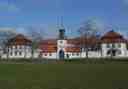
    Look straight ahead at that symmetrical white building complex with its steep red-tiled roofs and the central clock tower topped by a green copper dome. This is the Celle Correctional Facility, and believe it or not, you are standing outside the oldest functioning prison in Germany. If you check your screen, you can see a great shot of its classic exterior.

    This image shows the exterior of the Celle Correctional Facility, known as Germany's oldest functioning prison, which has been in continuous operation since its construction between 1710 and 1724.
    This image shows the exterior of the Celle Correctional Facility, known as Germany's oldest functioning prison, which has been in continuous operation since its construction between 1710 and 1724.Photo: Ymblanter, Wikimedia Commons, CC BY-SA 4.0. Cropped & resized.

    Built back between 1710 and 1724, this place started as a combination of a workhouse, a penitentiary, and an asylum. The original concept was actually inspired by a Dutch idea to rehabilitate inmates rather than just lock them away and throw away the key. But do not let the elegant French-style architecture fool you. Over the centuries, this place has seen the full spectrum of criminal justice.

    In the 1920s, a progressive director named Fritz Kleist tried to make things more humane by adding gymnastics, radio access, and a library. The locals actually mocked the idea, sarcastically calling the prison Cafe Kleist.

    But the history here takes some incredibly dark turns. During the Nazi era, political prisoners were held here, and as World War Two came to a close, terrible overcrowding and brutal conditions led to the deaths of over two hundred inmates. Because of the chaos of the time, they were buried right on the prison grounds.

    Fast forward to the 1970s, and this facility became a modern fortress. A new high-security wing was built specifically to house members of the Red Army Faction, a militant left-wing extremist group that operated in West Germany. Things got so intense that in 1978, German intelligence actually staged a fake bombing right here. They blew a hole in the prison wall, hoping to blame the extremists and use the chaos to sneak an undercover informant into the group. The wild stunt completely backfired and turned into a massive political scandal known as the Celle Hole.

    And speaking of wild, the escape attempts from this place sound like they were pulled straight out of an action movie. In 1984, two inmates used homemade guns to take a guard hostage, demanding a getaway BMW and 300,000 D-Mark, the former German currency. They got away, but police had secretly slipped a tracking device into the car and caught them the very next day. In 1991, four prisoners went even further, strapping homemade explosive collars to the necks of three guards. They managed to flee with two million D-Mark before being captured after a shootout a few days later. Then in 1996, a dangerous inmate took a prison social worker hostage at knife-point. The prison director, a courageous woman named Katharina Bennefeld-Kersten, actually offered herself up as a replacement hostage, taking the social worker's place until the man finally surrendered hours later.

    Despite its turbulent past, the prison remains active today, holding maximum-security inmates serving long sentences. Just as a quick tip if you need their offices, the administration is open from eight in the morning Monday through Saturday, but they are closed on Sundays. It is a striking monument with a deeply layered story. Whenever you are ready to leave this heavy history behind, we can head to our next stop.

    打开独立页面 →
  2. On your left stands Celler Schloss, a massive rectangular palace defined by smooth white plaster walls and topped with distinctive green domed towers. It is pretty hard to…阅读更多收起
    Celler Schloss
    Celler SchlossPhoto: Hajotthu, Wikimedia Commons, CC BY-SA 3.0. Cropped & resized.

    On your left stands Celler Schloss, a massive rectangular palace defined by smooth white plaster walls and topped with distinctive green domed towers.

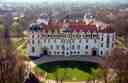
    It is pretty hard to imagine now, but this elegant palace started out as a gritty, bare bones watchtower way back in the nine eighties, guarding a local river crossing. Over the centuries, it kept expanding. If you pull up your screen, take a look at this aerial shot showing how the castle sits on its own little island, surrounded by a moat. Originally, it was ringed by heavy bastions, which are basically thick defensive walls jutting outward to repel attackers. But once the castle stopped needing military defenses in the late seventeen hundreds, those walls were torn down and replaced with the sprawling landscape park you see today.

    An aerial view of Celler Schloss, illustrating its location on an island surrounded by the castle moat, where outer bastions were later removed to create the surrounding landscape park.
    An aerial view of Celler Schloss, illustrating its location on an island surrounded by the castle moat, where outer bastions were later removed to create the surrounding landscape park.Photo: Carsten Steger, Wikimedia Commons, CC BY-SA 4.0. Cropped & resized.

    The real glow up happened in sixteen seventy. Duke Georg Wilhelm was running the show, and he was completely obsessed with Italy. He had spent time in Venice and decided his boring old German fortress needed a major facelift. He added that crown of gables around the roof and those unique, curving domes on the towers to mimic Venetian architecture. He even built a beautiful Baroque theater inside. Baroque is an incredibly ornate, dramatic style of design meant to overwhelm the senses, and amazingly, this theater still hosts performances by its own acting ensemble today.

    But a palace is not a palace without a little royal gossip. In seventeen seventy two, the former Queen of Denmark, Caroline Mathilde, was banished to this castle. The rumor was she had a scandalous affair with a royal adviser named Johann Friedrich Struensee. Because of this, she was divorced, exiled from Copenhagen, and sent here to live out her days holding a much smaller, quieter court. Tragically, she died here just a few years later from scarlet fever at the age of twenty three.

    If you step inside the inner courtyard, which you can see in this photo, you really get a sense of the sheer scale of the place. The inside hides another incredible treasure. The castle chapel is one of the most important Lutheran court churches in Europe, completely covered in stunning sixteenth century paintings and wood carvings. But there is a catch. By the nineteen nineties, the incredible tourist turnout was actually destroying the art. The humidity from so many people breathing in the small space was causing the historic wood panels to warp and the paint to flake. Today, you can still view the magnificent artwork, but only from behind a protective glass wall to keep the climate perfectly controlled.

    The inner courtyard of Celler Schloss, displaying the complex's four-winged structure around a rectangular space, shaped by centuries of renovations from Renaissance to Baroque.
    The inner courtyard of Celler Schloss, displaying the complex's four-winged structure around a rectangular space, shaped by centuries of renovations from Renaissance to Baroque.Photo: Ymblanter, Wikimedia Commons, CC BY-SA 4.0. Cropped & resized.

    If you want to check out the interior rooms or the museum, the castle is open Tuesday through Sunday from eleven in the morning to four in the afternoon.

    Take a moment to soak up the history of these white walls. Whenever you are ready, we can take a short walk over to the next stop.

    The southern facade of Celler Schloss, showcasing the Baroque transformation initiated by Duke Georg Wilhelm from 1670, featuring Venetian-inspired design with gables and distinctive domed towers.
    The southern facade of Celler Schloss, showcasing the Baroque transformation initiated by Duke Georg Wilhelm from 1670, featuring Venetian-inspired design with gables and distinctive domed towers.Photo: Ymblanter, Wikimedia Commons, CC BY-SA 4.0. Cropped & resized.
    A detailed view of an inner courtyard facade, revealing the specific architectural elements and ornamentation from the Renaissance and Baroque periods, which contributed to its character as a ducal residence.
    A detailed view of an inner courtyard facade, revealing the specific architectural elements and ornamentation from the Renaissance and Baroque periods, which contributed to its character as a ducal residence.Photo: Rendor Thuces Al'Nachkar, Wikimedia Commons, CC BY-SA 4.0. Cropped & resized.
    打开独立页面 →
  3. Look to your left and you will spot a striking white plaster building with a massive dark sloping roof, corner turrets topped with green copper spires, and an ornate stone coat of…阅读更多收起
    Bomann Museum
    Bomann MuseumPhoto: Calips, Wikimedia Commons, CC BY-SA 3.0. Cropped & resized.

    Look to your left and you will spot a striking white plaster building with a massive dark sloping roof, corner turrets topped with green copper spires, and an ornate stone coat of arms set right into the facade.

    Welcome to the Bomann Museum. Now, I know what you might be thinking. This building is a lot to take in. It looks like a medieval fortress, a grand townhouse, and a traditional timber framed home all crashed into each other at a very polite speed. And honestly... that is exactly the point.

    Back between 1903 and 1907, the architect Alfred Sasse and the museum's founder Wilhelm Bomann decided to make the building itself an exhibit. They intentionally smashed together different historical styles, from Gothic pointed arches to grand Renaissance flourishes, aiming to create this educational, picturesque collage of architecture. Not everyone was a fan right away. The famous local writer Hermann Löns famously mocked it as a true architecture pudding. Pull out your phone for a second and take a look at the screen. You can see exactly what Löns meant in this window detail, where different historical building traditions are stacked like layers in a rather chaotic cake.

    A window detail from the Bomann-Museum's facade on Stechbahn, illustrating the "Baustile-Collage" architecture that blends Gothic and Renaissance-style elements.
    A window detail from the Bomann-Museum's facade on Stechbahn, illustrating the "Baustile-Collage" architecture that blends Gothic and Renaissance-style elements.Photo: NobbiP, Wikimedia Commons, CC BY-SA 3.0. Cropped & resized.

    But that eccentric exterior holds one of the largest city museums in all of Lower Saxony. And the surprises do not stop at the front door. When they built this place, they literally constructed the ground floor around a massive, authentic farmhouse from the year 1571. It is a traditional Hallenhaus, which is a classic Lower German hall house where the living quarters, the open fire kitchen, and the animal stalls were all gathered under one gigantic roof. You step out of a modern museum corridor and suddenly you are standing in a sixteenth century kitchen.

    It is a place that impressed some pretty high profile guests. The German Emperor, Kaiser Wilhelm the Second, visited shortly after it opened and ended up donating a monumental battle painting that still hangs in the military honor hall today.

    While you are looking at the building, check your app again. This image shows a close up of the incredibly detailed coat of arms of the City of Celle mounted right on the corner of the museum. It is just one more ingredient in Sasse's architecture pudding.

    This image shows the Coat of Arms of the City of Celle on the Bomann-Museum at the intersection of Stechbahn and Schlossplatz, a testament to the building's detailed and eclectic architectural style.
    This image shows the Coat of Arms of the City of Celle on the Bomann-Museum at the intersection of Stechbahn and Schlossplatz, a testament to the building's detailed and eclectic architectural style.Photo: NobbiP, Wikimedia Commons, CC BY-SA 3.0. Cropped & resized.

    Today, the museum houses everything from ancient archaeological finds to the Tansey collection, which is one of the most important collections of portrait miniatures in the world. These tiny, exquisite paintings from the Baroque and Rococo eras were painstakingly painted on vellum and ivory, capturing the faces of European nobility in microscopic detail.

    If you want to explore the architecture pudding for yourself, the museum is closed on Mondays but open every other day of the week from eleven in the morning until five in the evening.

    Feel free to admire these wild architectural layers before heading to our next destination.

    This view of the Bomann-Museum (Schlossplatz 7) from Celle Castle highlights its prominent location opposite the castle, where it was built between 1903 and 1907.
    This view of the Bomann-Museum (Schlossplatz 7) from Celle Castle highlights its prominent location opposite the castle, where it was built between 1903 and 1907.Photo: Ymblanter, Wikimedia Commons, CC BY-SA 4.0. Cropped & resized.
    打开独立页面 →
再显示 9 个站点显示更少站点expand_moreexpand_less
  1. Direct your attention to the grand, peach-colored rectangular building on your left, defined by its precise rows of arched windows and a prominent arched wooden double door right…阅读更多收起
    Higher Regional Court of Celle
    Higher Regional Court of CellePhoto: Axel Hindemith, Wikimedia Commons, CC BY-SA 3.0. Cropped & resized.

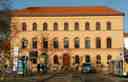
    Direct your attention to the grand, peach-colored rectangular building on your left, defined by its precise rows of arched windows and a prominent arched wooden double door right in the center.

    This is the Higher Regional Court of Celle, though locals just call it the OLG Celle. Built back in the 1840s, its design is inspired by the early Florentine Renaissance, bringing a little slice of historic Italy right here to Germany. Now, an Oberlandesgericht is a higher regional court, which basically means it is a major appeals court sitting just one step below the federal supreme court. And this one is a heavy hitter. It oversees a massive legal district of over four million people, making it the largest of its kind in Lower Saxony.

    The roots of this court stretch way back to 1711. Back then, the local ruling family gained enough political clout that they were no longer subject to the old imperial courts, meaning they had to build their own supreme court from scratch. Since then, the law has flowed through these halls for centuries, but that history is not entirely spotless.

    During the dark days of the National Socialist era in the 1930s and 40s, this court actively participated in the regime. Judges and staff pushed out their Jewish colleagues and twisted the law to align with the terrible ideology of the time. For a long time after the war, institutions across the country stayed quiet about what really went on behind their closed doors. But in 1986, the court president, a man named Harald Franzki, decided enough was enough. Under his watch, the OLG Celle became the very first higher court in Germany to completely open its records and expose its Nazi past, explicitly naming those who were involved. It was a massive, necessary step toward true justice.

    Since then, the court has made a different kind of history. In 1989, Helga Oltrogge took charge, becoming the first woman ever to serve as president of a higher regional court anywhere in Germany. Today, under current president Stefanie Otte, around ninety judges work directly in this historic building, tackling everything from civil disputes to massive criminal cases, including recent high-profile anti-terror trials.

    If you ever want to peek inside, the building is open to the public on weekdays from eight thirty in the morning until three thirty in the afternoon, though it closes at twelve thirty on Fridays and is shut down completely on weekends. Take a look at those massive doors, and move on when you are ready.

    打开独立页面 →
  2. Look out for the circular blue and white sign, shaped almost like a giant postage stamp with its serrated edges, featuring the word life right in the center. That is the mark of…阅读更多收起
    Stiftunglife
    StiftunglifePhoto: Tilmanalexander, Wikimedia Commons, Public domain. Cropped & resized.

    Look out for the circular blue and white sign, shaped almost like a giant postage stamp with its serrated edges, featuring the word life right in the center. That is the mark of Stiftunglife, a foundation that started back in 1989 with a simple but massive idea. Real estate entrepreneur Jürgen Gessner and his partner Sven Raap kicked things off with one hundred thousand Marks, and today, that foundation holds around twenty one million Euros. Not a bad trajectory, right?

    But here is the really wild part. They have exactly zero employees. Everyone working here volunteers, and they even pay for their own travel and administrative costs. Every single cent donated goes into a transparent account, where anyone can see exactly what comes in and what goes out.

    In Germany, they are famous for their work with the Tafeln, which are local food banks that distribute groceries to those in need. Back in the nineties, Gessner essentially helped organize this entire national food bank network. Over fourteen years, Stiftunglife helped buy four hundred twenty two refrigerated vans to transport that food, putting twenty million Euros into the project. They actually stopped the van program in 2017 after the diesel emissions scandal broke, because they refused to contribute to that kind of air pollution.

    But their reach does not stop at the German border. Half of their money is spent internationally. My favorite project is in Myanmar, where they run the Swimming Doctors. It is literally a floating medical practice that travels through the river delta, bringing healthcare to isolated villages. They have also built schools in Ethiopia and supplied emergency goods to Ukraine. And since you can view their completely transparent operations online, they are essentially open twenty four hours a day.

    It is pretty inspiring what people can build when they just decide to help. Whenever you are ready, let's keep moving to the next stop.

    打开独立页面 →
  3. You should be standing right in front of St. Mary's Church, easily recognizable by its smooth white stucco walls, the massive red-tiled roof punctuated by small semi-circular…阅读更多收起
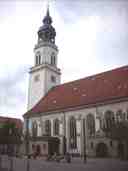
    St. Mary's Church
    St. Mary's ChurchPhoto: Rabanus Flavus, Wikimedia Commons, Public domain. Cropped & resized.

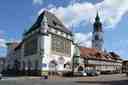
    You should be standing right in front of St. Mary's Church, easily recognizable by its smooth white stucco walls, the massive red-tiled roof punctuated by small semi-circular windows, and a tall, square clock tower capped with a multi-tiered green copper dome.

    Now, you’re probably expecting a standard history of German architecture, but this church actually holds a strange, forgotten connection to a single, chaotic street in Paris called La rue Pierre-Guérin. Back in the 1960s, the clergy right here maintained a close correspondence with a community of Franciscan nuns based on that exact street in the 16th arrondissement, which is a major administrative district in the French capital.

    Those letters linked this quiet Celle parish to a place with a truly wild history. The Parisian road was named after Pierre-Narcisse Guérin, a famous painter and director of the Villa Medici, a prestigious French art academy located in Rome. Before 1860, part of that street was known as the Sente des Vignes, which was really just a rugged dirt path cutting through ancient vineyards.

    Through those historical letters, this church was quietly tied to some larger-than-life neighbors. At number 38 lived Prince Felix Youssoupov, a famous Russian aristocrat, and his wife, Grand Duchess Irina Alexandrovna, who resided there from 1943 until they died. Later on, just down the street at number 41, the singer Carla Bruni and her husband, former French President Nicolas Sarkozy, moved in.

    I wonder what those nuns would have thought if they knew what would happen on their street in April 2021. Right in the middle of a strict health lockdown, a group of social media influencers threw a massive, underground party in a nearby villa. The quiet neighborhood was suddenly swarmed by dozens of police officers raiding the place in the dead of night.

    So, as you take in the peaceful atmosphere of St. Mary's, it’s fun to think about its subtle ties to a Parisian street full of artists, royals, and late-night scandals. Enjoy the peaceful atmosphere, and let's reconnect at the next location.

    打开独立页面 →
  4. Right in front of you, look for a cluster of five dark grey metal pillars cut into quirky human silhouettes, each topped with a traditional glass-paneled lantern head. You have…阅读更多收起
    Talking lanterns
    Talking lanternsPhoto: AusCelle, Wikimedia Commons, CC BY-SA 3.0. Cropped & resized.

    Right in front of you, look for a cluster of five dark grey metal pillars cut into quirky human silhouettes, each topped with a traditional glass-paneled lantern head. You have just stumbled into the local neighborhood gossip circle. These are the Talking Lanterns of Celle.

    If you step right into the middle of this little metal family, you will trigger their motion sensors. Suddenly, they come alive, sharing anecdotes, cracking jokes, or bickering with each other. It is totally random what you get.

    Take a close look at their shapes. You have slightly stooped Grandma Lilo, her little grandson Jonas, the tall and lanky Olli, the perfectly straight Mr. Westphal, and the rather stout Gerlach. They are not just random pieces of metal. Hildesheim light designers Matthias Schiminski and Peter Schmitz created them to celebrate the hundred and fiftieth anniversary of Celle getting its first public gas lanterns. The shape of the actual lamp heads on top is a nod to those original nineteenth century designs.

    But it is the voices that really give them soul. The city brought in local celebrities and voice actors to bring this family to life. For instance, the stout lantern, Gerlach, is voiced by the German voice actor for the Cookie Monster from Sesame Street. When they speak, their glass heads flicker in rhythm with the words, almost like they are breathing.

    And here is the coolest part. While they usually play pre-recorded tracks, there is a built-in microphone and radio system. During special events, a real person can hide nearby and talk through the lanterns, having live, real-time conversations with surprised folks walking by. They first pulled that trick during a Santa Claus championship here in two thousand and eight.

    Just keep in mind that they operate on standard daytime retail hours with a midday break, eventually switching to short evening greetings before shutting down overnight. Hang out with this glowing family as long as you like. When you are ready for a change of scenery, we can head over to our next stop.

    打开独立页面 →
  5. On your left is the Synagogue Celle, a striking half-timbered brick building featuring tall, arched white windows and a massive pitched roof covered in red clay tiles. You might…阅读更多收起
    Synagogue Celle
    Synagogue CellePhoto: Rendor Thuces Al'Nachkar, Wikimedia Commons, CC BY-SA 4.0. Cropped & resized.

    On your left is the Synagogue Celle, a striking half-timbered brick building featuring tall, arched white windows and a massive pitched roof covered in red clay tiles. You might notice it looks a bit tucked away, and that is entirely by design.

    Built around 1740, this is the oldest surviving half-timbered synagogue in Lower Saxony. But for a long time, you could not see it from the street at all. Take a peek at your phone to see the front houses that used to completely hide it. Back in the eighteenth century, hiding a synagogue behind a Jewish school and residential buildings was a common way to avoid the hostility of the Christian majority. You literally had to walk through the front school hallway just to reach the sanctuary in the back.

    The front half-timbered building at Im Kreise 24, part of the ensemble that initially obscured the synagogue from street view, a common practice in the 18th and 19th centuries due to anti-Jewish sentiment.
    The front half-timbered building at Im Kreise 24, part of the ensemble that initially obscured the synagogue from street view, a common practice in the 18th and 19th centuries due to anti-Jewish sentiment.Photo: Ymblanter, Wikimedia Commons, CC BY-SA 4.0. Cropped & resized.

    During the November pogroms of 1938, the interior was totally destroyed. Sacred objects were thrown into the street and burned. But the building itself was spared from the flames. Why? Because the attackers were terrified a fire would spread to the tightly packed wooden houses next door. Their self preservation is the only reason this rare building is still standing today.

    After that, it was used as a storage room, and by 1942, a holding space for the remaining Jewish community before they were deported. If you look down at the pavement nearby, you will see several Stolpersteine, small brass memorial blocks set directly into the ground to honor victims of the Nazis. Two of them remember Russian prisoners of war, Jakob Gerschez and David Klatschko, who were forced laborers.

    But the story does not end in tragedy. The city bought the buildings in 1969, and after massive restorations, the synagogue was re-inaugurated in 1974. Inside, the eighty square meter hall has no pillars blocking the view, thanks to a seriously clever hidden roof truss system. They even reconstructed the Bima, the raised central platform where the Torah is read, and the upper half of the Torah shrine on the east wall is actually original.

    If you want to check out the exhibitions inside, the doors are open Tuesday through Sunday from 11 AM to 4 PM. Take a moment to reflect here, then continue to the next spot on our route.

    The half-timbered synagogue building itself, now visible from Wehlstraße after a building demolition, revealing its formerly hidden location behind the front houses.
    The half-timbered synagogue building itself, now visible from Wehlstraße after a building demolition, revealing its formerly hidden location behind the front houses.Photo: Rendor Thuces Al'Nachkar, Wikimedia Commons, CC BY-SA 4.0. Cropped & resized.
    打开独立页面 →
  6. On your right, you will spot a long rectangular building featuring vibrant yellow plaster walls crossed with dark wooden timber framing, all under a sprawling red tile roof…阅读更多收起
    Institute of Beekeeping Celle
    Institute of Beekeeping CellePhoto: Losch, Wikimedia Commons, CC BY-SA 3.0. Cropped & resized.

    On your right, you will spot a long rectangular building featuring vibrant yellow plaster walls crossed with dark wooden timber framing, all under a sprawling red tile roof accented by small dormer windows. This is the Institute of Beekeeping Celle, though locals just affectionately call it the Bieneninstitut.

    I have always loved the idea that an entire campus can be dedicated to understanding one tiny, fuzzy insect. The institute actually started way back in July of 1927. A zoologist named Albert Koch kicked things off with a grand total of four employees, including himself, a beekeeper, and a lab technician. They moved right into this area, taking over a former ducal orangery from 1677. An orangery is basically a grand, historical greenhouse where European nobles used to shelter their delicate citrus trees from the cold. It feels fitting that a place originally built to protect nature is now doing exactly that for bees.

    If you look closely at the grounds, you will also notice a very different, older wooden structure. That is a Treppenspeicher from 1607. It is a traditional raised wooden storehouse with an external staircase, originally designed to keep harvested grain safe from hungry mice. They brought the structure here in 1931 to house a massive collection of vintage beekeeping gear. The institute wanted to preserve the old ways of heath beekeeping before modern technology totally erased that history.

    Today, this place is completely fascinating. It is not just a historical museum, but an absolute powerhouse of apiculture, which is the formal science of beekeeping. They manage over five hundred active bee colonies across the property. In 2023, those local bees managed to produce over seventeen tons of honey. Just imagine the sheer volume of flower nectar required to make that happen.

    Beyond the massive honey harvest, this is actually the only vocational school in all of Germany where someone can study to become a fully certified professional beekeeper. They train the next generation while also running a high-tech science lab. Every year, the team here analyzes almost twenty thousand samples. They track the purity of honey, monitor for devastating bee diseases, and test pollen to check for harmful pesticides.

    They are also highly respected bee matchmakers. The institute breeds a very specific, calm, and productive line of queen bees called the Celler Linie. To ensure these queens mate with the right drones and keep the genetics strong, the institute even sends them out to an isolated mating station on a tiny island in the North Sea. They ship out well over a thousand of these royal bees every year to beekeepers looking to improve their hives.

    If you want to poke your head in, the institute is generally open on weekday mornings and early afternoons, but it is closed on the weekends.

    Take a moment to appreciate the centuries of careful cultivation happening right behind those yellow walls. When you are ready, we can make our way to our next stop.

    打开独立页面 →
  7. Right in front of you stands St. Ludwig, a pale yellow, blocky stone building defined by its striking symmetry and two tall, black-shingled spires topping off square towers. It is…阅读更多收起
    St. Ludwig
    St. LudwigPhoto: Martin Kraft, Wikimedia Commons, CC BY-SA 4.0. Cropped & resized.

    Right in front of you stands St. Ludwig, a pale yellow, blocky stone building defined by its striking symmetry and two tall, black-shingled spires topping off square towers. It is quite the statement piece, especially when you realize that for a long time, there were hardly any Catholics around here.

    After the Reformation, Celle was a solidly Protestant town. The only Catholics hanging around were mostly foreign diplomats or people working at the royal court. They needed a place to worship, so in 1678, a bishop named Niels Stensen organized a permanent pastor just for them. For decades, they just used a private house outside the city that they had converted into a tiny chapel. But by the early nineteenth century, they decided it was time for an upgrade.

    The main body of the church you see today was finished in 1838, designed by an architect named Anton Spetzler. He built it in a pure Neoclassical style. Neoclassicism was all about bringing back the clean, rational, symmetrical lines of ancient Greek and Roman temples. It is very orderly. But if you glance at your screen, you can get a great view of how those two dramatic towers change the whole vibe. Those were actually added much later, in 1881, by Conrad Wilhelm Hase. He designed them in a style called Romantic Historicism, which basically means he was looking backward for inspiration, pulling in more ornate, dramatic details from medieval times.

    This exterior view of St. Ludwig showcases its pure Neoclassical design by Anton Spetzler, with the towers, added in 1881 by Conrad Wilhelm Hase, exhibiting elements of Romantic Historicism.
    This exterior view of St. Ludwig showcases its pure Neoclassical design by Anton Spetzler, with the towers, added in 1881 by Conrad Wilhelm Hase, exhibiting elements of Romantic Historicism.Photo: Ymblanter, Wikimedia Commons, CC BY-SA 4.0. Cropped & resized.

    It is a bit of an architectural mashup, but it works beautifully. The inside is just as surprising. It features a massive central hall covered by a coffered barrel vault. That is essentially a long, curved ceiling decorated with sunken square panels. Twelve towering white columns hold it up, and the walls are accented with pastel pink stripes and delicate gold bands. It feels unexpectedly bright and airy.

    You might wonder how a small, minority congregation afforded such a grand building. Well, they had some royal help. King Ludwig the First of Bavaria actually helped fund the construction. As a very polite thank you, the congregation chose Saint Louis, or Ludwig, the medieval King of France, as their patron saint. A little royal flattery goes a long way when you are trying to build a monument.

    If you want to peek inside to see those pastel pink walls, keep in mind the building is generally open weekday mornings from nine to one, but closed on weekends. Take your time checking out the striking towers before wandering over to our next stop.

    打开独立页面 →
  8. On your right stretches a massive expanse of green parkland, anchored by a perfectly circular water pond and bordered by a straight, structured avenue of towering trees. Welcome…阅读更多收起
    French Garden
    French GardenPhoto: Carsten Steger, Wikimedia Commons, CC BY-SA 4.0. Cropped & resized.

    On your right stretches a massive expanse of green parkland, anchored by a perfectly circular water pond and bordered by a straight, structured avenue of towering trees. Welcome to the French Garden.

    Take a look at your screen to see an aerial view of the park's impressive layout. It is a huge green lung right in the middle of Celle. You can easily spot that distinct circular pond on the western edge. Interestingly, that pond was not always round. Before 1770, it was actually four separate rectangular pools. But tastes change, and eventually, they were merged into the massive ninety-five-meter-wide circle you can find there today, complete with a multi-jet fountain and a little island hosting two weeping willows. If you want a closer look at the water features, pull up the next photo on your app.

    An aerial view of the French Garden in Celle, which is listed as a monument and protected under the Lower Saxony Monument Protection Act.
    An aerial view of the French Garden in Celle, which is listed as a monument and protected under the Lower Saxony Monument Protection Act.Photo: Carsten Steger, Wikimedia Commons, CC BY-SA 4.0. Cropped & resized.

    Now, here is the funny thing about the French Garden. It is not really French anymore.

    Back in the late sixteen hundreds, the wife of Duke Georg Wilhelm, a woman named Eleonore d’Olbreuse, brought in a couple of fancy French gardeners. They laid out a strict, highly manicured baroque garden. That meant straight lines, total symmetry, and nature forced into perfect geometric shapes. They planted that massive four-row avenue of linden trees you can see running along the northern edge.

    But then came Caroline Mathilde. She was a divorced Danish Queen who was exiled to Celle in the seventeen seventies. She completely overhauled the place, transforming it into an English landscape park. Instead of rigid lines, the English style is all about creating idealized, romantic nature with winding paths, sweeping lawns, and wilder-looking tree groupings. So the park kept its old French name, but wears a decidedly English outfit.

    Tucked away in the eastern part of the park is a beautiful half-timbered Renaissance building called the Schlösschen, built way back in 1611. Originally, it was the home of the royal court gardeners. Today, it is actually used as a daycare center. Imagine being a toddler running around a four-hundred-year-old royal gardener's mansion.

    The whole park is wrapped on its eastern and southern edges by the Magnusgraben, a deep water trench dug way back in 1370 as part of the original medieval city fortifications. Just keep in mind the park is open Monday through Friday until five, with a shorter day on Saturday until one, and closed completely on Sunday. Take all the time you need to appreciate this beautiful blend of royal history and nature. Whenever you are ready, we will head over to our next stop.

    The Renaissance-Schlösschen, built in 1611 by Duke Christian, originally housed the court gardeners and now serves as a daycare center.
    The Renaissance-Schlösschen, built in 1611 by Duke Christian, originally housed the court gardeners and now serves as a daycare center.Photo: Ymblanter, Wikimedia Commons, CC BY-SA 4.0. Cropped & resized.
    The circular pond on the western edge of the park was first depicted in this form in 1770 and features a multi-jet fountain.
    The circular pond on the western edge of the park was first depicted in this form in 1770 and features a multi-jet fountain.Photo: Ymblanter, Wikimedia Commons, CC BY-SA 4.0. Cropped & resized.
    打开独立页面 →
  9. You are looking down a street lined with striking cubic buildings made of painted plaster, defined by stark white central blocks flanked by vibrant, solid blue and red protruding…阅读更多收起
    Italian Garden Estate
    Italian Garden EstatePhoto: Axel Hindemith, Wikimedia Commons, CC BY-SA 3.0. Cropped & resized.

    You are looking down a street lined with striking cubic buildings made of painted plaster, defined by stark white central blocks flanked by vibrant, solid blue and red protruding sections. We were just wandering through the French Garden, and funnily enough, the land you are standing on right now used to be its neighbor, the Italian Garden, laid out back in the seventeenth century for royalty.

    But there is nothing seventeenth-century about these blocks. This is the Italian Garden Estate, built between 1924 and 1926 by architect Otto Haesler. It is a masterpiece of a movement called Neues Bauen, or New Objectivity, an architectural style that tossed out fussy historical decorations in favor of clean, rational lines and practical living spaces. Take a look at your screen to see an aerial view of how radical these flat roofs looked back then. In a town famous for slanted, half-timbered roofs, locals were so puzzled by these flat tops that they jokingly called the neighborhood New Jerusalem or Morocco.

    An elevated view of the settlement's flat roofs, a novel architectural feature for Celle at the time, which playfully earned the estate nicknames like 'New Jerusalem' or 'Marokko'.
    An elevated view of the settlement's flat roofs, a novel architectural feature for Celle at the time, which playfully earned the estate nicknames like 'New Jerusalem' or 'Marokko'.Photo: Rendor Thuces Al'Nachkar, Wikimedia Commons, CC BY-SA 4.0. Cropped & resized.

    Haesler did not just build boxes, though. He teamed up with artist Karl Völker to create the very first color-designed modernist housing estate. The colors actually tell you what is inside. The bold blue sections housed massive, 129 square meter apartments with four rooms, while the red sections held slightly smaller three-room flats. Check out your app to see how those windows wrap right around the corners of the colored blocks. Haesler borrowed that trick from De Stijl, a famous Dutch art movement that loved pure geometry and primary colors.

    The windows pushed to the house edge enhance the plasticity of the building, a design element adopted by Haesler from contemporary Dutch architecture like De Stijl.
    The windows pushed to the house edge enhance the plasticity of the building, a design element adopted by Haesler from contemporary Dutch architecture like De Stijl.Photo: Axel Hindemith, Wikimedia Commons, CC BY-SA 3.0. Cropped & resized.

    Now, the original plan for this whole project was to solve a local housing shortage for everyday workers. But there was a major catch. The apartments were built so incredibly spacious, even including tiny bedrooms for live-in maids and huge 250 square meter backyard gardens for growing food. Because of this luxury, they cost a fortune to build, and the rents were sky-high. Instead of factory workers moving in, the neighborhood filled up with upper-middle-class professionals like doctors, teachers, and merchants. The local paper even complained that the cooperative had built palaces instead of practical housing.

    If you look back toward the main road, you will notice two massive buildings with slanted roofs acting like a gateway. Haesler actually designed those in an Expressionist style, a slightly older trend using dramatic, emotional shapes, specifically to shield his wild, brightly colored flat-roofed experiment from the conservative main street.

    These colorful buildings have survived a lot, including a disastrous 1970s remodel that painted them pink and light green. Luckily, a massive restoration later brought back the brilliant red and blue you see today, though they did add thick modern insulation that slightly bulked up the original sleek proportions. If you ever want to learn more from the local historical sites around here, note that most operate Monday through Sunday from 9:30 AM to 4:30 PM, but remain closed on Tuesdays.

    This wide view of the 'Italian Garden' housing estate highlights its status as Germany's first color-designed modernist settlement, built by Otto Haesler between 1924 and 1926.
    This wide view of the 'Italian Garden' housing estate highlights its status as Germany's first color-designed modernist settlement, built by Otto Haesler between 1924 and 1926.Photo: Christian A. Schröder (ChristianSchd), Wikimedia Commons, CC BY-SA 4.0. Cropped & resized.
    This is one of the two broad, hip-roofed buildings on Wehlstraße, designed by Haesler to 'shield' the modern, flat-roofed houses from the busy street with its more traditional, expressionist style.
    This is one of the two broad, hip-roofed buildings on Wehlstraße, designed by Haesler to 'shield' the modern, flat-roofed houses from the busy street with its more traditional, expressionist style.Photo: NobbiP, Wikimedia Commons, CC BY-SA 3.0. Cropped & resized.
    The blue facades of these four-family houses indicate larger apartments (129 m²), showcasing the settlement's innovative use of color as envisioned by architect Karl Völker.
    The blue facades of these four-family houses indicate larger apartments (129 m²), showcasing the settlement's innovative use of color as envisioned by architect Karl Völker.Photo: Christian A. Schröder (ChristianSchd), Wikimedia Commons, CC BY-SA 4.0. Cropped & resized.
    A side view of one of the red-accented houses, which contain three-room apartments of 85 m² and exemplify the settlement's bold use of color in architecture.
    A side view of one of the red-accented houses, which contain three-room apartments of 85 m² and exemplify the settlement's bold use of color in architecture.Photo: Axel Hindemith, Wikimedia Commons, CC BY-SA 3.0. Cropped & resized.
    This entrance highlights the two-and-a-half-story white rectangular middle section, a key feature that visually anchors the two colored side cubes of the building.
    This entrance highlights the two-and-a-half-story white rectangular middle section, a key feature that visually anchors the two colored side cubes of the building.Photo: Axel Hindemith, Wikimedia Commons, CC BY-SA 3.0. Cropped & resized.
    The rear facade reveals the small semi-circular balconies and the spacious 250 m² utility garden plots, which were originally provided for residents' self-sufficiency.
    The rear facade reveals the small semi-circular balconies and the spacious 250 m² utility garden plots, which were originally provided for residents' self-sufficiency.Photo: Rendor Thuces Al'Nachkar, Wikimedia Commons, CC BY-SA 4.0. Cropped & resized.
    This 2004 image shows the settlement before its major 2005-2006 restoration, revealing the pink and light green facades and non-original windows from a 1970s modernization.
    This 2004 image shows the settlement before its major 2005-2006 restoration, revealing the pink and light green facades and non-original windows from a 1970s modernization.Photo: Rendor Thuces Al'Nachkar, Wikimedia Commons, CC BY-SA 4.0. Cropped & resized.
    New white wooden muntin windows, installed during the 2005-2006 restoration, aimed to replicate the original appearance, though with inward-opening sashes unlike the originals.
    New white wooden muntin windows, installed during the 2005-2006 restoration, aimed to replicate the original appearance, though with inward-opening sashes unlike the originals.Photo: Rendor Thuces Al'Nachkar, Wikimedia Commons, CC BY-SA 4.0. Cropped & resized.
    This interior view of a staircase hints at the generously sized apartments (up to 143 m²) that were originally designed for the upper-middle class, often including a small maid's room.
    This interior view of a staircase hints at the generously sized apartments (up to 143 m²) that were originally designed for the upper-middle class, often including a small maid's room.Photo: Rendor Thuces Al'Nachkar, Wikimedia Commons, CC BY-SA 4.0. Cropped & resized.
    This street view captures the symmetrical arrangement of the eight flat-roofed four-family houses, each with its own front and utility garden, lining the newly created Italienischer Garten street.
    This street view captures the symmetrical arrangement of the eight flat-roofed four-family houses, each with its own front and utility garden, lining the newly created Italienischer Garten street.Photo: Axel Hindemith, Wikimedia Commons, CC BY-SA 3.0. Cropped & resized.
    An information sign about the 'Italian Garden' settlement by Otto Haesler, providing historical context and details about this significant architectural landmark.
    An information sign about the 'Italian Garden' settlement by Otto Haesler, providing historical context and details about this significant architectural landmark.Photo: NobbiP, Wikimedia Commons, CC BY-SA 3.0. Cropped & resized.
    打开独立页面 →

常见问题

如何开始导览?

购买后,下载 AudaTours 应用并输入您的兑换码。导览将准备好立即开始--只需点击播放并按照 GPS 引导的路线行驶即可。

导览期间我需要互联网吗?

不需要!开始前下载导览并完全离线享受。只有聊天功能需要互联网。我们建议在 WiFi 下下载以节省移动数据。

这是导游带领的团体游吗?

不是--这是自助语音导览。您按照自己的节奏独立探索,通过手机播放音频解说。没有导游,没有团体,没有时间表。

导览需要多长时间?

大多数导览需要 60-90 分钟才能完成,但您完全控制节奏。随时暂停、跳过站点或休息。

如果我今天无法完成导览怎么办?

没问题!导览具有终身访问权限。随时暂停和恢复--明天、下周或明年。您的进度已保存。

有哪些语言可用?

所有导览均提供 50 多种语言版本。在兑换代码时选择您的首选语言。注意:导览生成后无法更改语言。

购买后我在哪里访问导览?

从 App Store 或 Google Play 下载免费的 AudaTours 应用。输入您的兑换码(通过电子邮件发送),导览将出现在您的资料库中,准备下载并开始。

verified_user
满意保证

如果您不喜欢该导览,我们将退款。请联系我们 [email protected]

安全结账使用

Apple PayGoogle PayVisaMastercardPayPal

AudaTours:语音导览

有趣、经济实惠、自助徒步导览

试用应用 arrow_forward

深受全球旅行者喜爱

format_quote 这次导览是游览这座城市的绝佳方式。故事很有趣,感觉不太照本宣科,我喜欢能够按照自己的节奏探索。
Jess
Jess
starstarstarstarstar
第比利斯导览 arrow_forward
format_quote 这是了解布莱顿的一种可靠方式,感觉不像游客。解说有深度和背景,但并未过度。
Christoph
Christoph
starstarstarstarstar
布莱顿导览 arrow_forward
format_quote 一手拿着羊角面包,零期望地开始了这次导览。这款应用真的很适合你,没有压力,只有你、你的耳机和一些很酷的故事。
John
John
starstarstarstarstar
马赛导览 arrow_forward

无限语音导览

解锁全球每个导览的访问权限

0 导览·0 城市·0 国家
all_inclusive 无限探索