奥卢语音导览:从市集广场传说到大教堂故事
在午夜阳光下,奥卢隐藏着在庄严尖顶和河畔舞台阴影中闪烁的故事。这个自助语音导览将揭示奥卢核心深处的秘密,引导你超越明信片般的风景,去往那些戏剧和反抗留下印记的地方。 奥卢大教堂内一场激烈的权力斗争是否永远改变了芬兰的未来?奥卢市剧院里有什么密室之谜困扰着演员们,让他们在天黑后窃窃私语?为什么在看似普通的冬日里,奥卢高中爆发了一场丑闻? 在宏伟的立面和宁静的小巷之间穿梭,城市传说在你身边展开。感受历史在你脚下流转,以全新的视角审视那些著名的地标。如果你知道如何倾听,这里的每个角落都藏着惊喜。 现在就开始你的旅程,发现奥卢还隐藏着多少秘密。
导览预览
关于此导览
- schedule持续时间 40–60 mins按照自己的节奏
- straighten2.3 公里步行路线跟随引导路径
- location_on
- wifi_off离线工作一次下载,随处使用
- all_inclusive终身访问随时重播,永久有效
- location_on从 奥卢老消防站 开始
此导览的景点
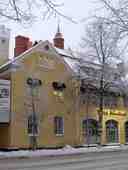
You’re looking for a sturdy yellow stone building at a busy street corner, featuring a pointed red turret popping above the snowy rooftops-just glance up and spot the round tower…阅读更多收起
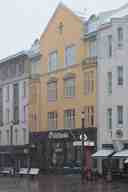
You’re looking for a sturdy yellow stone building at a busy street corner, featuring a pointed red turret popping above the snowy rooftops-just glance up and spot the round tower if you’re not sure! Let’s imagine Oulu in the early 1900s: horse-drawn carriages rush along snow-packed streets, bells clanging and flurries in the air as firefighters spring into action. This is the Old Fire Station, a Jugend-style masterpiece drawn up by architect Karl Sandelin. Oddly, the journey to a real, full-time fire brigade in Oulu didn’t spark all at once. For years, locals had to depend on eager volunteers and their trusty buckets. After a fire in 1916 nearly took down a whole city block, Oulu decided enough was enough-no more “every man for himself” during emergencies! After a few stops and starts, including a little hiccup called the Civil War, construction began in 1919, often pausing for months while the city scraped up enough money for bricks and mortar. The fire brigade’s first “engine” was more like horsepower-real horses, in fact. Imagine the chaos as teams dashed through wintry streets, clang, clang, clang, trying not to skid into snowdrifts. Their first fire truck arrived in 1925, but Oulu clung to horses until 1947 because snow could turn even the bravest engine into an expensive sled. The building was Oulu’s only fire station until the city grew north and east in 1965, when firefighters started answering calls from much farther afield. By 1982, the last alarms were sounded here, and the fire crews packed up for bigger quarters. Today, instead of sliding down poles, people sip coffee or run businesses where the old hoses once hung. Those old garage doors on Uusikatu were turned into windows, but there’s still a whiff of excitement in the air. Go ahead, peek inside-just don’t shout “fire”!
打开独立页面 →You’ll spot the Valkea Shopping Centre right in front of you by its massive glass façade decorated with a giant sparkling bow-hard to miss when it looks like the building is about…阅读更多收起
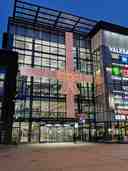
You’ll spot the Valkea Shopping Centre right in front of you by its massive glass façade decorated with a giant sparkling bow-hard to miss when it looks like the building is about to unwrap itself as a present! Now, get ready for a modern tale mixed with a bit of drama. Imagine this place taking shape: Osuuskauppa Arina invested nearly 100 million euros, like betting on a future where shopping bags and laughter echo through these halls. In 2016, the doors opened wide, unveiling sixty shops, the grand Sokos department store, and even sixty-six homes perched above-twelve floors high! The structure literally bridges the bustling Isokatu street, turning this patch of the city into a pedestrian’s playground. Before Valkea, there stood the Galleria mall and City-talo, once joined by a humble walking bridge, now replaced by Valkea’s vibrant buzz. Here, you might sense an undercurrent of energy because Valkea is always alive-so alive, in fact, that after 2023, round-the-clock security guards became as much a fixture as the sale banners thanks to a surge in crime. Tension peaked in June 2024, with two tragic stabbings on the Summer Street. Both cases were unsettling shocks to the community, tied to deeper social currents and leaving Valkea in somber headlines. But even with its dramatic moments, Valkea stands resilient-a glittering centerpiece where Oulu gathers, shops, dines, and, ok, occasionally wishes the escalators were faster.
打开独立页面 →Look for a large, cream-colored building on the corner with sleek, rounded balconies and a clock on its wall, and just above it you'll see bold letters spelling out "ARINA" on the…阅读更多收起
Look for a large, cream-colored building on the corner with sleek, rounded balconies and a clock on its wall, and just above it you'll see bold letters spelling out "ARINA" on the roof. Welcome to Hotelli Arina-or as the locals call it today, Sokos Hotel Arina! You’re standing where history and hospitality blend like a perfect recipe; this landmark was born in 1939, designed by architect Armas Lehtinen. Imagine the smells of fresh bread and coffee from the shops on the ground floor back in the day, guests in the upstairs rooms amazed to discover the city’s very first flushing toilets-believe me, in 1939, that was as fancy as having Wi-Fi today! But Arina’s charm isn’t just in its creature comforts. During the dark, tense days of World War II, bombs fell close by, even shaking the windows as explosions erupted across the street. Somehow, Arina stood tall-a safe house while everything rattled outside. When Oulu was evacuated in 1944, right here became the central hub for planning, buzzing with urgency and hope. Since then, Arina has seen face-lifts, growing and modernizing, but if these walls could talk, they’d tell tales of refugees and relief, parties and pancakes. So as you gaze up, remember: you stand not just before a hotel, but a survivor and silent witness to nearly a century of Oulu’s ever-changing story.
打开独立页面 →
再显示 12 个站点显示更少站点expand_moreexpand_less
To spot Kirkkokatu 10, look for the tall yellow building with a steep roof and large windows, right along the lively pedestrian street-just above the "Säästöpankki" bank signs at…阅读更多收起
To spot Kirkkokatu 10, look for the tall yellow building with a steep roof and large windows, right along the lively pedestrian street-just above the "Säästöpankki" bank signs at street level. Now, let’s unravel the story of this grand building! Imagine yourself over a hundred years ago, as the streets of Oulu buzz with dreams and business. This very spot once held humble wooden houses, but then in 1910, a deal happened-like a real-life game of Monopoly-between a merchant named Gust Hägg and the prison warden V. O. Juvelius, all on behalf of the city’s savings bank. They swept away the old houses to make way for this elegant, jugend-style landmark, designed by Finland’s renowned architect Wivi Lönn. The grizzled stone on the ground floor? It’s not just for looks; it’s there to impress and hint at the strength of your future savings! When the bank opened its shiny new doors in 1912, it became a beacon of hope for locals, whether they were saving for a rainy day or plotting world domination, one Finnish markka at a time. Over the years, the place saw war, bombs, and wild plans to turn the attic into apartments (which, spoiler alert, never happened). Even today, you might spot the echoes of that original, sturdy bank vault vibe inside. And remember, the next time you pop in for a coffee or handle your banking, you’re standing in the middle of a story that’s had more twists than a detective novel!
打开独立页面 →In front of you stands the Oulu Cathedral, easily spotted by its tall yellow tower with a clock face and a golden cross atop, crowned by a striking green dome behind it. Now,…阅读更多收起
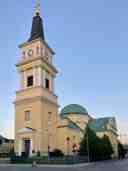
In front of you stands the Oulu Cathedral, easily spotted by its tall yellow tower with a clock face and a golden cross atop, crowned by a striking green dome behind it. Now, imagine yourself over 200 years ago, standing where the heart of Oulu beats strong and proud. This ground has been dedicated to worship and gathering since the 1610s, when a small wooden church first took root here. Time marched on, though, and by the 1750s, that little wooden chapel had seen better days - some even said it was more dangerous than a surprise Finnish winter storm! After much debate (and probably a few cups of very strong coffee), the townsfolk decided Oulu deserved something grand: a stone church, sturdy enough to outlast generations. While the townspeople grumbled at the price, King Adolf Frederick himself declared: “No skimping, build it of stone!” So, with a bit of royal nudge, building began in 1771. Now, picture a snowy Christmas Day in 1777: the new stone church opened, Oulu’s people flocked inside, and the candles flickered against cool stone walls. At that time, this place was only second in size to Turku’s cathedral - quite a feat, considering the only building rules back then were “Don’t let it fall over!” The church was named after Queen Sofia Magdalena, and held space for 1,500 - a true city landmark. But in spring 1822, disaster struck. The Great Fire of Oulu swept through the city, setting the wooden roof ablaze. Everything except the rugged stone walls was lost, but in a heroic dash, townsfolk saved almost everything movable - yes, even the candle chandeliers! For the next decade, services were held in a temporary wooden church thrown up right beside the smoking ruins. You might say Oulu isn’t just resilient; it’s downright stubborn. Oulu Cathedral’s modern face comes from the magic hands of architect Carl Ludvig Engel, who redesigned the building in neoclassical style in 1832 - think tall straight lines, gleaming pale walls, and a big shiny dome. The bell tower you see was finished in 1845 and soars 56.5 meters above the street, just in case anyone ever needed a reminder of the right time (or to duck for low-flying birds). By 1900, the church became the seat of the northernmost diocese in Finland - Oulu’s official cathedral, serving a region so big it could put some countries to shame. Inside, the treasures range from centuries-old silver chalices to grand organs that rumble the floor with 62 stops. You’ll find echoes of many centuries, with everything from ancient gravestones to modern renovations, even a crypt beneath your feet from the 1990s. Step back and admire the golden cross glinting above, the dignified neoclassical columns, and remember: this isn’t just a church, it’s a living time capsule filled with stories of survival, devotion, and a whole lot of Finnish determination! Exploring the realm of the stone church, artefacts or the former wooden church? Feel free to consult the chat section for additional information.
打开独立页面 →You’re looking for a grand, two-story building with red brick on the upper half, cream-colored stone on the bottom, and a fancy crest over the front doors-right across from the…阅读更多收起
You’re looking for a grand, two-story building with red brick on the upper half, cream-colored stone on the bottom, and a fancy crest over the front doors-right across from the park, behind a crowd of wintery birch trees. Now, as you stand in front of this dignified building, imagine it’s the year 1890 and the streets are filled with the excitement of something brand new: the grand administrative heart of all Oulu, built in a style so elegant even the snow seemed to take notice. Designed by Johan Jacob Ahrenberg and Ludvig Isak Lindqvist, this majestic spot became both the governor’s home and the nerve center for the whole province. Oh, and it’s not just official business inside; the walls now hold works of art, some dating back to the mid-1800s-talk about mixing politics with a touch of culture! Over the years, the building’s had some pretty fancy facelifts, most notably in 1995. The renovations were so good, they even won an award. Next door, you’ll spot older and newer additions: an 1859 stone survey office, a bold red-brick building from the swinging ‘70s, and tucked away, an 1889 wooden carriage house. The Oulu Provincial Government Building is a true survivor-graceful, practical, and just a little bit aristocratic, even during Finland’s chilliest winters!
打开独立页面 →To spot Franzén Park, just look ahead for a small green space surrounded by trees, and in the center you’ll see a proud statue of Frans Mikael Franzén atop a pedestal, with the…阅读更多收起
To spot Franzén Park, just look ahead for a small green space surrounded by trees, and in the center you’ll see a proud statue of Frans Mikael Franzén atop a pedestal, with the old provincial government building rising behind it. Alright, welcome to Franzén Park, the beating green heart of Oulu! Picture yourself in the late 1800s, right here-no trees, no flowers, just a wide-open square known as Kirkkotori, echoing with footsteps and church bells. But Oulu dreamed bigger. In 1878, the city decided their beloved poet Frans Mikael Franzén deserved to watch over everyone. They called up Erland Stenberg, a sculptor with a knack for dramatic busts, and ordered a monument. The unveiling in 1881 was almost a circus-crowds, speeches, and to make up for the lack of trees, they decorated the whole square with borrowed trees in pots. Trust Oulu to have a sense of humor! Transformation didn’t happen overnight, though. Some city councilors thought, “Should we really plant trees here? Maybe next year…” So, the square waited and waited, trees mostly in their imaginations, until around 1885 when the city gardener got everyone organized. Birches sprang up and, by the sound of it, the park finally looked less like a prairie. Franzén’s statue, by the way, got an unforgettable nickname: Mollo! Locals joked, “Mollo just sits here watching us all,” and even the park became known as Molloplaana for a while. Today, as you stroll past blooming roses, yews, and flower beds, remember: what you see is a living patchwork of past debates, borrowed trees, local jokes, and Oulu’s enduring love for its poet. And somewhere, Mollo’s stoic gaze makes sure no one skips poetry class!
打开独立页面 →By the 1880s, government support boosted the school, helping it to grow from a small private institution into a state-run powerhouse. The building itself has seen several…阅读更多收起
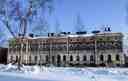
By the 1880s, government support boosted the school, helping it to grow from a small private institution into a state-run powerhouse. The building itself has seen several upgrades: the first extension in 1875 brought an impressive assembly hall, and a gymnasium designed by Theodor Granstedt appeared in 1907-now, every time you hear the echo of bouncing balls inside, remember: that’s architectural history at play! But Oulun Lyseon lukio is anything but old-fashioned. Since 1992, it’s offered the International Baccalaureate program, welcoming students from across the globe, including sporty folks from Sotkamo. Some students even tune in from Tyrnävä through remote learning. Getting admitted is a feat-future scholars here know their maths from their moose. As for famous graduates, let’s just say: the corridors have launched enough bright stars to light up all Oulu on a dark winter night! So, as you gaze at these storied columns, picture students from centuries past nervously awaiting exam results or planning their next energy-boosting coffee raid. And don’t forget, if you misplace a textbook here, it’s probably hiding somewhere in the building’s many historic corners-a true Lyseo tradition!
打开独立页面 →You’re looking for a large, light green, two-story corner building with classic white-trimmed windows-just glance to the edge of Franzén Park at the intersection of Kajaaninkatu…阅读更多收起
You’re looking for a large, light green, two-story corner building with classic white-trimmed windows-just glance to the edge of Franzén Park at the intersection of Kajaaninkatu and Kirkkokatu. Here at Franzén’s House, the air practically tingles with stories. Picture the year 1829: Oulu is recovering from a terrible fire, soot still clinging to the cellars as Johan Franzén dreams up this elegant empire-style building, almost on the ashes of what stood before. If you had been here in the 1600s, the chatter you’d hear was from scholars at the old trivial school. Fast forward, and Sara Wacklin’s hearty laughter and the sound of young girls learning fill the rooms-her girls’ school ran here in the 1830s! Next, see if you can spot the memorial plaques for Sara Wacklin and poet Samuel Gustaf Bergh, whose house once stood right in this spot. Over the years, there was even suspense-city officials schemed for years to turn this place into a city hall, their plans foiled in lengthy court battles. Today, the wonderful smells drifting out? That’s a Turkish restaurant, Hagia Sofia, in the ground floor. So, this corner of Oulu truly serves up history with a flavorful twist!
打开独立页面 →Look for a grand, yellow stone building with twin towers, big wooden doors, and a row of steps leading up-it's right in front of you, standing proudly in Maria Silfvan…阅读更多收起
Look for a grand, yellow stone building with twin towers, big wooden doors, and a row of steps leading up-it's right in front of you, standing proudly in Maria Silfvan Park. Welcome to Oulu City Hall, but be careful-this place has survived more drama than your average soap opera star! Imagine the year is 1886: the city buzzes with excitement, the smell of coal and new stone fills the air, and someone is hammering the last nail on Johan Erik Stenberg’s fresh neo-Renaissance masterpiece, just in time for a huge feast. Only four years earlier, a terrible fire swept through Oulu, and the city’s only party hall burned down. So when this strong stone building took its place, it became a proud sign of rebirth. For decades it was the top spot for glittering theatre shows, important political meetings, you name it-even the city council has gathered here since 1921. Now, walk around to Torikatu and you’ll see “Ajan kulku,” a bronze sculpture by Sanna Koivisto, telling Oulu’s story from the 1600s to today. It hasn’t escaped hardship-since 2019 it’s been under renovation after finding some mystery mold, and along the way, workers even uncovered sparkling glass art and forgotten 1920s newspapers! Oulu never tires of secrets, does it?
打开独立页面 →To spot the Cultural Centre Valve, just look for a glowing red neon sign with the word “Valve” outside a grand, ornate stone building with arched windows, located right along the…阅读更多收起
To spot the Cultural Centre Valve, just look for a glowing red neon sign with the word “Valve” outside a grand, ornate stone building with arched windows, located right along the street. Now let’s step into the past and shake things up! Imagine standing here in 1882-just as the flames of the Great Oulu Fire were crackling through this very spot. Once the fire passed, a determined tradesman named K.J. Granberg decided to bring life back to this city block with a brand-new building, designed by Johan Lybeck. Oulu took it over, and-believe it or not-gave it a glow-up, raising it another floor, stretching it wider, and adding a dash of civic importance. At one point, this building juggled jobs as the city hall, police station, and even a school, so if these walls could talk, they’d need three voices! In the 1950s, you’d have found prison cell doors clanging right about here. Fast forward past police hats and school bells, and this spot flourished in 1989 as a vibrant youth and cultural centre, swapping cells for cinema seats, theatre lights, and art galleries. Today, Valve is a cultural playground-home to Finland’s second largest film library and the Northern Photographic Centre, buzzing with creativity instead of sirens!
打开独立页面 →To spot Charles Vault, look to the street corner where a sturdy, pale yellow stone building with decorative white trim and large windows stands with an arched doorway under…阅读更多收起
To spot Charles Vault, look to the street corner where a sturdy, pale yellow stone building with decorative white trim and large windows stands with an arched doorway under glowing evening lights. Welcome to Charles Vault, or as the locals say, Kaarlenholvi! Imagine yourself standing here in the late 1700s, when this stately building was first rising from the snow-dusted ground. Back then, none of the locals had any clue that their humble stone house would survive Oulu’s great fire of 1822. When flames swept through the city, the building’s wooden upper floor was lost-poof, just like a magician’s trick! But the stone ground floor stood unbeaten. Later, the whole building was rebuilt with sturdy stone in the early 1800s, giving us the classic empire style you see today. Over its lifetime, Charles Vault has been a chameleon: a hospital, a jail cell (yes, a real one-imagine the stories those walls could whisper), a distillery, a bookshop, a wine shop, a post office, even the bishop's court. Some pretty interesting folks lived here, too, like the famous poet Runeberg and the writer Hellaakoski. Today, laughter and music spill out from the restaurants and pubs inside. So next time you visit for a meal, just remember-you’re eating in a building with more lives than a Finnish cat!
打开独立页面 →To spot the landmark, look straight ahead and find the large bronze statue of a round-faced policeman in uniform, proudly standing in the square. Imagine yourself in Oulu’s busy…阅读更多收起
To spot the landmark, look straight ahead and find the large bronze statue of a round-faced policeman in uniform, proudly standing in the square. Imagine yourself in Oulu’s busy Market Square, where you'll find a rather serious-looking, stout policeman made of bronze-meet the famous Toripolliisi! This statue, standing 220 centimeters tall, has been watching over Oulu’s traders and visitors since 1987, crafted by sculptor Kaarlo Mikkonen. But here's a fun twist: the real "market policemen" once patrolled this very area between 1934 and 1979, keeping peace among busy vendors, squabbling shoppers, and mischievous kids-imagine the shouts and laughter of the crowd around you. Toripolliisi owes his existence to the people of Oulu, who rallied together in 1985, raising money through donations, selling postcards, and even gingerbread cookies shaped like this chubby little lawkeeper. The statue’s look was inspired by Mikkonen’s own father-in-law, who once served as a strict chief constable in Paimio. When the statue was finally unveiled in September 1987, Oulu embraced this silent, watchful guardian. Today, Toripolliisi remains a local hero-a bronze protector whose stern gaze still keeps the square in check. So if you’re feeling mischievous, remember he’s always keeping an eye on things!
打开独立页面 →To spot the Market Square, just look ahead for a large open plaza by the Oulujoki river, filled with white tents and rows of colorful market stalls right at the waterfront,…阅读更多收起
To spot the Market Square, just look ahead for a large open plaza by the Oulujoki river, filled with white tents and rows of colorful market stalls right at the waterfront, bordered by charming old red barns and historic buildings. Welcome to the beating heart of Oulu! Imagine standing here over a century ago-smells of fresh bread, fish, and maybe a whiff of mystery meat hanging in the cool river air. Market Square has always been the center of city life, right here in the Pokkinen district on the river’s edge. The tradition of lively market stalls goes way back, but back then, things got a bit too wild with meat selling openly… Let’s just say it wasn’t a place for a sensitive nose! In 1901, city leaders decided enough was enough and built the gorgeous Oulu Market Hall just across the square, so you could buy your sausages in peace and the birds could shop elsewhere. Surrounding the square, you’ll see classic red barns-once shelter for merchants’ goods and now transformed into cozy bars and restaurants where you can swap your coins for a coffee instead of potatoes. And just behind you, the Rotuaari pedestrian zone stretches out, perfect for people-watching after you’ve filled your basket. Through good times, harsh winters, and countless summer festivals, Market Square has remained the city’s living room-always open, always buzzing, never boring.
打开独立页面 →Look straight across the water and you’ll spot the Oulu City Theatre-a modern, creamy rectangular building with long lines of windows, sitting proudly above the waterfront on its…阅读更多收起
Look straight across the water and you’ll spot the Oulu City Theatre-a modern, creamy rectangular building with long lines of windows, sitting proudly above the waterfront on its very own artificial island. As you stand here by the water, imagine the hum of excitement before a show. Oulu City Theatre isn’t just some ordinary playhouse; it’s a stage with a dramatic life story, full of twists, applause, and the occasional explosion-literally! The roots of theatre in Oulu stretch back to 1931, when eager amateurs formed the Oulun Näyttämö and performed in a lively workers’ hall. But in 1944, history took a fiery turn: during the war, a bombing raid destroyed their beloved theatre building, setting the city’s passion for acting ablaze-just in a less desirable way! Homeless but undeterred, Oulu’s theatre folk kept their spirits up, staging shows in the grand hall of City Hall while dreaming of a permanent spotlight. In 1972, that dream became a reality with this bold modern theatre, shimmering on Vänmanninsaari island as if it were Oulu’s own floating stage. With its clean, geometric lines designed by Marjatta and Martti Jaatinen, the building was an instant statement piece. The debut of the Kalevala play opened this house, drawing an audience of 78,000-the biggest crowd the theatre had ever seen. Since then, Oulu Theatre has welcomed 80,000 visitors a year, offering everything from Finnish and international premieres to dazzling operas, musicals, and colorful children’s festivals. But wait, there’s more behind these walls! The theatre is home to four different stages, the grandest seating over 500, and even a “Vinttikamari” attic chamber for intimate performances. After a major renovation, completed in 2004, people swarmed in by the thousands to see the new look. Today, innovative artists like Alma Lehmuskallio lead the house, winning awards and shaking up Oulu’s cultural scene with fresh winds of equality, imagination, and fearless creativity. So, while this place may look crisp and modern from the outside, the real spectacle is what’s happened (and still happens) on stage-and sometimes off! Now, if you listen closely, you might just hear echoes of applause, children’s laughter, and even a bit of theatrical mischief drifting from the doors... Intrigued by the theatre house, stages or the theatre directors? Make your way to the chat section and I'll be happy to provide further details.
打开独立页面 →
常见问题
如何开始导览?
购买后,下载 AudaTours 应用并输入您的兑换码。导览将准备好立即开始--只需点击播放并按照 GPS 引导的路线行驶即可。
导览期间我需要互联网吗?
不需要!开始前下载导览并完全离线享受。只有聊天功能需要互联网。我们建议在 WiFi 下下载以节省移动数据。
这是导游带领的团体游吗?
不是--这是自助语音导览。您按照自己的节奏独立探索,通过手机播放音频解说。没有导游,没有团体,没有时间表。
导览需要多长时间?
大多数导览需要 60-90 分钟才能完成,但您完全控制节奏。随时暂停、跳过站点或休息。
如果我今天无法完成导览怎么办?
没问题!导览具有终身访问权限。随时暂停和恢复--明天、下周或明年。您的进度已保存。
有哪些语言可用?
所有导览均提供 50 多种语言版本。在兑换代码时选择您的首选语言。注意:导览生成后无法更改语言。
购买后我在哪里访问导览?
从 App Store 或 Google Play 下载免费的 AudaTours 应用。输入您的兑换码(通过电子邮件发送),导览将出现在您的资料库中,准备下载并开始。
如果您不喜欢该导览,我们将退款。请联系我们 [email protected]
安全结账使用