
卧龙岗语音导览:卧龙岗的历史与海岸瑰宝
在卧龙岗,历史在海风的咸味和双子灯塔坚定的凝视下,隐藏在显眼之处。踏上自助语音导览之旅,旨在揭示其他游客可能错过的未讲述的故事和隐藏的角落。 在充满入侵谣言的夜晚,是谁在旗杆山堡垒拉响了警报?在卧龙岗港口水面之下,古老的贝丘仍在低语,那里还残留着哪些被遗忘的仪式?为什么两座灯塔如此紧密地守望,这对奇特的组合不仅仅通过光束连接? 漫步经过大炮林立的山脊和海港边的路径,叛乱、独创性和丑闻的故事在广阔的海景中层层展开,栩栩如生。卧龙岗戏剧性历史的脉搏与您同行,将每一个转弯都变成新的发现。 您准备好揭开那些白色塔楼和狂野海岸线背后的秘密了吗?您的卧龙岗最迷人景点之旅现在开始。
导览预览
关于此导览
- schedule持续时间 40–60 mins按照自己的节奏
- straighten5.4 公里步行路线跟随引导路径
- location_on
- wifi_off离线工作一次下载,随处使用
- all_inclusive终身访问随时重播,永久有效
- location_on从 卧龙岗岬角灯塔 开始
此导览的景点
As you approach the Wollongong Head Lighthouse, look for a tall, white cylindrical tower standing proudly atop Flagstaff Point. The lighthouse is constructed of reinforced…阅读更多收起
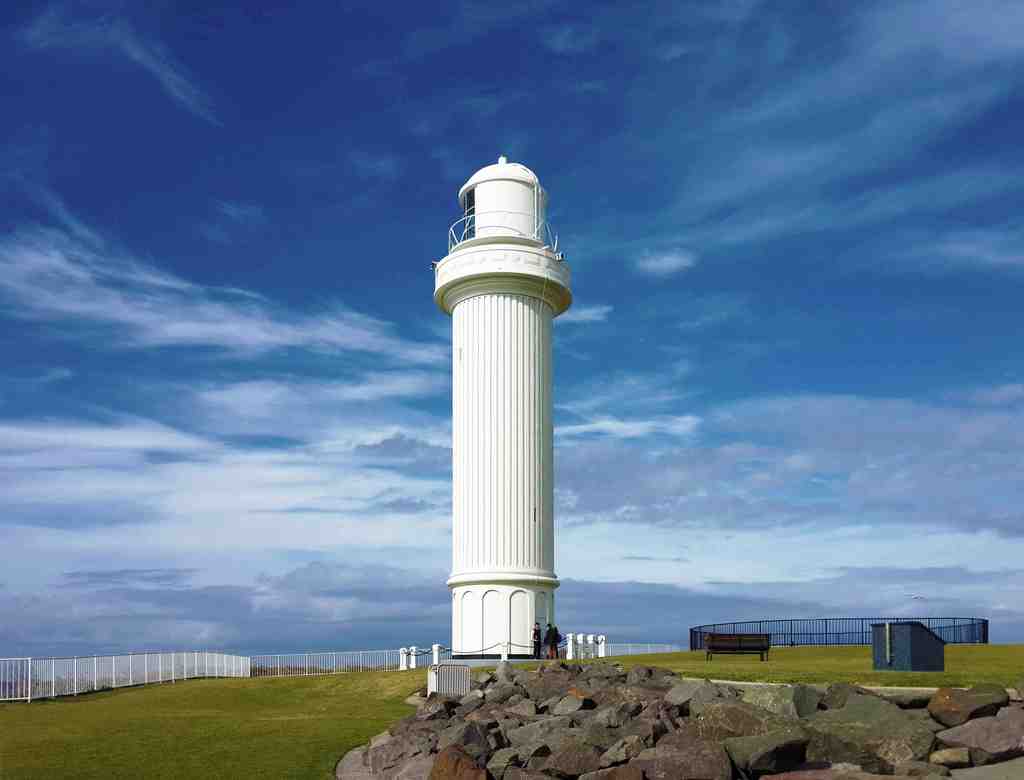
As you approach the Wollongong Head Lighthouse, look for a tall, white cylindrical tower standing proudly atop Flagstaff Point. The lighthouse is constructed of reinforced concrete and features a series of vertical ridges running from top to bottom, giving it a classic yet sturdy appearance. It’s surrounded by a fenced grassy area with a few benches and viewing points. Standing right on the edge of the coast, it offers a panoramic view of the Tasman Sea. Alright, you’ve made it to the Wollongong Head Lighthouse, also known as the Flagstaff Hill Lighthouse. It’s an active maritime light overlooking the stunning Tasman Sea, right here from Flagstaff Point. Fun fact: this beacon of light was the first fully automatic lighthouse in New South Wales when it was built in 1936. Talk about setting trends! But wait, there's more! Wollongong is unique in having two lighthouses in close proximity. Just a stone's throw away, you'll find the Wollongong Breakwater Lighthouse. Here at Flagstaff Point, you can enjoy a scenic picnic spot that’s loved by locals, visitors, and students from the nearby University of Wollongong. This lighthouse has been guiding maritime traffic safely into Port Kembla Harbour for decades, with its colour-changing lights-white visible through 100 degrees and red through 80 degrees to warn of shallow waters. And guess what? The area even had three old cannons aimed to fend off the Russian navy back in 1879 (thankfully, they never had to be used-no pirates here!). So, take in the ocean breeze and enjoy the view. Onwards to our next stop!
打开独立页面 →As you approach Flagstaff Hill Fort, keep your eyes peeled for the three large, black cannons on white mounts, proudly overlooking the crystal blue expanse of the Pacific Ocean.…阅读更多收起
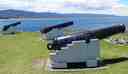
As you approach Flagstaff Hill Fort, keep your eyes peeled for the three large, black cannons on white mounts, proudly overlooking the crystal blue expanse of the Pacific Ocean. The cannons are set on a grassy area with a picturesque backdrop of the coastline and the mountains in the distance. It's a sight that’s hard to miss - those cannons are waiting to tell you their story! Welcome to Flagstaff Hill Fort! This fort has quite the story to tell. It all began back in 1879 when the steamship Havilah landed here with three whopping 4.6-ton, 68-pounder cannons. They were meant to step up the defences against a potential Russian attack. Imagine the look on the locals’ faces when these massive cannons arrived, with the ability to launch a 68-pound (31 kg) shell a whopping 1.60 km! However, they sat unused for 18 months without any mountings or ammunition - basically, they were just very stylish lawn ornaments. Finally, in 1880, the local volunteer artillery group got around to setting them up as an inner defense battery. Meanwhile, Endeavour Drive now covers where they originally stood. But by the mid-1880s, it became clear that enemy cruisers could simply stay out of range and still wreak havoc. Enter the more modern solution: In 1890, a more powerful 6-inch gun got placed near the summit of Flagstaff Hill. With underground rooms to protect the ammunition and the gunners, this fortification was the real deal. By 1893, they even completed further fortifications on Smith's Hill to the west of the harbour. Constructed between 1890 and 1891, this fort with a disappearing gun emplacement was quite the engineering marvel. Dug out of the hill with face brick walls and earth over the tunnels, it was commissioned and fired for the first time in 1892. Fast forward to 1938, and the Wollongong Head Lighthouse joined the scene near the fort, adding another layer to this historical landscape. So here you stand, witnessing the robust relics of Wollongong’s defense history and soaking in views that are worth a thousand words. Enjoy the vista and the aura of the past!
打开独立页面 →You’re almost there! As you walk towards the Wollongong Harbour Precinct, you should see a picturesque scene unfolding ahead of you. Look out for a collection of boats and yachts…阅读更多收起
You’re almost there! As you walk towards the Wollongong Harbour Precinct, you should see a picturesque scene unfolding ahead of you. Look out for a collection of boats and yachts gently bobbing in the sparkling blue waters of the harbour. Your eyes should be drawn to the white lighthouse standing tall on the breakwater, acting as a beacon for incoming vessels. The rocky seawalls and the green patches on the headland nearby complete the charming maritime picture! Now, let’s dive into some fascinating history about this area: The Wollongong Harbour Precinct is a heritage-listed marvel, located at Cliff Road and Endeavour Drive. Built way back in 1837, it's packed with historical goodies! The precinct includes Belmore Basin, Government Dam, Government Basin, Stockade Point, Flagstaff Hill, Signal Hill, Brighton Beach, Boat Harbour, and Fortress Hill. Did you know it was added to the New South Wales State Heritage Register on 5 May 2010? But here's something even cooler: before any European settlers set foot here, the Dharawal people used this natural harbour for cultural and ceremonial activities for thousands upon thousands of years. The natural bay provided them with protection from the rough ocean currents and winds. There was an abundance of fresh water and food, thanks to the combination of marine and riparian environments. Today, archaeological evidence in the form of extensive middens tells the tale of this long occupation. When the Europeans arrived, it was around 1815, and by 1820, Brighton Beach began serving as a shipping point. Supplies and produce bound for Sydney were transferred here via small flat-bottomed boats. Convicts, soldiers, and various government buildings soon followed, turning the area into Wollongong's main commercial, judicial, and administrative center. Governor Bourke got involved in 1834 and proclaimed Wollongong as an official town, a proclamation backed by a plan from the Surveyor General, Major Thomas Mitchell, which included a harbour. Construction began under the watchful eye of Captain George Barney in 1837, with convict labour doing much of the hard work. The harbour's basin was expanded, and mooring chains laid across the bay to provide safe anchorage. So, as you stand here and take in the view, you’re not just admiring a beautiful harbour, you’re looking at a rich tapestry of history that stretches back thousands of years. Enjoy the mix of natural beauty and historical significance! For a more comprehensive understanding of the description, current condition or the heritage listing, engage with me in the chat section below.
打开独立页面 →
再显示 10 个站点显示更少站点expand_moreexpand_less
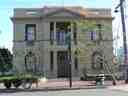
As you approach stop number 7, look to your right for a grand old building with a beige façade and green trim around the windows. The building stands out with its impressive…阅读更多收起
As you approach stop number 7, look to your right for a grand old building with a beige façade and green trim around the windows. The building stands out with its impressive classical architecture, featuring tall columns supporting a pediment above the entryway, and a second-story balcony that gives it a dignified air. There's also a green iron fence surrounding the property, which adds to its historic charm. You might also see a few trees and a bench out front where you can take a break if you need one. Now, let me tell you a bit about this fascinating place! The Old Wollongong Telegraph and Post Office at 11 Market Street is more than just a pretty face-it's a heritage-listed building that has watched over Wollongong since the mid-19th century. Originally serving as government offices, a telegraph station, and a post office, it now houses a local history museum. Think of it as Wollongong's memory bank, storing tales and artifacts from days gone by. Designed by the renowned architect James Barnet, the building went through several stages of construction from 1864 to 1882. It was a pet project for several builders, including S.E. Bloomfield, George Brown, George Billings, Andrew Herd, and later, the NSW Government around 1939. It's no wonder it's such a historical gem! The museum is also a reminder of the rich Indigenous history of the area, which was home to the Dharawal people for over 30,000 years before European settlers arrived. The area once bustled with cultural and ceremonial activities, supported by an abundant environment of marine and riverine resources. As European settlers moved in after the colonization of Sydney Harbour in 1788, relationships with the Aboriginal people initially started on a peaceful note but unfortunately soured by the 1830s due to land disputes. Despite these challenges, the heritage of the Dharawal people continues to be an important part of the local community's fabric. The Old Post Office itself is a testament to the early days of communication in Australia, with mail initially being a somewhat precarious endeavor managed directly by ship captains. It wasn't until 1809 that the first official postal service was established in the colony of New South Wales. By the 1830s and 1840s, Wollongong had evolved significantly, and mail delivery became more reliable with daily horseback deliveries and regular steamer visits by 1865. So, as you stand outside this grand old building, take a moment to appreciate the layers of history it harbors-from the time of the Dharawal people, through the early colonial postal service, to its current role as a museum. It's like a time machine packed into a heritage-listed edifice!
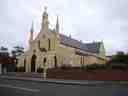
打开独立页面 →You should now be approaching St Francis Xavier's Cathedral on your right. It’s quite the architectural gem, so keep an eye out for its prominent Gothic Revival style. You’ll…阅读更多收起
You should now be approaching St Francis Xavier's Cathedral on your right. It’s quite the architectural gem, so keep an eye out for its prominent Gothic Revival style. You’ll notice the building’s cream color and the striking feature - three spires jutting into the sky atop the facade. The central spire is slightly larger. There's a large, arched red door at the entrance, flanked by gothic arched windows. Now, let’s dive into some fun history! St Francis Xavier's Cathedral, located in Wollongong, New South Wales, is quite the historical hotspot. It’s the seat of the Roman Catholic Bishop of the Diocese of Wollongong, presently the Most Reverend Brian Mascord. Sporting a rich past as the oldest church of any denomination in the Illawarra region, it all started with a humble wooden chapel in 1836, accommodating 250 people. By 1839, pioneer priest Father John Rigney decided bigger was better and initiated the construction of the larger, permanent, Gothic-style stone church you see today. Completed around 1848, this spacious church could fit about 500 folks, and cost a pretty penny-2,000 Pounds. Despite being splendidly decorated, the interior has evolved over the years, with stunning stained glass behind the sanctuary and a charming nave ceiling being the highlights remaining from the original design. The cathedral’s journey is dotted with many changes. In 1906, it got a bit of a makeover; the nave was extended, and the shingle roof was swapped for sleek slate. Then in 1933, the interior got an uncomfortable stretch, widening the church but causing some damage. When the Diocese of Wollongong was founded in 1951, St Francis Xavier’s took on the role of being the cathedral. Further renovations and modernizations were rolled out in phases, toning down some of the past aesthetic mishaps and embracing restorative features, like the Marian chapel from an old confessional in the 1980s. The latest rejuvenation came in April 2009 when the roof got a Welsh slate upgrade. This led to a grand rededication in March 2010, commemorating the death anniversary of Archbishop John Bede Polding, the first bishop in Australia, who had commissioned the church. Standing here now, you’re looking at a piece of history that’s evolved significantly but has managed to retain its spiritual splendor and architectural charm. Ready for the next stop? Let's go!
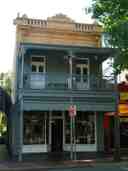
打开独立页面 →Alright, my friend, it's time to spot a piece of history! Look to your left, and you'll notice a building that stands out with its charming, old-world decorative facade and…阅读更多收起
Alright, my friend, it's time to spot a piece of history! Look to your left, and you'll notice a building that stands out with its charming, old-world decorative facade and delightful verandah-this is 87 Crown Street. This lovely terraced shop, nestled snugly between modern establishments, features a symmetrical design with a grayish-blue facade. The upper floor has a decorative iron-laced balcony railing, and above it, the building is crowned with ornate moldings and an intricate cornice highlighting the era it was built in - around the 1870s to 1880s. You’ll see two arched windows on the upper level, and below them, large glass windows perfect for displaying goods. Now, let me share a fun nugget of info for you! 87 Crown Street isn’t just any shop-this heritage-listed gem has been a busy retail premises for well over a century! Back around 1900, it served as W. McInnes' tailor shop and later hosted Coad's secondhand jewelry store from the 1940s to the 1960s. Today, it is home to the charming café, Lee and Me, so why not treat yourself once you’ve admired the building? This shop’s got some pretty impressive neighbors too, including the Wollongong Town Hall and the Old Wollongong East Post Office. So, go on, take a moment to revel in one of Wollongong's last remaining commercial structures from the 19th century. Talk about timeless charm, eh?
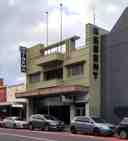
打开独立页面 →Ah, here we are at the Regent Theatre, right on Keira Street! As you walk along, keep an eye to your right and look for an elegant, light-green building with distinctive vertical…阅读更多收起
Ah, here we are at the Regent Theatre, right on Keira Street! As you walk along, keep an eye to your right and look for an elegant, light-green building with distinctive vertical signage that says "REGENT" and "CINEMA." The building’s art deco charm is hard to miss, with its geometric lines and small balcony protrusions. The windows are set back from the street, and you'll see a bit of an old-school cinema vibe going on. Now, let me whisk you back in time with some theatre magic! The Regent Theatre, heritage-listed and all, was designed by Reginald J. Magoffin with a snazzy interior by Marion Hall Best, built between 1950 and 1954. It’s not just a pretty face; it’s a significant part of Wollongong’s history, complete with a classic popcorn-smelling past! The story starts way back with Herbert Wyndham Jones, a pioneer in the film exhibition industry. Imagine this: Jones, originally a storekeeper-turned-entrepreneur, steered into the film business during the Great Depression. When theaters were a luxury for people scraping by, Jones opened the Princess Theatre as a silent movie house in 1930 and faced many ups and downs, including converting to talkies in 1931. He showed great civic spirit, making sure entertainment was accessible even when times were tough. Jones didn't stop at owning theatres; he leased Wollongong Council's Town Hall Theatre in 1939 and introduced a raft of innovations like "deaf aids," daily matinees, and extended seasons. These efforts made movie screenings a vital part of the community’s shared experience. Herbert Jones passed away in 1943, but the show must go on! His wife continued as licensee, ensuring the legacy was well-maintained until 1964. The groundwork laid by the family paved the way for the captivating Regent Theatre. In 1934, Jones bought land on Keira Street and aimed to build a picture theatre of modern design. The Regent was set to be stylish and perfect for movie lovers. The design by Magoffin featured an auditorium almost larger than life, a courtyard, and seating for 1569 patrons. Think of it as the red-carpet premiere of buildings! So, as you stand here, soaking in the architectural beauty, imagine the countless moviegoers who've been transported to different worlds through the magic of film, all thanks to the Jones family's dedication and innovation. Now, onto the next stop, but carry a little movie magic in your step!
打开独立页面 →Alright, you're almost at Wollongong Central! Just look slightly to your right and you should see a strikingly modern structure with a blend of angular, textured walls and large…阅读更多收起
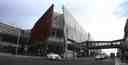
Alright, you're almost at Wollongong Central! Just look slightly to your right and you should see a strikingly modern structure with a blend of angular, textured walls and large glass panels. There's a prominent pedestrian bridge stretching over the road, connecting different sections of the shopping centre. The building might remind you of a modern art piece with its sharp lines and mixed materials. It’s hard to miss! Now, let’s dive into a bit of history while you take it all in. Wollongong Central isn't just a shopping centre, it's practically a local legend! Starting off in 1975, Crown Central was the new kid on the block on the northern side of Crown Street, flaunting its Venture department store, Franklins supermarket, and Best & Less, among others. In 1986, its sibling, Crown Gateway, popped up on the southern side, playing host to Grace Bros and Rebel Sport. Fast forward to 1996, and the two rivals were united by GPT, creating the seamless shopper’s paradise you see today! In a flurry of excitement, a pedestrian bridge was built in 2000 to connect the former competitors, making it a breeze for shoppers to hop from one building to the next. Fast forward to 2009, a $20 million renovation brought a new wave of style and elegance to the North building, which now gleams with modern glory. The expansion saga didn't stop there. The West Keira building emerged, boasting an eight-screen cinema, a food court, underground parking, and many specialty stores. It's joined to the North building via both an underground pathway and that eye-catching pedestrian bridge. The grand opening in 2014 was a real spectacle! In more recent history, David Jones moved in, H&M made its mark, and fun spots like Holey Moley and B Lucky & Sons arcade hopped on board, adding to the centre’s vibrant allure. Nowadays, you'll find an eclectic mix of fashion outlets, cafes, and more that perfectly blend the modern with a touch of nostalgia. So, whether you're here to shop, eat, or simply admire the architectural prowess, Wollongong Central has got a little something for everyone. Enjoy exploring!
打开独立页面 →🏰 As you walk along Church Street, keep an eye out to your right. You’ll spot a charming stone building with a tall, pointed spire reaching towards the sky. This is St Michael's…阅读更多收起
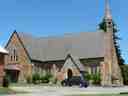
🏰 As you walk along Church Street, keep an eye out to your right. You’ll spot a charming stone building with a tall, pointed spire reaching towards the sky. This is St Michael's Cathedral. The structure showcases a lovely sandstone exterior with pointed arch windows and a steeply pitched roof. If you see a classic, timeless church that looks like it has been there forever, you’ve found St Michael's! St Michael's Cathedral is no ordinary church-it’s a heritage-listed gem! Serving as the principal Anglican church in Wollongong, it was designed by the talented Edmund Blacket and built back in 1858-1859. That’s over 160 years of standing strong! But the story of this area goes back even further. Aboriginal communities were present long before the first European settlers arrived in 1796. The area saw its first European industry with cedar cutters in the 1810s and cattle bearing the brunt in 1815 thanks to Dr. Charles Throsby. His nephew, Charles Throsby Smith, was one of the very first settlers who set up a big 300-acre parcel in 1822, making this area bustling with activity! And here’s a fun fact: Smith's barn, close to the harbour, became the first school house in 1826 and then a church building in 1828. Talk about multi-purpose use! Wollongong saw major growth in the 1880s, especially with the railway connecting it to Sydney by 1888. This very whereon helped transition Wollongong from a coastal hub to a quickly expanding city, with St Michael's at its heart. The church has not only been a beacon of faith but also a witness to Wollongong’s transformation from a small town to a major city. From building a rectory amidst a depression in the 1890s to standing through significant regional developments, St Michael’s has played a central role throughout the city's dynamic history. It's more than just a church; it's a storyteller of Wollongong's rich past! So, take a moment to appreciate its historical stones and towering spire; they’ve seen a lot! 🕍
打开独立页面 →
常见问题
如何开始导览?
购买后,下载 AudaTours 应用并输入您的兑换码。导览将准备好立即开始--只需点击播放并按照 GPS 引导的路线行驶即可。
导览期间我需要互联网吗?
不需要!开始前下载导览并完全离线享受。只有聊天功能需要互联网。我们建议在 WiFi 下下载以节省移动数据。
这是导游带领的团体游吗?
不是--这是自助语音导览。您按照自己的节奏独立探索,通过手机播放音频解说。没有导游,没有团体,没有时间表。
导览需要多长时间?
大多数导览需要 60-90 分钟才能完成,但您完全控制节奏。随时暂停、跳过站点或休息。
如果我今天无法完成导览怎么办?
没问题!导览具有终身访问权限。随时暂停和恢复--明天、下周或明年。您的进度已保存。
有哪些语言可用?
所有导览均提供 50 多种语言版本。在兑换代码时选择您的首选语言。注意:导览生成后无法更改语言。
购买后我在哪里访问导览?
从 App Store 或 Google Play 下载免费的 AudaTours 应用。输入您的兑换码(通过电子邮件发送),导览将出现在您的资料库中,准备下载并开始。
如果您不喜欢该导览,我们将退款。请联系我们 [email protected]
安全结账使用 


