
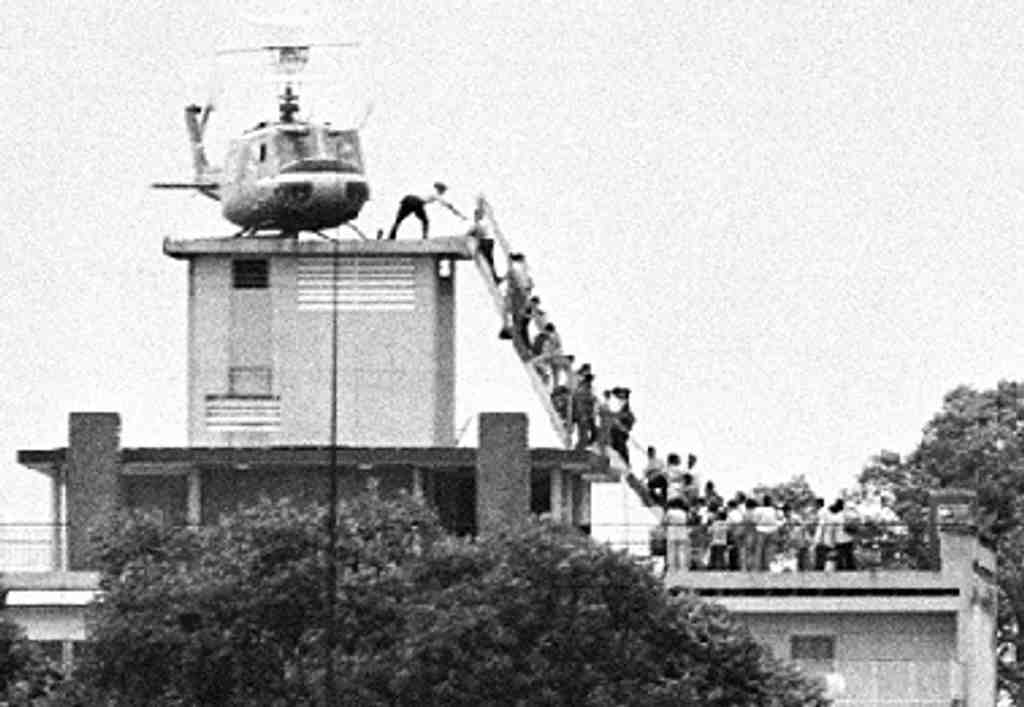
To spot this landmark, look for a low, square rooftop with a helicopter perched on top and a line of people scrambling up a narrow metal stairway-if you see a scene that looks like it belongs in the climax of an action film, you’re in the right place!
Alright traveler, you’re now standing at the site of one of the most dramatic moments in 20th-century history-this is where the Vietnam War reached its climactic end and Saigon changed forever. So, let’s go back to April 1975. Imagine yourself surrounded by the hum of anxious crowds and the unmistakable whirring of helicopter blades -there’s a tension in the air, thick enough to cut with a spoon. The city is on edge. The North Vietnamese forces are closing in, and this rooftop is the last hope for thousands of desperate people who just want a chance at freedom.
Things hadn’t always been this way, you know. For years, Saigon had been fairly calm despite the chaos outside its borders, but now things have changed overnight-panic in the streets, rumors echoing everywhere, people desperately trying to get exit visas while the price of everything from boat tickets to brooms has skyrocketed. At this very spot, in the final hours, helicopters swoop in from the sea as part of a giant operation called "Operation Frequent Wind," the biggest helicopter evacuation in history. If you listen carefully, you might almost hear the crackle of radios instructing Americans and South Vietnamese when it’s finally time to run for the ladder.
The streets below are jammed-cars, bicycles, waving families, abandoned suitcases. Saigon’s defenders are battered and divided, trying to mount a last stand with little hope left, while inside this building, people cling to each other, begging for a seat on the last chopper out. Embassy workers anxiously call their loved ones, and Americans signal their Vietnamese friends-many are climbing that very same metal stairway, risking it all in a bid for escape. The soundtrack of this moment is unforgettable: the distant rattle of artillery, the roar of engines, a bittersweet chorus of hope and heartbreak.
Meanwhile, all across the city, chaos and confusion reign. The South Vietnamese government, overwhelmed and out of options, shuffles through three presidents in two weeks! Across town, young soldiers and families throw together makeshift goodbyes-while U.S. officials have resorted to playing "White Christmas" on the radio as the secret code to evacuate. It sounds like a Christmas party gone very wrong.
The tension peaks as North Vietnamese tanks roar towards the center of Saigon. They crash through barricades, past stunned defenders. The city’s main points-bridges, airports, radio stations-fall one by one like dominoes. At the Presidential Palace not far from here, the gates are finally smashed open, and the old flag is torn down, the new red one hoisted up on the roof. The battle is over in moments, but the aftershocks ripple through decades.
You can almost sense the mix of relief and fear in the air-some people celebrate, others mourn. For many locals, it’s a day of victory and liberation, known as Reunification Day. For others, especially the refugees who fled abroad, it’s forever "Black April," a time of heartbreak and exile. Saigon is renamed for Ho Chi Minh, finally united after years of fierce struggle-its name changed on July 2, 1976.
Stand here for a second and imagine what people saw from this very spot: a city shrouded in uncertainty, yet strangely hopeful, as the helicopter took off one last time, leaving a rooftop empty-but alive with the echoes of history. It’s a reminder that when history turns a page, sometimes you really can hear it flip.
Seeking more information about the names, north vietnamese advance or the evacuation? Ask away in the chat section and I'll fill you in.


