
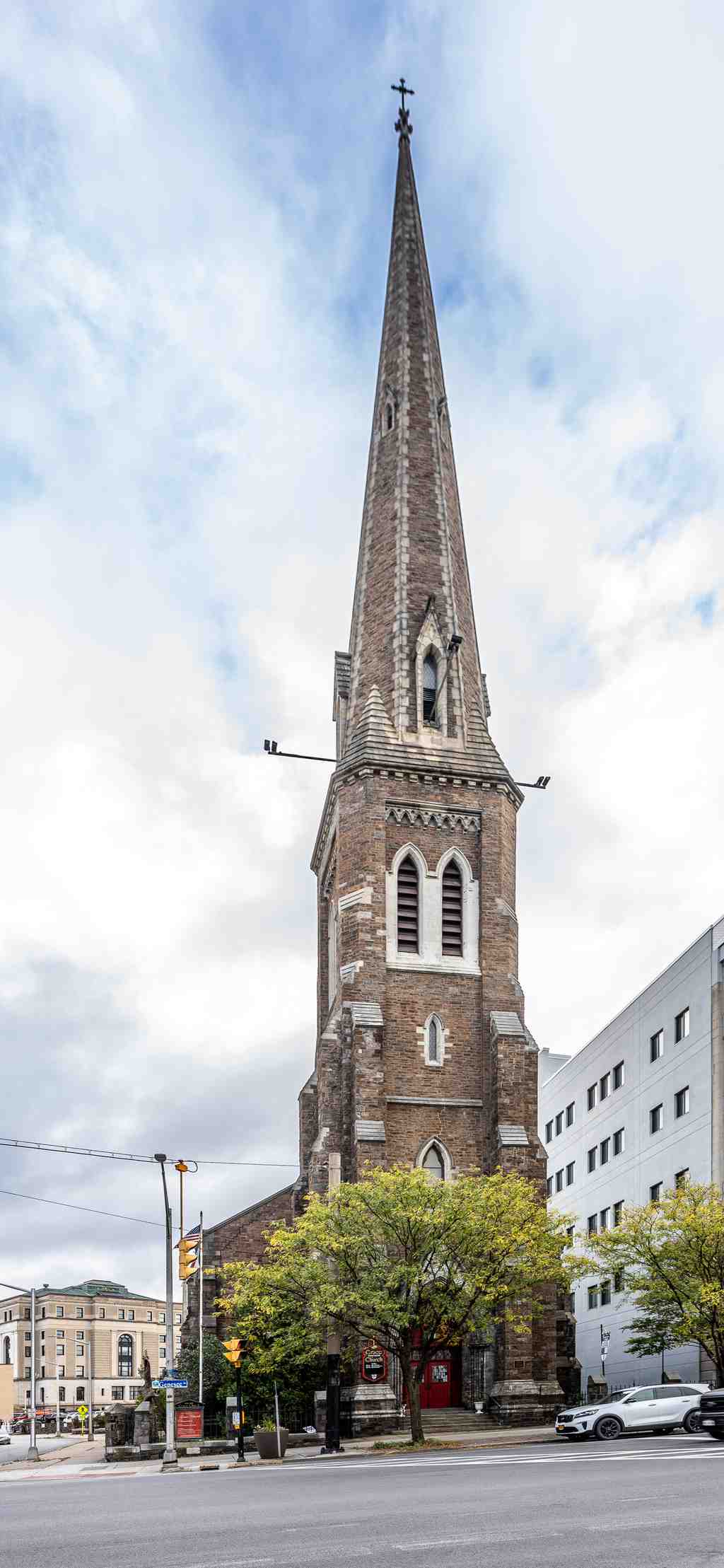
To spot Grace Church, simply look for the tall, pointed stone steeple with a cross on top rising above the trees and the busy street-it stands out immediately with its brown brickwork and striking red door.
If you imagine yourself here back in 1838, you’d find a handful of determined parishioners convincing their rector to let them form a new Episcopal church-no fancy building, just eager neighbors gathering in an upstairs room. Now, you’re looking at their legacy, a church that faced more drama than a soap opera. The first building was put up at the corner of Broadway and Columbia, but after two decades, they aimed higher. In 1856, workers set the very cornerstone beneath your feet, the sound of hammers and hopeful voices buzzing through the air. The trouble was, money was tighter than a drum, and by 1859 it looked like the church would remain a beautiful but unfinished dream. Enter Reverend Brandegee, the third rector, who hustled and fundraised tirelessly, practically shaking every tree along Genesee Street for nickels and dimes.
Finally, in 1860, the doors creaked open for the first service-imagine the pride and relief echoing through these walls! And by Easter of 1864, the mortgage was paid; it only took them $30,000 and countless bake sales. Over the years, Grace Church became a hub for helping neighbors, its mission echoing in all corners of the city. Even as its congregation grew smaller, it stayed resilient; in 1994, it welcomed a new wave of friends from Calvary Church, creating a new chapter in its story. After more than 150 years of joy, struggle, and music-thanks to organist Norman Coke-Jephcott for nearly a decade-it earned its spot on the National Register of Historic Places in 1997. Grace Church isn’t just bricks and stone; it’s a testament to what a bit of stubborn faith and a lot of teamwork can build.




