
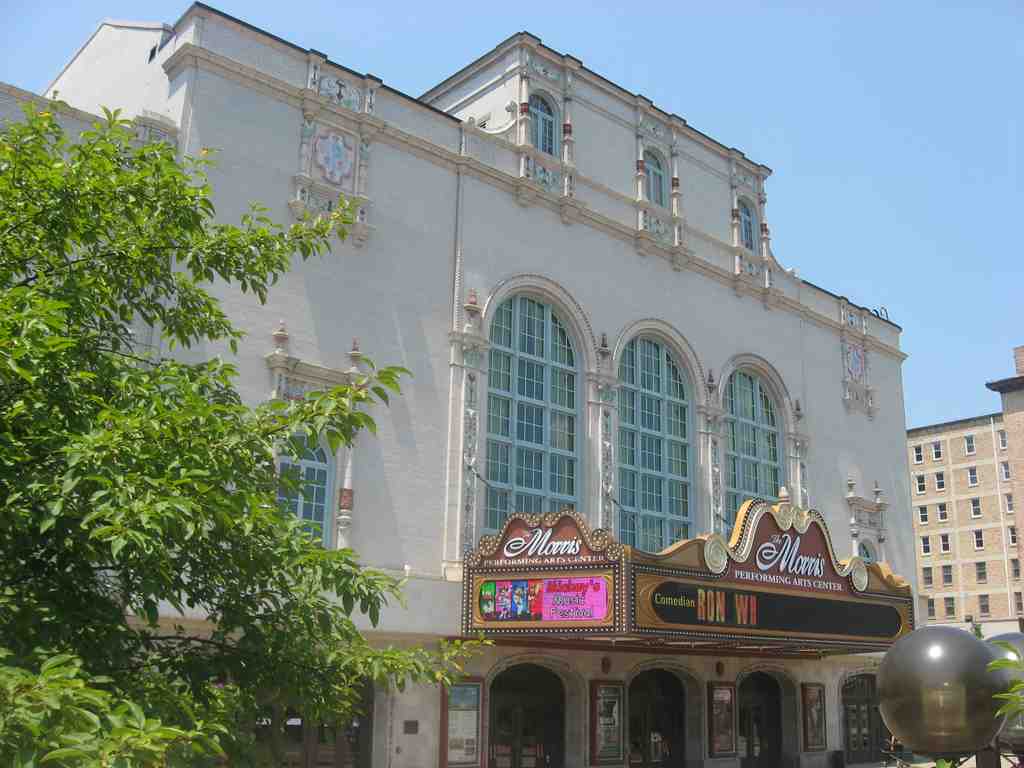
The towering, rectangular building before you is defined by its pale brick facade and a trio of huge arched windows adorned with finely crafted, colorful terra cotta ornamentation. This is the Morris Performing Arts Center, originally built in 1922 as the Palace Theatre. Take a look at your screen to see the first image which gives you a closer view of that exterior terra cotta.
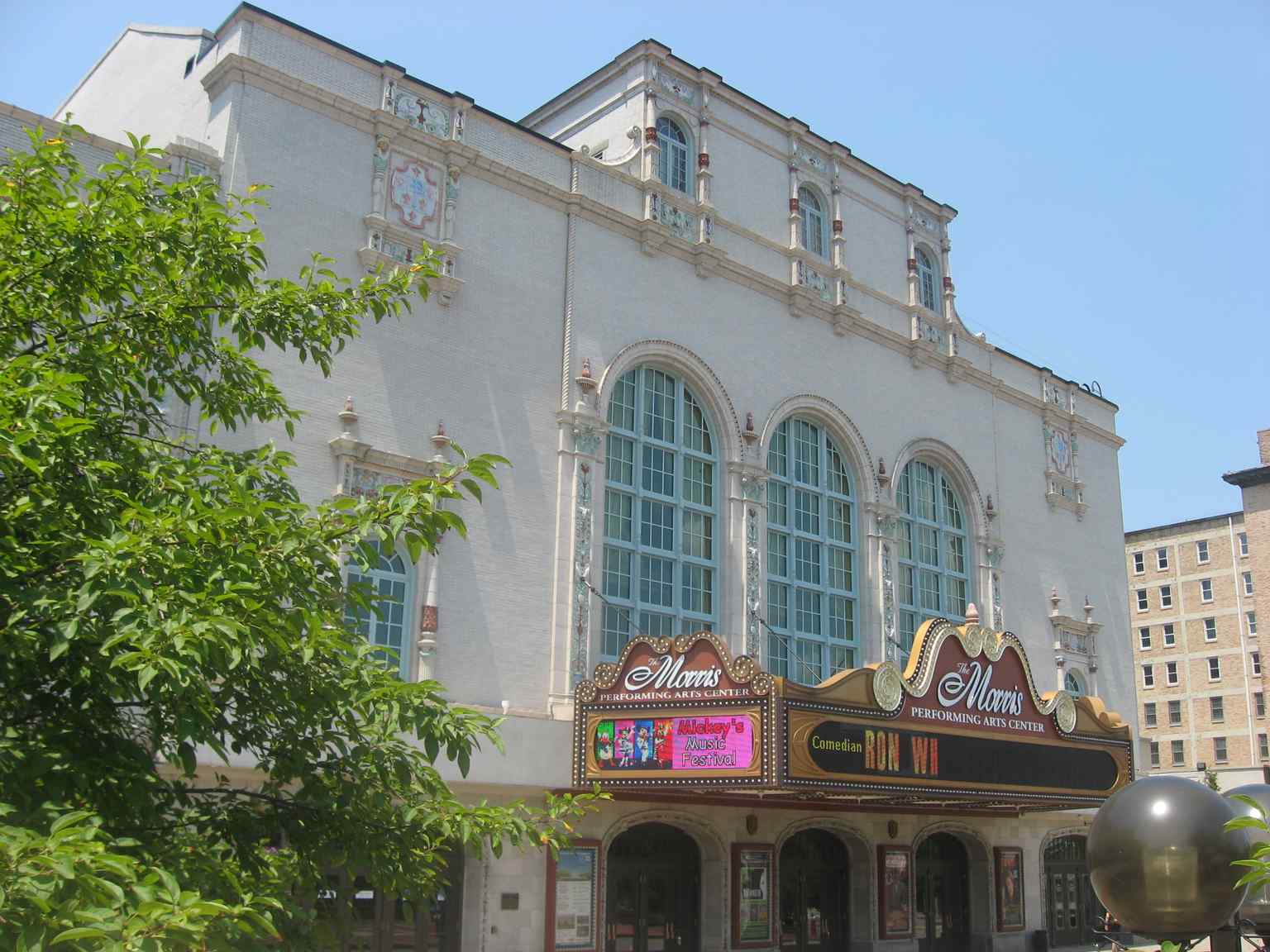
Architect J.S. Aroner threw everything at this design, intentionally mashing together Spanish Renaissance, Baroque, and Greco-Roman elements. The goal was to create a little palace where an average citizen could drop a few cents and feel like royalty. It was a huge financial gamble, banking on the insatiable public appetite for vaudeville, a type of live theatrical entertainment featuring a variety of unrelated specialty acts. Check your app for the third image to see the theater in those early days, when it hosted legends like Harry Houdini and George Burns.
But the true spectacle arrived on October 4, 1940.
That night, the theater hosted the world premiere of the Hollywood film Knute Rockne All American. Inside, twenty four hundred lucky ticket holders watched the debut alongside stars like Ronald Reagan and Bob Hope. Outside, it was absolute chaos. An estimated twenty four thousand people swarmed the surrounding streets, desperate to catch a glimpse of the celebrities. It was a monumental triumph for a local venue.
Yet, triumphs fade. By the late nineteen fifties, the rise of television had decimated nightly attendance. The theater went broke, and the board voted for demolition. The wrecking ball was literally on the schedule for 1959.
Enter Mrs. Ella M. Morris.
In an astonishing display of community resilience and immense personal risk, this local philanthropist purchased the entire doomed property with her own wealth for an undisclosed sum. Then, in a legendary power move, she immediately sold it back to the city of South Bend for exactly one dollar, which is about ten dollars today. After a modest fifteen thousand dollar facelift, roughly one hundred and fifty grand today, the city renamed it in her honor. She singlehandedly saved a cultural monument.
From a miraculously saved public space, our route now shifts to a completely different type of enduring legacy, a long-lasting family enterprise. We are heading to the W. N. Bergan J. C. Lauber Company Building, a nine minute walk away. By the way, if you want to admire the restored interior of the Morris, they are open Monday through Friday from noon to five PM.





