
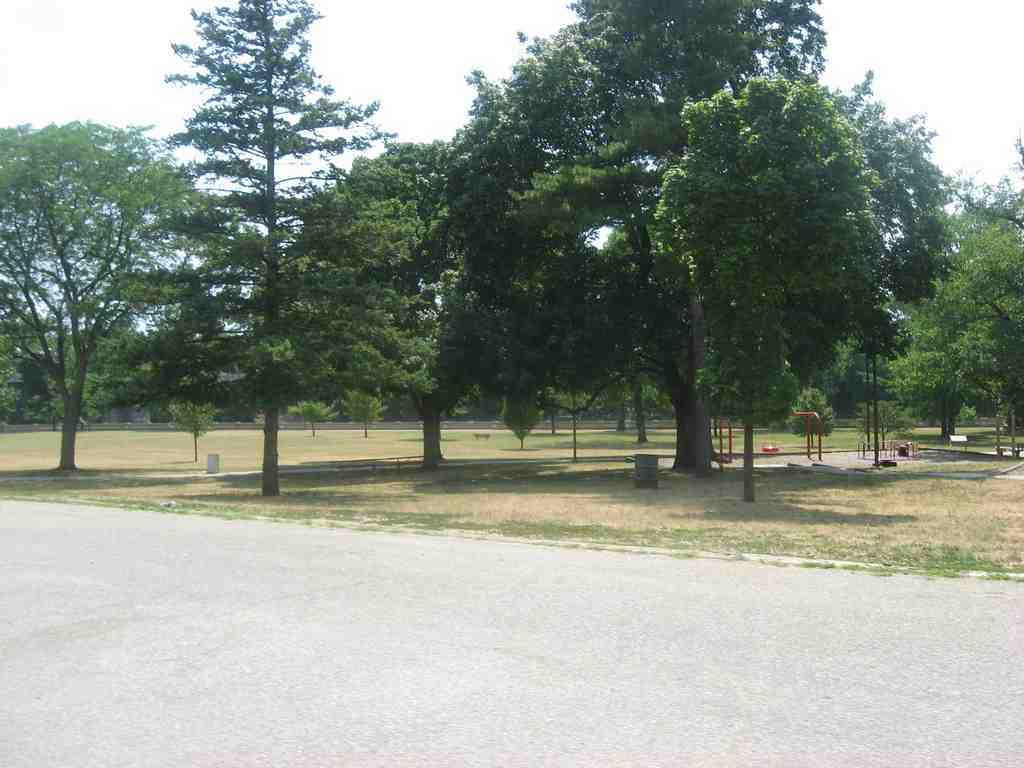
On your left is the Howard Park Historic District, marked by a sprawling grassy expanse shaded by thick-trunked trees and a curving paved pathway cutting across the foreground. Pull up the photo on your app to see the wide open fields that form the core of this historic area.
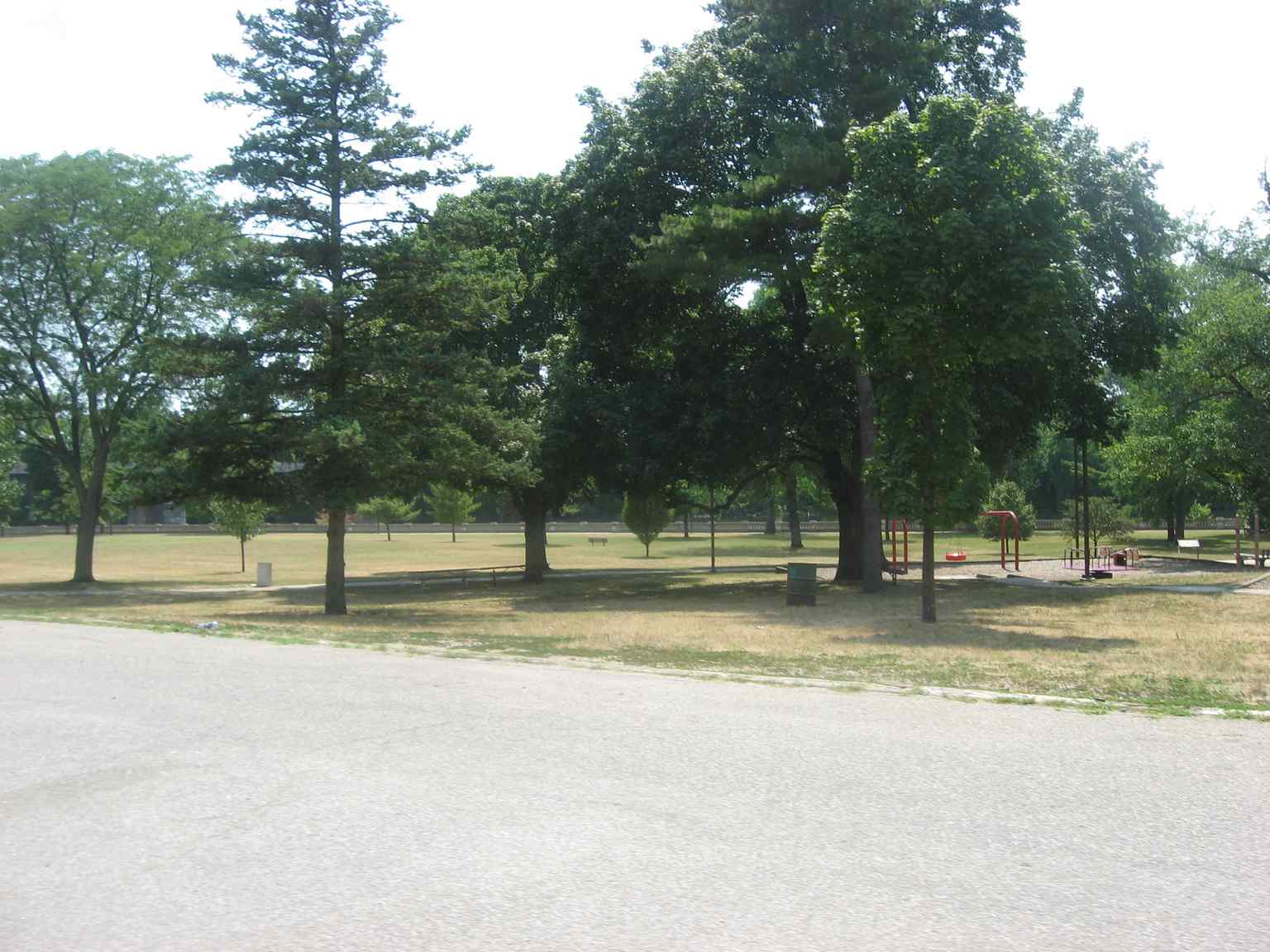
In 1862, a young soldier named Timothy Edward Howard was catastrophically wounded during the bloody Battle of Shiloh. Picture surviving such devastating injuries at a young age... would you have quietly retreated from the world, or thrown yourself headfirst into shaping it? Howard chose the latter, transforming his physical recovery into the ultimate act of community resilience. He returned home to teach everything from astronomy to law at Notre Dame, eventually rising to Chief Justice of the Indiana Supreme Court. Yet, he remained fiercely modest. When tasked with writing Notre Dame's fifty-year history, he flatly refused to put his name on the cover. A politician turning down free publicity... a rare breed indeed.
Howard risked his political capital in 1879 to secure the riverbank for South Bend's first public park. The neighborhood that sprouted around it became a fascinating collision of worlds. You had industrial laborers, like the German immigrants who worshipped at the Zion Evangelical Church, a building designed in the Gothic Revival style, which is known for its soaring pointed arches. These families flocked here to work at the nearby sewing machine plant.
Right alongside them, you had the wealthy elite building lavish estates. The Studebaker House, a Queen Anne mansion, an architectural style famous for its complex asymmetrical roofs, sat on a huge rough-cut stone foundation. Their sprawling horse barns were even converted into modern living quarters when the automobile took over.
The park grounds are open daily from six in the morning until eleven at night. Let us keep moving toward our final stop, a place where education and determination meet. St. Joseph School is just a six-minute walk away.





