
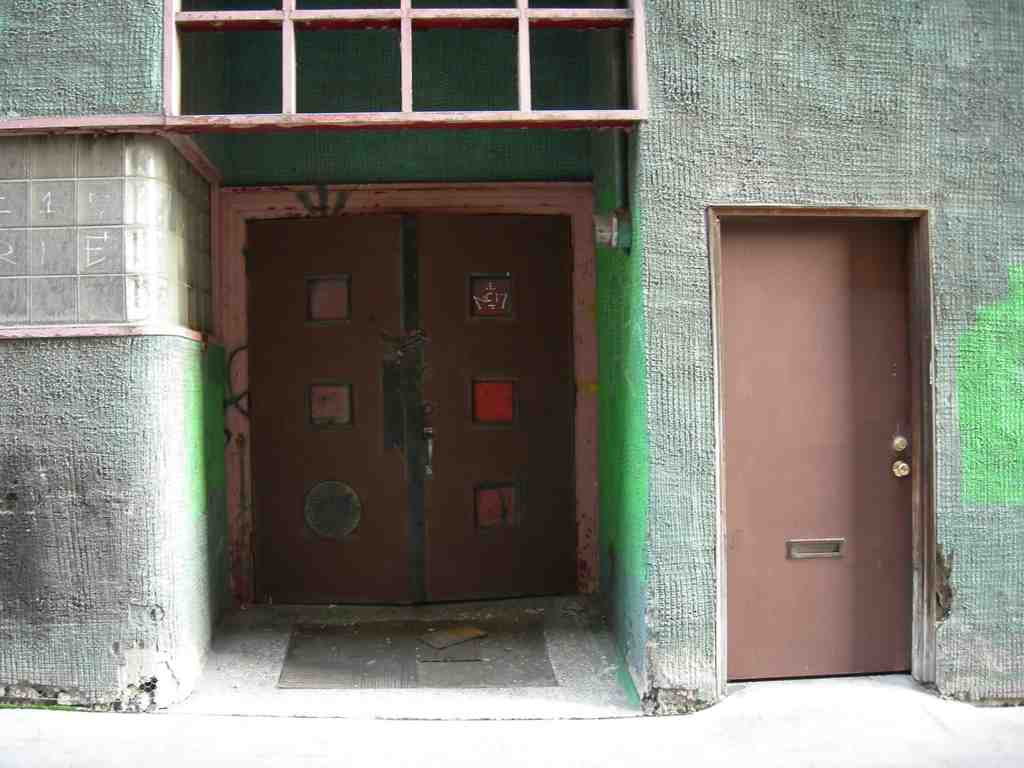
Straight ahead, look for a tucked-away entrance with faded green walls and a pair of battered double doors, marked by dark, square windows and a sense of deep, silent history-this is where the infamous Wah Mee gambling club once hid beneath the street.
Let’s go back in time together, right here in this quiet alley of the International District. It’s February 1983 and, though now it’s calm, the air then was thick with secrets, whispers, and excitement just out of sight. This building is the Louisa Hotel, built in 1909-a place that saw decades of comings and goings, hopes and heartbreaks, and, sometimes, just plain bad luck. By the time the 1980s rolled around, its basement was home to the Wah Mee Club, once known as “Beautiful China.” It had gone from a bustling hotspot, where people of all backgrounds came for dancing, gambling, and laughter, to a dingy, secretive spot, full of shadows and tales best told behind closed doors.
Imagine you’re a regular back then, squeezing past two sets of locked doors into the Wah Mee, where the only way in was to be recognized by the watchful security behind those thick glass blocks-one clear window so he could peek out and check who was coming. The place buzzed with the clink of dominoes and shouts over card games. People came hoping for good fortune… but on February 18, 1983, fate had other plans.
Very late that night, three young men-Willie Mak, Benjamin Ng, and Tony Ng (no relation)-walked in. They were known around the club. That’s why, as they were buzzed inside, nobody expected trouble. Suddenly, the friendly faces were replaced by the cold threat of drawn guns. The club regulars-all Cantonese, many longtime immigrants, some successful restaurant owners-were ordered to the ground. One by one, they were tied up with rope, hands and feet bound. Even as fear crept in, one old man, Wai Yok Chin, tried to charm his way out: “No need to tie so tight, I’m just an old man!” Little did they know, he’d be the only one to survive and eventually tell their story. In the shadows, the gunmen methodically robbed each person, the silence thick, broken by muffled cries, and finally-gunfire, sudden and lethal.
Wai Yok Chin was shot, but against all odds, survived. As he staggered outside, bloodied but alive, three would-be new patrons buzzed at the door, only to be met by horror. Thirteen out of fourteen people were lost that night, shot execution style, making it the deadliest mass murder in Washington State history.
The aftermath gripped Seattle in shock and sadness; the doors were padlocked, and the Wah Mee Club was closed forever. Police found no signs of resistance-everyone had recognized their attackers. The single survivor, Chin, faced threats to his life, yet found the strength to testify in court. The three killers were eventually caught: Mak and Benjamin Ng would spend the rest of their lives in prison, while Tony Ng, after years on the FBI’s Most Wanted list, was caught in Canada and later served 28 years before being deported to Hong Kong.
But the story of this spot doesn’t end in darkness. After the tragedy and a terrible fire in 2013 that gutted much of the building, the Louisa Hotel was rebuilt, rising anew in 2019 with apartments and new shops along the street. Buddhist monks came to bless the place, hoping to bring peace to its turbulent history.
So as you stand in this alley, look at those aging doors and imagine all the chapters written here-from Blue Heaven’s roaring 1920s, through times of legend and heartbreak in Chinatown, to a community determined not just to remember its scars but to carry on and restore life anew. This is no ordinary spot on the map; it’s a window into the heart of Seattle’s past, pulsing with stories, loss, and resilience. And if you listen closely as you move along, you just might still hear a whisper of the Wah Mee’s secrets in the wind.
Wondering about the background, massacre or the victims? Feel free to discuss it further in the chat section below.


