
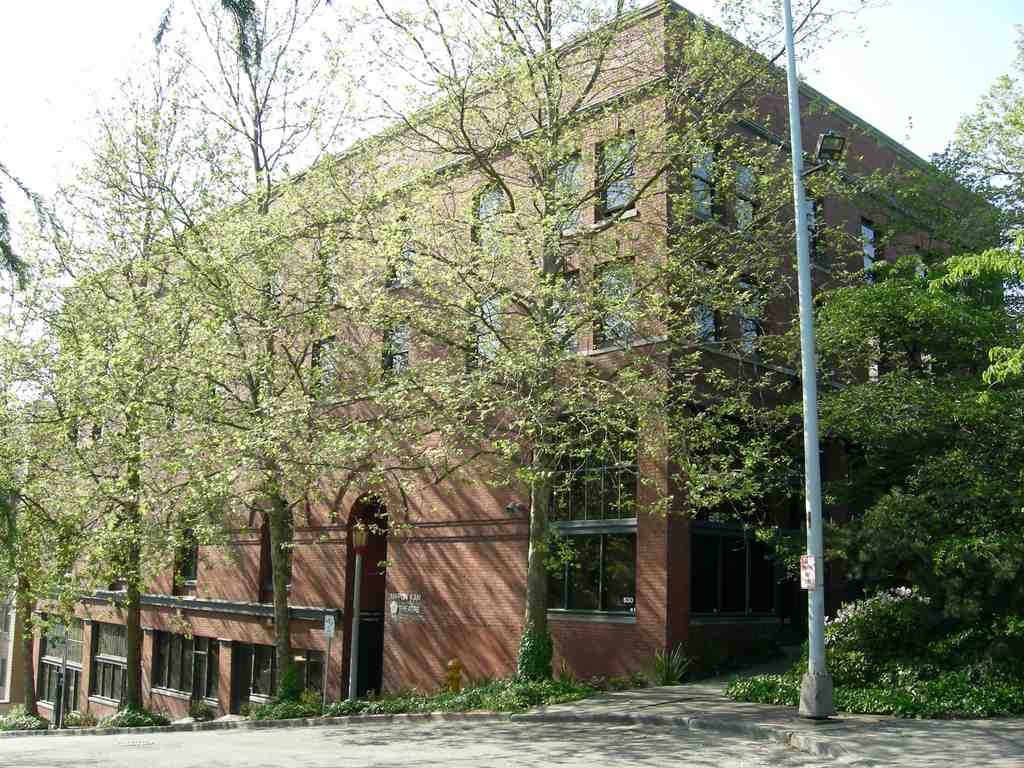
To spot the Nippon Kan Theatre, just look for a large, brick, four-story building peeking through the shade of leafy trees right on the corner of S. Washington Street-if you spot big windows and an arched entrance, you’re in the right place!
Alright, settle in and imagine you’re stepping back in time-just outside this sturdy brick building, the year is 1910, and Seattle’s Japantown is buzzing with excitement. Picture crowds gathering here, some in crisp suits and others in traditional kimonos, all eager to see the grand opening of the Nippon Kan Theatre. The scent of fresh ink drifts from the Asahi News press nearby, and the air is thick with anticipation (and maybe a bit of sake).
This place wasn’t just any old theater. A group of visionary Japanese businessmen pooled their money and dreams, creating a lively hub for new immigrants. Back then, folks would climb these steps to catch vaudeville acts, martial arts demonstrations, familiar tunes from home, and even movies from faraway Japan. These nights were far from boring-if you listened closely, you’d hear laughter, shouts from a feisty judo match, and the thump of a taiko drum echoing up the stairwell. In the quiet corners, the aroma of noodles and rice wafted from the rooms above-yes, there was even a hotel up there!
But it wasn’t all fun and games. During World War II, tragedy struck-this bustling place fell silent. In 1942, Japanese Americans were uprooted and sent to internment camps, and the doors here slammed shut. The theater stood silent, memories lingering like old posters on the wall. For decades, it stood as a ghost of happier times, boarded up and forgotten by many.
That is, until the 1980s, when a couple with a passion for history lovingly restored the theater, rescuing it from the shadows. They even uncovered an old, colorful curtain covered in Japanese advertisements. Now, that historic curtain hangs down the street, safe and sound, in the Wing Luke Museum. As of 2024, this place is celebrated every year on May 23-officially Nippon Kan Theatre Day. You can almost hear the applause and laughter echoing out onto the street, a reminder that the heartbeat of this community still echoes in these walls.
So, next time you pass, give a little bow-this is where Seattle’s Japanese stories began and where they’re still remembered, brick by brick.


