
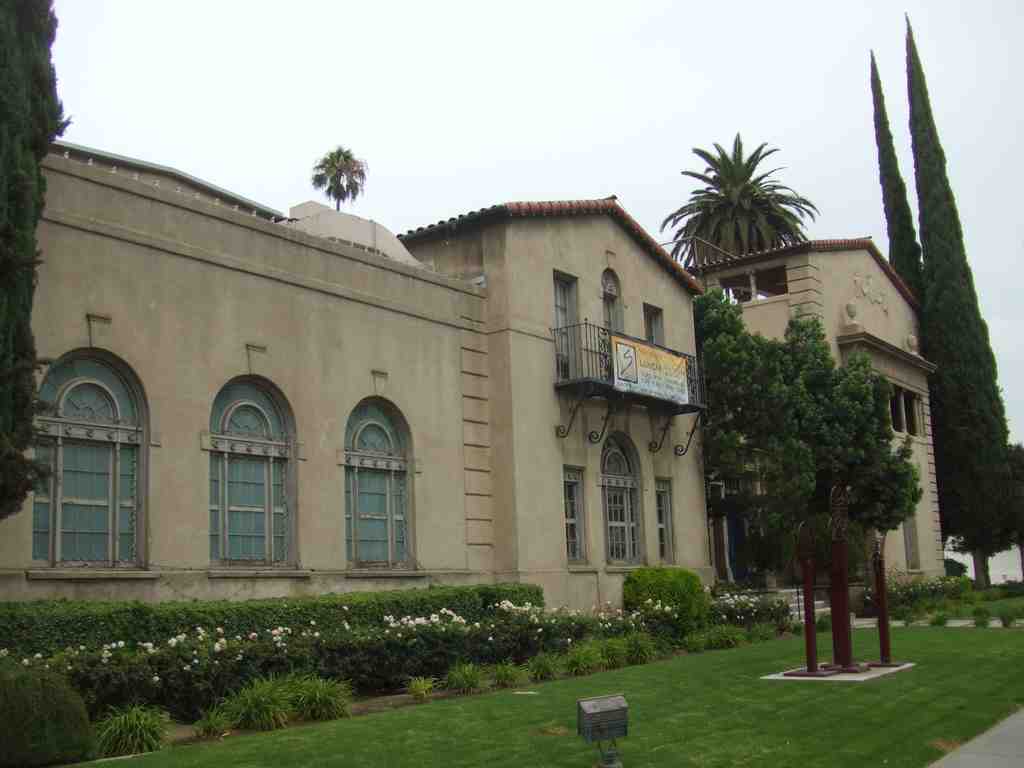

Look to your right and you will spot a pale concrete building topped with a low terra cotta tiled roof and defined by three tall, arched windows lining its left side. This is the Riverside Art Museum, but long before it housed fine art, it was the site of a fierce clash over the very identity of this city. In 1929, the local Young Women's Christian Association, or YWCA, wanted an urban sanctuary for women. They needed funding, and local magnate Frank Miller offered to help finance the project, provided they build it right next to his famous Mission Inn. But Miller's money came with heavy strings attached. He aggressively demanded they hire a local male architect to match the Spanish fantasy style of his hotel. He even patronizingly insisted the women serve the nearby Municipal Auditorium.

The women of the YWCA flatly refused. They reportedly declared they did not want to be anyone's servants. Instead, they stuck to their guns and hired trailblazing female architect Julia Morgan over Miller's vocal objections. Julia Morgan was a visionary who prioritized structural integrity just as much as aesthetics. Knowing she was building in earthquake country, she designed this structure using reinforced, poured in place concrete, meaning the liquid concrete was poured directly into molds right here on the site to create an incredibly sturdy shell. To Miller's intense disapproval, Morgan bypassed his preferred style entirely, designing an innovative tri-block building in a blend of Mediterranean and Classical Revival styles, mixing Italian and Spanish architectural elements to give it a distinctly modern feel.

There are profound battles poured into the very foundation of this building. Inside, Morgan even designed a massive first floor swimming pool. For decades, it was a lively community hub where local kids learned to swim. When the Riverside Art Center bought the building in 1967 for two hundred fifty thousand dollars, which is over two million dollars today, they did not demolish the pool. Instead, they ingeniously filled the basin and transformed it into a dramatic, sunken, multi-level exhibition space. The sheer scale of that former pool offers a striking contrast to traditional galleries, serving as a lasting testament to Morgan's highly adaptable structural design. It stands as a monument to a group of women who refused to compromise their vision against intense pressure from powerful men.

If you want to view their permanent collection of around fifteen hundred pieces or step inside that ingenious sunken gallery, the museum is open Wednesday through Saturday from ten to five, and Sunday afternoons from twelve to five. Now, we are going to walk toward a church with a completely different history of dramatic relocation and remarkable resilience, so let us head toward the Universalist Unitarian Church of Riverside, just a two minute walk away.


