
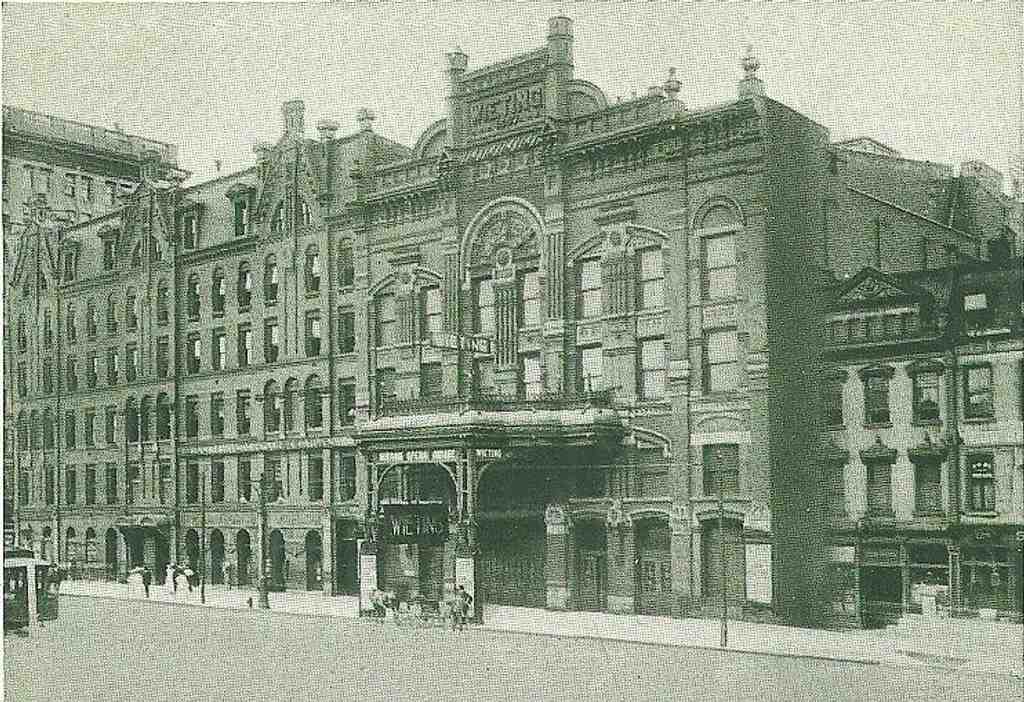
Look straight ahead for a large, impressive brick facade with arched windows, decorative stonework, and a grand entrance marquee; you'll spot it towering a bit above its neighbors, making it hard to miss on the street.
Now, let’s travel back in time-right where you’re standing, imagine the aroma of fresh popcorn and the distant echo of a violin tuning up behind those big arched windows. This was the legendary Wieting Opera House, once the beating heart of entertainment in Syracuse! Can you hear the clink of opera glasses and the chatter of the crowd lining up for a night out? It all started in 1852 when John Wieting, a local hero and a man of grand visions (and apparently a strong insurance policy!), decided Syracuse needed a performance hall to match its ambitions. He funded the first Wieting Hall right here, but as luck would have it, or perhaps as Syracuse’s unofficial fire chief would say, it burnt to the ground in just four short years. Legend has it, firefighters struggled so much with the cold that their water froze solid-talk about a tough night on the job!
But Wieting wasn’t one to give up. He had the hall rebuilt in just 100 days (take that, home renovation shows!), and soon enough, it became the place in town to see speakers like Charles Dickens and Susan B. Anthony, or to witness performances by stars like Sarah Bernhardt and Lillian Russell. If you’d been here in the mid-1800s, you might have caught Buffalo Bill entertaining the crowds, or even found yourself at a raucous political convention, where chairs-and possibly tempers-flew!
The hall also hosted some of the era’s most heated debates. Picture the tension in 1861 when abolitionist Frederick Douglass arrived to lecture-his visit was so controversial that the mayor had to deploy police and even soldiers to keep the peace, all while Wieting refused to cancel. The show must go on, right? It’s no exaggeration to say these walls saw more political wrangling and history in the making than anywhere else in the city.
By 1870, eager for more drama (the good kind), Wieting transformed the hall into the Wieting Opera House, with plush “opera chairs” replacing the original wooden ones-goodbye splinters, hello comfort! And while it proudly wore the name “opera house,” the stage delivered everything from Broadway-bound plays to rambunctious vaudeville acts long before opera itself graced the theatre.
Here’s where things heat up (literally): the Opera House burned down again in 1881-twice! But whether by daring spirit or just stubborn optimism (we’ll call it passion), Wieting and, later, his wife Mary always rebuilt it-bigger, glitzier, and with more gold, velvet, and chandeliers. Mary’s final version in 1897 was designed to be “absolutely fire-proof.” If you ever visit a theater and smell smoke, just remember: at the Wieting, the drama wasn’t always on stage.
Believe it or not, the Wieting wasn’t just a local favorite. It was a testing ground for plays destined for Broadway-think of it as the Hollywood of upstate New York. Audiences cheered musicals, cried at tragedies, and sometimes grew decidedly impatient, like that one night when the opera company was late and the crowd nearly took over!
The Opera House even dipped its toes into the world of early cinema, screening movies in the 1920s, right as vaudeville was moving aside for silent film stars. But by 1930, automobiles needed homes too, and the great Wieting Opera House gave way to a parking garage. The era of velvet curtains and standing ovations ended, but the memories linger-if you listen closely, maybe you’ll hear the faint sounds of applause, and the whispers of Broadway’s best as you stand on this historic spot. Syracuse never forgot the Wieting, and neither will you!
For further insights on the wieting hall, political conventions or the wieting opera house, feel free to navigate to the chat section below and inquire.


