

Syracuse Audio Tour: Legends, Landmarks & Hidden Stories Unveiled
A statue gazes sternly over Columbus Circle while secrets crackle beneath the city’s brick and marble—Syracuse’s past demands a second look. Venture beyond the obvious on this immersive self-guided audio tour, discovering the bustling epicenter of Clinton Square, the proud façade of the Upstate Medical University Arena, and those in-between places most maps ignore. Hear whispered stories and walk in the footsteps of power players, rebels, and dreamers who shaped the city’s legacy. Why did an icy confrontation in Clinton Square inflame an entire region overnight? What hidden messages linger in the stones at Columbus Circle, and whose careers were made or destroyed behind the arena’s towering walls? Which forgotten rivalry still echoes in public art no one looks at twice? Move through time on crowded plazas and quiet corners, as Syracuse’s contradictions and drama spring to life at every turn. Press play and let the city’s unsolved mysteries pull you in.
Tour preview
About this tour
- scheduleDuration 30–50 minsGo at your own pace
- straighten4.3 km walking routeFollow the guided path
- location_onLocationSyracuse, United States
- wifi_offWorks offlineDownload once, use anywhere
- all_inclusiveLifetime accessReplay anytime, forever
- location_onStarts at Armory Square
Stops on this tour
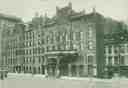
Look straight ahead for a large, impressive brick facade with arched windows, decorative stonework, and a grand entrance marquee; you'll spot it towering a bit above its…Read moreShow less
Look straight ahead for a large, impressive brick facade with arched windows, decorative stonework, and a grand entrance marquee; you'll spot it towering a bit above its neighbors, making it hard to miss on the street. Now, let’s travel back in time-right where you’re standing, imagine the aroma of fresh popcorn and the distant echo of a violin tuning up behind those big arched windows. This was the legendary Wieting Opera House, once the beating heart of entertainment in Syracuse! Can you hear the clink of opera glasses and the chatter of the crowd lining up for a night out? It all started in 1852 when John Wieting, a local hero and a man of grand visions (and apparently a strong insurance policy!), decided Syracuse needed a performance hall to match its ambitions. He funded the first Wieting Hall right here, but as luck would have it, or perhaps as Syracuse’s unofficial fire chief would say, it burnt to the ground in just four short years. Legend has it, firefighters struggled so much with the cold that their water froze solid-talk about a tough night on the job! But Wieting wasn’t one to give up. He had the hall rebuilt in just 100 days (take that, home renovation shows!), and soon enough, it became the place in town to see speakers like Charles Dickens and Susan B. Anthony, or to witness performances by stars like Sarah Bernhardt and Lillian Russell. If you’d been here in the mid-1800s, you might have caught Buffalo Bill entertaining the crowds, or even found yourself at a raucous political convention, where chairs-and possibly tempers-flew! The hall also hosted some of the era’s most heated debates. Picture the tension in 1861 when abolitionist Frederick Douglass arrived to lecture-his visit was so controversial that the mayor had to deploy police and even soldiers to keep the peace, all while Wieting refused to cancel. The show must go on, right? It’s no exaggeration to say these walls saw more political wrangling and history in the making than anywhere else in the city. By 1870, eager for more drama (the good kind), Wieting transformed the hall into the Wieting Opera House, with plush “opera chairs” replacing the original wooden ones-goodbye splinters, hello comfort! And while it proudly wore the name “opera house,” the stage delivered everything from Broadway-bound plays to rambunctious vaudeville acts long before opera itself graced the theatre. Here’s where things heat up (literally): the Opera House burned down again in 1881-twice! But whether by daring spirit or just stubborn optimism (we’ll call it passion), Wieting and, later, his wife Mary always rebuilt it-bigger, glitzier, and with more gold, velvet, and chandeliers. Mary’s final version in 1897 was designed to be “absolutely fire-proof.” If you ever visit a theater and smell smoke, just remember: at the Wieting, the drama wasn’t always on stage. Believe it or not, the Wieting wasn’t just a local favorite. It was a testing ground for plays destined for Broadway-think of it as the Hollywood of upstate New York. Audiences cheered musicals, cried at tragedies, and sometimes grew decidedly impatient, like that one night when the opera company was late and the crowd nearly took over! The Opera House even dipped its toes into the world of early cinema, screening movies in the 1920s, right as vaudeville was moving aside for silent film stars. But by 1930, automobiles needed homes too, and the great Wieting Opera House gave way to a parking garage. The era of velvet curtains and standing ovations ended, but the memories linger-if you listen closely, maybe you’ll hear the faint sounds of applause, and the whispers of Broadway’s best as you stand on this historic spot. Syracuse never forgot the Wieting, and neither will you! For further insights on the wieting hall, political conventions or the wieting opera house, feel free to navigate to the chat section below and inquire.
Open dedicated page →
Show 8 more stopsShow fewer stopsexpand_moreexpand_less
 4
4State Tower Building
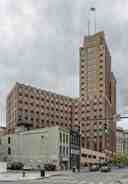
Buy tour to unlock all 15 tracksLook straight ahead and you’ll spot the State Tower Building-the tallest structure soaring above everything else on this block, with its creamy brick and limestone facade that…Read moreShow less
Look straight ahead and you’ll spot the State Tower Building-the tallest structure soaring above everything else on this block, with its creamy brick and limestone facade that gets lighter as it rises and a dramatic, stepped Art Deco tower reaching for the sky. Welcome to one of Syracuse’s crowning architectural giants, the State Tower Building! Stand here and imagine yourself way back in the Roaring Twenties when this whole corner was abuzz with excitement-right at the crossroads of Genesee, Warren, and Water streets. The building you see now might look timeless, but its story began in a rather dramatic, fiery fashion. Before the tower rose, this spot was home to the grand Bastable Theatre-a legendary place with laughter, applause, and plenty of drama. But that all went up in smoke, literally, in a massive fire in 1923. For a while, the lot here was just a charred patch, with folks dreaming up everything from “bigger and better” theaters to grand office buildings. Eventually, dreams gave way to determination, and the plot was scooped up by Central Offices-no, not a secret agent group, just some ambitious developers named Mayer. Picture the year 1927: jazz music in the air, flappers on the streets, and here, teams of 300 workers digging a foundation deeper than anything Syracuse had ever seen before. It went so far down, folks joked it almost reached Onondaga Lake! Water had to be pumped out constantly, and if you stood here then, you’d hear the echoes of hammers, the thud of boots, and probably a few workers muttering about the mud. By late April 1928, the hullabaloo grew even louder as the tower was finished just in time for a glamorous unveiling. Syracuse newspapers called it a “new era,” hailing its gleaming combination of brick, concrete, tile, and secret steel bones. This was Syracuse’s very first “skyscraper,” poking up 312 feet-so high that people must’ve squinted up with their jaws dropped. Trust me, giraffes would get neck cramps just looking at it! For decades, the State Tower Building made its mark, lit up at night for all to see. And as you stand here outside, take a look at those bricks-the architects made them lighter towards the top, pulling off a clever trick to make the building seem even taller. The bottom ten floors spread wide and grand, perfect for buzzing offices, but as you move up, the tower narrows, like someone stacking boxes smaller and smaller until only the bravest would climb up top. Speaking of climbing, each year people take on “The Climb,” racing up all 338 steps for charity-a real leg-burning way to help kids coping with cancer. But there’s no shortage of adventure and mishap in the building’s long life. In 1962, a gas explosion rumbled through the place, sending 3,000 office workers scrambling and splashing water through the flooded basement. Don’t worry; all ended well-just a wild story for the grandkids and a pretty hefty insurance claim. Over the years, the State Tower has weathered changing times-renovations in 2003, asking if its facade was a little shabby in 2014, then new owners swooping in for a huge face-lift in 2016. Most of the building still bustles with business on the lower floors, but just imagine: the upper stories, once lonely office floors, are now 61 high-end apartments. Glass, marble, and views for days! The windows you see were swapped out for shiny new ones, and the tower even has extra stairwells now for all those modern safety codes. For a while, even peregrine falcons made their home here-the feathered speedsters of the sky-raising chicks on the dizzying heights with a nest box and even their own live-stream camera (probably better ratings than some TV shows). So as you stand at the foot of the State Tower, you’re not just looking up at the tallest thing in Syracuse or a lovely bit of Art Deco. You’re staring back through a story of fire, ambition, reinvention, wild mishaps, and-yes-a few birds who got the best view in town. Not bad for a building that almost became a theater, right?
Open dedicated page →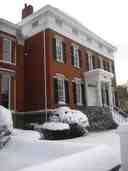 5
5Hamilton White House
Buy tour to unlock all 15 tracksTo spot the Hamilton White House, look straight ahead for a stately, red-brick mansion with striking white columns framing its front doorway and classic black shutters on tall…Read moreShow less
To spot the Hamilton White House, look straight ahead for a stately, red-brick mansion with striking white columns framing its front doorway and classic black shutters on tall windows-today it stands out especially well against the snowy shrubs! Alright, as you stand here, take a breath and picture what it was like on this site nearly 180 years ago. The year is 1842. Imagine horse-drawn carriages bumping along the muddy street, sharp winter air, and the proud White family moving into their brand-new Greek Revival home. Hamilton White himself, a local powerhouse in business and politics, had it built-can you picture him, hat tipped just so, watching the finishing touches go up as the bricklayers chatter to each other, steam rising from their breath? No one quite knows who drew up the blueprints, but folks are pretty sure it was the same mysterious architect who designed the elegant Moses Burnett House. These two masterpieces went up within a year of each other, and you can feel the family resemblance in every carved cornice and stately façade. Hamilton White wasn’t just a wealthy banker and businessman-although Syracuse certainly owed its booming salt trade and its fat bank accounts to his creativity and hustle. Born in 1807 to a farmer in Homer, he built a fortune out of grit, vision, and the odd cup of tea. He and his brother Horace didn’t just handle the money-they co-founded banks, invested in bold new ventures like the Erie Canal and the railroad, and fueled the city’s growth with salt, Syracuse’s “white gold.” Want a little drama? Picture Hamilton, along with his wife Sarah and their five children, tiptoeing through years that saw the city transform. The White family helped spark changes that reached from city hall all the way to struggling churches and schools. They made and gave away enough money to inspire supervillain levels of envy-and super-hero sized acts of charity. Now here’s where the story takes an exciting turn-the next chapter belonged to their son, Hamilton Salisbury White. Born right inside these walls in 1853, young Hamilton S. was obsessed with fire engines before most kids could recite the alphabet. At age four, he reportedly grabbed the family pony cart and zipped off to watch volunteer firefighters in action, practically writing his own origin story as the world’s first professional firefighter. He later became not only a lawyer and a real estate tycoon, but also a city fire commissioner, spending much of his fortune on making Syracuse safer. He built the world’s first paid fire company, invented better fire suits, and-get this-probably gave the world its first fireman’s pole for quick escapes! He turned firefighting into a science. He even raced his own firefighters to calls to make sure their “response time” was top notch-imagine him dashing through the snow, determined to beat his own crew to a blaze. Yet his passion cost him dearly. In 1899, Hamilton Salisbury White tragically lost his life battling a chemical fire downtown, overwhelmed by toxic fumes. He died a hero, and the very park across the street-Fireman’s Park-still holds a monument in his honor. Picture townsfolk gathering there under the summer sun in 1905, fedoras in hand, as the city remembered its “gentleman fireman” with speeches and tears. Inside the house, the Whites lived, mourned, celebrated, and shaped the city’s destiny. They were quiet leaders in the fight to abolish slavery, backed black churches and the Underground Railroad, and brought legendary speakers like Frederick Douglass to Syracuse. Their generosity seeded countless institutions: churches, homes for orphans, Syracuse Home Association, Crouse College at Syracuse University, and even Cornell University, co-founded by distant cousin Andrew White. Over time, the house transformed from a family home to a club, then offices, but it never lost its character. Today, as you look up at its dignified brickwork and stately windows, remember that you’re gazing at not just a building, but a stage where history’s great dramas-business booms, secret abolitionist meetings, laughter and loss-all played out. And if you listen closely, you might still catch the faint echo of fire bells, the creak of leather boots, or the soft laughter of a family whose spirit helped shape Syracuse itself.
Open dedicated page → 7
7Upstate Medical University Arena
Buy tour to unlock all 15 tracksTo spot the Upstate Medical University Arena, just look for the grand sandstone building with tall columns, rows of American flags waving proudly, and bold lettering across the…Read moreShow less
To spot the Upstate Medical University Arena, just look for the grand sandstone building with tall columns, rows of American flags waving proudly, and bold lettering across the top, right across the street in front of you. Now, standing before this mighty arena, imagine yourself back in the early 1950s-the scent of new concrete in the air, the metallic clang of construction echoing down the street, and a buzz of excitement as Syracuse awaited a true marvel of engineering. This place, originally the Onondaga County War Memorial, isn’t just a building-it’s a tribute to those who served in World War I, World War II, and the Aroostook War, with every inch of its design meant for remembrance. Here, a single-span, thin-shell concrete roof stretches above you, a structure that wowed architects as one of the earliest and most sophisticated of its kind-so yes, this place is literally a big deal in roof circles! It opened in 1951 and immediately became the beating heart of Syracuse’s sports and entertainment. Back in the arena’s heyday, you’d find the Syracuse Nationals, who clinched a nail-biting NBA title on this very floor in 1955. Imagine the roar as they edged out the Fort Wayne Pistons by a single point! NBA All-Star legends, the NCAA’s Frozen Four, and even pro wrestlers have battled it out here, beneath lights that, by the way, were the first pro-hockey arena LEDs ever installed. Quick fact: even Bob Dylan, Elvis Presley, and Bruce Springsteen have filled these seats with music lovers-and let’s not forget the Syracuse Crunch, who maintain this as their icy home. But it’s not just a space for champions and rockstars. Over the years, it's hosted wild wrestling matches, AHL All-Star Classics, legendary concerts, historic lacrosse events, and even the annual state high school wrestling tournaments for decades. It was transformed into a beacon of community service during the COVID-19 pandemic, serving as a testing and vaccination hub. Above the stage inside, the words “In memory of our service veterans” remind every visitor of its true purpose. So as you watch those flags flutter, remember you’re standing at the gateway to stories of triumph, drama, laughter, and hope… all beneath a roof that-trust me on this-has seen it all!
Open dedicated page → 8
8Everson Museum of Art
Buy tour to unlock all 15 tracksJust in front of you, you’ll see a bold, modern cube-like building made of concrete, rising in sculptural shapes with striking cantilevered sections-look for its unique “blocks”…Read moreShow less
Just in front of you, you’ll see a bold, modern cube-like building made of concrete, rising in sculptural shapes with striking cantilevered sections-look for its unique “blocks” jutting out from all sides and its broad, open plaza. Welcome to the Everson Museum of Art, where even the building itself is a masterpiece! Imagine you’re standing here in downtown Syracuse in the late 1960s, surrounded by the hum of the city, but suddenly your eye is drawn to this dramatic, monumental structure that looks more like an enormous piece of abstract sculpture than a museum. That’s exactly what architect I. M. Pei had in mind-he wanted the museum to stand out against all its neighbors, not as a simple container for art, but as art itself! Now, if the blocks look like they’re balancing in midair, don’t worry, it’s all solid-unless you’re a skateboarder, but more on that in a moment! The story of the Everson goes way back to 1897. Picture a group of art lovers gathering inside the chilly May Memorial Church, led by George Fisk Comfort-a man so excited about art that he also helped found the Metropolitan Museum in New York City. They started as the Syracuse Museum of Fine Arts and decided pretty quickly to focus their collection entirely on American art, long before it was trendy! As the collection grew, they bounced from one building to another-bank, library-you name it, they tried it. Each time, the art outgrew the space, like an over-ambitious houseplant. Fast-forward to 1932 when ceramics became the stars of the show. The museum’s legendary Ceramic National exhibitions put Syracuse at the center of America’s ceramics world for decades. The star piece? The Scarab Vase, created by Adelaide Alsop Robineau and rumored to have taken over a thousand hours to carve-just imagine her explaining that deadline! The museum kept winning more and more beautiful pottery, until their ceramics collection became one of the largest and most prestigious in the country. You could say they really put the “art” in “earthware.” Then came a huge gift-literally-a million dollars from Helen Everson, determined to give Syracuse the museum it deserved. In 1968, the new building finally opened, designed by I. M. Pei, who later became world-famous for his glass pyramid at the Louvre in Paris. The Everson’s unique four-block, cantilevered design was sensational, and it continues to be the perfect canvas for art... and, quite literally, for movies! On summer nights, the museum’s façade becomes an outdoor cinema, with families and art lovers gathering in the courtyard to watch films projected on its concrete walls. But if it’s daytime, the only show outside might be some quick-footed skateboarders. Starting in the 1980s, the museum’s open plaza became a skater’s paradise-a sort of East Coast skateboarding mecca! Youngsters zipped and flipped, including filmmaker Bill Strobeck, who first picked up a camera to film here. Eventually, skating was banned (even masterpieces need a break sometimes), but every National Go Skateboarding Day you might catch wheels spinning over the museum’s steps again. “Free the Everson!” shout the locals-no, not to let the art escape, just the skaters. Inside, there’s enough art to make your head spin-paintings by Gilbert Stuart (yes, he painted George Washington!), wild modern creations by Jackson Pollock (before one went for a cool $13 million at auction), and works by Helen Frankenthaler and Ching Ho Cheng. There are also vast collections of video art-one of the first in the country, and now the largest! In a twist worthy of a good art mystery, some of the most experimental video artists, like Nam June Paik and Bill Viola, got their start fiddling with monitors and wires here. This is a place where American art isn’t just hung on the walls; it spills out into the plaza, onto the building, and right into the lives of everyone in Syracuse. So take a moment and soak in the view-you’re standing in front of a sculpture that’s having as much fun as the people who visit it. Onward to our next stop! To delve deeper into the collection, the building or the deaccessioning controversy, simply drop your query in the chat section and I'll provide more information.
Open dedicated page →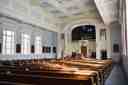 9
9Temple Society of Concord
Buy tour to unlock all 15 tracksTo spot the Temple Society of Concord, look for a grand neo-classical building with tall windows and elegant white trim, standing proudly at the corner, its welcoming facade…Read moreShow less
To spot the Temple Society of Concord, look for a grand neo-classical building with tall windows and elegant white trim, standing proudly at the corner, its welcoming facade calling out among the quieter surroundings. Now, step up to the Temple Society of Concord, and you’re not just staring at a building-you’re meeting one of the oldest Jewish congregations in all of America, right here in Syracuse! Picture the year: 1839. German immigrants, still dusty and tired from their Erie Canal journey, gathered not in this grand hall, but in the cramped back room of a humble store. Can you sense it? The air would have been thick with anticipation, dreams, and maybe the faint aroma of pickles from the shop shelves. Back then, their spiritual leader wasn’t a rabbi but just a devoted community member leading prayers, teaching the kids, and-talk about multitasking-even performing ritual duties! The congregation soon moved up (literally) to the second floor of a member's home-imagine squeezing in there, friends and families perched on chairs as Max, Samuel, and Joseph, the first trustees, tried to keep things running smoothly. They chose the poetic English name “Temple Society of Concord”-peace and harmony in every prayer. Fast forward to 1910, and the scene changes. Now you're imagining the sound of chisels and hammers echoing through the neighborhood as construction crews put up the latest temple-a vast sanctuary with sunlight pouring through tall patterned windows, a pipe organ overhead, and a warmly gleaming wooden ark framed by ornamental white columns. Designed by Alfred Taylor and Arnold Brunner, the new building opened in 1911, and was joined by a bustling social hall and, later, an ever-growing religious school. This isn't just a place for worship; it’s the lively heart of Jewish life in Central New York. Every Friday night and Saturday morning, voices rise in song-holiday celebrations, laughter from children’s classrooms, and educational programs help keep traditions alive. For decades, rabbis and devoted leaders guided the congregation, their voices echoing through the halls, steering their community through the triumphs and trials of history. Even as times changed, Temple Concord adapted-expanding, remodeling, and eventually facing the tough decision in 2019 to sell their historic home. The building’s fate now became a hot topic in Syracuse, with fierce debates over whether student apartments could ever match this temple’s soul. Whatever the outcome, you stand today in a place that has seen nearly two centuries of dreams, courage, and faith. And you know what? All these echoes of history-they’re still here, quietly welcoming all who stop to listen. Wondering about the religious leaders and rabbis, synagogue and related buildings or the gallery? Feel free to discuss it further in the chat section below.
Open dedicated page → 11
11D'Aniello Institute for Veterans and Military Families
Buy tour to unlock all 15 tracksYou’ll know you’ve found the D’Aniello Institute for Veterans and Military Families when you see the bold navy and orange Syracuse University sign with large block lettering and…Read moreShow less
You’ll know you’ve found the D’Aniello Institute for Veterans and Military Families when you see the bold navy and orange Syracuse University sign with large block lettering and three orange stripes on the side-just look for the proud “S” and you’re right there. Alright, buckle up for a story of purpose and service that’s still unfolding right in front of you! Imagine standing at the heart of a building born not just from brick and mortar, but from ambition, teamwork, and maybe even a little bit of Syracuse’s famous orange spirit. The D’Aniello Institute for Veterans and Military Families-or IVMF if you don’t have time to say a mouthful-was launched back in June 2011, and it wasn’t just thrown together like a last-minute group project. This institute was the brainchild of a determined bunch: J. Michael Haynie, who’s basically the superhero professor around here, and the then-chancellor Nancy Cantor, both wanting a home for veterans that’d be more than just a meeting spot. It began by merging several veteran-focused programs already buzzing with activity around campus. Now, what’s even cooler? The roots stretch back to a program called the Entrepreneurship Bootcamp for Veterans with Disabilities. Way before “side hustle” was cool, this bootcamp at the Whitman School of Management was out there helping veterans launch new careers and businesses. What started as a tiny but mighty team of four people back in 2006 grew to more than seventy staff all across eight states by 2018-and by 2024, they topped over a hundred, stretching their support across nine countries. But let’s talk about the building you’re looking at now-the National Veterans Resource Center, a state-of-the-art, $64 million marvel finished in 2020 thanks to a jaw-dropping philanthropic campaign, including a $20 million gift from Daniel D’Aniello. The place is enormous-four stories, 126,000 square feet, with an auditorium big enough to host an army (750 seats!), a gallery, research facilities, even a café that probably fuels more brainstorms than coffee breaks. You can almost feel the energy from veteran business owners, ROTC debates, and conference laughter echoing through those sleek modern halls. Inside, magic happens. The Institute is a lifeline for thousands of veterans and military families each year. Think of all the career training, entrepreneurship programs, and support it takes to launch 200,000 folks into new chapters of life-they do it all, including running Onward to Opportunity, a program that practically hands out superhero capes-okay, job certifications-in more than 30 fields. Got a question about GI Bill benefits or housing or just need a lift? The IVMF’s AmericaServes network has you covered in 18 cities, from career jumps to finding mental wellness. And for the ladies, there’s V-WISE, fueling female veterans to ignite their own business dreams. This place is also a research hub-since 2017, over 1,500 research products, scores of Capitol Hill appearances, and critical testimony have come out of these offices. Walking past, you’re sharing sidewalk with folks shaping national policy, helping real people, and quietly making history-maybe with a latte in hand. And with support from big hitters like JPMorgan Chase, Lockheed Martin, and even Google, the Institute’s fundraising story is as impressive as their mission. They’re a community that knows the true meaning of service, and you, my friend, have just visited their headquarters-no boots required! Wondering about the programs, national veterans resource center or the leadership and staff? Feel free to discuss it further in the chat section below.
Open dedicated page →
Frequently asked questions
How do I start the tour?
After purchase, download the AudaTours app and enter your redemption code. The tour will be ready to start immediately - just tap play and follow the GPS-guided route.
Do I need internet during the tour?
No! Download the tour before you start and enjoy it fully offline. Only the chat feature requires internet. We recommend downloading on WiFi to save mobile data.
Is this a guided group tour?
No - this is a self-guided audio tour. You explore independently at your own pace, with audio narration playing through your phone. No tour guide, no group, no schedule.
How long does the tour take?
Most tours take 60–90 minutes to complete, but you control the pace entirely. Pause, skip stops, or take breaks whenever you want.
What if I can't finish the tour today?
No problem! Tours have lifetime access. Pause and resume whenever you like - tomorrow, next week, or next year. Your progress is saved.
What languages are available?
All tours are available in 50+ languages. Select your preferred language when redeeming your code. Note: language cannot be changed after tour generation.
Where do I access the tour after purchase?
Download the free AudaTours app from the App Store or Google Play. Enter your redemption code (sent via email) and the tour will appear in your library, ready to download and start.
If you don't enjoy the tour, we'll refund your purchase. Contact us at [email protected]
Checkout securely with 


