
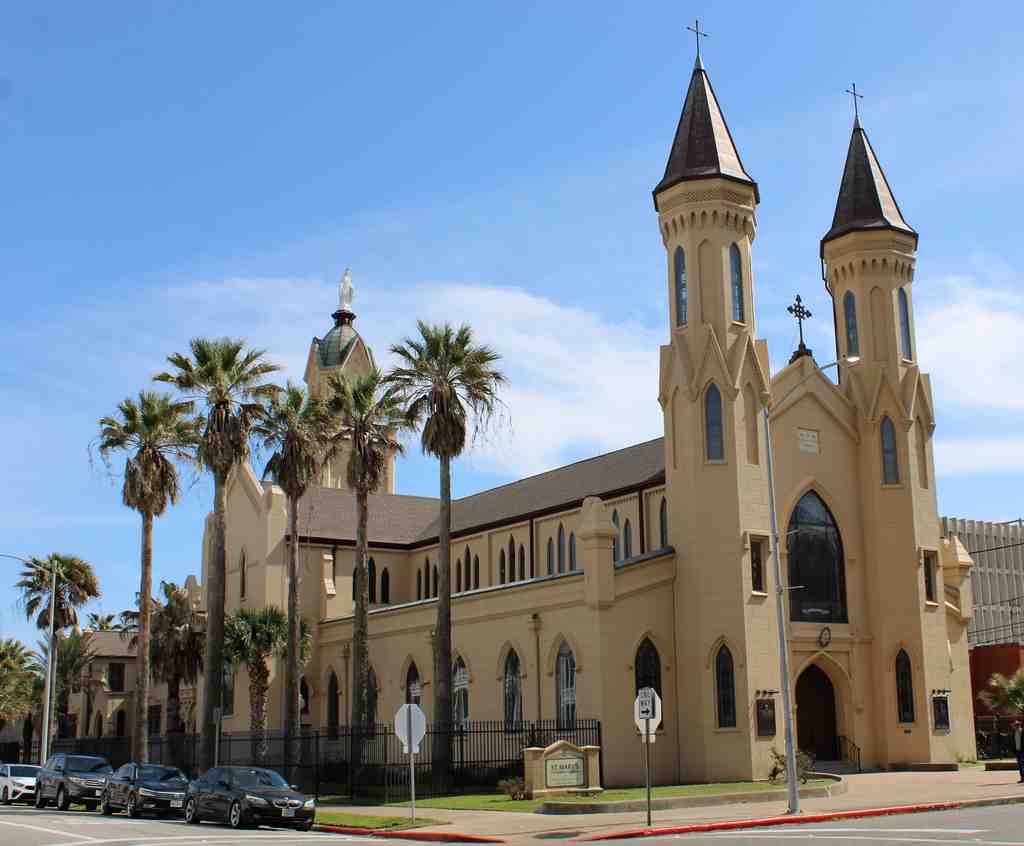
Right in front of you, you’ll spot a grand tan building with twin pointed towers, arched windows, and palm trees lining its entrance-it’s hard to miss the sense of purpose and permanence radiating from this spot.
Alright, let’s talk about the Roman Catholic Archdiocese of Galveston-Houston-an institution whose roots here run about as deep as the Gulf Coast’s humidity. You’re standing near the headquarters of the largest Catholic jurisdiction in Texas. Not too shabby for a diocese born on the salty spit of Galveston Island, huh? From humble origins to massive reach, the story of this archdiocese is a tale of faith, endurance... and a little Texan grit.
Imagine the year is 1756. Spanish missionaries set up shop not too far from here, opening Nuestra Señora de la Luz on Galveston Bay. The place didn’t last-by 1771, it was abandoned, probably because even back then, Texas weather took no prisoners. Fast forward through a roller coaster of flags-Spanish, Mexican, Republic of Texas-and you land in 1839, when Houston got its very first Catholic church, courtesy of Pope Gregory XVI, making Texas an official piece of Catholic turf.
Galveston was THE Catholic capital for years, with the diocese officially crowned in 1847. Folks like Bishop Jean-Marie Odin were on a holy mission-he opened schools, welcomed religious orders, and crisscrossed Texas recruiting both priests and, occasionally, financial aid. The early bishops? Imagine working remote... but with horses and buggies, not Wi-Fi.
After the horror of the 1900 Galveston hurricane, Catholic institutions were reduced to rubble. Bishop Nicolaus Gallagher went into full rebuild mode, roping in just about every order he could find: Jesuits, Sisters of Charity, Basilian Fathers-you name it. And by the time he checked out in 1918, the diocese had quadrupled in size. That right there is some serious Texas tenacity.
But as Houston grew-boy, did it grow-the Catholic engine moved inland. In 1959, Sacred Heart in Houston was tapped as co-cathedral, officially linking Houston’s name to the whole project. By then, Houston’s sprawl was unstoppable-kind of like our traffic. Integration came to the Catholic schools in the early ‘60s, and ministries began reflecting the city’s growing diversity.
In 2004, everything shifted again: the diocese was made an archdiocese, turning Galveston-Houston into the fifth-largest archdiocese in the country, now serving a whopping 1.8 million Catholics. Today, it reaches from Galveston’s beaches to the pine woods north of Houston-8,880 square miles of Texas-sized territory divided into 13 administrative deaneries. It runs over 140 parishes and the biggest private school system in Texas, where enrollment actually grows year over year-hard to pull off these days.
But not all chapters are uplifting. The archdiocese has weathered storms not just of the meteorological kind but also from the reckoning on clergy sex abuse, with public calls for transparency, legal scrutiny, and demands for protection finally taking center stage.
Inside, you’ll find a coat of arms featuring a star for Texas, a red cross for the faith, and roses for Mary, the archdiocese’s patron. It all signals the grand mix of Texas identity and Catholic tradition. And for those keeping score, the current archbishop is Joe Vásquez-new to the post, and probably still learning the names of all those counties.
So as you stand here, sizing up those spires and palm trees, think about the generations of folks who turned the flat, unpredictable landscape of Houston and Galveston into spiritual home turf-stubborn, hopeful, and, let’s be honest, maybe just a little bit stubborn again.




