
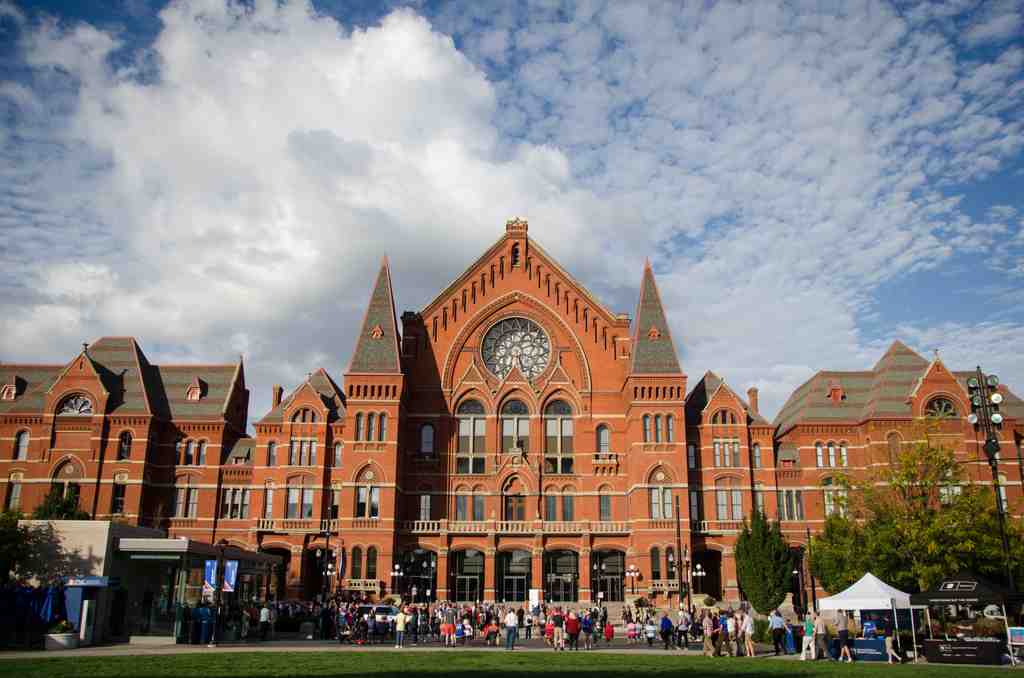
To spot the Cincinnati Music Hall, just look for a gigantic, ornate red-brick building with arched windows, pointed towers, and a huge circular stained-glass window right in the center-it's the proud, Gothic crown jewel facing Washington Park!
Welcome, my friend, to the legendary Cincinnati Music Hall! Take in that stunning Venetian Gothic architecture-a swirl of spires, arches, and that magnificent rose window gleaming above you. In fact, it’s so grand that even the ghosts are impressed! Let’s step back in time and kick up the dust of history together.
Imagine it’s the late 1800s-Cincinnati is buzzing with excitement, proud to be home to one of America’s most vibrant cities. But this block wasn’t always about music; it used to be a pauper’s cemetery. Yes, right where you’re standing, thousands were laid to rest-so if you ever get a chill down your spine, well, it might not be the Ohio wind!
Fast forward to 1876. The city is overflowing with industrial expositions and musical festivals, but the buildings are mostly rickety wooden structures. Enter Reuben Springer: a wealthy businessman with a generous heart and, presumably, a good set of earplugs. After attending a festival where rain on a tin roof drowned out an entire chorus, Springer decided that Cincinnati deserved a hall as grand as the voices that filled it. He pledged $125,000-on the condition that everyone else chip in, too. The city answered the call, and together they funded a masterpiece.
Designed by Samuel Hannaford-whose mustache, I’m told, was almost as impressive as his buildings-the Music Hall was completed in 1878. It’s not just a single building, but three, joined together by second-story passageways to make one united, awe-inspiring space. Every detail tells a story: look up to see carvings of musical instruments, and the giant rose window, which lets colored sunlight splash across the grand Springer Auditorium inside.
Inside, the Springer Auditorium, named for our friend Reuben, seats over two thousand and once claimed second-largest opera house status in the country. Hanging from the ceiling is a chandelier so gigantic-1,500 pounds and 21 feet across-you might suspect it was brought in piece by piece, which it actually was, all the way from Czechoslovakia!
Throughout its history, this has been a gathering place for legends-everyone from Ulysses S. Grant to Ray Charles, Ella Fitzgerald, Johnny Cash, Pink Floyd, and the Cincinnati Symphony and Opera have echoed through these halls. At one point, it even doubled as the city’s main roller-skating rink, so you could go from Beethoven to “boogie” with just one ticket!
But let’s not forget the ghosts! Employees and artists have whispered about watching shadows slink through these corridors late at night, especially after it was featured as one of the Travel Channel’s “Most Terrifying Places in America.” Some say if you’re here at 3 AM, you might just see a Victorian spirit enjoying a phantom encore. Others-maybe more skeptical-blame those eerie noises on the fantastic acoustics. But, hey, a building this full of life (and maybe afterlife) just couldn’t help but hold onto a few stories.
In 2016, Cincinnati came together once again for a $143 million facelift, merging old-world splendor with modern comfort. Now, as you stand beneath these soaring towers, surrounded by the ghostly hum of a thousand performances past, remember: you’re sharing a sidewalk with centuries of dreams, dramas, and maybe a ghost or two.
Alright, onward to our next adventure-unless, of course, you prefer hanging out with the resident phantoms a little while longer! Just don’t ask for a haunting autograph; they’re notoriously hard to read.
Interested in a deeper dive into the venues, architecture or the paranormal? Join me in the chat section for an insightful conversation.


