
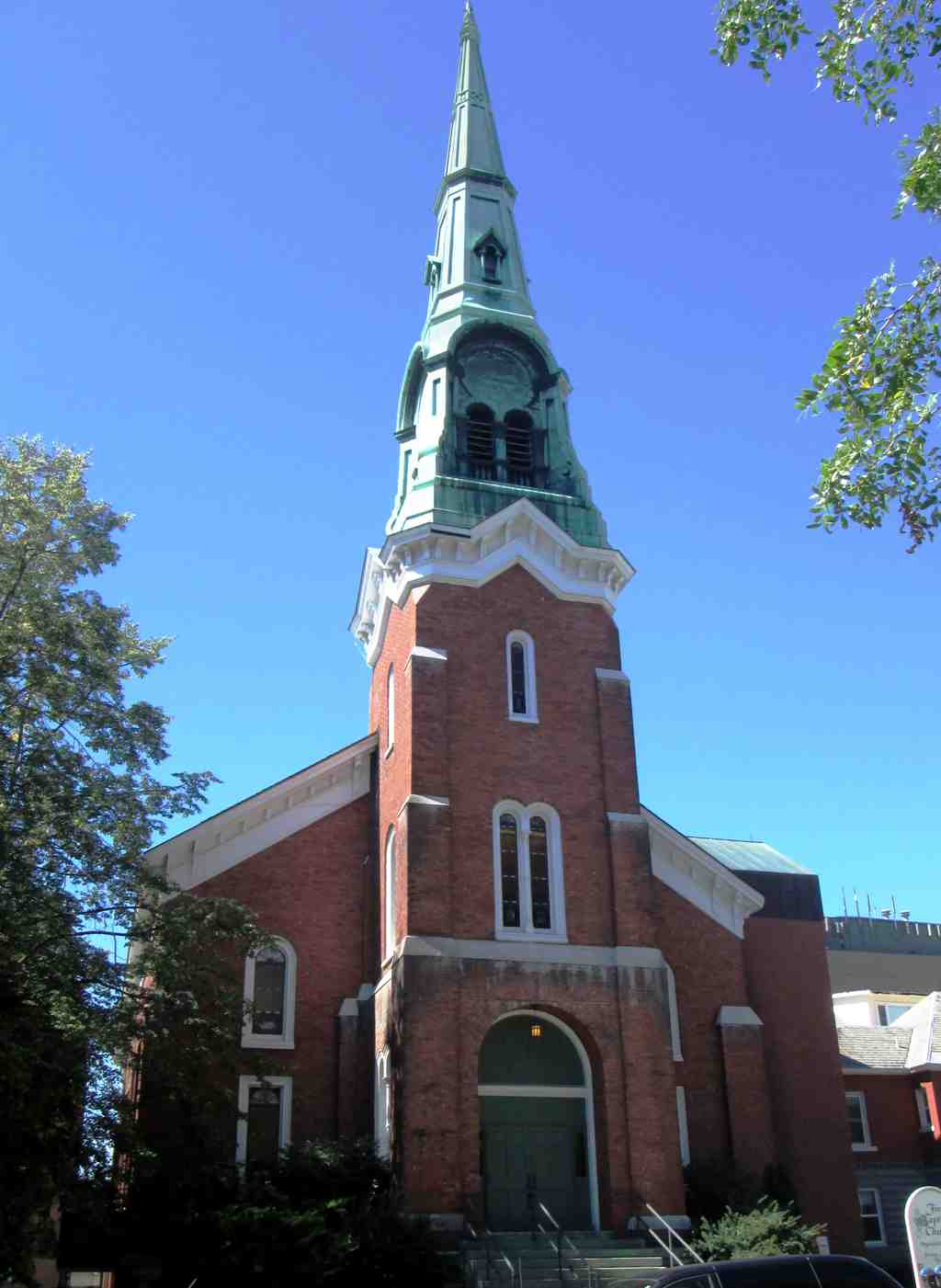
You are standing before a sturdy rectangular building of red brick, anchored by a central square tower that ascends into a distinctive, multi-tiered green steeple. Look closely at this structure, because its dramatic physical evolution mirrors the restless spirit of the city around it. Burlington has never been a place to simply stand still and preserve the past under glass. Instead, this city is defined by constant architectural and social reinvention, adapting and transforming itself to meet the ambitions of each new era.
In the 1860s, the growing Baptist congregation commissioned a new building, but the original plans were a disaster. Master builder Thomas Hill spotted fatal structural and stylistic flaws immediately. They brought in Boston architect John Stevens to review the work, and he bluntly told the committee their design was twenty-five years out of date. You can glance at your screen to see the bold Italianate design he proposed instead. Italianate architecture, popular in the mid-19th century, favored tall, arched windows and decorative roof brackets to signal wealth and modernity.
The redesign delayed the project and pushed the final cost to $32,550, which is over $600,000 today. Fortunately, they had Lawrence Barnes in the pews. He was a wealthy local industrialist, and his deep pockets largely funded the construction.
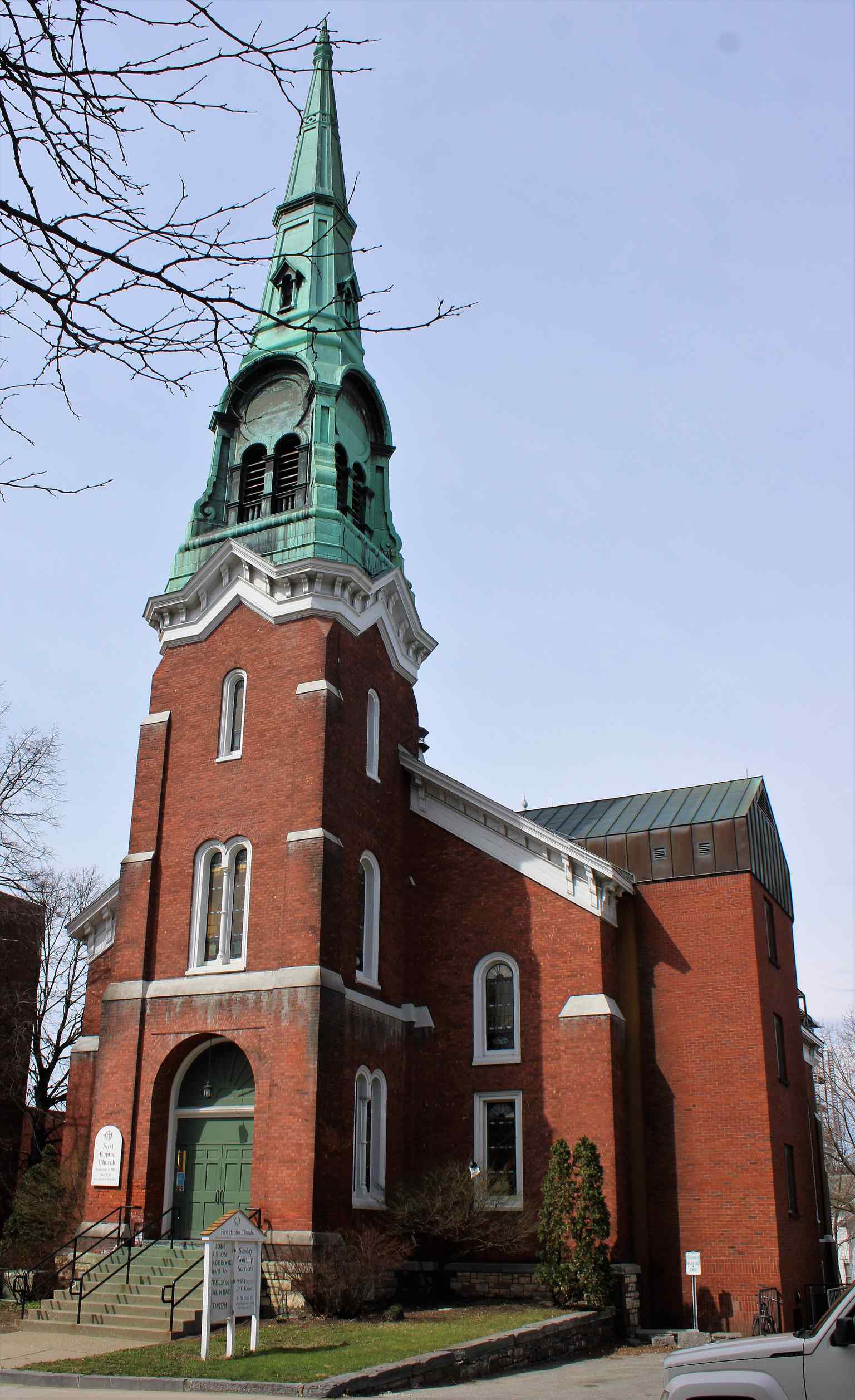
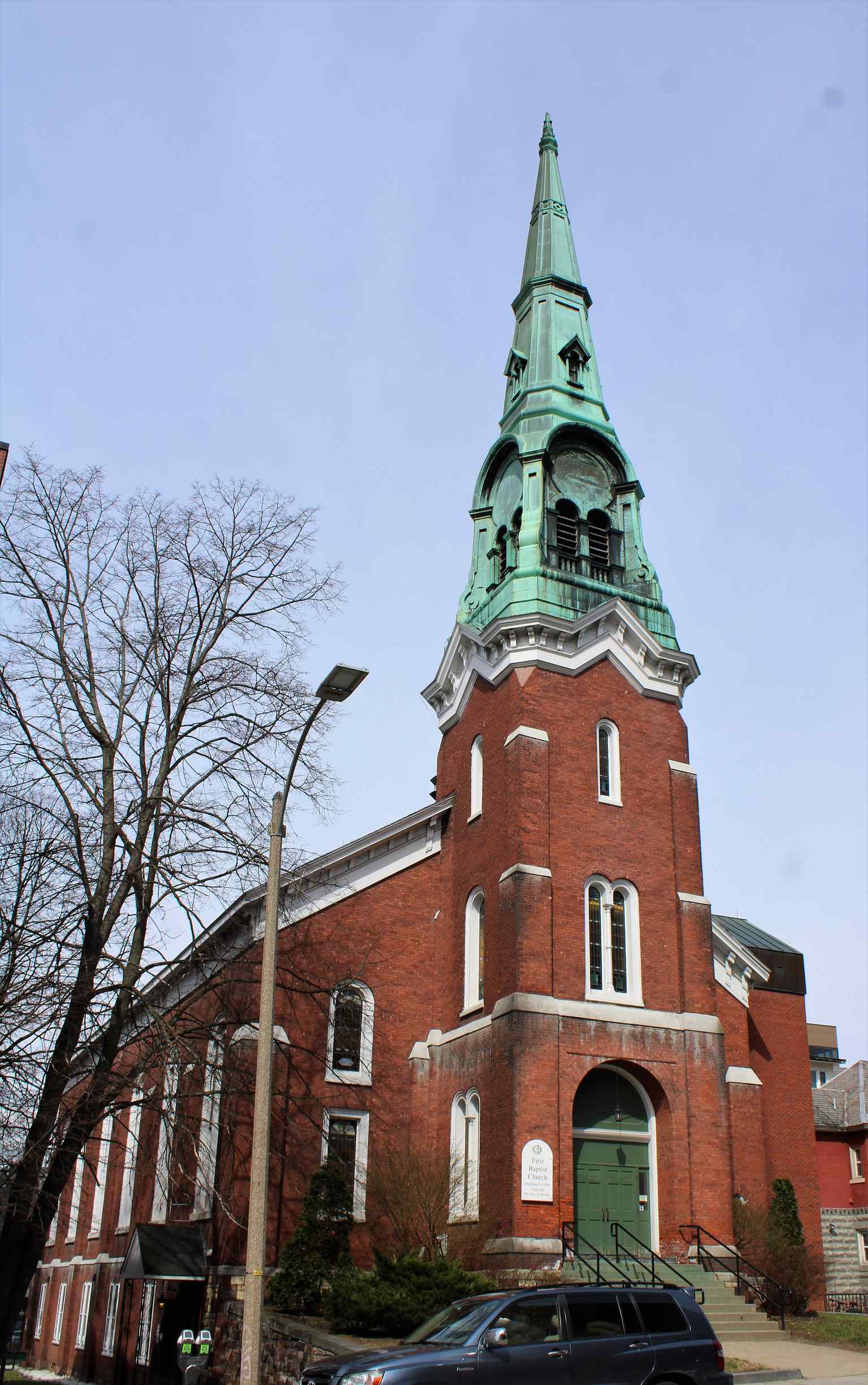
Yet, what you see today is not what Barnes paid for. When dedicated in 1864, the church was covered entirely in wood. It was not until 1905 that the congregation completely encased the wooden frame in the red brick you see now, adding the stained glass windows shown on your app. The iconic steeple was also transformed later. In 1910, the spire was wrapped in copper. Over the decades, exposure to the air caused the copper to oxidize, a natural chemical reaction that developed the pale green patina making it such a recognizable marker on the skyline today.
Inside sits a massive, 10,000-pound pipe organ built by the famous Hook brothers in 1864. It is a rare survivor, having escaped the 20th-century trend of electrifying old instruments. But its immense weight slowly crushed the floor beneath it. In the mid-1990s, church members rallied to completely rebuild the floor with specially engineered trusses to save the historic pipes.
As for the congregation's original 1845 church? It met a highly unusual secular fate. The Burlington Times newspaper bought the old building, ripped off the belfry, and dragged their heavy printing presses right into the sanctuary.
The First Baptist Church welcomes visitors on Sunday mornings and most weekday mornings except Wednesdays. Now, let us walk toward the pedestrian center of the city, heading to the Church Street Marketplace just a few minutes away.


