
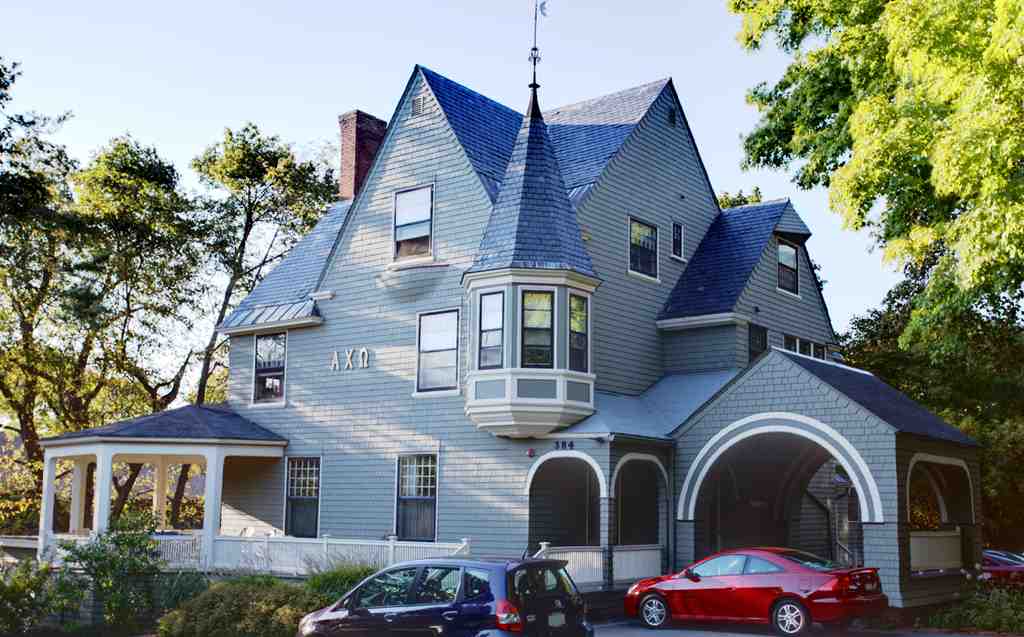
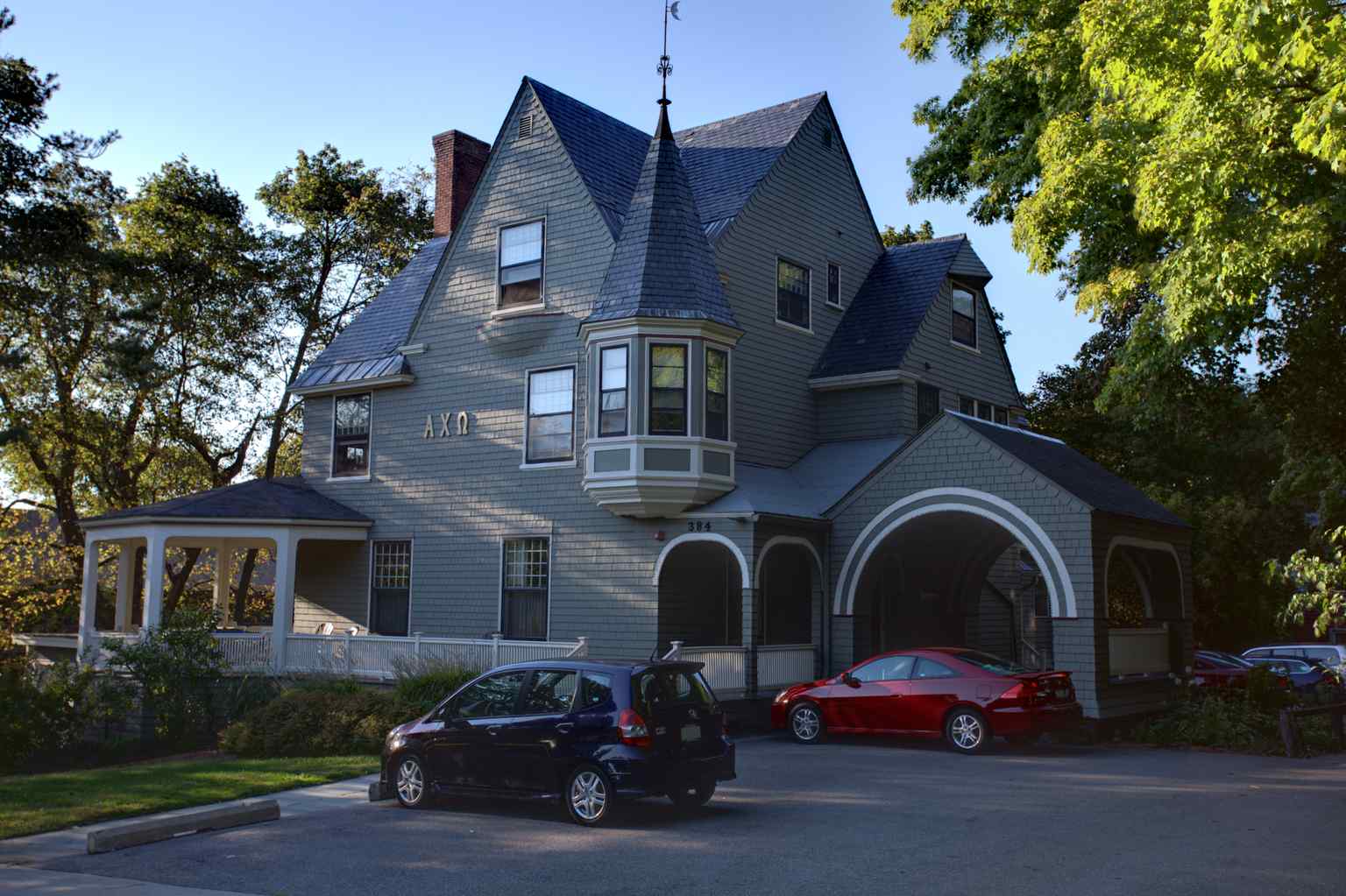
On your right stands a sprawling, pale blue wood-shingled house, easily recognizable by the pointed octagonal turret projecting from its front and the large rounded archway of the covered drive. Look at your screen for a clear view of its intricate exterior. This is the Daniel Webster Robinson House, built in 1885.
It stands as a physical monument to Burlington's waterfront lumber boom. During the late nineteenth century, Canadian timber was floated into the harbor, milled here, and shipped by rail. The lumber piles along Pine Street grew so massive they formed a wooden maze, requiring workers to assign street names to the passages just to navigate them. This booming waterfront industry generated the immense wealth that physically built the grandest parts of the city.
Daniel Webster Robinson managed a massive timber firm. He used his fortune to hire a major Boston architectural firm to design this residence. It is a classic example of Queen Anne architecture, a style famous for asymmetrical shapes, varied textures, and dramatic rooflines.
Robinson lived a life of high society success until his death in 1909. It is a sharp contrast to the tragic financial ruin of Thaddeus Tuttle, whose former home we explored previously. Robinson's legacy held firm, but the fate of his house took a strange turn.
In 1911, a prominent surgeon named Dr. Harris R. Watkins bought the property, hosting lavish gatherings for nearly two decades. When he died in 1930, a bizarre controversy erupted. He had named a specific trust company as his will's executor. However, shortly after his death, that company merged with a larger bank. The new bank abruptly seized control of Watkins's assets and this house without legally applying to the probate court.
This move sparked a bitter lawsuit. The estate accused the bank of acting as an executor de son tort. That is a legal term for someone who wrongfully assumes authority to manage a deceased person's estate without court permission. While the courts untangled this financial mess, the grand mansion sat entirely vacant for a year.
Once settled, the empty house found a vibrant second life. In 1931, it became the home of the Alpha Iota chapter of the Alpha Chi Omega sorority. Despite the daily wear of a collegiate residence, the students have been meticulous stewards, preserving the original, finely detailed woodwork Robinson installed over a century ago.
The wealth of industry ultimately paved the way for university life. Let us walk toward the heart of the campus to see how this civic ambition was channeled into education. Our next stop, the Ira Allen Chapel, is a nine minute walk away.


