
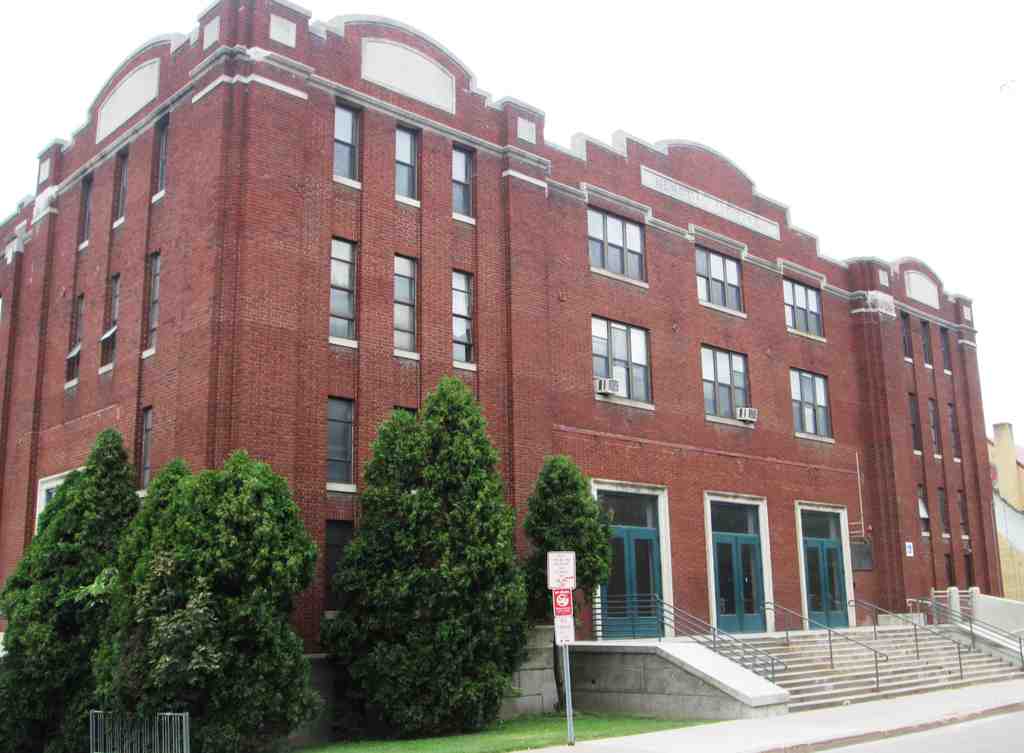
Before you stands a massive red brick structure characterized by its distinctive stepped roofline with curved parapets and a broad set of stone stairs leading to three tall entrance doors. In the mid-1920s, this building represented a bold, incredibly expensive attempt at downtown reinvention.
Mayor Clarence Beecher had a grand vision for Burlington. He wanted to build a memorial to honor the city's First World War veterans, but he also wanted that memorial to generate income. A monument is noble, but a convention center pays the bills. So, the concept for the Burlington Memorial Auditorium was born.
Initially, the city had secured a massive bond and planned to attach the auditorium to a new city hall. The public, however, demanded a standalone arena. In 1926, voters passed a referendum, which is a direct public vote on a specific proposal, allocating 150,000 dollars, roughly 2.6 million dollars today, to build a sprawling independent venue designed by local architect Frank Lyman Austin.
But as anyone familiar with municipal construction knows, initial budgets are rarely more than polite fiction.
Almost immediately, it became obvious that the allotted funds were entirely inadequate. Austin scrambled to revise his blueprints. He slashed decorative details and shrank the building's footprint, desperately trying to stop the financial bleeding. Construction stalled while the administration panicked.
Sensing weakness, former Mayor James E. Burke pounced. In early 1927, Burke wrote scathing open letters to the local newspaper criticizing the spiraling costs. He weaponized the budget crisis, using the scandal of municipal overdrafts to announce his own renewed candidacy for mayor.
Beecher was cornered. With the project in jeopardy, his administration was forced to return to the taxpayers and ask for an additional 100,000 dollars. In a rather surprising display of civic commitment, the public overwhelmingly approved the extra funds. The final price tag ultimately landed at over 204,000 dollars, or about 3.6 million dollars in today's money.
When it finally opened in 1928, it was undeniable in its scale. It featured a massive main hall with a proper proscenium stage. A proscenium is simply the architectural arch that frames a stage, separating the performers from the audience like a picture frame. Take a quick look at the before and after image on your screen to see how this grand civic centerpiece has anchored the corner while the surrounding streetscape evolved over the decades.
For nearly ninety years, it was the beating heart of local culture, hosting everything from Amelia Earhart to amateur boxing matches. Decades later, its basement even became a legendary, city-funded sanctuary for underground punk rock. It stood as a testament to a community constantly adapting its spaces, until structural decay forced its closure in 2016.
We have just explored the messy, expensive reality of public ambition. Next, we will see what happens when limitless ambition is entirely personal. We are directing our path toward the university campus now, where the opulent Grasse Mount awaits you, about a twelve-minute walk away.


