
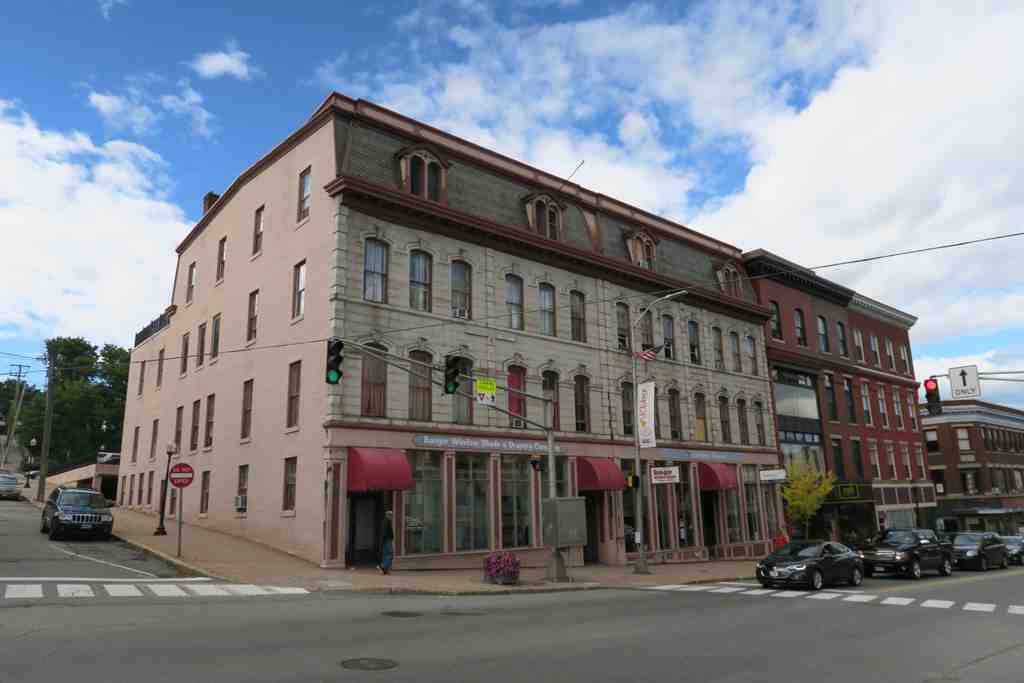
Look to the intersection of Main and Middle Streets for a grand, stone-fronted four-story building with a striking mansard roof and big red awnings over the storefront windows-that’s the Adams-Pickering Block standing proudly before you.
Now, take a moment-imagine Bangor in the 1870s, the smell of fresh-cut granite lingering in the air, the clatter of horse-drawn carriages echoing through lively streets. This impressive building rises above the corner, a survivor with stories to spare. The Adams-Pickering Block, crafted by Bangor’s own architect George W. Orff, has stood here since 1873, built right on the site of “The Main Street Fire” of 1872-where flames claimed one life and wounded eight others. You might say this building has been through the fire and come out looking rather dapper, Second Empire style and all-just look at those dramatic window hoods and cast iron trim up above. The elegant granite façade was built to impress, and even though the ground floor has changed over time, you can still spot hints of the original ironwork.
Here’s the twist: just a few decades later, in 1911, Bangor was struck by a devastating fire. Most buildings of this era vanished, but the Adams-Pickering Block stood firm. It’s a rare witness to both disaster and progress, stubbornly refusing to be erased by either flames or the urban renewal craze of the 1960s.
And who’s behind the name? George W. Pickering-not just a savvy merchant or the president of the Kenduskeag Bank, but also mayor and one of Bangor’s founding figures. If the city’s old timers had a “Best in Business” trophy, his name would be engraved at the top. Today, as sunlight glints off that granite, you’re standing in the shadow of a true Bangor legend-where history, mystery, and a dash of survival spirit meet at one unforgettable corner.


